
Sekulow


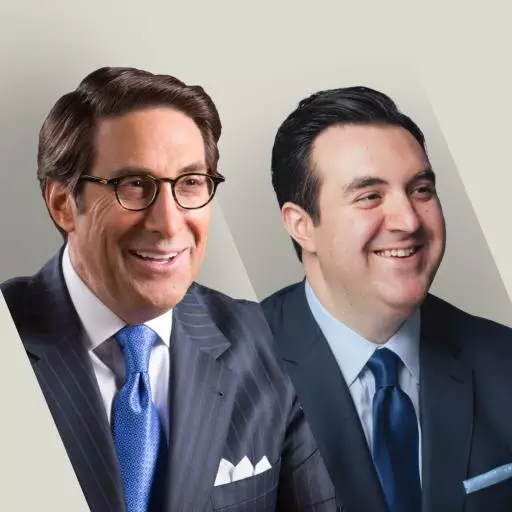
Logan Sekulow and Will Haynes are joined by Mike Pompeo to discuss the FBI being caught spying on Kash Patel and Susie Wiles.
Logan Sekulow: Welcome to Sekulow. It's Thursday, Will.
Will: It is. We're making it closer and closer to the end of the week.
Logan Sekulow: Always news coming out. Of course, another bombshell moment. Those on our team, they say bombshell a lot. Sometimes I go, "Let's tone down the bombshell."
Will: If everything is a bombshell, then nothing is a bombshell.
Logan Sekulow: Right. However, this one you presented to me this morning. Pretty bombshell. Now, of course you probably saw the title, you may see that it refers to Kash Patel, current FBI Director, and Susie Wiles, the Chief of Staff. Is that right?
Will: That's right. Chief of Staff. Look at that, I got my facts right. And you may see, "Hey, the FBI is caught spying on them. What are we talking about?" Of course, he's the director of the FBI. So we're actually flashing it back a little bit, correct?
When they were just civilians. This is back in 2022 and 2023 while the Special Counsel was probing all of the things going on. It turns out not only were Senators' phone records being spied upon, obtained through subpoena with all of the stuff going on there, which we have a FOIA lawsuit on about right now, but it also turns out they were going after Kash Patel, who is now their boss, as well as Susie Wiles.
So much so, not just the toll records where they would see who was calling when and where, but you start to look at this, and they also apparently recorded a phone conversation between Susie Wiles and her attorney. According to the reporting, the attorney was aware of the recording, but she was not, which raises a lot of ethical concerns when it comes to attorney-client privilege and the attorney there. This is really, really shocking and there's a lot more to go over with it as well.
Logan Sekulow: We're going to keep that discussion going. If you have questions or comments about this, give us a call at 1-800-684-3110. Of course, tensions rising in Iran as they are meeting. Are they scheduled? Are they happening? Where are we at with the meetings in Iran?
Will: The meetings in Iran are currently happening today, right now in Geneva. We have Secretary Pompeo calling in in a little bit to talk about that because the strategy of the US government has gone a lot more aggressive. The demands they are taking today, and this is kind of like the last-ditch effort for Iran to save what appears to be a military attack.
And these demands are the strongest that we have seen from the negotiating team, something that Iran has repeatedly said they will not agree to. However, we're going to find out what happens very shortly.
Logan Sekulow: Yeah, so we're going to have a packed show today. You're going to make sure you stay tuned. With that also, I want to encourage you to check out the incredible work that our ACLJ team is doing and how you can get involved. Easiest way to do that is just go to ACLJ.org. Of course, you can download the ACLJ app. You can get involved by subscribing to our podcast, by following all the different social media platforms, but all of it really can point back to ACLJ.org or the ACLJ app.
I encourage you to do that today, be a part of the ACLJ team. It's a really important time as we start to wrap up February, if you can believe it. By the time we'll be talking to you next week, it'll be the month of March. March will kick off a big moment for the ACLJ. We have these special months and we've got a special month coming for you in the month of March.
But even right now, this is a great time to get involved and engaged in the ACLJ. Even if you're not making your donation today, which is fine, if you can, great. Just sign up on the email list. Subscribe to the YouTube channel. Do things like that. Be proactive because March is going to be big, you're going to want to be a part of it. That is at ACLJ.org. Once again, I am going to take your phone calls and questions and comments at 1-800-684-3110. That's 1-800-684-3110. I want to hear from you today.
So give me a call. What do you think about this new FBI scandal? Seems like nothing is shocking. The comments kind of indicate, "Oh well, who's surprised?" Well, maybe the current Director of the FBI should be. We'll be right back with more on Sekulow. Stay tuned, don't go anywhere.
Welcome back to Sekulow. A lot of you are just joining us right now, so we're going to restate some of the facts here. I hear from some of you and you go, "Hey, sometimes you guys repeat yourself." Well, I know there's a lot of podcast listeners that are listening and watching later on, not live. For those watching live, though, we have a lot of people that join us within the first 10 minutes of the show, so we kind of have to reset.
If not, then we start getting people saying, "You're click-baiting us, you're not talking about the main topic." And of course the main topic today is that the FBI had obtained the phone records and even had some private recordings of Kash Patel and Susie Wiles. This is current FBI Director and Chief of Staff before they were the FBI Director and Chief of Staff. During all this investigation, during the Jack Smith investigation, all of this was happening and this is a big deal because there really was no justification for this going on.
Will: No, there was not. This is the witch hunt that was perpetrated by Jack Smith and we saw just how aggressive he was going after sitting US Senators.
Logan Sekulow: At that time, Kash Patel was what? I mean...
Will: He was a private citizen. He was nothing. Now, however, he'd been in the orbit of President Trump. But what's also crazy is not just the fact that they did all this, which is crazy enough, but the lengths at which the FBI under the previous administration went to cover this up. They are just now finding this out.
Kash Patel has been the FBI Director for over a year, Susie Wiles has been the Chief of Staff for over a year, and this is new information to them. 10 people at the FBI have been let go because they were a part of this. And here's the thing, this is from a source that told the New York Post, "It's not just phone records and subpoenas, but a massive targeting operation," the official noted, indicating the use of both technical tools and human intelligence.
So they have agents undercover that are running operations against these US citizens. Several FBI employees were fired Wednesday related to the discovery. The existence of the subpoenas were first reported by Reuters, but the Patel and Wiles phone records were found in files labeled "prohibited." This is something that they had stashed somewhere, put markings on to make sure no one would look at them. I guess they were trying to play it both ways within the law of not destroying the evidence, as that would be an outright federal crime when it comes to retention of government records.
However, they were trying as hard as they could, whether it be all the files related to Arctic Frost found in burn bags in a locked closet that no one knew about to this, having these files placed somewhere, marked prohibited so no one would open them up and look at them. I also know that Kash Patel has since banned the practice of marking things in this way because it was so abused as a way to make people not—there's no oversight at this point. Agents are going in and doing stuff, write prohibited, no one's going to look at it.
Logan Sekulow: That's right. Phone lines are open for you. What do you think about this when you hear this from the FBI? Again, does it shock you that this was going on? Do you see a way to move forward? Do you feel like you can get trust behind people like Kash Patel who are currently in charge, that this kind of behavior will not continue on? I want to know your thoughts on the current state of the FBI as well as these shocking reports of what was going on before.
However, there's also news coming out of the potential war with Iran. Of course, that has been something that has been, you don't want to say teased, but it kind of feels that way, teased for the last number of weeks. There is a breaking point that is getting very, very close. There's a final negotiation going on right now and we were going to discuss it with Mike Pompeo in the next segment. But I'd like to hear from you.
If they cannot come to an agreement, where do you stand on a potential intervention, a potential—I mean, let's just call it a war—a potential war with Iran? It's a big deal, shouldn't be something we take lightly. It should be the number one story on the news. Where do you stand right now as the American people? 1-800-684-3110. I think it's important that we hear from you. Look, you could be for this, against it, somewhere in between. I do really want to hear from you. I want to hear the nuance that you may have as a perspective.
Maybe you are a former military person who served during the War on Terror, maybe you have some experience and you want to share that with our audience. I think all voices are important here. 1-800-684-3110 because again, these are kind of two big moments that are all going to be involving in some way or fashion the trust of the current administration, the trust of the people in charge. When you have a new Department of War and Pete Hegseth, what does that look like when it comes to the first time you'll actually see real military intervention, not just a strategy moment like the Iran taking out the nuke facilities? Those things obviously have happened.
But it's not talking about what could lead to a war like we saw—the closest thing would be back in the early 2000s.
Will: That's right. And once again, that is because the talks are underway in Geneva. This is kind of at the tail end of the 10-day deadline that they have put in place from President Trump. The negotiators are there, it's Steve Witkoff and Jared Kushner, and they are expected to present, and this is obviously going on as we are live, but new demands from the US that Iran must dismantle its three main nuclear sites: Fordow, Natanz, and Isfahan, and deliver all of its remaining enriched uranium to the US.
As well as insisting that this nuclear deal does not have a sunset like the JCPOA. This is a forever deal if you want to stay where you are.
Logan Sekulow: So this is a big ask. You know, this is not just a small negotiation. This is likely, if you were just to look at the terms and the way we know how the rulers in Iran have been, how sword-rattling they've been even on social media, all those type of things, these kind of asks seem unlikely. Maybe we're at a point where they realize that if they don't do this, they're out of power and it's going to happen. The people are uprising and you're going to have the American military on board. What does that look like? And maybe they know they have to make this kind of deal.
Let's go ahead and take a quick call because I do want to hopefully inspire you to call in as well and get engaged in this conversation at 1-800-684-3110. Let's go to Cliff who's calling first in Illinois. Cliff, go ahead.
Cliff: Yeah, hi. Listen, there's so much going on at once. You've already touched on a lot. You got the election thing, you got the Clintons going in front of the committee now, that's Hillary and then tomorrow's Bill. You got Cuba, you got everything that you've touched on. How can one keep focus on anything to have anything done? I mean, really, it's very confusing.
Logan Sekulow: Yeah, Cliff, I don't know. I mean, to me, truthfully—and I've pitched this and look, maybe I'm wrong here—that I believe people like you and that listen to this show, as well as the administration, have the ability to focus on more than one thing. We got big brains here, Will. So I've been told.
Will: Who told you that?
Logan Sekulow: My mom.
Will: Okay.
Logan Sekulow: Yeah. Said you're a real smart boy, you can think about two different things. There could be two topics that you cover in a day. And that's what we're doing here. And that's what I feel like the American people should be doing. Instead, we've got caught in a media cycle where they present to you one big problem and that one big problem is likely unsolvable, it's likely nothing that you can do about, whether that is a Nancy Guthrie or whether that's what's going on in Minnesota. There's been so many topics and they'll focus on that for two or three weeks and then pretend it didn't happen.
Remember the wall-to-wall coverage of Nancy Guthrie? What happened to that? Is it less important now than it was two weeks ago? What about Minnesota? When was the last time you saw that on the news? I have no idea what's going on in the streets of Minnesota right now. If you were to ask me, I would assume peace because no one's talking about it. Not unlike the frog costumes of yesterday. If you're going to tell me that these problems are the extreme problems in the world, that they are, you know, leading to destruction, the end times, they are leading towards World War, you can't also present it to me as it's the only thing I can focus on until the media cycle changes and three weeks later we're going to move on and pretend it never happened.
Phone lines are jammed right now with so many of you calling in. A lot of you are calling about the FBI, a lot of you are calling about Iran. We're going to take a ton of calls. When we get back, we're going to hear from Mike Pompeo. He's going to be calling us to give us his thoughts. You know, look, when we have people like Mike Pompeo on, I think it's very important because these are people that have been there and done that, have seen this from the inside. They understand how this system works. You're not going to get this kind of analysis on a lot of other shows.
So whether you agree or disagree, whether you like what he says or don't like what he says, whether you like him or not, is really not of my concern. What I want to do is bring in the top-level experts in the fields. We have done that for many years here on the show. Again, it's not necessarily always people you're going to agree with. Sometimes you may disagree with them, but there's no doubt that they have the cred. And we can't do that, by the way, without your support. Because when you give financially, you're giving to bring in experts on all of these topics that can come on this show and give great analysis.
So when we get back, we're going to hear from Secretary Pompeo and then we get to hear from you as we head into the second half hour. And some of you may not get the second half hour if you're listening on terrestrial radio, and I'm going to ask you, you should be watching us and engaging with us at ACLJ.org, on the YouTube channel, on Rumble, wherever it may be, Facebook. There's so many different places you can watch and engage with our audience.
Again, phone lines are completely jammed. We're going to do our best to get to as many of these calls as possible. They are kind of all over the map in terms of the topics you guys want to discuss and we'll do that when we get back. Again, Mike Pompeo is going to be joining us and then I'll be taking your calls and comments throughout the second half hour of the show. But as we head to break, I want to encourage you to go to ACLJ.org, just look around. Look around at all the incredible free content we provide to you. No paywalls at ACLJ.org.
Welcome back to Sekulow. We are now joined by Senior Counsel for Global Affairs, Secretary Mike Pompeo. Secretary Pompeo, there is some big updates. I'm going to kick it to Will first. Some big updates coming out of Iran. We need to probably give people a little bit of a preface for this. I know you want to take the first question.
Will: That's right. The Wall Street Journal reported this morning that as US envoys Steve Witkoff and Jared Kushner are in Geneva for this next round of talks with Iran, that the United States is bringing tougher demands to the table than previously had been reported. Specifically, they're going to tell Iran they have to dismantle the three main nuclear sites: Fordow, Natanz, and Isfahan, as well as deliver all of its remaining enriched uranium to the US.
And also that they are expected to insist that any deal must last forever and not have a sunset clause similar to the JCPOA that was such a disaster under the Obama administration. But Mr. Secretary, we know that the claims of the Iranian regime have always been that we have a right to enrich uranium. The strength of these negotiations and the strength of these demands that are coming from the US sounds like it is a non-starter from what we've heard with the regime. Do you think the threat of military action could have any sway on what happens today?
Mike Pompeo: I'm actually not optimistic. I actually think it's appropriate that we exhaust every diplomatic option and try to get there, but I think it's very unlikely for the reasons that you've just articulated perfectly. The things that we're asking for are for them to simply behave like a normal nation and they have no interest in doing that. My sense is the Ayatollah thinks he can suffer a strike by President Trump and stay in power, much more likely than he can by losing power by giving up the things that he believes defend their country.
And so the chance of them actually acceding to a permanent decline for nuclear weapons, to cease their ballistic missile program, to stop building terror forces around the world seems like a very unlikely event. So I think the United States will, along with its partner Israel, have to do the necessary.
Will: And this is a position that you have talked about. You've written for ACLJ.org an article just a couple weeks back that said negotiations serve the Ayatollah's interest, not America's. And this was before we'd even gotten to this point. At the same time, you know that President Trump would prefer a diplomatic path, would prefer to make a deal. But at the same time, does it also give you reassurance that while they have entertained these negotiations, that the strength of what the US is bringing today will not end up being another sort of failed JCPOA 2.0, especially with how strong those restrictions and demands are?
Mike Pompeo: No, of course it does. Look, when I wrote that piece, I wish I was wrong and I still hope I'm wrong. I want peace as well. I don't seek conflict with any nation. But I also don't want the United States to suffer under a ballistic missile program that can kill our soldiers, sailors, airmen, and Marines and can strike, even at some point, the United States of America. And I think President Trump gets all of that. So he's trying to get to the right place. In the intervening two, two-and-a-half weeks now, he has built up a force very capable of achieving those objectives, right?
He can take out the infrastructure, not only the remaining nuclear materials, but very likely their missile program, all the stuff that sits behind it, all the industrial capacity that sits behind it. I think he has put the forces in place that can actually keep our soldiers, sailors, airmen, and Marines relatively safe, although you know they're all always at risk when they enter into conflict. But we can do so in a way that will deliver a really good outcome for America. And President Trump's not going to be a dupe like President Biden or then Vice President Biden and President Obama were.
Think about this. Today we sit here in 2026, the vast majority of the restrictions that were agreed to in the JCPOA have already expired. So even if we'd kept the deal, they would be free to build out their ballistic missile program, which we sit here today with no restrictions and with a whole lot more money than they have today because they have lifted an enormous amount of sanctions as well.
Will: You mentioned the safety of the troops. Obviously, that's a concern of we here as well as many Americans who don't want our men and women in uniform in harm's way, and obviously they signed up for a job to protect America, but at the end of the day, we'd prefer they are not in harm's way. We know that the threat to bases is what the Iranians will say as well, but I wanted to get your take if you think that they still have command over their proxy forces, such as Hamas, Hezbollah, the Houthis, if the decimation of those groups from the US and Israel over the past couple years have maybe lessened the will of those groups to stand up and fight for the Ayatollah if we were to take a decisive military action.
Mike Pompeo: Look, you ask a very important question. I don't think it's changed their intention or their will. I think they would still like to do that. What has definitely changed is their capability to inflict harm. Look, Hamas can't really do a lot to America, although they can still present some risk to Israel. Hezbollah, too, is greatly diminished in its capacity to strike from Lebanon, although the Israelis still have to take action almost every day into Lebanon to go after Hezbollah forces who continue to try and build and build and build.
The greatest risk is what they might be able to do in the Gulf states and in the Strait of Hormuz, right? They have the capacity to make it very difficult for ships to get insured. So moving more than about 20% of total global petroleum products that move across the world every day, they can make that a mess for a little while before the United States is able to make sure that that is reopened. I think that President Trump and his team have thought about that a lot. I know in the first Trump administration we did. We can achieve that, but there could be a handful of days where there's not only risk to commerce and the ability to move refined products and petroleum around the world, but also some risk to our service members that are serving in that region.
Will: Mr. Secretary, thank you so much for joining us today. Just a quick last question here as we come up on a break, but if an agreement of some sort or extension of these talks is not agreed upon today, what do you think the next move is and who makes it first?
Mike Pompeo: Yes, my sense is that President Trump has played out the string as far as he can, or you could argue the Ayatollah has played out the string as far as he can. My sense is this will be the moment when President Trump will do what he has said he'd do. He said help was on the way and then gosh, a week and a half ago, maybe 12 days, he said 10, 15 days we'll do something. My sense is that the United States and Israel will jointly go deliver a punishing blow to the regime's infrastructure and its ability to project terror across the world, as President Trump spoke about in the State of the Union Tuesday night rather.
Logan Sekulow: Secretary Pompeo, thank you so much for joining us. Always great to hear from your insight in this situation. Look, that's why we're able to bring on people like Secretary Pompeo because you are not going to get this kind of coverage, this kind of commentary from anyone else. Of course, you may see him pop up on other shows, but to have 10 minutes of time to spend and really break down all of this for you, I hope you're able to take this information and then share it with your friends and discuss this at home and discuss it with your family so you have an understanding of why these situations are so important, why we believe they should be top stories.
And when you have a potential for war going on, there is no one better to have on than Secretary Pompeo to voice his thoughts in this. So I appreciate you for joining us again today. Hey, we have another half hour coming up on the broadcast today and I want to pack this half hour with your calls and comments. Phone lines are jammed. We got one open, just opened up. 1-800-684-3110. Go ahead and get in line. We're going to take as many calls as we can this next half hour.
I want to hear from you as of course the future is a little uncertain when it comes to the potential war in Iran and we continue that conversation about the FBI, whatever you'd like. 1-800-684-3110. If you don't get us in your local market or you're looking for a more interactive experience, I encourage you to join us. You can watch us full television style production ACLJ.org, or the Salem News Channel. You can also find us on YouTube, Rumble, 12:00 to 1:00 PM Eastern Time every day, Monday through Friday. And of course, you can catch us whenever and wherever you get your podcasts on demand. We'll be right back, second half hour coming right up.
Featured Offer


Featured Offer
About SEKULOW
The American Center for Law and Justice (ACLJ) focuses on constitutional law and is based in Washington, D.C. The ACLJ is specifically dedicated to the ideal that religious freedom and freedom of speech are inalienable, God-given rights. In addition to providing its legal services at no cost to our clients, the ACLJ focuses on the issues that matter most to you — national security, protecting America's families, and protecting human life.
About Jay Sekulow
An accomplished and respected judicial advocate, Sekulow has presented oral argument before the U.S. Supreme Court in twelve cases in defense of constitutional freedoms. Several landmark cases argued by Sekulow before the U.S. Supreme Court have become part of the legal landscape in the area of religious liberty litigation; these cases include Mergens, Lamb's Chapel, McConnell v. FEC, Operation Rescue v. National Organization for Women, and most recently Pleasant Grove City v. Summum.
In 2009, Townhall Magazine named Sekulow to its "Townhall of Fame" and recognized him as "one of the top lawyers for religious freedom in the United States." In 2007, the Chicago Tribune concluded that the ACLJ has "led the way" in Christian legal advocacy. In 2005, TIME Magazine named Sekulow as one of the "25 Most Influential Evangelicals" in America and called the ACLJ "a powerful counterweight" to the ACLU. Business Week said the ACLJ is "the leading advocacy group for religious freedom." Sekulow's work on the issue of judicial nominees, including possible vacancies at the Supreme Court, has received extensive news coverage, including a front-page story in The Wall Street Journal. In addition, The National Law Journal has twice named Sekulow one of the "100 Most Influential Lawyers" in the United States (1994, 1997). He is also among a distinguished group of attorneys known as "The Public Sector 45" named by The American Lawyer (January/February 1997). The magazine said the designation represents "45 young lawyers outside the private sector whose vision and commitment are changing lives."
Sekulow brings insight and education to listeners daily with his national call-in radio program, Jay Sekulow Live!, which is broadcast throughout the country on nearly 850 radio stations. Sekulow also hosts a weekly television program, ACLJ This Week, which tackles the tough issues of the day. He is also a popular guest on nationally televised news programs on ABC, CBS, NBC, CNN, FOX News, MSNBC, CNBC, and PBS.
Contact SEKULOW with Jay Sekulow
jsekulow@aclj.org
http://aclj.org/
American Center for Law and Justice
PO Box 90555
Phone: 757-226-2489
1-800-684-3110
1-877-989-2255