
Sekulow


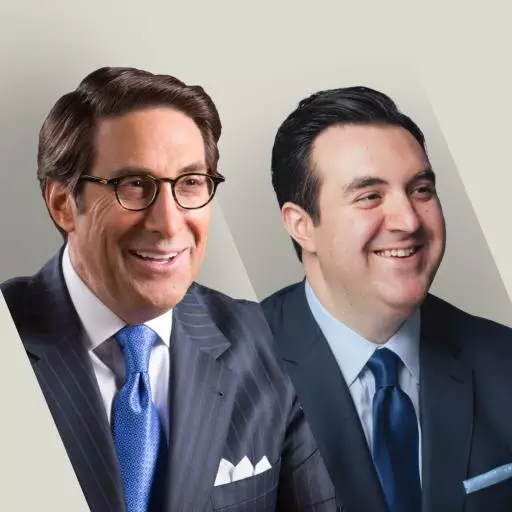
Logan Sekulow and Will Haynes are joined by Jeff Ballabon to discuss the US readying for an attack order from Trump in Iran.
Logan Sekulow: Welcome to Sekulow. We're live. Thursday, once again. We made it to another Thursday. We usually say that on a Friday. That's how the weeks work, though. I know. Normally you get to Thursday if you start at Monday. But it feels better the closer we get to the weekend. You're one of those guys, just living for the weekend. Weekend warrior Logan. My kids every morning, I feel like when they get up for school, there's only one day left till we get to the weekend. So maybe that's the world I live in.
Welcome to Sekulow. Phone lines are open for you at 1-800-684-3110. On a little bit more serious news, there is some breaking news we're going to be covering and that is the US is certainly building their military presence and they are starting to really posture for a potential military strike in Iran.
The US has warned this time after time, but maybe things are actually about to happen. There has been major concern over the last few weeks that things have softened and quieted down and that maybe we would not see that regime change that a lot of us hoped for, and a lot of us hoped for change in Iran. But the US seems to not be taking this lightly, once again amping it up and really being fully ready to go once the orders are made.
Will: That's right. So what we're hearing now is that the US military is ready to conduct strikes on Iran as soon as this weekend. They are waiting for the final order from the President. We are witnessing the largest deployment of air power to the region since the 2003 invasion of Iraq.
The carrier groups, also the positioning of assets, whether it be cargo planes, whether it be fighters, whether it be refueling planes, or just planes that are taking military hardware over, this is a buildup that is not just a posturing thing. This is something that is a large scale, like I said, has not been this large of a deployment of military resources since the 2003 invasion of Iraq.
So they are at least forecasting something big would be coming if this were to play out. President Trump has also said that there's basically a 10-day deadline now that Iran has. Remember, he gave a 40-day deadline back last year. That passed. And then there was some time of thinking maybe he's not going to do anything, and then we saw that surprise attack. He said a 10-day deadline, but that could be even earlier, basically saying if these negotiations go nowhere, then he is willing and able to make this order go forward of an attack, what would appear from the buildup, a massive strike on Iran.
Logan Sekulow: The Trump administration is if nothing but surprising. We know this, as Will said. It's happened before where threats have been made, where it feels like tension has been building, then goes quiet. Then one day we wake up to a breaking news item. We wake up to an item that a country has been attacked or that a bombing or an air raid has happened. Look what happened even in Nigeria. These things that felt like they were given deadlines, the deadlines had passed, it felt like it quieted down, and the Trump administration acts.
Now with Iran, we know if this happens anytime right now, they're essentially having the warning. Unlike a lot of these countries, they have been given the warning. Our troops are there and ready. What do you think about this? 1-800-684-3110. Jeff Ballabon from ACLJ Jerusalem is actually going to be joining us in studio. So we're going to have him in studio. Rick Grenell is going to be joining us a little bit later. If you want to hear expert opinions on this, stay tuned.
But always we want to hear from you as well. That is at 1-800-684-3110. Of course, the US and the ACLJ has always been involved with our support of the Iranian people. The ACLJ and the ECLJ appear at the UN Human Rights Council. We're always involved in different ways. Of course, we have our offices in Europe and Jerusalem, and you're going to hear from Jeff Ballabon. If you want to support those in the ACLJ work around the globe, I always like to promote it. I know sometimes it's a little bit of a hard sell, but if you understand the importance of the global side of the ACLJ, I think it would be great.
So I encourage you to go to ACLJ.org and make your donation today. When you donate to the ACLJ, you're also supporting the work we do internationally. We cannot stay silent when these moments happen, everyone. Sign the petition also at ACLJ.org/sign. We'll be right back.
Guest (Male): The challenges facing Americans are substantial. At a time when our values, our freedoms, and our constitutional rights are under attack, it's more important than ever to stand with the American Center for Law and Justice. For decades now, the ACLJ has been on the front lines, protecting your freedoms, defending your rights in courts, in Congress, and in the public arena. And we have an exceptional track record of success.
But here's the bottom line: we could not do our work without your support. We remain committed to protecting your religious and constitutional freedoms. That remains our top priority, especially now during these challenging times. The American Center for Law and Justice is on your side. If you're already a member, thank you. And if you're not, this is the perfect time to stand with us at ACLJ.org where you can learn more about our life-changing work. Become a member today. ACLJ.org.
Logan Sekulow: Welcome to the all-new ACLJ app. Expert analysis and insight Big Tech can't censor. Customize your news and get real-time alerts on the issues you care about. Advocacy is now at your fingertips. Take action, make a difference, support the causes you care about with just one tap. Be the first to know. Breaking news alerts sent straight to your inbox. Everything you need, all in one place. Stay informed, stay empowered. Download today.
We are so excited to announce the ACLJ's brand-new app, completely redesigned to provide you with the best tools available to partner with us at the ACLJ. You can watch the daily Sekulow program, sign the petitions, customize your ACLJ membership experience, donate with the click of a button, and receive up-to-the-minute critical updates that the mainstream media can't censor. Just scan the QR code on your screen or go to your phone's app store, search ACLJ, and click install. It's that simple.
Welcome back to Sekulow. We do have some phone lines open for you at 1-800-684-3110 as the mounting pressure with the potential war with Iran starts to bubble up more and more as President Trump and the troops now are getting in place or are in place. The largest, as Will said, since the war in Iraq. So what does that look like? And how do you feel about it? 1-800-684-3110. Let's hear from President Trump to start this off, and then I want to open the questions and comments up as well.
Will: That's right. This was at the Board of Peace meeting today where he was giving comments and basically saying that Iran could be a part of this historic peace, this era of peace that we're seeing in the Middle East. Instead, they're posting things like if you get slapped in the face, you're not going to be able to stand up. Big threat. Let's go ahead and play bite one from President Trump just this morning.
Donald Trump: It's time for Iran to join us on a path that will complete what we're doing. And if they join us, that'll be great. If they don't join us, that'll be great too. But it'll be a very different path. They cannot continue to threaten the stability of the entire region and they must make a deal. Or if that doesn't happen, I maybe can understand if it doesn't happen. It doesn't happen, but bad things will happen if it doesn't.
Logan Sekulow: Bad things will happen if it doesn't. President Trump also said essentially you're going to be finding out over probably the next 10 days if we have to make a meaningful deal, otherwise bad things happen. Again, 10-day warning, roughly. In President Trump fashion, it's a blurry deadline, which often comes with an attack when you're not expecting it.
Will: Well, and the reality is, I think that they will know or probably already know whether or not the Iranians are willing to make a meaningful deal. You're also having this two-sided moment with Iran. This is something we're going to talk to Rick Grenell about later, but where you have the Foreign Minister who is playing the diplomat role, who is having these negotiations with the United States mediators here. And then you're having the Ayatollah and the mullahs who are posting things and making statements which are very much in the saber-rattling "we will fight you" kind of demeanor.
I also want to play this Iranian Foreign Minister that gave an interview just yesterday, talking about the kind of deal they would want. It's bite six, and it's once again the same language that we've heard from the Iranians back when President Obama negotiated a bad deal with them. So let's go ahead and play bite six and then we'll talk about it.
Guest (Male): Yes, we are in favor of a deal, but a fair and balanced deal. The problem is when Americans, the current administration, talk about a deal, in fact, they want to dictate what they want. And this is what we experienced as recently as two months ago in New York. We are ready for negotiation, but not for dictation. We are ready to go for a deal, but for a fair and balanced deal, not a one-sided deal.
Will: And once again, they talk about we want civilian use nuclear power. They have nuclear power plants in Iran where zero of the nuclear material used for those power plants come from their own program. They buy that from the outside. This is once again him sounding like a rational, reasonable actor here and saying, listen, we just don't want to be told what to do. We believe in Iran first. They're trying to use that same language that maybe will even speak to an American audience that may give bad polling numbers against an Iran strike.
Logan Sekulow: We know the truth, but we also know that they're not wrong in the sense that the American people, specifically online, can be very easily manipulated. If I start seeing people that are pro-current regime in Iran walking around, and there have been some, but it's been fairly minor. People who are purely uneducated on what's actually happening in that country. Speaking of which, I want to go to Camilla who is calling from Oregon on line one. Camilla, go ahead.
Camilla: Hi. I'm old enough to have actually been in Middle Eastern studies in 1978 at the Iranian revolution. Love the Iranian people. My professor was ready to take us to visit the country. At that time, what ensued, the lack of asking and consulting experts on this ancient culture was horrific. We had professors there at Portland State that were ready to help them with their questions and all the incredible ignorance of the American culture to not consult with them and not understanding the people.
Now, I am a believer that voted for Trump, but and I do acknowledge that the difference between this endeavor and going into Iraq and Libya and Afghanistan and deposing dictators for people that have never experienced a Western freedom like the people of Iran. Of course, they were Western, the hijab was actually outlawed at the time that that happened. So I understand that there's a difference. But I just live in terror of us going in, jumping in again.
Logan Sekulow: Camilla, it's not an unwarranted concern. I think the fallout from the war on terror, which by the way, most of us supported, and I would still say that in general supported what happened with the war on terror. I don't know if I support the length of time, a lot of the exit strategy, if you will, we heard that a lot. I think what happened was maybe handled improperly.
But that being said, I know for a lot of people in your generation and now in my generation because my generation grew up as that was our teens to our late 30s was the war on terror officially. It was a lifetime. And now to potentially feel like we're restarting that and when you do see this kind of military operation start coming into play, you can't help but have those flashbacks.
But we do need to remember what we're dealing with here and, like I said, you could take a little bit of this out of this. The ACLJ works on a global scale and there's a reason we work on a global scale because these issues are important. We live in a small world after all, if you will, and that has become even more and more true over the last decade and the last two decades since the birth of social media, since the way we're all able to communicate.
I mean, there are people from all over the world watching this show right now as we speak, live or taped later on. I hear from them all the time. We were lucky to be able to get coast-to-coast coverage on terrestrial radio when this show started 30 years ago. Now, anyone with Wi-Fi, anyone with internet connection, anyone with cell phone signal can hear and see us in real time. The world is very different now. We have to treat it as such.
Will: That's right. And when you also think about the context of what we're talking about with this Iranian regime, this is it is different than the war in Iraq. It is different than what that scenario was, as well as the leader that would be conducting this has a different philosophy on military action. You see what happened in Venezuela. You see what happened with ISIS. You see what happened around the world with Nigeria and even the first strike on Iran. The President doesn't seem to be wanting a prolonged boots on the ground type of conflict, knowing that the United States has the ability, the technology, and the might to be able to take out regime without necessarily having to go in and nation build.
Also knowing the context that Camilla even talked about, that this was a society with leaders that are still alive that remember the Westernized Iran that could help get in there. Now, there's going to be a power struggle if they topple the regime for sure. There's always the chance that once again something worse rises out. But we know the stated goal of the Iranian regime: death to Israel, death to America. We know that they use their proxy groups to kill Americans. We know they use their proxy groups to kill Jews and Israelis.
That this is a very different regime than what even we were told about Saddam Hussein. We knew that he was a bad guy, an evil guy. But this isn't even a they may have weapons of mass destruction. We know the nuclear program. We know that their uses for the nuclear program are not even for their own civilian use, that they don't use it in their own nuclear power plants. What do they do? They buy that from Russia, a good partner of theirs.
So if it were even what they tried to say it is, why are they not even producing nuclear material at the appropriate level to use in their own civilian use? So once again, these are not things that even the world is in disagreement on, on whether or not they are doing this and whether they have these ambitions.
So I do think that we are at a tipping point here. The buildup is significant. They are saying that they could strike as early as this weekend. They've gotten all the pieces in place, the strategies are being written, the battle plans. We now also see people like Thomas Massie and Ro Khanna that are going to try and block a military strike by the President. They're going to try and use congressional power and say no, you can't do this.
So there's a lot of discord at home that could also affect this. This is something that is worth looking at, worth paying attention to because it can affect the American people in many different ways, not just national security, economically, the political unrest it could cause at home. There's a lot of different angles to this. We'll talk more about it with Jeff Ballabon in the next segment, as well as Rick Grenell coming up later.
Logan Sekulow: Jeff Ballabon, usually remote from ACLJ Jerusalem, in studio today. So we're going to chat about this with him, the impact it will have on Israel, because obviously when you're dealing with Iran, there are certain people who really are paying attention to this and the Israelis are definitely paying very close attention. Of course, all of the connections, we'll get into that, so much coming up. I'd love to hear from you too. We have a few lines open at 1-800-684-3110. 1-800-684-3110 to have your voice heard on the air today. I would like to hear from you right now. Give me a call. Jeff Ballabon joining us next segment. Stay tuned.
Welcome to the all-new ACLJ app. Expert analysis and insight Big Tech can't censor. Customize your news and get real-time alerts on the issues you care about. Advocacy is now at your fingertips. Take action, make a difference, support the causes you care about with just one tap. Be the first to know. Breaking news alerts sent straight to your inbox. Everything you need, all in one place. Stay informed, stay empowered. Download today.
We are so excited to announce the ACLJ's brand-new app, completely redesigned to provide you with the best tools available to partner with us at the ACLJ. You can watch the daily Sekulow program, sign the petitions, customize your ACLJ membership experience, donate with the click of a button, and receive up-to-the-minute critical updates that the mainstream media can't censor. Just scan the QR code on your screen or go to your phone's app store, search ACLJ, and click install. It's that simple.
Guest (Male): For decades now, the ACLJ has been on the front lines, protecting your freedoms, defending your rights in courts, in Congress, and in the public arena. The American Center for Law and Justice is on your side. If you're already a member, thank you. And if you're not, this is the perfect time to stand with us at ACLJ.org where you can learn more about our life-changing work. Become a member today. ACLJ.org.
Logan Sekulow: Welcome back to Sekulow. Phone lines are open for you at 1-800-684-3110. Jeff Ballabon, ACLJ Jerusalem, joining us in studio, which is nice to have you here. Usually we're dealing with you on a screen here, so to have you here in the flesh, very cool. If you have a question or comment all the way also for Jeff and for what we're doing over in Israel, you can give me a call too at 1-800-684-3110. Of course, the conversation today really centered on the pending war, potential breakout of attacks in Iran. What does it look like? What does it mean? And of course, Jeff, I think one of the big questions is what does it mean for Israel?
Jeff Ballabon: Well, people first of all are pretty sure it's going to happen. I mean, it just really feels that way. Second of all, for Israel, what this means is that it's a new or ongoing two-front war, Lebanon and Iran. Iran at a distance because there's obviously space in between them, but Lebanon is a front that's very dangerous. Hezbollah, while it was very weakened by Israel in very spectacular ways, the pager operation, other work there, remains a threat and it's expected that it would be activated. Israel is quite certain that it has the capability to deal with both of those if America does in fact go to war with Iran.
Will: Well, and I think Jeff that is kind of the big question. And the fact that they were decimated, both Hezbollah, both Hamas and Hezbollah, as well as what we saw with the Houthis being contained more with the second Trump administration than they had been under Biden. And when you start to see is there the will of these proxy groups to stand up for Iran, to take their marching orders from the Ayatollah, should America come in with this massive show of force which is what the buildup's projecting?
We know that it was a spectacular surprise attack last June, but now this is a massive show of force. It is the largest air power deployment to the Middle East since 2003. Would that, and I know that's probably the military strategy and hope, but what is the thought, would these proxy groups decide maybe this isn't worth it? Maybe now is not the time and maybe we can live to see another day?
Jeff Ballabon: Look, this is really an all or nothing not just for the Iranian regime, but also for its proxies. And the Lebanese army really does not have the wherewithal to deal with it, to disarm them under the time frame that's been given. No, it's an absurdity and this is they've not only completely wrecked the country of Lebanon, which was once a Christian country and is now just a horror show and by the way, a beautiful country. But it's also made it impossible to live in the north of Israel and as their weapons have gotten increasingly long-range, in anywhere in Israel almost.
So there's a problem of Iran having several thousand, I think they say a couple of thousand ballistic missiles capable of reaching Israel. And the notion of them raining down 2,000 missiles in a desperate attempt to do as much damage as they can to the civilian population of Israel is a very real one and a very imminent one. So Israel obviously is paying incredibly close existential attention to what America is going to do.
But for America, and this is the problem, we tend to see this as not necessarily existential for us, but it really kind of is. They say death to America, they are a borderline nuclear power. Yes, it was severely degraded, but they're working with countries that are inimical to us that can be supplying them. They have been working to get intercontinental ballistics. So they are a threat directly to our homeland as well.
Will: Well, and here's the other angle to that, that is something we talk about here often, is what we're seeing even in the rise on the right with the anti-Semitism, the hatred of Israel. The narrative from the bad actors on the right if America does take decisive action against Iran, something that we've been talking about for a long time, knowing that they lie, they cheat, they steal, they were propped up by Obama, they were propped up by Biden.
That it's going to be played out on the not-so-dark corners of the right-wing internet that Donald Trump is just doing the bidding of the Jews in Israel and that this is wasting American treasure, potentially blood if there is any sort of conflict where Iran is able to take down a plane or able to shoot at a ship, that then they are going to blame Israel for this. Not understanding the history of it, how much it does affect American national security, knowing that Hezbollah trains in Venezuela, that the proxy of Iran is right at our doorstep and within the country to many levels as well. But how do we combat that next going forward? Because that's going to be the line: that once again President Trump is beholden to Bibi Netanyahu and is just doing his bidding at the expense of the taxpayer.
Jeff Ballabon: Sure. Listen, this is literally as old as the Bible. It's literally as old as Pharaoh's idea that the nation that comes in, this people, the small family that comes in and helps save Egypt from itself, then becomes the threat. He wakes up one morning and all of a sudden it's a threat. This has played itself out century after century for millennia, and it's happening here again. We see every time it happens in a culture, it's because a culture itself is tearing itself apart, and so they're looking for someone to blame.
This is a problem as an American. This is a problem for my family that lives here, my family for everyone who lives here, that there is a regime that is fully capable of wanting to kill as many of us as it can, that is willing to do it and they're at their endgame right now. We don't know what's going to happen with regime change.
Logan Sekulow: Yeah, I think a lot of people have a misunderstanding or maybe don't have a visual of what they're dealing with with Iran and some of these nations. You think of them as a small Middle Eastern country, we may be picturing some sort of version of Iran that's almost a cartoon. That's not what it actually is. This is a powerful organized crime, if you will, but it is a powerful nation that can do this kind of damage.
Jeff Ballabon: Yeah, it's the Persian Empire. I mean, it's not some small little Arab country. It is a Persian country. It's about 90 million people, they estimate. It's a huge country. It's a very sophisticated and advanced country that has been under the thumb of a brutal, hostile, anti-America regime now for decades and they are in their endgame.
Will: Well, and I think that's also what's so frustrating about those of us that have studied Iran for so long, that have watched how the Ayatollahs have, since the revolution, just completely taken advantage of such a brilliant culture, such a smart culture, historically a great culture. A lot of the story of Esther, that's the Persian Empire, the Persian king that she was married to. There is such beautiful biblical literature that tie in with this great culture that was completely taken away and hijacked by this theocratic death cult that is the Ayatollahs. And in knowing what could have happened in the modern era with that culture, with the Middle East, had it not been just completely controlled, as you said, by the Ayatollahs for so long.
Jeff Ballabon: Well, I mean, look at certain corners of America where that culture is becoming strong and is being controlled in tiny little pockets by that culture and their stated desire is to in fact do that to this country. So unfortunately, as you say, they do have a lot of people who are very influential, who are on the air, who get paid a fortune of money to push their line. They call themselves Americans, sometimes they call themselves Christians and nationalists, and somehow they seem like pagans and tribalists to me. They don't seem to care about Christianity or Christians or America or Americans.
And yet, unfortunately, they default to the story that it's the Jews' fault, blame the Jews, we don't want to die for them. Well, let me tell you something, right now Israel has done more to save Americans than America has in the last year by what it did, by paving the way to help destroy this regime that has been building up its arsenal to destroy America, not in hiding, saying it openly.
Logan Sekulow: That's right. Look, Jeff's going to stick with us. We're going to be joined by Rick Grenell next, and then we'll go back to dealing with this whole situation. Of course, we're going to discuss that with Jeff as well. Phone lines are jammed. There's one line open. You can call in. No guarantees you'll make it on the air today, but we'll try. 1-800-684-3110.
I think it's always important to hear the global aspect of this, and I think you need to do some research as well. It is very easy for us who even grew up in an era where Iran has been the Iran that we know of now our entire lives to kind of write it off. But you know the kind of impact it could have if you had true regime change for the better. And like Jeff said, you never know where it's going to end up. We have seen good and bad with regime changes over the years. We'll continue that discussion, though, coming up. Support the work of the ACLJ while you can at ACLJ.org. Second half-hour of the show right after this.
Guest (Male): For decades now, the ACLJ has been on the front lines, protecting your freedoms, defending your rights in courts, in Congress, and in the public arena. The American Center for Law and Justice is on your side. If you're already a member, thank you. And if you're not, this is the perfect time to stand with us at ACLJ.org where you can learn more about our life-changing work. Become a member today. ACLJ.org.
Featured Offer

Featured Offer
About SEKULOW
The American Center for Law and Justice (ACLJ) focuses on constitutional law and is based in Washington, D.C. The ACLJ is specifically dedicated to the ideal that religious freedom and freedom of speech are inalienable, God-given rights. In addition to providing its legal services at no cost to our clients, the ACLJ focuses on the issues that matter most to you — national security, protecting America's families, and protecting human life.
About Jay Sekulow
An accomplished and respected judicial advocate, Sekulow has presented oral argument before the U.S. Supreme Court in twelve cases in defense of constitutional freedoms. Several landmark cases argued by Sekulow before the U.S. Supreme Court have become part of the legal landscape in the area of religious liberty litigation; these cases include Mergens, Lamb's Chapel, McConnell v. FEC, Operation Rescue v. National Organization for Women, and most recently Pleasant Grove City v. Summum.
In 2009, Townhall Magazine named Sekulow to its "Townhall of Fame" and recognized him as "one of the top lawyers for religious freedom in the United States." In 2007, the Chicago Tribune concluded that the ACLJ has "led the way" in Christian legal advocacy. In 2005, TIME Magazine named Sekulow as one of the "25 Most Influential Evangelicals" in America and called the ACLJ "a powerful counterweight" to the ACLU. Business Week said the ACLJ is "the leading advocacy group for religious freedom." Sekulow's work on the issue of judicial nominees, including possible vacancies at the Supreme Court, has received extensive news coverage, including a front-page story in The Wall Street Journal. In addition, The National Law Journal has twice named Sekulow one of the "100 Most Influential Lawyers" in the United States (1994, 1997). He is also among a distinguished group of attorneys known as "The Public Sector 45" named by The American Lawyer (January/February 1997). The magazine said the designation represents "45 young lawyers outside the private sector whose vision and commitment are changing lives."
Sekulow brings insight and education to listeners daily with his national call-in radio program, Jay Sekulow Live!, which is broadcast throughout the country on nearly 850 radio stations. Sekulow also hosts a weekly television program, ACLJ This Week, which tackles the tough issues of the day. He is also a popular guest on nationally televised news programs on ABC, CBS, NBC, CNN, FOX News, MSNBC, CNBC, and PBS.
Contact SEKULOW with Jay Sekulow
jsekulow@aclj.org
http://aclj.org/
American Center for Law and Justice
PO Box 90555
Phone: 757-226-2489
1-800-684-3110
1-877-989-2255