
Sekulow


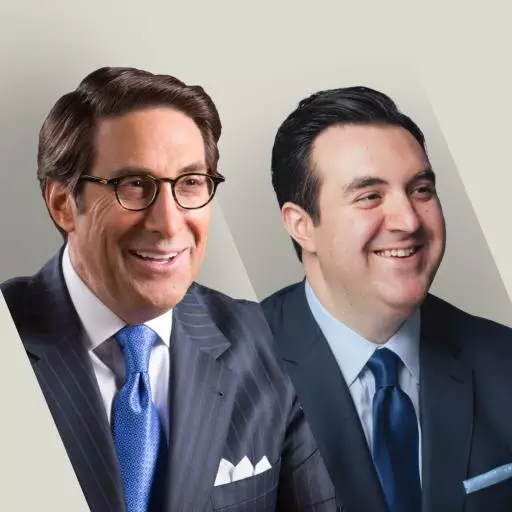
Logan and Jordan Sekulow are joined by Will Haynes to discuss the SAVE Act and what it means for Voter ID.
Logan Sekulow: Welcome to Sekulow. It's Logan Sekulow. Jordan Sekulow's in studio, Will Haines as always, and of course later on we'll be joined by Rick Grenell. It's a packed show. I'm getting all my papers in front of me to make sure that it's all lined up because it's a busy weekend. A lot of you have not been paying attention to the news, or maybe the news that you've been watching has been dominated by some of the stories we're going to talk about today.
I actually like that. I had a couple of people reach out and go, "Are you going to talk about the Super Bowl? Are you going to talk about Bad Bunny, Cat-Rat, TV?" No, we're probably not. I'll be honest. It's probably not what we're going to do today because what is really great with us is we're actually able to present to you when we think something is very important. The news is happening and a lot of times it doesn't dominate the ratings, and that's okay. That's what we get to do here on this show.
Today, you may have seen it, maybe it briefly popped up, that John Fetterman once again made some kind of statement. It's not been uncommon for John Fetterman to be siding more and more with conservatives over the last few years. But this one has to do with voter ID, a topic that has come up from time to time, and you may be wondering why it's in the news right now when John Fetterman said he maybe wouldn't be opposed to voter ID laws. Will, why don't you give us an update of why this has become a story right now and why he was even being asked to begin with?
Will Haines: A lot of news has been discussed recently, especially with all of these bills moving forward with government funding, about whether or not the SAVE Act would be presented before the Senate. That's the Safeguard American Voter Eligibility Act. It is something that was passed by the House in mid-2025 and has been waiting in holding in the Senate, whether or not they are going to move forward with it.
There's a lot of discussion on whether the Senate Majority Leader, Senator Thune, will even make some adjustments to the filibuster rule, into a talking filibuster as opposed to the legislative filibuster that we are so used to, where you have to get to the 60 votes to move anything forward in the Senate. A talking filibuster would be much more old-school. But this is something that has started to come up now as these bills are moving forward with funding because a lot of people are seeing this could be the time ahead of the midterms to roll out something like this.
This is something that has national voter ID. To register to vote, you have to have proof of citizenship. These are things that would safeguard American elections. It's something that the ACLJ and ACLJ Action have done action on. There has been a campaign with ACLJ Action to support this. But now you're starting to hear, at the same time that Chuck Schumer went out and called this Jim Crow 2.0, as they like to say whenever there's any sort of voter restrictions, they go back to the race debate and say that this is just trying to disenfranchise minority groups. But you're seeing the Senator from Pennsylvania, John Fetterman, say this isn't a radical idea. There's also polling to back that up that we will get into.
Logan Sekulow: We've got a little bit of time here. Let's play—and Jordan, I'll get your feedback—let's actually play this. This is Maria on Fox Business talking to John Fetterman.
Maria Bartiromo: What I don't understand, Senator, is why it is so difficult to get the SAVE Act into the portfolio and onto the floor. What's wrong with having an ID to vote? Chuck Schumer last week said if the SAVE Act even attempts to get to the Senate, it is dead on arrival. Why?
John Fetterman: Me as a Democrat, I do not believe that it's unreasonable to show ID just to vote. I would remind everybody that less than a year ago in Wisconsin, they added that to the constitution by a 63% passing, to put that in the constitution that you have to show ID to vote. They also elected a very, very liberal justice into their Supreme Court. So it's not a radical idea for regular Americans to show your ID to vote.
Logan Sekulow: I think you hear from John Fetterman like that, and you also think of the American people. A lot of you have to show your ID. I've never voted in my life in the states that I've lived in and not had to show some sort of proof of who I am, so it doesn't feel unnatural for people. Now, of course, those arguments come up. We can break those down and how the ACLJ and ACLJ Action has gotten involved.
And of course, if you want to become an ACLJ champion, it's a great way to do it right now. We've got big legal fights coming up, and of course, we're in court always. Become an ACLJ champion today. That's a recurring donor. Go to ACLJ.org and donate now. When we get back, we'll hear from Jordan and the rest of the team.
Narrator: The challenges facing Americans are substantial. At a time when our values, our freedoms, and our constitutional rights are under attack, it's more important than ever to stand with the American Center for Law and Justice. For decades now, the ACLJ has been on the front lines, protecting your freedom, defending your rights in courts, in Congress, and in the public arena.
And we have an exceptional track record of success. But here's the bottom line. We could not do our work without your support. We remain committed to protecting your religious and constitutional freedom. That remains our top priority, especially now during these challenging times. The American Center for Law and Justice is on your side. If you're already a member, thank you. And if you're not, well, this is the perfect time to stand with us at ACLJ.org, where you can learn more about our life-changing work. Become a member today. ACLJ.org.
Narrator: Welcome to the all-new ACLJ app. Expert analysis and insight Big Tech can't censor. Customize your news and get real-time alerts on the issues you care about. Advocacy is now at your fingertips. Take action, make a difference. Support the causes you care about with just one tap. Be the first to know. Breaking news alerts sent straight to your inbox. Everything you need, all in one place. Stay informed, stay empowered. Download today.
Logan Sekulow: We are so excited to announce the ACLJ's brand-new app. Completely redesigned to provide you with the best tools available to partner with us at the ACLJ. You can watch the daily Sekulow program, sign the petitions, customize your ACLJ membership experience, donate with the click of a button, and receive up-to-the-minute critical updates that the mainstream media can't censor. Just scan the QR code on your screen or go to your phone's app store, search ACLJ, and click install. It's that simple.
Welcome to Sekulow. Phone lines are open for you at 1-800-684-3110. I think we want to break down. In the first segment, you heard about the news. Of course, you have John Fetterman. That's part of the fun part of the story, which is you have Democrats who are actually siding with this voter ID moment where people are calling for it because it is not controversial to most Americans.
Jordan Sekulow: It's not at all. In fact, I want to first go through and tell you what counts as an ID because you may say, "Do I have to go and get some brand-new ID?" Likely, you've got one of these forms already, and if you don't, you've got plenty of time to get them. In many places, they will do this at no cost for people who meet certain economic standards. So don't be afraid if you think you don't have the money to do it. Likely your state still wants you to have an ID.
So you can use a Real ID that shows your citizenship. Usually, that would be on a driver's license. So updating a current driver's license, you can do that. A passport. If you have a current passport, that counts as a Real ID. It counts for these elections. A military ID with proof of U.S. birth, a government-issued photo ID showing U.S. birth, or other government-issued photo ID with a birth certificate, other proof of U.S. birth or naturalization documents. I mean, this is very broad.
This is the bill that should have bipartisan support, and I'll tell you why in a second. So zoom out. It also requires mail-in applicants to prove citizenship in person when they go and request those mail-in ballots so that you don't have that issue of what we thought was happening in 2020 where there were just too many live ballots all over the place.
Now, you ask yourself then, is this just Republicans supporting this and the Democrats think this is going to hurt the vote? Elected Democrats keep saying that, but when they actually poll Americans, 83%—not of conservatives, not of Republicans—83% of U.S. adults support requiring some form of government-issued photo ID to vote. That includes 71% of Democrats. That is an overwhelming number of Democrats when their party is the party taking the line that this is Jim Crow 2.0. That's how out of line they are with their rank and file.
Republicans, of course, are higher at 95%. Only 16% of American adults oppose it. And let me tell you, that's probably the group inside the Democrat Party that's running it right now. And the reason they oppose it is they will get less voters if you have to have ID. It's very interesting. They're fighting this so hard. Why would a group that wants free and fair elections be so opposed to making sure that the people voting are the person they say they are and they're voting in the right district?
Will Haines: And Jordan, I think we should play this. This is from Senator Chuck Schumer on Morning Joe. So we've got to set the stage here. It's not like he went on Fox News and decided to fight this. This is the questioner on Morning Joe, Jonathan Lemire, is asking Senator Schumer after those polls, with the context of the polls.
Now, traditionally on a policy issue like this, this isn't some human rights issue, this isn't some massive funding issue. This is something that typically a party would look to their base to gauge where the base is. If it's a 50/50 issue, maybe the national party makes a call what they think they want long-term. But when it's something that is so lopsided within your own party, traditionally you don't have the leadership of the party then come back and push back in this way. Let's listen to bite four when Chuck Schumer is asked by Jonathan Lemire directly about this.
Jonathan Lemire: There's a new Pew Research poll that 95% of Republicans but also 71% of Democrats like this idea. So why do you not?
Chuck Schumer: It's Jim Crow 2.0. And I've called it Jim Crow 2.0, and the right wing went nuts all over the internet. That's because they know it's true. What they're trying to do here is the same thing that was done in the South for decades to prevent people of color from voting.
Will Haines: So Jordan, the Senate Majority Leader there is taking the question about his own party and decides we're going to go with what we say whenever there is a bill that would try to strengthen the security of elections, go back to calling it Jim Crow. It's the same old tired talking points. But he doesn't even address what the question was of what do you say when you see 71% of your party agrees with this idea?
Jordan Sekulow: Let me just say this. Of those 71% of Democrats, let me tell you, that's a lot of Hispanic voters. They have photo IDs, the Hispanic Americans. They are working in jobs, they're working really hard. This is, again, same with African Americans. They again, they've got IDs. They're working hard.
This is about people who don't have legal citizenship in the United States, whether they're Hispanic or from another country, and getting them able to register to vote because they are domiciled here, so they can have an address, they can register, and if they show up, if they don't catch it when you register, all they have to do is show up and give that name. They don't have to show an ID, and so they don't have to worry about not having a legal ID in the United States.
Their green card could be expired, things like that. So because of that, I think this is just their play to continue to get this smaller percentage but still meaningful of these 10% of voters that, again, should not be voting in our elections and likely will be voting for Democrats because they're the ones standing in the way of this legislation.
Logan Sekulow: It's also sort of an old way of thinking. As we saw with President Trump in the last election, especially in South Florida and those areas, people that they start painting with such a large swath of people saying every one who is Hispanic is going to be voting one way or the other. We know that's just simply not the case anymore, that they're not as easily manipulated. People are not manipulated into exclusively voting for whoever the political party decides is who you should be voting for. It was always a disturbing racially bent trend. Now we are finally seeing a break from that a little bit, so it's not always going to be in their favor.
Will Haines: And I think we should play this once again because same line of questioning, this is coming from Jonathan Karl on ABC This Week talking to Congressman Schiff. This is bite one. He's basically asking the same question with those same polling numbers, and listen to the response.
Jonathan Karl: But in one recent Pew poll, 83% of adults support requiring photo ID to vote. 71% of Democrats favor requiring photo ID. Is that something that you can support? And if not, why not?
Adam Schiff: It's still going to be something that disenfranchises people that don't have the proper Real ID, driver's license ID, that don't have the ID necessary to vote even though they are citizens. This is another way to simply try to suppress the vote. And the last thing I think we want to do is discourage more people, more citizens from voting.
Will Haines: And once again, this line of argument that it's just going to suppress the vote. Okay, Democrats love spending money. Why not say, "Okay, we'll take this up, but we are going to fund a massive ID push to help Americans get IDs if they don't have them." If they are so concerned that this is such an obstacle, maybe they find a way to come together.
There's got to be another reason, Jordan, that they don't want these safeguards in the election when so much of their party does, because it would be just as easy for someone to say, "My concern here is that it may be too hard of a burden for people to get this." I think it's a silly argument to some degree, but say they put that out there as another obstacle. Then find a solution. Say, "Okay, fine. We will do this because we want free and fair elections, but we want money added to this to help states register voters that are citizens."
Jordan Sekulow: I think states would be happy to get these IDs out, not the driver's license, but the IDs out at easier than going to a DMV. So if this becomes the law of the land and we uphold this—and we see some states that do require it, by the way, some don't—but again, those states I think will happily provide centers so people can register. And guess who's not going to come?
People who aren't here legally. They're not going to risk being thrown out. So what does that do? That keeps voters who should not be voting in our elections because they don't have citizenship here. They have to have citizenship to vote. They can't just have a green card. They can't just be lawful permanent residents. They have to have citizenship. They're not going to show up to a government facility, even a makeshift one, if they know that they can be caught right now and be deported very quickly.
Logan Sekulow: And they play like you said of legal residents that are here that are not citizens. I mean, that's not uncommon. We have some that work on this show that are here legally, but are not citizens.
Jordan Sekulow: It's good for them too. Looking at you. No, I'm just kidding.
Logan Sekulow: You don't need to go to those places—you can obtain driver's licenses and things like that when you're permanent—but if we set up something that was just the ID card that we did for free basically, so that no one could come back and make that argument again, and you put them in all different communities, and you don't need very much information to show that you're here legally—they do that even for kids. You could get a non-driver's license photo ID.
Jordan Sekulow: You can still do that for adults.
Logan Sekulow: And then I think that solves everything. Then how can they argue against it if you offer it for free? But clearly, it is something that has been a sticking point for years. For some reason, that is something that they won't let go of to vote. That's their 16% cushion that they can get out to vote in close states. They get them registered, they figure out names on the polls that aren't being used, and then they say, "Go and tell them you're this." There's no voter ID check, and that's it.
Think about how often you do show your ID still in this country. I show my ID multiple times a week at multiple different things, none of them, by the way, as important as deciding who gets to become the leader of the land. It's just I don't think it's uncommon here in America. But I'd love to hear from you. Phone lines are open at 1-800-684-3110. Have your voice heard today. We get back also a big update in the world of the ACLJ. I'm excited to share with you again, 1-800-684-3110, and then I'm going to encourage you to support our work at ACLJ.org. But when we get back, we'll tell you exactly why and what's been going on even over the weekend. We'll be right back.
Narrator: Welcome to the all-new ACLJ app. Expert analysis and insight Big Tech can't censor. Customize your news and get real-time alerts on the issues you care about. Advocacy is now at your fingertips. Take action, make a difference. Support the causes you care about with just one tap. Be the first to know. Breaking news alerts sent straight to your inbox. Everything you need, all in one place. Stay informed, stay empowered. Download today.
Logan Sekulow: We are so excited to announce the ACLJ's brand-new app. Completely redesigned to provide you with the best tools available to partner with us at the ACLJ. You can watch the daily Sekulow program, sign the petitions, customize your ACLJ membership experience, donate with the click of a button, and receive up-to-the-minute critical updates that the mainstream media can't censor. Just scan the QR code on your screen or go to your phone's app store, search ACLJ, and click install. It's that simple.
Narrator: The challenges facing Americans are substantial. At a time when our values, our freedoms, and our constitutional rights are under attack, it's more important than ever to stand with the American Center for Law and Justice. For decades now, the ACLJ has been on the front lines, protecting your freedom, defending your rights in courts, in Congress, and in the public arena.
And we have an exceptional track record of success. But here's the bottom line. We could not do our work without your support. We remain committed to protecting your religious and constitutional freedom. That remains our top priority, especially now during these challenging times. The American Center for Law and Justice is on your side. If you're already a member, thank you. And if you're not, well, this is the perfect time to stand with us at ACLJ.org, where you can learn more about our life-changing work. Become a member today. ACLJ.org.
Logan Sekulow: Welcome back to Sekulow. We do have a few lines still open at 1-800-684-3110, and I will get to your calls here in just a minute. Because the work of the ACLJ continues. Will, this is a big update that's coming out of another one of those shocking moments, another one of those very sad state of affairs where the arguments have to be made that are still on the side against protecting the unborn. They get more and more disturbing and more and more like living in a world of unrealistic beliefs here that you really just have to hear it for yourself. So this is coming from Planned Parenthood.
Will Haines: That's right. So as a little background for everyone, the ACLJ and many of our attorneys were deputized by the Attorney General of Missouri to assist in this case where Planned Parenthood was suing the state for some of the requirements within their limitations and licensing issues that they had restricting the abortion industry. And that's what Planned Parenthood saw it as, and they were challenging some of these things like normal health and safety issues within a surgery room, things of that nature.
They were challenging these what they saw as limitations on the access to abortion under a ballot initiative where the people of Missouri enshrined a right to abortion under the state. So that's where this all comes from. Planned Parenthood gets the right to abortion in the state through the people of Missouri and then immediately starts going after common-sense laws that govern and regulate the abortion industry.
And our attorneys—and I spoke with one of our attorneys at length on Friday getting a download of everything that happened in this two-week trial. It was a bench trial before a state judge. But some of the most egregious things—as Planned Parenthood always says they speak for women. They had zero witnesses that were women from the state of Missouri to speak about how these laws were and these very normal things were harming them and their access to abortion.
On the contrary, the state and our attorneys at the ACLJ assisting with that had many women who had been harmed by unregulated abortion practices in the state of Missouri, and they were actually speaking for women of Missouri. But some of the shocking things—because you know we called this the trial of the century because we know now this was one of the first cases like this where Planned Parenthood got to trial challenging these regulations of their industry post-Dobbs.
And their experts that they had testify—one was pushing back at some of the issues with the concept of fetal pain by arguing in court—just listen to this. That's always been a point of discussion. And look, for those who are wanting to hear back about Fetterman and the election and voter ID, we're going to get back to that. Don't worry. I see some of those comments coming in. We will get back there just a moment. But fetal pain is something that we've discussed many times before. It's very proven. You can see it happen in the womb. But they're claiming maybe the most ridiculous stand.
So their doctor that they had testify in court was maintaining the position that fetal pain does not exist because a baby in utero cannot be conscious of the pain and cannot express it, cannot communicate the pain. So therefore, they took this line of questioning down the line and said, "Well then, would you say the same thing about maybe a one-year-old or an infant that has been born?"
And they maintained the same position. The doctor was saying that a one-year-old—that it could go up to one to two years old—cannot be conscious of the pain and cannot adequately communicate that pain. Therefore, the concept of infant pain is therefore not a real thing. This is what Planned Parenthood, claiming to speak on behalf of women of Missouri, is arguing.
Logan Sekulow: Medical science. I mean, anyone who's had a child, a one-year-old or a two-year-old or a three-day-old who's received a shot, knows they feel pain. Anyone who's had a kid fall knows they feel—I mean, this is so—I can't even believe that I'm even making this excuse or having to make this argument, but this is the distortion of all of it. We always say that, but it's just true. Because when it comes down to these moments, it's taking what should be what everyone knows. Every parent, every person who has ever dealt with a baby before knows how this works, and they treat you like you're an idiot.
Will Haines: And once again, this same doctor also was questioned about viability. And here's where their logic was, is that you can't know viability basically ever. In that if a baby dies post-birth, then it was not a viable pregnancy. So taking a not-ignoring all circumstances, but that if a child, an infant even dies in childbirth, that wasn't a viable pregnancy ever. It makes no sense, the logic arguments. To what's even grosser, though, from these same doctors who testified—this is Dr. Stephen Ralston, look him up because this is a doctor who believes that toddlers do not feel pain.
Jordan Sekulow: Now, anyone who has a toddler or has had a toddler, they feel pain. And they're actually very sensitive when they're learning to walk. Sometimes they laugh when they fall over, sometimes they don't and cry. Why would they cry if they don't feel anything?
Logan Sekulow: Again, it's like a dumb argument that we're having to even—I mean, they have pain receptors at that point. If you pinch them, they feel it. If they're hurting, they tell you.
Jordan Sekulow: They may not be able to articulate why or what hurts. So if they get pinkeye or chapped lips or they're not—you don't think that that is their body showing them that they feel pain? It's a way for their body to tell you because they can't speak yet.
Logan Sekulow: It's how the argument of viability falls apart when you're like, "Well, what is viability?" because viability would be like, "Okay, so if you—" what viability is to them is that they can feed themselves and clothe themselves.
Jordan Sekulow: Like a 10-year-old?
Logan Sekulow: I don't even know if it's that. I think it's someone who can drive a car and fully take care of themselves. Anything other than that, they feel like can be disposed of. Which is disgusting.
Jordan Sekulow: It is, and look, but the ACLJ or ACLJ Action, we're going at it. That's who you're up against. And this is not how gross they are.
Logan Sekulow: And this is now before the judge. There's post-trial brief. This was a bench trial. Obviously, they challenged the statute as different counts. So there's many different ways this could fall, but one, I think pray for the wisdom of the judge in this, that the arguments of ACLJ attorneys and the Attorney General's office of Missouri landed with that judge.
Because once again, when Planned Parenthood has the comfortableness behind a courtroom door, knowing that this isn't televised, this is a state court, they can get in there and use these witnesses. These are witnesses I'm sure they take all around the country anytime they're fighting something like this. They know that this isn't going to make headline news.
They're comfortable putting witnesses on the stand making these arguments that are honestly in contrast with what they argue is their position on their website. If you take the slogans of Planned Parenthood—caring for women and believing them—they didn't put a single citizen of Missouri that would be harmed by these laws. As a matter of fact, it was only the state who could show how the practices of Planned Parenthood are detrimental to the health and wellness of women of that state.
It's just a gimmick. It's just a gimmick. Don't fall for their gimmick. We know you don't, but sadly, we know a lot of people do. And with that, we've got one minute left in this first half hour. We will be back for a full second half hour if you don't get us in your local station or however you're watching.
Make sure you join us. We're streaming live on ACLJ.org, YouTube, Rumble, however you get your podcast, we're there live 12:00 to 1:00 PM Eastern time. If you're listening to this later, we may have already done it. Go back, listen to the second half hour because it's going to be packed. Rick Grenell is going to be joining us. But look, this is the time to stand up, be a part of the ACLJ right now.
And what I'm really asking you to do this week is to become an ACLJ champion. There's thousands and thousands of you that give, and you know how important that is. If you give one-time gift, that's fantastic. There's a core group of you, only about 20,000, that give in a recurring monthly way. And look, that could be five dollars, that could be 500 dollars. It can be whatever you want it to be.
Everyone who decides they want to become a monthly recurring donor, we label you ACLJ champions. People come up to me in the street and say, "I'm a champion." You know how happy that makes me? Because you are one of the leaders in our fights to defend life, liberty, constitution, freedom, faith, all of the things that we hold important. We'll be right back. Second half hour coming up in less than a minute.
Narrator: For decades now, the ACLJ has been on the front lines, protecting your freedom, defending your rights in courts, in Congress, and in the public arena. The American Center for Law and Justice is on your side. If you're already a member, thank you. And if you're not, well, this is the perfect time to stand with us at ACLJ.org, where you can learn more about our life-changing work. Become a member today. ACLJ.org.
Featured Offer

Featured Offer
About SEKULOW
The American Center for Law and Justice (ACLJ) focuses on constitutional law and is based in Washington, D.C. The ACLJ is specifically dedicated to the ideal that religious freedom and freedom of speech are inalienable, God-given rights. In addition to providing its legal services at no cost to our clients, the ACLJ focuses on the issues that matter most to you — national security, protecting America's families, and protecting human life.
About Jay Sekulow
An accomplished and respected judicial advocate, Sekulow has presented oral argument before the U.S. Supreme Court in twelve cases in defense of constitutional freedoms. Several landmark cases argued by Sekulow before the U.S. Supreme Court have become part of the legal landscape in the area of religious liberty litigation; these cases include Mergens, Lamb's Chapel, McConnell v. FEC, Operation Rescue v. National Organization for Women, and most recently Pleasant Grove City v. Summum.
In 2009, Townhall Magazine named Sekulow to its "Townhall of Fame" and recognized him as "one of the top lawyers for religious freedom in the United States." In 2007, the Chicago Tribune concluded that the ACLJ has "led the way" in Christian legal advocacy. In 2005, TIME Magazine named Sekulow as one of the "25 Most Influential Evangelicals" in America and called the ACLJ "a powerful counterweight" to the ACLU. Business Week said the ACLJ is "the leading advocacy group for religious freedom." Sekulow's work on the issue of judicial nominees, including possible vacancies at the Supreme Court, has received extensive news coverage, including a front-page story in The Wall Street Journal. In addition, The National Law Journal has twice named Sekulow one of the "100 Most Influential Lawyers" in the United States (1994, 1997). He is also among a distinguished group of attorneys known as "The Public Sector 45" named by The American Lawyer (January/February 1997). The magazine said the designation represents "45 young lawyers outside the private sector whose vision and commitment are changing lives."
Sekulow brings insight and education to listeners daily with his national call-in radio program, Jay Sekulow Live!, which is broadcast throughout the country on nearly 850 radio stations. Sekulow also hosts a weekly television program, ACLJ This Week, which tackles the tough issues of the day. He is also a popular guest on nationally televised news programs on ABC, CBS, NBC, CNN, FOX News, MSNBC, CNBC, and PBS.
Contact SEKULOW with Jay Sekulow
jsekulow@aclj.org
http://aclj.org/
American Center for Law and Justice
PO Box 90555
Phone: 757-226-2489
1-800-684-3110
1-877-989-2255