
Sekulow


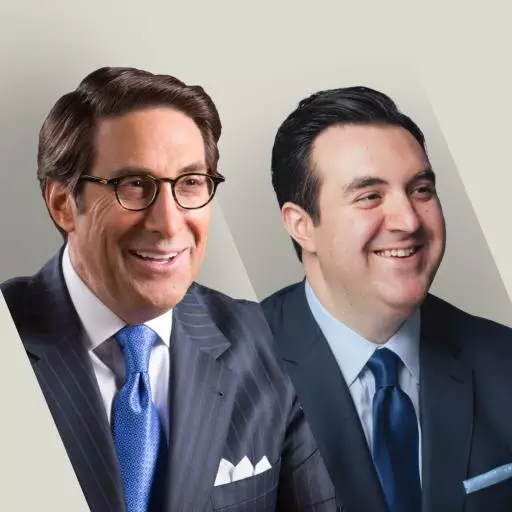
Logan Sekulow and Will Haynes break down Iran bracing for a critical showdown with the US.
Logan Sekulow: Welcome to Sekulow. Phone lines are open for you at 1-800-684-3110. It’s a Thursday, Will.
Will Haun: It is. Happy Thursday.
Logan Sekulow: We’ve got Rick Grenell joining us a little bit later. In the US and Iran, you may have tuned in seeing that headline on our YouTube channel, the on-again, off-again relationship between the US and Iran. Well, it is like a Hallmark movie with bigger consequences.
Will Haun: That’s right, and not the Hallmark movie that we probably would want to watch around the holidays. But what you’re seeing now is this get-together between the Iranians and the United States that was supposed to be occurring on Friday. Yesterday, the United States was calling off their plan to be meeting in Istanbul with Iran.
Logan Sekulow: We need to back it up for those who maybe weren’t listening earlier in the week. There was conversation between President Trump saying, "Look, we’re going to meet, we’re going to actually sit down and do this because Iran had started to really kind of push saying a regional war is bound to happen if we don’t really come up with a deal." America kind of called their bluff a little bit.
Will Haun: And that is with the US having an entire carrier group very close to the Iran region where they could launch an attack from. Iran, as you mentioned, warned this could spark a regional war, and they were supposed to have a sit-down, a face-to-face negotiation between the Iranians and the United States in Istanbul this Friday, tomorrow.
Yesterday, the Iranians started to make changes to the plan saying, "No, we are no longer going to meet in Turkey; we want to meet in Oman." We no longer want it to be about the nuclear issue plus human rights, plus ballistic missiles, plus our support of the proxy groups, Hamas, Hezbollah, the Houthis in Yemen. We just want it to be about the nuclear issue.
So the United States said, "Okay, fine, we’re not meeting. By the way, we told you, if we don’t come to a deal on Friday, or at least get somewhere, you know what’s coming. We’re going to bomb you." And then after major pushback from regional allies that probably don’t want a war with Iran in their backyard, the US has now agreed that they will move the location from Istanbul to Oman.
Now, also think about that: the security involved, all of the logistics of moving to an entire different country where your talks were supposed to be held—Turkey—to a different country—Oman—in just a couple days. That’s a headache at least. It’s a game from the Iranians. But the US has said they agreed to hold meetings in Oman and that it will be respectful to the allies in the region in order to continue pursuing the diplomatic track.
Now, what we don’t know is what the agenda is going to look like. Will the US still insist that the human rights—the protesters, that’s what all of this stemmed from—as well as the support for the proxy groups and the ballistic missile program, are those things going to remain on the agenda tomorrow?
Logan Sekulow: We know, look, here at the ACLJ, we’re involved in this directly. We’re involved in it because there’s a lot of Iranian Christians, a lot of Iranian Christians that are under persecution. This week we actually filed a submission at the UN Human Rights Council on Iran to stop the persecution of Christians and call out Iran’s human rights abuses. Of course, Jordan was a featured panelist earlier this week in the International Religious Freedom Summit in Washington, D.C.
All of this happens because the ACLJ gets involved. So when you hear us bring up these topics, it’s not always what the number one story is in the news. Of course, a lot of people, the number one story right now is the Guthrie family. Of course, her family and all of that is in our prayers and we are monitoring it as the world kind of holds their breath on it. But the ACLJ is directly involved in some of these international affairs that are happening.
And while it may not always be the number one story, we’ve got to make sure we get the information to you because it is life-or-death situations in terms of the Christians and really honestly just the people of Iran. They are on the verge of a true revolution. What does it look like now? What is the future for the people there in terms of their freedom? We’re going to dive deeper into that.
I’d love to hear from you. 1-800-684-3110. I know that sometimes it can get a little heady; you may not even know how to ask a question about it. Hit us up also in the comments. If you don’t know what to comment, let me know where you’re watching from. I’d love to read that during the break and see where everyone’s at worldwide on YouTube or on Rumble or of course at ACLJ.org. If you want to support the work of the ACLJ, great time to become an ACLJ Champion. Do it today at ACLJ.org.
I think you should hear from President Trump himself on this situation. I know a lot of you are just chiming in. I know there were some technical issues maybe on our YouTube stream, so for those of you, hopefully you can hear us and we’re back and everything is good. We didn’t have anything on our end, but we saw a lot of you did. So I’m sure that there were some problems there. Phone lines are open at 1-800-684-3110. But let’s hear from NBC News; this was a conversation with President Trump just yesterday. Byte one.
Guest (Male): Should the supreme leader in Iran be worried right now?
Donald Trump: I would say he should be very worried, yes, he should be. As you know, they're negotiating with us.
Guest (Male): I know they are, but the protesters have said, "Where are the Americans who promised them we'd have their back?" Do we still have their back?
Donald Trump: Well, we've had their back. And look, that country's a mess right now because of us. We went in, we wiped out their nuclear. So that's the point. If we want peace in the Middle East, if I didn't take out their nuclear, think of it, if we didn't take out that nuclear, we wouldn't have peace in the Middle East because the Arab countries could have never done that. They were very, very afraid of Iran.
Guest (Male): Yeah, yeah, yeah.
Logan Sekulow: Interesting, almost antagonistic approach from NBC News a little bit there, or just more maybe conversational. But pushing President Trump on these issues saying, "Well, the people are saying where is the United States?" I do think there’s a discussion point to be had of how far you take this. And I think a lot of Americans—and we’ll ask Rick Grenell about this later on because Rick has been one of those original voices within the Trump administration.
He's a guy who worked for the Bush administration during the war on terror, saw the good and the bad that came from that and very much was in favor of the way President Trump kind of pitched the "no new wars" and that feedback. So when you have a moment like this where President Trump, and I quote, said, "He should be very worried," that does throw a little bit of a different plan for people who aren’t expecting. Now again, doesn’t necessarily mean there’ll be the boots on the ground kind of war effort happening.
Will Haun: Well, and here’s what I want to hear from the audience about. Because if the President and the negotiators go to Oman and it is only about the nuclear issue, all of this stemmed from the protests on the ground that we saw. That is why Iran, as the President said, "If you start killing your civilians, we will get involved." That’s where all these getting back to the negotiating table stemmed from.
And remember, the President and his team were negotiating with the Iranians in the summer of last year, spring and summer. He gave them a 60-day deadline to actually come to a deal. The Iranians kept moving the goalposts, as they tend to do to stall. And what did the President do? He bombed their nuclear facilities on June 22nd of 2025.
And remember what our press—and when you hear this reporter from NBC saying, "Should the supreme leader be worried right now?" On June 21st, The Atlantic wrote a piece by David Frum that was titled "What Iran Knows About Trump." And the subtitle was "The mullahs of Iran join the bet that Trump always chickens out." The next day, their nuclear sites were decimated by those B-52 bombers that went in Operation Midnight Hammer.
So I feel like the Ayatollah and the mullahs in Iran are coming to this negotiation with a different context. That being said, they’re still playing games, moving the site two days before, saying things are off-limits with negotiation. I feel like they should be a little bit more apprehensive based off their last round of talks. But here’s the question I have for our audience.
If the President agrees to only a nuclear issue negotiation, and they come out of this agreeing to get rid of their entire nuclear program, we want to know. The Iranians are patient because they will wait as long as they can to build up that arsenal and with their end goal of destroying Israel, destroying the United States if they can attempt that. Are you fine with sidelining the issue of the human rights for a more America First policy of like, yeah, they don’t have nuclear power, they can deal with themselves?
Or is it concerning that what got us here again is something that we have been calling for for a long time: the liberation of the Iranian people? We’ve been upset with what Obama’s deal did in propping up the regime longer. It was a terrible deal. But would you trade a non-nuclear Iran for at least a long time where they have to hit complete reset button, start at zero if they are wanting to build up a nuclear program? Would you trade that for leaving them in power for longer, or would you like to see a more aggressive campaign that ends up ousting the mullahs in that theocratic death cult?
Logan Sekulow: People ask about this, how do you monitor a foreign country like this when you say, "End your nuclear program?" We do send people, checks and balances, to do routine check-ins. There’s people who will be stationed there. There are ways to be a little more vigilant. However, I don’t trust that behind the scenes there’s not a way they’re working on these things; it’s not happening.
Personally, do I want to see us get involved in another war? Absolutely not. But do I think we should help the current situation there to maybe lead to what could be a good day for Iran when it has been so long? Again, a country that has been written off when just a few decades ago was a thriving, multicultural Western-ish society—maybe not Western, but closer to a Western society than a lot of what’s happening, maybe closer to a Saudi Arabia to what’s happening over there now.
I would love to see that. I would love to see the Persian people and the Iranian people be able to live in peace and actually thrive. Brilliant people who have contributed so much to our society in America that if they have a moment where this could happen, and I feel like this now gets on repeat where they get close and then, as Will said but in a different way, the reset button is hit and you still have this dictatorship in control and instead of seeing actual potential freedom being brought to these people.
Now I want to pivot very quickly while Will’s question is posed because I do want to hear from you about that. 1-800-684-3110. 1-800-684-3110. Call in; let us know your thoughts on this. What would you rather see: a relationship with Iran that ends their nuke program but doesn’t necessarily set their people free, if you will, or for us to get involved militarily that could lead to a better future for the people of Iran? There’s no wrong answer here. Give us a call at 1-800-684-3110. I’m going to pose that question later on to Rick Grenell.
Just to pivot slightly, and in the next segment we’re going to talk more about the ACLJ’s work, and I want you to hear a big update coming out of one of our cases that is one of those jaw-dropping moments when you see this in real time. You hear us talk about these cases, and when you actually see the clients, you actually hear them, it hopefully does change the way you feel about them, makes it feel a little closer to home.
But we have a call coming in. It has more to do with our conversation yesterday talking about Minnesota and Tom Homan and all that. And I want to go to it because Candy called in from Georgia yesterday; we weren’t able to get to her call. Let’s go ahead and take it though. Candy, go ahead.
Guest (Female): Yes, I like Tom Homan. I was taken aback at first when I saw that he was honored by President Obama, but that doesn't make him a bad person. He's doing a good job. And also Scott Bessent worked for George Soros, but he's doing a good job as well and maybe had a change of heart. I also like what Anne said yesterday that the ice is not melting. But real briefly about Iran today, I think that we should be involved militarily to free the people and get rid of the mullahs because they can't be trusted. And that's all I have to say.
Will Haun: Candy, I think that based off what I’m seeing on YouTube and Rumble—and I see when you gave the phone number, Logan, the lines have lit up, which we will definitely get to—but to that point, a lot of people on Rumble and YouTube are agreeing with you, Candy. One comment said, "If you take a murder weapon away from a murderer, they will find another weapon to use."
That basically the Iranians and their bad activities, especially with their proxy groups, them being behind the planning and execution of October 7th and what we see around the world, their attempts at assassination attempts on US soil, having fatwas out against our President, against Mike Pompeo who’s on this broadcast multiple times a week, their bad activity won’t end just by containing their nuclear program.
And even if President Trump can get the best deal ever where every single bit of nuclear material and nuclear infrastructure is taken out of their country, we know that just begins day one for them and they will find a way to start again because that is their ambition. That is their goal. So any deal that is a great deal of taking away that nuclear threat is still a delay.
It’s still kicking the can down the road as long as that regime is in power. The question is, is it worth it for the US to take that deal and not have to go more active militarily? And I think that’s what we’re going to hear from our audience while they feel, and I don’t know that I know which is better at this point.
Logan Sekulow: Phone lines are filling up, but there’s one open at least right now at 1-800-684-3110. I’ve only got a minute, so I’m not going to take a call in this segment, but in the next segment we’re going to take a bunch of them. Stay on hold if you’re on hold; let our phone screener do its job. Be patient. We’ll do our best to get to all of you.
Just give us a call as I said, 1-800-684-3110. If the phone is ringing, someone will get to you, so just give it there a minute. We’ve got two lines now open as we kind of go through it. Sometimes people don’t make it up or they hang up. Call, wait when the lines fill up, it takes time for our phone screeners to go through it, so give them a little bit of a moment.
I’m going to encourage you, and what I’m hoping is you see the next segment when we talk about the work of the ACLJ a little bit more and you see our clients first-hand. It’ll encourage you to not only give and support the work of the ACLJ financially, but maybe some of you can become ACLJ Champions, those that give on a monthly basis automatically, recurring. Of course you can cancel whenever, but it really does help us out. So right now I’m going to ask you to do that. Go to ACLJ.org, spend a little time. There may be a video in the break here where you’re going to see a little bit of that. So if you are watching, then you may have a bit of a preview of what we’re going to show. But again, these are our clients live and in action.
Welcome back to Sekulow. We’ve got a lot of calls coming in. We’re going to talk; we’re going to get to you. And I think we should. But I do want you to know the ACLJ team is hard at work. When you hear about what I said, our participation even in the support of Iranian Christians, but that is our worldwide efforts. That’s the European Center; that’s the ACLJ; that’s us at the UN. That’s Jordan at the International Religious Freedom Summit. These are big-picture, big-ticket items, if you will.
But just as important is the individual parent, maybe in a state like Kansas where you don’t think there’d be a lot of persecution going on for people because of their beliefs, or you wouldn’t believe that there’s a lot of pushback and hostility. But we’re not talking about anything normal; we’re talking about the public school system. And Will, a lot of people may remember this because we’ve been talking about it for the last few weeks.
Will Haun: That’s right, and it’s shocking when you’ve heard us talk about it, and it was shocking when we heard about the case. This is where there was a "Find Your Voice" assignment for sixth graders and individual students were told they could not put President Trump as a hero when they went up to write their heroes on the board, Charlie Kirk as a hero, even religious people.
The assignment starts, they go up to write their hero and then are reprimanded and told that can’t be your hero. Then we told you how it got worse, how they said, "Don’t tell your parents about this." They tried to handle it internally. But in Kansas, the Education Committee is debating a bill right now in the state legislature whether or not to try to fix this, to try to help protect the students' rights. And it all stemmed from this case and this client. Our client, the parent of the student, went and testified yesterday and Garrett, who is one of our attorneys, was there with her. And we have that testimony.
Logan Sekulow: I think you all have to see this. It’s just a couple minutes. But it gives you a real understanding of the emotion and the feel of these parents that are put in these really horrible situations. It’s different when you hear it from Will and I; of course we can tell you about it and maybe you think that we’re spinning things. Maybe you think that we’re riling you up to ask for support or that we’re not necessarily giving you 100% of the facts or maybe you just think we’re presenting it in a television-style way. Well, this is not for television; this is the real deal.
So I want you to watch this. It’s a couple minutes long. It is a testimony. Again, how long were we talking about this?
Will Haun: It’s about three and a half minutes.
Logan Sekulow: It’s about three and a half minutes. And I think it is important for you to see all of this in its entirety. Stay on hold if you’re on hold. We’ll get to you coming up a little bit later. But this is very important. This is the work of the ACLJ in action. When you support the work of the ACLJ, remember that this client we do not charge her a dollar to have our incredible legal team be a part of this and to help her. It is only because people like you support. So let’s take a listen.
Briann Vincent: My name is Briann Vincent. I'm here testifying in support of this bill because my daughter and her sixth grade classmates were censored for expressing their religious and political views at Marshall Elementary, a school in Eureka. As a result of this discrimination and the school's response, I had to withdraw all three of my children from the school. On October 28th, the guidance counselor gave students an assignment called "Find Your Voice." It should have been an empowering exercise; instead, it became a lesson in censorship. The impact on these children was immediate and the message was clear: "find your voice" really meant find the voice your teacher approves of.
But it gets worse. After meeting with the principal and counselor the next day, they addressed the sixth grade class. Multiple students, including my daughter, reported that the principal told them that in the future, they should bring concerns to school officials first and not to their parents. I questioned the principal about this statement. She suggested that I homeschool my children.
Guest (Male): If you listened to Miss Vincent's testimony about what occurred with her daughter, what is the recourse for that family other than pulling their children out of school, which is what was suggested to them? If what she says is legitimate and somebody said, "Go homeschool your kids," that's a legitimate concern. Now, I think she's taken the actions that she can. But to pass a bill like what we're talking about, what would it do to all the schools in the state of Kansas? I think she's doing what she feels is right and I can't make any other suggestions for her. It's unfortunate that the school board didn't stop it at where it was at. Thank you.
Logan Sekulow: Look, that’s sort of a highlight reel of what happened. We ran out of time to play the whole segment in full. When we get back in our second half hour, I’m going to play you the full testimony. You need to hear it in its entirety. So we had to cut it short a little bit for this segment, but know when we get back, we will do it.
When you even hear just the moments there from that mother, you see some of the passion that’s coming in here. Again, this is the real work of the ACLJ, the on-the-ground work our team is involved in, our legal team. Where you have a parent who doesn’t know what to do, who is told in the public school system, "Well, maybe your best bet is to homeschool your kids," as if that’s a luxury that everyone can afford.
Why? Simply because a kid wanted to state who their hero was. And look, they could have preemptively said, "We’re not talking about politics, we’re not talking about religion, we don’t want to ruffle any feathers here." And look, we probably would have said, "You know what, if the kid went up there and did the same and still said those things, maybe this is not where the ACLJ gets involved." This was post.
And of course after, then they said, which to me is the most egregious part, "Next time, come talk to us before you talk to your parents." This is where the public school system gets out of control. And look, I’d probably say the private school system does too. This is where academia and education gets out of control, where they think they can control the minds of your children more so than you even have the right to hear what’s going on in their classroom. But the ACLJ team is hard at work to make sure this doesn’t happen. And Will, it doesn’t stop there.
Will Haun: That’s right. And as you see, that mother who has the courage to go before a legislature and talk about what happened, and when her student is told, "Hey, you can’t do this," they go and talk to their parents, and what does the school say? "Don’t go talk to your parents. Talk to us first." The parents go forward and then they say to them, "Listen, if you don’t like this, how about you homeschool your kids?"
Which many people do because of situations just like this, and they’re applauded for that and we celebrate that, and the ACLJ has supported homeschool families where states have gone after them for decades. But here’s the problem: not everyone can do that. And not everyone that wishes they could and can’t do that then should be subjected to constitutional violations because of it.
Not everyone feels like they should be teaching their kids, they feel equipped to do—homeschooling is not something that’s just an option for everyone. I think that that is absurd. Not everyone is an educator, not everyone has that ability to do that, not everyone has the financial ramifications that come with homeschooling your kids because clearly that means someone’s got to be at home and not taking your kids to school and going and supporting your family financially. There’s so many things that it’s such an egregious moment again that it’s shocking, and you need to be a part of this team.
Logan Sekulow: We’ve got a second half hour coming up. It’s available on ACLJ.org, it’s available on YouTube, Rumble; we’re live always 12:00 to 1:00 PM Eastern Time. So make sure you’re always getting the full show. When we get back, we’re going to take some of your phone calls. A few people did drop off, so we do have some lines open at 1-800-684-3110.
But I’m going to encourage you right now, whether you think the ACLJ’s involvement in what’s going on in Iran is what’s important—of course it is—or maybe you think making sure the ACLJ team is available to that mother in Kansas who were told, "If you don’t like the way your public schools is treating their beliefs, go homeschool your kids, get them out of here." We’re not going to stand for that. Go to ACLJ.org today, become an ACLJ Champion. Back in less than a minute on ACLJ.org, however you get your podcast.
Featured Offer


Featured Offer
About SEKULOW
The American Center for Law and Justice (ACLJ) focuses on constitutional law and is based in Washington, D.C. The ACLJ is specifically dedicated to the ideal that religious freedom and freedom of speech are inalienable, God-given rights. In addition to providing its legal services at no cost to our clients, the ACLJ focuses on the issues that matter most to you — national security, protecting America's families, and protecting human life.
About Jay Sekulow
An accomplished and respected judicial advocate, Sekulow has presented oral argument before the U.S. Supreme Court in twelve cases in defense of constitutional freedoms. Several landmark cases argued by Sekulow before the U.S. Supreme Court have become part of the legal landscape in the area of religious liberty litigation; these cases include Mergens, Lamb's Chapel, McConnell v. FEC, Operation Rescue v. National Organization for Women, and most recently Pleasant Grove City v. Summum.
In 2009, Townhall Magazine named Sekulow to its "Townhall of Fame" and recognized him as "one of the top lawyers for religious freedom in the United States." In 2007, the Chicago Tribune concluded that the ACLJ has "led the way" in Christian legal advocacy. In 2005, TIME Magazine named Sekulow as one of the "25 Most Influential Evangelicals" in America and called the ACLJ "a powerful counterweight" to the ACLU. Business Week said the ACLJ is "the leading advocacy group for religious freedom." Sekulow's work on the issue of judicial nominees, including possible vacancies at the Supreme Court, has received extensive news coverage, including a front-page story in The Wall Street Journal. In addition, The National Law Journal has twice named Sekulow one of the "100 Most Influential Lawyers" in the United States (1994, 1997). He is also among a distinguished group of attorneys known as "The Public Sector 45" named by The American Lawyer (January/February 1997). The magazine said the designation represents "45 young lawyers outside the private sector whose vision and commitment are changing lives."
Sekulow brings insight and education to listeners daily with his national call-in radio program, Jay Sekulow Live!, which is broadcast throughout the country on nearly 850 radio stations. Sekulow also hosts a weekly television program, ACLJ This Week, which tackles the tough issues of the day. He is also a popular guest on nationally televised news programs on ABC, CBS, NBC, CNN, FOX News, MSNBC, CNBC, and PBS.
Contact SEKULOW with Jay Sekulow
jsekulow@aclj.org
http://aclj.org/
American Center for Law and Justice
PO Box 90555
Phone: 757-226-2489
1-800-684-3110
1-877-989-2255