
Sekulow


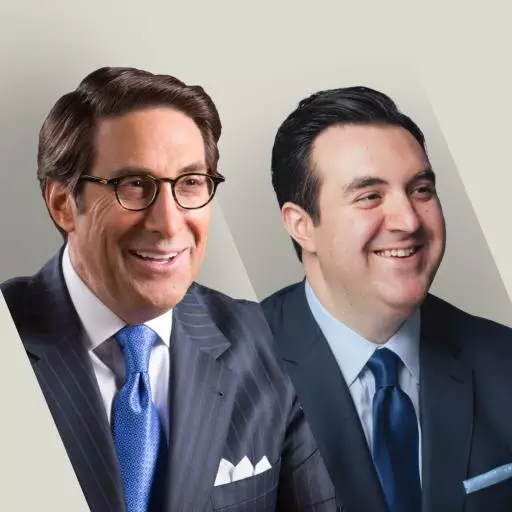
Will Haynes is joined by Jordan Sekulow live from Washington, DC to discuss Don Lemon's appearance on Jimmy Kimmel Live last night.
Will Haines: Today on Sekulow, Don Lemon goes on his media tour after his arrest. Keeping you informed and engaged, now more than ever, this is Sekulow. We want to hear from you. Share and post your comments or call 1-800-684-3110. And now your host, welcome to Sekulow. Will Haines here and I'm joined by Jordan Sekulow in our Washington D.C. studios.
We're going to get into this because Don Lemon, after being arrested late last week by the DOJ for violations of the FACE Act when he participated in that disruption of the church service in Minneapolis, has decided the best time to go on television is now to talk about it and tell his story. He went on Jimmy Kimmel last night which I know for certain had to have been a planned outlet for him to go on. Obviously, he mentioned, "If you want to make me into Jimmy Kimmel, that's fine," and then surprise, surprise, that's the show where he does his first interview post-arrest.
But Jordan, as we look at this, I think these are issues that we need to continue to talk about because the DOJ is prosecuting him under the FACE Act. This is something that at the ACLJ, we have been very critical of the law, although it is still the law, because of the way it has been weaponized against pro-life advocates for a very long time. Now we are seeing it being applied against the left, as you see what Don Lemon did. We can go over the indictment in the next segment as that came out late Friday. But now he is making this press tour trying to make it all about himself. We will see where it goes from there, but I want to get your weigh-in on this as we see him trying to play the victim card when we saw exactly what he did in that church.
Jordan Sekulow: Yeah, he wants to be like the reporter martyr. The truth is, Don Lemon was an activist that day. There are no bones about that. He went into the church. He didn't stay outside. And while the pastor was trying to get things under control with security because the police didn't enter either, Don Lemon tried to interview him live and put him on the spot.
So he took a lot of steps that had to coordinate with those protesters and that's what DOJ will have to show. They had enough to show to get the indictment, but they will then have to show that he coordinated with the protesters, knowingly was going to enter, and if you do that, you violate the FACE Act. As long as the FACE Act is the law of the land, Don Lemon should be treated just like any pro-life protester at an abortion clinic.
Will Haines: One of the interesting things here is now you're seeing members of the left, those very people who were fine with this being a law when it went after pro-life protesters, are coming out saying maybe this is unconstitutional. Maybe this law shouldn't exist. Now, I don't think that would save people from doing what they did in a church like what we saw in Minnesota. Obviously, there are trespass laws or other things that people can be charged with when they go and are violating someone's civil rights like that. However, this also could end up being a tipping point where we see something like the FACE Act challenged on its constitutionality. I want to get your take on that.
Jordan Sekulow: None of us like the FACE Act, especially in the pro-life world, because it's so open to interpretation. For instance, if you are causing any kind of distraction outside of an abortion clinic, that can be a criminal violation of the FACE Act. Well, who decides what is a distraction?
Now, if you have 300 people outside of a church banging a drum, that's enough to violate the FACE Act because we know that's disruptive noise going into the church—not road noise, not normal noise, not an ambulance going by. But all in all, if this wakes the left up to the fact that they put a law on the books that restricted free speech, there are still laws that would protect that church. We don't need the FACE Act, but so long as it's there, we should utilize it.
Will Haines: That's right, and we will talk more about this when we come back, including playing some of the sound from Don Lemon on Jimmy Kimmel last night. His description of his arrest. You're not going to want to miss that. But I also want to hear from you. Do you think that the DOJ pursuing charges against Don Lemon is the right move? Call me: 1-800-684-3110. That's 1-800-684-3110. And we'll be back with more in just a few moments, as well as some of the work that Jordan is up in D.C. working on right now. We'll be right back.
Welcome back to Sekulow. We're discussing the interview that Don Lemon gave last night on Jimmy Kimmel and we're going to play some sound from it in a moment. But I also wanted to bring up what is in the indictment because that came out after our broadcast on Friday where we talked about how we knew that he had been arrested in Los Angeles by the FBI and the Department of Justice.
But the way that it is written in the indictment, which was presented to a grand jury and the grand jury returned that indictment, is the fact that it's not just that he was there and recording. But when Don Lemon went into the church, he was taking direction from the organizer, according to the indictment, from the organizer of the protest, the disruption, the riot—whatever you want to label it. Taking direction of whom he should go interview from the church, whom he should go put on the spot. So there is coordination there.
Also, when he's with the pastor, in the indictment, it says that Don Lemon with two of the other protesters, one of them is a co-conspirator, another indicted party, two of these individuals went and boxed the pastor in. There was more coordination there when he is peppering the pastor with those questions. It's almost what we discussed on air, what we were almost looking at and predicting could be in there, that he got in the pastor's face. When the pastor was trying to leave, he would not let him and also said "don't push me" to the pastor. The intimidation factor there. When the pastor asked him to leave, he did not. He continued to report from there and then he blocked people from exiting the building when he finally did go out.
So this was not someone just chronicling, as Don Lemon says, but this was someone who was actively disrupting what was supposed to be going on there. But Jordan, I want to play this bite. This is from Jimmy Kimmel last night asking Don Lemon about the difference between the protesters and he, as Jimmy Kimmel refers to him, a credentialed journalist.
Guest (Male): Is there a difference between whether those protesters had the right to go into a church and whether a credentialed journalist like yourself had the right to go in and cover them going into the church?
Guest (Male): Well listen, obviously I'm in the middle of this. I can't say a lot. There's a lot that I cannot say. But what I will say is that I'm not a protester. I went there to be a journalist. I went there to chronicle and document and record what was happening. I was following that one group around and so that's what I did. I reported on them. But I do think that there is a difference between a protester and a journalist.
Will Haines: Jordan, when you hear that, especially when you read what's in the indictment of how it lays out the coordination—this wasn't someone just chronicling as Don Lemon says—but also even Jimmy Kimmel trying to say the difference between a credentialed journalist. The First Amendment makes no qualifications of what is the press. It doesn't say you have to be a credentialed journalist. They try to create these levels of protection for themselves. But what are your thoughts on the way that Jimmy Kimmel tries to get that distinction out from Don Lemon and what we see in the indictment here?
Jordan Sekulow: One, it's a 1990s distinction. Everyone is a journalist now because everyone's got a camera with them. That has changed the law in the sense that if you and I were walking down the street here in Washington D.C. and there was a large protest came by, of course, we could video it, we could upload it, we could use it on our show. That doesn't mean we were part of the protest or part of the organizing.
And if those protesters started to enter a building illegally or try to get involved with police, that again would not implicate us if we were just walking down the sidewalk. Now, if we coordinated with those protesters and knew their plans and said we want to be there from the outside to the inside, that's where things start to change because you're not just there reporting on live news that's happening outside your control. You are now part of the control group. All of us can be journalists now. Don Lemon is still a journalist even though he's no longer with a major network and no one's questioning whether he is. He has his podcast and things like that. But he decided to take that next step, which is you're not just covering the event, you become a participant. And by going up to the pastor, who did not really want to talk to him, who is trying to figure out the chaos in his church, and put him on the spot, I actually think that makes him look more like a protester and less like a journalist.
Will Haines: That's right, Jordan. I want to play this as well. This is Don Lemon describing his arrest in LA. One thing that Logan has cautioned is that this is exactly to some degree what Don Lemon wants. He wants to be relevant again. He wasn't relevant. And so there is that fine line of holding people accountable. I personally believe that he should be held accountable for his participation in that, but he is loving this. He is turning it into something all about himself. This is no longer about even what the purpose of the disruption and the protest claimed to be about, about ICE and about immigration enforcement. This is now all about Don Lemon. Let's hear how he describes this horrible event and this arrest that took place after a grand jury returned an indictment against him.
Guest (Male): I got back to the hotel. I walked in, I had my swag bag from the thing, and I was walking up to the room. I pressed the elevator button and all of a sudden I feel myself being jostled and people trying to grab me and put me in handcuffs. I said, "What are you doing here?" and they said, "We came to arrest you." I said, "Well, who are you?" and then finally they identified themselves. I said, "If you are who you are, then where's the warrant?" And they didn't have a warrant so they had to wait for someone from outside, an FBI guy, to come in to show me a warrant on a cell phone. By that time, I was trying to figure out what was going on, to get my bearings, and they dropped all my stuff. My glasses had fallen on the floor. I'm like, "I can't read that," so they had to pick my glasses up and I read it. And still, what does that mean? So then it was a bunch of guys and they took me outside. FBI guys were out there. I mean, it was—it had to be maybe a dozen people, which is a waste, Jimmy, of resources. Because I told them weeks before, and maybe once or twice, that my attorney tried to contact them once, maybe twice, that I could just go in and it would have to be the folks who were just working there that day and they wouldn't have to have all these people following me around.
Will Haines: Once again, Jordan, making it about himself. The details of which he tells of, "I can't read that, I need my glasses back on," is just the absurdity of trying to tell this story and make it about himself. So I think Logan's caution to us that we've discussed on here before, of him becoming the main character, him becoming relevant again, is something that we should be concerned about because elevating him to this status of the martyr for the left is what he's trying to do.
Jordan Sekulow: But we know one thing from Don Lemon: the more he talks, the bigger hole he digs for himself. He did that at CNN and he got fired. So if he starts doing that again because he's got this attention, while I understand the idea of you don't want necessarily to make someone who's a professional on TV into the martyr instead of the grassroots activist actually on the ground in Minneapolis who are doing these acts every single day trying to coordinate these illegal acts against law enforcement.
I do think that if you were going to pick a high-profile former mainstream journalist, a leftist journalist out of CNN, Don Lemon's the best one because he talks in language that is very tough for his lawyers. Especially like when he said the purpose of the protest is to traumatize kids. All those kinds of statements start adding up. You start digging. So it might start with Jimmy Kimmel, but when he's actually going to be interviewed—if he actually takes any real interviews from real journalists—I think that's where again Don Lemon gets himself in trouble and you don't have to worry as much about him being the martyr for the left. He wants to be this leftist leader out of this moment and I'm not sure that the media hasn't already moved on from him.
Will Haines: I think that's also very fair. I also think that you cannot decide to not hold people accountable just because they are going to get 15 minutes more fame out of it. I think that is the big problem here. Jordan, I think this ties into everything that we talked about yesterday with you at the International Religious Freedom Summit, with that panel that you did that we showed video from and were able to talk to you about.
Tomorrow we have attorneys that will be with a client who's testifying before the Kansas legislature because students in sixth grade were told you can't speak your mind in an assignment called "Finding Your Voice." When the teachers asked people to write their heroes on the board, they were ostracized for writing President Trump or Charlie Kirk. It seems to be that the only protected speech that people like Don Lemon and the left want is their own activist speech. They can disrupt your church service and say it's journalism. They can disrupt your church service and your freedom of worship and say this is our freedom of assembly. They are trying to weaponize the Constitution against people of faith now and we are not going to stand for it, Jordan. That's why we do all this work at the ACLJ.
Jordan Sekulow: That's right. Support the work of the ACLJ at ACLJ.org. We need you to donate today. It's an important time for us. We're going to talk about what we're doing in Washington D.C. as well. A busy week here in Washington D.C., but support our work. ACLJ.org. Donate today.
Will Haines: Welcome back to Sekulow. Will Haines here, and I'm joined by Jordan Sekulow from our D.C. studios. Jordan, you've had a very busy week up there. We are going to continue talking about Don Lemon and going on Jimmy Kimmel and his media tour, as well as some of the sound from the Attorney General pushing back on some of the statements that Don Lemon has made. But I also wanted to bring into focus what is going on in D.C. because there is a lot going on domestically. Congress is there debating things like a shutdown, as well as the SAVE Act, which is getting a lot of attention.
But Jordan, you're up there. You were at the International Religious Freedom Summit yesterday, as well as CC Hile, whom people know from this broadcast. She moderated a panel. I know some of our office is still over at the International Religious Freedom Summit today as you are broadcasting with us. But Jordan, you're also meeting with members of Congress. You have very important work that is being carried out that is the work of the ACLJ that is important for those that support the ACLJ and ACLJ Action as you take these meetings, as you present things to these members of Congress that can do something about it legislatively, not just the activism side that you see from the ACLJ.
Jordan Sekulow: Yeah, that's right. I mean just last night, this was after I'd already been on the air with you guys about the International Religious Freedom Summit, our team is still participating as of today. There's some of the panels like the one that CeCe was hosting that are called these action panels that are focused in on specific areas and they are like over three days and lead up into the prayer breakfast at the end of this week in Washington D.C., which we'll have ACLJ team members at.
But just to give you a little switch of what's happening today, last night we spent some time with Congressman Brad Knott out of North Carolina. We spent time with Congresswoman Ashley Hinson out of Iowa who is running for Senate because Joni Ernst is retiring. Both were talking to them about bringing them on Sekulow, getting them involved in the work that we do. Brad is a new member of Congress, just about a year he's been here in office, and getting to know them. Saw Senator Cruz, saw Congressman Jordan as well who's been at the top, of course, of the Jack Smith testimony and what happened with Arctic Frost. And of course, Senator Cruz is someone we work really closely with, his team and him directly.
So you could, again, we have the summit, we had those meetings that came together, and then tomorrow I'm actually moderating a panel in the Rayburn House Office Building. That panel is on the App Store Freedom Act. I'm doing that with Congresswoman Cammack out of Florida and a representative from Garmin and a representative from Samsung. They are there primarily from Spotify, actually, to discuss the way that the app stores work and how they take—Apple takes 30% of everything that you purchase through an app and you've got to make an app specific for the Apple Store. You have to make an app specific for Google Play and all of that. You can't just create an app, put it on your website or send it out on X, and people can't just download it regardless of their device. It has to be the right one and you're giving up a significant amount of money.
And there's that distinction between wanting technology to flourish—we want to be the leader—so we allow these companies for a long period of time to almost have a monopoly. Then you have to decide at what point have we given them enough time on that issue to where we need to make this a fairer for the small businesses and organizations and the consumers as well. So that's what the discussion is tomorrow. So while you may think ACLJ is religious liberty, life, some of the international issues like Israel, there we are on antitrust, the App Store, which again affects all of our supporters as well. It also affects how we're able to get our message out.
Will Haines: And Jordan as well, when you talk about the complexity of these issues, you talk about antitrust, but it also fundamentally goes back to things like the freedom of speech, the freedom of religion. Those issues are still woven into these issues because of the way that individuals are able to get their message out or are able to raise grassroots support. Things of that all tie back to the very core mission of the ACLJ.
But I also think we've had our Director of Government Affairs on the broadcast many times, Mark Kelly, that when we were very excited we were able to bring him onto this team and revamp and put in this work to rebuild the ACLJ government affairs arm. You're seeing the fruits of that in real time and that's where things like this don't just happen. There are plenty of groups that are advocates for the First Amendment for the issues that we fight in court, but also that is why it is so important that we have that presence on Capitol Hill because we can do as much as we can through the courts, but sometimes you have to be proactive. You have to go the legislative route. You have to have these relationships. You've known Chairman Jordan and Senator Cruz for a very long time because of the way that the ACLJ is able to operate not just in the courtroom but also in D.C. As we continue to build our government affairs office, it shows in these meetings and these panels that you are a part of, the influence that the ACLJ members, those that support this organization, the influence they have because they create what is able to happen as you are there in D.C. right now.
Jordan Sekulow: Yeah, I mean we have a great friend of ours, Mike Johnson, as Speaker of the House. If that's not enough to motivate people to get out the vote in the midterms, especially our audience, I'm not sure what else is because he's really one of us. He's an attorney, religious liberty attorney, ran for Congress, was not looking to be Speaker of the House, and has become an effective Speaker of the House and got legislation through.
Now we need to start getting legislation through the Senate. But you're right, Will, you have to have the relationships here and the trust. We have it two ways, via government affairs and legislation and as attorneys. So when you gain that attorney-level trust with a member of Congress, the relationship there allows you're able to do a lot of positive things. So whether we're doing that at the state level with governors and attorneys general, state representatives and leaders there, or we're doing it here at the federal level, we're able to get work done two ways. We know a lot of legislation, even once signed into law, will be challenged in court. So we're able to one, assist in drafting to make sure it's as strong as possible in case it is challenged in court. We're able to offer something that most of these K-Street lobbyists don't have and we're able to do that as an organization.
Will Haines: That's right. Jordan, I know you've got a lot ahead today, so folks, Jordan will be leaving me after this segment of the broadcast and I appreciate you taking the time out of that schedule to be able to get on here and speak directly to our audience and speak directly to ACLJ members and champions about the work you're doing, as well as the team that's up there. A lot of times because of the media center, we do, we try to have as many attorneys from D.C. and around the country as well as our government affairs on as much as possible, but it's also that balance of not taking them away from the important, very busy schedules that they have going on in D.C. All of that is possible because of you, the ACLJ member and champion.
Once again, we're talking about this religious freedom issue as Jordan was at the International Religious Freedom Summit yesterday. Much of our team is still there today. It's a busy week because we had that yesterday and today. Tomorrow we're filing an amicus brief at the U.S. Supreme Court to stop California from forcing Christian schools to make Christian education optional. Tomorrow we will be before the Kansas Senate with our client, the mother of a child who was reprimanded for calling Charlie Kirk and President Trump heroes in a school assignment on finding your voice. A lot more as the ACLJ continues this work, but we can't do any of it without you and that's why we encourage you to support the work at ACLJ.org or become an ACLJ champion. For decades now, the ACLJ has been on the front lines protecting your freedoms, defending your rights in courts, in Congress, and in the public arena. The American Center for Law and Justice is on your side. If you're already a member, thank you. If you're not, well this is the perfect time to stand with us at ACLJ.org where you can learn more about our life-changing work. Become a member today. ACLJ.org.
Featured Offer


Featured Offer
About SEKULOW
The American Center for Law and Justice (ACLJ) focuses on constitutional law and is based in Washington, D.C. The ACLJ is specifically dedicated to the ideal that religious freedom and freedom of speech are inalienable, God-given rights. In addition to providing its legal services at no cost to our clients, the ACLJ focuses on the issues that matter most to you — national security, protecting America's families, and protecting human life.
About Jay Sekulow
An accomplished and respected judicial advocate, Sekulow has presented oral argument before the U.S. Supreme Court in twelve cases in defense of constitutional freedoms. Several landmark cases argued by Sekulow before the U.S. Supreme Court have become part of the legal landscape in the area of religious liberty litigation; these cases include Mergens, Lamb's Chapel, McConnell v. FEC, Operation Rescue v. National Organization for Women, and most recently Pleasant Grove City v. Summum.
In 2009, Townhall Magazine named Sekulow to its "Townhall of Fame" and recognized him as "one of the top lawyers for religious freedom in the United States." In 2007, the Chicago Tribune concluded that the ACLJ has "led the way" in Christian legal advocacy. In 2005, TIME Magazine named Sekulow as one of the "25 Most Influential Evangelicals" in America and called the ACLJ "a powerful counterweight" to the ACLU. Business Week said the ACLJ is "the leading advocacy group for religious freedom." Sekulow's work on the issue of judicial nominees, including possible vacancies at the Supreme Court, has received extensive news coverage, including a front-page story in The Wall Street Journal. In addition, The National Law Journal has twice named Sekulow one of the "100 Most Influential Lawyers" in the United States (1994, 1997). He is also among a distinguished group of attorneys known as "The Public Sector 45" named by The American Lawyer (January/February 1997). The magazine said the designation represents "45 young lawyers outside the private sector whose vision and commitment are changing lives."
Sekulow brings insight and education to listeners daily with his national call-in radio program, Jay Sekulow Live!, which is broadcast throughout the country on nearly 850 radio stations. Sekulow also hosts a weekly television program, ACLJ This Week, which tackles the tough issues of the day. He is also a popular guest on nationally televised news programs on ABC, CBS, NBC, CNN, FOX News, MSNBC, CNBC, and PBS.
Contact SEKULOW with Jay Sekulow
jsekulow@aclj.org
http://aclj.org/
American Center for Law and Justice
PO Box 90555
Phone: 757-226-2489
1-800-684-3110
1-877-989-2255