
Sekulow


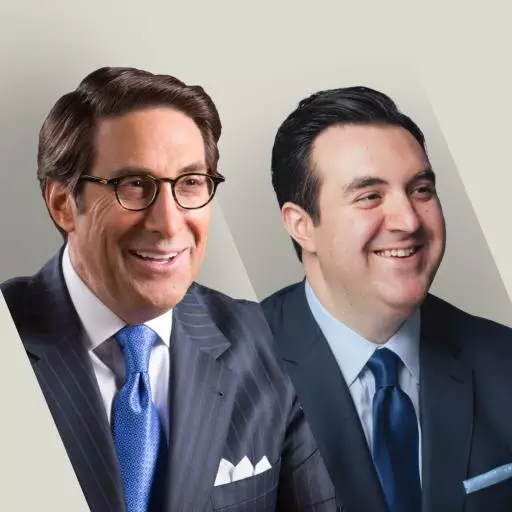
Logan Sekulow and Will Haynes break down President Trump's response to the Iranian threat of regional war.
Guest (Male): Today on the show, President Trump responds to the Iranians' threat of war. Keeping you informed and engaged, now more than ever, this is Sekulow. We want to hear from you. Share and post your comments or call 1-800-684-3110. And now your host, Logan Sekulow.
Logan Sekulow: Welcome to Sekulow. It's Monday. We are here live in our studios in Nashville, Tennessee. We're going to be broadcasting a little bit, joining Jordan in Washington, D.C., as he is there for very important reasons. We'll get into that a little bit later.
Of course, President Trump couldn't give us a Monday without something news to break, some big moment. We'll discuss that, as well as still the fallout coming from Minnesota, including like I told you what happened: the celebritization of Don Lemon. As we saw in the Grammy Awards, walking the red carpet, getting standing ovations. You know what? Somewhat, this was predictable. I knew this was going to happen. I told you what happened. This was the moment he had been waiting for to finally become a celebrity. We had rid him of the news world, but now we've decided to make Don Lemon once again relevant.
Phone lines are open for you at 1-800-684-3110. Again, as President Trump says he doesn't agree with the Iranians and is pushing forward with what it could look like as Iran threatens what they're calling a regional war, an area war, if a deal isn't sparked. We know that we're talking about days away.
Will: That's right. So what's going on now is we saw that there was an armada of US Navy that was sent over to the region very close to where the Iranians live. This armada was there specifically as a deterrent and also trying to get them to stop going after the protesters that were in the streets of Iran.
The Ayatollah made a statement over the weekend that said if the US were to attack Iran, it could cause, it would cause a regional war. What we're also seeing is that the administration with Steve Wickhoff is planning on meeting in Istanbul this Friday with the Iranian Foreign Minister to discuss a possible nuclear deal. This is as we've heard the administration say that the Iranians wanted to talk because of all the pressure the United States was putting on the regime in relation to all these protests that have been going on in Iran.
Now it's getting back to the nuclear issue. The armada of the US Navy that is there, some of the most powerful warships, as President Trump said, in the region, on the doorstep of the Iranians, are there as a deterrent to one, continue going after these protesters, but as well as a backstop if these negotiations were to fail. President Trump was asked about the comment from the Supreme Leader, from the Ayatollah yesterday at a press gaggle. Let's go ahead and play that for people and hear how President Trump responded.
Donald Trump: Why wouldn't he say that? Of course he's going to say that. But we have the biggest, most powerful ships in the world over there, very close, a couple of days. Hopefully we'll make a deal. If we don't make a deal, then we'll find out whether or not he was right.
Will: So we will have our ships there. We have a meeting in a couple of days. Hopefully we'll make a deal. But then if we don't make a deal, we'll find out whether the Ayatollah was right or not about a US attack sparking a regional war. The threat obviously there from the President that if the Iranians aren't able to make a deal, that a US attack could be imminent.
Logan Sekulow: I want to know what you think about this. This again kind of gives everyone a bit of a reminder of what could have happened previous years, what happened during the War on Terror. Does it make you feel good about this? Do you think we need to get involved with Iran? Do you think we need to sit this one out? Do you want there to be a deal with Iran also that could keep the current administration in power?
I think that is a big concern as we are finally, it felt like, on the verge of a revolution once again in Iran. Now does that look like a few steps backward? Again, we'll discuss that coming up in the next segment, but I want to hear from you, the American people. 1-800-684-3110 to have your voice heard on the air today. The dangers in Iran at that tipping point, and we know that Christians often tend to be punished disproportionately during these uprisings.
We want you to get involved, which is why we're taking some urgent legal action today. We have filed a vital submission to the UN Human Rights Council on Iran. We'll get into that coming up. Also, Jordan was featured this morning at the International Religious Freedom Summit in Washington, D.C. You're going to see some of that. Jordan's going to join us a little bit later. We'll be right back.
The challenges facing Americans are substantial. At a time when our values, our freedoms, and our constitutional rights are under attack, it's more important than ever to stand with the American Center for Law and Justice. For decades now, the ACLJ has been on the front lines, protecting your freedoms, defending your rights in courts, in Congress, and in the public arena. We have an exceptional track record of success.
But here's the bottom line: we could not do our work without your support. We remain committed to protecting your religious and constitutional freedoms. That remains our top priority, especially now during these challenging times. The American Center for Law and Justice is on your side. If you're already a member, thank you. If you're not, this is the perfect time to stand with us at ACLJ.org, where you can learn more about our life-changing work. Become a member today. ACLJ.org.
Welcome to the all-new ACLJ app. Expert analysis and insight Big Tech can't censor. Customize your news and get real-time alerts on the issues you care about. Advocacy is now at your fingertips. Take action, make a difference, support the causes you care about with just one tap. Be the first to know. Breaking news alerts sent straight to your inbox. Everything you need, all in one place. Stay informed, stay empowered. Download today.
We are so excited to announce the ACLJ's brand-new app, completely redesigned to provide you with the best tools available to partner with us at the ACLJ. You can watch the daily Sekulow program, sign the petitions, customize your ACLJ membership experience, donate with the click of a button, and receive up-to-the-minute critical updates that the mainstream media can't censor. Just scan the QR code on your screen or go to your phone's app store, search ACLJ, and click install. It's that simple.
Logan Sekulow: Phone lines lighting up at 1-800-684-3110. Definitely going to restate what we're discussing today, which is of course President Trump saying a war with Iran or attacks on Iran aren't impossible, aren't off the table as we know negotiations look like they may happen this coming week, maybe as soon as Friday. We'll actually sit down and have some discussions with Iran.
That does continue a really interesting conversation of what do you do when you decide to make a deal with these kind of regimes? What are the consequences and the fallout beyond just protection of your own people, which I believe we need? Protection of the United States. What about the people in Iran who are on the verge of a revolution? Now they're seeing a potential step back. What does that mean?
We do have a lot of calls coming in on it as well, but maybe we just need to restate it, maybe play President Trump one more time so people can understand the situation. Let's actually start with that with President Trump, which you saw in the last segment. This again discussing the fact that the Supreme Leader of Iran essentially said if nothing is reached, if a deal isn't reached, a regional war could be sparked. Take a listen.
Donald Trump: Why wouldn't he say that? Of course he's going to say that. But we have the biggest, most powerful ships in the world over there, very close, a couple of days. Hopefully we'll make a deal. If we don't make a deal, then we'll find out whether or not he was right.
Logan Sekulow: So where does this come from? All of this obviously you need to give some background, some history of where we're at. Remember the Trump administration through Steve Wickhoff and through Jared Kushner and many of these other individuals were negotiating with the Iranians over their nuclear program last summer.
Then we remember the 12-day war between Israel and Iran, which kind of culminated with the United States bombing the nuclear sites of Iran. That was when we knew that the talks were not progressing. They were just a stall tactic by the Iranians, as is expected, but the Trump administration was giving them the benefit of the doubt. When they gave the Iranians a deadline like, "Listen, we have a hard out at this point. We are going to say no more," what did the United States do? They made good on their promise to do something about it and bombed the nuclear sites.
Now this is a little different, but it has gotten the Iranians to kind of come back to the table because this all sparked with those protests that began in late December. We're now in February. They dominated the news. At first, they were not talked about at all. Then they kind of rose into the news and now we're not hearing about it as much because of domestic issues. That's the news cycle.
But what we were hopeful for was that the Iranian people themselves could overthrow the tyrannical death cult that has been in leadership since the '70s there. What we're now seeing, and this is kind of a concern, and I want to also get people's thoughts on this, is that now that the Iranians are saying, "Hey, let's have a nuclear deal talk again on Friday," President Trump is still being very strong with them.
He sent an armada of ships, a large group of some of the most powerful navy ships off into the region not far from Iran, where strikes could be made against the Iranians if the President decides to make that call. The President said he was going to stand up for the protesters. Now the Iranians are dangling this nuclear issue again, taking the, hopefully not taking the administration, the Secretary of State, and the President their eye off the ball here.
The nuclear issue, the Iranians had already balked at and not gotten to an amenable place with the administration last summer. Now they're wanting to have this talk in Istanbul on Friday. I don't want this to derail what the people of Iran have started there. One of the biggest criticisms we had of the Obama administration was their nuclear deal, which was awful. It wasn't a good deal. I do trust that anything the President would put forward would be a lot stronger than what the Obama administration did.
However, what did that deal do? It in a way legitimized the Iranian regime for a lot longer than it should have in the wake of the Green Revolution, which was the other time in history we were closest to seeing the people overthrow the government. We have a call basically on that exact topic. Let's go to Tom in West Virginia. Tom, go ahead.
Tom: Yeah, thank you for taking my call. Obviously, in 2009, Hussein Obama just pretty much gave lip service to a popular revolt that went on with the Persian people of Iran. I have no ill will to the people of Iran. I have ill will to the Islamists that run that country that since 1979 have said "Death to Israel, Death to America."
As the great poet laureate Maya Angelou once said, "When somebody tells you who they are, believe them." I would like to give one other quick notation. Billy Eilish said we live on stolen land. So you know something, for all those highly affluent white liberals that feel that we live on stolen land, give your land, your little piece of property back to the nearest Native American tribe and put your money where your mouth is. I'm fed up with these people. Thank you for taking my call.
Logan Sekulow: Tom, thanks for calling. Obviously, Tom referring back to the Grammy Awards last night where essentially the topic of immigration and ICE was on the front of just about everyone's acceptance speech. Maybe not for Brandon Lake and Jelly Roll, but other than that, it feels like it was what people would say.
I'm not saying everybody, because I have to go through everyone's, but it certainly was the conversation piece. Not unexpectedly, it was a standing ovation moment for a lot of people when they were looking for their moment of celebration. Not everyone went political, a lot did with that.
Look, I think there's a lot to be said right now in terms of how people are responding to all of that. But you are right. That was one that was maybe a bit aggressive in terms of that whole concept. If that's true, then we're all kind of dealing with a whole different situation. We've actually been represented and worked with a lot of the Native American tribes and their land and the reservations here in the United States. Maybe Tom's got some points.
Give me a call though at 1-800-684-3110 if you want to continue this conversation. In the next segment, also, we're going to hear from Jordan. We have a video that we're going to play and then he's going to be joining us a little bit later because he was at a featured panelist at the International Religious Freedom Summit that was today in Washington, D.C. So we're going to discuss that coming up.
Again, a lot of you are calling in. I do want to kind of hear from you as we continue this conversation. 1-800-684-3110. It is interesting to see, and you've got to be always careful with this, the news cycle and how it shifts and how it moves. Of course, we're going to also discuss other topics. We said it was very nice to not have another day talking about Minnesota, another day talking about Don Lemon necessarily.
However, we've seen the news cycle now move back to Iran. The problem is when the news cycle moves off of Iran, I feel like the American people do as well. They forget about what's going on around the world. It feels like the American people, according to the news, according to mainstream media, have the attention span for one story and one story only at a time.
I don't believe that to be the case. You know how we do this show. Each and every day is different, and often the show has multiple topics in one day. I think that you all can walk and chew bubblegum at the same time. You can actually pay attention to what's happening.
But it's very easy to take your eye off the ball, get outraged over one issue, get in a bot argument online, and forget that there is a verge of revolution happening not that far away. We live in a pretty small Earth to begin with. However, when you're talking about the Middle East, you could get there today if you really wanted to. You could be there in a dozen hours, no problem.
Let's remember that when we're talking about what's happening. When there's a threat of a regional war, of course, there are shades of a War on Terror on this. There are some people who get concerned. They got concerned with it over Israel and Gaza. You get concerned over it when you start having these moments where America starts to get a little more involved, then maybe President Trump ran on.
I'm not saying it's the wrong thing. I actually am very much in favor of a new Iran. I think Iran can be a wonderful place under new leadership. So when a deal starts getting struck and people start talking about that, sure, I am all for protecting American lives, protecting troops. But when it starts to go at the potential shelving of a revolution that could lead to an enormous amount of human lives saved in the long run, it is a little concerning.
Will: Well, but to that point as well, what the Trump administration has long said their demands are of Iran, Iran will never agree to. So I really don't think that a deal with Iran is possible.
Logan Sekulow: Then do we get into war? That's going to be the next step.
Will: Right. Well, and once again, that's where President Trump is saying we'll see if it sparks a regional war because it didn't spark a regional war when we bombed your nuclear site. I think that what you've also seen is how diminished Hezbollah is, how diminished the Houthis are, how diminished Hamas are.
The regional war would be from those proxy groups: Hezbollah in Lebanon, Hamas in Gaza, the Houthis in Yemen, and the IRGC. At this point, is that an empty threat from the Ayatollah? Yes, they may try to spark a regional war, but have they lost control of the command of those terror groups? Are those terror groups even willing to die for Iran at this point?
So I think that is where the calculus of the President being strong, sending the Navy there, and putting that threat right on the doorstep of Iran, is that something they even have the capacity at this point to respond to? I am curious what comes out of any sort of meeting on Friday, but I am also cautious that I don't want it to be another decade-plus mistake of propping up that regime.
Logan Sekulow: And with them, we are mobilizing our ACLJ team to make sure that we are there and available for Christians in Iran who need their help around the globe, even. So take action with us. I want you to sign our petition we just launched at ACLJ.org/sign. Do it today.
If you're able, become an ACLJ Champion while you're there. A recurring monthly donor. Go to ACLJ.org, make your donation, and select to become a Champion. We really would appreciate it. We'll be right back.
Welcome back to Sekulow. We are going to take your phone calls. We got a lot coming in. We still have one line open at 1-800-684-3110. I want to thank all of you who during the break visited ACLJ.org, looked at all the great, incredible free resources we provide. Maybe you considered, maybe you signed the petition, and maybe you considered becoming an ACLJ Champion.
Those are people who decide, "I'm not only just going to support the ACLJ and give a one-time donation." Nothing wrong with that. That's the vast majority of people that support the work of the ACLJ. But those who say, "You know what? Click that little box and say every month I want to become a recurring Champion, a member of the ACLJ essentially."
It goes a huge way in creating a great baseline for our organization. So we know where we're working from, we know what to budget for future months. Look, when you have teams like our teams, this is not a two-person show by any means. You see me and Will on here. If you could turn the camera around, you'd see a dozen people working on this show. If you roamed the halls of this media center, you'd see 30, 40 people who are actively working not only on this show, on the content that will be created later on.
Of course, our legal team who are in court each and every day or filing or part of getting involved in the local level, the state level, federal level of what is happening and making sure we're there for you. All of that happens because you support the work financially of the ACLJ at ACLJ.org. If you become a Champion, we'd really appreciate it.
On days like today, also, my brother Jordan, Executive Director here at the ACLJ, he's in Washington, D.C. That's where he is a lot right now. So if you don't see him on here, you know he's been traveling. This morning he was a featured panelist at the International Religious Freedom Summit in Washington, D.C., urging the nations to promote religious freedom globally. This is something the ACLJ has been involved in in many different ways, but now we are seeing some mainstage work here from our team.
Will: That's right. I think it's also important to reiterate why we do all this work. One, because we believe deeply in our hearts to fight for the persecuted when no one else will in many cases. But also because if you don't fight persecution wherever it is, then you see it come closer and closer to our shores.
Unfortunately, we have seen where people are disrespecting and disregarding the First Amendment, the freedom of religion in our own country now. When you look at what happened in Minneapolis where the protesters stormed the church and disrupted worship. Now, that is not in any way close to what we are seeing around the world yet. But we know that persecution will find its way wherever it can, and so we have to fight it not just here in the United States, but everywhere.
Even this morning, we filed at the UN Human Rights Council a document on Iran talking about specifically the persecution of Christians, even among what is going on with the protests there. We cite specific cases and call out Iran to the UN, how they have an obligation under the Universal Declaration of Human Rights to ensure that its citizens have a freedom of religion. I think that's why it's so important that our ACLJ team filed this today on Iran at the UN at the same time Jordan is on a panel with the Religious Freedom Summit. I think we should go to that right now and hear some from Jordan before we talk to him in a couple segments from our D.C. studio. From that panel, let's go ahead and roll that.
Guest (Male): ACLJ is a nationwide organization, grassroots. You hear from the grassroots every day. Give us some advice on how you translated that energy outside the Beltway to move the needle here in Washington.
Jordan Sekulow: I think what's important is through our entire time at the ACLJ, we started domestically and then we grew internationally pretty quickly in very diverse kinds of places. Whether it's Strasbourg, which is our European headquarters, but we're in India, Pakistan, we were in Russia, and we might be again if the sanctions are lifted and they were able to survive through their legal process there.
We're also in Israel. But our first client after we opened our Israeli office was a Palestinian Christian family whose husband was killed by Hamas. He was the head of the Bible Society in Gaza. She just needed to get to the West Bank to be reunited with her family. This was a day before Operation Cast Lead began. We didn't know that at the time.
We got the call though because Israel knew she was our client, and we had worked at the UN, we had worked to kind of expose it to the point where Hamas, they went to the gate and they took her there and they said, "No one's opening this gate today." I was like talking to them on the phone. They said, "In this... these are the stories that work because it brings people in."
So at one end I'm talking to the Israelis, other I've got her and then she hands the phone to the Hamas guy. I'm like, "Listen, you can't follow her. When she gets to the halfway point, the gate will open and you need to close your gate immediately." I kind of confirmed that with the Israelis, and it happened.
You can do that a day before a country goes to war if you push hard enough. That kind of story for years drove supporters of the ACLJ because they realized, wow, we can... this is not just about an issue that you can resolve in the US civilly or even at the US Supreme Court. This is about saving people's lives.
So if, and most of our faith calls us to do that if we can. To save the innocent. Almost every faith calls for that. So if we're truly practicing our own faith, that's how we talk to our people. If you're truly practicing your own faith, you can't ignore the issues in your own country. You want to handle those first, but we have to. If you're going to come doing this from the United States, the US has to be protecting religious liberty here at a very robust level too.
I think we are the greatest country in the world when it comes to doing that, but we see how quickly things start slipping even with our Western allies when the religious speech also kind of intertwines with political. We do understand that robust religious liberty can change a country. Not just its people, but its entire way it's perceived around the world. So again, those stories, people understanding how it can make them safer, but also the dictate of their faith calls them to do something. Back to you.
Logan Sekulow: That was just a small clip of what Jordan was sharing there again at the International Religious Freedom Summit today in Washington, D.C. He's going to be joining us in about two segments so you make sure you stay tuned to hear from him more about what he was doing up there. Will, maybe you can give us a brief background on what this was and the reason our team was there.
Will: Right. This is such an important summit. This is one that the International Religious Freedom Summit that the ACLJ has had connections with and worked with on many different issues. It comes with a bunch of groups that are from different backgrounds. There are people that represent different faiths there.
Going forward and being able to speak the message of what the ACLJ fights for to a group of individuals that may not have the same political or philosophical background, be able to hear that powerful message from Jordan about why it's important that even groups like the ACLJ exist and can fight, one, to remind we have to keep protecting it here at home.
But also even the story about us helping get that Christian family out of Gaza, it's not something that even people that may disagree with us politically are used to hearing from what they think of just the Christian conservative group.
Logan Sekulow: They certainly shouldn't realize, we've been doing that, that story is getting close to 20 years ago now. That's a story that we've been working on those cases for a long time well before it was popular to talk about these issues. The ACLJ was there and will be there long after it's popular because these issues are what matters to us the most.
With that, we only have about 58 seconds left in this segment of the show. We have a second half hour coming up. So if some of you don't get us in your local markets, if you're listening on terrestrial radio, find us broadcasting on SiriusXM, on ACLJ.org, YouTube, Rumble, however you get your podcast. We're going to be there live, but we'll also be there archived later on.
If you are listening to this later on, the second half hour is available on ACLJ.org or again however you get your podcast. But I'm encouraging you right now, stay on hold if you're on hold. We're going to get to some of your calls coming up in the next segment. If you're able to become an ACLJ Champion, do it today. That's someone that gives on a monthly basis. Also sign that petition. Signing the petition is free. Get on our email list. Start getting updated from the ACLJ if you're brand new.
If you are just watching on YouTube for the first time, hello, welcome. I encourage you to hit subscribe. Get involved in the way that the ACLJ can help you. Again, that's at ACLJ.org. We'll be back with the second half hour of the broadcast coming up in just a moment. Don't go anywhere. This is our shortest break, less than a minute.
For decades now, the ACLJ has been on the front lines, protecting your freedoms, defending your rights in courts, in Congress, and in the public arena. The American Center for Law and Justice is on your side. If you're already a member, thank you. And if you're not, well this is the perfect time to stand with us at ACLJ.org where you can learn more about our life-changing work. Become a member today. ACLJ.org.
Featured Offer

Featured Offer
About SEKULOW
The American Center for Law and Justice (ACLJ) focuses on constitutional law and is based in Washington, D.C. The ACLJ is specifically dedicated to the ideal that religious freedom and freedom of speech are inalienable, God-given rights. In addition to providing its legal services at no cost to our clients, the ACLJ focuses on the issues that matter most to you — national security, protecting America's families, and protecting human life.
About Jay Sekulow
An accomplished and respected judicial advocate, Sekulow has presented oral argument before the U.S. Supreme Court in twelve cases in defense of constitutional freedoms. Several landmark cases argued by Sekulow before the U.S. Supreme Court have become part of the legal landscape in the area of religious liberty litigation; these cases include Mergens, Lamb's Chapel, McConnell v. FEC, Operation Rescue v. National Organization for Women, and most recently Pleasant Grove City v. Summum.
In 2009, Townhall Magazine named Sekulow to its "Townhall of Fame" and recognized him as "one of the top lawyers for religious freedom in the United States." In 2007, the Chicago Tribune concluded that the ACLJ has "led the way" in Christian legal advocacy. In 2005, TIME Magazine named Sekulow as one of the "25 Most Influential Evangelicals" in America and called the ACLJ "a powerful counterweight" to the ACLU. Business Week said the ACLJ is "the leading advocacy group for religious freedom." Sekulow's work on the issue of judicial nominees, including possible vacancies at the Supreme Court, has received extensive news coverage, including a front-page story in The Wall Street Journal. In addition, The National Law Journal has twice named Sekulow one of the "100 Most Influential Lawyers" in the United States (1994, 1997). He is also among a distinguished group of attorneys known as "The Public Sector 45" named by The American Lawyer (January/February 1997). The magazine said the designation represents "45 young lawyers outside the private sector whose vision and commitment are changing lives."
Sekulow brings insight and education to listeners daily with his national call-in radio program, Jay Sekulow Live!, which is broadcast throughout the country on nearly 850 radio stations. Sekulow also hosts a weekly television program, ACLJ This Week, which tackles the tough issues of the day. He is also a popular guest on nationally televised news programs on ABC, CBS, NBC, CNN, FOX News, MSNBC, CNBC, and PBS.
Contact SEKULOW with Jay Sekulow
jsekulow@aclj.org
http://aclj.org/
American Center for Law and Justice
PO Box 90555
Phone: 757-226-2489
1-800-684-3110
1-877-989-2255