
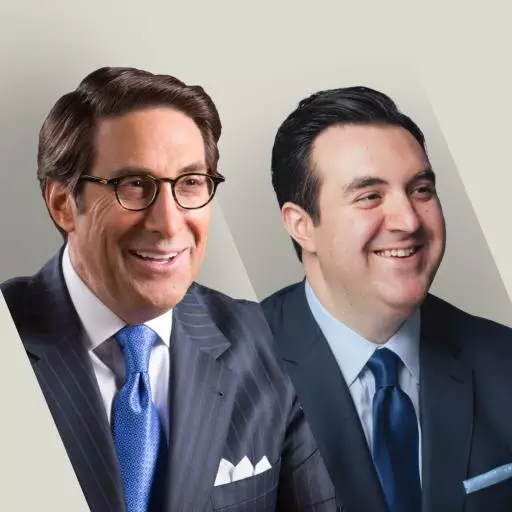
Sekulow


Logan Sekulow and Will Haynes break down the arrest of Don Lemon.
Don Lemon: We got breaking news. Don Lemon arrested.
Logan Sekulow: Welcome to Sekulow. We've got a packed show. It is Friday. We're live, so I want to make sure you have an opportunity to call in. We'll open up those lines, open up the phone lines for you at 1-800-684-3110. That's at 1-800-684-3110. Do we have phone lines open? Or are they down? Okay. All right. We'll make sure we open those up for people to call in. I'm not sure. We'll figure that out.
Don Lemon has some breaking news. Don Lemon has been arrested. That's right. Journalist Don Lemon, who stormed that church with the protesters, who went in and got in the face of that pastor, has now been arrested. This would have happened last night in his hotel around 11:00 last night, I believe, in Los Angeles, as he was preparing for the Grammy Awards, which are this weekend. It opens up a whole host of questions.
Of course, last week, we learned that a judge said he was not going to be, but that changed, obviously, and the federal government has made some arrest. Now again, and we need to take a step back, my big concern about this is making Don Lemon into some kind of superstar for the left. Because do I think Don Lemon—do I think he's a big threat to anyone? Likely not. In fact, I think he was a pretty irrelevant person, an irrelevant source of news, an irrelevant source of broadcasting for many years now.
He said, "Make me the next Jimmy Kimmel." Essentially, "Make me that martyr, if you will." And it looks like that is headed to happen. And that is my concern when something like this happens—not that consequences shouldn't befall someone. Look, if he deserves to be arrested, he deserves to be arrested, and so on and so forth. But my concern is that we make this kind of moment the focus and not actually focus on the real concerns of what's going on in Minnesota.
All of a sudden, you now have created a superstar out of Don Lemon, not something that I would like to have happen as he has not been very kind to us in the past. I think this is absolutely what he wanted to have happen. Could you imagine a grander scale for it to happen also in your Los Angeles hotel the weekend of the Grammys that you're there to cover? And they're there arresting a journalist.
Now look, did he get in the face of that pastor? Absolutely. Do I think really what he said was egregious and so fundamentally wrong in misunderstanding how the First Amendment works? Absolutely. Like I said, I think he was a talking head who was pretty good at reading a teleprompter and now is given a situation where he's not. Did he go after those people and said, "Look at the traumatized children out there," but that is why protesters are doing this? Essentially, he said that.
He wants that to happen. He wanted this disruption of the church service to happen. So sure, that opens the door to what the legality is. Now, do I think it's a slippery slope also when you start going after journalists? I do, because I can see where the shoe is on the other foot and all of a sudden we are talking about the loads more of independent conservative-leaning journalists who likely would have been in this situation.
But look, a lot of them have had issues. Look at what happened with James O'Keefe and all of those issues that happened at Project Veritas. It's not unheard of in the conservative movement for someone to be arrested or to have any sort of legal ramifications.
Will: That's right. And what we don't know right now is specifically which statute he's been charged with. There was a lot of talk of the FACE Act. We can get into that in the next segment. But what is interesting here is that, remember, they went to a federal magistrate judge in Minnesota a couple weeks back and he was not given an arrest warrant to sign off on to arrest him.
They appealed that decision in a kind of an unusual move to the actual district court judge and the chief judge of that, who said, basically, "If you want to do this, we're not going to overturn the magistrate judge. Go empanel a grand jury." That appears to be what has happened. They empanelled a grand jury and were able to get an indictment against Don Lemon through that process. We don't know what the charges are yet, but we have some information we can talk about in the next segment.
Logan Sekulow: That's right. Give us a call. 1-800-684-3110. 1-800-684-3110. You always ask for arrests. You always ask for things to happen. Well, they happened, and how do you feel about it now? 1-800-684-3110. Support your work of the ACLJ at ACLJ.org. We'll be right back.
Welcome back to Sekulow. Like I said, phone lines are open for you at 1-800-684-3110. Reporting on the news, of course, that Don Lemon, after being a part of that raid of that church that ended in chaos in Minnesota a couple weeks back, now has been arrested, likely charged. We are still waiting for all the information about it. Of course, this happened at City's Church.
And you remember Don Lemon made a big point about this as he followed—he didn't just happen to be there. He was part of the group that went inside. And he went up to the pastor during the service. That's where I guess you could start really considering if he was impeding that service, what he was doing. Because I do believe in a broad protection for journalists. And I know that's going to ruffle feathers. People won't love that.
But I do believe that—because I think of myself as somewhat of a journalist and being having the shoe on this other foot, going, "Okay, well, would they do this to me if I was attending a protest?" Now would I have gotten in the face of that pastor? Would I have been celebrating children being traumatized? Absolutely not. I think what he did was disgusting. I think what he did is abhorrent.
Do I think what he did was federally illegal? I don't know. I think that's a gray area that we should at least be open to having the conversation about. I want you, though, to flashback here. So let's go back to that interaction between Don Lemon and the pastor in the middle of the chaos that had broken out in the church.
Pastor: Our church had gathered for worship, which we do every Sunday, and we were interrupted by this group of protesters.
Don Lemon: Yeah.
Pastor: We asked them to leave and they obviously have not left.
Don Lemon: What do you think of it?
Pastor: I mean, this is unacceptable. It's shameful. It's shameful to interrupt a public gathering of Christians in worship.
Don Lemon: But there were folks—I have to take care of my flock. I have to listen. We live in a—there's a constitution and the First Amendment to freedom of speech and freedom to assemble and protest.
Pastor: We're here to worship. We're here to worship Jesus because that's the hope of these cities. That's the hope of the world is Jesus Christ. I want to be very respectful. Please don't push me, though. We're here—we're here to worship Jesus. That's why we're here. Okay? That's what we're about. We're about worshiping—
Don Lemon: Don't you think Jesus would be understanding and love these folks?
Pastor: We're about—we're about spreading the love of Jesus.
Logan Sekulow: Will, I want to actually play the follow-up to this as well, because—and I agree with you to a large degree that there is—
Will: It's okay. You don't have to.
Logan Sekulow: No, no. I mean, I'm going to get the people on Rumble riled up, you know? But here we go with a situation where, yes, we here at the ACLJ are First Amendment advocates. We fight for people who want to protest or share the gospel in places that people don't want them. So we do have to look at this and be very objective about it. And in what—here's the problem I have, because I think journalists do have a very wide ability to report.
Here's the big problem I have and I think where he may have problems as well. Obviously, a federal grand jury believed that there was probable cause to charge him. But in that bite, the pastor is trying to get away and he's saying, "I need to go take care of my congregation," and Don Lemon won't let him go. He's even—he's trying to give hand signals like, "I need to go," and Don Lemon goes, "Please don't push me."
Already, he is trying to keep the pastor there, which is interfering with the worship service. He is actively engaged in it. It's not like he's in the corner filming it unfold. And if he had just gone in and filmed, there probably is less of a case against him than what I see here. And I want to play this follow-up bite as well, because I think this also is where Don Lemon goes from being someone who is reporting to someone who is participating in it.
Will: Commentary. Because this is bite three, and this is an important bite. Still continuing after the pastor has said, "I need to go take care of them." Don Lemon is still continuing to pepper him with questions. He's trying to be respectful, the pastor. But let's roll bite three.
Don Lemon: I'm just trying to talk to them as a—
Pastor: No one is willing to talk. Okay. I have to take care of my church and my family. So I ask that you actually would also leave this building.
Don Lemon: You don't want us to chronicle what happened?
Pastor: Unless you're here to worship.
Don Lemon: I'm always worshiping. I'm a Christian.
Pastor: Well, we're here to worship. We're here to worship. Okay. Thank you very much. I appreciate it.
Don Lemon: So, that's one of the pastors of the church.
Will: So that bite there, the pastor directly asks him, "I would ask that you would leave unless you are here to worship." And Don Lemon has a cute response of, "I'm always worshiping. I'm a Christian." No, you're not. You're not there to worship. You're not there to participate in the worship service. But Don Lemon doesn't leave. He continues to go and pushes his microphone in the faces of other congregants.
He's there for seven more minutes inside the building, and then decides to go outside. And then we have that famous look, "Oh, the kid is clearly upset. This is upsetting and traumatizing," which is the point. He is there as an activist. And yes, he may be documenting it, but he is—it's not just someone there documenting without a purpose and not engaged in.
He is engaged in it the entire time. He does not leave when asked to respectfully by the pastor. It is not as if it was outside in an open area and someone said, "Leave our protest." It's like, "Well, no, I'm not going to." This is a continued disruption of the service that the pastor is trying to get under control and trying to ask people to leave, and the journalist here is refusing to also do so.
Logan Sekulow: My concern will always be if this was, again, the other side of the story, if this was a conservative reporter or someone more on the right doing the same thing, would we feel the same? And maybe you would feel the same. And that's why I'm posing that question to you. Would you feel the same if that person happened to be on your side? I don't agree with anything Don Lemon did in this.
I don't agree with really anything Don Lemon has ever done or will probably ever do. I didn't think he did a good job at CNN. I think he had a lot of personal issues at CNN that obviously came out. And then I think he has done a poor job of keeping himself relevant. I think about the interview he did with Elon Musk and how inappropriate I thought that was.
Now again, I have to, though, think critically and think legally and start thinking about what the ramifications are when there is a Democrat in the White House. And that is surely to happen in our lifetime. I mean, let's just look, the pendulum moves. It has our entire lifetimes. It goes back and forth between Republicans and Democrats. And who has been the ones who have been censored the most over the last few years? It has been those on the right.
And I do always have that tinge of going, "But what if?" I think what he did was wrong. I think what he did is disgusting. I don't like him at all. I don't like what he had to say. But there is a concern that I personally have, even though you said, "Yes, he's engaging." And I agree, he's engaging. I think he's completely inappropriate and off base, even as a journalist. Do I believe he's committing a federal crime? That is where the line—I'm not so sure on.
Will: Well, when we look at what the FACE Act says—and once again, we don't know what the specific charges are. There's been some commentary, maybe it's a conspiracy to violate the FACE Act, maybe it is actually a FACE Act violation. But Title 18, U.S. Code Section 248 is the Freedom of Access to Clinic Entrances codified version of the FACE Act.
And what it says is the prohibited activities is whoever—and then you jump down to subsection two—by force or threat of force or by physical obstruction, intentionally injures, intimidates, or interferes with, or attempts to injure, intimidate, or interfere with any person lawfully exercising or seeking to exercise a First Amendment right of religious freedom at a place of worship.
That's the second subsection because it says the exact same thing in section one about obstructing, intimidating, any of those same issues with someone trying to obtain or provide reproductive health services. It's two sides of it. One, it's to protect the abortion clinics, and then they got it codified by adding the houses of worship to it. And I think—I want to go back to your analogy as well. Think about what would happen.
Think about what would happen under typically a Democrat administration if, say, Live Action or James O'Keefe—one of those organizations went in when not just people outside protesting an abortion clinic, but actually entered into it to disrupt the services of that. That would be a violation of the FACE Act.
Logan Sekulow: I mean, you could say they did that with some of their investigation in some of the when they would put on a costume and wear hidden cameras.
Will: At meetings, right. But did they interrupt the services? That is the big question there. And I think that they would probably be charged along with the protesters that broke into the building in that case. That's a hypothetical. We'd have to see how that plays out. You do have to be careful, but I think once again, when you see him talking to the pastor in that way, not letting him go when he's saying, "I need to go take care of my congregation," it puts him in a different role from reporting to actually engaging in the activity of interfering with the worship service.
Logan Sekulow: I see your point. I think it's blurry. We have a comment coming in that said, "Come on, Logan, a conservative reporter went in—if they went into a leftist religious service, they'd be dragged off in jail." That's probably correct. And I don't know, though, that that's good. That's not necessarily what we want. Now, do I think that if they went in and they were protesting and making a scene themselves that they should be? Yeah, probably.
But if they were going in as just a reporter and they were just asking questions, I don't want that to be what happens because I do believe in a very broad version of journalistic freedom. With that, we'll continue the conversation. People are saying it's because of the ice storm that hit my head and things have happened. You know what? Maybe you're right. I'm not on here defending Don Lemon. I'll say that ad nauseam.
I'm here discussing the ramifications of limiting the freedom that journalists have. I want to hear from you. We're going to take some calls coming up in the next segment. You go to ACLJ.org for more information.
Welcome back to Sekulow. We've got a lot of calls as expected. We're going to take them. It is Friday, and we want to make sure that you have an opportunity to speak as well. But Will, this does tie into the arrest of Don Lemon, everything that's happening right now in Minnesota. It does tie into a lot of the work we're working on.
Will: That's right, because today—and if you were watching on one of our streaming channels, whether it be YouTube or Rumble or Facebook, you saw a clip from a previous show when we announced the cert petition we have filed at the Supreme Court asking them to take a case that involves defamation in CNN. And the goal of that case is to try to get clarity, maybe update to a precedent called New York Times v. Sullivan.
Which has really built up this impenetrable wall for journalists, for media, saying that they can never really be charged with defamation because there's this intent level that has to be reached. And so for a long time, they have had a much broader, much more leeway than even other people within the First Amendment that can be sued for things like this. So this is a case, Dershowitz v. CNN, that the ACLJ brought right at the end of December.
Many of you remember that, and if you saw that clip, it's really a landmark case if the Supreme Court takes it. Today's an important day in this schedule as we wait to see if the Supreme Court will take it, because today is the day that CNN's response to our cert petition is due. They don't have to file a response. If they do, then we will have a reply brief to their response due about two weeks from now, February 13th.
However, there are many ways this could even play out. If they decide not to and the Supreme Court's looking at this, they could compel them to respond to this. But right now, we are kind of eagerly watching the docket on the Supreme Court website to see if and when CNN's response to our cert petition is filed. This, I think, goes back to what the whole discussion is—is that journalists in the United States right now, especially if you are with a big organization, have these even more heightened protections.
It is within the same amendment as regular freedom of speech, freedom of worship. We know this, freedom of assembly. But the freedom of the press category seems to have, whether it be through Supreme Court precedent or through other actions, this more heightened protection where normal citizens exercising their First Amendment right would not be able to just defame.
Logan Sekulow: People for so many years have called me personally when maybe a hit piece comes out on them or their family or their organization and filled with lies, filled with half-truths. And they've called me in tears often or not sure what to do, spinning out of control because they feel like their lives are being ruined by lies. And in any other circumstance, I'm usually able to say, "Well, we'll take up your case. Let's go work on it. Let's go do it."
When it comes to, like Will said, the broad almost immunity that journalists have—and that really big news organizations have—to spin a half-truth or a lie, even when they knowingly know it to be untrue, has been broadly protected. So I have to have these weird conversations where I bring a lawyer on a phone call and I kind of have to say, "Especially if you're a public figure, you're a public figure, there is not much you can do."
"We can take this to court. It's going to cost a lot of money and a lot of years of your time, and likely you're going to lose." Because like Will said, it has had this really broad sense of immunity, especially in the last decade. But that is where the ACLJ has finally had an opportunity to step in and make these adjustments to where at least, at least they can't continue repeating known lies.
And the Supreme Court hopefully will take it up and have it—we'll have an answer. And I believe there's a good chance that we win this and we see a massive change in the way reporters are held accountable. So where I do think there is broad immunity in terms of—or there's definitely a broad scale of what freedom of journalism is and when you're there as a journalist and covering what you need to cover, I do think there is an opportunity to limit the lies.
Because it's not about opinions. A lot of these are stated as facts. They're stated as just what's going on. They're never even caveated often, or a correction comes out later on and it's buried and never seen. There's a lot that can be done in that.
Will: That's right. And once again, I do think it ties into what we're seeing here. And we'll get to phone calls, I know lines are jammed. But I want to play this also because it ties back to the Don Lemon story, where the voicing an opinion and showing where you're at on this issue. And I think it gives you an insight into what his motives were there. But this is bite nine.
This is after the fact, after we saw what happened, after he refused to leave when the pastor asked him to. He was on the I've Had It podcast and talked about what his thoughts are on that church, of which I don't—I don't know if he did any research on that church, if he knew any of the people there. But it's this casting them and defaming the people there in a wide sense. Now, he does say, "I think," it's his opinion.
But the ability for a journalist to just feel so comfortable saying this out loud after saying, "I was just there to chronicle this," is shocking. This is bite nine.
Don Lemon: And there's a certain degree of entitlement. I think people who are, you know, in religious groups like that, it's not the type of Christianity that I practice. But I think that they're entitled and that that entitlement comes from a supremacy, a white supremacy. And they think that this country was built for them, that it is a Christian country, when actually we left England because we wanted religious freedom.
It's religious freedom, but only if you're a Christian and only if you're a white male, pretty much. And so yeah, absolutely 100%. But it's an intimidation tactic. And you know, I said, "I don't understand how I've become the face of it when I was a journalist." I do understand that I'm the biggest name there. And I'm also—as I was on with my producers this morning, you know, you and Kylie talk all the time.
My producers were saying—I said, "How did I become the face of this?" And my producer said, "Don, you're a gay black man in America."
Will: And once again, this is him ascribing motives for people there on a Sunday that were participating in a worship service. That is white supremacist because they were not at protests on Sunday morning? It is such a twisted, demonic mindset that he so comfortably spews that, you know, religious groups—"it's not the type of Christianity I practice."
And we know that his type of Christianity is worship through journalism, I think, is what we took from the church service. But once again, he's just sitting there defaming and chastising these people on a liberal podcast by saying that they are effectively white supremacist and that they don't want others to have religious freedom. He knows nothing of the intention or the hearts of these people.
Logan Sekulow: All right. We only have about a minute left, and we do have a lot of calls. And I want to make sure we do get to you. So in the next segments, we're going to take calls, so stay on hold if you're on hold. If you're not—I don't know how many lines we have open, if any. No lines open right now. When we get to calls, you'll hear someone take a call.
Usually by the time you have heard that—because it's about, you know, probably takes 20 seconds for it to get from my voice to your radio or to your stream—a line's probably open. So you can give us a call. I did want to encourage you to go to ACLJ.org. Look at the incredible content we're providing you there, absolutely free.
When you have these moments where we are going into a current battle with CNN in courts to change this shield that they have where they can do whatever they want, you've got to be a part of it. Because this is a big moment. So I encourage you to go to ACLJ.org. That's at ACLJ.org. If you can, support the work financially. It's a great time to do it.
Make a donation if you can. If not, though, subscribe on YouTube. Do something that costs you nothing. Just be a part of the team. It means a lot to us either way. Again, at ACLJ.org, though, you can get engaged, read great content, watch great content. And of course, if you can, support the work. Second half hour coming up. Find us on ACLJ.org or all social media platforms.
Featured Offer


Featured Offer
About SEKULOW
The American Center for Law and Justice (ACLJ) focuses on constitutional law and is based in Washington, D.C. The ACLJ is specifically dedicated to the ideal that religious freedom and freedom of speech are inalienable, God-given rights. In addition to providing its legal services at no cost to our clients, the ACLJ focuses on the issues that matter most to you — national security, protecting America's families, and protecting human life.
About Jay Sekulow
An accomplished and respected judicial advocate, Sekulow has presented oral argument before the U.S. Supreme Court in twelve cases in defense of constitutional freedoms. Several landmark cases argued by Sekulow before the U.S. Supreme Court have become part of the legal landscape in the area of religious liberty litigation; these cases include Mergens, Lamb's Chapel, McConnell v. FEC, Operation Rescue v. National Organization for Women, and most recently Pleasant Grove City v. Summum.
In 2009, Townhall Magazine named Sekulow to its "Townhall of Fame" and recognized him as "one of the top lawyers for religious freedom in the United States." In 2007, the Chicago Tribune concluded that the ACLJ has "led the way" in Christian legal advocacy. In 2005, TIME Magazine named Sekulow as one of the "25 Most Influential Evangelicals" in America and called the ACLJ "a powerful counterweight" to the ACLU. Business Week said the ACLJ is "the leading advocacy group for religious freedom." Sekulow's work on the issue of judicial nominees, including possible vacancies at the Supreme Court, has received extensive news coverage, including a front-page story in The Wall Street Journal. In addition, The National Law Journal has twice named Sekulow one of the "100 Most Influential Lawyers" in the United States (1994, 1997). He is also among a distinguished group of attorneys known as "The Public Sector 45" named by The American Lawyer (January/February 1997). The magazine said the designation represents "45 young lawyers outside the private sector whose vision and commitment are changing lives."
Sekulow brings insight and education to listeners daily with his national call-in radio program, Jay Sekulow Live!, which is broadcast throughout the country on nearly 850 radio stations. Sekulow also hosts a weekly television program, ACLJ This Week, which tackles the tough issues of the day. He is also a popular guest on nationally televised news programs on ABC, CBS, NBC, CNN, FOX News, MSNBC, CNBC, and PBS.
Contact SEKULOW with Jay Sekulow
jsekulow@aclj.org
http://aclj.org/
American Center for Law and Justice
PO Box 90555
Phone: 757-226-2489
1-800-684-3110
1-877-989-2255