
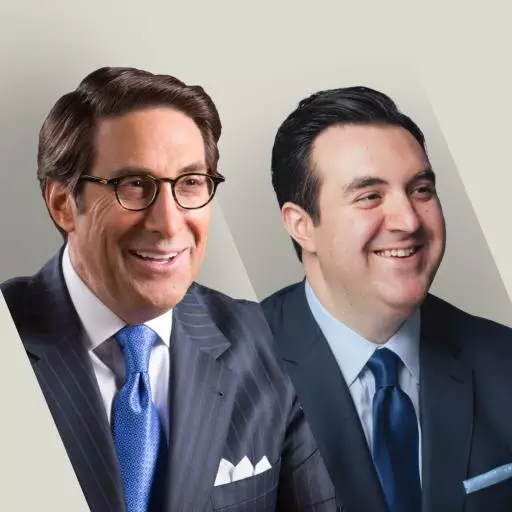
Sekulow


Will Haynes is joined by Mike Pompeo to discuss Tom Homan arriving in Minnesota at the direction of president Trump.
Will Haynes: It's not Logan Sekulow today. It's Will Haynes sitting in here, and I want to go ahead and get you in this conversation early. 1-800-684-3110 to talk to me on air because we heard this morning a press conference from Border Czar Tom Homan, who has now been tasked with leading the operation in Minnesota.
We talked yesterday about how the responses from both Governor Tim Walz as well as the Mayor of Minneapolis, Jacob Frey, were very accepting and amenable to having Tom Homan there leading this operation, which is kind of surprising considering how demonized Tom Homan has been by the left for years. Now he's welcomed as this voice of reason.
But I also think it's really interesting—and this is where I want to get your comments—this is a different tactic than we've seen from the Trump administration, maybe in the history of the Trump administration, going back to the very beginning. When there is such pressure and organized pressure in the ways that these protest movements take place, normally it is not the MO of the Trump administration to change course, to do something differently, to find common ground. But it seems like that's exactly what we're seeing here.
As a matter of fact, Tom Homan said in a press conference that he's talked to the chiefs of police and he's talked to individuals on the ground. He said President Trump wants this fixed, and he is going to fix it with their help. At this press conference, he also went on to say, "I don't want to hear that everything that has been done here has been perfect. Nothing is ever perfect. Anything can be improved upon, and what we've been working on making is this operation safer, more efficient, and by the book."
He is admitting mistakes have been made. Now, while everyone understands that this is common knowledge—that there can be mistakes in any human endeavor—it's a different tone than you're used to hearing from someone in the Trump administration. Even saying that the President has tasked him with coming here to fix it. Normally, even if that is the real goal, the Trump administration is very strong in their language that they are going to build upon what they have done, not giving an inch or backing down to the detractors on the left.
This is a different playbook, it seems like. I want to know, do you think this is a refreshing thing to hear? Do you have trust that Tom Homan is going to be the voice of reason when we have seen so much irrationality from those leaders in Minnesota? But also the fact that they're saying they're having productive conversations, meeting in the middle, and finding common ground when Tom Homan was decried as someone who was inhumane and ruthless.
Julian Castro, who was the former HUD Secretary, when Tom Homan was named Border Czar, said he is the heart of cruelty. That doesn't sound like the person that you're hearing at this press conference today. We're going to play some sound from Tom Homan in the next segment.
We also have a packed show. We have Secretary Pompeo talking about a Senate hearing that Marco Rubio had yesterday that didn't get a ton of attention because of everything going on in Minnesota. We want to make sure you see that. We also have Rick Grenell joining us to talk about some of the ways that some of this has been framed. We will round out the show from Jerusalem with Jeff Ballabon, our director of ACLJ Jerusalem, about some of the work that they have going on there.
But if you're watching this today, you know and watched yesterday that we were out a couple of days this week because of this crippling ice storm that hit much of the country. But you know who wasn't out during that time? ACLJ attorneys. They still were on the ground in court in Missouri fighting Planned Parenthood. Today our team is in Massachusetts defending pro-life pregnancy resource centers. Tomorrow we have a deadline in Houston with a demand letter for a client that was sharing the Gospel there. Our attorneys never stop working, no matter what the situation with weather.
Guest (Male): The challenges facing Americans are substantial. At a time when our values, our freedoms, and our constitutional rights are under attack, it's more important than ever to stand with the American Center for Law and Justice. For decades now, the ACLJ has been on the front lines protecting your freedom, defending your rights in courts, in Congress, and in the public arena.
We have an exceptional track record of success. But here's the bottom line: we could not do our work without your support. We remain committed to protecting your religious and constitutional freedoms. That remains our top priority, especially now during these challenging times. The American Center for Law and Justice is on your side. If you're already a member, thank you. And if you're not, well, this is the perfect time to stand with us at ACLJ.org, where you can learn more about our life-changing work. Become a member today at ACLJ.org.
Will Haynes: Welcome back to Sekulow. I said I was going to get to some of this sound from the press conference this morning with Border Czar Tom Homan, because I thought the tone was incredible. I thought that he spoke firmly but softly. It wasn't an attacking of people; it was a very level-headed press conference, taking questions and really getting to the heart of what the issue is here. Once again, I think this was important as well because he called out the rhetoric. This is where he was getting to the point that he had been saying for a long time: if you keep the rhetoric that we are Nazis, that we are authoritarian, that this is secret police, then bad things are going to happen.
Tom Homan: I begged for the last two months on TV for the rhetoric to stop. I said in March that if the rhetoric didn't stop, there was going to be bloodshed. And there has been. I wish I wasn't right. I don't want to see anybody die. Not our officers, not members of the community, and not the targets of our operations.
Will Haynes: Once again, that tone was so key to me because we have heard such loud voices on this for a while now. You see how that has ratcheted up the tensions on both sides. I feel like his tone speaks volumes. His words are great, but this press conference set a tone for how the federal government can enforce the law in a way that isn't in-your-face and making the tensions with those on the other side continue to increase.
I feel like this was the right call. I'm very appreciative, too, that in these statements he was saying that this has not been perfect. He's still committed to the mission, but he is acknowledging there is a change. This is a fork in the road for the way we are going to do this. He is going to make changes and continue to pursue the mission. This isn't giving up or surrendering, but this is a course correction.
I feel like that should be welcomed, not just by people that are maybe obviously not the people in the street. I don't think that those that are organized to an incredible level with their signal chats and dispatching people are ever going to be satisfied. But the people that are maybe more apolitical, that are getting fed stuff by their social media algorithm that is making them think that the country is falling apart, I think this is the right tone to set for the mission of our law enforcement on a good path forward and also calling out the insanity that we have seen going on.
I think that everyone should be pleased with this course correction, this shift in tone from Tom Homan. But he is showing that the need for the amount of people there was in large part because of how much the leaders in Minnesota were pushing back. Based on the discussions he's had with Governor Tim Walz and Attorney General Keith Ellison, who are not friends of the Trump administration, those conversations can lead to less ICE presence in their state, which is what they've been calling for.
He said they can start drawing down those resources as far as those looking for public safety threats being released and do it in the jail with much fewer people. So the drawdown is going to happen based on these agreements. But the drawdown can happen even more if the hateful rhetoric and the impediment and interference will stop.
I also think these images that you see of ICE in the media, in newspapers, online, as well as social media, make you have this image that ICE is just roaming like an army through these city streets. The reason that protesters are able to get there so quickly and it seems like they're always there isn't because ICE is ubiquitous and it's on every street corner. It's because they are stalking federal law enforcement, coordinating through these signal chats to be able to get people and surge their protester resources there quickly.
So don't always believe even what the images appear to be. The media wants it to look like this is an authoritarian takeover, when in reality they are executing a mission. They get information, they find out, they go after people that they have information on that are here illegally and many times are criminals beyond entering the country illegally. I want to get to some phone calls really quickly, too, because we do have a lot of guests coming up in the remainder of this show. But let's go to Patricia calling from Georgia on line one. Patricia, you're on Sekulow.
Patricia: Hello, thank you for taking my call. I want to call in response to a lady that called in yesterday. She was talking about how Christians ought to be welcoming to the people that come into this country. But we always have been. You can't just open the doors and allow anyone to come in that you don't know. They have to go through a vetting service first. I mean, I'm sure she wouldn't just open her door and allow someone that she didn't know to come in and spend the night in her home. Just because you're a Christian, that doesn't take away your common sense. You can't just allow anyone in here.
Will Haynes: Patricia, thank you for calling. I think this is a difficult discussion, right? As Christians and people of faith, we know the commands of Christ to love our neighbor as ourself. We know even the parables of Christ of the Good Samaritan and things of this nature and the commands to love others and to share the Gospel and to further the love of Christ with others. I made a point, too, that there is a distinction between our commands as Christians and the role of the government.
Back to why the letter from Thomas Jefferson to the Danbury Baptists about mentioning that wall of separation of church and state was not so that the church would not corrupt government, but that it was vice versa—that the government would not corrupt the church itself, the institution. But yes, there are also needs for the government to protect, to ensure the safety of the citizens of the country.
What we saw, the lawlessness under the Biden years, was at a fever pitch. It was open borders; it was the sanctuary cities that were harboring the migrants. It does not take away from the responsibility of the government to protect the citizens of the country and have a border and have a secure border. It also doesn't mean that many good Christian organizations and Christian individuals are not also able to show love to those that are here in this country that are immigrants, both legally and even. It's not the role of individual citizens to go after illegal immigrants, just like it isn't the role of the citizens to go after ICE.
When you see what is going on in Minnesota, you see many people trying to say that there is a love for their neighbor, therefore they are assaulting federal officers. That doesn't square with what Scripture commands either. So it is a difficult discussion and something that can be debated and talked about for a very long time. But it also doesn't take away from the fact that we do have laws on the book. The sovereignty of a nation does not mean that whomever crosses the border instantly gets here and gets full benefits of a citizen and gets full government benefits, as we have seen so often. That is what has become so tiring and frustrating to many people that just want to see the law upheld.
Tom Homan even talks about ICE itself—it's not making this up. They're following the law; they're enforcing the law. If you have a problem with the law, go speak to Congress. Have them change it. We at the ACLJ have called for comprehensive immigration reform for decades. It's Congress not doing their job that continues to add to this problem. We'll talk about it more ahead.
Welcome back to Sekulow. We're joined now by Senior Counsel for Global Affairs at the ACLJ, former Secretary of State Mike Pompeo. Mr. Secretary, yesterday we saw on the Hill Marco Rubio testifying before a Senate committee. Much of it was on the Venezuela action, removing Nicolas Maduro from the country, fulfilling warrants that were out for his arrest that the bounty had been raised by even the Biden administration, and they did nothing about it. But this was really—it's getting lost in the news because of everything going on in Minnesota and potential government shutdown. But I think it was important, and I wanted to get your takeaway. What did we learn yesterday from Secretary Rubio's testimony before the Senate?
Mike Pompeo: I think we saw three things. One, we saw a Secretary of State who's very much in control of managing what is an incredibly difficult process. By the way, it also reminded me of my time when I was Secretary of State, when I had Democrats scream at me about things that were completely hypocritical. So it brought back some memories as well. I'm not in therapy yet, so all good.
But we saw a Secretary of State who was clearly in control, who, by the way, I think shares the urgency that some of the senators had to say, "Hey, we need to restore democracy in Venezuela." We know this. You're not going to get the economic investment that President Trump wants into Venezuela until you have that political stability. They're not going to come in with Delcy Rodriguez in charge. They just won't trust that it's not going to fall back and have their stuff stolen again.
So I think Secretary Rubio can see that in what he spoke to yesterday about his sense of urgency. He was also clear that it's going to take a little bit of time, and I think that's incredibly reasonable. Some patience is normal for a process like this. Some amount of time is normal. So I think those were the things we saw yesterday. I would just, if I was talking to Secretary Rubio, I would tell him that speed does matter. Leaving the current folks in play when the Venezuelan people have clearly demanded change is not something that is even medium-term acceptable. The opportunity will fall away. I know they're putting pressure on the current folks who are in control of the military to do the things America needs. I think they're prepared and President Trump is prepared in the event that they do not do that to take the actions necessary to get them to conform to what's good for the Venezuelan people and good for the security of America as well.
Will Haynes: You mentioned your time as Secretary of State and also how you have Democrats that will say hypocritical things or go after you. But I think one thing that separates when you have a conservative administration versus a Democrat or leftist administration is that the Republican Party is a very diverse party when it comes to ideology. I think you saw that on display yesterday. I want to play this exchange between Secretary Rubio and Senator Rand Paul because Rand Paul, I feel like, does speak for a very significant portion of the MAGA movement that has gone this more isolationist route. But I wanted to play this exchange between Senator Rand Paul, who is of the same party and former colleague of Secretary Rubio, and get your take on this and how the Secretary handled it.
Rand Paul: Let's vote on these things. But I think we're in violation of both the spirit and the law of the Constitution by bombing a capital, blockading a country, and removing elected officials. We certainly wouldn't tolerate it, nor would I, if someone did it to us.
Marco Rubio: We didn't remove an elected official. We removed someone who was not elected, and it was actually an indicted drug trafficker in the United States.
Will Haynes: Once again, as you have been in that chair before, you know that when you are with a Republican administration, it doesn't mean that you get a pass from half of the Senate as you would if you were with a Democrat administration. But what was your take on even how quickly he was able to respond with facts about Maduro's even holding of the office of presidency?
Mike Pompeo: I loved it. I think it was instructive for the American people. Our party—your point's exactly right—the Republican Party has always had a diverse set of views on many issues, including national security issues like Senator Paul does. I've had this conversation with Senator Paul many times or related conversations. So I think it was lovely.
By the way, it was very intellectual. No one was screaming. It was arguments being made by each side of opposing views. I happen to share Secretary Rubio's view on this particular issue. I thought he handled it perfectly. Not only is he not the duly elected president, the leader of Venezuela—it was a coup that put him into power—but it's also the case that there are drug charges against him in the United States. The responsibility to bring those fugitives to justice is definitely an American role.
But I thought it was instructive because Senator Paul does represent a number of American people, from some Democrats as well. I thought that's exactly the purpose of these hearings—to allow people to make arguments, to have different voices heard, and in the end for an administration to be held accountable for the things that they do by the other elected officials. I think that was a very important part of yesterday's hearing.
Will Haynes: And one of the reasons I was glad that you were on today and that we could talk about this is because I feel like it hasn't necessarily got as much attention as maybe it normally would if other things weren't going on domestically. But I also think it was important the way Secretary Rubio was differentiating, even with those conversations with Democrats or even with Senator Paul, about us—and I know he had this back-and-forth with Senator Duckworth, which we don't have time to play, but I did want to bring up. She was asking about us being at war with Venezuela, and Secretary Rubio was saying, "No, we are at war with drug traffickers." This is something that needs to be differentiated not just to the Congress but I think to the American people to understand how this works and why it's important to engage on these issues at this point.
Mike Pompeo: No, that's exactly right. We're no more at war with Venezuela than a man in the moon, right? We're actually with the Venezuelan people. Some 80 or 90% of them voted not to have Maduro be in power and to have their country be a terrorist narco-state driven by the Iranians, the Chinese, and the Russians. It's not what the people want. And so we're actually there attempting to effectuate the will of the Venezuelan people, broadly speaking. No one frankly in the hearing yesterday even disputed that. So I think Senator Duckworth's comments were aimed at just making a news clip for her constituents, not at actually effectuating an argument which is good for American security and puts America first.
Will Haynes: Thank you so much for joining us today, Mr. Secretary, on such an important issue that we here at the ACLJ will continue to break down and analyze for people. It's because of the support of ACLJ members and champions that we can have voices like Secretary Pompeo on this broadcast to break down these issues. Someone who has been in that very seat that Secretary Rubio was in yesterday.
I feel like having that insight is invaluable to not just our audience but to our team here as we analyze these issues and bring forward content to you. Having someone that is a voice that has been not just in the room but in the chair—you can't get that anywhere else, folks. We get to spend multiple times a week breaking down these issues. Not just a three or four-minute hit on TV, which there is plenty of, seeing people with vast experience. But we can get deeper into these topics with these individuals because of the support of the members and champions of the ACLJ.
I think that is valuable to you as you get this broadcast for free. We don't put it behind a paywall. These issues we will analyze and the legal work that the ACLJ does that you get to hear about on this show, that equip you in your daily life, in your conversations, in your relationships with your family and friends. But as well, if you are ever targeted by the government, having your rights suppressed by a school, you know you have a resource here at the ACLJ, and it's at no cost to our clients. Visit ACLJ.org.
Featured Offer


Featured Offer
About SEKULOW
The American Center for Law and Justice (ACLJ) focuses on constitutional law and is based in Washington, D.C. The ACLJ is specifically dedicated to the ideal that religious freedom and freedom of speech are inalienable, God-given rights. In addition to providing its legal services at no cost to our clients, the ACLJ focuses on the issues that matter most to you — national security, protecting America's families, and protecting human life.
About Jay Sekulow
An accomplished and respected judicial advocate, Sekulow has presented oral argument before the U.S. Supreme Court in twelve cases in defense of constitutional freedoms. Several landmark cases argued by Sekulow before the U.S. Supreme Court have become part of the legal landscape in the area of religious liberty litigation; these cases include Mergens, Lamb's Chapel, McConnell v. FEC, Operation Rescue v. National Organization for Women, and most recently Pleasant Grove City v. Summum.
In 2009, Townhall Magazine named Sekulow to its "Townhall of Fame" and recognized him as "one of the top lawyers for religious freedom in the United States." In 2007, the Chicago Tribune concluded that the ACLJ has "led the way" in Christian legal advocacy. In 2005, TIME Magazine named Sekulow as one of the "25 Most Influential Evangelicals" in America and called the ACLJ "a powerful counterweight" to the ACLU. Business Week said the ACLJ is "the leading advocacy group for religious freedom." Sekulow's work on the issue of judicial nominees, including possible vacancies at the Supreme Court, has received extensive news coverage, including a front-page story in The Wall Street Journal. In addition, The National Law Journal has twice named Sekulow one of the "100 Most Influential Lawyers" in the United States (1994, 1997). He is also among a distinguished group of attorneys known as "The Public Sector 45" named by The American Lawyer (January/February 1997). The magazine said the designation represents "45 young lawyers outside the private sector whose vision and commitment are changing lives."
Sekulow brings insight and education to listeners daily with his national call-in radio program, Jay Sekulow Live!, which is broadcast throughout the country on nearly 850 radio stations. Sekulow also hosts a weekly television program, ACLJ This Week, which tackles the tough issues of the day. He is also a popular guest on nationally televised news programs on ABC, CBS, NBC, CNN, FOX News, MSNBC, CNBC, and PBS.
Contact SEKULOW with Jay Sekulow
jsekulow@aclj.org
http://aclj.org/
American Center for Law and Justice
PO Box 90555
Phone: 757-226-2489
1-800-684-3110
1-877-989-2255