
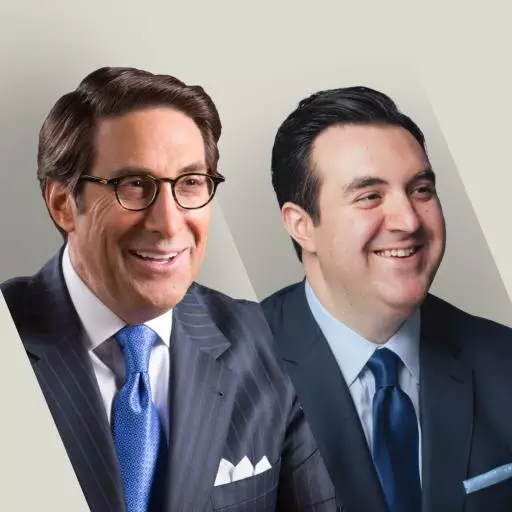
Sekulow


Logan Sekulow and Will Haynes break down President Trump and Gavin Newsom's messages to the world at Davos.
Logan Sekulow: Welcome to Sekulow. Phone lines are open for you at 1-800-684-3110. 1-800-684-3110 if you want to be on the show today. We do have a packed show. Rick Grenell's going to be joining us a little bit later and Will is here. Will Haynes, happy birthday, Will.
Will Haynes: Oh, thank you.
Logan Sekulow: Big birthday. I'm not going to tell people how old you are. Is that a thing?
Will Haynes: No, it doesn't bother me.
Logan Sekulow: He's an old man now. But phone lines again are open. Look, it's a big day as we saw both President Trump, Gavin Newsom, among so many others speaking at the World Economic Forum at Davos. Will, if there's anyone I know who could explain the World Economic Forum to this audience and what Davos is, why they're there, and what it all means, it's your birthday, you take the lead on this. Not because I don't know, not because I'm not as informed as you, but because it's your birthday and you should be able to do it.
Will Haynes: I appreciate that, Logan. Davos is the name that they colloquially call the World Economic Forum's annual conference that happens in Davos, Switzerland. It's abbreviated. They refer to it as Davos. It's an invite-only conference with political leaders, world leaders, CEOs, NGOs, academics, and they all get together and they pontificate about things, they speak about things, and they offer ideas about the future of the world. It's the worst of the worst globalization on display.
There's no binding resolution that comes out of this, or revolution, hopefully not. It also gets a lot of criticism. It was founded, the World Economic Forum, by Klaus Schwab. He is the author of the Great Reset idea, which came out of COVID, which was like, "Hey, let's capitalize on this great crisis and remake the way the world economy should look," with a lot of the ESG, the environment, governance, and stakeholder issues that are widely criticized by capitalists and by conservatives and also just this entire globalist elite mindset where they get together in a non-democratic forum, but they sit here and they come up with all these ideas.
What is different about this year in what we're seeing is the way the Trump administration is positioning themselves and preaching this America First ideology that is what got the Trump administration into office on this stage with people that disagree with it completely.
Logan Sekulow: And the concept of theirs is saying, "Hey, we're not saying just America first, we're saying you all should be representing your countries' best interests first." So all of the other countries first, Germany first, whatever.
Will Haynes: Right. And Howard Lutnick actually did a fantastic job laying that out and we'll play that. But as we see, Emmanuel Macron was there. He had to wear aviator sunglasses. He has an eye condition, but he looked silly on stage. I don't know, Logan, it was indoors with aviators. I know that people want you to wear the indoor sunglasses, but I don't think any of them are going to say he looked cool.
Actually, I do know that audience. But you have him giving his speeches, you have the pushback from a lot of people about the Greenland moves by President Trump. President Trump spoke today, as well as a lot of the cabinet members that are there. We will get into it, but one guest that is there, not as a speaker, but is making some waves is Gavin Newsom. He's palling around with Alex Soros and making some very bold claims where he is criticizing world leaders for not standing up to America. Yes, you heard that right. The governor of California is going and lecturing world leaders for not having a backbone and standing up to the United States. We'll break that all down in the segments ahead.
Logan Sekulow: That's right. Look, it's Will's birthday Wednesday, so it's been fun. We want you to support the work of the ACLJ in honor of Will today if you like what he contributes. Today is the day. If you give in the next hour, we will make that in honor of Will's birthday. Let's try to do $1,000 for every birthday you've had. Y'all can figure out what that is in the next hour. We'll be right back.
Welcome back to Sekulow. It is Will's big birthday, and in honor of Will's birthday, we're talking about the World Economic Forum. You can tell who picked the topic today. Not me. Maybe this guy over here, executive producer of Sekulow. And like I said, if you give today because Gavin Newsom's making waves at Davos, Will Haynes is making waves here. If you enjoy what he's been doing here, his contribution today is Will Haynes Day. You donate to the ACLJ, it's in honor of Will. We're going to hit a goal. We're going to try to hit the goal, which is $1,000 for every year you've been born. So we're looking for a big four-zero. We're looking for a big 40,000. Can we do it? It's a big ask. We'll find out.
All right, so Will, let's restate what we're talking about here. Gavin Newsom and President Trump among many others have been appearing at Davos, the World Economic Forum. A lot of people are calling in because I think in general you hear things like World Economic Forum, you initially, and maybe you should, you shudder at the sound of it existing. It's like the United Nations. There is that bit of New World Order that comes off of that, or The Hague, the International Criminal Court. It all kind of feels like it lives in this same universe of creep.
Will Haynes: Well, and when you look at who's hanging out together, and I think we have this image, this is from Alex Soros' Instagram account, where he's hanging out with none other than Gavin Newsom and he's saying, "Catching up with the real star of the 2026 World Economic Forum, my friend Gavin Newsom. So glad he's here calling out world leaders for believing appeasement works when it comes to Trump. It doesn't, it only emboldens him to become more chaotic and destructive. World leaders could take a page out of Newsom's book. It's time to stand tall, stand firm, and stand united before it's too late." That echoes very closely the words of Gavin Newsom himself speaking to reporters. Let's go ahead and run bite five because he's just going on this tirade against world leaders that they need to stand up against America. Let's roll it.
Gavin Newsom: I mean, handing out crowns and handing out... I mean, this is pathetic. Nobel Prizes they're being given away. I mean, it's just pathetic. And I hope people understand how pathetic they look on the world stage. At least from an American perspective, it's embarrassing. It's time they decide... the Europeans should decide for themselves what to do. But one thing they can't do is what they've been doing and they've been played. This guy's playing folks for fools and it's embarrassing.
Logan Sekulow: And again, it's Gavin Newsom now playing another character. Now he's playing the character of the full anti-Trump, how dare he, he's embarrassing, he's pathetic. And look, if he had been consistent with that, fine, whatever, I don't really care. You can say whatever you want. You may think that some of those things are silly and goofy. Fine, I don't really have any problem with you thinking that way. The problem is when six months ago he was going to be the moderate who was going to bring you to the table.
Will Haynes: Well, I think he's also trying to show himself on the world stage that he can be this world leader, that he can really work with the Europeans and do something different than what we're seeing President Trump doing. I think it's very telling that Alex Soros, who is the son of George Soros, who now runs the entire Soros organization. He's 95, born in 1930, and he is at this point where his son, Alex Soros, runs everything. So the George Soros bogeyman that has been in American politics for financing all the leftist candidates, all the leftist district attorneys that we know the money has been poured into, that's all being run by Alex Soros. Also married to Huma Abedin, former close aide to Hillary Clinton. Like this entire liberal global elite network. And he's 40. He's a 40-year-old man. He's the same age as Will and I.
Logan Sekulow: I think I just spoiled it, Will, you're 40.
Will Haynes: You did. I think you said it earlier, too.
Logan Sekulow: I did, but we're 40-year-old men. Me, Will, and Alexander Soros. We're very similar.
Will Haynes: Right. And when you look at this, though, we know who clearly Alex Soros is going to be backing in 2028. I think that has already been shown, so that means the big money is going to be on Gavin Newsom. But when you also, I want to contrast with that message that is being told by Gavin Newsom to reporters there with what Howard Lutnick, who is one of the close advisors of the President, is saying about this America First kind of model and everything.
I think it's very important because he's calling out the globalism that conservatives in America have called out for a long time, but we're even more concerned about in the wake of the Biden administration and what happened during the COVID pandemic.
Logan Sekulow: Yeah, let's, before we pitch to it again, who is this and why is he there?
Will Haynes: So Howard Lutnick is one of the close advisors, he's economic advisor, does a lot of deals for President Trump as well. And he's there as a representative of the Trump administration. It's a cabinet member position. You see Scott Bessent, the Treasury Secretary, Howard Lutnick being the Commerce Secretary. I think some people may interchange those two and not be sure who we're talking about. Right, exactly. But so you have both of these and we have bite also from Scott Bessent. When they are there giving these things, this is on behalf of the administration. They are speaking from a position of authority. But let's go ahead and roll this. This is bite 13 from Howard Lutnick.
Howard Lutnick: We are in Davos at the World Economic Forum and the Trump administration and myself, we are here to make a very clear point. Globalization has failed the West and the United States of America. It's a failed policy. It is what the WEF has stood for, which is export, offshore, far shore, find the cheapest labor in the world and the world is a better place for it. The fact is it has left America behind, it has left the American workers behind. And what we are here to say is that America First is a different model, one that we encourage other countries to consider, which is that our workers come first.
Will Haynes: And once again, that is him and he keeps going on about that and saying that we want you, the world, to think about your own people. He's saying that this idea of globalism and what the WEF, that's the World Economic Forum, the very place he's speaking, has stood for is the wrong path. It's the wrong thing for your people. It's the wrong thing for your economies. And that's what we've seen at home, the focus not being this globalization, this interconnected economies with all of our trading partners we've seen it through, whether it be tariffs, whether it be the way that our diplomacy has worked, the focus on bringing manufacturing back to the United States and helping Americans live a better life. He's also not saying and everyone needs to continue to invest in us. He's saying you need to think about your people. This is the better way forward. And that is such a stark contrast to what even Gavin Newsom is saying, is saying, "Resist." When you put those next to each other, where Gavin Newsom is saying you are not being strong enough against Donald Trump and the message from the Trump administration and the Secretary of Commerce here is, "Take care of your people," that should be a campaign ad against someone like Gavin Newsom.
Logan Sekulow: Has Greenland come up? Has that been discussed?
Will Haynes: Greenland has come up. President Trump said he's not going to take it by force, which is kind of something in interest.
Logan Sekulow: Okay, thank God for that. There's some things that are like, I know I didn't think he would, but let's just hope that's not the case. I do think the tariff situation is very interesting because I think a lot of people were very pro-tariff and then you had the tariffs come out and maybe we all started to feel it a little bit. And then when the tariffs got threatened in the Greenland situation, it became a little politicized and that is where I felt. What about you, the audience? How did you feel about that when President Trump last week said, "Hey, if I don't get Greenland full ownership, we're going to bump the tariffs up... it's going to go up to 25% tariff pretty much in most of our trading partners."
Will Haynes: Well, and I think the tariffs are a tricky issue for a lot of reasons. I know a lot of people on the right and supporters of President Trump are very pro-tariff, that they have liked the way that he has used this economic power to make deals, to actually try and reset the balance of trade in many ways.
Logan Sekulow: And they understand that to a certain extent, but there is a point where it feels like the balance gets shifted.
Will Haynes: Well, and he's also, he is not incorrect when he talks about the history, that that used to be how the government was funded. American government was funded largely on tariffs until Woodrow Wilson and the income tax and all of these things were introduced and then they started doing direct taxing of Americans' income. Now when he's bringing back this kind of tariff policy, we are in a situation where the government's being funded by both. There is this big tariff policy and we still have the income tax, obviously.
Logan Sekulow: Very sneaky, sis. It's a Connect Four once again.
Will Haynes: But what you see is that there is this kind of struggle. We will see where the Supreme Court falls on that. But there is some concern as well that the more tariffs get put in place, the more pressure goes that way, that it could start to impact everyday Americans' pocketbooks as prices could rise on those goods that are brought in.
Logan Sekulow: Look, I'm going to check while we're in break to see how close we are to that $40,000 goal. There are some people who thought I said 50. I saw that and they were like, "Oh, Will doesn't look a day over 48." And I'm like, "You know, that's because he's only 40." They were trying to be kind, but it was a backhanded compliment. Will turned 40 today. Young spry man as he is. Phone lines are open for you, 1-800-684-3110. Let's talk about the World Economic Forum. I think the tariffs, that's an easy way to get you jumping in this conversation. How do you feel about the tariff situation? How do you feel about tariffs being threatened in relationship to the Greenland conundrum? Give me a call, 1-800-684-3110.
Welcome back to Sekulow. 1-800-684-3110 to be on the air. I posed a question, I would like to hear from you about it. You have President Trump speaking at the World Economic Forum. You have Gavin Newsom speaking there. You have all the other foreign countries all discussing the direction of the nations from a financial standpoint. President Trump has made it very clear that he wants to have control and ownership of Greenland, which has been a really contentious thing with only a few dozen of thousand people, 50,000-ish people, 60,000 people that live in that country.
There's some strategic reasons why President Trump sees it, but he said today or he said yesterday he would not be taking it by force, which I think should be a sigh of relief from most of us because I don't think any of us really want to get into a war that feels completely unnecessary. But he's still interested in it and said, "Europe needs to put pressure on it." It's controlled by Denmark currently. But said last week, he said, "I'm going to put in new tariffs. I'm going to say 10% tariff unless I get full control and if I don't, then we're going to hit 25% tariffs," using the tariffs a bit differently than they were used before, which was just to figure out ways for a fair and balanced way for these countries to also support the United States economy and have a fair trade sort of agreement as we were not taking a lot of these tariffs.
Now the other way is now playing politics with it. I want to hear from you what you think. 1-800-684-3110. 1-800-684-3110. We have one call coming in, certainly more on the side of President Trump in this. Let's go to Ricky in Colorado on line one. Ricky, go ahead.
Ricky: Hey guys, love your show, love listening while I'm in my car driving. I just wanted to put some insight of my thoughts on the tariffs and things that are going on. I think it comes down to our lack of knowledge of our history and our country, the real lack of knowledge of what the Federal Reserve is and what all they actually control. So I think the tariffs are something that a lot of people don't realize how our country benefited pre-Federal Reserve, pre-1913, as well as some of the things that are being highlighted with the Federal Reserve right now, them being under criminal investigation or at least Jerome Powell, I should say.
Will Haynes: Well, Ricky, I agree with you. I think people don't know the history enough, especially of the economics of the United States. I could talk to Ricky for hours about the Federal Reserve and about... but what we've got here and to Ricky's point is that tariffs were how the government were funded prior to the implementation of the income tax largely taking over.
Logan Sekulow: If they said no more income tax, I think we'd all be getting a lot more on board here.
Will Haynes: Right. And once again, the origination of the income tax was 1% on incomes over $3,000, which was a high income earner back in the early 1900s when it was instituted. So you think of how far we've come from that to the progressive system that we have now, the central banking which controls and creates inflation. When people talk about inflation, the Federal Reserve has a target rate of 2% inflation. That is what they want. They don't want deflationary policies because we are a credit system, fractional reserve banking, all of these things create more money.
And what does that do? It devalues one your dollar over the long term as well as it creates a situation where they need inflationary policy in order for the entire economy to continue to grow. So when you start talking about all of these things, these are things that have not been talked about in American economics for decades outside of smaller pockets, niche groups on university campuses. Nerds like me.
But once again, the other than people even like Ron Paul started bringing up the Federal Reserve 15, 20 years ago. It's a tough pill to swallow because again, that's why I wanted you to even lead today's conversation, not just because it's your birthday, but because someone who has a background in finance because it is one of those hot topics that is not easy to follow. It's not easy to take in in a one-hour show here when we have commercial breaks and all these things happen. But I think we're probably doing a better job than most of explaining why it's important to be there, why it's important we're in having these messaging, and what it looks like in the future, how things are being planned out because none of this is short term. A lot of what is being planned from an economic point of view is forecasting a decade or so, maybe more into the future.
Well, and I think part of my reservation about bringing the tariffs back into play the way they have been, and once again we'll see what the Supreme Court does. But here's my reservation: not that it could be better for the country economically if we kind of pull back on the income tax, move back to a more tariff which we've seen the big beautiful bill is lowering the income tax for a big portion of Americans, they will see that this year, the American middle class will receive benefit from that, and the tariffs will kind of offset that to some degree. However, when Democrats are back in power, if they then raise the income tax and continue to use the tariffs, that breaks the system. Then it's double taxation.
And when they start to make these threats of it's double taxation that you see from the left and how dare he, once they get the green light though, the Democrats and the left have never decided to give up government revenue. They don't like to get rid of taxes and get rid of revenue sources for the government. So that is my one hesitation and concern is that yes, I think you hear Howard Lutnick saying to the faces of the World Economic Forum, it's these globalization policies, these interconnected world, that's why tariffs are actually frowned upon by these countries is because it's wanting to be a more globalist society and tax your own people. When he's saying we're flipping the script and I'm going to say it directly to you here at the World Economic Forum, that is trying to push this and say you should do the same.
Logan Sekulow: Well, it's been that discussion point of whether inflation or deflation can even occur when your society is built on inflation and not built on prices coming down. But what we've seen actually for the first time in a long time there have been not only some settling, some items and products the prices are dropping. Now there's the ones that are kind of on a scale like gas. But we've seen that actually happen. That is not very common in America to just get things stable is I mean look what's happened the last not just the last four years. Obviously things went out of control in the last four or five years in terms of inflation, even the last two years. But if you were going to look back the last 50 years at a chart, everything is just going up at a pretty alarming rate. To get things to stabilize is even difficult.
Will Haynes: Well, and once again talking about stabilization, historically when you talk about those years of 9% year-over-year inflation under Biden, typically those prices are baked in in perpetuity. So you're getting those 2%, if you get it back within scope of what the Federal Reserve target is, those prices are baked in and you're building on top of those huge levels. And that's where trying to change things and almost not break the economy, but break the system that has been baked in and like I said, people weren't talking about these issues because while there were conservatives and Democrats when it came to policy, conservatives and liberals about economic policy, when you started to talk about the system, it was that almost uniparty that people talk about. There wasn't a lot of disagreement of changing it and shaking it up the way it's been for more than 100 years at this point.
And I think that is what's different about people like Scott Bessent, like Howard Lutnick, about like President Trump, that are getting in there and saying, "This old way has not been good for the American people at the point where we're at. We need to start to think about it a little differently."
Logan Sekulow: All right, hey we got a second half hour coming up and look it is Will's big birthday. And with that, I'm trying to raise $40,000 during this show, $1,000 for every year that Will Haynes has been on this earth. Can you do it? Can you support the work of the ACLJ right now by going to ACLJ.org? You can also sign our petition, become an ACLJ champion, that's all appreciated. Second half hour coming up. If you don't get us on your local station, find us on YouTube, Rumble, or ACLJ.org.
Featured Offer


Featured Offer
About SEKULOW
The American Center for Law and Justice (ACLJ) focuses on constitutional law and is based in Washington, D.C. The ACLJ is specifically dedicated to the ideal that religious freedom and freedom of speech are inalienable, God-given rights. In addition to providing its legal services at no cost to our clients, the ACLJ focuses on the issues that matter most to you — national security, protecting America's families, and protecting human life.
About Jay Sekulow
An accomplished and respected judicial advocate, Sekulow has presented oral argument before the U.S. Supreme Court in twelve cases in defense of constitutional freedoms. Several landmark cases argued by Sekulow before the U.S. Supreme Court have become part of the legal landscape in the area of religious liberty litigation; these cases include Mergens, Lamb's Chapel, McConnell v. FEC, Operation Rescue v. National Organization for Women, and most recently Pleasant Grove City v. Summum.
In 2009, Townhall Magazine named Sekulow to its "Townhall of Fame" and recognized him as "one of the top lawyers for religious freedom in the United States." In 2007, the Chicago Tribune concluded that the ACLJ has "led the way" in Christian legal advocacy. In 2005, TIME Magazine named Sekulow as one of the "25 Most Influential Evangelicals" in America and called the ACLJ "a powerful counterweight" to the ACLU. Business Week said the ACLJ is "the leading advocacy group for religious freedom." Sekulow's work on the issue of judicial nominees, including possible vacancies at the Supreme Court, has received extensive news coverage, including a front-page story in The Wall Street Journal. In addition, The National Law Journal has twice named Sekulow one of the "100 Most Influential Lawyers" in the United States (1994, 1997). He is also among a distinguished group of attorneys known as "The Public Sector 45" named by The American Lawyer (January/February 1997). The magazine said the designation represents "45 young lawyers outside the private sector whose vision and commitment are changing lives."
Sekulow brings insight and education to listeners daily with his national call-in radio program, Jay Sekulow Live!, which is broadcast throughout the country on nearly 850 radio stations. Sekulow also hosts a weekly television program, ACLJ This Week, which tackles the tough issues of the day. He is also a popular guest on nationally televised news programs on ABC, CBS, NBC, CNN, FOX News, MSNBC, CNBC, and PBS.
Contact SEKULOW with Jay Sekulow
jsekulow@aclj.org
http://aclj.org/
American Center for Law and Justice
PO Box 90555
Phone: 757-226-2489
1-800-684-3110
1-877-989-2255