
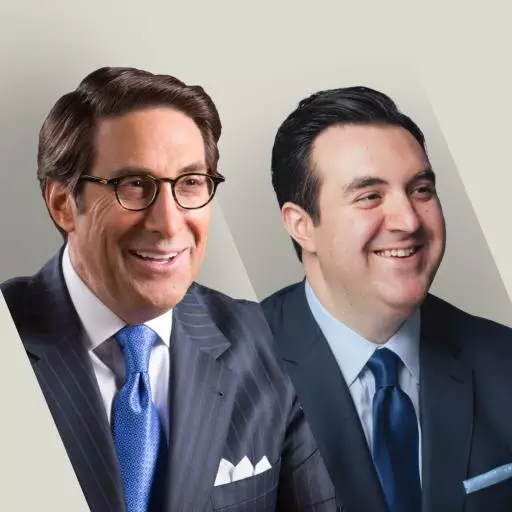
Sekulow


Logan Sekulow and Will Haynes break down President Trump talking about using the Insurrection Act in Minnesota.
Logan Sekulow: Welcome to Sekulow. Phone lines are open for you at 1-800-684-3110. Once again, we have breaking news and a packed show. We have Rick Grenell joining us a little bit later. Mike Pompeo will be joining us at the end of the broadcast. That means we're going to be taking your calls a lot earlier than usual. If you want to get in line, now is the time to do it. That's at 1-800-684-3110.
The breaking news comes out directly from President Trump on Truth Social. This is specifically targeted at everything that is going on in Minnesota, specifically related to ICE. There have been an endless amount of debates about what went down last week in that loss of human life, which is always unfortunate. There has been a lot of debate on both sides—who was right and who was wrong. There have now been a lot of riots that have been happening in the area. It is starting to get a little out of control.
President Trump put out a statement and said, "If the corrupt politicians in Minnesota don't obey the law and stop the professional agitators and insurrectionists from attacking the patriots of ICE, who are only trying to do their job, I will institute the Insurrection Act, which many presidents have done before me, and quickly put an end to the travesty that is taking place in a once great state. Thank you for the attention to this matter, President DJT." That, again, came out on Truth Social and on social media platforms.
This is an official statement from President Trump. Now, what does the Insurrection Act mean? I think we can break that down. Will Addison knows a little bit more than a lot of us do, and we'll do that now. It hasn't been used by a lot of presidents, but it was last used in 1992 during the Los Angeles riots. So, within most of our lifetimes, if you're listening to this and this show is interesting to you, there's a good chance you were maybe around in 1992. Maybe you're a young person like Will and I were back then in the good old days of the 90s where everything was peaceful and calm.
Will Addison: Except for when they used the Insurrection Act, exactly. Nostalgic times. These days, you realize it's not all that different. There were impeachments going on, and there were riots in the street. Let's talk about what this Insurrection Act may look like, and then let us know what you think. Let us know what you think about the whole ICE situation. I'd be very interested in that at 1-800-684-3110 because I have seen conversations bubble up from people on the right who say this is maybe not what we signed up for. I think they have to start taking the political wins and checking on where people are feeling with all of this.
The Insurrection Act of 1807 is actually an amalgamation of laws from the beginning of the Republic, some even enacted in the 1700s. They've been used over 30 times throughout our history by presidents like George Washington to put down some rebellions. What it now looks like is Title 10 of the U.S. Code, Sections 251 through 255. Those are the codified versions of what these insurrection laws were.
Section 252 is really what is applicable here. It says whenever the President considers that unlawful obstructions, combinations, or assemblages, or rebellion against the authority of the United States make it impracticable to enforce the laws of the United States in any state by the ordinary course of judicial proceedings, he may call into federal service such of the militia of any state—the National Guard here—and use such of the armed forces as he considers necessary to enforce those laws or to suppress the rebellion. What's key here is that this has generally been seen as a very broad law. The term "rebellion" is not defined, so that implies it is up to the President. This is one of the few instances where the Posse Comitatus Act, which bans the use of the military for civil enforcement of law, is excepted.
Logan Sekulow: What do you think about that at 1-800-684-3110? Of course, we obviously have to look at the ramifications of using these kinds of acts and what it could look like if it's something that you're not in favor of if the next president was to utilize it. We have to be safe and we have to be thinking about it. Give me a call and let me know what you think at 1-800-684-3110. While you're at it, during this break, go to ACLJ.org and support the work. Make a donation; it will really help us out. We'll be right back.
Guest (Male): The challenges facing Americans are substantial. At a time when our values, our freedoms, and our constitutional rights are under attack, it's more important than ever to stand with the American Center for Law and Justice. For decades now, the ACLJ has been on the front lines, protecting your freedoms and defending your rights in court, in Congress, and in the public arena. We have an exceptional track record of success.
But here's the bottom line: we could not do our work without your support. We remain committed to protecting your religious and constitutional freedoms. That remains our top priority, especially now during these challenging times. The American Center for Law and Justice is on your side. If you're already a member, thank you. If you're not, this is the perfect time to stand with us at ACLJ.org, where you can learn more about our life-changing work. Become a member today at ACLJ.org.
Guest (Male): After nearly 50 years, Roe v. Wade, the tragic ruling that manufactured a so-called right to abortion, has been overturned by the United States Supreme Court. This is the moment the ACLJ has been fighting for. It's the biggest victory we've achieved in our three-decade-long fight against the soulless abortion industry. Believe me, abortionists like Planned Parenthood are devastated. This victory would not have been possible without the steadfast prayer and support of ACLJ members like you.
On behalf of the entire ACLJ, I thank you for standing with us against the abortion industry and helping us save defenseless babies. I thank you for making this victory possible, and I ask you for your continued prayer and support as we continue to battle against barbaric new abortion laws across our nation.
Logan Sekulow: Welcome back to Sekulow. Phone lines have lit up. We have not been able to screen any of them yet, but a lot of them are on hold right now, so stay on hold at 1-800-684-3110. We're going to take calls in this segment and the next segment. Later on, we are joined by Mike Pompeo and Rick Grenell in the back half of the show. It's going to be a packed back half. We'll do our best to get to as many of your calls up front as we can.
For those just joining us, yes, you've seen the news and you saw the headline. What does it mean? President Trump threatens using the Insurrection Act. He says a lot of presidents have used it before, and it's time to make sure Minnesota is safe and that the ICE agents are taken care of. This obviously comes at a very intense time in terms of Minnesota and President Trump in general. At the same time, Governor Walz is telling Trump to turn down the temperature. It feels like that's the ongoing thing we've heard, which is to turn down the temperature on a situation. Sure, that's good advice; I would love for that to happen. But the streets say otherwise.
Will Addison: That's right. What we are seeing now, first, is the Insurrection Act. This is a set of laws referred to as the Insurrection Act of 1807, but it's codified in Title 10 of the U.S. Code, Sections 251 through 255. It's different instances where the President or the federal government can use military forces to enforce the law or to keep order or put down a rebellion. Rebellion is not defined, so it's been generally interpreted that it is up to the President to decide what is a rebellion.
I want to read this because this is Section 252. This is really what gets to the heart of what we're looking at here. There's some other ones that kind of tangentially get there, but this is where, whenever the President considers that unlawful obstructions, combinations, or assemblages, or rebellion against the authority of the United States make it impracticable to enforce the laws of the United States in any state by the ordinary course of judicial proceedings, he may call into federal service such of the militia of any state and use such of the armed forces as he considers necessary to enforce those laws or to suppress the rebellion.
There was talk of this when he was sending the National Guard to California, and it was bubbling up, but it was never actually invoked. I think that's actually why a lot of the courts ended up saying you have to send the National Guard home. You can't just deputize them or call them into federal service without this extra authority because of the Posse Comitatus Act. Generally, the President and the federal government are barred from using the military for law enforcement purposes within the country. That's a good thing; we generally don't want that. I mean, how many times have people on the right been concerned about martial law from other presidents?
Logan Sekulow: That's my concern with this in general, and that's why I say you have to think long-term on this in terms of the way ICE is being used and the way that they are deputized. We've had this discussion, which is: whose authority do they have and who are they over? Are they over American citizens also? Is this just enforcement of people here illegally? It's a little blurry, and I think maybe that's the big concern. It's also the problem we're running into already, which is, again: are they law enforcement? Yes. Are they your local law enforcement? No. So what does that mean if you are a citizen of one of these states or one of these areas and you encounter ICE? What kind of rules are they under?
Will Addison: Well, and I think this is where it gets more dangerous. One, you saw the Governor, and this is also what differentiates it between what happened in California and what is happening in Minnesota. In California, Governor Newsom was criticizing the policies of the President, and he was saying, "No, we don't need the National Guard because we've got it and we're taking care of it." So that was the argument there—that they were taking care of it, but also that ICE shouldn't be sent there.
When you look at what Governor Walz is doing, he is calling on the citizens to resist—to resist the federal government. The ICE agents that are enforcing legally deportation orders and going after people that are here illegally, that is their job and they are allowed to do that. When you have a state that is actively, not just within their own policies but also within directing their citizenry and their constituents to resist, you do get into an area where it seems like an Insurrection Act to put down a rebellion could be a logical use here.
I want to hear this. This is from last night. Governor Walz played a pre-recorded message on social media. It was supposed to look live, but they had some tech issues. It happens; we've all been there, though not necessarily the finest moment at that point. But here is some of the rhetoric that he was saying last night. This wasn't a moment where he, and he said President Trump needs to bring down the temperature, but he is still instructing his citizens to push back. That isn't going to help anyone. That's only going to give more credibility to the use of something like an Insurrection Act. Let's play bite five when you hear from the Governor of Minnesota, who has recently had articles of impeachment filed against him.
Governor Tim Walz: You're angry. I'm angry. Angry's not a strong enough word. But we must remain peaceful. Second, you are not powerless. You are not helpless, and you are certainly not alone. All across Minnesota, people are learning about opportunities not just to resist, but to help people who are in danger. Thousands upon thousands of our fellow Minnesotans are going to be relying on mutual aid in the days and weeks to come, and they need our support.
Will Addison: The Governor there is talking about how the people of Minnesota are going to be fighting back on the ground—not his government saying we're going to go to court and we're going to try to get an injunction against this. No, he is saying that you can not just resist, inferring continued resistance, but also how to help people who are in danger. Many of those people, I assume, are illegal migrants that are there that have deportation orders against them.
When he says this is of the President's doing, in this address, he also said he wants more of this chaos. What is chaotic is that the government of Minnesota is resisting. He's a very powerful individual; he is the Governor of a state where this is taking place. He can get on the phone with the administration. We even heard from Kristi Noem on Fox this morning. She has called him and tried to call him to talk about this, and he will not have these conversations.
Logan Sekulow: Well, he's getting more airtime than ever. I mean, Tim Walz is back to being a household name, and he hasn't been for about a year. How many people even remember who the losing vice presidential candidate is? Most people would at least have to think for a few minutes about each one. We could go back and go, "Okay, well, who was Mitt Romney's? Oh, Paul Ryan, yeah, that's right." Now let's go back, "Who was Al Gore's? Joe Lieberman." Then "Who was..." SNL even did that whole skit about Tim Kaine one election cycle prior, and the whole joke was no one knew who he was.
Now you have Tim Walz, who had to have some egg on his face for a moment saying, "I'm going to not run for a third term." Now he's able to turn that around. I don't know what the rules are on turning that back around, but I have a feeling he could use this as a political stunt to re-bolster that potential third-term campaign, saying, "Look, I am the one who's going to be fighting back against President Trump." Then that becomes your entire campaign strategy. In certain states, that will fly really well.
Will Addison: Well, and once again, what could the Governor actually do here? Instead of saying we need all of our people to help people that are going to be in danger—in danger of what? Being deported for not being in the country legally? Instead of doing that, what he could say is, "I am the Governor. I want you, I understand your anger, but this is my job. Thank you, everyone, for raising your voice, but this is going to be my job. I'm going to use the Minnesota Department of Investigations, I'm going to use our attorneys here and my Attorney General, and we're going to meet with the White House and with the administration. We're going to get it sorted out because they are going to want to get people that are here illegally out, but we're going to do this safely."
We're not going to have this where they're even saying we're not going to have them go door to door. We're going to work with them to get the people that are in our jails out. But instead, he's enlisting his people to resist and to almost—he's invoking this kind of World War II era idea where you're going to have to take people into your homes, as if this is a Holocaust situation. He has said that ICE is the Gestapo before. He's continuing this narrative, and that is very dangerous for his people. He's not taking care of Minnesotans.
Logan Sekulow: We only got a minute and a half left in this segment. In the next segment, I'm going to hear from you. We are going to take a bunch of calls, so stay on hold if you're on hold or give us a call. Hey, have you seen the chat? Some people are asking about updates from Iran and updates about the Greenland situation. A lot of that's been in the news quite a bit. As I was flipping through the channels today, even on BBC, they were talking a lot about Greenland and President Trump's threats there to take it by force if necessary.
We'll talk about that a little bit more, even with Mike Pompeo, who will be joining us later. He's always a good voice on the international front to have an understanding of that. That will wrap up the show towards the end. But we will take some calls and comments related to that as well if you have them at 1-800-684-3110. I think these talking points become sometimes lost in the news cycle. Why was Greenland even an important conversation to begin with? We can go back and discuss that a little bit further. We also have news coming out of the ACLJ in a very interesting case that we're going to be taking on. Again, the left's war against the freedom of speech, specifically towards kids in schools, is heating up once again. You're not going to believe this story.
We're going to discuss that coming up in the next segment as well as take your phone calls, so don't go anywhere. I am going to encourage you, if you want a little spoiler of what we're talking about, go to ACLJ.org/sign to sign a petition to make sure you don't have to surrender your religious liberties and your kids don't have to just in their school. We'll be right back with more on Sekulow.
Guest (Male): After nearly 50 years, Roe v. Wade, the tragic ruling that manufactured a so-called right to abortion, has been overturned by the United States Supreme Court. This is the moment the ACLJ has been fighting for. It's the biggest victory we've achieved in our three-decade-long fight against the soulless abortion industry. Believe me, abortionists like Planned Parenthood are devastated.
This victory would not have been possible without the steadfast prayer and support of ACLJ members like you. On behalf of the entire ACLJ, I thank you for standing with us against the abortion industry and helping us save defenseless babies. I thank you for making this victory possible, and I ask you for your continued prayer and support as we continue to battle against barbaric new abortion laws across our nation.
Guest (Male): The challenges facing Americans are substantial. At a time when our values, our freedoms, and our constitutional rights are under attack, it's more important than ever to stand with the American Center for Law and Justice. For decades now, the ACLJ has been on the front lines, protecting your freedoms and defending your rights in court, in Congress, and in the public arena. We have an exceptional track record of success.
But here's the bottom line: we could not do our work without your support. We remain committed to protecting your religious and constitutional freedoms. That remains our top priority, especially now during these challenging times. The American Center for Law and Justice is on your side. If you're already a member, thank you. If you're not, this is the perfect time to stand with us at ACLJ.org, where you can learn more about our life-changing work. Become a member today at ACLJ.org.
Logan Sekulow: Welcome back to Sekulow. We have a completely full bank of calls. Some of these calls are going to be similar, but I want to hear from all of you. Let's go ahead and take a couple of these calls and we'll talk about some of the work of the ACLJ coming right after this. A lot of you have been on hold for the whole show. Let's start it off with an old standard. Let's go to Bill in Wyoming on line three. Bill, you're on the air.
Bill: Yeah, hi. Thanks for taking my call. Look, first of all, I want to apologize, but I was trying to talk about what you covered last week in the fact that I wanted to say, let us remind everybody what happened with the last administration. You covered it, but I lost my thoughts on the other side of the coin in the fact that, why don't we just sit down, address this properly and calmly, get rid of the agitators, take care of those who are here illegally, and maybe even—in my opinion—maybe that what happened January 14th would never have happened.
Will Addison: Well, that's right. Once again, I feel like cooler heads could prevail on many sides of this. But what you are seeing is, yes, aggressive action by the administration, which they ran on. Then you are seeing an aggressive response by these governors of blue states or mayors that are trying to make a name for themselves out of this and actually putting their people in harm's way as a result.
I mean, Governor Walz even gave another way the people could help by wanting them to—and he keeps saying peacefully as if to cover that, as if it's not going to get out of hand—but he's encouraging people to go out and film ICE so that they can establish a database of atrocities, is what he calls it, against Minnesotans. This is to establish not just a record for posterity, but to bank evidence for future prosecutions. Once again, the entire premise the Governor is putting out there is that everything ICE is doing is an atrocity and illegal because they're going to prosecute these people.
This is not a situation where, when he's telling people to be peaceful, he's actually ratcheting up the rhetoric even more, saying that we need a database of atrocities against Minnesotans. The tragic death of a human that occurred last week, I don't think rises to the level of atrocity in the sense of the way he's using it. He is trying to make it, as we've said, he is using that Nazi rhetoric constantly. This is not me overstepping saying he's trying to make these ties. That is his goal, and that is where it is going to make people more agitated. It's going to make law enforcement more nervous about the people around them and is going to lead to more harm being done to individuals.
Even the media is complicit in this. They put out headlines: "Another ICE-involved shooting last night in Minnesota." What happened in that situation was a member of ICE was going after someone who they were pursuing because they are here illegally. That person is fleeing. People run out of a house to assist the getaway of the person that is here illegally and start hitting the ICE agent with shovels and brooms. Someone is shot in the leg out of self-defense from the ICE agent. Once again, that type of behavior is a direct response to what the Governor is calling for here—to get involved. Hitting someone with a shovel? Yeah, law enforcement, if they are being beaten, are probably going to shoot you in the leg. And that is self-defense. You have no right to run out and start beating a law enforcement officer with a shovel. But yet, this is the same night that the Governor is out there saying there is more you can do. Get out there and create a database. It's shocking that more incidents have not happened, but I am afraid they will.
Logan Sekulow: Well, I think there may be more that we're just not seeing also that are happening on the ground there. Again, that's why I'm always interested if you're in Minnesota to give me a call because what's it like actually to be on the ground there? I'd love to hear from you. But we have a lot of calls from around the country. Let's continue on. Let's go to Kathleen in California on line two. Kathleen, got an idea? Go ahead.
Kathleen: Yeah, I have an idea because I can see that the agitation is just going to keep going. I'm a retired teacher, and I know that kids can drive you nuts. So I'm sure these people are, and they're all paid, because they were paid in California, I know that. My suggestion is that President Trump pull all those people for a time period, that he tells Walz that either he cooperates or he's arrested.
Logan Sekulow: All right. Well, you know, that is an option that's on the table, I guess. I don't know if the President has necessarily the right to just start threatening to arrest people like Walz and governors of states, but you know what? I could see how the frustration would be building to that. I do think there is a tipping point we do have to be aware of. I think whether you are a supporter of how ICE has been handling things, or maybe you think, "Hey, in general we like the idea of being heavier or better on immigration, but maybe ICE is taking it too far. Maybe they need better training. Maybe we don't have the right people in these roles."
Because there have been instances, and we know this, and I think let's not pretend that it's been a 100 percent flawless record here now. We have had issues where the wrong people have been sent places, wrong people have been arrested, and doors have been busted down at homes of people who should not have had their doors busted down. So let's not pretend that we're living in some perfect society here where that's just working flawlessly. The American people, you do have to gauge their temperature. I do that on these calls. Look, I have to say most of the calls, most of the people here, are obviously very supportive of President Trump. That's not any shock based on what this show is and the audience that calls in on conservative talk and Christian radio. However, I always want to make sure that you do feel that way because it does feel like you can wake up in a different America each and every day.
Let's go ahead, we've got two minutes, let's take one more call at least in this segment. Stay on hold, though, we'll get to you. Let's go to Joel, who is calling in California also. Joel, go ahead.
Joel: God bless you guys. I don't understand how turning down the temperature by cranking up the thermostat is going to work. Somebody must ask Tim Walz that question. I also thought it was illegal to incite a riot, and I think that's what he's doing.
Logan Sekulow: Well, it's a catch-22, Joel. It feels like there have been two of those statements, like you said, that don't really coexist with each other when you say turn down the temperature and then at the same time, you start to tell your own citizens of your state that you are the Governor of to be concerned and be ready.
Will Addison: Well, and to Joel's point as well, they had a special counsel and an entire indictment trying to go after President Trump, saying he incited an insurrection at the Capitol, right? So if we are just taking what they have put out there—the baseline—then is the non-President of the United States, the Governor of a state, trying to interfere with laws that are on the books, that are lawful, and action that is lawful of deportation of people that are here criminally? Is that not an insurrection? And that's why you have the questions of the Insurrection Act. So do I think that we need to get there as a country again? No, because I'm so glad we are behind that. But once again, it's like they're daring the federal government to do it. That's what the—and you know what? It worked for President Trump to get re-elected because people saw how ridiculous it was, so maybe that is his plan. Arrest me for insurrection so I can run for President in 2028.
Logan Sekulow: We got a second half hour coming up; I want you to join us. Phone lines are still jammed. They may continue to be jammed. We're going to get to as many as we can, but we do have a packed back half, including Rick Grenell, Mike Pompeo. I do want to talk about the new ACLJ case. We haven't been able to get to it yet because this is obviously what everyone wants to talk about, and I understand that. But there is important work that the ACLJ is doing. We're going to get to that in the second half hour. If you don't get us on your local station, we're broadcasting live right now for another half hour at ACLJ.org, on YouTube, on Rumble. Find us there. Subscribe if you haven't, and make a donation if you can at ACLJ.org if you want to support this show and our legal work. We'll be right back.
Guest (Male): For decades now, the ACLJ has been on the front lines, protecting your freedoms, defending your rights in court, in Congress, and in the public arena. The American Center for Law and Justice is on your side. If you're already a member, thank you. And if you're not, well, this is the perfect time to stand with us at ACLJ.org, where you can learn more about our life-changing work. Become a member today at ACLJ.org.
Featured Offer


Featured Offer
About SEKULOW
The American Center for Law and Justice (ACLJ) focuses on constitutional law and is based in Washington, D.C. The ACLJ is specifically dedicated to the ideal that religious freedom and freedom of speech are inalienable, God-given rights. In addition to providing its legal services at no cost to our clients, the ACLJ focuses on the issues that matter most to you — national security, protecting America's families, and protecting human life.
About Jay Sekulow
An accomplished and respected judicial advocate, Sekulow has presented oral argument before the U.S. Supreme Court in twelve cases in defense of constitutional freedoms. Several landmark cases argued by Sekulow before the U.S. Supreme Court have become part of the legal landscape in the area of religious liberty litigation; these cases include Mergens, Lamb's Chapel, McConnell v. FEC, Operation Rescue v. National Organization for Women, and most recently Pleasant Grove City v. Summum.
In 2009, Townhall Magazine named Sekulow to its "Townhall of Fame" and recognized him as "one of the top lawyers for religious freedom in the United States." In 2007, the Chicago Tribune concluded that the ACLJ has "led the way" in Christian legal advocacy. In 2005, TIME Magazine named Sekulow as one of the "25 Most Influential Evangelicals" in America and called the ACLJ "a powerful counterweight" to the ACLU. Business Week said the ACLJ is "the leading advocacy group for religious freedom." Sekulow's work on the issue of judicial nominees, including possible vacancies at the Supreme Court, has received extensive news coverage, including a front-page story in The Wall Street Journal. In addition, The National Law Journal has twice named Sekulow one of the "100 Most Influential Lawyers" in the United States (1994, 1997). He is also among a distinguished group of attorneys known as "The Public Sector 45" named by The American Lawyer (January/February 1997). The magazine said the designation represents "45 young lawyers outside the private sector whose vision and commitment are changing lives."
Sekulow brings insight and education to listeners daily with his national call-in radio program, Jay Sekulow Live!, which is broadcast throughout the country on nearly 850 radio stations. Sekulow also hosts a weekly television program, ACLJ This Week, which tackles the tough issues of the day. He is also a popular guest on nationally televised news programs on ABC, CBS, NBC, CNN, FOX News, MSNBC, CNBC, and PBS.
Contact SEKULOW with Jay Sekulow
jsekulow@aclj.org
http://aclj.org/
American Center for Law and Justice
PO Box 90555
Phone: 757-226-2489
1-800-684-3110
1-877-989-2255