
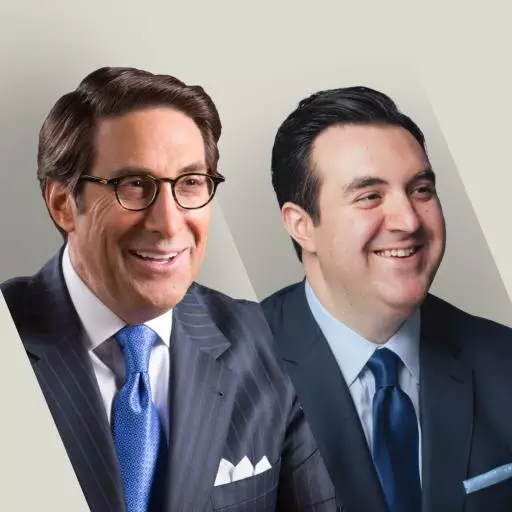
Sekulow


Happy New Year from the ACLJ!
Logan Sekulow: Happy New Year, everyone. Welcome to Sekulow. I just wanted to first start this show off. Logan Sekulow, by the way, Will Haynes in studio as well.
Will Haynes: I'm here.
Logan Sekulow: And we wanted to first just start off and say thank you for an amazing 2025. I know you heard me do that push over and over again for our year-end drive. Thank you again for all who supported the work of the ACLJ, whether that is our legal work, as we are in court rapidly, continually, constantly, and our media work. Like I always say, we always strive to be the best of the best, to have the best crew, to have the best team of lawyers, to have the best media team. None of that happens without you.
So I just want to say first and foremost, a big thank you. As we head now into a new season for the ACLJ, 2025 we celebrated 35 years of ACLJ and now we head into our 36th year. We head into, again, a new chapter for the organization as we look to what the future may hold. 2026, I'm sure just like 2025, will fly by with so much that happens on a continual basis here within the organization and, of course, within the news.
Will Haynes: That's right. And we have a lot going on even as we speak. We talked about how in December things were so busy for our attorneys. They don't slow down just because it's a new year. Just this month alone in January 2026, which is hard to believe, we've got things like this going on. We have an oral argument on a motion to dismiss on January 29th. That's in Massachusetts regarding our lawsuit against the Commonwealth of Massachusetts with their attacks on the pro-life community.
Logan Sekulow: And that's headed into what, the third year I guess of doing this? Two years since we started it, but heading into the third year of actually being involved in what happened in Massachusetts. And of course, there's things like going after Gavin Newsom and the State of California for what they've done to some of these churches out there, trying to collect these insane fines. Or we have other opportunities, specifically with the case that we're going to have against CNN, trying to finally regulate what defamation can look like within this country.
Will Haynes: That's right. And because we filed those cert petitions at the Supreme Court at the end of 2025, we should be getting replies from the other parties, whether it be the State of California or from CNN, towards the end of January, early February. We get their reply brief, and then our attorneys go right back to work and write our reply to the opposition brief. So then we're still working on those cases.
We have an oral argument in New Orleans coming up on January 9th. So, not long into the new year, we have an oral argument in an appeal that the Katy Independent School District in Texas, outside of Houston, put forward. Remember that teacher we told you about that was told, "You're not able to pray anywhere a student can see you visibly"? We won at the lower court level, but now it is at the appeals court, the Fifth Circuit in New Orleans. Oral argument on that is January 9th. In court in Chicago, there's a status conference January 20th on street preachers. So, a lot going on in the courtroom early this year.
Logan Sekulow: And we're also going to be expanding our media operation. You know we did last year, we talked about at the very end of the year, one of our new specials that we're working on, *The Chilling Effect: The War on Free Speech*. That'll be coming likely before the end of 2026. We've got a lot going on with that project as well as so many others as the show continues to expand as well. We're going to be on some new networks, going to be in some new places. Again, we always try to do this entire operation without having to come up with some sort of paywall or something where you have to join to be a part of it.
But of course, a lot of you do. A lot of you financially have supported the ACLJ through 2025, and we hope you consider doing that through 2026. All of our ACLJ champions, the people that give on a monthly basis, we know that you are doing the good work here. You are really spending your time and your energy to make sure the word gets out there for organizations like ours. So again, as we head into this new year of 2026, I just wanted to start this off and just spend these first few minutes just saying how appreciative we are.
We're not going anywhere. We have a packed year ahead. And of course, we have a packed show as well. The show's not going anywhere, so make sure you always stay tuned. Make sure you're subscribing on YouTube and doing all of that. Help us out. That's a great free way to just do it. If you haven't subscribed, hit that subscribe button right now on YouTube. We'll be right back.
Logan Sekulow: Welcome back to Sekulow. Phone lines are open for you. I'd like to hear from you on this issue because it's something that I think the ACLJ and really the American people should be weighing into right now as the media landscape has changed quite a bit since the sixties and the shield that organizations like mainstream news organizations like CNN have had against defamation has been almost impenetrable. I cannot tell you the constant calls I've had over the years where someone gets very upset that lies are being spread about them through mainstream news. They call us, and Dad, half the time it feels like the conversation's got to be, sadly, there's not a whole lot we can do.
Well, that may change as the ACLJ is now back in court with what could be a landmark case against the cable news network, against CNN, for perpetuating something that their organization knew to be untrue against Alan Dershowitz, fame lawyer, celebrity lawyer, if you will. This is not usually how everything lines up. But when you have Alan Dershowitz suing CNN, where's the ACLJ get involved? We get involved because of not necessarily even the merits of this specific case, but because the standard that has been in place and has been established since the sixties just does not reflect the media landscape of 2025.
Jay Sekulow: You're exactly right. And you mentioned earlier, Logan, that it's almost impenetrable. It really is impenetrable. If you're a public figure and the media attacks you. President Trump has seen this. It's basically, we tell clients, "Sorry, there's nothing really we can do." Now, what's interesting here is in Professor Dershowitz's case, which it's quite an honor for us to represent a leading constitutional law professor in American history. He was representing President Trump, with me and Jordan, at the Senate floor during the impeachment. And he made a statement of how the impeachment laws are supposed to work under the Constitution, what constitutes an impeachable offense.
And CNN, after knowing exactly what he said, all their commentators went on, made up a thing called the Dershowitz Doctrine, which there is none, and said completely the opposite of what he said. And Logan, they had the tape, the whole world saw it, and they continued this for a couple of days. They never retracted it. So Professor Dershowitz filed a lawsuit. The judge said that if there was ever a case of defamation, this was it. But the only thing standing in the way between Professor Dershowitz and justice is a Supreme Court opinion called New York Times v. Sullivan, which was in 1964, which gave media heightened protection.
But the media landscape was totally different then. Now everybody's media. So what you've got is, as you mentioned, this impenetrable wall. We're challenging New York Times v. Sullivan. We also believe that the burdens that they place on plaintiffs is outrageous in these kind of cases. And let me take it a step further. It's not just how does this impact CNN. It impacts everybody. Because Logan, as you said, these are calls we get including from the President all the way to Professor Dershowitz to other people. The attacks that come and nobody can take legal action.
We're hoping to change that. Justice Thomas, Justice Alito, and Justice Gorsuch have all questioned the law saying it was created out of a political decision, not a legal one. It's not rooted in the Constitution. And we have filed this morning, which you're right folks, we work right through the holidays to get this brief done, the petition for certiorari. It has been filed as of about 45 minutes ago. So we are now officially at the Supreme Court of the United States in what I think is probably one of our—not probably, it is one of our biggest cases we've ever had.
The implications are huge, and our ACLJ members and donors have made this possible. And it was a lot of legal work. We had five lawyers plus me working on this case pretty much for the last two months. It's been our project. So I'm excited, very pleased with the product. The other side gets to respond, then we'll respond again. And we'll probably know end of the spring if they're going to take it or not. If they do, we will argue it next year. I'm optimistic. There are justices calling for this decision to be overturned. It's time, and we're optimistic and I think we've got the perfect case for it.
Logan Sekulow: It's a long process. I want to make sure people know that you're hearing about it today and it's not going to be answered tomorrow. But we have to have a team on board pretty much working these Supreme Court cases almost on a full-time level on these kind of scales when it comes to these kind of cases. This is not something that we send off a demand letter and then we wait for it to come back. This is something that we have to be on point about. That's why you've got to have the best of the best.
If you want to support the ACLJ because look, at a bare minimum, you may be watching this going, "I don't know if the media should, you know, their scrutiny shouldn't be that hard." Maybe you believe it should be a bit more open to how things are right now where like you said, if you're a public figure, it is just sort of fair game. However, I think what we all can agree on that it's at least time, the way media has changed, it is at least time for the court to weigh in for the first time since the sixties on this.
Will Haynes: That's right, Logan. And this is another angle as well I find so fascinating about the history of this case and the case as well is that Professor Dershowitz was a law clerk for Justice Goldberg when this was decided in New York Times v. Sullivan. And Justice Goldberg wrote a concurring opinion in New York Times v. Sullivan. So his history with this goes back to when it was decided and is now with ACLJ fighting against what is happening in the current landscape because even he realizes that things have changed.
But I also wanted to bring this up and ask you about this, is that when you look at the First Amendment, it makes protection for no law respecting establishment of religion, prohibiting the free exercise thereof, the freedom of speech or the press. And then also we get down to one that many people don't talk about as much, but we at the ACLJ fight for, is the petition the government for a redress of grievances. These are all clauses within the First Amendment. However, what New York Times v. Sullivan seems to have done is tip the scales in favor of the press to some degree, giving them an enhanced protection while those that may be subject to not being able to get a redress of their grievances by petitioning the government because the scales have been tipped for the press. Is that something that we're addressing here as well?
Jay Sekulow: Of course, but it's more than tipping the scale. It's pretty much eliminated the right to petition the government. By the way, the petition of government is not just a petition to Congress. That includes going to court because you can't win. I mean, the court here, the lower court who ruled against Professor Dershowitz and said we're ruling against Professor Dershowitz because of New York Times v. Sullivan, even though they say, "Of course he didn't say what they said he said." Think about that for a moment. So the First Amendment is not a license for libel and slander. That was never the founders' intent.
So there will still be First Amendment protections. You're going to have to show truth will always be a defense that the media can use and that's fine. But this enhanced protection, and by the way, Alan Dershowitz not only clerked for Justice Goldberg who wrote a concurrence, he worked on that concurrence. But the concurrence was limited to not public figures, but public officials. And that was basically government figures. I don't think it was right as that either, but there's a big difference between an elected official who's got the apparatus of government to defend them versus a private citizen who happens to be a public figure.
So it's got huge ramifications. It'll be very helpful as we move forward with real freedom of speech and freedom of the press. But there needs to be some accountability. People call this program all the time and say we want some accountability. Well, this is a way to get it. But again, we need everybody supporting our work. This is just the first round. We filed our opening petition brief, which is about 30 pages plus attachments. It's probably 200 pages. They will respond and then we will respond again.
So I want to encourage everyone that's listening to this broadcast right now, support the work of the American Center for Law and Justice. Logan and Jordan are doing a great job on the broadcast and a great job in court, but your support keeps all this momentum going forward and we encourage you to do that at ACLJ.org. I did it yesterday. I encourage everyone to do it.
Logan Sekulow: That's right, Dad. Of course, we only got two minutes left in this segment. It is important.
Will Haynes: And Logan, as we showcase today a lot of the work that we've been doing here at the ACLJ that we continue to do in this new year, it's important for people to realize that the support they gave in 2025 is the reason that we are on air. We are doing this broadcast, but our legal team that worked throughout the holiday season, that is working on these very cases you're hearing about today, the entire reason that we are able to do this and we are able to move forward in a new year with strength is because of the members and champions of the ACLJ.
So we want to thank them today for the support they showed us in the last year as we finish strong and are able to continue this fight. Because we've got a busy month ahead. Really January and February are extremely busy for our legal team. We know they're going to be extremely busy for our media team. And we are not stopping. We are moving into this year with strength because we know of those ACLJ supporters that supported us this last year.
Logan Sekulow: And we have to map out the entire year. That's really what we do here. Obviously, there are things that come up, times change, news breaks, things happen, you have to adjust and pivot. But we have to really start planning what 2026 looks like well before we got to 2026. So we're already talking even about what happens second, third quarter of the year. What happens at the end of next year? What happens when we get to 2027, which we know is going to be a crazy year? And then of course, coming right after that, it's going to get wild once again.
We need you to get engaged in many different ways. I mean, we got the midterms later on this year. Can you believe that's where we're at? And then just a couple of years away from what will be a new President of the United States. And how does that work in this cultural landscape? Our team is hard at work to plan on that. Of course, we're now in a big celebratory year also for the United States of America as we celebrate a big anniversary of ours, which will be fun to do when we get to the summertime. But with that, again, we just wanted to say thank you, and we'll be right back with more on Sekulow.
Logan Sekulow: Welcome back to Sekulow. We are going to give you some updates on some ACLJ victories and wins. I know a lot of you are watching right now because of this breaking news item, so I don't want to divert too far off of it. There's a lot of calls that have come in. I want to make sure we get to some of those. Let's go first to Todd in Georgia. Todd on line three. Go ahead, Todd.
Guest (Male): Hey, thanks for taking my call. My question is, since they've uncovered so much fraud with these NGOs, whether in Minnesota or the UN, is it time for NGOs to have to pass an audit, to have to prove that the taxpayer money they're getting is actually going where it's supposed to go? It seems like they get the checks and then they're out the door.
Logan Sekulow: Todd, you would think that that was happening to begin with. You'd think there'd be some kind of accountability when millions or, I don't know, billions of dollars are going out the door that there would be someone checking up on these organizations. But we know that this has been a problem. During COVID, it was a big problem where organizations were just being funded without websites, without any sort of track record of any sort of existence in an organization.
This was happening so much we all became acutely aware of it. I think that's what's crazy is that who knows how long these organizations have been doing it this way because of the way government funding clearly does not have those crossing-the-T moments where you think they'd be actually checking what's happening, that you'd have somebody involved on that level. The massive corruption—I doubt only exists in Minnesota.
Will Haynes: And what you have to remember here is that for years we've talked about the bureaucracy almost being like the fourth branch of government, that it was hard to control. It was an unelected branch of government in a way, and that they had so much power given to them it was almost impossible to fight back. That was the deep state, right? You have this fifth branch of government almost that has been more and more exposed because of how much money they got and how much power they had over politicians it seemed.
It was the NGO set that's not a non-governmental organization in the sense of like a non-profit organization, one that does charitable work that receives donations. This is where basically their entire budget is given through grants from you, not directly, but through the government. And so we already saw all the ridiculous things that were being funded at USAID and things of that nature, the State Department when DoJ really got to it.
But there were so many things that everyone was told, "You can't look there. You can't look there because that is a good service that's being provided and it's helping people, and people will die if you do not take away that money and you look at it." But in reality, what's probably happening and why these are being shielded is you're going to find that less people are being helped than should be. Wouldn't you, even if that money is appropriated and sent out the door—at that point, you've lost control over it as the taxpayer.
They've already appropriated it whether you agree with it or not. Would you rather that money go to actually doing what it's supposed to or just being stolen by people? And that's the crazy part, is that you don't have these checks and balances. And I think that's something that if you're in the state of Minnesota, or honestly any of these states, you need to be calling on your representatives to actually be checking up on this, make this a big deal.
If we know that nine billion dollars or so is where the fraud is in Minnesota, I think it's time we start checking on all these states. Whether you're a Republican state or a Democrat state, where's the money going? Are these organizations actually doing, like Will said, you may not agree with the idea of a social program like this, but you may still want, well, if I'm going to have to do it, I'd like it to at least be going to child care and not have a bunch of shell child care companies that are just receiving funds for no work.
Will Haynes: Here's what I also think, Logan, is a big thing we have to wrap our heads around. Because it used to be, and I think on the right, conservatives still talk about it this way, we're still discussing whether or not a program is good to fund because of political ideology. Do we think a welfare program is going to actually help bring people out of poverty or is it going to keep them trapped in a cycle of poverty? That's the old argument that we would have with members of the other ideology.
It's not that we didn't think that people needed help, it's just that by just giving away money and money and money, it doesn't actually help people out of poverty in the way that it's supposed to. I mean, that's why Bill Clinton was able to pass welfare reform in the nineties because that was the debate. The debate was let's make it so that if we're going to be helping people, it at least gives them a pathway out of it. That's no longer even the discussion.
Now the discussion is should we just be throwing this money, you can't even question it, and we're not even going to make sure it's going to try and help, but you're not allowed to question it. Because if you do, you're an evil Republican that just wants people to languish in poverty and wants people to die because you won't give them your taxpayer money.
Logan Sekulow: You clipped that, Will, just saying that last part.
Will Haynes: That's how they're going to use that against you.
Logan Sekulow: Let's go to Rachel who's calling in New York with a question a lot of people are asking, but I think there's a pretty easy answer. Go ahead, Rachel.
Guest (Female): Yes, hi. I'm just wondering since all this focus is being put on Walz, why isn't any being put on Omar?
Logan Sekulow: Well, I don't know about if any of it's not, but I do believe it's because he's the Governor. This is where a lot of this money is being funneled through, different than your representative.
Will Haynes: That's right. Well, he's in control of the executive branch of the state and many of these programs are facilitated by his agencies through that. She is a member of the US Congress. Now yes, like the Meals Act of 2020 which helped get money to all states, not just Minnesota, was one that was exploited by fraudsters in Minnesota. I don't think you can necessarily draw a direct tie to her other than maybe a bad piece of legislation because it didn't have the controls on there to help not stop the fraud.
But she's referencing that a lot of people are trying to point out her net worth. I mean, look at 450 some odd members of Congress and shockingly, a large majority of them, their net worth goes up making $160,000 a year. But her husband, who they like to point to, is a political consultant. He's not an NGO person running one of these programs. So I'd be very careful when you read an allegation like that if there is no proof behind it.
But if there is, I'm sure the federal investigators will look into it. And I also want to say this: you make them into celebrities, and celebrities end up making a lot of money. Whether that's from speaking, whether that's—I mean, I don't know how the money all works in that. There's a lot of ways for celebrities to use their influence to make money.
Will Haynes: And Logan, as we showcase today a lot of the work that we've been doing here at the ACLJ that we continue to do in this new year, it's important for people to realize that the support they gave in 2025 is the reason that we are on air. We are doing this broadcast, but our legal team that worked throughout the holiday season, that is working on these very cases you're hearing about today, the entire reason that we are able to do this and we are able to move forward in a new year with strength is because of the members and champions of the ACLJ.
So we want to thank them today for the support they showed us in the last year as we finish strong and are able to continue this fight. Because we've got a busy month ahead. Really January and February are extremely busy for our legal team. We know they're going to be extremely busy for our media team. And we are not stopping. We are moving into this year with strength because we know of those ACLJ supporters that supported us this last year.
Logan Sekulow: And we have to map out the entire year. That's really what we do here. Obviously, there are things that come up, times change, news breaks, things happen, you have to adjust and pivot. But we have to really start planning what 2026 looks like well before we got to 2026. So we're already talking even about what happens second, third quarter of the year. What happens at the end of next year? What happens when we get to 2027, which we know is going to be a crazy year? And then of course, coming right after that, it's going to get wild once again.
We need you to get engaged in many different ways. I mean, we got the midterms later on this year. Can you believe that's where we're at? And then just a couple of years away from what will be a new President of the United States. And how does that work in this cultural landscape? Our team is hard at work to plan on that. Of course, we're now in a big celebratory year also for the United States of America as we celebrate a big anniversary of ours, which will be fun to do when we get to the summertime. But with that, again, we just wanted to say thank you and we'll be right back with more on Sekulow.
Featured Offer

Featured Offer
About SEKULOW
The American Center for Law and Justice (ACLJ) focuses on constitutional law and is based in Washington, D.C. The ACLJ is specifically dedicated to the ideal that religious freedom and freedom of speech are inalienable, God-given rights. In addition to providing its legal services at no cost to our clients, the ACLJ focuses on the issues that matter most to you — national security, protecting America's families, and protecting human life.
About Jay Sekulow
An accomplished and respected judicial advocate, Sekulow has presented oral argument before the U.S. Supreme Court in twelve cases in defense of constitutional freedoms. Several landmark cases argued by Sekulow before the U.S. Supreme Court have become part of the legal landscape in the area of religious liberty litigation; these cases include Mergens, Lamb's Chapel, McConnell v. FEC, Operation Rescue v. National Organization for Women, and most recently Pleasant Grove City v. Summum.
In 2009, Townhall Magazine named Sekulow to its "Townhall of Fame" and recognized him as "one of the top lawyers for religious freedom in the United States." In 2007, the Chicago Tribune concluded that the ACLJ has "led the way" in Christian legal advocacy. In 2005, TIME Magazine named Sekulow as one of the "25 Most Influential Evangelicals" in America and called the ACLJ "a powerful counterweight" to the ACLU. Business Week said the ACLJ is "the leading advocacy group for religious freedom." Sekulow's work on the issue of judicial nominees, including possible vacancies at the Supreme Court, has received extensive news coverage, including a front-page story in The Wall Street Journal. In addition, The National Law Journal has twice named Sekulow one of the "100 Most Influential Lawyers" in the United States (1994, 1997). He is also among a distinguished group of attorneys known as "The Public Sector 45" named by The American Lawyer (January/February 1997). The magazine said the designation represents "45 young lawyers outside the private sector whose vision and commitment are changing lives."
Sekulow brings insight and education to listeners daily with his national call-in radio program, Jay Sekulow Live!, which is broadcast throughout the country on nearly 850 radio stations. Sekulow also hosts a weekly television program, ACLJ This Week, which tackles the tough issues of the day. He is also a popular guest on nationally televised news programs on ABC, CBS, NBC, CNN, FOX News, MSNBC, CNBC, and PBS.
Contact SEKULOW with Jay Sekulow
jsekulow@aclj.org
http://aclj.org/
American Center for Law and Justice
PO Box 90555
Phone: 757-226-2489
1-800-684-3110
1-877-989-2255