
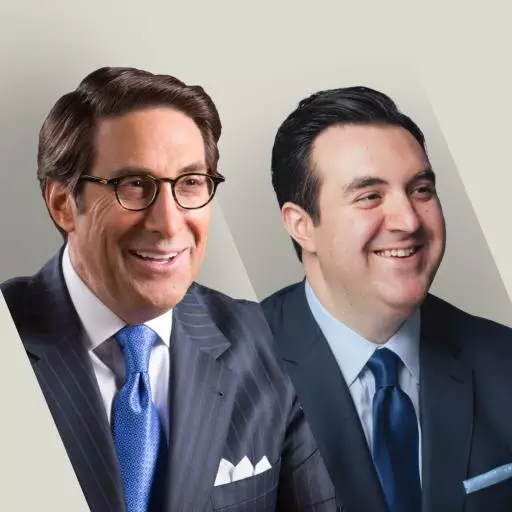
Sekulow


Will Haynes breaks down Congresswoman Ilhan Omar's bizarre interview on MSNOW.
Announcer: Today on Seculo, congresswoman Ilhan Omar breaks her silence with a bizarre interview on MS Now. Keeping you informed and engaged now more than ever. This is Seculo. We want to hear from you. Share and post your comments or call 1-800-684-3110. And now your host.
Will Haynes: Welcome to Seculo. Will Haynes in today. Give me a call 1-800-684-3110 as we watch the growing narrative around what is going on with congresswoman Ilhan Omar. It's been something that I thought was going to kind of go out of the news, but yet last night she decided to go on MS Now and give an interview with Chris Hayes in what some are calling a head scratcher and some of the responses she gave. We're going to get to that right away and if you want to talk about it, where do you think it's going? Do you think anything will happen?
Give me a call 1-800-684-3110. But I did want to give a quick update right here because right before we went to air, we got an update from the assistant attorney general at the DOJ's fraud division. Uh this is Colin McDonald who has said there is going to be a major fraud announcement in about 29 minutes from now at 12:30 Eastern time. So when we're live, it'll be while we're on the show and he is in Los Angeles. So buckle up folks. We have our entire producer team monitoring that situation. So we're going to bring that to you live as it unfolds, as he announces a major fraud announcement.
This comes as we saw the announcement of indictments over COVID fraud schemes, Medicare and Medicaid fraud schemes yesterday. It seems like this fraud division is really picking up in the last few days. Can't wait to see what the assistant attorney general McDonald has to announce, but we will get to that. Let's get back to Ilhan Omar as it is right now. Stay tuned for the fraud announcement in a little bit. This is what she said to Chris Hayes. As almost the time to clear the air, she went on the most friendly media outlet she could find with the most friendly host she could find on MS Now.
And he obviously had to ask the question. I would say the elephant in the room, but this isn't a Republican congresswoman here. Had to ask the question, you know, there's these allegations about your second husband being your brother and all of this situation. We'll play the longer one in the next segment, but I want to get right to it if you haven't heard this. This is bite two. This is after a back and forth about how it started this rumor. Here is what Chris Hayes said and the congresswoman's answer, bite two.
Chris Hayes: He was you were not related to him at all.
Chris Hayes: Not that not to my there's not some weird kernel of truth that through some game of telephone.
Ilhan Omar: Not to my knowledge.
Will Haynes: There's not some weird kernel of truth. You're not related to him at all and the congresswoman says not to my knowledge. A lot of people pointing to this as a flub. Some people are saying this was a rehearsed line. Some people are saying it's off the cuff. What do you think? Do you think this was a a calculated answer at a time where that is what seems to be the question swirling around? Give me a call. What do you think 1-800-684-3110. Do you think this investigation by the Department of Justice and Homeland Security is going to go anywhere or do you think it's all just a show as many of of our audience say nothing ever happens?
Let me know 1-800-684-3110. We've also got some fascinating updates about the illegal voters and by illegal I mean not illegal in their citizenship status, but non-citizens that are illegally on voter rolls or voting illegally. There's a lot of information coming out about that as we saw indictments in California. We see some action on the hill related to that as well that I'm going to break down for you a little bit later, but join me 1-800-684-3110 as we break down all of these very important issues that are moving very quickly just less than two weeks before election day, the midterm elections.
That's crazy. It's crazy that October is almost over folks. I can't believe it myself, but that's where we are and we're going to keep breaking it down for you. So give me a call, join me on air just me today 1-800-684- 3110 if you have thoughts on this, you have thoughts on all the fraud investigations the DOJ is uncovering or even the voter situation in states like California, New Jersey and some others. 1-800-684-3110 and as always if you support the work that we do here at the ACLJ go to aclj.org today and donate. It's tax deductible.
We'll be right back.
Jay Sekulow: The challenges facing Americans are substantial. At a time when our values, our freedoms and our constitutional rights are under attack, it's more important than ever to stand with the American Center for Law and Justice. For decades now, the ACLJ has been on the front lines protecting your freedoms, defending your rights in courts, in Congress and in the public arena. And we have an exceptional track record of success, but here's the bottom line. We could not do our work without your support. We remain committed to protecting your religious and constitutional freedoms. That remains our top priority, especially now during these challenging times.
The American Center for Law and Justice is on your side. If you're already a member, thank you. And if you're not, well this is the perfect time to stand with us at aclj.org where you can learn more about our life-changing work. Become a member today aclj.org.
Guest (Female): Welcome to the all new ACLJ app. Expert analysis and insight Big Tech can't censor. Customize your news and get real-time alerts on the issues you care about. Advocacy is now at your fingertips. Take action, make a difference, support the causes you care about with just one tap. Be the first to know. Breaking news alerts sent straight to your inbox. Everything you need all in one place. Stay informed, stay empowered. Download today. We are so excited to announce the ACLJ's brand new app completely redesigned to provide you with the best tools available to partner with us at the ACLJ.
You can watch the daily Seculo program, sign the petitions, customize your ACLJ membership experience, donate with the click of a button and receive up to the minute critical updates that the mainstream media can't censor. Just scan the QR code on your screen or go to your phone's app store, search ACLJ and click install. It's that simple.
Will Haynes: Welcome back to Seculo. We're talking currently about the situation with congresswoman Ilhan Omar. Uh obviously we have had issues with a lot of the positions of the congresswoman for a very long time talking about her disdain for the state of Israel. She was one of the original squad members with AOC and the like, but when you start to get into this this conversation, we even said it a few days ago that yeah there actually is optically she she has a point optically that you know the timing of this obviously her race is not competitive in Minnesota.
She should easily win reelection, but yes it is right before the midterms. It is within that window, that kind of 30 to 90 day window where the DOJ has rules against conducting certain investigative activities to not interfere with an election. So so to some degree that gives her talking points and makes it easier for her to make this seem like a political sham. At the same time, you know, a a judge signed off on a warrant, a magistrate judge that was obviously the the way the magistrate is to my understanding is is appointed in DC is that the judge panel picks the magistrate magistrate magistrate judges.
Sorry about that and is able to put them on and obviously the DC circuit and the DC courts, the district courts there are not a conservative court in any way, shape or form. So even the fact that the the warrant obviously warrants can be sought and got pretty easily in criminal matters, but you still have to show cause, you have to show probable cause for the judge to sign off on this and especially this close to an election and with a sitting congresswoman you think that a judge would be a lot more hesitant to sign off on it based off the timing.
Yet what did we see? We saw that there was a search warrant executed on the home of congresswoman Ilhan Omar. So there's a lot of questions that linger here, right? Because that judge signed off on it. Yet the timing doesn't look great. All of these things at the same time she kind of went dark. She started not saying as many statements. This is one of the most outspoken members of Congress, loves to get on TikTok and on Twitter and on the internet and in front of cameras to make her statements against how bad the Trump administration is, but yet kind of went quiet and then we saw this video asking for money that she posted just a day or so ago while she was riding in a vehicle.
Fundraising off of this we've seen that there they have been using that in emails. I am certain her her fundraising campaigns are doing very well because all of the language is ripe for that kind of fundraising going to those donors. We know how well it worked for President Trump when he was the target of political prosecutions. She's flipping the script and using it for herself. But here's where it got bizarre. Obviously I'm thinking this is her press shop saying you have to get out there. You can't just be quiet. I would have advised against her doing this interview because even at the most friendly of friendly organizations she's not at risk of losing her seat.
Wait till after the election and come out and say what you need to say, but there is an ongoing criminal investigation as far as it appears within Homeland Security and the Department of Justice. I feel like you can do more damage than good at this point by going public. Obviously her base is going to support her. That's how polarized we are. There there is nothing I think that is being investigated here based off what we know publicly and whether that be through anonymous sources in the news, leaks, however you want to categorize it. There's nothing publicly shocking that is a new revelation.
These have been rumors for a long time. We know that there have been back under the Biden administration. They looked into her immigration status before it was shut down. So this isn't new. This isn't novel that all of a sudden we're coming we're hearing these things and and they are brand new. They've never been discussed on blogs or on social media. So why does she feel like she has to go out and give this interview? And and I want to play the full context because it was going the most salacious part was going to be asked by no matter who the interviewer was.
And if I were the press shop, I would say let that fizzle. Let it run wild on the internet by your political enemies and it'll go away. But the fact that she gave the interview means she has to go kind of on record about this. And in the back and forth is just it it's bizarre to hear and I want you to hear it and I'll give my thoughts on why I think PR wise this wasn't a great move for her, but let's play bite 14. It's a little bit longer cuz I like to play the context.
This is the the beginning of the conversation from Chris Hayes about bringing this up and then kind of the back and forth her giving the origin story of it etc. Let's play bite 14 for folks.
Chris Hayes: He will tweet Ilhan Omar she married her brother blah blah blah. You think you see that you think yourself boy that sounds odd. I don't it seems unlikely that she married her brother. There are right-wing people who believe that this man was your brother.
Ilhan Omar: Yeah. Yeah. Right.
Chris Hayes: You have called it a disgusting lie. Well you who who was this man that was your husband? When did they start saying that he was your brother? Why?
Ilhan Omar: I started with the Somali blog um that I don't know if it still exists, but somebody put in there that you know that he had to have been my brother or something to that effect and um right-wing conspiracy theorists in Minneapolis got a hold of it and they just kind of went and like found random people who are like she introduced us you know she introduced him to us and said he was her brother.
Chris Hayes: You were not related to him at all.
Chris Hayes: Not that there's not some there's not some weird kernel of truth that through some game of telephone.
Ilhan Omar: Not to my knowledge.
Will Haynes: There we go. So one he did ask who is this person that they claim is your brother and she never really addresses that, which is uh it it's interesting obviously this is not her current husband. She doesn't have to get into that per se, but she does ignore that question. So I want to point that out for people and says the origin was a Somali blog that that kind of fed this salacious um you know very tabloidy uh allegation against her and it grew from there and was adopted by um right-wing conspiracy theorist as she likes to say and then just kind of grew from there.
We don't know a lot about what the Department of Justice is looking into. There's been a lot of rumor about what it is. There's there's things about whether her birth date, when she was naturalized at 17 was fabricated to a make her be able to be a minor so be able to be naturalized based off her father's naturalization. There's rumors about that. There's rumors obviously about things that were fraudulent with trying to get that second husband a green card. There's a lot of questions and rumor and conjecture about what's being investigated. So I think everyone should be very careful that we don't know what is fully being investigated.
We know that there's the the leak if you want to call it that there was DNA evidence obtained uh or or DNA was was obtained from her. So there's a a lot out there and if you're going to do a PR move interview, see the only reason you do this she didn't help herself. Now there are some and and once again you can you can quarterback this any way you want that think that no that was specific to try and give that answer of not to my knowledge. I personally I want to hear from you.
Do you agree with me or disagree with me? I think it was an off the cuff remark and I think that's the danger of doing these interviews. I think the way she said not to my knowledge was supposed to be like flippant and and belittling to the claim because he even says there's there's no kernel of truth not that you're some way related to him, distant cousin, you know something like that, but but even that not just being able to just say no, of course not. That should have been the off the cuff answer. I still think it was off the cuff.
I think it was unfortunate and I think she did more damage to her PR campaign by even giving this interview. But I want to hear from you. What do you think? Do you think that it was calculated? Do you think she was trying to hedge by saying not to my knowledge when things come out? I don't think she needed to do that. I think the best thing if that were what they were concerned about is don't talk about it. Don't go on MS Now. You're you're not going to lose your election. Who are you trying to fix your reputation for?
Conservatives that don't watch MS Now? People that are as you call it saying spreading salacious rumors that are unfounded online? Why did you do this? Give me a call 1-800-684-3110. When we come back we also have some fascinating information out of the House Judiciary Committee trying to get answers about those voter rolls in New Jersey. Remember we talked about this where the motor voter laws, the the automatic registration when you get your driver's license in the state of New Jersey was signing up people. It was a software glitch they said, signing up people that were not eligible to vote and being added to the voter rolls automatically.
And we talked about it. They said they fixed it, they caught it, you know we did a good job here hoping that it would go away. Well it's not going away. The House Judiciary Committee right now is issuing subpoenas to government officials and we'll get into that in the next segment about this very issue. Is that concerning to you that a lot of these states now we're finding out we talk about what we talked about in California yesterday. We'll give more information on that. All of these rolls that we were told for so long don't need to be cleaned up.
All of a sudden they're admitting no there's problems with our voter rolls, but don't worry we moved the goal post. It's not going to be outcome determined. It's not even a lot. It's not going to change anything. It's such a minuscule percentage. Why do these individuals not want their voter rolls clean? That's the big question. We'll get into that in the next segment and as always support the work of the ACLJ at aclj.org. It's a critical time. We need your support. Go to aclj.org today. Welcome to the all new ACLJ app. Expert analysis and insight Big Tech can't censor.
Customize your news and get real-time alerts on the issues you care about. Advocacy is now at your fingertips. Take action, make a difference, support the causes you care about with just one tap. Be the first to know. Breaking news alerts sent straight to your inbox. Everything you need all in one place. Stay informed, stay empowered. Download today. We are so excited to announce the ACLJ's brand new app completely redesigned to provide you with the best tools available to partner with us at the ACLJ. You can watch the daily Seculo program, sign the petitions, customize your ACLJ membership experience, donate with the click of a button and receive up to the minute critical updates that the mainstream media can't censor.
Just scan the QR code on your screen or go to your phone's app store, search ACLJ and click install. It's that simple. The challenges facing Americans are substantial. At a time when our values, our freedoms and our constitutional rights are under attack, it's more important than ever to stand with the American Center for Law and Justice. For decades now, the ACLJ has been on the front lines protecting your freedoms, defending your rights in courts, in Congress and in the public arena. And we have an exceptional track record of success, but here's the bottom line. We could not do our work without your support.
We remain committed to protecting your religious and constitutional freedoms. That remains our top priority, especially now during these challenging times. The American Center for Law and Justice is on your side. If you're already a member, thank you. And if you're not, well this is the perfect time to stand with us at aclj.org where you can learn more about our life-changing work. Become a member today aclj.org. Welcome back to Seculo. I am going to shift topics a little bit and and for those of you watching as well I teased at the very beginning that the assistant attorney general uh for the DOJ's fraud division has announced it at 12:30 so 10 minutes from now.
We will have an announcement about fraud. There's some inklings of what it might be. I might tease that out here in a minute, but stick with me and click like and subscribe if you're not subscribed to the channel to make sure you catch that because he said it's going to be a massive fraud announcement out of Los Angeles. So very interested in what it could be. Stick around with me so we can get to that and you'll get that news as it's breaking. So stick around. But I did want to get to this in this segment because yesterday it was announced that the Senate uh sorry not the Senate the House Judiciary Committee the Republicans have subpoenaed the New Jersey Secretary of State for information on the state registering over 6,000 non-citizens to vote.
If you're watching on one of our social channels on YouTube or Rumble or Facebook you saw a video in the break that kind of caught you up to that. What this was was that there were 6,600 non-citizens that were placed on the New Jersey voter rolls in what the current governor uh claimed was a software error where basically the software that connected driver's licenses because you can get a driver's license here if you are a resident or a permanent resident, a green card holder, things of that nature. That doesn't give you the right to vote, but the motor voter law that that has been around for a very long time.
Many states have different ways it's implemented, but this was where you were automatically signed up to you were registered to vote when you got your driver's license. The New Jersey system was supposed to filter out those that are not citizens and therefore did not have the right to be added to the voter rolls and it didn't work. 6,600 at least were placed on the rolls. Now the committee uh is asking for uh the the Secretary of State to produce sufficient documents responsive to the committee's oversight request concerning the registration of approximately 6,600 non-citizen voters between June 2023 and June 2024.
Also it's very interesting the timeline there as everyone tells Republicans and and conservatives no there's not non-citizens on the rolls. We don't need to clean them up. We don't need voter ID. Don't worry this is a nothing burger. The specific time period of this glitch how many coincidences will we get in our voting system that for the year of June to June of 23 to 24 during primaries and a general election build up the voter rolls got beefed up with non-citizen voters added to the list. I mean these coincidences are laughable when they try to play them off as a software glitch.
So we're going to see what the committee can get at this. They're requesting documents and information about compliance with applicable federal voting laws. They say to date the department's response has been inadequate. The department has produced only 12 total documents and has not produced any documents to explain how the alleged software error resulting in the registration of non-citizens was discovered or why non-citizens remained on voter rolls until 2026. These are the two topics that the committee wants to get to the bottom of. Also the ACLJ is involved in this as well. We have actions going out next week that we will fill you up fill you in on when we get to it about our questions we have for the state as we want to get to the bottom of it as well.
Remember we also got information out of the state of California. We told you this yesterday that our state foyer is there produced that let's see here. The Secretary of State's Office we asked them you know we know this is a thing. How do you track non-citizen voters that are on your rolls? How do you ensure that they are not registered? And they say well we don't track it, okay? So that's not a thing we do here, Secretary of State of California's Office. But don't worry. It's illegal if they do. Okay. So the Secretary of State's Office tells us in California at the same time all of these questions around what's going on in New Jersey they tell us don't worry.
It's okay. It would be illegal if if they did that. We don't track it though. We also ask the attorney general's office of California hey how what procedures do you have to you know investigate it when it does happen? They gave us no records. Why? They have no records related to the enforcement or policies or procedures of investigating the crime of voting illegally in the state of California. At the same time what do we see? We see that yesterday in a court filing it came out that the city of Los Angeles also said the registrar in Los Angeles, the person who registers you to vote say we don't have procedures that track this.
We have no way to verify citizenship. The only thing we have is the statement from the voter cuz it's illegal if they lie to us, but we're not going to track it. We're not going to investigate it. We're not going to get to the bottom of it. That was their court filing fighting back against the government that's trying to say we need to look at your voter rolls. We have questions about 20,000 voters. And here's where it gets laughable too because it used to be don't listen to conservatives when they say there's problems with people that are non-citizens voting.
They call it conspiracy theories, election deniers all of the pejorative terms they've used against people that just want to see the faith in our elections upheld that when you go vote your vote will be counted and it's not going to be canceled out by someone who's not voting legally. Pretty simple request, right? You'd think so. You'd think that every American, especially an elected official, would want the same thing. They don't want to have an illegitimate election allegedly. They want to say I was elected because I know and I have faith in our election system, but the press office of Gavin Newsom, the governor of California he had this to say about the arrests that took place from the Department of Justice of people that had voted that weren't supposed to vote in California earlier this week.
Any credible allegation of voter fraud should be taken seriously and investigated. I agree. Great. In the tweet that's it. Let it be. But wait there's more. That being said so erase everything I said before the action by Trump's Department of Justice charging 28 individuals suggest they have no evidence to back up their claims just last week of tens or hundreds of thousands of illegally registered voters. I want to dissect that for a second here. I'm going to run out of time in this segment. Those are two separate things. The 28 individuals that they were charged with voting illegally.
So being on the roll and then taking the action that has nothing to do with the claim that there are tens or hundreds of thousands of people on your voter rolls that shouldn't be. One of those individuals that was arrested came forward and said I've never registered to vote nor have I ever voted because I'm not allowed to. Raise a lot of questions there. If he's telling the truth how many other individuals that the are having their name used to get on the voter rolls and they don't know a thing about it. I'll break more of this down when I get back cuz there's a lot more here.
Stick with me. Also we're watching that fraud announcement, but the ACLJ is fighting for you and fighting to protect the integrity of our elections. Donate today at aclj.org.
Jay Sekulow: For decades now, the ACLJ has been on the front lines protecting your freedoms, defending your rights in courts, in Congress and in the public arena. The American Center for Law and Justice is on your side. If you're already a member, thank you. And if you're not, well this is the perfect time to stand with us at aclj.org where you can learn more about our life-changing work. Become a member today aclj.org.
Featured Offer


Featured Offer
About SEKULOW
The American Center for Law and Justice (ACLJ) focuses on constitutional law and is based in Washington, D.C. The ACLJ is specifically dedicated to the ideal that religious freedom and freedom of speech are inalienable, God-given rights. In addition to providing its legal services at no cost to our clients, the ACLJ focuses on the issues that matter most to you — national security, protecting America's families, and protecting human life.
About Jay Sekulow
An accomplished and respected judicial advocate, Sekulow has presented oral argument before the U.S. Supreme Court in twelve cases in defense of constitutional freedoms. Several landmark cases argued by Sekulow before the U.S. Supreme Court have become part of the legal landscape in the area of religious liberty litigation; these cases include Mergens, Lamb's Chapel, McConnell v. FEC, Operation Rescue v. National Organization for Women, and most recently Pleasant Grove City v. Summum.
In 2009, Townhall Magazine named Sekulow to its "Townhall of Fame" and recognized him as "one of the top lawyers for religious freedom in the United States." In 2007, the Chicago Tribune concluded that the ACLJ has "led the way" in Christian legal advocacy. In 2005, TIME Magazine named Sekulow as one of the "25 Most Influential Evangelicals" in America and called the ACLJ "a powerful counterweight" to the ACLU. Business Week said the ACLJ is "the leading advocacy group for religious freedom." Sekulow's work on the issue of judicial nominees, including possible vacancies at the Supreme Court, has received extensive news coverage, including a front-page story in The Wall Street Journal. In addition, The National Law Journal has twice named Sekulow one of the "100 Most Influential Lawyers" in the United States (1994, 1997). He is also among a distinguished group of attorneys known as "The Public Sector 45" named by The American Lawyer (January/February 1997). The magazine said the designation represents "45 young lawyers outside the private sector whose vision and commitment are changing lives."
Sekulow brings insight and education to listeners daily with his national call-in radio program, Jay Sekulow Live!, which is broadcast throughout the country on nearly 850 radio stations. Sekulow also hosts a weekly television program, ACLJ This Week, which tackles the tough issues of the day. He is also a popular guest on nationally televised news programs on ABC, CBS, NBC, CNN, FOX News, MSNBC, CNBC, and PBS.
Contact SEKULOW with Jay Sekulow
jsekulow@aclj.org
http://aclj.org/
American Center for Law and Justice
PO Box 90555
Phone: 757-226-2489
1-800-684-3110
1-877-989-2255