Oneplace.com

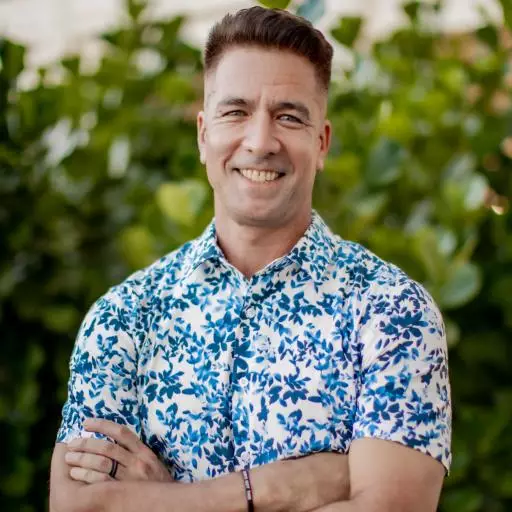
Mike Kai: "KINGS AND KINGDOMS"

June 8, 2026
00:00

What happens when a generation loses the Word of God?

In this powerful message from our Journey Through the Bible series, Pastor Mike Kai unpacks the remarkable story of King Josiah, a young leader who discovered God's Word, led a nation in repentance, and sparked one of the greatest spiritual revivals in biblical history. Through the account found in 2 Kings 22–23, you'll learn how taking responsibility, repenting, embracing God's truth, and pursuing reform can bring restoration to individuals, families, and entire communities.

Pastor Mike also draws compelling parallels between biblical history and Hawaii's own spiritual heritage, highlighting the importance of preserving faith, embracing revival, and standing firm in God's purpose for future generations. Whether you're seeking personal renewal, spiritual growth, or hope for your family and nation, this message will challenge and encourage you to return to God's Word and experience His restoring power.

In This Message: • The story of King Josiah and the rediscovery of God's Word • How revival begins with personal responsibility and repentance • Why biblical truth is essential for lasting transformation • The power of spiritual reform and restoration • Lessons from the history of Israel and Hawaii • Finding hope for future generations through faith in Jesus Christ •

How God restores what has been lost Key Scriptures:

• 2 Kings 22–23

• Psalm 119:11

• Joshua 1:8

• 2 Chronicles 34

Mike Kai: Come on, thank the Lord one more time, everybody. He is worthy of our praise. You may be seated. Give somebody a high-five, fist bump, elbow, chicken wing hug, something to somebody around you. I want you to open your Bibles to 2 Kings chapter 22. This is my last one. I am going to give it all I have got. I am really excited about this message. This is a sermon and a history lesson. For some of you, it is going to be a refresher. For some of you, you may not have heard of this at all before, but I pray that it lands right where you sit today.

I love this story that we are going through. We are going through the 37 most important messages in the Bible that we believe we need to know in order to understand the Bible from the Book of Genesis all the way to the Book of Revelation. When you look at the Book of Genesis all the way to the Book of Revelation, every single one of these stories that we have studied are powerful for us. We could go 50 or 70, but we only have time for 37 in order to finish off the year.

When we look at this, I love it that Darian preached last week. He preached on Elijah and Elisha. We would love to know more about Elijah and how Elisha's double portion worked out for him. I know that a lot of us would love to camp on the Book of Daniel. We want to talk about Daniel's dream and the creature that came out of the Euphrates River, who the ten horns are, who the three that emerged are, and who the Antichrist is that comes out of that. We will get to that in another series.

I know that when we get to the Gospels, you are going to want to pause at John because John was different from Matthew, Mark, and Luke. What we want to do is to give you a better overview of the Word of God so that you fall in love with the Word of God. When I look at this and I think about Elijah and Elisha where we left off last week, now you have a divided kingdom. Remember, we talked about the divided kingdom. The kingdom was once whole under David and under Solomon. Because of Solomon's actions and his son Rehoboam, God split the kingdom in two. He allowed the kingdom to be split in two.

Now we have a Northern Kingdom and we have a Southern Kingdom. The Northern Kingdom, the Kingdom of Israel, the ten tribes to the north, stayed at the north. Those tribes, ten out of twelve, started off with Jeroboam and went all the way to Ahab and Jezebel, which is the worst. They should all be wicked because they were all wicked kings and queens. They brought in all the practices of Ashtoreth, Baal, and Molech and incorporated it into their worship. Pretty soon you did not hear about Yahweh anymore.

They were worshipping golden calves. They made their own calves to worship, bowed down to them, and everything else that had to do with prostitution cults and infanticide, throwing babies into the fire. All of that began to happen. On this side, though, at least almost 50% of the kings were good. This is Judah. Judah retained Jerusalem as their capital, and Jerusalem is where the temple of God was. This is the holy hill of Zion. All of these kings, their bloodline was all the same.

The Northern Kingdom was not pure bloodline because it started off wrong with Jeroboam. From then on, you had overthrow and rebellion. On this side, because of the Bible's common phrase, "for the sake of David," God loved David so much that through the people of Judah, these people generally were faithful to God except for their kings, and they led the people astray. What did they do? They worshipped Molech, Baal, Ashtoreth, and they brought all those practices into the Kingdom of God and even into the temple of the Lord.

When you look at all of these different kings, you start off with Rehoboam. He is bad. You go to Asa and Jehoshaphat. They are great. Now you have a succession of devilish and wicked kings. Athaliah was the worst. She was the queen that suppressed her grandson from being king. She killed all of the grandchildren in the house of God and in the palace, but one baby was spared because she could not find him. They hid him in the temple. He grew up in the temple.

When he was of age, they made him king after Athaliah. His name was Joash. You go all the way down to Jotham, all the way down to King Hezekiah, who was really good. Hezekiah has a son named Manasseh who is wicked, who has another son named Amon who is wicked, but they end up with a son named Josiah. That is who we are going to talk about today. Josiah was eight years old when he became king. Can you imagine being an eight-year-old and being a king? Crazy, right?

He did not rule as king and govern until he was of age. Until then, he had a regent to help him lead. The regents would be consultants, advisors, and military generals that would help him. This is how he led during that time. Then the Bible says that by the time he was 16 years age, he loved God. That is why camp is so important. That is why it is so important to bring your kid into a youth group. It took eight years for him to get there. By the time he was there, he followed after David.

The reason why the succession of all of these kings were pretty much pure bloodline, talking about generation to generation all the way from David to Solomon to Rehoboam, passed on to grandson and son and genealogy, all the same DNA, was because the Messiah would have to come through the lineage of Judah. Josiah is 16. He loves the Lord with all his heart and he begins to tear down idols, all the idols that the people had brought up. This is a king that I love because he is so young, but he is so willing to please God no matter what the culture is doing.

While the culture is going one way, you better run in the other direction. That is why the Bible says in 2 Chronicles chapter 34 verse 3 that during the eighth year of the reign while he was still young, Josiah began to seek the God of his ancestor David. Then in the 20th year, he began to purify Judah and Jerusalem, destroying all the pagan shrines, all the Asherah poles, the carved idols, and the cast images. All of these demigods, which some people say is just a lesser god, no, a demigod is a demon god.

They were Molech, Ashtoreth, and they were Baal. Today we have those. They are still here, but they are given different names. They are social constructs. They are man-made ideologies today that are disguised as humanism, but they are really demonic inactivity, and they are still alive today. We have to be wise to that. When we look at Josiah, the Bible says in 2 Kings chapter 22:

Josiah was eight years old when he became king, and he reigned in Jerusalem for 31 years. His mother was Jedidah, the daughter of Adaiah from Bozkath. He did what was pleasing in the Lord's sight and followed the example of his ancestor David. He did not turn away from doing what was right. If our lives could just be that way on verse two, everything would be good. I want to tell you this, that 1st and 2nd Kings in the Bible runs parallel to 1st and 2nd Chronicles. You are going to double up on the reading sometimes when you are reading it and going through your devotions.

There are some little nuances in stories that you will find in Chronicles that you will not find in Kings. We are going to stick with Kings today because the same story is told in Chronicles. It says in verse three that in the 18th year of his reign, while he was still young, King Josiah sent Shaphan, the son of Azaliah, the grandson of Meshullam, the court secretary, to the temple of the Lord. He told him, "Go to Hilkiah the high priest and give him the count and count the money from the gatekeepers that they have collected from the people at the Lord's temple.

Trust this money to the men assigned to supervise the restoration of the Lord's temple. Then they can use it to pay the workers to repair the temple. They will need to hire carpenters, builders, and masons. Also have them buy the timber and the finished stone needed to repair the temple, but do not require the construction supervisors to keep account of the money they receive, for they are honest and trustworthy men." What a great king. He trusts his contractors who are trusting their subcontractors.

Hilkiah the high priest said to Shaphan the court secretary, "I have found the Book of the Law in the Lord's temple." Then Hilkiah gave the scroll to Shaphan, and he read it. Shaphan went to the king and reported, "Your officials have turned over the money collected at the temple of the Lord to the workers and to the supervisors of the temple." Shaphan also told the king, "Hilkiah the priest has given me a scroll." Shaphan read it to the king. This scroll is the Book of Deuteronomy. The Book of the Law is Deuteronomy.

They did not have books back then. They did not have bookbinding back then. This was a scroll of Deuteronomy. They were not in mass production. It was very rare to have one, especially the temple one. It has got to be the best if it is going to be in the temple. They lost it, and they found it. When the king heard what was written in the Book of the Law, he tore his clothes in despair. Then he gave these orders to Hilkiah the priest, Ahikam, the son of Shaphan, Acbor, the son of Micaiah, Shaphan the court secretary, and Asaiah the king's personal advisor.

He said, "Go to the temple and speak to the Lord for me, and for the people, and for all Judah. Inquire of the Lord for me and for the people for all Judah. Inquire about the words written in this scroll that has been found. For the Lord's great anger is burning against us because our ancestors have not obeyed the words in this scroll. We have not been doing everything it says that we must do." Hilkiah the priest, Ahikam, Acbor, Shaphan, and Asaiah went to the new quarter of Jerusalem to consult with the prophetess Huldah.

She was the wife of Shallum, son of Tikvah, son of Harhas, the keeper of the temple wardrobe. She said to them, "The Lord, the God of Israel has spoken. Go back and tell the man who sent you, this is what the Lord says. I am going to bring disaster on this city and its people. All the words written in the scroll that the king of Judah has read will come true. For my people have abandoned me and offered sacrifices to pagan gods, and I am very angry with them for everything that they have done. My anger will burn against this place, and it will not be quenched.

But go to the king of Judah who sent you to seek the Lord and tell him, this is what the Lord, the God of Israel says concerning the message that you have just heard. You were sorry and humbled yourself before the Lord when you heard what I said against this city and its people, that this land would be cursed and become desolate. You tore your clothing in despair and wept before me in repentance, and I have indeed heard you, says the Lord. I will not send the promised disaster until after you have died and have been buried in peace. You will not see the disaster that I am going to bring to this city."

They took her message back to the king. This is powerful when I begin to look at this and I begin to think about our country and our 250th year that we are celebrating on July 4th. Thank the Lord that we celebrate as a nation. A lot of people do not want to live here anymore. They want to move to Vietnam or Costa Rica. I am sure it is really nice to vacation there, but I am telling you right now, there is no other greater nation on God's green earth than the United States of America.

Whatever all the scars, all that it is, it is what it is, and God shed His grace on thee. When I look at this, I cannot help but think about our country. I wonder at what point does God say, "I give up"? I wonder at what point where the Lord says, "I have had enough"? I wonder what we are doing to our society and to our children that at one point the Lord says enough is enough. I pray that just like Josiah, we would repent. I pray that just like Josiah, we would ask the Lord to stave off whatever could come to us. I pray that we have a heart turned back to God as a country and as a state.

When we look at today, today's complacency is tomorrow's captivity. While we are hoisting flags that have nothing to do with our country in different places and capitals around the state and around America, what we tolerate will eventually dominate. Today there is no such thing as comfortable Christianity. Truth must not be compromised on the altar of cultural or political expediency. The social constructs and the man-made ideologies and the alphabet soup of confusion over our nation has to end in the name of Jesus.

Number one, what I loved about Josiah was he was eight years old when he took over, but by the time he was 16, he loved the Lord. By the time that he was 20 years old, he took responsibility. In a world that is filled with people who just want to be a victim, "I just want to blame somebody else," he could have blamed his grandfather. He could have blamed his father, but he did not. What did he do? He said, "We have sinned against you, God," and he took responsibility on behalf of a nation.

I want to encourage you to take responsibility where you are at. Whatever is going on in your life, whatever is happening with your 'ohana, whatever is happening in your family or in your workplace, just take the responsibility because I tell you right now, God is looking for people who are taking responsibility over things they might have never done. When I look at this, I think the second thing that I love about this young man is he repented. You see how he repented because back then, he just tore his clothing off. That was an expression.

I think about Hawaiians when they would mourn, they would take out a tooth. They would gouge an eye. They would mutilate themselves back then. They stopped that practice, but during that time, this was the way that they repented. This is what was passed on. When I look at repentance, what is repentance? Repentance is godly sorrow. "Lord, I have sinned against you. I have sinned against you, against your name, against your people. Lord, I have sinned with my body. I have sinned with my mind. God, please forgive me."

When we repent, times of refreshing come. When I look at this, the temple was filled with the Word of God, but they could not find the Word of God. The temple had the Word of God, but they could not find the Word of God. When they found the Word of God, you find something when something is lost. It was hidden. It was probably maliciously hidden. I believe that it was hidden during Manasseh's time. I believe it might have been hidden during Amon's time because nobody wanted to read it, because if they read it, they would get convicted.

Sometimes we do not read the Bible because if I read the Bible, I am going to get convicted. Can I tell you that God was not meant to add more burden to you? He is about to take your burden off you because His burden is easy and His burden is light. It is still a burden, and you have got to be able to carry that burden of the Word of God. It becomes a different burden. The burden becomes a responsibility rather than a weight that weighs you down. It becomes a responsibility that you want to live up to.

That is why Psalm 119:11, "I have hidden your word in my heart that I might not sin against you." That is why you hide the word in your heart. That is why you read the word. Joshua chapter one verse eight, God said, "Study this book of instruction continually. Meditate on it day and night so that you will be sure to obey everything written in it. Only then will you prosper and succeed in what you do." To study on it, meditate on it, and be sure you obey it. God's word is powerful. God's word is true.

Josiah got it at a very young age. When he found what he did not know was missing, all of a sudden, he could not believe what he found. The words in it cut him to the core. The words that he read told him that they were under judgment. The words that he read made him worry about his people. There are going to be times in your life and mine that you take responsibility for what you have done. Then you repent of what you have done, and then you begin to bring reform into your life.

That is the third thing that he did. He brought reform. In 2 Kings chapter 23, verses four to seven, moving on to the next chapter, it says then the king instructed Hilkiah the priest and the priests of the second rank and the temple gatekeepers to remove from the Lord's temple all the articles that were used to worship Baal and Asherah and all the powers of heaven in the temple. The king had all these things burned outside Jerusalem on the terraces of the Kidron Valley, and he carried away the ashes away to Bethel.

He did away with the idolatrous priests who had been appointed by the previous kings of Judah, not him. What you do not deal with, somebody else is going to deal with later. They had offered sacrifices at the pagan shrines throughout Judah and even in the vicinity of Jerusalem. They had also offered sacrifices to Baal and to the sun, the moon, the constellations, and to all the powers of the heavens. The king removed the Asherah pole from the Lord's temple. Do you know what an Asherah pole is? It is a dancer's pole. An Asherah pole is a dancer's pole.

Acrobats and things like that upside down dancing around a pole. That is an Asherah pole. The king removed the Asherah pole from the Lord's temple and took it outside Jerusalem where he burned it. Then he ground the ashes of the pole to dust and threw the dust over the graves of the people. What a king. He also tore down the living quarters of male and female shrine prostitutes that were living inside the temple of the Lord where the women wove coverings for the Asherah pole.

It would be the equivalent of having Baal worship, having ancestor worship, all kinds of cultural pagan worship in this building with an Asherah pole and a sex cult going on in the building in the church. Crazy. No wonder God wanted to burn the place down. No wonder He wanted to start all over. No wonder He wanted to send everybody to exile. He was going to, but He waited. When I look at this, I just have to think about a couple of parallels that I love to make.

He was eight. Kamehameha III, when he became king, he was 12 years old. Kauikeaouli was 12 years old when he became king. I am going to get back to him for a moment. When I look at this, I think about how all the idols had to be torn down. I have to say this. When I came to Jesus, my dad, our family on our Hawaiian side, we prayed the Rosary. We went to confession booth, and we still had talk about the 'Aumakua. Our 'Aumakua or family god was the Mo'o.

I was hoping to be shark, but we was Mo'o because Mo'o is a lizard. My dad would talk about it, but when I became a born-again believer, I told my dad, "Dad, we cannot do that anymore. You will have no other gods before me, so I cannot culturally still acknowledge this part while saying Jesus is my savior." Dad had a hard time with it in the beginning. He was grown up that he did both. When I became a believer in Jesus Christ, there is no room for both. He is your Lord and your Savior, and He said, "You shall have no other gods before me."

When I look at what the toughest job happened, I believe that it happened in 1819 and then happened in 1839. In 1819, before the missionaries came to Hawaii, you have to understand by 1778, Captain Cook had already been to Hawaii. Even though he died in Kealakekua, he was killed in Kealakekua, even though they thought he was a god and he was not a god and he died in Kealakekua, his crew still left. They went to Kauai, and then of course they probably ended up back in Great Britain. They already had us on GPS now.

Now you had all these other nations in Great Britain coming, and they were scoping out Hawaii. They were coming here for resupply. We had the Germans, we had the Russians. They were already coming. We had the British and the French would eventually come. All these guys are coming. By 1819, you have all of these foreign influences coming still at the same time. Well, in 1786, George Vancouver comes to Hawaii and he wants to bring a peace offering to Kamehameha the Great. What is it? It is six head of cattle.

He wants them to populate, and he gives it to him as a gift, as a peace offering for Captain Cook and what happened back then, wanting to reestablish diplomatic ties with the Kingdom of Hawaii. Really, that was a setup because the British loved to eat beef. We know that they were beef eaters, and they were setting up their provisions before they even got here to be able to take over Hawaii. So they were already setting up their provisions. Smart buggahs, eh?

Anyway, they were setting up the provisions, but by the time all these cattle began to multiply and Kamehameha had to put a kapu on it that no touch, they populated so much that what we had to do, we had to bring in Vaqueros, cowboys from Baja, California, to teach us to be Paniolo, and we became the best in the world by 1911. We smoked everybody. We go to Cheyenne, Wyoming, and Ikua Purdy, he wins the equivalent of the Rodeo Olympics. He could not take his horse, and they promised them horses in Cheyenne, Wyoming.

When they get there, no more horses. What do they do? They go into the wild, they find wild stallions, they break them in the water because Hawaiians broke them in the ocean, so they break them in the river and they win with broken horses from Cheyenne, Wyoming, found in the wilderness. That is pretty good. Meanwhile, back at the ranch, in 1819, Kamehameha has already received two prophecies. He has received a prophecy from Hewahewa the high priest. He said, "A god in a canoe greater than yours is coming, and we must follow him."

You do not tell anything like that to Kamehameha. You do not say anything like that to these guys. You say nothing like that to these guys, otherwise off with your head, right? "You are my Kahuna Nui and you are telling me this?" He says, "A god greater than yours in a canoe greater than yours is coming, and we must follow him." Then there is a black box prophecy in all of the Ka Nupepa, the Hawaiian newspapers, that talk about this black box prophecy confirmed in Hawaiian newspapers that Hewahewa said that God is coming in a black box.

Now we back up in 1809. There is a young boy named Opukahaia (Henry Obookiah) who runs away from his captor and then from his uncle and now he is in Kealakekua and he goes with Captain Caleb Brintnall and he goes all the way to China because Hawaii had turned into a supply depot for a lot of the seal trade or the whale trade. They would go in Hawaii and they would resupply and take their seal pelt all the way to China. They would sell it in China and they would load up with the dishes, China dishes, they would load up the China and they would take it back to Hawaii, resupply, then they would make their way back up to Connecticut, sell it there for a huge profit.

Opukahaia stayed while he was there. The story is he gets to Yale University. While he is there, he is already hānai by a lot of people, brought him in, adopted them into his family. He is learning English. He is frustrated because nobody is teaching him. Edwin Dwight, the president of Yale University at the time, which was a seminary, brings him and he begins to teach him and adopt him. All of these other pastors along the way began to train him. By the time he was done, he already knew Hebrew, he knew Greek, he knew Latin, he knew Hawaiian, and he spoke English.

How was this boy so akamai? Because he was trained as a Kahuna by his uncle, so all the memorization of the genealogy, the oli, everything going on that has got to be passed on from the head of the household to be able to pass on to everybody, all of the remedies, all of the healing arts, everything memorized. He was able to memorize, and they said that he was already had started writing and translating the Book of Genesis to Hawaiian when he died of typhoid fever in 1818, a year before Kamehameha the Great dies.

In 1819, unbeknownst to the missionaries when they finally get on the ship with all of these missionaries, Asa Thurston, Hiram Bingham, Chamberlain, all these guys are on the ship. They do not know that Kamehameha the Great, who unified the islands, the greatest warrior king we ever had, dies. When he dies, his wife Ka'ahumanu, his other wife Keopuolani, they lead along with Kalanimoku, his general, along with Liholiho, his son, Kamehameha II, decide to tear down the idols.

Some people blame the missionaries. It was not them. They did not even get here yet. The Hawaiians already knew. Ka'ahumanu said, "These gods have done us no good." They break kapu, they eat with one another. This is the political and the religious system that makes everything work at this point. There is no earthquake, there is no lava flow, there is no tsunami, and they leave it. They tear it down and they leave it. When the missionaries land in 1820 and they get to the shores of Kailua-Kona, they are quarantined on the ship.

They meet Queen Ka'ahumanu, and then they are sent all the way to Kailua-Kona about 30 miles down the road. When they finally sail there, they are left off the ship and they are given one year. "One year you get to stay here, but we are going to separate all of you." To Kona, they leave Asa Thurston. To Maui, they send people all over. To Honolulu, they sent Hiram Bingham. All of this, I wondered who helped Josiah, King Josiah back in the Bible, to make all these moves. Because it takes courage.

Once somebody hits you, it is easy for you to back down. I know he is the king, but the culture had not changed. You can be a king and say God bless America, but if the people do not change, it does not mean a lot. I looked it up and who helped him, who encouraged him? The prophet Hezekiah, the prophet Jeremiah, all of these prophets, the prophetess Huldah, and Zephaniah. They all encouraged him. When I look at Kauikeaouli when he becomes Kamehameha III, in the meantime, the missionaries come and they help us take our oral language and put it in paper form.

They did not say, "Here is English, read this first." No, they said, "Here is your language," and did the best they could with their printing press that they brought to teach us our own language, 'olelo in paper. Then we became the most literate people per capita on planet Earth by 1836, 1837. As a result of the missionaries coming, they helped Kamehameha III for a new economy and a new way of life and a new way of governing, because no longer are we fighting with spears and rocks and daggers made out of bone.

Now there are guns and rifles, and there are superpowers that are coming in that want this beautiful place for themselves. The missionaries helped them to create a constitutional monarchy, not just a monarchy, not just a kingdom, but now we are going to have a constitution. We are going to try to get to where Great Britain and France are at that time. We want to be recognized. During this point in time, Liholiho, Kamehameha II, goes to Great Britain to meet with King George. Sadly, he and his wife get measles and die in Great Britain in their hotel room.

Kauikeaouli, Kamehameha III, rises to power at the age of 12 before his time. His regents who help him lead are Kalanimoku, Ka'ahumanu, and Keopuolani. There are others that help him to lead until he becomes of age. During this time, the missionaries go from 1820 and the greatest revival season started by 1837, in 17 years. In that 17 years, the people that helped him to stand firm and stand strong are different people. The first one are these missionaries: Hiram Bingham, the founder of Kawaiahao Church, solid biblical Christian values.

Second, Asa Thurston, Kona, in Kailua-Kona, the oldest church in Hawaii. Then Lorenzo Lyons. I love this guy. He was a short dude, but he had a huge heart for the Hawaiian people. He learned how to speak Hawaiian so quick. His district went from Hamakua all the way from the Big Island to the Hamakua coast all the way to Kohala, to the tip of Hawi, coming all the way down to Kawaihae and going all the way back to Waimea. That was his district. He traveled even by hiking or horseback. He had the most gulches that he had to travel: Waipio Valley, Waimanu Valley.

He had to do all of that by foot, and he would preach the Gospel and start churches all over that place. When he died 54 years later, they buried him in a Hawaiian flag sent by the king. He wrote "Aloha Hawaii." He was a lyricist, he was probably the lyrical poet of the Pacific. He was amazing. They called him Makua Laiana because they loved him so much. The next guy, Titus Coan, gets here in 1835, 1836. He goes straight to Hilo. As a matter of fact, it is said that Hiram Bingham was threatened by his preaching. He was so good he sent him as far as he could, and he sent him to Hilo.

He was a preacher. He learned the Hawaiian language in three months good enough to preach. He and my ancestor David Lyman held the baton together. After a year, David said, "You take it, Titus." Titus preached all around Puna, all around that area, and a revival began to hit. This guy David Lyman, what did he do? He ended up taking on Hilo Boarding School, which was his love, and he started it. Some great young Hawaiian men were mentored and got them ready for the new society that was about to hit Hawaii.

He helped them to understand art and literature, academics, of course, English and mathematics. One of those people is Joseph Nawahi. Joseph Nawahi was married to my ancestor Emma Nawahi. Her name was Emma Ayi, and she was a sister of my great-great-great-grandmother Alai Ayi. They were powerful together. Whenever Queen Liliuokalani would come to Hilo, she would stay at Emma and Joseph's home in Hilo. She became an advisor to the queen, and so did he. He died in 1896 after the 1893 overthrow. It broke his heart.

I want to go back to Titus Coan. God used him powerfully. As a matter of fact, between 1837 and 1840, an estimated 20,000 Hawaiians were baptized in the Kingdom of Hawaii. On a single day in July 1838, Titus Coan baptized 1,705 people. Come on, you heard of baptize America, that is baptize Hawaii, somebody. They said that his baptism was so large and they were running out of time that he would take a broom and dip it in the water and just sprinkle everybody at one time. I do not know how true that is, but that could be an urban legend.

I look at the people that encouraged Kamehameha III, and here is why I believe he had the toughest job. By the time the foreign influence was coming, when the sandalwood trade was almost at its decline where our forests used to have sandalwood and they began to be depleted, the chiefs began to turn their attention more toward sandalwood and less toward the ahupua'a and the people were not eating as much and there was actually a famine at one time. He noticed the foreign influence and the people coming to take land or trade for land and take advantage of the people.

He did something called the Great Mahele. The Great Mahele was a great division of the land. Not everybody could get land. He tried the best that he could between crown lands and being able to divide the land and to be able to give away the land, so to speak. A lot of this land, according to this book The Pageant of the Soil that I read, not easy to read a book written in 1935, but when I read that book, I had an admiration for the responsibility that he needed. I look back at the missionaries who helped him to bring reform back into Hawaii because that was the most important thing he did.

Then what you do is you restore. Number four, they restored Passover to Israel. They had not celebrated Passover in over 400 years, and then came a revival. I pray for the nation. I pray for Hawaii. We have changed so much. There is so much frustration and anger. There is so much going on here. We have taken the slippery slope slide because what we tolerated is now dominating. We have a moral, spiritual responsibility to help change this state. I know that this state has to change in many levels. It can start in our home.

When you hoist flags that have nothing to do with our country or our state, when pride takes over a state or a country, you open yourself up to the devil and you open yourself up to deception. I do not play no more. We have got to change. The state has to change or we are going to hell. I think we have been the silent majority for too long, scared of pushback, kickback, worried about things. I honestly believe that we can flip it. This West side is strong. I would like to think we have something to do a little bit to do with that.

We have got to see change or they are going to sell us down the river, y'all, if we are not already sold. The only person that can change this is Jesus. Jesus and you. If we do nothing, if we say nothing, if we do not exercise the right to vote, we are dead in the water and we are going to go another four years like this, and more, and more, and more. God have mercy on our country. God have mercy on our state. You can live the way that you want to live, but you do not impose that on us anymore.

That is your personal life, go right ahead, but I do not want it. I do not want it, not for this state, not for these kids. Let's pray. Bow your heads. Heavenly Father, we love you. God, I pray that this Josiah's message would wake us up. All of the things that they invited into their country, all the things they invited into the country's capital, were hidden under plain sight. God, I pray that you eradicate and uproot things in Washington, DC, things in Honolulu Hale, things at the state capital that are not of you.

God, we pray for righteousness. God, I pray that you would sweep this land. God, I pray that you bring a revival and an awakening across this country where people would turn to you. God, I pray that you shed your grace on thee, that you protect us. Cover us with the blood of Jesus. Put a hedge of protection around your church and your people. God, I pray that we would not be fearful, we would not be afraid, but we would be bold, that we would be bold and something to be reckoned with. We love you, Lord. We bless you in the name of Jesus. Amen.

One more moment. If you need to give your life to Jesus today, if today is the day that you need to repent, if today is the day that a message like this from Josiah's life rattles you and makes you uncomfortable and makes you nervous, then today is the day that you respond to God. Today is the day that you throw yourself at His mercy. Today is the day that you say, "Lord, please forgive me." Today is the day that you stop. Today is the day that you give Him your life.

If you are already saved, today is the day that you stop the shenanigans, you stop the things that are holding you back. Today is the day that you give your heart fully to the Lord. No more time for lukewarm Christianity. No more time for comfortable Christianity. Today is the day of your salvation. At the count of three, I want you to raise your hand if you want Jesus. If you need Jesus in your life, you need a time of refreshing, you need to repent, you need Him to restore things, you take responsibility, get ready. One, He will never let you down. Two, about to raise your hand to give your life to Jesus. Three. One, two, three.

Put your hand up if that is you. God bless you. Hands all over the house. Thank the Lord before we pray. Everybody repeat after me. Say, "Jesus, today I lay down my life because you laid down yours. Thank you for loving me before I first loved you. Thank you for loving me into the Kingdom of God. I am who I am, where I am at today, but I am excited about what I look like tomorrow. Thank you for dying on that cross, shedding your blood that washes my sins as white as snow. I also thank you that when I die, I will be in your presence for all eternity. But while I am here, be my strength for today, my hope for tomorrow, my ever-present help in my time of need. You are my God and I am your child. The old has passed, the new has begun. I am a new creation in Christ Jesus, created to serve you and to bring you glory with the life you gave me. In Jesus' name I pray. Amen."

This transcript is provided as a written companion to the original message and may contain inaccuracies or transcription errors. For complete context and clarity, please refer to the original audio recording. Time-sensitive references or promotional details may be outdated. This material is intended for personal use and informational purposes only.

Featured Offer

Get a copy of my new book today!

‘That Doesn’t Just Happen’- Learn how excellence accelerates everything in your life.

Video from Mike Kai

About Inspire

From humble beginnings in 2001 to a thriving multi-site congregation, Pastors Mike and Lisa Kai are passionate about building the Church. They are visionary leaders with hearts to advance the Kingdom of God by attracting non-believers to Christ, connecting them to their church family, training them for life and ministry and sending each person to fulfill their God-given potential.

About Mike Kai

Pastor Mike believes that “No eye has seen, no ear has heard, and no mind can comprehend what God has for those who love Him (1 Corinthians 2:9),” and out of this conviction has sparked the emergence of the Equip and Inspire Network. Each year, the Network hosts the Arise Women’s Conference, Kingdom Man Conference, and the Equip and Inspire Conference, which empower people from across the Hawaiian Islands, US Mainland, and Internationally.

Mike and Lisa reside in Honolulu and are the proud parents of three daughters and two grandchildren. Mike has traveled to speak at conferences and to congregations all over the world and conducts pastor’s and leader’s round tables nationally and internationally. Mike is the author of The Pound for Pound Principle and Plateaus, and Lisa is the author of Perfectly You.

Contact Inspire with Mike Kai

Waikele
94-877 Lumiaina St
Waipahu, HI 96797

Mililani
95-061 Waimakua Dr.
Mililani, HI 96789

Honolulu
461 Cooke Street
Honolulu, HI 96813

Metro Manila
4th Floor Japan Town
Ayala Malls Vertis North
Quezon City, Philippines
Phone Number
808.677.8844