

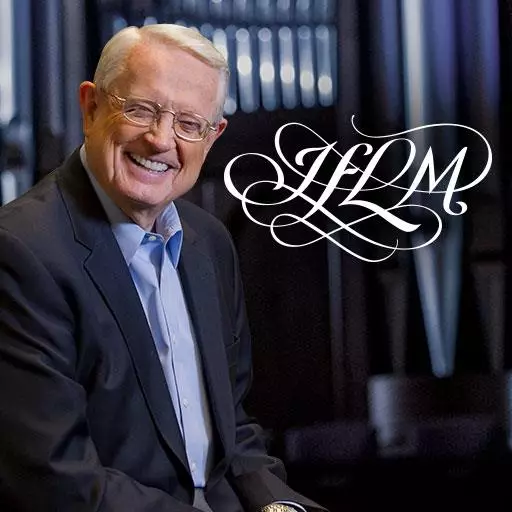
Saying Yes! to Christ’s Call, Part 2


Mark 1:14–20
Nearly everyone longs for a clear sense of purpose—yet leaving the familiar behind is another matter entirely. When Jesus called His first disciples beside the Sea of Galilee, He didn’t issue a theological lecture. He simply said, “Follow Me.”
From Mark 1:14–20, Pastor Chuck Swindoll examines the Savior’s call on Simon, Andrew, James, and John. Jesus’ call was personal, authoritative, and transformational—turning fishermen into fishers of men.
Consider what Jesus may be asking you to leave behind—and where He’s leading. Saying yes to Christ’s call is the most significant decision you will ever make!
Bill Maier: Today from Bible teacher Chuck Swindoll.
Chuck Swindoll: He who has the son has the life. He who does not have the son of God does not have the life. That's his message. Don't try to make a gift cost anything. It's free. It's free.
Bill Maier: Today on Insight for Living, Chuck Swindoll continues his study in the book of Mark. We're just getting started in this beautiful glimpse of Jesus. And as we look at the first chapter, Chuck draws three searching questions out of this passage. These aren't questions about the house we live in or the job we hold. They reach deeper than that. First, where does the Lord find you today? Second, what is his calling in your life? And third, how long will it take you to say yes? Chuck begins with prayer.
Chuck Swindoll: We have already come to you, our Father, in silence. And now we continue our worship with these simple words. Be to us what we can never be for ourselves, our Father. Be our peace. In a world that's chaotic, disturbing and often disillusioning, be our peace. Be our hope. So much around us is empty. All of it is temporary, temporal. It's passing. And as time passes, many things deteriorate. So be our hope as well as our peace. Be our grace, Lord, in a world of demands and deadlines and unforgiving spirits and revengeful people. Be our grace, our hope, our peace, and be our vision.
So easy for us to be short-sighted, preoccupied with now or even yesterday. Be our peace and our hope, our grace, our vision. Everyone said amen.
Bill Maier: You're listening to Insight for Living. To dig deeper into the gospel according to Mark, be sure to purchase a copy of our Searching the Scriptures Bible Study Workbooks by going to insight.org/offer. Chuck titled today's message Saying Yes to Christ's Call.
Chuck Swindoll: There once lived a man who preached his first sermon and when he was about 30 years of age, and he not only knew his audience, he knew them better than he knew himself. And when he preached that sermon, everyone listened. In fact, they gathered and they sat down on this slope near a body of water and he preached what came to be known as the sermon on the mount. Matthew covers the story or the sermon in chapters 5, 6 and 7, which we'll not turn to. But this was the first sermon he delivered and what a masterpiece it was.
It was the beginning of a lifetime of masterpieces. Though his lifetime would last only 3½ years on this earth. But for now, our attention turns immediately to use Mark's word. Immediately we go to verse 14 of chapter 1. Just before we hear the words of the master, we observe two things in this 14th verse. First, that John has been arrested and incarcerated. That's John the Baptist. Last time we saw John, he was baptizing and preaching in the wilderness. And now we find John pushed away from the crowd and in fact taken and left in prison.
John is is arrested and incarcerated, but Jesus, we read in verse 14, begins his ministry in Galilee. You see the verse? After John had been taken into custody, Jesus came into Galilee preaching the gospel of God. Why would he minister early in the in the area of Galilee? Because it was less priest-ridden and certainly less Pharisee dominated. More of the legalism rested in the south, in the region of Judea. Jesus was there and had been there, but his main ministry at least, as it's kickstarted if you will, takes place in Galilee. Here he is freer, much more able to minister, not so many obstacles, not so much of a hostile opposition except from his own hometown.
We'll get to that later also. Notice, if you will, in verse 14, he comes. His method is preaching the gospel of God. See the word preaching? It's the same Greek term as in 2 Timothy 4 verse 2 where Paul exhorts younger Timothy to preach the word. The preaching of the word is to include the declaration of the gospel as well as the communication of information regarding the Christian life. In this case, Jesus isn't at a church. He is along the shore of the Sea of Galilee, but he is making an authoritative proclamation regarding what? What is his message?
Look. He is preaching the gospel of God. It is a good news of peace as opposed to that which is chaotic and filled with unrest. It is a good news of hope in a in the midst of hopelessness and emptiness. It is good news of immortality. The life after this one in a world that's given to temporal happiness and momentary relief. Jesus word regarding the gospel of God is a bold declaration making people aware of their need for the living God. Now he gets even more specific. Mark adds with the word saying verse 15, see?
Jesus came into Galilee preaching the gospel of God and saying and if you carry a Bible with red letters, that is those those words spoken by Jesus, you immediately notice your text, the font, has turned red because these are the first recorded words of Jesus in Mark's gospel. Notice that his message has three characteristics. One, it is urgent and relevant. Two, it is transforming and personal. Three, it is free based on grace. Let's go over all three of them. First, it is relevant. It's a we read here the time is fulfilled and the kingdom of God is at hand.
There's urgency. The kingdom is at hand. You have been waiting for Messiah. I am he, says Jesus. And he's able to stand before them personifying the message of Messiah. You've been looking for the coming of Messiah. You are looking at the one who qualifies the fulfillment of God's promises. The kingdom has come and is at hand. Second, you will notice his message is transforming and personal. Repent. Repent. What does that word mean? Listen carefully. It means to change the mind. What does that mean? A person without Christ lives in sin. Jesus is declaring you need to repent.
In other words, change your mind regarding a lifestyle and a mentality of sinfulness and turn toward the gospel, the good news of Christ. And how do I do that? I believe. Think of them as going together. Don't separate them. You haven't really believed in the Lord Jesus until you have turned from a mentality toward trusting in sinfulness and turning toward the one who can forgive you of your sin. You have not really repented, that is in full sense, you've not really turned until you've believed in the Lord Jesus. He who has the son has the life.
He who does not have the son of God does not have the life. That's his message. Don't try to make a gift cost anything. It's free. It's free. So we've got that settled. That's his message. And now we turn to his call in the life of these men who are here of fishing along the Sea of Galilee. Just for clarification, let's understand that this is not the first time these men have seen Jesus. Let's just clarify that. Hold your place here. I mentioned earlier we'd look at it. Look at John chapter 1. Turn there from Mark 1.
Skip Luke, go to John. And you will find Jesus is preaching. John is declaring verse 36 Behold the lamb of God. Two disciples heard him speak. They followed Jesus. Verse 40 One of the two who heard John speak and followed him was Andrew, Simon Peter's brother. He found first his own brother Simon and said to him we have found the Messiah. Translated means Christ. He brought him to Jesus. Jesus looked at him and said you are Simon, the son of John. You shall be called Cephas, which is translated Peter. The next day he purposed to go into Galilee and he found Philip.
And Jesus said to him follow me. So understand this in Mark 1 is not the first time these men have laid eyes on Jesus. They've heard him in and around the Galilean area. Back to Mark 1. There's a reason I mentioned that and we will get to it right away in in what from what Mark writes. Now look at verse 16 of Mark 1. As he was going along by the Sea of Galilee, he saw Simon and Andrew, the brother of Simon, casting a net in the sea, for they were fishermen. Now where were they?
They were on the Sea of Galilee up in that most likely in that northwest corner area we just looked at on our maps. And they are casting a net into the water. Now when you and I think of fishing, we think of a of a casting rod or a fly rod. But when you're a commercial fisherman, you fish with nets. In those days there weren't powered boats, only sailing vessels. And so a little boat would go in the water and the fisherman would carry a large net circular in shape with weights on the edges and would cast the net into the water.
It would fall like a parachute down to the bottom. And most often one of the fishermen would dive in and gather the weights together at the bottom and hold this net. And the other would pull it up and they would dump their fish in the boat or a boat alongside to carry the fish. It was a full-on business. These men are casting their nets. They are professional fishermen. We read that here at the end of verse 16. You may not know it, but fishing was big business back then and remains so for years in Galilee.
One man helps us with the this the story. In the 1st century fishing was a thriving industry on the Sea of Galilee which counted no fewer than 16 bustling ports on the lake and several towns on the northwest shore. So numerous were fishing boats that Josephus, who was a Jewish historian who wrote later, Josephus was able to commandeer 230 of those boats during the war in Galilee in AD 68. Nor was the catch consumed by local markets alone. It should be remembered that fish, not red meat, was the staple food of the Greco-Roman world. Fish from the Sea of Galilee were exported and prized in distant Alexandria in Egypt and Antioch in Syria.
This is big business. These men knew the world of fishing. Now notice when Jesus sees them doing what they did for a living, he spoke to them. Again, if you carry a red letter edition of the Bible, you'll see red words here. Jesus said to them follow me. Follow me and I will make you become fishers of men. Let the passage say what it says. Don't put words in Jesus mouth. He simply says follow me. Understand he's not starting a school to train preachers. He is not announcing the beginning of a seminary. He's not opening a rabbinical course of instruction.
If he were, the emphasis would be on the Torah where they to this day study the Old Testament Scriptures in the Holy Land. That he's not opening a school. They are not given an entrance exam. They are not tested for their personality traits or types. They aren't asked questions about the Old Testament. They aren't encouraged to talk to their wives and family, though I have the feeling that they did. All he says is follow me. This was an enormous risk because in order to follow him, they would need to leave what was familiar, their source of income, the way they supported their family.
He only made one promise after the command. Do you see it? I will make you become fishers of men. It would be a process which is seen in the word become. They didn't 10 minutes after starting to follow qualify as fishers of men. That took time. They needed to be trained in that. They would become that over a process of and they would need to leave the familiar places of their life and go to what was unfamiliar. Ultimately they would stop catching fish and they would start catching people. I think Jesus was saying this if I can trust you to follow me, you can trust me to train you.
His call always has that implication. If I can trust you to follow me, then you can trust me to train you, to take care of you, to guide you, to lead you. Now I observe how they responded. And here is an remarkable thing. Immediately they left their nets and they followed him. The most amazing thing is the first word immediately. When you talk about risk, you talk about trusting someone else. They knew when they left they weren't going to be fishing anymore. He would talk to them about fishing for people. So they're leaving the familiar, but there's got to be something similar to what they were doing cuz he calls it fishing for men.
They have been fishing for fish. I'll come back to that thought in a moment. Go on to the next. Look at this next couple of of of men. Going on a little farther, he saw James, the son of Zebedee, and John, his brother. Now where were they? Well, they are in the boat. In their case, they're mending nets. The others were casting. These men are sitting in their boats and they're mending their nets. What do we read? Immediately he called them. What was their response? They left their father Zebedee in the boat with the hired servants.
And they went away to follow him. No reluctance. If there were questions, we don't read of them. If there was hesitation, Mark doesn't tell us about it. They simply followed him. Now let me pause and interject a couple of thoughts that I think might be helpful before I apply all of this because this is not a history lesson or a geography lesson. This is a spiritual direction for all of us. This is a message for everyone of us. But let me mention a couple of things. First, Jesus knew much more than he promised. He told him they would become fishers of men and he left it at that, but there was so much more he knew.
He knew what that would include, the training process of those next 3½ years. There would be privation, there would be pain, there would be exhaustion. There would be times of exhilaration and celebration. There would be occasions when the scene would be so dark, they wouldn't know what to do. Being unable to cast out demons, they've never been around the demonic realm. They'll be in the midst of that. There'll be times of confusion. There'll be times when they're under attack, misunderstood and misrepresented. And in fact, they'll be killed for their walk with Christ. They don't know any of that.
Most of them became martyrs. He doesn't tell them that. All he says remember this you will become fishers of men. When your direction in life is turned from the mundane nets and boats and water of your life and it's turned toward people and God is calling you in that direction, you are in for one surprise after another. And all the things I mentioned multiplied by 10. Your world will be turned upside down as you become fishers of people. Now the second thing I want to mention is that Jesus saw in them much more than he than he revealed.
Jesus saw in them much more than he revealed. Let's take Simon Peter. Peter saw himself as just a fisherman. Jesus saw other things deep within him. Peter was by nature well, let me let John Phillips describe it for us. He saw Simon. Everyone saw Simon Peter or at least heard him. Simon was always the center of a crowd. He was always where the action was. At sports Simon had to bet first. At play Simon had to be the groom if they were playing weddings and the rabbi if they were playing funerals or better still, the corpse if they were going to be a resurrection.
He saw Simon, but he saw more than that. He saw Peter. As Michelangelo saw David in a block of marble, so Jesus saw an apostle in a rugged fisherman. He saw Simon casting his net, but at the same time he saw 3,000 souls being saved by a single sermon that Peter would deliver years ahead. He saw Peter and he saw Gentiles being added to the church. He saw Peter and he saw a man carrying a cross to execution hill, faithful unto death, even the death of the cross. He saw Peter and he saw a name being written down in glory, engraved with an iron pen.
Never doubt it. When he calls you, he sees you not as what you are, but as what you are to become. Trust me on this. When God first calls us into his calling and work, the people who see us today would never have believed it back then because of the work the Lord is doing as he teaches us to become fishers of men and women. Now the invitation of Jesus today. I have three searching questions that I want to linger on with you for the next few minutes because this is as I say this is all about a spiritual lesson today as much as it is about the teaching of the passage of Scripture.
Three searching questions. And I've I've I've put on your outline a place at the bottom for you to write your questions. If you don't mind doing that, this would be a good time to take out your pen and to write the questions in because I want them to haunt you. I want them to follow you after this sermon is over and you've long since forgotten what the date is. I want you to think about these three questions. The first one is this based on what we have just read about Peter and Andrew and James and John.
Where does the Lord find you today? Where does the Lord find you today? I know where I find you. I can name the place. I can name the address. I can name the time and the date. But I don't see you like the Lord sees you and I don't find you the way he finds you. He sees you inside and out. He knows your past as well as your future. He knows your potential, though you are probably blind to most of it. Where does the Lord find you today? Let's go to your home. Let's go to your family.
Where does he find you in the environs of your home? Are things harmonious and satisfying and and are things in good shape or does he find that there are some things that have been dislodged, missing, perhaps corrupted through acts of omission on your part or perhaps even delivered acts of sinfulness. Where does he find you in your home? How about at your work? Are you truly fulfilled in the what you do for a living? Where does he find you in your work? How about in this stage of your life? Many of you are in your 30s, in your 40s.
Some of you are in your 50s and 60s, others of you younger, others older than that. Where does he find you in this stage of your life? Are you changing or are you stuck? Are you open or are you closed? Jesus started where these men were. He saw them just where they were and he took them to where he had in mind for them.
Bill Maier: Where does the Lord find you today? Wherever you might be, at home, at work, in this season of life, Jesus meets you right where you are. But he never leaves us there. He knows where he's taken us and he calls us to follow. So don't be afraid to say yes. You're listening to Insight for Living. Chuck Swindoll titled today's message Saying Yes to Christ's Call. Just 1 week ago today we started a brand new study through the gospel according to Mark. It's a series that's never been shared on Insight for Living until now. As you know, we make it our mission to create Bible study resources that allow you to search the Scriptures just as Chuck did to prepare this sermon series on Mark.
This study is no exception. And in fact, because of the scope of Mark's gospel, Chuck has divided the study into three volumes. His Searching the Scriptures Bible Study Workbooks for Mark come in three spiral-bound workbooks and they're published and ready today. To purchase these volumes, either for personal or group study, call us at 800 772 8888. Here's some exciting news. Chuck has completed his personal memoir. It's rolling off the printing presses this week and you can be among the first to own a copy. Chuck titled his memoir Awakened by Grace. You can purchase your copy right now by going to insight.org/memoir.
It shouldn't surprise you that Chuck's memoir is filled with fascinating stories told as only Chuck can tell them. He describes how a stuttering young boy spent his childhood in the shadow of World War II. More importantly, Chuck shares how God was working out his purposes, preparing Chuck for a lifetime of public ministry. To purchase Chuck's personal memoir Awakened by Grace, call 800 772 8888 or go to insight.org/memoir.
Bill Maier: I'm Bill Maier. Join us when Chuck Swindoll's study in The Gospel According to Mark continues Thursday on Insight for Living. The preceding message Saying Yes to Christ's Call was copyrighted in 2010 and 2026 and the sound recording was copyrighted in 2026 by Charles R. Swindoll Incorporated. All rights are reserved worldwide. Duplication of copyrighted material for commercial use is strictly prohibited.
Featured Offer

Pastor Chuck’s audio set (CD or MP3), commentary, and companion spiral-bound workbooks give you everything you need to walk with Jesus from Galilee to the empty tomb.
Past Episodes

Video from Pastor Chuck Swindoll
Featured Offer
Pastor Chuck’s audio set (CD or MP3), commentary, and companion spiral-bound workbooks give you everything you need to walk with Jesus from Galilee to the empty tomb.
About Insight for Living
Join the millions who listen to the lively messages of Pastor Chuck Swindoll, a down-to-earth pastor who communicates God’s truth in understandable and practical terms, with a good dose of humor thrown in. Chuck’s messages help you apply the Bible to your own life.
About Pastor Chuck Swindoll
For most of his entire life, Pastor Charles R. Swindoll has devoted himself to the accurate, practical teaching and application of God's Word — anchoring every message in the transforming power of God's amazing grace. From congregations on the East Coast to the West Coast, his ministry has carried that message across the country, ultimately taking root in Frisco, Texas, where he founded Stonebriar Community Church. Yet Chuck's influence has never been confined to a single sanctuary. Since 1979, Chuck’s messages have aired on Insight for Living, one of the most widely heard programs in Christian broadcasting, carrying his voice — and the timeless truth of Scripture — to listeners around the world. That same passion for God's Word has shaped his leadership at Dallas Theological Seminary, where his tenure as president and now chancellor emeritus has helped raise up a new generation of men and women equipped and called to ministry. Few lives have touched so many, across so many places, for so long.
Contact Insight for Living with Pastor Chuck Swindoll
customerservice@insight.org
http://www.insight.org/
Mailing Address
Insight for Living
Post Office Box 5000
Frisco, Texas 75034
USA
Phone Number
1-800-772-8888