

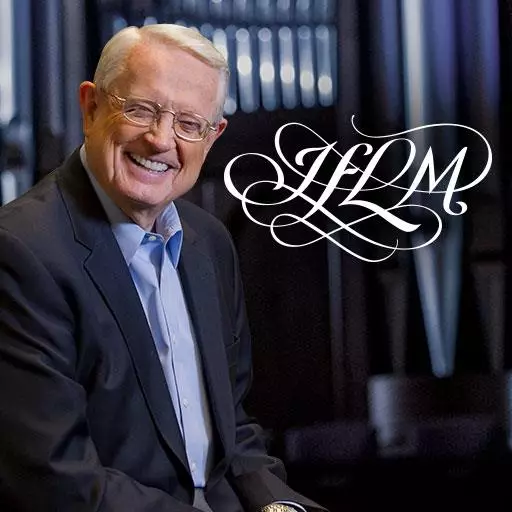
Saying Yes! to Christ's Call, Part 1


Mark 1:14–20
Nearly everyone longs for a clear sense of purpose—yet leaving the familiar behind is another matter entirely. When Jesus called His first disciples beside the Sea of Galilee, He didn’t issue a theological lecture. He simply said, “Follow Me.”
From Mark 1:14–20, Pastor Chuck Swindoll examines the Savior’s call on Simon, Andrew, James, and John. Jesus’ call was personal, authoritative, and transformational—turning fishermen into fishers of men.
Consider what Jesus may be asking you to leave behind—and where He’s leading. Saying yes to Christ’s call is the most significant decision you will ever make!
Bill Maier: Today, on Insight for Living.
Chuck Swindoll: It has been a dark day in the church when preaching took a backseat. It was never meant to be. The church of Jesus Christ is always to be a place where preaching is prominent.
Bill Maier: Sometimes personal invitations change everything. Today on Insight for Living, Chuck Swindoll brings us to the shore of the Sea of Galilee, where four ordinary fishermen were mending their nets and doing what they'd always done. And then Jesus walked by with two simple words that would turn their world upside down. Follow me. No questions, no long explanations of where they were going, just a call to follow him. So what made these men drop their nets and leave their boats? And what might Jesus be asking of you? We begin by reading the passage together.
Chuck Swindoll: We are just underway in our journey through the Gospel by Mark. If you're unfamiliar with your Bible, it is the second book in the New Testament. Chapter one will begin our reading at verse 14 down through verse 20. You will also find an outline in the worship folder that I always fill out ahead of time and during the message you will If you have a pen handy, you'll find that the thoughts will stay longer if you will write a few things down that will be helpful for you. Mark one beginning at verse 14. Now after John had been taken into custody, Jesus came into Galilee preaching the gospel of God and saying, the time is fulfilled and the kingdom of God is at hand.
Repent and believe in the gospel. As he was going along by the Sea of Galilee, he saw Simon and Andrew, the brother of Simon, casting a net in the sea, for they were fishermen. And Jesus said to them, follow me and I will make you become fishers of men. Immediately they left their nets and followed him. Going on a little farther, he saw James, the son of Zebedee, and John his brother, who were also in the boat mending the nets. Immediately he called them and they left their father Zebedee in the boat with the hired servants and went away to follow him.
Bill Maier: You're listening to Insight for Living. To dig deeper into the gospel according to Mark, be sure to purchase a copy of our Searching the Scriptures Bible Study workbooks by going to insight.org/offer. Chuck titled today's message Saying Yes to Christ's Call. Every preacher remembers his first sermon, unfortunately. We were all younger back then, all less experienced, and most of all we were scared out of our minds. And when that's true, you always say things that later you realize should never have been said. I could fill the next 30 minutes with my own stories. One former DTS faculty member told me when he first preached, he brought to his with his Bible to the pulpit 2021 pages of notes.
And just as he opened his Bible to preach, the notes just flew all over the platform and he spent the first two or three minutes gathering the notes back together and realized when he did he had forgotten to number the pages. The late great S. Lewis Johnson, whom I always loved to hear preach, told our class that his first sermon was memorable. He said thankfully it was preached way out in the country. And he said just as I stood up to preach, boom the back doors burst open and in came a herd of goats. Climbed over the pews and around and all kinds of noise.
He said I've been spending my years ever since then trying to get the goats out and the sheep in. Clever line. One of my first sermons I remember came when I was a student at Dallas Seminary and the local funeral home needed someone to preach the service for a man who had no family left, no one. It would be a small service, you don't have to preach very long. He didn't know it was my first sermon and of course I didn't tell him. So when I showed up to preach, no one was there except a man sitting very near the back with a fox terrier in his lap.
I learned later that the man who died left a boatload of money to the dog and the man holding the dog is the lawyer in the church service. I don't know whether to preach on obedience or greed that day. One of the funniest true stories came from the back roads of Kentucky where the funeral director didn't know it was the young man's first sermon, but he needed someone to preach a homeless person's service and it would be held at the gravesite really at a pauper's cemetery. Well, the young man said he would do it, but he got lost going there and he was one full hour late when he arrived.
He had driven all around and finally came to the place and by then the funeral director and everyone else had long since left. Only the gravediggers were sitting there and other members of the crew having their lunch. And he walked over and he looked into the hole and he saw that the lid of the vault was already in place and didn't know what else to do, but he turned to the workman standing there and opened his Bible and preached his sermon. Well, they stood up, put their cap over their hearts and they listened as he finished his sermon and then he felt led to sing Amazing Grace, how sweet the sound that saved a wretch like me.
And one of the workers started to cry and another and before long the preacher was weeping and finally he just sort of stopped. And he prayed with his head bowed low. He walked back to his truck and just as he reached out to open the door, he overheard one of the workman say, man, I ain't never seen nothing like that before and I've been putting in septic tanks for 30 years. Don't know. Rule number one is you always need to know your audience when you preach a sermon. There once lived a man who preached his first sermon and when he was about 30 years of age and he not only knew his audience, he knew them better than he knew himself.
And when he preached that sermon, everyone listened. In fact, they gathered and they sat down on this slope near a body of water and he preached what came to be known as the Sermon on the Mount. Matthew covers the story or the sermon in chapters five, six and seven, which we'll not turn to. But this was the first sermon he delivered and what a masterpiece it was. It was the beginning of a lifetime of masterpieces. Though his lifetime would last only three and a half years on this earth. Interestingly, Mark doesn't even bother to mention the Sermon on the Mount or a number of other events as he moves quickly from Jesus' temptation in the wilderness to his ministry in Galilee.
If you want it filled in, this passing of time that occurs that Mark doesn't cover, you'll need to read John chapter one verse 19 down through chapter four verse 54 and you'll cover those events. We'll turn to that in just a moment, but for now our attention turns immediately to use Mark's word. Immediately we go to verse 14 of chapter one. And just before we hear the words of the master, we observe two things in this 14th verse. First, that John has been arrested and incarcerated. That's John the Baptist. Last time we saw John, he was baptizing and preaching in the wilderness and now we find John pushed away from the crowd and in fact taken and left in prison.
The reason for it is covered in Mark chapter six. When we get there, we'll return to that then, but not now. The point is John is silenced and the hope of Herod was to keep him silenced from him from here on. Though admittedly he did see John as a bit of a a novelty and he enjoyed hearing what he had to say, though it never reached his heart. There are still a lot of people like that. John is is arrested and incarcerated, but Jesus, we read in verse 14, begins his ministry in Galilee. You see the verse.
After John had been taken into custody, Jesus came into Galilee preaching the Gospel of God. Before we look at what Jesus said, let's observe where Jesus was. And right next to the Scriptures, my favorite part of my Bible is found in the very back of the Bible, the maps. So if you will turn back to that section of your Bible, there really are maps there. I'm going to watch little dust pockets form around the seats as you turn back there since you've not been there in a long time, quite likely. My map is map number 12, but yours may not be numbered that.
The maps are numbered chronologically and this one takes us to the ministry of Jesus. So if you'll find the map that describes the geography in the days of Jesus, and the reason for that is the map changes from one era to another and so this one is important that you find. You know you were there when you come to the map that shows two bodies of water. Smaller body of water is to the north. The larger body is to the south, much larger. One is a body that is filled with living fish and other living organisms.
The last one, the bottom body of water is dead. Nothing there by way of fish, fish life organisms. Nutrients are there, but nothing else. The little serpentine body of water that trickles or at least flows from Galilee, the Sea down to the Dead Sea is called the River Jordan. The Jordan River connects these two as the Sea dumps into the body of water that's even lower than the Sea of Galilee. Look at the Sea of Galilee on your map. It's an inward lake of warm water called interestingly a Sea, though it is in fact a lake.
It's 12 and a half miles long. It's about seven and a half miles wide. It's located 680 feet below sea level, so it's low. It is also deep. It runs in its deepest part from somewhere between 80 and a 160 feet deep. It's there on this body of water much of Jesus' ministry takes place and it's around this body of water we find the area of Galilee. Look to the west, to the left of the lake and you will see Galilee and all of those places. If you look at the south at the northwest corner of the Sea of Galilee up on the shoreline, you'll see the little town of Capernaum will be there next time.
But for now we're along the shore of the Sea of Galilee and love map. So let's go back now to Mark chapter one. Why would he minister early in the in the area of Galilee? Because it was less priest ridden and certainly less Pharisee dominated. More of the legalism rested in the south, in the region of Judea. Jesus was there and had been there, but his main ministry at least as it's kick started, if you will, takes place in Galilee. Here he is freer, much more able to minister, not so many obstacles, not so much of a hostile opposition except from his own hometown.
We'll get to that later also. Notice if you will in verse 14, he comes his method is preaching the Gospel of God. See the word preaching. It's the same Greek term as in 2 Timothy 4 verse 2 where Paul exhorts younger Timothy to preach the word. Kerygma is the Greek term and it means to make an authoritative proclamation, to be a herald before the public. In those days kings would send out their edicts verbally and they would hire or they would have on what we would call their staff, their own courier, and he would go into the marketplace or the public square and he would kerygma the message.
He would make a a a authoritative proclamation. It was always bold and it always captured the attention of the public. It has been a dark day in the church when preaching took a backseat. It was never meant to be. The church of Jesus Christ is always to be a place where preaching is prominent. No minister should ever apologize for the bold proclamation of the message of Jesus Christ, of his word. When the preaching is replaced with something else, the church instantly loses its voice. It becomes less significant in the community and becomes less of a teaching place for the education of God's people.
The preaching of the word is to include the declaration of the gospel as well as the communication of information regarding the Christian life. In this case, Jesus isn't at a church. He is along the shore of the Sea of Galilee, but he is making an authoritative proclamation regarding what what is his message. Look. He is preaching the Gospel of God. The word rendered Gospel is it means good news. It is good news of truth as opposed to the messages that were given in that day that were deceptive. It is a good news of peace as opposed to that which is chaotic and filled with unrest.
It is a good news of hope in a in the midst of hopelessness and emptiness. It is good news of immortality. The life after this one in a world that's given to temporal happiness and momentary relief. Jesus' word regarding the Gospel of God is a bold declaration making people aware of their need for the living God. Now he gets even more specific. Mark adds with the word saying verse 15 see. Jesus came into Galilee preaching the Gospel of God and saying, and if you carry a Bible with red letters, that is those those words spoken by Jesus, you immediately notice your text, the font has turned red.
Because these are the first recorded words of Jesus in Mark's Gospel. Not the first time he's preached. John covers that. Other Gospels cover that, but this is the first time in Mark's Gospel. Notice that his message has three characteristics. One, it is urgent and relevant. Two, it is transforming and personal. Three, it is free based on grace. Let's go over all three of them. First, it is relevant. It's we read here the time is fulfilled and the kingdom of God is at hand. There's urgency. Every time someone preaches, you ought to feel a sense of urgency.
Another word is passion. Passion. It it it bothers me greatly that preachers bore audiences. As my dear friend Howie Hendricks puts it, a mist in the pulpit puts a fog in the pew. If the pulpit's sleepy, the congregation is snoring. The ministry of the word is always to be delivered on tiptoe. It is to be delivered with relevance and urgency. The kingdom is at hand. You have been waiting for Messiah. I am he, says Jesus. And he's able to stand before them personifying the message of Messiah. You've been looking for the coming of Messiah. You are looking at the one who qualifies, the fulfillment of God's promises.
The kingdom has come and is at hand. Second, you will notice his message is transforming and personal. Repent. Repent. What does that word mean? Listen carefully. It means to change the mind. To change the mind. Meta around nos mind is to change the mind. What does that mean? A person without Christ lives in sin. If you've never trusted the Lord Jesus Christ, you may not look like a sinner. You may look like other believers sitting around you. You may not even sound like you are depraved and debauched in your soul. You may pay your bills and certainly take care of your family and live a responsible life, but you are living without God and without Christ.
Your whole life, your frame of reference is sinful. Your motivation is sinful. Your goals in life are self-serving. Your purpose for living is to please yourself, to find happiness, to take care of just your own and very few others. You are not by nature generous. You are not by nature giving. You're you are driven by selfishness and sinfulness. Most places won't tell you that. Count on it. Here you'll hear about it. Jesus is declaring you need to repent. In other words, change your mind regarding a lifestyle and a mentality of sinfulness and turn toward the Gospel, the good news of Christ.
And how do I do that? I believe. Think of them as going together. Don't separate them. You haven't really believed in the Lord Jesus until you have turned from a mentality toward trusting in sinfulness and turning toward the one who can forgive you of your sin. You have not really repented. That is in full sense you've not really turned until you've believed in the Lord Jesus. And please observe it stops with the word believe. Believe. Don't add one thing to it. The gift of God is the free gift. Don't force people to make Jesus Lord of their lives before they can believe in the savior.
That's called lordship salvation. Stay away from it. It will confuse you. There are many who teach you must be sincere, you must be deeply committed, you must follow Christ with your whole heart. And if things don't aren't transformed in your life, you didn't really believe. You just claimed to have believed. That's adding to the message of salvation. Do I not believe in lordship? Oh, I do with my whole heart. But I don't believe a sinner can trust in the Lord Jesus Christ. He can only trust in the savior. Jesus died for me. How can I know Jesus?
I must believe in him. That is I acknowledged before you God that I'm a sinner and I know Christ can forgive me of my sins and I trust in him and him alone, by faith alone, because of grace alone. It's a message that's freely given. Well, isn't there a purpose in in the Christian life? Absolutely. Now that I've come to Christ, I need to grow in him and that's where lordship plays its part. But don't be confused about it. One man put it this way. Many Christians today disagree over what a person must do and believe in order to become a Christian.
Some attempt to front load the Gospel, which includes adding the need to confess all known sins and committing one's life for service to Christ as a condition for gaining the free gift of eternal life. Well, the point is that's not free. You're adding to it in order to receive it. For others, he continues, there's the need for backloading the Gospel, stipulating that if a person truly believes in Christ, there will be a changed life evidenced by continued good works. If there is not enough visible change, then the reception of eternal life was a mere profession.
You know the problem with that? You never know when it's enough. You know I'm sometime criticized for teaching easy believism. Well, what's hard believism? What's hard believism? I do believe that you must believe. And I do believe that the Lord offers the message of repent and believe to this day. That's the good news and when you trust in the Lord Jesus with your heart and your soul, you turn to him. Simple prayer, Lord, I realize I'm lost. I believe Jesus can save me up from my sins and I trust in him. You have believed. He who has the son has the life.
He who does not have the son of God does not have the life. That's his message. Don't try to make a gift cost anything. It's free. It's free. Jesus paid it all. That's where the cost is paid. Jesus paid it all. All to him I owe. Sin left a crimson stain, he washed me white as snow, the old hymn goes. What a relief to be reminded that the Gospel is free. There's nothing to add to it, nothing to earn. When you turn to Christ and trust in him, you have believed and the life he offers is yours.
Jesus paid it all. You're listening to Insight for Living with Chuck Swindoll. Chuck titled today's message in Mark's Gospel Saying Yes to Christ's Call. To purchase the Searching the Scriptures Bible Study workbooks for this brand new series in Mark, just go to insight.org/offer or call us at 800 772 8888. Well, it's mid October and Thanksgiving and Christmas are right around the corner. We want to tell you about a creative resource that we've designed for your family, hoping that the next few months will become rich with spiritual meaning. I'm referring to a book published exclusively by Insight for Living.
Everlasting Light is a 25-day Advent devotional that invites you to step out of your busy schedule and into a prayerful rhythm of waiting, reflection and preparation. This includes scripture to anchor your heart, a quote from Chuck Swindoll to shape your thinking, and pastoral reflections from our own Carlos Zazueta to carry into your day. This hard cover devotional is ready today, so you'll receive it in plenty of time for Advent. Ask for the book called Everlasting Light when you include a contribution to support the ministry of Insight for Living. I'm sure your heart is heavy as mine is about the tension prevailing here at home and around the world.
Do we need any more convincing that our troubled world needs the love and compassion of Jesus? This only amplifies the need to shine the everlasting light of God's love through Insight for Living. You can partner with us right now by going to insight.org/donate or call 800 772 8888. And when you give, remember to request the 25-day Advent devotional called Everlasting Light. What does it truly mean to follow Jesus? I'm Bill Maier. Join us when Chuck Swindoll provides a biblical answer tomorrow on Insight for Living. The preceding message Saying Yes to Christ's Call was copyrighted in 2010 and 2026 and the sound recording was copyrighted in 2026 by Charles R.
Swindoll Incorporated. All rights are reserved worldwide. Duplication of copyrighted material for commercial use is strictly prohibited.
Featured Offer

Pastor Chuck’s audio set (CD or MP3), commentary, and companion spiral-bound workbooks give you everything you need to walk with Jesus from Galilee to the empty tomb.
Past Episodes

Video from Pastor Chuck Swindoll
Featured Offer
Pastor Chuck’s audio set (CD or MP3), commentary, and companion spiral-bound workbooks give you everything you need to walk with Jesus from Galilee to the empty tomb.
About Insight for Living
Join the millions who listen to the lively messages of Pastor Chuck Swindoll, a down-to-earth pastor who communicates God’s truth in understandable and practical terms, with a good dose of humor thrown in. Chuck’s messages help you apply the Bible to your own life.
About Pastor Chuck Swindoll
For most of his entire life, Pastor Charles R. Swindoll has devoted himself to the accurate, practical teaching and application of God's Word — anchoring every message in the transforming power of God's amazing grace. From congregations on the East Coast to the West Coast, his ministry has carried that message across the country, ultimately taking root in Frisco, Texas, where he founded Stonebriar Community Church. Yet Chuck's influence has never been confined to a single sanctuary. Since 1979, Chuck’s messages have aired on Insight for Living, one of the most widely heard programs in Christian broadcasting, carrying his voice — and the timeless truth of Scripture — to listeners around the world. That same passion for God's Word has shaped his leadership at Dallas Theological Seminary, where his tenure as president and now chancellor emeritus has helped raise up a new generation of men and women equipped and called to ministry. Few lives have touched so many, across so many places, for so long.
Contact Insight for Living with Pastor Chuck Swindoll
customerservice@insight.org
http://www.insight.org/
Mailing Address
Insight for Living
Post Office Box 5000
Frisco, Texas 75034
USA
Phone Number
1-800-772-8888