

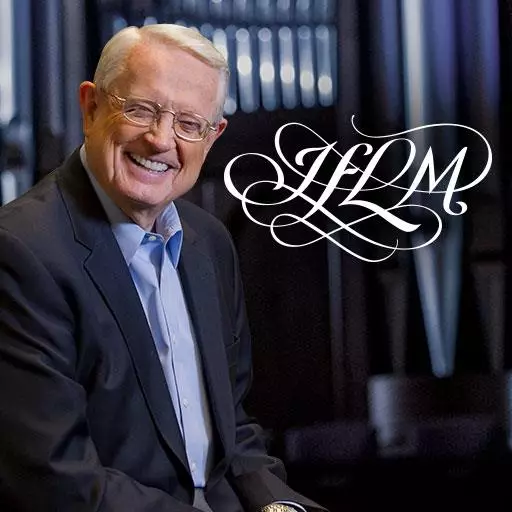
What Goes Around, Comes Around, Part 2


Do you feel like all is lost or that God doesn’t see your struggles? Esther 6 teaches us that God is always present, even when hope seems distant.
At a crucial moment, God gave King Ahasuerus a restless night, setting in motion a chain of events that humbled proud Haman and elevated humble Mordecai.
Join Pastor Chuck Swindoll as he mines gems of truth in this powerful chapter, reminding us that God’s timing is perfect and His care never fails. Find renewed hope and trust in God’s faithful hand.
Bill Meyer: To fully engage with Esther's story, we need to be familiar with the three characters who play a major role. First is Mordecai, Esther's adoptive father. Second is Haman, a powerful leader in the king's company who had generational hatred for the Jews. And the third, King Ahasuerus of Persia. When the king discovered Mordecai had once saved his life but was never rewarded, the stage was set. Today on Insight for Living, Chuck Swindoll describes the twists and turns in this epic plot. We're in Esther chapter six with a message titled, "What Goes Around, Comes Around."
Chuck Swindoll: As soon as the king heard nothing had been done for Mordecai, his wheels started turning. He began to imagine what might be done, and then he had to figure out who would help him carry it out. And so in verse four, he asks the logical question, "Who is in the court?"
Now, Haman had just entered the outer court of the king's palace. Watch this. In order to speak to the king about hanging Mordecai on the gallows, which he had prepared for him. Is this a great moment or what? Verse five, "The king's servants said, 'Behold, Haman is standing in the court.' And the king said, 'Let him come in.'"
Verse six, "So Haman came in and the king said to him, 'What is to be done for the man whom the king desires to honor?'" And Haman said to himself, "Whom would the king desire to honor more than me?" Of course. "Let's begin with the king's robe, which the king has worn, and choose the horse on which the king has ridden, and the crown on whose head the royal crown has been placed. And let them array the man whom the king desires to honor and lead him on horseback through the city square and proclaim before him that it shall be done to the man whom the king desires to honor."
Verse 10, one of my all-time favorite verses. "Take quickly the robes, the crown, the horse, and all you have said and do that for Mordecai the Jew." Oh, no. Oh man. This has got to be a mistake. Who? Mordecai the Jew who is sitting at the king's gate. Do not fall short in anything of all that you have said.
Now, I want to get the finest in the kingdom to make the announcement. So Haman, you be the one who leads the horse through the city and make the announcement how great this man is that sits on this horse. This is an in-your-face kind of announcement. Some of you look at me rather piously. How could you think such a thing? Oh, it's easy. Just like you could do it. I mean, this is my chance to get back. No, all of a sudden, I can't. I've got to go through and to make it worse, I thought of it. I thought of this idea.
So Haman, oh, this is great. So Haman took the robe and the horse and arrayed Mordecai and led him on horseback through the city square and proclaimed before him, "Thus it shall be done to the man whom the king desires to honor." One wise commentator said the words Haman had to proclaim must have been as gravel in his mouth.
We have a saying in our day. It's called what goes around comes around. It has come around for Mordecai. Sitting on that horse in regal attire is the most surprised man in the kingdom. That's the beauty of the story. Not a proud man. Not a man whispering, "Say it a little louder. Eat your heart out, Haman." Not a word. You read nothing, listen to me, nothing of vengeance in Mordecai's life.
You know what I appreciate most? The silence of Mordecai. How rare are the people who can be promoted to a place of significant stature and not live for their own clippings, and not crave the lights, not demand to be in the center stage, to be treated with kid gloves. You know a beautiful scene? It's a small phrase you would probably in your reading overlook. Verse 12, "Then Mordecai returned to the king's gate."
Isn't that great? Rather than Mordecai decided it was time for a promotion. You know why it's significant? Because that's where he's been all the time and his role has not gone to his head. I thought I was the first to discover that, and then I found in an old book published in 1880 from a man named Alexander Raleigh this insightful paragraph, better than I could have ever thought.
And I quote, "A proud, ambitious man would have said to himself, 'No more of the king's gate for me. I shall direct my steps now to the king's palace and hold myself ready for honor which surely must now be at hand.' Mordecai seems to have said with himself, 'If these things are designed for me in God's good providence, they will find me, but they must seek me. I will not seek them.'"
"Those who confer them know my address, Mordecai at the king's gate. That will still find me. Let the crowd wonder and disperse. I've had enough of their incense. Let Haman go whither he will, he is in the hands of the Lord. Let my friends at home wait. They will all hear all in time. I can wait best at the old place and in the accustomed way. I'll be at the king's gate."
Have you been promoted in recent days? Has God's providence smiled on you so that you are now being quoted in places where you were once not even known? Have you come to the place of nobility in the eyes of the people? The real question is, are you still comfortable at the king's gate, or must you now live in the palace where you are protected from the real world?
Must you now be treated with special care and be given a special touch and not bothered with everyday problems? Mordecai said, "Just drop me off at the king's gate." Let me give you a little piece of advice. No matter what happens to you, the best place on earth is the king's gate.
One more principle comes from this story in this chapter, and that is when nothing seems just, it is. If you're like me, you have been waiting for a long time for the other shoe to fall. You have been wanting somehow, not for Mordecai to take vengeance—that's not his right—but you have been wanting Haman to get what he deserves.
There's something in all of us that wants justice. That's why we will go to the trouble of finding an attorney and, if necessary, going to law in this case, because we have to bring about a sense of justice when we have been wronged. And this man, Haman, has strutted his stuff long enough.
When all seems lost, when nothing seems just, it is. Listen to verse 12, "Mordecai returned to the king's gate, but Haman hurried home mourning with his head covered." Remember the last time he was there? He was going through the litany of how great he is. Now he slides under the door as he gets there that afternoon.
And he recounts to Zeresh, his wife, and his friends everything that had happened to him. Haman types are the type that always blame other people for their misfortune. Have you noticed that? It's never "God has taught me a valuable lesson" or "I have been humbled through this and in the loss I have gained" or "God has crushed my spirit and I have learned to rely on Him." It is invariably "if it hadn't been for him," "if she hadn't said," "if that person hadn't done," "if the company hadn't," and on and on and on. Haman's like that.
He rehearses all that has happened to him, not all that he brought on himself. Then his wise men and Zeresh, his wife, said to him, "Hold on. If Mordecai, before whom you have begun to fall, is of Jewish origin, you will not overcome him. Your days are numbered. You will surely fall before him." You know what? You've got to admire their theology. They are right on target.
That couldn't have been sourced better if I had read for you Genesis 12:2 and 3. "I will make you, the Jews, a great nation. I will bless you. I will bless those who bless you and the one who curses you I will curse." The marginal reference states, "I will bind under a curse." Genesis 12:2 and 3, the Abrahamic Covenant. "My people will be protected. You curse them, you'll pay a terrible price." Thank God America has not forgotten that. It's wise to remain allies to the Jews.
When nothing seems just, it is. And they say to him, "Don't get your hopes up for many more mornings. It looks like you're about done for." Not while I was graduating from seminary, but a couple of years before my class made it, I was sitting in the audience listening to the long-standing president of Dallas Seminary at the time, Dr. John Walvoord.
I forget much of what he said, but I will never forget a statement he made as he was challenging the graduates to a life of purity, holiness, humility, godliness. I remember his warning all of those graduates in cap and gown that day to be careful with how they handled the glory of God and God's use of their lives in the days ahead. He made a statement not original to him, but at the time, I had never read it anywhere else before. He said, "Remember, God's wheels grind slowly, but they grind exceedingly fine." Never forget that.
Here in the case of Haman, God's wheels grind exceedingly fine. Never once in all of his peacock strutting about the kingdom had God overlooked Haman, never once. In none of his plan for the murder of the Jews, to say nothing of the murder of Mordecai that day, had God missed the statements, the feelings of the hearts, the motives behind the decisions. His wheels grind slowly but exceedingly fine.
I don't care how important you may think you are or how valuable you feel you are to the company or the community or the home or the church. His wheels grind exceedingly fine. Be very, very careful about walking in pride. It will come back to curse you.
Having heard these words, in fact, while—verse 14—while they were still talking with him, a knock came at the door. And before he could even get his thoughts together, according to the verse, the king's eunuchs had arrived and hastily brought Haman to the banquet which Esther had prepared. I mean, he didn't even have time to compute what was said before he was swept out of the house and moved right on to the palace of the king for this ominous banquet that would spell his doom.
Will you allow a preacher a little imagination for a moment? I can't help but wonder if on the way to the king's palace Haman didn't glance at the gallows and truly think, "Could it be that the one I planned to put there will never go, and I will be hung there in its place?" It's the kind of thought that Judas thought of too late.
There's an old English couplet that says, "Still as of old, man by himself is priced. For 30 pieces, Judas sold himself, not Christ." There he stood. In a moment of hesitation before going into the banquet, what goes around comes around. We've seen the principle "things are not as they seem" carried out in four different manners, haven't we? When all seems lost, it isn't. When no one seems to notice, they do. When everything seems great, it isn't. And when nothing seems just, it is.
Which is another way of saying when God seems absent, He's present. Even when you think you have lost it all, in the losing of all, God uses it as an opportunity to bring you to your knees. That's the strange way He works, you know.
I saw in a Billy Graham Decision magazine the story that was entitled "Disaster." Maybe you remember reading it. It was a story of a man who was shipwrecked and thrown on an island with nothing but a few things he was able to salvage from the ship. And he hurriedly built a little hut in which he would be protected from the elements and where he could keep the few last possessions he had salvaged from the wreck.
And he lived through the hot sun and the cold nights and the stormy days and nights on the island. And returning one evening after a search for food, and he had every day watched for a passing ship and saw nothing, when he came back that evening, he was terrified to find that the little hut he had built was consumed in flames.
And he stood there without any ability to stop the fire and in the crushing disaster of realizing that the last bit he had was now gone. Yet by divine mercy, his affliction was going to work to his mighty advantage. He went to sleep that night near the ashes, listening to the surf as it pounded on the sand. Awoke early the next morning, and to his surprise, as he sat up, he saw a ship.
And before he could awaken himself fully, he heard the footsteps of a crew of men next to him. And one of them said, "We saw your smoke signal and we came to rescue you." Everything the marooned man owned had to be destroyed before he could be rescued. Where are you in this story? I speak mainly to the Hamans who have been kind enough to listen very carefully.
You've been engaged in building your kingdom and erecting your fortune, establishing your name, making it prominent so that other people will ooh and aah. You've got your fortune in hand. You can see it in your sights. You've walked over and through people to get there. Listen to this piece:
"I had walked life's way with an easy tread. I had traveled where pleasures and comfort led. Until one day in a quiet place, I met the Master face to face. With station and rank and wealth for my goal, much thought for my body, but none for my soul. I'd entered to win this life's mad race when I met the Master face to face."
"I built my towers and reared them high till they had pierced the blue of the sky. I'd sworn to rule with an iron mace when I met my Master face to face. I met Him and knew Him and blushed to see that His eyes full of sorrow were fixed upon me. I faltered and fell at His feet that day while my castles melted and vanished away, melted and vanished and in their place, nothing else could I see but the Master's face."
"My thoughts are now for the souls of men. I have lost my life to find it again. Since that day in a quiet place, when I met the Master face to face."
I'd like you to bow your heads for a few moments. I'd like to address you who feel that God has been absent or on hold, distant in some way. I would like to reassure you of this: He has been present all the time. Furthermore, He knows your heart. He knows the true condition of your soul. He knows the impurities of your motive. He knows the depravity of your sin. But He has come to your rescue today.
The good news is that He has come to you. He's heard your signal and He will not turn you away. You're surrounded this day in all corners of this world with people who have given their hearts to Jesus Christ. Maybe they've not announced it to you, but I can assure you, in churches that preach His truth, they're there in great numbers. They understand the battle you're going through. I today invite you to make a decision they have made, and that is to give your life to Jesus Christ. Don't wait.
Father, we come just as we are today. We come as Hamans and Mordecais. We come in our need. We come in the dread of our own foolish decisions. We come in the misery of a memory, and yet we come. Thank You for truth that emerges from an ancient book whose scrolls are hardly known by the public at large.
Thank You for speaking to us through the lives and lips of men and women that we can identify with, who lived in a culture we'll never know, at a time where we could never be. Thank You for the glory of heaven that awaits all who know Jesus Christ. For the pleasures of sins forgiven, tears removed, blessings eternally ours to enjoy, rewards never made real on earth coming to pass there. Thank You for Christ, who has made it all possible. And we come to Him today in His great name. Amen.
Bill Meyer: This is Insight for Living. Whether you came to this program today more like Haman, building your own kingdom, or more like Mordecai, faithful and overlooked, the invitation is the same: come just as you are. God has not been absent. He's been present all along, working behind the scenes on your behalf. Chuck Swindoll will have a closing comment coming up, so stay with us.
Insight for Living has assembled a special bundle of Bible study tools for the Esther series. This bundle includes the searching the Scriptures Bible study workbook, the full-length biography of Esther written by Chuck, and the complete collection of 12 sermons on CD. To access these resources right now, go to insight.org/offer. If you've been on social media in recent days and seen video clips of Chuck's series called Living with Insight, you probably noticed that while Chuck is aging, his passion for proclaiming the good news isn't fading. Instead, it's growing stronger.
Chuck Swindoll: I've never been good at pretending. The calendar doesn't lie. I'm in my 90s now, and so my eyes don't function as they once did. My legs remind me every single day that I've logged a lot of miles. There are mornings when everything in me would rather sit quietly and let somebody younger carry the load, but then something happens. I picture myself standing behind a pulpit, my hands on that sacred lectern, my Bible open in front of me next to my notes, and something stirs deep down where age doesn't reach.
And I remember, I remember what this is. I remember what's at stake and I feel it all over again: the thrill, the privilege, the sheer staggering wonder that God would allow a weathered preacher to open his mouth and declare the most radical news ever to reach human ears—the cross of Jesus Christ. Friend, I look at this world, the chaos, the sorrow, the anger, the pain, and I don't see a world that needs better arguments. I see a world that needs what we have: the message that God has stepped into our mess and offered redemption to every last soul who will believe.
That's not wishful thinking. That's the gospel and it's just as powerful today as it was 2,000 years ago. My days behind the pulpit week in, week out are now behind me. I know that, I'm at peace with it, but we still proclaim the cross. As we close out this fiscal year on June 30th, I want to invite you to link arms with me for whatever miles remain. Your gift to Insight for Living is your voice in this proclamation. Through radio, the internet, social media, and resources reaching every corner of this world, you and I together get to tell them. Come with me. Let's boldly tell the world what they're longing to hear.
Bill Meyer: Thanks for responding to Chuck Swindoll today. Your gifts truly make an impact. Recently, we heard from one of your fellow listeners who said, "Dear Insight for Living, yours is the voice I run to when life in this world becomes too much. Thank you for grounding me and pointing me back to the cross." These moments are made possible through the generous gifts from friends just like you.
Today, we'd like to say thanks for your contribution by providing a brand new booklet from Chuck. It's called The Cross We Proclaim. You know, there are probably mornings when you wonder if you have anything left to give. In The Cross We Proclaim, you'll be reminded that you were never meant to do it in your own strength. When you give a gift to Insight for Living, we'd be pleased to send you a copy. Here's our mailing address: Insight for Living, Post Office Box 5000, Frisco, Texas, 75034. You can also call us at 1-800-772-8888 or give online at insight.org/donate.
Do you ever find yourself struggling to see God's hand in your story? I'm Bill Meyer. Don't miss Chuck Swindoll's enlightening message tomorrow on Insight for Living. The preceding message, "What Goes Around, Comes Around," was copyrighted in 1989, 1990, 1997, 2005, 2018, and 2026, and the sound recording was copyrighted in 2026 by Charles R. Swindoll Incorporated. All rights are reserved worldwide. Duplication of copyrighted material for commercial use is strictly prohibited.
Featured Offer

Pastor Chuck’s audio set (CD or MP3) and companion spiral-bound workbook help you discover who God truly is—and live transformed.
Past Episodes

Video from Pastor Chuck Swindoll
Featured Offer
Pastor Chuck’s audio set (CD or MP3) and companion spiral-bound workbook help you discover who God truly is—and live transformed.
About Insight for Living
Join the millions who listen to the lively messages of Pastor Chuck Swindoll, a down-to-earth pastor who communicates God’s truth in understandable and practical terms, with a good dose of humor thrown in. Chuck’s messages help you apply the Bible to your own life.
About Pastor Chuck Swindoll
Charles R. Swindoll has devoted his life to the accurate, practical teaching and application of God's Word. Since 1998, he has served as the founder and senior pastor-teacher of Stonebriar Community Church in Frisco, Texas, but Chuck's listening audience extends far beyond a local church body. As a leading program in Christian broadcasting since 1979, Insight for Living airs in major Christian radio markets around the world, reaching people groups in languages they can understand. Chuck's extensive writing ministry has also served the body of Christ worldwide and his leadership as president and now chancellor of Dallas Theological Seminary has helped prepare and equip a new generation for ministry. Chuck and Cynthia, his partner in life and ministry, have four grown children, ten grandchildren, and six great-grandchildren.
Contact Insight for Living with Pastor Chuck Swindoll
customerservice@insight.org
http://www.insight.org/
Mailing Address
Insight for Living
Post Office Box 5000
Frisco, Texas 75034
USA
Phone Number
1-800-772-8888