

What Does It Mean to “Really Live”?, Part 1


What do people want or need to confidently say, “I am really living!” The answer may surprise you.
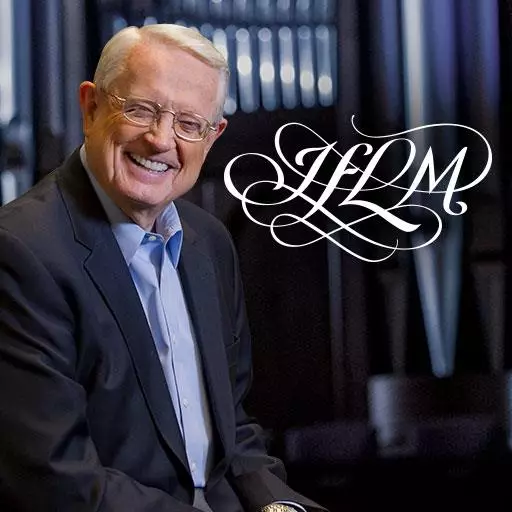
Hear Pastor Chuck Swindoll teach on the fulfilling life of faith from 1 Thessalonians 3:9–13.
Paul lacked much materially, but he overflowed with joy, prayer, love, and holiness. Imitate Paul, as he looked to Christ, and find that you will grow in wisdom and depth too!
Guest (Male): We're all chasing something. Purpose, meaning, a life that feels truly alive. Along the way, we climb ladders, sock money away, and accumulate degrees, convinced that the next achievement will finally satisfy. Yet somehow, contentment remains just beyond our reach.
Bill Meyer: Today on Insight for Living, Chuck Swindoll describes Paul the Apostle, a man who was stripped of his comfort, health, and safety. Yet Paul found what most people spend their entire lives searching for. What did Paul know that we've missed? Chuck titled today's message with a question: What does it mean to really live?
Chuck Swindoll: What does it mean to really live? Well, some people say it takes money to really live because money can buy the good life. But since when is the good life the same as the real life? Others would say real living belongs to the vibrant young. So, smoothing out our wrinkles, tucking in our tummies, and combing our hair over our bald spot, we do what we can to stay young and not fall behind in the fast lane of youth, right? But since when is the fast life the same as the real life?
I can hear a few say, "Listen, a life of comfort and ease, swinging in the old hammock out back and sipping a cool, tall glass of lemonade under a shade tree. Now that is living." Yet do we really think a sleepy, pampered life in a hammock is the real life? How about the educated life? Is that the real life? Or the productive or the organized life? Do any of those pursuits define what it means to really live?
If we ask God that question, I'm honest here, I think he'd probably shake his head, "No." None of that constitutes real living. Unfortunately, humanity rarely turns to him for his thoughts on the matter, even though he is our maker. But turning to our maker's word is what I want us to do today. So please, if you have a Bible handy, locate 1 Thessalonians chapter 3. I want you to listen as I read for you the last six verses of 1 Thessalonians 3, beginning at verse 8.
For now we really live, if you stand firm in the Lord. For what thanks can we render to God for you in return for all the joy with which we rejoice before our God on your account, as we night and day keep praying most earnestly that we may see your face and may complete what is lacking in your faith.
Now may our God and Father himself and Jesus our Lord direct our way to you. And may the Lord cause you to increase and abound in love for one another and for all people, just as we also do for you, so that he may establish your hearts without blame in holiness before our God and Father at the coming of our Lord Jesus with all his saints.
Bill Meyer: You're listening to Insight for Living. To dig deeper into 1 Thessalonians on your own, be sure to purchase our Searching the Scriptures Bible study workbook by going to insight.org/offer. Chuck titled today's message with a question: What does it mean to really live?
Chuck Swindoll: What does it mean to really live? I mean, what does it take? Well, many would say it takes money. If you want to have the good life, you need a lot of money. At age 69, Sophie Tucker said, "From birth to age 18, a girl needs good parents. From 18 to 35, she needs good looks. From 35 to 55, she needs a good personality. From 55 on, she needs cash." If you want to enjoy the good life, you've got to have cash. You've got to have the bucks. But since when is the good life the real life? Since when is having a lot of money really living?
Just as many would say when asked the question, "What does it take to really live?" just as many who would say money would probably say youth. It takes youth. If you plan to keep up in this day and age of speed and change and innovation, you have to stay young. You have to look young. You have to be young. The world is leaving behind those that are getting older. Far too many could have written on their tombstone: Died at 31, buried at 73. Far too many people die before they're buried. You've got to stay alert. You've got to stay alive. You've got to be young.
But who's to say that the fast life is the real life? Who's to say that being young provides real living? I know a 17-year-old youngster who wouldn't say that. A junior in high school wrote Ann Landers this letter: "I don't care what you do with this letter. You don't even have to read it if you don't want to, but I have to write it. A lot of people wonder why anyone my age would want to commit suicide. Most of us have a decent life and it seems like a crazy thing to do. But it doesn't seem so crazy to me.
I'm a guy who wishes he didn't have to get up every morning and face the day. I'm empty, useless, and tired of struggling. I feel like I'm in everybody's way and I don't think anybody would give a rip if I disappeared from the face of the earth. I have no idea why I was born, and I don't fit in anyplace. I know you can't do anything about all this, but I wanted to explain it to somebody. I wanted to explain what goes through a person's mind before he pulls the trigger or swallows one too many pills." Signed, "Anon Person."
No, that's not the answer. The answer isn't to be young if you want the real life. Just as many who would say money or youth would say comfort. "I want it easy. That's the real life." I remember, and I smile when I say this, I remember our oldest daughter when we would go camping when she was very, very small. She could hardly wait for us to get the tent up and everything in place so that I could hang the hammock.
And I would wrap her in a big warm blanket, and then I would place her in this hammock. She'd snuggle up and put her index finger in her mouth. I know she'll be thrilled to have me announce to the world that she sucked her index finger, never her thumb. And then she would mouth out the side of her mouth to me, "Daddy, this is living." I'd push her in the hammock and she'd be wrapped up in the blanket with her little finger in her mouth.
But who's to say the comforting life or the comfortable life is the real life? I mean, you could name a half dozen other things. Some would say education. The educated life. Now, that's real living. You and I know a lot of educated people who aren't really living. Some would say it takes a job, a job that satisfies and a job that makes you productive. Who's to say the productive life is the real life? I know a lot of productive people who are burning the candle on both ends, and they're not very fulfilled.
There are some who would say what it takes is goals and objectives. You get those in place like ducks in a row, you can make tracks. Who's to say the organized life is the real life? What does it take to really live? Now, I find it nothing short of remarkable that so few people ask God that question. Honest to goodness, the one who holds the patent on our bodies, the one who made us with our personality, the one who put life together as we know it today, he's seldom consulted on that.
And you know the result? We substitute. Left to ourselves, we don't ask for help. We substitute. The artificial for the authentic. Now, that's not my idea. Solomon was the first to write about it over in the journal that he kept named Ecclesiastes. Will you turn to chapter 7 and the last verse of Ecclesiastes 7? If you're not familiar with your Bible, it's just beyond Psalms and the book of Proverbs. Tucked in there is the journal of Solomon.
And in it, he makes a comment about how we tend to substitute. And then in a moment, I want to give you a couple or three substitutions we invariably make in life. They are called here devices. Devices. Look at Ecclesiastes 7:29. "Behold." When you read that in scripture, it's another way of saying, "Listen up," or "Attention everybody." "Behold, I have found only this, that God has made man upright." Nothing wrong with that.
But those who were made upright have sought out many devices. The Living Bible says, "Though God has made men upright, each has turned away to follow his own downward road." The Good News Bible reads, "God made us plain and simple, but we have made ourselves very complicated." The New International Version, if you carry that, you read, "God made mankind upright, but men have gone in search of many schemes."
The reason those paraphrases and versions read like that is because of the use of the term *chashab*, which means to invent. It's translated devices. In noun form, inventions, devices. It's used, for example, of creating instruments of music in scripture. It's used in the Old Testament for creating works of art. It's used for making implements of warfare. Uzziah was one king who devised implements of warfare and implemented them during his reign, and they were effective. He invented them.
Nothing wrong with works of art, instruments of music, or implements of warfare to defend a nation. But the root term translated to invent is really the term to think. To think. To think through a plan, to arrange clever and imaginative ideas. God has made men upright, but they have thought through a plan that's creative, clever. And when you carry that plan to the ultimate end, you wind up with substitutes.
Let me give you three. Mentally, we substitute knowledge for wisdom. You will not get wisdom from the schools today. You will get knowledge. Schools cannot teach wisdom. It's a gift from God. But we are very impressed with knowledge. We are impressed with human scholarship much more so than with divine understanding. If you don't think so, you try to get an interview with the media and talk about divine wisdom and see if that gets into print.
We are far more impressed with men's opinion rather than God's principles. We like people who are clever and witty, people who can debate. Couldn't miss that moment. We like people who can out-think one another on the horizontal plane because we like knowledge, but wisdom? Ah, it's kind of boring. A little spooky. A little hard to get a handle on. So we substitute knowledge for wisdom.
Emotionally, we substitute feelings for facts. You question that, stop and think. We will opt for pleasure today in spite of the pain it'll bring tomorrow. I just had a young man say to me just not too long ago, in fact, a few moments ago, every day, I smoke pot. Every day, I smoke marijuana. I know it's bad. It's doing bad things to me. Why does he do it? It feels good. It feels good.
We choose comfort regardless of the consequences. If it feels good, then it's more important to me than if it's best for me. If it makes me happy, I care about doing it rather than glorifying God if that won't make me happy. I want feelings. I don't want facts. It's a substitute.
Third, spiritually, the worst of the three, we substitute temporal for the eternal. That's what I mean by worst. What a dead-end street that is. We tend to emphasize cost over value. One wag has said, "Americans are the people who know the cost of everything and the value of nothing." We will go for the urgent every time rather than the important, unless God's in control. We shoot for the horizontal, forgetting the vertical. We're impressed with the natural, not the supernatural. We're skeptical of that. We like quantity rather than quality. All of that is temporal goods as opposed to eternal stuff. One man put it this way: Man occasionally stumbles over the truth, but most of the time, he'll pick himself up and continue on.
One of the things that keeps drawing me back to the Bible, week after week after week of my life, is perspective. I get perspective from God's word. I don't like interruptions. When I am interrupted and I have God's perspective, they don't bother me. I don't like to wait. When I have perspective from God's word about waiting and I'm forced to wait, it doesn't bother me.
I don't like to suffer. When I am in pain and I have perspective from God's word on the benefits of pain and suffering, it doesn't bother me nearly as much. The perspective his word gives is phenomenal. It's called divine wisdom. It's called reality. Reality is not the way I wish things were. Reality is not the way things appear to be. Reality is the way things are. And that's what God tells us in his book.
Now, from Solomon's counsel, turn to a love letter Paul wrote to the Thessalonians, chapter 3. We're going to look at the latter half of this third chapter. And I'm so glad we're doing this. The man who wrote this letter was in anything but an ideal situation. Are you ready? He lacked the creature comforts. He was away from the people he knew and loved, many of them. He was hundreds of miles from home. He was in poor health. He had very little money. His future was uncertain and his life was threatened.
But he really lived. Does that seem a little bit unusual to anybody else? I mean, how many people do you know, given those same circumstances, if you called them up on the phone, would say to you in return, "Man, this is living"? Only a person with biblical perspective could say that. And out of this context of difficulty, could say in verse 8, "We really live."
And it's directly connected with his friends: "if you stand firm in the Lord." But it doesn't stop there. In fact, I find in verses 9 to 13 four factors that emerge that relate to real living. They're all right here in the passage. You don't even have to make them up. You don't have to make them rhyme or start with the same letter. They're all right there in the passage. The first one is what I will call joyful in gratitude. Not joyful ingratitude, but joyful in gratitude. Let's understand what we're saying.
Verse 9: "What thanks can we render to God for you?" What thanks can we render to God for you in return for all the joy with which we rejoice before our God on your account? I think Paul smiled when he wrote that. Forgive that little imagination, if you need to. But I think Paul on occasion, when he thought about his friends, smiled. I do. And I think you do. Sometime when I'm writing a letter to someone I really love, I smile as I say how much I love you, how encouraged I am by your life, what a thrill the memory of our friendship is to me. And I smile. I think Paul is smiling when he expresses his gratitude.
You love Psalm 103 as much as I do? Bless the Lord, O my soul, and all that is within me, bless his holy name. Bless the Lord, O my soul, and forget not all his benefits. And he counts his blessings. He surrounds us with loving kindness. He protects us. He heals me. He meets my needs morning, noon, and night. And I am full of gratitude, and I am full of joy.
One of the reasons I love to be around children is because they make me laugh. It's impossible to be with children at play and not feel better after the fact, unless, of course, you've got a house full of 15 or 20 of them and you're trying to survive. But you know what I mean. Some of us get pretty, pretty grim in life. And I guess that's why I like certain people that interview children. Danny Kaye is one of the best. But the best is no doubt Art Linkletter.
And Art Linkletter can get children to say, well, as he puts it, the darndest things. He remembers a three-year-old girl with big brown eyes whom he asked, "What do you do to help your mother?" "I help my mom cook breakfast," she replied. "Well, what do you do to help your mom with breakfast?" Art asked. She didn't hesitate. "I put the toast in the toaster, but she won't let me flush it." That's a great line. She won't let me flush it.
Art asked one grammar school youth what his father did for a living. The boy took the microphone as if it were an ice cream cone. "My dad's a cop. He catches crooks and burglars and spread-eagles them and puts cuffs on them and takes them down to the station and puts them in the slammer." "Wow," Art replied, "I bet your mother gets worried about his work, doesn't she?" "Heck no," the youth assured Art, "he brings her lots of watches and rings and jewelry."
Oh, that's great stuff. I really like the one where he interviewed the kid and he said, "Now, let me give you a situation. You're the pilot of a commercial airliner, and you've got 250 passengers and you're flying to Hawaii and you're over the ocean and all four engines go out. What would you do?" This little kid stood there and thought, and he said, "I would press the 'fasten seat belt' button and parachute."
You know what, men and women? Life is too grim for most of us. It has gotten that way since we've grown up. It used not to be like that. Let me tell you, let me tell you the most magnetic witness for Jesus Christ today. That's the person with contagious joy. You cannot stay away from them. Cannot. There's a winsomeness about them. There's a believability about their faith. There's a Pauline kind of freshness that says, in the midst of satanic opposition when he couldn't get to them and personal distress that he mentions in verse 7 of chapter 3. In spite of the distress and the oppression from Satan, Paul says, "You are my joy. You are my glory. I smile when I think of you people.
Joyful in a life of gratitude. We need to keep the child alive within us. You might think he's kind of quirky, but I have a friend who carries around little toy cars in his pocket. I thought I had one, I've got my keys in mine. I thought somebody stuck one in my pocket here. And he every once in a while will take out this little toy and look at it, stick it right back in his pocket. Just to keep him reminded he's not that far removed from the child.
We rejoice before our God on your account. I don't mean that every day is full of grins and silly giggles. You know better than that. That's not joy. That's a superficial cop-out. But a deep sense of happiness with life. God is in me. God's on the throne. God's moving me in his direction. God's going to take me there, and when I am there, he's going to smile and say, "I've been waiting for you. You're mine. Let's go." I mean, there's no better way to live. That's really living.
It's not just the joyful gratitude, however. There's an earnestness in prayer. See verse 10: "As we night and day keep praying most earnestly." You notice the order? It hit me just last night when I was reviewing these thoughts. Night is mentioned first, then day. I don't know if your life is like mine, but when I travel, my hardest time is when the sun goes down. I get most lonely when the sun dips down in the horizon and leaves this surface and it gets dark. When it gets dark, weeping sometimes comes, doesn't it? Weeping may endure for the night, but joy comes in the morning, says the psalmist.
Now, the apostle says in his nights and during his days, there's a consistency in prayer. Continually praying. And it's not a frivolous kind of "Now I lay me down to sleep" or "Dear Lord, bless the missionaries." Not that kind of thoughtless prayer. But prayer that says "most earnestly" its requests.
Bill Meyer: Today on Insight for Living, Chuck Swindoll is answering a common question: what does it mean to really live? And there's much more teaching ahead, so please keep listening. In fact, we're just getting started with our study in Paul's first letter to the Thessalonians. It's a practical series that Chuck titled "Contagious Christianity." If you'd like to do an in-depth study in Paul's letter on your own, we highly recommend you request the Searching the Scriptures Bible study workbook called "Contagious Christianity."
This popular spiral-bound resource transforms your experience from listening to Chuck teach into discovery for yourself. It's printed in a convenient format so you can lay the Bible study workbook flat with your Bible open. And it's perfect for writing down your thoughts and reflections. To purchase the Searching the Scriptures Bible study workbook for Contagious Christianity, call 800-772-8888 or go to insight.org/offer.
We're also pleased to offer you and your family one of Chuck's most highly requested books. It ties in naturally with our study on Contagious Christianity because it's about finding outrageous joy. Chuck's book is called Laugh Again. To be clear, joy isn't the same as happiness. Happiness depends on what's happening at the moment, but joy, joy runs deeper. In his book Laugh Again, Chuck helps you understand God's radical offer to experience outrageous joy.
Even when life feels dark, even when you're tired or afraid, authentic joy is possible. Not because you're ignoring reality, but because you know the one who's bigger than your reality. You can own this book, Laugh Again, when you give a donation to support the ministry of Insight for Living. Thanks for remembering that your gift, no matter the size, empowers us to share Chuck's teaching every day on your station and the many other places you can freely access Insight for Living. Call 800-772-8888 or visit insight.org/offer.
What does it mean to really live? I'm Bill Meyer. Don't miss Chuck Swindoll's biblical answer Monday on Insight for Living.
The preceding message, "What Does It Mean to Really Live?", was copyrighted in 1984, 1985, 1993, 2003, and 2024, and the sound recording was copyrighted in 2024 by Charles R. Swindoll, Incorporated. All rights are reserved worldwide. Duplication of copyrighted material for commercial use is strictly prohibited.
Featured Offer

Pastor Chuck’s audio set (CD or MP3), commentary, and companion spiral-bound workbooks give you everything you need to walk with Jesus from Galilee to the empty tomb.
Past Episodes

Video from Pastor Chuck Swindoll
Featured Offer
Pastor Chuck’s audio set (CD or MP3), commentary, and companion spiral-bound workbooks give you everything you need to walk with Jesus from Galilee to the empty tomb.
About Insight for Living
Join the millions who listen to the lively messages of Pastor Chuck Swindoll, a down-to-earth pastor who communicates God’s truth in understandable and practical terms, with a good dose of humor thrown in. Chuck’s messages help you apply the Bible to your own life.
About Pastor Chuck Swindoll
For most of his entire life, Pastor Charles R. Swindoll has devoted himself to the accurate, practical teaching and application of God's Word — anchoring every message in the transforming power of God's amazing grace. From congregations on the East Coast to the West Coast, his ministry has carried that message across the country, ultimately taking root in Frisco, Texas, where he founded Stonebriar Community Church. Yet Chuck's influence has never been confined to a single sanctuary. Since 1979, Chuck’s messages have aired on Insight for Living, one of the most widely heard programs in Christian broadcasting, carrying his voice — and the timeless truth of Scripture — to listeners around the world. That same passion for God's Word has shaped his leadership at Dallas Theological Seminary, where his tenure as president and now chancellor emeritus has helped raise up a new generation of men and women equipped and called to ministry. Few lives have touched so many, across so many places, for so long.
Contact Insight for Living with Pastor Chuck Swindoll
customerservice@insight.org
http://www.insight.org/
Mailing Address
Insight for Living
Post Office Box 5000
Frisco, Texas 75034
USA
Phone Number
1-800-772-8888