

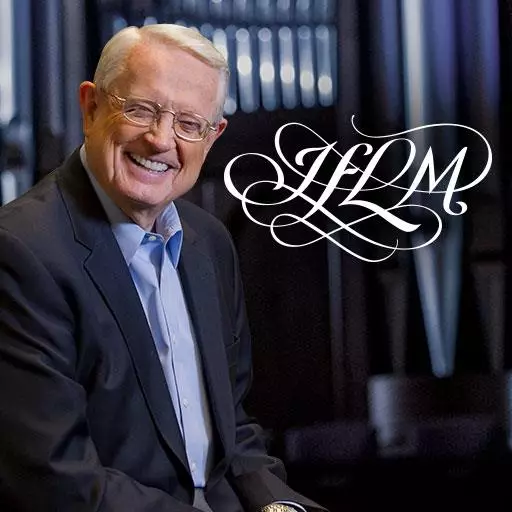
Uzziah: The Leader Who Became a Loser, Part 2


How quickly monuments erected in our own names and for our own glory come crashing down, taking us with them. The rise and fall of King Uzziah, recorded in 2 Chronicles 26, is a pertinent example of this tragedy.
Tune in to hear Pastor Chuck Swindoll teach on pride, leadership, and God’s glory.
Learn the telltale signs of a ministry or a leader hoarding glory for themselves instead of giving it back to God. Determine to give God all the praise!
Bill Meyer: You may have heard it said that success can be more dangerous than failure. It's true. We stumble more on mountaintops than in valleys. Today on *Insight for Living*, Chuck Swindoll tells the story about a leader who experienced 52 years of God's extraordinary blessing until pride crept in and everything unraveled.
So, here's the question: When does blessing become a curse? And more importantly, how do we create safeguards? Through this king's dramatic story, Chuck delivers an urgent message for everyone in ministry, no matter how gifted, how useful, or how many people follow your lead.
Chuck Swindoll: Isaiah 42:5-8. I direct your attention to this significant section of scripture. I learned of the fear of God from my mother, but I learned of the glory of God from my God himself. And I dedicate this message today to all of us engaged in ministry of any kind—ministry of the Word, ministry of music, ministry of education, ministry of counseling. This is a message for us to take and hold as a sacred trust.
I have a sense of timing in this that it is the right occasion to speak it. We are watching these days with an ache in our hearts as kingdoms of men are crumbling about them that once were under the guise of ministry. And we sorrow, we grieve as we watch fellow men and women falling in ministry because of the failure to hold the glory, the heaviness, the splendor that belongs only to God.
And failing to give it all to him, they've taken it, and they've loved it, and it's ruined them. And it could ruin us just as well—anyone of us. Isaiah writes of God's own word, 42:5: "Thus says God the Lord, who created the heavens and stretched them out, who spread out the earth and its offspring, who gives breath to the people on it and spirit to those who walk in it."
"I am Yahweh. I am the Lord." I've underlined that: "I am the Lord." Does that mean we have no part in his ministry and in his work? No, look at the list of things that follow. "I have called you," so we have been called. "I have called you in righteousness. I will also hold you by the hand," we are being helped. We are being guided. "I will watch over you," we are being protected as in a shield of God's divine providence.
"I will watch over you. Furthermore, I, the Lord, will appoint you." Look at this: He will use us. "I will appoint you a covenant to the people." And look at the areas of ministry: "as a light to the nations, to open blind eyes, to bring out prisoners from the dungeon and those who dwell in darkness from the prison." "I am the Lord," he repeats it. In scripture for emphasis, exclamation points weren't used—repetition is used.
"I am the Lord. I am the Lord." Remember it. "That's my name," he says in verse 8. "It's not your name. And it's not for you to use lightly or misuse or abuse. I will not give my glory to another." There it is again: *Kabod*. "It is my heaviness of splendor, and I won't let you borrow it. I won't let you take it. Nor my praise will I give to graven images."
The word is idols. "You build idols; my praises don't go to your idols. You build empires; they do not receive my praises. My praises come unto me and come unto my works. They come unto my name." It is true in John 17:22, Jesus in a prayer speaks of the glory that God gave to him and he in turn gives to his own. But he tells us there, it is for the purpose of unity.
In other words, he gives his glory to the church as a body of people to represent in unity his message and his works. John, who writes that, also is the one who writes in the third letter words of great rebuke to Diotrephes, who attempted to take the place of the Lord in the church. "And he loved first place," says John, and he brings words of reproof to Diotrephes.
So this is not to be confused with that sharing of the glory in John 17. This is unto the Lord: "I am the Lord, that is my name. I will not give my glory to another, no matter how gifted, no matter how useful, no matter how valuable, no matter how many people follow, no matter how many hang on your words and listen to your records and sing your songs, no matter how many would say you're the reason I'm still alive from your wise counsel. I am the Lord. My glory I will not give to you, and I will not give my praises to your idols."
That's the formula. Very simple formula to follow that will keep a ministry a movement of God rather than a monument unto ourselves. Number one: remember his name. Number two: reflect his glory. Number three: rejoice in his praises. Remember his name, reflect his glory, rejoice in his praises. Hold all of it in a sacred trust.
No amount of time in ministry ever gives anyone the right to take his name or eclipse his glory or steal his praises. The tragedy is the longer we're in ministry, the more loosely we handle such statements, and the easier it is to rationalize around the fact that we are abusing the right of ministry. Let me give you a statement that represents everything I have to say: ministry monuments result in disaster.
Ministry monuments finally crumble, and disaster occurs. Illustration: a king named Uzziah. Second Chronicles chapter 26, please turn there next. Second Chronicles 26 is a relatively unknown account of a king. His name was Uzziah. According to the sacred record, while Uzziah was in his mid-teens, his father was assassinated. He heard of a conspiracy and he fled to Lachish, and while in this region, he was found, and the conspirators found him and took his life.
Perhaps in the presence of his own son he was killed; certainly the word traveled immediately to Uzziah if he was not there at the time. And as was the ancient custom, the son took the father's place on the throne of Judah. Verse 1: "And all the people of Judah took Uzziah, who was 16 years old, and made him king in the place of his father Amaziah."
Now, if you're Jewish, you will love this vignette of history. If you're a parent, you will be like me, amazed, because you once were 16. If you're like me, you've reared several through the 16-year-old temporary insanity period of time, and you are scared to think that a 16-year-old could take the throne. You know, the Bible never once speaks disparagingly of youth.
I challenge you to find a scripture that decries someone because he is simply, or she is simply, young. In fact, God using Paul's pen says to young Timothy, "Don't let anyone despise your youth." Young in ministry, that's not your problem. It's encouraging to think that Timothy was in his 40s when Paul wrote to him as a young man. I find greater comfort in that as years pass.
A young man—but Timothy, don't let anyone despise your youth. God has used the young throughout the generations. One comes to mind in Charles Haddon Spurgeon, the most prolific, colorful preacher in Victorian England, who at the age of 17 was called to his first pastorate. At the age of 20 was called to the chapel, and by 22, they were standing in the snow to hear Spurgeon preach.
By 25, the numbers were so great, they were required to build Metropolitan Tabernacle. The thousands of people that came by carriage and horseback, often by walking across great sections of London, to attend the service to hear young Spurgeon preach. His name is a legacy in the land of Great Britain. He was young, and he remained in that pulpit from age 20 to the end of his life in his mid-50s.
Suffering of ill health, he finally stepped aside and shortly thereafter died, but he knew no other pulpit. For 25 years after his death, they published his sermons once a week, besides all of the publishing he had done in his lifetime, and they finally stopped—not running out of material, but they simply decided to stop. The man was prolific.
If you're young and you're in ministry, that's fine—nothing to be ashamed of and everything to be excited about. But learn a lesson from history. Learn a lesson. You can be young and still walk with God. Look at Uzziah. Verse 3: He was 16 years old when he became king, and he reigned 52 years. And verse 4: "He did what was right in the sight of the Lord."
There is something to be said for staying a while in a ministry. There is something to be said for staying 30, 40, if God grants you 50 years in a position if he is still using you and you don't see yourself as indispensable and God is blessing your leadership. So it was with Uzziah. Why is it that he was doing right in the sight of the Lord? Verse 5: He continued to seek God.
He spent time in prayer. He was engaged in the disciplines of holy living. He walked humbly with his Lord. He was careful with his authority. Being influential, he was wise in his decisions. Here is a man who also chose the right mentor; his name was Zechariah. Verse 5: "He continued to seek God in the days of Zechariah, who had understanding through the vision of God."
Some Old Testament texts read: "He had understanding in the fear of God," and I prefer that. He walked with a man who walked with God. He stayed close to a man who reminded him of the respect he must sustain for God. He didn't hold God's things loosely, nor did he practice them as evidences of his own strength. He remembered the name of God, he reflected the glory of God, and he rejoiced in the praises and blessings of God. And God's hand rested on King Uzziah.
Look at his exploits. The scripture in this passage is full of them. It says in verse 5 at the end, "As long as he sought the Lord, God prospered him." Of course, that's always true. God added blessing to his life. God gave him good health, I take it. God also used him with strength in his work. If you just take the verbs of verses 6 through 16, you'll see a story of an incredible biography.
It says he warred against Philistines, the ancient enemies of Judah. He took them to task. He beat them in their own grounds and at their own game, and he tore down their walls at Gath and Jabneh and the wall at Ashdod. He built cities in the area of Ashdod. He not only conquered them, he did great exploits among them. The Philistines were at his feet. Verse 7: That's the reason, because God helped Uzziah.
Young, growing, learning, but humble before his God. Significant individual. Verse 8: The Ammonites gave tribute to Uzziah. Watch it, verse 8: "His fame extended as far as Egypt." His name was a household word. He was known all over the country. He was a man eminently gifted and blessed of God. Moreover, verse 9, he built towers. Tells us where he built them in verse 9.
Verse 10: He hewed many cisterns. Furthermore, "he loved the soil," verse 10 concludes. I take it he was a farmer at heart. He loved to work in the soil; he loved to see the vineyards flourishing. And in the process, he maintained a strong army. Look at verse 11: He had an army ready for battle. The number of the warriors, verse 12, 2,600. The entire army numbered over 307,000 soldiers, verse 13, who could wage war with great power to help the king against the enemy. He had the salute of his people.
Here he is: creative, strong, strategic, unique, and famous. Look at verse 15: He even gathered around him people of creativity. "In Jerusalem he made engines of war invented by inventive men," the Hebrew says. These engines of war were invented by inventive men to be on the towers and on the corners for the purpose of shooting arrows and great stones. He had a war machine, and he put creative men into it, and the city of Jerusalem became a citadel of strength and military might.
And he was strong because he was marvelously helped, verse 15 concludes. "His fame spread afar, for he was marvelously helped... until he was strong." You say, "Now wait, I've been reading of strength, and now it says he was helped until." What does that mean? Well, verse 16: "When he became strong, his heart was proud."
The entire door of Uzziah's life swings on the hinges of verses 15 and 16. He grows, he increases in strength, his fame spreads as far as Egypt. They're talking of Uzziah. The city is built; the city is fortified. The flags fly, the armies march, the parades are held. The people are singing their songs, and they're all turning to Uzziah. And he one day believed it. And that's when his demise began.
When his favorite piece of furniture in the palace was a mirror. When he suddenly began to believe his clippings. I don't know if it happened quickly or imperceptibly. I only know it happened, and the blessing of God lifted from him. I take it that he borrowed God's name and absorbed God's glory and enjoyed the praises that should have gone to God. He became conceited, we would say today.
J. Oswald Sanders, in a book you must buy and read, *Spiritual Leadership*, writes: "Egotism is one of the repulsive manifestations of pride. It is the practice of thinking and speaking much of oneself, the habit of magnifying one's attainments or importance. It leads one to consider everything in its relation to himself rather than in relation to God and the welfare of his people."
"The leader who has for long been admired and deferred to by his followers is in great danger of succumbing to this peril. Actually, egotism is nothing more than the anesthetic that dulls the pain of stupidity." The man in his stupid pride begins to believe in himself, and there was nobody around with guts enough to tell him, "You're arrogant. The glory has departed from your leadership."
Find a place in your Bible to write down several of the telltale signs of ministry slippage, will you? I think there are five I detect in these verses we have read and will read. Telltale signs of ministry slippage. How can you, as a congregational member, detect that your pastor is slipping? How can you, as a Bible class member, tell that your teacher in his or her ministry is beginning to slip?
How can you tell when it's becoming a personal empire rather than a work for God's glory? What are the signs? I must say that they are often subtle and will take a discerning mind to spot. As long as you are enamored of the leader and have him or her pedestaled, you will not detect those things. But when you think clearly and God is the God of your life and the Lord of your direction—not your teacher, not your pastor, not your counselor—you will be given enormous discernment.
And you will be able to spot the signs of ministry slippage when the movement has stopped and the monument building has begun. Let me give you two or three of them now, and as we work our way through the balance of this chapter, I'll give you the other two. First: when greater battles are fought within than without, the ministry has begun to slip.
He used to fight Philistines; now he's fighting his own image. He's fighting for his own name. He's become protective, defensive, stubborn, arrogant, conceited. According to verse 16, his heart was proud. That's the first sign, and again, you can't read my heart, and I cannot read yours. But that's where it starts: in your heart, which is the biblical word for your inner being.
Your mind, your inner person. Down there, you entertain thoughts that are arrogant. You carry yourself with a confident sense of self-assurance. The need to pray and to lean and to rely on others and on God is conspicuous by its absence. You are now struggling for your own name, and your battles are no longer against the Philistines. Your battle is now within yourself. I'll show you that in a moment specifically in Uzziah's life, the storm that was within his own being.
First, when greater battles are fought within than without, the leader has begun to slip. Second: when more attention is directed to the leader than to the Lord, a monument is beginning to be built. When you must kowtow to the sayings of the leader, regardless of the declarations of Holy Scripture. When you must fulfill his list for your holiness and his demands for your faithfulness.
When his name becomes prominent at the church, on the ministry, in the school, at the class, in the organization, watch out. Let me put it straight so that folks like us can understand: Pride stinks. The problem is the proud person is the only one who doesn't smell it.
Bill Meyer: No mincing words about pride. Its impact is devastating. Stay with us because Chuck Swindoll has much more to say about Uzziah, the leader who became a loser. This is *Insight for Living*. On Monday's program, Chuck will conclude today's message, wrapping up the entire 14-part series called *Fascinating Stories of Forgotten Lives*.
To access the helpful Bible study tools for this series, now's the time to reach out. Many listeners tell us how much they appreciate the way Chuck brings these Bible characters to life. This series gives you several of these portraits. Picture yourself on a Saturday morning with your coffee, opening one of these messages and meeting someone you've read past a dozen times. Or imagine your small group discovering together why God preserved even a single verse about someone's faithfulness.
Well, the *Searching the Scriptures* Bible study workbook is a great resource we have to guide you. This popular spiral-bound workbook will transform your experience from listening to Chuck teach into discovery for yourself. To purchase the *Searching the Scriptures* Bible study workbook for *Fascinating Stories of Forgotten Lives*, go to insight.org/offer. There's even a full-length book by the same title, written in Chuck's classic storytelling style.
Before you go, let me invite you to request a brand new quarterly resource from Insight for Living called *Guided by Grace*. It's a high-impact magazine that we've designed to bring biblical encouragement directly to your mailbox. Inside its colorful pages, you'll explore characteristics that define Christ-like living. One issue might focus on joy, another on generosity or authentic community.
Each edition features Chuck's teaching, stories from Insight for Living pastors who are witnessing God's work around the world, and devotionals to help you apply what you're learning. It's rich content that will inspire and equip you throughout the year. We'd love to send you this valuable resource. It's yours for the asking when you call 800-772-8888 or go online to insight.org/guidedbygrace.
I'm Bill Meyer. Chuck Swindoll concludes his powerful biographical series called *Fascinating Stories of Forgotten Lives* Monday on *Insight for Living*.
Featured Offer

Pastor Chuck’s audio set (CD or MP3) and companion spiral-bound workbook help you discover who God truly is—and live transformed.
Past Episodes

Video from Pastor Chuck Swindoll
Featured Offer
Pastor Chuck’s audio set (CD or MP3) and companion spiral-bound workbook help you discover who God truly is—and live transformed.
About Insight for Living
Join the millions who listen to the lively messages of Pastor Chuck Swindoll, a down-to-earth pastor who communicates God’s truth in understandable and practical terms, with a good dose of humor thrown in. Chuck’s messages help you apply the Bible to your own life.
About Pastor Chuck Swindoll
For most of his entire life, Pastor Charles R. Swindoll has devoted himself to the accurate, practical teaching and application of God's Word — anchoring every message in the transforming power of God's amazing grace. From congregations on the East Coast to the West Coast, his ministry has carried that message across the country, ultimately taking root in Frisco, Texas, where he founded Stonebriar Community Church. Yet Chuck's influence has never been confined to a single sanctuary. Since 1979, Chuck’s messages have aired on Insight for Living, one of the most widely heard programs in Christian broadcasting, carrying his voice — and the timeless truth of Scripture — to listeners around the world. That same passion for God's Word has shaped his leadership at Dallas Theological Seminary, where his tenure as president and now chancellor emeritus has helped raise up a new generation of men and women equipped and called to ministry. Few lives have touched so many, across so many places, for so long.
Contact Insight for Living with Pastor Chuck Swindoll
customerservice@insight.org
http://www.insight.org/
Mailing Address
Insight for Living
Post Office Box 5000
Frisco, Texas 75034
USA
Phone Number
1-800-772-8888