

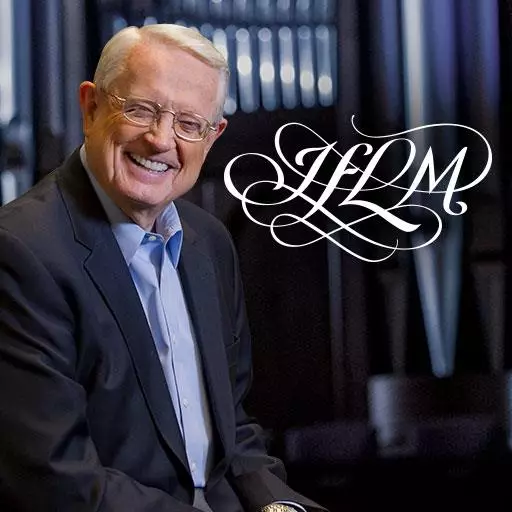
Three "Musts" for a New Year, Part 2


A new year stretches ahead of you—twelve months of fresh possibilities! What does Jesus consider essential for you this year?
Listen as Pastor Chuck Swindoll lays out Jesus’ three “musts” for every disciple from Luke 9:22–25. Deny yourself—desire only God’s will. Take up your cross—be ready to suffer for His sake. Follow Jesus—do whatever He commands.
Jesus said, “If you give up your life for my sake, you will save it” (Luke 9:24). Make Jesus’ “musts” your mottos, and you’ll discover what real living is all about.
Bill Meyer: Without wavering, Jesus commanded us to take up our cross and follow him. In today's world, those words sound archaic, even offensive to some. Our culture screams self-expression, self-care, and self-fulfillment. But Jesus whispers self-denial. He calls us to a cross.
But what does that mean? Today on Insight for Living, Chuck Swindoll strips away our sanitized view of discipleship and reveals three uncomfortable truths that Jesus demands from every follower. This isn't about religious performance. It's about dying to self so we can truly live. Chuck titled today's message Three "Musts" for a New Year.
Chuck Swindoll: When Jesus was with his 12, he often looked ahead, for he was the only one who knew what the future held. And he prepared them with words that were not only truthful, but they were wise. Because of that, I was drawn to his counsel to his disciples recorded by Dr. Luke in the ninth chapter.
I want to point out three things before we look at the three musts. May I do that? First, I notice this. He is saying what he does in verse 23 to all believers. Look at the verse. He was saying to them all, "If anyone." All. That's all of us.
Second, I notice that this is a choice. You may choose to do this. You may choose not to do this. The third thing I observe is that each of these three musts is an essential. He was saying to them all, "If anyone wishes to come after me," now let's stay riveted to this 23rd verse, "he must."
Number one, deny himself. If that word throws you since you'll rarely read it in this culture, think of three words: "say no to." He must say no to himself. It represents a refusal to set one's will and desires ahead of or against the will and desires of Christ.
In other words, when I deny myself, I relinquish my plans. I set aside my preferences. I ignore my personal desires. I give up my dreams, and instead I acquiesce, I defer to, I pursue, I commit myself to him and his will. It starts with saying no to the one that you have been taught to take care of, make pretty, protect, stare at in the mirror, and focus on when you're in a crowd. What do they think of me? How am I coming across? Did that make a good impression? If you wish to come after him, you say no to yourself.
I realize that I've already lost some of you. That's okay. You choose not to do this. That's your choice. I don't worry about you. You don't answer to me. You answer to your master. What he does to get your attention, to bring you around to this, is between you and him. I hope I'm not around because he means business, and so do I.
We start with saying no to ourselves. We start there. This new year, I suggest you start there. Form that habit. We had a good conversation the other evening. We were enjoying a meal with our older son and his wife, both of whom are turning 50 this year. So we spoke a little more slowly so they could get it.
We got on a fascinating subject which I love about their family: you don't just sit around talk about what's for supper. You sit around talk about great things like when is a habit formed? Suddenly, like you, we got quiet. One of the children said, "I think within six to eight weeks, you've pretty well formed a habit." His mother said, "No, I think it takes a year or so."
I thought about that, knowing this was coming today. I thought if we want to get ready for this kind of lifestyle, I suggest a year. Give it all you've got for this year. Start by saying no to what you want. That's a major leap for many.
Second. Second must. Look at what he says. We're riveted on the verse. "He must take up his or her cross." Is that what it says? No, I left out a word. Daily. See, he wasn't hard pressed for vocabulary. He could have left it out, but he put it in. Jesus took up his cross once. Followers of Jesus take up our cross every single day. It's a must.
Must. Now this explains and intensifies denying yourself. In that era, understand every condemned criminal that was killed under the Roman system was seen in the streets bearing the horizontal beam of his cross. He couldn't carry it all. Often, just the horizontal beam was more than he could stand because he had been scourged as well.
But either across his shoulders or dragging in the ground or on the street behind him, he's holding onto the crossbeam and he's pulling it inexorably toward that place of death. And it was always a one-way trip. You never saw him again unless you went to the place of death and watched him nailed to the cross, the beam attached, the crossbeam held up or the vertical beam held up, dropped into a hole, and there he hung until he died.
Merrill Unger says there's a case on record where one hung for eight days. Hopefully, he dies in only hours. Imagine. That's what they thought of when they heard the word "cross." Now you take up yours every day. There will be crosses that occur all year long. There's no way I could mark my day-timer with them. I don't know what they will be, but I will have at least one every day, and so will you.
Yours will be different from mine, and hers will be different from yours, and his altogether different from yours or mine because the Lord shapes us into Christ's image in specific ways and in, I might add, very private crosses. And some of them will be horrendous.
Cynthia and I were so pleased to see the old year leave. I didn't want to celebrate the coming of a new one. I wanted to celebrate the ending of the old one. Goodbye. It's out. But you know what? You know where I learned what I learned through that? In the crosses of it. Some of them were borderline unbearable. I never dreamed I would face a cross like that. I'm no martyr; you have yours as well. But I love Christ so deeply that I don't resent those crosses. Having endured them, gone through them, I say thank you Lord for helping me live past them. Thank you. Thank you for that scar. Thank you for what that represents. Thank you for depth that I have now that I would not have had if it had not been that I tasted it on that day of that old year.
I must bear my own cross every day, and so must you. And the third, I must follow him, and so must you. He adds that, still riveted to the verse, "and follow me." Now, I hope it isn't pedantic, but I love things like this and their fine points. The first two verbs are written in a point of time, it's called the aorist tense. In the aorist, it's in a point of time. In a point of time, I say no. In a point of time, I bear that cross each day, in a point of time. But I follow him; that's present tense. I keep on. A long obedience in the same direction.
I keep on following. I don't let the crosses of yesterday keep me from following him today or tomorrow. I don't let the pain of what has happened stop me from worshipping him and following him and walking where I can see his footsteps and stepping there, and there, and there. I want to follow him like that. So do many of you, many of you. So keep on. Keep right on. Keep on following. Press on. Press on. Press on through that year, whatever it may include. And I could think of a dozen things and I will not go there.
Let me apply this, as if we haven't already. Three things come to mind. Three things. Number one, following Christ means more than believing him. It includes obeying him. Following Christ means more than believing him. It includes obeying him. Here's the second. Obeying him means more than accepting his teachings. It also includes tasting death. Write that word down. You need to see it in print. It means tasting death. Death to something, death to someone. It means tasting death. Obeying him means more than accepting his teachings. It means tasting death. Tasting it. It touches me.
Tasting death, thirdly, tasting death means more than occasional unselfishness. It means dying every day to something or someone every day. Or he wouldn't say daily. Every day there's something.
Now, I was tempted at this point to just end everything in this message and we go on to the rest of the day, but I was stopped and I got a thought just in the last part of my preparation that is very unusual for me to mention. My added thought, given the radical nature of this message that I've delivered and realizing what a contrast it represents in our culture, I'd like to add a few words to those of us who are older.
Who would that be? Well, if your hair is gray or white or absent, or if it should be gray but you've colored it some other color, okay, so don't do that to me, okay? And you know who you are. You're among a generation unlike the young generation. This is why I say it's different. I rarely divide congregations into ages, but I'm going to do that. I want to address those of us who are older.
Will you help me in this year communicate this to the younger generation? Because they don't know it. Why do we know it? Because, thank God Almighty, we've known the greatest generation. They raised us. They died for our country. They modeled sacrifice. Thank God for parents like I had. They weren't perfect, but they knew self-sacrifice. They knew self-denial. It was a part of their vocabulary.
We were raised in a rationing world during the Second World War. Cynthia says that when her parents told her to ration even toilet paper, she said we got four squares. Now that's pretty specific right there, folks. I'm sure she's thrilled that I would share that with all of you today. It was right down to that kind of rationing. Don't eat all the meat; save some of it for the next meal. Don't know how many times I was told that. Take all that's on your plate, but don't take anything more than you can eat. I was reared by parents like that, self-denying parents. We don't need two cars; one will do. And all through my childhood and teenage years and older years until our kids, my brother and sister came along along with me, there was only one car in our driveway. It was unheard of to have more than one car.
Hear all the gray heads out there? The rest of you go, "Eat everything on your plate, what's the big deal?" That's the whole point. It is a big deal. It starts with self-restraint. I was raised with self-restraint. When I joined the Marine Corps and had to go through all the rigors of that boot camp, I really didn't have to learn much about obedience. I'd been trained for 20-plus years in my home. When someone in authority told me to do something, I did it. I never asked why and I didn't question it. Oh, I did, got the snot beaten out of me, but I did. And I learned that beating out snot is very, very painful and I don't want to do much of that.
So I knew obedience. Why? Because my mom and dad were faithful to teach me that. Say no to yourself. Restrain yourself. Keep your hands off that young woman. You've no business going to bed with any woman until you marry that woman. It's called faithfulness, son. Help me communicate this to a generation that sleeps around and lives around and lives in and is no big deal. It is a big deal because you do not learn to deny yourself. You do not take up your cross daily when you do that kind of thing. You do not follow Christ when you do that kind of thing. Help me communicate this.
And they won't want to hear it, some of them. Keep saying it. If I relied on what people want to hear, I'd have stopped preaching 25, 30 years ago. You don't stop because they don't want to hear. Now I'm not bragging about being restricted. I'm just saying it was the way we were raised.
Your kids are not raised like that. And I can assure you the grandkids are not being raised like that. My message to those of us who are older, this is a message we've got to get to them. We've got to get this message to them. You wonder how to spend your time at this age of 60, 70, 80, 90. That's how you do it. You help them see the value of denying themselves, taking up their cross, and following the Savior. They've come to Christ, great. They believe the right thing, great. Praise God. They're not raised right if they don't learn self-denial, cross bearing, and walking a path that isn't selfish.
I commit myself to telling this to my grandchildren, and I confess to you openly I have not done so until now. I see it. That was part of the rebuke of my time in my day-timer. What in the world do you think you live this long for, Chuck, if you're not building into your grandchildren and teaching them these things? Communicate the value of giving up their own rights. You prepare them for a Christ-like life. And it has to be loud enough and strong enough and a much of a habit for them when they get to college that they don't get their heads turned by some persuasive prof who buys into the system. Or some potential mate who's going to take them down the path, or some live-in boyfriend who's going to get them in a backseat as quickly as he can. Tell them.
If you want to exemplify Christ, if you want to help them learn what real living is all about, tell them. Douglas Southall Freeman has written four volumes on the life of Robert E. Lee. I recently finished the one volume that was a summation of the four. And on page 588, Freeman concludes with this true story of Robert E. Lee.
It's a cold October day. The mother has her baby in her arms and she brings it to the white-haired gentleman, Robert E. Lee. She brings her baby for him to be blessed, and she hands the baby to this great, seasoned warrior, soon to die. He cradles the baby in his arms. He looks deeply into his eyes and then into the mother's eyes and says slowly, "Teach him he must deny himself."
And a chill went down my spine. I don't know that I've once said that to my grandchildren, but I will this year. And if they're present, be ready for it. I'm going to talk about that. Which is what makes the cross so valuable to you and me.
Let's bow our heads. We sang it earlier, so we'll not sing it again, but we use the words, "Beneath the cross of Jesus I would take my stand." You now know what that means. If you've never trusted in the Lord Jesus, then I invite you to come to the cross. If you have met the Savior, I invite you to come beneath it. In fact, I charge you to do that. Deliberately through the year, find ways to say no to yourself, willingly and deliberately restraining what you prefer for the glory of Christ and for the joy of living differently from a world that has long since lost its way.
Had I taken the time to go further in the section of scripture, I would have pointed out that this is the way you save your life, otherwise you lose it. This is a life-saving message. Jim Elliot put it this way: "He is no fool who gives what he cannot keep to gain what he cannot lose."
As you follow through on these three musts, you will lose your will and you will gain his, and you'll learn what living is all about, and you'll be changed. It'll become a habit.
Our Father, this day, we confess to you our disobedience over the years. We acknowledge our ignoring the hard truths. And only by your grace have we been able to keep our marriages together. Only by your grace have we disciplined ourselves to live within our means. Only by your grace have been able to win the wars we were called upon to win. God, help us not to forget that we got another generation that doesn't know what those things are all about. They're so strange to them, they're weird. They're so outdated, they're obsolete. But they're right.
And that's why we worship your son. We worship him because he died that we might live. Thank you Father for the cross. Thank you for what it represents, for the magnificent eternal benefits of his death on that cross. We worship him today. Enable us to remember what we have heard as the days unfold into weeks and another cross looms large before us. Help us to get it, to get it, to embrace it, to model it. In Jesus' name. Amen.
Bill Meyer: You're listening to Insight for Living. Chuck Swindoll titled today's message Three "Musts" for a New Year. To hear Chuck's message from start to finish, you can easily access the entire sermon on our mobile app. Just go to your favorite app store and download the free Insight for Living mobile app.
Now, here's a look to next week. On Monday, Chuck begins a series in the Old Testament called "Fascinating Stories of Forgotten Lives." These colorful biographical sketches from Chuck will include obscure characters that rarely get mentioned, but their lessons still strike us powerfully today. To coincide with Chuck's messages, we've prepared a brand new Bible study workbook for you. It's part of our Searching the Scriptures Bible Studies. It's perfect for jotting down your personal notes and observations. Many of our listeners use this spiral bound Bible study workbook in their small group, and it's great in a classroom setting as well. Like the broadcast series, the Bible study workbook is called "Fascinating Stories of Forgotten Lives." You can learn more at insight.org/offer or call us at 1-800-772-8888.
We'd like to thank all of those who responded this week with a special year-end contribution to support the ministry of Insight for Living. Your gift will enable us to touch more lives in 2026. And if you had good intentions to give, it's not too late to do it. Remember the first time you found Insight for Living? Many of our listeners have told us about their experience years ago and the spiritual progress they've made since then. Well, maybe today is the day that you step forward to do for some unsuspecting person what someone once did for you. We invite you to become one of our valued monthly companions. A monthly companion gives a contribution every month in the amount that works for you. To become a monthly companion today, call us at 1-800-772-8888 or go to insight.org/monthlycompanion.
I'm Bill Meyer. Join us when Chuck Swindoll begins our next series called "Fascinating Stories of Forgotten Lives," Monday on Insight for Living.
The preceding message, Three "Musts" for a New Year, was copyrighted in 2011, 2012, and 2025, and the sound recording was copyrighted in 2025 by Charles R. Swindoll, Inc. All rights are reserved worldwide. Duplication of copyrighted material for commercial use is strictly prohibited.
Featured Offer

If you want to explore Contagious Christianity: A Study of 1 Thessalonians with Pastor Chuck Swindoll, you can now purchase all 12 messages, all 12 corresponding Searching the Scriptures Bible studies, and the Insights on 1 & 2 Thessalonians Commentary as a set.
CD series of 12 messages, spiral-bound workbook with 12 Bible studies, and commentary.
Past Episodes

Video from Pastor Chuck Swindoll
Featured Offer
If you want to explore Contagious Christianity: A Study of 1 Thessalonians with Pastor Chuck Swindoll, you can now purchase all 12 messages, all 12 corresponding Searching the Scriptures Bible studies, and the Insights on 1 & 2 Thessalonians Commentary as a set.
CD series of 12 messages, spiral-bound workbook with 12 Bible studies, and commentary.
About Insight for Living
Join the millions who listen to the lively messages of Pastor Chuck Swindoll, a down-to-earth pastor who communicates God’s truth in understandable and practical terms, with a good dose of humor thrown in. Chuck’s messages help you apply the Bible to your own life.
About Pastor Chuck Swindoll
Charles R. Swindoll has devoted his life to the accurate, practical teaching and application of God's Word. Since 1998, he has served as the founder and senior pastor-teacher of Stonebriar Community Church in Frisco, Texas, but Chuck's listening audience extends far beyond a local church body. As a leading program in Christian broadcasting since 1979, Insight for Living airs in major Christian radio markets around the world, reaching people groups in languages they can understand. Chuck's extensive writing ministry has also served the body of Christ worldwide and his leadership as president and now chancellor of Dallas Theological Seminary has helped prepare and equip a new generation for ministry. Chuck and Cynthia, his partner in life and ministry, have four grown children, ten grandchildren, and six great-grandchildren.
Contact Insight for Living with Pastor Chuck Swindoll
customerservice@insight.org
http://www.insight.org/
Insight for Living
Post Office Box 5000
Frisco, Texas 75034
USA
1-800-772-8888