

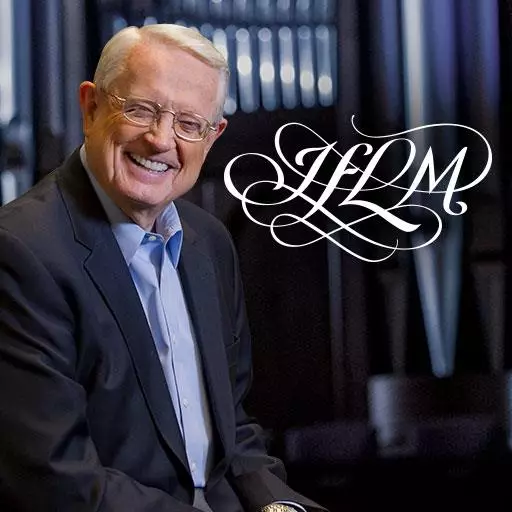
Three Faces of God, Part 1


In Romans 9–11, Paul addresses the questions his Jewish audience would’ve been asking. While at times difficult to understand, these chapters point to the sovereignty, justice, and faithfulness of God.
Pastor Chuck Swindoll explains how God has not ignored His chosen people nor forgotten His promises. Uncover the relevance of these truths in your life today!
Guest (Male): Paul's letter to the Romans is known to many as the Christian's Constitution, and for good reason. In these Spirit-inspired chapters, Paul lays the theological foundation of our faith: our sinfulness, God's righteousness, and the life-changing truth of justification by faith.
But then something unexpected happens. Right after eight powerful chapters, Paul takes what seems like a detour. He stops to address God's heart for His chosen people, the Jews. Today on Insight for Living, Chuck Swindoll reveals that Romans chapters 9, 10, and 11 aren't a detour at all. They're the essential bridge that changes everything.
Chuck Swindoll: Today we do a survey of three chapters in the middle of the letter to the Romans, so let me read just randomly several verses from each of the chapters. If you have a New Testament with you, turn please to the ninth of Romans, 9:1.
I am telling the truth in Christ, I am not lying. My conscience testifies with me in the Holy Spirit that I have great sorrow and unceasing grief in my heart. For I could wish that I myself were accursed, separated from Christ for the sake of my brethren, my kinsmen according to the flesh, who are Israelites.
Verse 1, Chapter 10. Brethren, my heart’s desire and my prayer to God for them is for their salvation. For I testify about them that they have a zeal for God, but not in accordance with knowledge. For not knowing about God’s righteousness and seeking to establish their own, they did not subject themselves to the righteousness of God. For Christ is the end of the law for righteousness to everyone who believes.
Verse 1 of Chapter 11. I say then, God has not rejected His people, has He? May it never be! For I too am an Israelite, a descendant of Abraham, of the tribe of Benjamin. God has not rejected His people whom He foreknew.
And then at the end of that chapter, verse 33. Oh, the depth of the riches both of the wisdom and the knowledge of God! How unsearchable are His judgments and unfathomable His ways! For who has known the mind of the Lord, or who became His counselor?
Who has first given to Him that it might be paid back to him again? For from Him and through Him and to Him are all things. To Him be the glory forever. And everyone said, "Amen."
Guest (Male): You're listening to Insight for Living. To dig deeper into the book of Romans on your own, be sure to purchase our searching the scriptures Bible study workbook by going to insight.org/offer. Chuck titled today's message: Three Faces of God.
Chuck Swindoll: The late cartoonist Charles Schulz always loved to portray vignettes of life in the little characters we all sort of identified with. There was always Charlie Brown and Lucy in charge, of course, and Linus and Pigpen, and every once in a while, Snoopy would get the show and take it from there.
One of my favorite scenes is Charlie and Lucy on the deck of a cruise ship, and Lucy is again instructing Charlie. "Charlie," she said, "this is a decision you must make all on your own. Do you want to set your deck chair facing forward so that you can see where we're going? Or do you want to turn and face your deck chair to the rear to see where we've been? What's your decision, Charlie?" He said, "I can't get my deck chair unfolded."
Maybe you feel like that as we're in the middle of this letter to the Romans, and we've been going forward and backward. You can't get your theological deck chair unfolded as we work our way through this letter. This is Paul's magnum opus. This is Pauline theology at its very best. This is truth, this is doctrine, this is Christian living as you will read nowhere else in the scriptures. This is the Christian's Constitution.
So it would be helpful to face our deck chairs toward where we have been and look back. For eight chapters, we have been watching the gospel unfold, and the main message has been God's righteousness. Not what we have done to earn it, but God's giving it to us because of what Christ has done for us.
For example, in Chapter 3, we read very clearly in verse 23: all have sinned and fall short of the glory of God. That's us. For three chapters, he has been developing the depravity of humanity. It doesn't mean we're as bad as we can be; it means we're as bad off as we can possibly be.
Some sinners are good, some sinners are better than other sinners, but no one is righteous enough to get into heaven on their own. Because we have all sinned and we all fall short of the glory of God. How do we get this righteousness of God? Verse 24: by being justified as a gift by His grace through the redemption that is in Christ Jesus.
A lot of four-bit words that mean God has given us His righteousness when we place our faith and trust in His Son, Jesus. The term "justified" simply means God's sovereign act whereby He declares righteous the believing sinner while we are still in a sinning state.
It doesn't mean we get better and better until we're finally good enough to deserve it. It means we remain on the level of sinfulness, and God in grace, because we place our faith in Christ, deposits to our account divine righteousness. We then have the righteousness of God.
The results are numerous, and one of the best ones is in 5:1, where we read: having been justified by faith, having been declared righteous, we now have what we could never find in ourselves: peace with God through our Lord Jesus Christ.
And that offer of salvation continues to go on. Verse 8: God demonstrates His love toward us in that while we are yet sinners, Christ died for us. So throughout the centuries, including this one and on beyond our own, God continues to demonstrate His love to us in bringing to the attention of the lost His Son's death. When we trust in Him, we are given the righteousness of God. How good is that?
Having the righteousness of God means that we are now saved. We're no longer spiritually lost. That's the major theme of the first eight chapters: our salvation, which is by faith apart from works. It is trusting in Christ alone, by faith alone, because of God's grace alone.
The songwriter puts it: nothing in my hands I bring, simply to Your cross I cling. By doing so, I am born out of darkness and into light. I am born out of death into life. I no longer am condemned in my sin, but because of God's grace, I am accepted into His family.
Now, when you get to the end of Chapter 8, it just doesn't get much better than that. There's a great climax. If you love music, it's like a great crescendo that comes to the end with a triple fortissimo. It's as if three exclamation points appear. Who can separate us from the love of Christ? Shall tribulation, or distress, or persecution, or famine, or nakedness, or peril, or sword?
None of these things can separate us. As Paul said at the end of the chapter, I am absolutely convinced that neither death, nor life, nor angels, nor principalities—and he goes through a whole grocery list of the things that he could name—none of that will ever separate us from the love of God, which is in Christ Jesus our Lord. If this were a play, the curtains would be closing. The end of Act 1, and the audience would be applauding. How great is the message of salvation? Nothing will separate us from the love of Christ.
Now, if you ask me, when you end Chapter 8, what ought to begin is Chapter 12. So skip the next three chapters and go to Chapter 12, and the curtains open, and "Now, therefore, I urge you by the mercies of God that you present your bodies a living sacrifice unto God." After all, look at what God has done for us. Next chapter of the book or the next act of the play: here's what we do in return. We give Him ourselves and not be conformed to this world, but be transformed by the renewing of your minds. It fits.
So the great question is: why are there three chapters that keep us from this climactic ending to the book? Chapters 9, 10, and 11. I'm not the first to point out that these are a little bothersome as they appear in this letter. One man writes, "Chapters 9 through 11 are as full of problems as a hedgehog is full of prickles."
There are more difficulties in Chapters 9, 10, and 11 than you will find in any part of Chapters 1 through 8 or 12 to 16. It's full of problems. It's full of issues. There are a number of things in here that make you squirm. It's here we read of predestination, the election of God. It's here we read about the Jews. Oh, and by the way, that's what these three chapters are all about.
You see, there's one thing Paul is that most of us are not: Paul's Jewish. And being a Jew, he would hear us say, "Why are these three chapters in the letter to the Romans?" And he would say, "What a Gentile question is that?" When you're a Jew, your great concern is for your Jewish family. Your Jewish mom and dad, your Jewish brothers and sisters, your Jewish relatives, your Jewish friends. In Paul's case, the Jews who form the Sanhedrin, the fellow Pharisees who were a part of his group and he a part of theirs.
Paul is grieved over the fact that they're not here. And by now he thinks, "I can stay quiet no longer." So Chapters 9, 10, and 11 bring into perspective the Jews. That's an issue that has to be answered.
As a Gentile, you think, "Why do I need to worry with what the Jews...?" You have every reason to be concerned. The Jews are His chosen people. To the Jews, He first gave the message of hope. To the Jews, He wrote the Torah. The Jews are the ones who preserved the scrolls, the sacred scrolls of scripture. From the Jews, the message of missions was sent forth to a Gentile world.
One of the early missionaries: Jonah. Maybe you never thought about him as a missionary. Jonah is a Jewish prophet who is told to take the message of the news of God to Nineveh. And he goes to Tarshish. That's like God saying go to Berlin and you go to Hawaii. You don't get there by going to Tarshish.
What was the problem? He's a bigoted Jew. He doesn't want the Gentiles to believe. "We're the ones who are the chosen. We're the ones with the message." And finally, he does go. The first amphibious landing in the scriptures is in Jonah. It's a story of a missionary who took the message reluctantly to a group of people and, to the surprise of most, it's the greatest revival in all of the Old Testament when Nineveh hears and responds.
Well, we better answer the issue of the Jews. If it's the gospel in Chapters 1 to 8, we certainly need to know where the Jews are in it. The fact is, for the most part, they're blind. There aren't many Jews in this congregation. Born Jews, reared Jewish, Jewish parents, Jewish friends; most of us are Gentile. Do you realize in ancient days, we were known as the dogs? We were given the crumbs from the table.
It was the Jew who was first to receive the message. So Paul, as he begins this ninth chapter, is grieved that his family and friends are not in the number of the saved. Let me clarify something because we're going to just hit the high spots. Remember when you were a kid, you threw a little flat rock across the top of the lake and it skipped? That's what we're going to do today. We're going to skip Chapters 9, 10, and 11. So don't write me and tell me I didn't cover verse 6, or you left out 10:14.
We'll get to it. Relax. Right now we're skipping. We're doing a little survey. And I want you to see that Chapters 9, 10, and 11 really are not chapters about the Jews. They're chapters about God. Don't forget that.
In God's great plan, He is the star of the show. He is the preeminent one. In Chapter 9, He is sovereign. In Chapter 10, He is just. In Chapter 11, He is faithful. That's what these chapters are about. It so happens to be applied to the Jews.
But in Chapter 9, He is sovereignly in charge of selecting those who will come into the family and blinding those who choose not to. In Chapter 10, He declares His justice. The only way I can receive anyone into My family is through faith in My Son, Jew or Gentile, doesn't matter. In Chapter 11, I haven't forgotten My people. I made promises and I will make them good. God's faithfulness is promised there. God's sovereignty Chapter 9, God's justice Chapter 10, God's faithfulness Chapter 11. Three faces of God.
When you get into Chapter 9, it isn't long before you feel the heartbeat of a Jewish pastor, a Jewish missionary, a Jewish writer of scripture. Verse 1: I am telling the truth in Christ, I'm not lying. My conscience testifies with me in the Holy Spirit that I have great sorrow and unceasing grief in my heart. Why, Paul? After coming to that climax at the end of Act 1, the curtains closed, nothing will separate us from the love of Christ, Paul says, "Wait, wait, wait. But what about my fellow Jews? I'm grieved."
Verse 3, you wonder how grieved: I could wish that I myself were accursed, separated from Christ for the sake of my brethren, my kinsmen according to the flesh, who are Israelites. I think we Christians read that and we who are Gentiles don't really feel the passion that Paul would feel. If you're Jewish, you would.
It's just built into your system to think Jewish, to feel Jewish. And he realizes, having presented these magnificent truths, that most of his contacts are lost. They're all blind to the message. So he says, "I'm grieved. I would be willing to be accursed if my kinsmen would believe."
Then he reminds himself and us in his writings that it is God who is at work. Verse 6: it is not as though the word of God has failed, for they are not all Israel who are descended from Israel. Just because you're born a Jew doesn't mean you're truly a part of the family. That's a surprising message to the orthodox Jew.
Nor are they all children because they are Abraham's descendants. They would consider that heresy. No wonder they don't read the New Testament. They are descended from Abraham, that means they are in the family, they're born in the family. Wrong, says Paul. Your Messiah has already come, though you did not recognize Him. The Messiah has already paid the penalty for your sin, though you haven't received it, haven't accepted it.
So understand, just because you're Jewish doesn't mean you're in the family of God. As a matter of fact, God has selected those who are in His family, and this is called divine election. Now, here's where we gag. We come to that, and we who are not reared with that particular doctrine emphasized in our lives, we see it as a bit of heresy. What we miss is the perspective.
You will never understand the doctrine of election if you do not see it's a matter of perspective. As God looks down upon humanity from the portals of heaven, as He looks onto this earth and sees all of humanity, from His perspective, none of it is a surprise. Everyone who believes has been called to believe. Everyone has been elected. Everyone is in the family that God has chosen to be in the family. That's Chapter 9.
As a matter of fact, when you get deeply into the chapter, you realize there's an illustration about a potter with a piece of clay, and the clay cannot say to the potter, "What are you doing?" It's the potter's sovereign right to shape the clay as he pleases. So it is from God's perspective, His sovereign right to select whom He chooses.
But we don't like that because we're in charge. We like being in charge. We like calling the shots. We like making our own selections. Especially we in America; we're independent. We'll decide. On the contrary, God has decided.
Now, you say, "Wait a minute. We are getting way, way off." No, from His perspective, He is the one who makes that decision. And He places in our path those individuals who will lead us to a knowledge of Jesus, and then we respond by faith to the message. And then we believe, and horizontally, it looks like we're the ones who made the decision when, in fact, we are responding to the divine work of God in our lives.
Some of you look at me right now and say, "What? What do you mean?" We have not been taught Romans 9 correctly. All the way through this chapter, there's the reminder that He is in charge. He is the one making the call. He is the one who determines these things. God's sovereign hand is at work.
Now, there are some who say, "If I really believe that it's all about the sovereign hand of God, then I'd lose all my zeal for those who are lost." Really? Look at Chapter 10, verse 1. Does this look like a loss of zeal? Brethren, sisters, my heart's desire and my prayer to God for them is for their salvation.
Featured Offer

Pastor Chuck’s audio set (CD or MP3), softcover book, and companion spiral-bound workbook help you embrace the mystery of God’s sovereignty and learn how to lean into the goodness of God.
Past Episodes

Video from Pastor Chuck Swindoll
Featured Offer
Pastor Chuck’s audio set (CD or MP3), softcover book, and companion spiral-bound workbook help you embrace the mystery of God’s sovereignty and learn how to lean into the goodness of God.
About Insight for Living
Join the millions who listen to the lively messages of Pastor Chuck Swindoll, a down-to-earth pastor who communicates God’s truth in understandable and practical terms, with a good dose of humor thrown in. Chuck’s messages help you apply the Bible to your own life.
About Pastor Chuck Swindoll
For most of his entire life, Pastor Charles R. Swindoll has devoted himself to the accurate, practical teaching and application of God's Word — anchoring every message in the transforming power of God's amazing grace. From congregations on the East Coast to the West Coast, his ministry has carried that message across the country, ultimately taking root in Frisco, Texas, where he founded Stonebriar Community Church. Yet Chuck's influence has never been confined to a single sanctuary. Since 1979, Chuck’s messages have aired on Insight for Living, one of the most widely heard programs in Christian broadcasting, carrying his voice — and the timeless truth of Scripture — to listeners around the world. That same passion for God's Word has shaped his leadership at Dallas Theological Seminary, where his tenure as president and now chancellor emeritus has helped raise up a new generation of men and women equipped and called to ministry. Few lives have touched so many, across so many places, for so long.
Contact Insight for Living with Pastor Chuck Swindoll
customerservice@insight.org
http://www.insight.org/
Mailing Address
Insight for Living
Post Office Box 5000
Frisco, Texas 75034
USA
Phone Number
1-800-772-8888