

The Love of God, Part 1


Many people imagine God’s love as something like a kindly grandfather—affable, lenient, and unbothered by sin. But this misunderstanding cheapens love rather than exalts it. God’s love is not soft. It is fierce and purposeful.
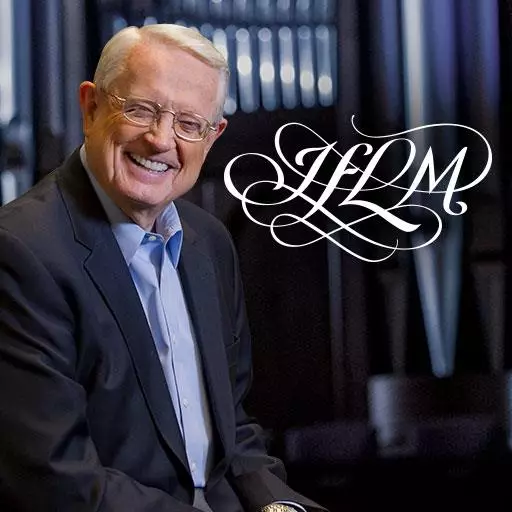
Weaving through Deuteronomy 7, John 3, and 1 John 4, Pastor Chuck Swindoll explores why God chose to love an undeserving people—not because of who they were, but because of who He is. The cross stands as the ultimate proof.
Let the depth of God’s love move you. Understand it clearly, receive it fully, and let it reshape how you see yourself and others!
Bill Meyer: A.W. Tozer once warned that the church had traded its high view of God for something so low, so ignoble as to be unworthy of thinking people. That was 50 years ago, and things haven't improved.
But today on Insight for Living, Chuck Swindoll cuts through the noise of a theologically shallow culture to recover something ancient, revolutionary, and life-changing: the love of God as Scripture actually describes it. Not a feeling, not a sentiment, a force so vast, so unconditional, so relentlessly personal that it will reframe everything you thought you knew.
Chuck Swindoll: I would like to give you 12 words that I hope you will never, ever forget. Here they are: what we think about God is the most important thing about us. Once again: what we think about God is the most important thing about us.
I'll repeat that periodically through this message because I want it riveted into your brain. You'll need it in this day in which there is a lot of sloppy and silly thinking about God. As a matter of fact, if we have a low and inaccurate view of God, our worship will be shallow and skewed and dissatisfying. However, if we have a high view of God and if it is true, our worship will be meaningful and pure, satisfying and deep.
I'll go further. If we shape our thinking about God from the culture around us, our life will remain complicated and even become chaotic. But if we allow Holy Scripture to shape our thinking, God will emerge in our minds as he is: real, personal, meaningful, all-powerful. What we think about God is the most important thing about us.
Tragically, not many people think that much about God. In fact, there are a few who don't do much thinking at all these days. I like the way one wag put it: "God is a lot like my pastor. I don't hear from him during the week, and I don't understand him on Sunday." Maybe you feel that way. Today, I want you to understand him. I want him to become real to you.
He is at work whether you see him or hear him or feel him. He is there. As Francis Schaeffer once put it, he's not silent. He's at work in what you called tragedies, surprises, and unexpected events. He's at work when you begin to doubt. He was not in any way out of control. What we think about God is the most important thing about us.
Truth be told, the church of the 21st century has reached an all-time low-water mark theologically. We have come into shallow waters biblically. This isn't a new realization. A.W. Tozer wrote of it 50 or more years ago. The church has surrendered her once lofty concept of God and has substituted it for one so low, so ignoble as to be utterly unworthy of thinking, worshipping men and women.
With our loss of the sense of majesty has come the further loss of awe and consciousness of the divine presence. We have therefore lost our spirit of worship and our ability to withdraw inwardly to meet God in adoring silence. How true is that? Adoring silence.
We are beginning to learn about our heavenly Father. One of the things we are learning is that he is not an old, doting heavenly grandfather who sits around nodding and winking and handing out $20 bills for you to buy another video game. The God of the Scriptures is our awesome, holy, glorious, loving, heavenly Father. There is a great deal of difference when painted in that light.
When you think about the love of God, it's necessary these days that we explain or define what it does not mean. God is not one who sits in his heaven nodding and saying, "No matter what, anything goes because I love you." That wouldn't be love. That wouldn't be good for us.
God is not saying, "My love is so strong, so consistent, so deep, I'm willing to overlook any sinful thought, word, or deed you participate in. It doesn't matter. I love you." While I'm at it, he isn't saying, "My love means that nothing you do will grieve me because I care so much for you. I don't even notice it when you walk away." That is not an accurate understanding, in spite of what you may have learned or been taught.
We're going to discover today what it means to say that God is love. In 1 John chapter 4, we read a statement that is just three words, and you may have heard them throughout your religious life or spiritual life. 1 John 4:8 concludes with the three words: God is love.
That means this: he personifies unconditional love. Love permeates who he is and everything he does. His love is spontaneous, it is sacrificial, it is consistent, it is self-giving, it is active. It is full of understanding, but it is not absent from his other characteristics.
You see, not only does 1 John tell us that God is love in verse 8 as well as verse 16 of this fourth chapter, but back in chapter 1, I want you to notice in verse 5, we read, "This is the message we have heard from him and announce to you, that God is light." There are another three words to compare or contrast with "God is love."
The one who is loving consistently, unconditionally loving, is also the God of light. You will read at the end of the verse, "in him there is no darkness at all." That means not a trace of darkness, not a touch, not a hint, not a particle of unholiness or impurity. God is holy. God is just. God is pure. God is full of splendor. God is light.
We must keep these two thoughts in balance. The one who is love is also light. His love reaches out, seeks us, and desires us. His love tempers his justice and his righteousness. His love prompts his grace to us. His love must never be separated from his other characteristics.
It is an attribute of our heavenly Father. And so I would add to my statement another word: what we think about God's love is the most important thing about us. We're all members of a family. You came from a family. Perhaps you have married and come into another family as well. Perhaps you've never married or you're not now married. The point is, we understand family.
So we understand the love in a family. Let's take those of us who are married. We who are married have a relationship with another individual like no other person on this earth. We love them. We want to believe unconditionally. And sometimes we will even say that. The fact is, our love has limits. And sometimes, our love has to get tough.
There are boundaries you don't cross even though you are unconditionally loved. A wife would never say to her husband as he's on his way to a sales meeting in another city, "Hey, anything goes, sweetheart. No matter what you do, I love you." Whoa! Not anything goes. She says to him in effect, "My love for you is deep and I believe in you. Therefore, I know you'll remain faithful to me." There's a limit on that love, and it's balanced by the reminder that there needs to also be faithfulness.
How about a parent's love for a child? Let's go there. We're all the children of someone. We have a father, we have a mother. Your mother or father may still be with you, maybe have gone, but you have a memory of being reared in the home of your parents. Leave 1 John and go to Hebrews chapter 12. Hebrews 12 will talk about the love of a father, and you will see love at work in a surprising way. It will help us understand and define love.
Hebrews 12:6 says, "Those whom the Lord loves, he disciplines." Look at that. Wait a minute. Those whom the Lord loves, he disciplines? Absolutely. In fact, if you read further, that's how we know we are his sons, we are his daughters.
"For those whom the Lord loves, he disciplines. He scourges every son whom he receives. It is for discipline that you endure. God deals with you as with sons." Now look at the question. "For what son," we could even add what daughter, "is there whom his father does not discipline? If you are without discipline, of which all have become partakers, then you are illegitimate children. You're not really sons."
Furthermore, we had earthly fathers to discipline us, and we respected them. Shall we not much rather be subject to the Father of spirits and live? They disciplined us for a short time as seemed best to them, but he disciplines us for our good, that we may share his holiness. All discipline for the moment seems not to be joyful but sorrowful. Yet those who have been trained by it, afterwards, it yields the peaceful fruit of righteousness.
I believe those were some of my mother's and father's favorite verses of Scripture. I've used those verses in the early years of rearing our children. I have some funny stories I could tell you about quoting verses like that.
I would sometimes say to one of our children, "You know, to discipline you right now hurts me more than it does you." They always gave me that "Yeah, really. Look." On one occasion, our youngest daughter, Colleen, and I were on the way up the stairs. She had disobeyed and disobeyed and disobeyed again and again. I said, "Come here, young lady." We were on our way up the stairs and the tears started. Nobody could cry quite like Colleen.
On the way up the stairs, my father's heart began to sort of yield a little. I remembered the verse of Scripture: "the one whom a father loves, he disciplines." So I get to the top of the stairs, and I walk in the room and I close the door. She gets those big crocodile eyes at me and says, "Daddy, don't." And I said, "You know what, honey? You need to know this hurts me as much as it hurts you." She said, "Daddy, I've got a great idea. Don't do it, and both of us will be happier."
So I stopped saying things like that. The truth is, it does pain the Father. It does grieve the Lord when we walk away from him. He's saddened over the fact that we make a foolish decision and walk in the flesh. He's our Father. He loves us. He cares about us deeply and profoundly. But his love doesn't exist as a solitary virtue. He's also just, he's righteous, he's holy.
Let me show you an example of the Father's unconditional love. Deuteronomy chapter 7, verses 6, 7, and 8. These words were spoken by Moses to the people of Israel, to the Hebrews. They have been through the wilderness. They are right on the verge of the Promised Land. He is delivering his swan song in this book of Deuteronomy. The word itself means "second law," so it's a reiteration of the law. He is assuring his people of the Father's love.
Look at Deuteronomy 7:6. "You are a holy people to the Lord your God. The Lord your God has chosen you to be a people for his own possession out of all the peoples who are on the face of the earth." Now the verse I love: "The Lord did not set his love on you nor choose you because you were more in number than any of the peoples, for you were the fewest of all peoples, but because the Lord loved you and kept the oath which he swore to your forefathers, the Lord brought you out by a mighty hand and redeemed you from the house of slavery, from the hand of Pharaoh, king of Egypt."
Isn't that great? Why does the Lord love us? Because he loves you. Remember when your parents would say, "I want you to do that." You'd say, "Why?" "Because I said so." It never seemed to make sense. And I find it right here. Lord, why do you love me? Because I said so.
In fact, there's nothing about you that draws me to you. There's nothing all that impressive and I've seen you at your worst. But because I choose to love you. That is the sovereign act of God allowing his mercy to overrule his justice. Knowing we deserve the worst, he provides the best. And the people of Israel could remember over and over again, it's because the Lord chose to love them.
On your way toward the New Testament, stop off at Jeremiah, one of the great prophets of the Old Testament. Jeremiah chapter 31, verse 3. There we are. The Lord appeared to him from afar, saying, "I have loved you with an everlasting love. Therefore I have drawn you with loving kindness."
I want to linger here just long enough to remind you of a hymn that was written based on this. George Wade Robinson back in the 19th century was so moved when he read verse 3, "I have loved you with an everlasting love," that he wrote that hymn, "Loved with Everlasting Love." "Led by grace that love to know, gracious spirit from above, thou hast taught me it is so. Oh, this full and perfect peace, oh, this transport all divine, in a love which cannot cease, I am his and he is mine." Cannot cease. We're getting close to unconditional here, aren't we? It cannot cease.
Before I turn to anything further, some of you are resisting the thought because you've not known unconditional love as long as you can remember. Tragically, some of you don't remember your parents telling you they loved you. Maybe it's been a long time since someone, another adult, has told you that they love you.
I'll never forget while I was a part of the leadership at Dallas Seminary, one of our profs had written a major work on the book of Leviticus. I mean, it was the mother of all books on Leviticus. He wrote more about Leviticus than Moses knew. We had a chapel service and we were honoring him. I was so moved when I saw him standing there so humble. The student body was applauding.
I just stood up, and then people saw me standing up and realized I meant to, and so they stood up and they started applauding. I walked up to the prof and I threw my arms around him. I could tell by his response that was a new thing. I whispered in his ear and I said, "Doctor, I want you to know how much I love you and respect you for your work."
He wrote me a note that afternoon I wish I would have saved. I would be reading it right now because his words were much more eloquent than mine. He said, "I want you to know that never in my adult life have I ever had another man to tell me he loved me." I was shocked. I shouldn't have been, but I was. I mean, I thought someone that brilliant, that capable, that effective in the classroom, surely there were people telling him they loved him.
You need to hear today: God loves you. Now, don't go there. I can just feel the resistance. "If you'd see me last week..." I don't care about last week, okay? It doesn't affect his love. The one who knows you the best loves you the most. God loves you. He never comes to the place where he says, "Well, that's it. That's the last time. Going to take you a long time to get back in my good graces. Shame on you."
No. Look at it again. "I have loved you with an everlasting love." In your darkest times when you not only feel but you are most unlovely, when you really aren't all that loving to others, he would write you a note at that moment and tell you, "Listen, I love you right now. I love you."
This morning he says, "I love you. I know, I know all about your past. I know all of the things, all of the things you have done, should have done, didn't do. I know the regrets, I know all the dark side, I know all the secrets. I love you. I love you and I remind you of that today. Tonight, when you turn in, God is still saying, 'I love you.' Isn't that a great thought? It's an everlasting love."
Bill Meyer: What we think about God is the most important thing about us. And today Chuck Swindoll has given us something worth thinking about for the rest of our lives. God's love isn't sentimental, conditional, or fragile. It's everlasting, sovereign, and unshakable. And it's yours.
To dig deeper into these truths, Insight for Living has an exclusive set of Bible study resources. They're designed to take you beyond listening, deep into the passages that Chuck's been unpacking. The Searching the Scriptures Bible study workbook walks you through the text with probing questions, cross-references, and space to write what God is showing you personally. Combine it with the complete sermon series on CD or MP3, and you have a devotional resource that will serve you for years to come.
To purchase the Searching the Scriptures Bible study workbook for this series on God's attributes or the 12 audio messages, go to insight.org/offer. Or you can call us at 800-772-8888.
Chuck Swindoll: I came across a quote not long ago that I haven't been able to shake. It was from a man named John Allen, a Salvation Army saint, who was near the end of his life. John made this shocking statement: "I deserve to be damned. I deserve to be in hell, but God interfered." That last part is worth repeating: God interfered.
Wow. I love that more than I can say. Because that's the story of the cross. We were running hard in the wrong direction and God stepped in. He didn't send a memo. He didn't offer a suggestion. He hung on a cross and bled and died and rose again. That's not a metaphor, that's history. And that interference has changed every life that's ever truly reckoned with it.
Here's what keeps me up at night. Millions of people are still running the wrong direction, and they don't know it. They're busy, they're sincere. Some of them are sitting in church every Sunday, but they've never had a real, personal, life-altering encounter with the cross we proclaim. That's the whole reason Insight for Living exists.
And here's what I want you to understand as we approach June 30th. When you send a gift to Insight for Living, God's word doesn't just sit in a quiet studio. It goes through radio, through the internet, through social media, through printed resources into homes and hearts all over the world. You are the one who sends it. Your generosity is your ministry. Someone somewhere is about to have their own "God interfered" moment. The cross is going to reorient their entire life. Your gift makes that possible. Please don't wait. Give today and give knowing that what you're investing in is genuinely, permanently, eternally important.
Bill Meyer: Your gifts truly make an impact. Recently we heard from one of your fellow listeners who said, "Dear Insight for Living, yours is the voice I run to when life in this world becomes too much. Thank you for grounding me and pointing me back to the cross." These moments are made possible through the generous gifts from friends just like you.
Today we'd like to say thanks for your contribution by providing a brand new booklet from Chuck. It's called The Cross We Proclaim. You know, there are probably mornings when you wonder if you have anything left to give. In The Cross We Proclaim, you'll be reminded that you were never meant to do it in your own strength.
Let us send you this booklet today. It's yours when you include a donation to support the ministry of Insight for Living. Here's our mailing address: Insight for Living, Post Office Box 5000, Frisco, Texas, 75034. You can also call 800-772-8888 or give online at insight.org/donate.
I'm Bill Meyer. Join us when Chuck Swindoll continues to describe the inexhaustible love of God tomorrow on Insight for Living.
Featured Offer

Pastor Chuck’s audio set (CD or MP3), softcover book, and companion spiral-bound workbook help you embrace the mystery of God’s sovereignty and learn how to lean into the goodness of God.
Past Episodes

Video from Pastor Chuck Swindoll
Featured Offer
Pastor Chuck’s audio set (CD or MP3), softcover book, and companion spiral-bound workbook help you embrace the mystery of God’s sovereignty and learn how to lean into the goodness of God.
About Insight for Living
Join the millions who listen to the lively messages of Pastor Chuck Swindoll, a down-to-earth pastor who communicates God’s truth in understandable and practical terms, with a good dose of humor thrown in. Chuck’s messages help you apply the Bible to your own life.
About Pastor Chuck Swindoll
For most of his entire life, Pastor Charles R. Swindoll has devoted himself to the accurate, practical teaching and application of God's Word — anchoring every message in the transforming power of God's amazing grace. From congregations on the East Coast to the West Coast, his ministry has carried that message across the country, ultimately taking root in Frisco, Texas, where he founded Stonebriar Community Church. Yet Chuck's influence has never been confined to a single sanctuary. Since 1979, Chuck’s messages have aired on Insight for Living, one of the most widely heard programs in Christian broadcasting, carrying his voice — and the timeless truth of Scripture — to listeners around the world. That same passion for God's Word has shaped his leadership at Dallas Theological Seminary, where his tenure as president and now chancellor emeritus has helped raise up a new generation of men and women equipped and called to ministry. Few lives have touched so many, across so many places, for so long.
Contact Insight for Living with Pastor Chuck Swindoll
customerservice@insight.org
http://www.insight.org/
Mailing Address
Insight for Living
Post Office Box 5000
Frisco, Texas 75034
USA
Phone Number
1-800-772-8888