

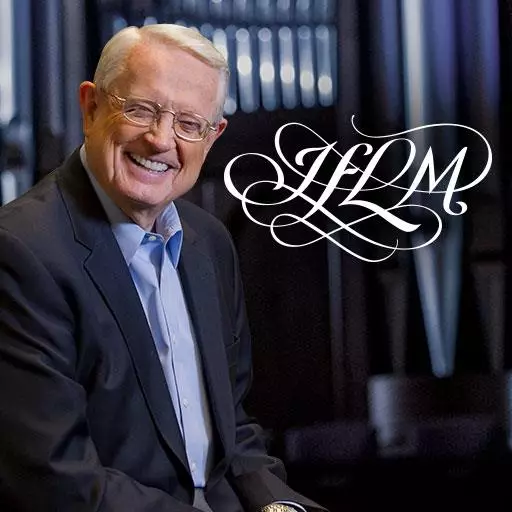
The Grace of God, Part 3


We live in a world of earning and deserving. Promotions come to those who perform. Favor goes to those with the right background. But grace—true grace—operates by a completely different economy. It seeks out the undeserving and pulls them to the table.
From 2 Samuel 9, Pastor Chuck Swindoll tells the remarkable story of Mephibosheth, a crippled outcast brought to eat at King David’s table as one of his own sons. In this obscure Old Testament story lives the clearest picture of how God’s grace works.
See yourself in Mephibosheth. Embrace the grace God extends to you freely, and enjoy the life available to those who sit at His table!
Guest (Male): There’s a man in the Old Testament with a name quite tough to pronounce. Mephibosheth was a nobody, living in obscurity, lame in both feet. Tragically, he expected to be executed. Instead, a king invited him to the royal table for life.
And today on Insight for Living, Chuck Swindoll says his story is actually our story because grace isn’t God helping those who help themselves. It’s God seeking out the helpless, the sinner, the enemy, meeting us with arms wide open. Today's message on God's grace is part of Chuck’s 12-part series called "How Great Is Our God."
Chuck Swindoll: Today on the grace of God, we're going to look at Mephibosheth, 2 Samuel chapter nine. David has come to the throne. His predecessor, King Saul, has died. The family of Saul has fled away, though David exterminated none of them.
But when Saul died, Ziba, his servant, as well as a nurse who was helping with the children, took up this little boy Mephibosheth and ran for their lives to hide. In the running, she dropped him and he was crippled in both his feet. Now, that's the background of the story Mephibosheth here in 2 Samuel nine. David is now in his palace.
And David, as he's sitting and musing, remembers a promise. Before his dear friend Jonathan died in the same battle as Saul, his father had died in, David promised Jonathan he would take care of his family. Jonathan said, "Just make that covenant with me," and David said, "I promise." Suddenly, the promise comes back to his mind, and he thinks, "I've got to make that promise good" because of his relationship with his friend Jonathan and Jonathan's father Saul.
King David initiates an act of grace. Look at it. So David said, "Is there yet anyone left of the house of Saul that I may show him kindness for Jonathan's sake?" Think of grace. Grace is God's treatment, free sovereign favor to the ill-deserved. "Is there anyone to whom I might show free sovereign favor?"
So he meets a man named Ziba, who is from the house of Saul, and Ziba said, "I know where there is one. I'm just a servant," but verse three concludes, "There's still a son of Jonathan, but David, he's a cripple. He's disabled." It's a sensitive point, but we need to stay here at the text long enough for you to feel it.
What's Ziba thinking? "David, look around. This is a place for the brightest and the best. You need those with high SAT scores. You need those with IQs that are almost off the chart. You need the tall and handsome and bronze from the sun. You need warriors. But this fellow I have in mind is crippled in both feet."
By the way, Ziba overlooked one word that David used: "Is there anyone?" Is that good or what? Sometime I'm in my study and I'll go, "Is that good or what?" Nobody's around, so I say, "Yeah, that's good." This is one of those moments. "Is there anyone?" Put your name there. I'll put mine there. "Is there anybody, Ziba, that I can show grace to?"
"I'm doing it for Jonathan. I'm not handing out a life achievement award. This is about grace, Ziba." Ziba didn't get it. "Well, there's a fellow who's crippled on both his feet." Don't you love David's response? "Where is he?" He doesn't say, "Now, do you think he'll ever get better?" or, "Does he like to walk with crutches?" or, "Can he get around without somebody being there to help?"
You and I do that because we're sinful and proud. And we're not disabled, we think. We're all disabled. That's where I'm going. I just can't wait to get there, so I'm going to tell you the end of it before I get there. We're all disabled. I mean, the King says, "Where is he?" "Well, he's living in Lo-debar."
It's a little ambiguous, by the way, in the Hebrew. It's hard to trace what that word means. Geographical locations often had etymologies that were interesting and symbolic. The word "lo" in Hebrew always means "no" or "not," but "debar" is debatable. Some suggest it means pasture, as in no pasture land, a barren place. He's living in the wilderness.
I like the one that seems a little more reliable. He's living in a no-place. You would say the ghetto, the dump. I can't use it nowadays. There's a place named The Dump here where you buy things, but forget that. That fouled up my illustration all of a sudden. I realized, but the kind of dump you thought of when you were kids, okay? He lives in the ghetto.
He's a nothing living in a no-place. A friend of mine said I was so far out in the country, we had to go toward town to hunt. That's where Mephibosheth was living. "David, the guy's a nobody living nowhere." David says, "Go get him." You know why? Because it's grace. That's why he didn't miss you or me. You're getting it, aren't you? There are times that overwhelm me. It literally overwhelms me that he would choose me. I'm so in this story, I can hardly believe it.
Analogy number one, write it down. David, out of sheer grace, extended his love to a nobody, just as God, in sheer grace, extended it to you and me. "Where is he? Go get him." Okay, now the story gets really good. "Okay," says Ziba, "we'll go get him." Verse five: "The King sent and brought him from the house of Machir the son of Ammiel from no-place."
Can you imagine Mephibosheth? "Mephibosheth, we know you're in there. Mephibosheth!" He sees the horses outside. He sees the chariot that's come from the King's palace. What are they going to do? What would you think? "They're going to kill me."
The nurse who had carried him and dropped him when she was running from the new King and he became lame on both his feet, she's now nervous. But you can't hold back the King's guard. The door bolts open. "The King wants to see you, Mephibosheth." And he pulls his crutches under his arms and [thump, scrape, thump, scrape, thump, scrape]. They help him into the chariot. He's never in his life been in a chariot.
Second analogy, write it down. Just as David sought and found this undeserving man, so God sought and found us. David said, "Where is he?" and he sent people to find him. Verse five, and they found him, just as God found you and God found me. He pursued us. He, in the words of a poet, set the Hounds of Heaven against us.
Remember their bark? Remember when they were nipping at your heels? Remember when you thought you could outrun him or outfox him? No one said, "Mephibosheth, clean yourself up. Take a shower. You're getting ready to go before the King." Come now just as you are. Come on, Mephibosheth.
So with gentleness, they take him to the chariot. He's never in his life been in a chariot. There's a wonderful story of how they rescued the Jews over in Israel. The Jews had come from Africa and they had never seen any place but where they were living. And to preserve their lives, Israel flew planes in and picked up these dear people, these Africans.
And they put them on the plane for the first time in their lives. They're sitting on a plane. They take off. Can you imagine? Then they land them in Israel, free. Free. How gracious of that country. How gracious of David. How gracious of our God to take us from the ghetto of our existence and put us on his chariot.
Now he stands before the King. Can you imagine how scared he must have been? Verse six: "Mephibosheth, the son of Jonathan, the son of Saul, came to David and fell on his face and prostrated himself." That means he fell on his face, face down, belly touching the floor. Absolutely flat prostrated before the King. David said, "Mephibosheth." He said, "Here is your servant." He's probably thinking it's curtains.
David says to him, verse seven, "Do not fear. Do not fear. I will surely show chesed to you. I will show grace to you for the sake of your father Jonathan." How good did that sound? About like when you heard it. Don't fear. I didn't die to ruin your life. I died to rescue you.
Here's the third analogy. As David restored this man to a place of honor, God has done that for us. If he would give us what we deserve, you don't even want to know what the place looks like. We'd give new meaning to the word ghetto. There would be breath taken from your lungs before you could take a third or fourth deep breath. But God doesn't do that. He restores us to a place of honor. How great of him. That's called grace.
And don't you love this? Verse seven continues: "And will restore to you all the land of your grandfather Saul, and you shall eat at my table regularly," meaning what? He's adopting him. Fourth analogy: As David adopted Mephibosheth from his place of emptiness, so God has adopted us into his forever family. "Now you're mine."
Don't you know Mephibosheth must have thought if not said, "Look, King David, look at me. Look at me. There are thousands of others you could choose. Look at me." I love the humility of Mephibosheth. He just bows before the King. There is no pride. There is only amazement. And David says, "Now you're mine. Now you're under my care."
"You're not going to drop in for a snack once a month. You're one of my own. There's a chair for you. There's a place for you." He tells Ziba all about it, says we're going to set this up so that his land will be his, Saul's land will be brought to his grandson. It's all going to work out great. Ziba says, "Yes, sir. We'll do it that way." Verse 11: "So Mephibosheth ate at David's table as one of the King's sons."
Pause and think. Pause and think. One of the King's sons sat alongside Solomon, sat alongside Absalom, who by the way was handsome from the crown of his head to the sole of his feet. Sat alongside Tamar, Absalom's blood sister, Kileab. Probably Joab came in for a meal rather often. The chair's empty. They wait for him to come. The dinner bell rings. Everybody's at the table. [Thump, scrape, thump, scrape, thump, scrape]. And the tablecloth covered his feet.
That's also a great thought. And I said in my study, "Oh, that's good!" and there was nobody around to say, "That is good." The tablecloth covered his feet. How good is that? Surrounded by this royalty, and this nobody from nowhere is sitting at the King's table.
That brings us to the fifth: Mephibosheth's disability was a constant reminder of the King's grace. Just as Mephibosheth's disability was a constant reminder of the King's grace, so our disabilities remind us of that. Our failures, our faults, our times of coming up short. I mean, we're still undeserving, we're still insufficient and weak, and in spite of all of that, we're one of his. We've been adopted and we eat regularly at the King's table.
How's the meal this morning? You're feasting at his table. But you don't need to be here to feast. You can feast at his table tomorrow afternoon or late tonight or next Saturday morning. His word is open and truth flows like great food from a banquet hall. How gracious of our God.
I love it that he says you will eat, verse 11, "as one of the King's sons." The end of that verse, look at that. Mephibosheth ate at David's table as one of the King's sons. By the way, he wasn't instantly healed. He was never healed. Take note of that. People have the idea that they'll bargain with God, they'll come to God if he will heal them. You're never going to be healed of sin. We're forgiven of sin, but we're never told we're healed of sin. That comes when we move into eternity. When we die, the sin thing is over. Until then, we've got the disability.
Number six: When he sat at the King's table, there was no status or rank in the family. They were all the King's sons and daughters. You want a great thought? They're sitting at the supper table, and David says to Mephibosheth, "Why don't you ask the blessing?" Probably would be nothing but weeping. "Oh God, how gracious you are to find me when I wasn't even looking and to give me a place at the table of the King."
Another great thought. Someday we'll be at a table like that. And nobody will say, "Hey, that's Apostle Paul's seat. Don't sit there." "Wait, that's Peter's seat. Don't you know the pecking order? Paul, Peter..." "That's James's seat." "That's Martin Luther's seat." You sit down at the table. Sit down, Brother Martin. There's a stool over there. He sits right down. Or some great church father or some great author you've read or some great singer of yesteryear or your mom or daddy. Somebody who meant the world to you. They're waiting for you at the table.
Final thought. You know how we'll often say there's an old saying when you see someone that's in trouble, "There but for the grace of God go I"? When I think of Mephibosheth, I think, "There because of the grace of God go I." Why? Because we are all disabled. May God never let us forget Mephibosheth.
And every time you are with someone disabled, think of Mephibosheth. There will be no place for impatience, misunderstanding, expectations. They can't keep up. You wait for them. You encourage them. You love them. You show grace to them, just like Corrie ten Boom when she shook his hand. Let's bow our hearts together.
How great of the King to reach out to one who really was undeserving. How great of God to send his son for you and for all of us lame, awkward, backward, broken, inconsistent, unloving, unkind, impatient, profane, vile. But we have a place at the table. Your chair is empty if you've never trusted Christ, and today's the day to reserve your spot. I urge you to do that.
Thank you, Father, that in the shattered condition of both my mind and body, this man was found. And his lameness and awkwardness never turned the King away. How great is our God. How full of grace. Forgive us for even a moment of pride or arrogance or impatience. And remind us, Lord, in our Lo-debar existence, that you have graciously chosen us to be yours.
Father, thank you for your grace to us and your mercy that is new every morning. Thank you for loving us even though we are by nature forever helpless, sinful, and rebellious. Thank you for looking through and beyond all of that and by your grace, choosing us and using us. How humbled we are today to acknowledge that we identify best with Mephibosheth in the story. Keep us from ever forgetting that in the name of the one who loved us and gave himself for us, Christ, who though he was rich, yet for our sakes became poor, that we through his poverty might be rich. Even Jesus, we pray. Everyone said, amen.
Guest (Male): David didn't search for the brightest, the strongest, or the most deserving. He asked, "Is there anyone?" And grace found a nobody in a no-name place, lame, forgotten, and afraid, and seated him at the King's table as one of his own sons. That's the gospel in a story. We didn't earn our chair, neither did Mephibosheth.
And if today's message stirred something in you, Chuck Swindoll's Bible study tools will help you go deeper into the grace that found you. Just before we hear a closing word from Chuck, let me remind you that Insight for Living has assembled a bundle of resources for this 12-part series on the attributes of God. The series is called "How Great Is Our God."
It includes the Searching the Scriptures Bible study workbook and all 12 audio messages in the series. All the details for ordering them can be found online at insight.org/offer. I'll tell you about a brand new resource written by Chuck in just a moment. It's called "The Cross We Proclaim." Stay with us for more details. And now, here's Chuck.
Chuck Swindoll: You know, for almost 20 years, a colleague of mine did the same thing every single Sunday. Right before I stepped up to preach, Howie would lean over and whisper a few words into my ear. The same words, every time: "Preach grace, Chuck. Preach the cross." Oh my, I can still hear his voice.
And here's what I've learned after more than 60-plus years of standing behind a pulpit. Those four words are the whole ball game. Everything else is just noise. The cross isn't a decoration. It isn't the introduction to a better topic. It is the topic. Always has been, always will be.
The Apostle Paul said it plainly, "I determined to know nothing among you except Jesus Christ and him crucified." That's not a modest man underselling himself. That's a brilliant man who finally understood what actually changes people. Not cleverness, not rhetoric, not a carefully crafted performance. The cross. Just the cross.
That's why Insight for Living exists. Not to put on a good broadcast, not to win awards or grow an audience, but to make sure that somewhere, in a car, in a kitchen, on a phone, on a computer screen halfway around the world, someone has a genuine, life-altering encounter with the cross we proclaim.
Now, June 30th marks the end of our fiscal year, and I want to invite you personally to become part of what happens next. When you send a gift to Insight for Living, you're not just supporting a ministry, you actually have one. Your generosity is what casts the seed of God's word into places I will never go and reach people I will never meet. That's not small. That's extraordinary. Would you give today generously, sacrificially, joyfully? Join me in giving the cross our very best.
Guest (Male): As a tangible expression of our gratitude for your gift, we'd like to send you a brand new booklet from Chuck Swindoll. It's called "The Cross We Proclaim." We published this booklet to coincide with Chuck's teaching series on the attributes of God.
In his booklet, Chuck says there's a better way to live, and it begins at the foot of the cross where all the ground is level. By reading "The Cross We Proclaim," you'll find the freedom that comes when you stop managing your reputation and start resting in what Christ accomplished.
To give a donation and request a copy of "The Cross We Proclaim," call us at 800-772-8888. Or to send a check in the mail along with your request for the booklet, just address the envelope to Insight for Living, Post Office Box 5000, Frisco, Texas 75034. You can also go to insight.org/donate. Join us when Chuck unpacks one of the most magnificent passages Paul ever wrote about Christ. Tuesday on Insight for Living.
Featured Offer

Pastor Chuck’s audio set (CD or MP3), softcover book, and companion spiral-bound workbook help you embrace the mystery of God’s sovereignty and learn how to lean into the goodness of God.
Past Episodes

Video from Pastor Chuck Swindoll
Featured Offer
Pastor Chuck’s audio set (CD or MP3), softcover book, and companion spiral-bound workbook help you embrace the mystery of God’s sovereignty and learn how to lean into the goodness of God.
About Insight for Living
Join the millions who listen to the lively messages of Pastor Chuck Swindoll, a down-to-earth pastor who communicates God’s truth in understandable and practical terms, with a good dose of humor thrown in. Chuck’s messages help you apply the Bible to your own life.
About Pastor Chuck Swindoll
For most of his entire life, Pastor Charles R. Swindoll has devoted himself to the accurate, practical teaching and application of God's Word — anchoring every message in the transforming power of God's amazing grace. From congregations on the East Coast to the West Coast, his ministry has carried that message across the country, ultimately taking root in Frisco, Texas, where he founded Stonebriar Community Church. Yet Chuck's influence has never been confined to a single sanctuary. Since 1979, Chuck’s messages have aired on Insight for Living, one of the most widely heard programs in Christian broadcasting, carrying his voice — and the timeless truth of Scripture — to listeners around the world. That same passion for God's Word has shaped his leadership at Dallas Theological Seminary, where his tenure as president and now chancellor emeritus has helped raise up a new generation of men and women equipped and called to ministry. Few lives have touched so many, across so many places, for so long.
Contact Insight for Living with Pastor Chuck Swindoll
customerservice@insight.org
http://www.insight.org/
Mailing Address
Insight for Living
Post Office Box 5000
Frisco, Texas 75034
USA
Phone Number
1-800-772-8888