

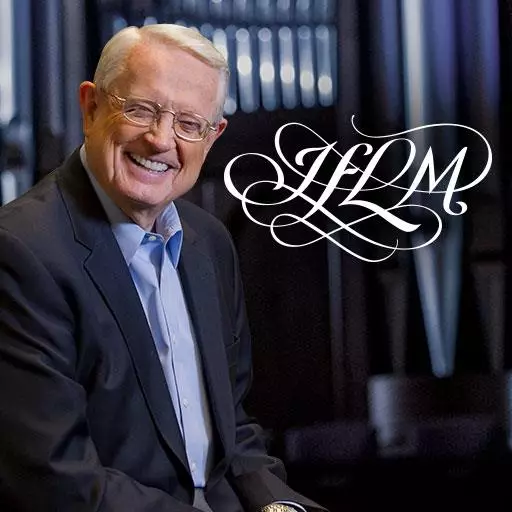
The Cup That He Drank, Part 2


We live in an age obsessed with comfort and the avoidance of pain. But Jesus, in the garden of Gethsemane, faced the most bitter cup imaginable—and chose to drink it.
Pastor Chuck Swindoll walks through John 18:1–11, the scene of Jesus’ arrest, to examine the cup the Father gave His Son to drink. In Christ’s submission lies the model for every believer who must choose obedience when the cost is high.
Learn from your Savior’s example. Embrace the path of obedience—even when it hurts—and find the strength that comes from trusting God!
Narrator (Male): You know you're a Christian. You go to church, you believe the Bible is true, but you also understand your weaknesses because there's a difference between believing in Jesus and actually following Him.
Chuck Swindoll admits that he too has felt the gap between what he wanted and what God wanted. And today, on Insight for Living, he'll show us exactly where that gap shows up and what it costs to close it. From the Gospel of John, Chuck brings a message that's direct, deeply personal, and impossible to forget. He titled it, "The Cup That He Drank."
Chuck Swindoll: Our world is in a world of hurt. Days are dark in places of great importance in the eyes of people, but there's nothing more significant happening today than what is happening in this room, where we meet with the one who is exalted over all, above all, and His plan is working through all.
The great temptation in this hour is to panic. Believers in Christ have no need to do such. Nothing is out of control because whatever happens to us passes first through the Father's hand. When we doubt that sovereign work of God, panic replaces trust.
We pray today so that there might be a renewal and refreshment, a reminder that our times are in His hand. They're not in the hands of the United States government. They're not in the hands of the particular few who make decisions. They're in the hands of our God. And by the way, He loves us. Remember? Say that with me. He loves me. Do it again. He loves me.
Father, we thank you for that divine love that pervades and encompasses and envelops us. Thank you that it invaded this earth in the person of Your Son. And for the first time, love was personified in a perfect model of life.
Thank you for Your Son's willingness to leave all the glories of heaven and to set aside temporarily His divine attributes so that when they were exercised, they were exercised only in obedience to Your will and plan. May that mark our lives. Find in us, Father, that kind of commitment.
Hear us, Lord, today when we say, whatever the cup, we will drink it. Whatever the cross, we will bear it. Whatever Your will is, we want to be in it and walk through it, regardless of the times in which we live. They're all in Your hands. And thank you for that reassurance.
May that come through clearly today, our Father, as we focus our attention on the one who took our place at the most torturous means of death known to humanity. And He did it for us because He loved us. And we love you, Father, in Jesus' name. Everyone said, amen.
Bill Meyer: You're listening to Insight for Living. To dig deeper into today's topic on your own, be sure to purchase our Searching the Scriptures Bible study workbook called "How Great Is Our God." You can find it at insight.org/offer. Chuck titled today's message, "The Cup That He Drank."
Chuck Swindoll: It takes a long time for many people to get really serious about their walk with Christ. Coming to know Christ is, in a point of time, a decision made for the Savior where we receive the gift of eternal life by faith because of God's grace. And we come to Christ alone by faith alone. That's called conversion. It's the miracle of a moment.
However, the process of becoming disciples is a journey. As Redpath calls it, it's the task of a lifetime. Now, what does becoming a disciple mean? It means becoming a close follower of Jesus Christ. I know of no more clear and concise section of scripture on discipleship in few words than Luke 9:22 through 24.
The Son of Man must suffer many things, be rejected by the elders and chief priests and scribes, be killed and be raised up on the third day. Look closely. The Son of Man must suffer many things. Do you read crushing in that? You should. The Son of Man must be crushed, which will include being rejected by the elders and chief priests and scribes. And in His case, it meant being killed and be raised up on the third day.
Verse 23, and He was saying to them all—so to all the people standing with him, all those men—"If anyone wishes to come after Me, let him deny himself, take up his cross daily, follow Me." Stop right there. Notice it's a condition. "If anyone." It's a choice. "Let him deny himself." Second, "Take up his cross daily." He would add that, wouldn't He? Daily. Daily.
But first, the cross. Last time we were together, we learned that it's a symbol of death. So obscene it didn't even fit proper conversations around the table in a Roman home. You wouldn't think of putting an electric chair in a small piece of jewelry and hanging it around your neck. But that's what you do when you put a cross around your neck.
It's the most torturous, shameful, humiliating form of death ever devised by humanity. It's a symbol of saying no to myself, putting to death my will. Spiritually speaking, the cross represents a deliberate decision to abandon one's own desires, preferences, and plans, and to live with the pain that that entails. All of the adjustments, all of the—if I may use the word—all of the consequences. And we're to do it daily. Daily.
When God wants to do an impossible task, He takes an impossible person, and He crushes him with the reminders like this. Truth be told, some of you are on a maddening pursuit to please yourself. That's why you chose the career you chose. That's why you're jealous when someone else is promoted over you. That's why you are offended when someone asks you to give up your rights here for the greater good. That's why suffering is such an interruption. And that's why lingering illness is so irritating, for you're not able to get about what you planned.
Stop. Stop all that. A disciple says, "I am here for the long haul, regardless of what it may mean. And if it means ultimately my death, I am in it for death." You say, "Well, that's a crazy way to live." Well, that's why the ranks are thin. That's why you don't meet many disciples.
That's why Jim Elliot could say, when he realized that it could mean death—and it did in his and four of his friends reached the Auca Indians with the claims of Christ—"He is no fool who gives what he cannot keep to gain what he cannot lose." That statement, by the way, was part of the process of changing my life.
When my orders were cut and I was told I was to go to Okinawa, even though the Marine enlisting officer had promised me I'd never have to go overseas—liars that they are—little did I know it would have anything to do with my spiritual growth. It had everything to do with my change in life. Everything changed. And it was crushing to leave my wife. It was crushing to move 8,000 miles away from my family.
I get no credit for it. The government paid for it. It was the president's idea, or somebody up there. No, not really. It was a plan of God for me. God knew I needed no other crutch but Himself. And in the loneliness and the emotional torture of 16 months in Southeast Asia, my whole life was turned around. I never had known such a walk with Christ as I developed there, up to that point in my life. Took the crushing. The daily, daily reminders. You're not in it for yourself, bud, you're in it for Me.
And it says, "And then follow Me." Deny yourself, take up your cross daily, follow Me. It means to obey. It means to emulate. To follow the leader regardless of the sacrifice. Remember when you were a kid, you played Follow the Leader? Do kids play Follow the Leader anymore? I remember years ago, way back when the earth's crust was cooling, I was small and I had a lot of buddies around. And one guy would be the leader. And I mean, he would take us into the most unbelievable—he'd jump off places. I'd say, "No way." "Ah, then you're out." So I'd have to jump off because I'm a Follow the Leader. That was back when I was following klutzes who did all kinds of crazy things.
But you can trust Him. But you can be sure there'll be risk involved. You can be certain that as your decision to move from the outer circle to the inner circle and become one of those close followers—and by the way, the ranks are still thin, always will be, always will be—many more believers than there are close followers, because we don't want to obey anyone else. We want our own way.
John R.W. Stott writes this: "Jesus gave no encouragement whatever to thoughtless applicants for discipleship. Thousands of men and women every year are still undertaking to follow Christ without ever pausing to reflect on the cost of that enterprise. They have allowed themselves to become somewhat involved, enough to be respectable but not enough to be uncomfortable."
I'll get specific. You have a fine career. You are middle-aged. You and your family—let's put you in a situation where you're married and you've got two or three kiddos—and you're on your way to another promotion and yet another promotion. You're moving into the realm of financial security you've thought about and wanted to have, and your dad, and certainly your father-in-law, wanted you to have.
And as time passed, the future looks brighter, and then you get serious about spiritual things. I am only imagining this. I have no one in mind, so listen closely, but relax. And then you hear a sermon like this, and you think, because there's no post to hide behind in this building—you notice how we built it here? Some of you stay behind the head in front of you a whole lot of the sermon, I've noticed, and you notice that it just penetrates right through that cranium, and suddenly you think, "The guy's talking to me."
Could it be that this is not where God wants me, but I'm where I wanted to be? Could it be that it's not all about my salary? Could it be that it's not just about owning all the stuff I own or pursuing the stuff I've always felt I should pursue? In the process of growing and learning and hurting and discovering, you realize your place is ministry. You're to be in vocational Christian service. You're no longer to be in the realm of those who watch ministry transpire.
You realize, you really sense a peace that you need to be returning to school, get further education, go to seminary and get that graduate degree so that you are then for the rest of your life equipped to help others grow deeply. Maybe you should go to the mission field. Maybe you should serve Him in a cross-cultural context somewhere. Let's say you go to work the next day and you say to your buddy, "Hey, I'm going to become a missionary." Don't count on, "That is fantastic! How wonderful a decision!" They're going to say, "Are you nuts?" You know why? Because they're not disciples. They're in it for themselves. And they envy you because you make more than they do. And it's all about you, of course—except in their case, it's all about them.
But what does that mean? Do the math. It means you leave a very secure position. Probably means you move to another part of the country. It means you live in a situation that is not the kind of comfort you have enjoyed before. It means your income is reduced considerably. It means your partner may have to go to work to make that happen. It means you will now enter the ranks of the unfamiliar. You will now be exposed to information you have never heard before or studied. And you are following Christ.
That happened in my life. It's happened in the lives of a number of people listening right now. Now, ideally, your partner is with you in that journey. One of my favorite questions when I meet brand new seminary students and they come to the church to visit and they'll say, "Hi, we're first-year students." And they always have that look about them—a little bit bewildered. So I invariably will look, in case this is a man that introduces himself, I'll look at his wife and I'll say, "What do you think about that?"
I get some very interesting answers these days, very interesting. Sometimes it's just like out of the textbook: "Oh, this is the fulfillment of our dream." Other times I'll hear, "I'm not so sure." And that makes for a very difficult process of years. Maybe the man acted too quickly in his decision, and perhaps wisdom would say, "Let's spend some time working this through with your wife so that she's on board with you." Having partners where one is a disciple and one is not is a pretty difficult way to live. Pretty difficult. That's just one application that comes to mind.
You see, God specializes in this sort of thing as He brings us from the ranks of general believers—those who know Christ and when they die they're going to go to heaven. We're sure of that. We know Sunday comes we want to be a part of the worship service. Yeah, well, we understand that. But just don't let it get in my way.
When you become a disciple, it gets in your way. Suddenly you move from the ranks of the complacent to the committed. Turn to John chapter 18, will you do that? John 18. I often speak to folks who are without Christ. For the next few minutes, I want to speak mainly to you and only to you who know the Lord. I want to speak to you who are in the broad, wide circle. You've come to Christ, but chances are good you've not entered into a seriousness in your walk.
And that's a sad fact. In fact, it grieves the Holy Spirit. Because it—doesn't mean you have to enter ministry. It means that Christ enters the throne room of your life and takes charge, and whatever that may mean, wherever you must follow Him.
Now, this is a threatening situation here, the setting, verses 1 to 3. It's very serious. They've had the last meal together, Jesus and His followers. The upper room teaching is over. It's not included here. In fact, it just says in verse 1 of "When Jesus had finished these words," no doubt referring to His teaching in that Last Supper as well as His prayer as He's on His way to the Garden of Gethsemane just before He's taken under arrest.
His prayer to the Father is completed. He and His eleven remain together, and they're making their way to the Garden of Gethsemane. They cross a brook called the Kidron, the Kidron Valley. It's an immensely emotional time as they get to Gethsemane, where the fight is on. That's where the battle took place. The battle in Jesus' own mind was not at the cross; it was at Gethsemane.
People don't think about that enough. It's at Gethsemane He prayed, "Let this cup pass from me. If it's possible, Father, let it be another way. Let there be some other journey but the cross." Nevertheless—listen to the words of a disciple, if I may—"Not my will, but Yours be done. Not my way, but Your way, Lord. Not my plan, but Your plan."
That's the setting. A.T. Robertson says, "The hour was late and the strain had been severe. But Jesus pleads for a bit of human sympathy as He wrestled with His Father. It did not seem too much to ask. He was on His face, not His knees." The figure of the cup can only mean the approaching death. Now the Master is about to taste the bitter dregs in the cup of death for the sin of the world. That's the context.
In verse 4, "Knowing all the things that were coming upon Him." By the way, in the distance, He can hear the clatter of the swords and the chains and the sight of the torches flickering in the darkness. If you've been to Gethsemane, you know it's a small place, and an approaching crowd would be easy to detect, and they were on their way to get Him.
Verse 3 concludes they came with lanterns and torches and weapons. Why? They expected a fight. What they didn't realize is the fight was over. He'd accepted the cup. But they didn't know that. So Jesus, knowing all things were coming upon Him—look at the surprising surrender—"Whom do you seek?" Now, normally, if a group is coming after a criminal, the criminal doesn't say, "Hey, who are you guys looking for?" In their eyes, He was the criminal.
But to their amazement, He says, "Whom do you seek?" Look at this. They say, "Jesus the Nazarene." He said, "I am He." Judas was also standing with them. And when He said to them, verse 6, "I am He," they drew back and fell to the ground. We would say it blew them away. Why? Why isn't He running? Why isn't there an argument? Why isn't He bargaining with us? "I am He." You don't do those things when you're a close follower, if I may use those words for our Savior. He has finished the fight. Remarkable things occur when the fight is finished and a surprised plan unfolds. You accept it. You don't resist it. One of the benefits of being crushed is that you learn slowly but surely that there's a better plan, and resisting it is not a good thing.
Bill Meyer: He has finished the fight. When your will finally stops wrestling with God's will, something remarkable happens. Not weakness, not defeat, but freedom. Chuck Swindoll calls it the benefit of being crushed, and he knows it firsthand. There's a lot more in this message, and we'll hear some closing comments from Chuck in just a moment, so stay with us.
This is Insight for Living. Today's program features message number six in Chuck's 12-part study on the attributes of God. He titled this series, "How Great Is Our God." We invite you to take advantage of the bundle of resources we have for digging deeper on your own. It includes the Searching the Scriptures Bible study workbook and the complete collection of 12 sermons on CD or MP3. To purchase the bundle today, go to insight.org/offer.
Well, Chuck, we're coming up on another milestone here at Insight for Living. On June 30th, we close the books on another ministry year and we step into our 48th year of ministry. At moments like these, it's imperative to remain laser-focused on the one we serve.
Chuck Swindoll: When Paul arrived in Corinth, he was fresh off a rough stretch. He'd just come from Athens, where the philosophers basically laughed him off the Areopagus. If you've ever poured everything you had into something and watched people shrug and walk away, and if you've ever had a message fall completely flat, you know something of how Paul felt stepping into Corinth.
And what did he decide? Quoting now, "I determined to know nothing among you except Jesus Christ and Him crucified." He didn't concoct a new strategy, not a better presentation, not something more sophisticated, more polished, more likely to impress the intellectuals. Just the cross. Here's what 60-plus years of preaching has taught me: The moment I start trying to be impressive, I've already missed the point.
The goal has never been for you to walk away thinking, "What a great communicator." It's for you to walk away thinking, "What a great Savior." There's a world of difference between those two. That's the heartbeat of Insight for Living, always has been, always will be. I want every program, every single one, to be a place where someone has a real encounter with a real Savior. Not a religious experience, not a motivational moment, a genuine, life-altering collision with the cross we proclaim.
As we close out our fiscal year on June 30th, I want to ask you something, not to help us, but to consider the ministry you personally have when you invest in this broadcast. Your gift travels. It reaches languages I don't speak, countries I've never visited, and people who've never heard the message we take for granted. You send it, we broadcast it, and God does what only God can do. Would you give today? The cross is worth it, my friend.
Bill Meyer: To respond to Chuck Swindoll, you can choose one of several easy ways to give a donation. Many of our listeners prefer to send a check in the mail. If that's you, address your envelope to: Insight for Living, Post Office Box 5000, Frisco, Texas, 75034.
When you give today, we'll be saying thanks by providing a brand-new booklet from Chuck. In "The Cross We Proclaim," you'll discover why Jesus at the cross doesn't ignore your past, but redeems it. A copy is yours when you give a gift to support the ministry of Insight for Living.
The deadline June 30th is this coming Tuesday, so call us at 800-772-8888 or give a donation online at insight.org/donate. I'm Bill Meyer. Join us when Chuck Swindoll continues his study about the attributes of God, Monday, on Insight for Living.
Narrator (Male): The preceding message, "The Cup That He Drank," was copyrighted in 2008, 2009, 2016, 2019, and 2026, and the sound recording was copyrighted in 2026 by Charles R. Swindoll, Incorporated. All rights are reserved worldwide. Duplication of copyrighted material for commercial use is strictly prohibited.
Featured Offer

Pastor Chuck’s audio set (CD or MP3), commentary, and companion spiral-bound workbooks give you everything you need to walk with Jesus from Galilee to the empty tomb.
Past Episodes

Video from Pastor Chuck Swindoll
Featured Offer
Pastor Chuck’s audio set (CD or MP3), commentary, and companion spiral-bound workbooks give you everything you need to walk with Jesus from Galilee to the empty tomb.
About Insight for Living
Join the millions who listen to the lively messages of Pastor Chuck Swindoll, a down-to-earth pastor who communicates God’s truth in understandable and practical terms, with a good dose of humor thrown in. Chuck’s messages help you apply the Bible to your own life.
About Pastor Chuck Swindoll
For most of his entire life, Pastor Charles R. Swindoll has devoted himself to the accurate, practical teaching and application of God's Word — anchoring every message in the transforming power of God's amazing grace. From congregations on the East Coast to the West Coast, his ministry has carried that message across the country, ultimately taking root in Frisco, Texas, where he founded Stonebriar Community Church. Yet Chuck's influence has never been confined to a single sanctuary. Since 1979, Chuck’s messages have aired on Insight for Living, one of the most widely heard programs in Christian broadcasting, carrying his voice — and the timeless truth of Scripture — to listeners around the world. That same passion for God's Word has shaped his leadership at Dallas Theological Seminary, where his tenure as president and now chancellor emeritus has helped raise up a new generation of men and women equipped and called to ministry. Few lives have touched so many, across so many places, for so long.
Contact Insight for Living with Pastor Chuck Swindoll
customerservice@insight.org
http://www.insight.org/
Mailing Address
Insight for Living
Post Office Box 5000
Frisco, Texas 75034
USA
Phone Number
1-800-772-8888