

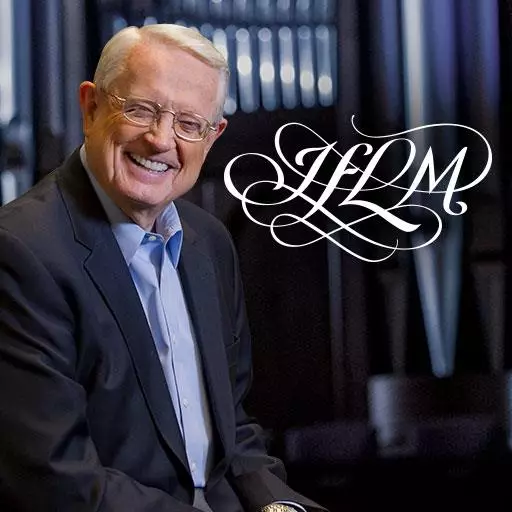
Often-Overlooked Lives of Significance, Part 1


Behind every great leader are a few invaluable individuals serving without recognition, but with purpose toward a common goal.
Learn from Pastor Chuck Swindoll the four unwritten rules of true servants by examining the lives of David’s mighty men recorded in 2 Samuel 23 and 1 Chronicles 11–12.
Evaluate your role, attitude, and pursuits. Who is getting the glory? Lean into Christlike humility and joy today!
Announcer (Male): Do you ever feel invisible? Like your contributions go unnoticed while others take center stage? Well, you're in good company. History's greatest achievements weren't solo acts. They required countless unnamed characters working tirelessly behind the scenes.
Yet, few of us know their names. Today on Insight for Living, Chuck Swindoll brings to light the remarkable stories of both triumph and failure that transform how we view those hidden roles. You see, the Bible spotlights overlooked characters, ordinary people who changed the course of history, and their powerful stories show us what true significance looks like.
Pastor Chuck Swindoll: Over in the book of 2 Samuel, chapter 23, we will read of the last words that were significant enough for the writer of the book to include that fell from the lips of David. And then we will move over to 1 Chronicles and read of similar words that were said at the beginning of David's move toward the throne of Israel. So turn in your Bibles to both chapters, if you will, 2 Samuel 23, and then in a moment, we'll get over to 1 Chronicles 11.
I have a friend who calls this section of the scriptures the "pots and pans" edition or section of the scriptures. It's often the place where people stop reading through the Bible because it is full of words that are hard to pronounce and names and sort of comes across as an obituary. When in fact, it is history at its most exciting moment, though it doesn't seem like it when you read words on the page.
So follow along. 2 Samuel 23, verse 1. "Now these are the last words of David. David, the son of Jesse, declares, the man who was raised on high declares, the anointed of the God of Jacob and the sweet psalmist of Israel. The Spirit of the Lord spoke by me, and His word was on my tongue."
Verse 8. "These are the names of the mighty men whom David had: Josheb-Basshebeth, a Tahchemonite, chief of the captains. He was called Adino the Eznite because of 800 slain by him at one time. And after him was Eleazar, the son of Dodo the Ahohite, one of the three mighty men with David when they defied the Philistines who were gathered there to battle and the men of Israel had withdrawn."
Verse 11. "Now after him was Shammah, the son of Agee the Hararite. And the Philistines were gathered into a troop where there was a plot of ground full of lentils, and the people fled from the Philistines. But he took his stand in the midst of the plot, defended it, and struck the Philistines. And the Lord brought about a great victory."
The passage goes on to describe that. But let's turn from there to 1 Chronicles, chapter 11, verse 9. "David became greater and greater, for the Lord of hosts was with him. Now these are the heads of the mighty men whom David had, who gave him strong support in his kingdom, together with all Israel, to make him king according to the word of the Lord concerning Israel."
Verse 22. "Benaiah, the son of Jehoiada, the son of a valiant man of Kabzeel, mighty in deeds, struck down the two sons of Ariel of Moab. He also went down and killed a lion inside a pit on a snowy day. He killed an Egyptian, a man of great stature, five cubits tall."
Verse 1 of chapter 12. "Now these are the ones who came to David at Ziklag, while he was still restricted because of Saul the son of Kish, and they were among the mighty men who helped him in war. They were equipped with bows, using both the right hand and the left to sling stones and to shoot arrows from the bow. They were Saul's kinsmen from Benjamin."
Verse 18. "Then the Spirit came upon Amasai, who was the chief of the thirty, and he said, 'We are yours, O David, and with you, O son of Jesse! Peace, peace to you, and peace to him who helps you. Indeed, your God helps you.'"
The passage runs on down to the end, where at the very end we read the last sentence of verse 40, which describes the result of all of their work and cooperation and bravery. The last sentence reads, "There was joy indeed in Israel."
Announcer (Male): You're listening to Insight for Living with Chuck Swindoll. Today, we're starting a new series called Fascinating Stories of Forgotten Lives. To purchase the spiral-bound Bible study workbook for this series, go to insight.org/offer. And now, let's begin message number one titled, "Often-Overlooked Lives of Significance."
Pastor Chuck Swindoll: Well, it's time to take a quiz, and so I'm going to give you about five or six questions, see how well you do. You don't have to write anything down, but you need to draw on your bank of memory to see how well you can remember some significant people in the past.
Question number one in the quiz: Who taught Martin Luther his theology and inspired his translation of the scriptures from Latin to German? Question number two: Who spoke to Dwight L. Moody in the shoe store that day and ultimately led him to Christ, which led ultimately to a magnificent life of evangelism for the rest of his days? Who was that man?
Who served on Harry Ironside's pastoral staff during his most significant years of ministry at Moody Memorial Church in Chicago? Number four: Who was the elderly lady who prayed every day of her adult life for Billy Graham, especially during the heyday of his ministry in his crusades? What was her name?
Who followed Hudson Taylor at China Inland Mission, giving it its direction and vision in a remarkable manner for a long number of years? Who was the wife of Charles Haddon Spurgeon? Who helped Charles Wesley get underway as a composer of music so that he would ultimately leave the church with over 5,000 hymns to sing? Who was that person?
Well, how did we do? Isn't that amazing? All of these significant people who, if they had not lived, would have changed the shape of church history, we don't know a name. We don't know one of those names.
Let me switch gears all of a sudden and put you in the picture and make you one of the unknowns. You teach a third-grade Sunday school class at the church you love and attend, and you have done so for a number of years. Or you work in the back parking lot wearing a bright-colored vest, helping people who are sometimes not that courteous find a place to park at the church you love. You do it in season and out of season, when it's hot or cold, windy or dry. You're there.
Let's say you're on the staff of a ministry. The ministry has a few people who are known, but you work behind the scenes. You deal with the people of the staff, or people who have complaints and concerns. You provide copies of information, you answer phones, you meet the public. Everybody knows that other person, but if you stood up in a lineup of 20 people, no one or very few would even know your name.
Let's make you the receptionist. You think everybody would know the receptionist's name, wouldn't you? But they don't call to talk to you. In fact, you get in their way as they try to get ahold of someone else they really want to talk to. It's a thankless job, but you're there.
You're responsible for getting the music together for the choir to sing or helping in the rehearsal of the children when they sing on a given Sunday. Or you're in charge of the sound system of, let's say, some traveling well-known singer or musical group. You tape the wires, you set the mics, you determine the speaker system and how it's set up. You record things for this famous individual.
Isn't that amazing how important the "unknowns" are? I thought of that just last Thursday night. Cynthia and I, along with 1,500 plus other individuals who love Dallas Seminary, gathered at the old Majestic Theatre in downtown Dallas. The only thing older in Dallas than Dallas Seminary is the Majestic Theatre. It's just been refurbished and refurbished. One of these great theatres.
Steve Green was the singer, and boy, we all turned out to hear Steve sing. Everybody knows Steve. I was back behind the stage, and I got a chance to meet people nobody knows. The fellow from California who plays keyboard for Steve Green. The young woman from Orlando who plays violin. The gentleman who plays several guitars beautifully, masterfully. These people accompany Steve Green and make his performance memorable.
I even got to meet the man responsible for the sound. Steve brings his own sound system, and it was flawless. I mean, you speak in the mic every jot and tittle, speaks, sounds correctly. I realized that when Steve's sound system was turned off and the house system was turned on and Mark Bailey, our president, walked up to greet everybody. He took the mic from the system in the house and he goes, "Good evening, every— tap— hear— far— Seminary." And he goes, "I want to say, get Steve's sound system back on."
Who knows the name of the sound engineer? Who knows the name of the person who plays violin? As one of the great composers answered when asked what's the most difficult position to fill, gave the answer, "Second fiddle." Who plays harmony? Boy, are they important.
How about the nurse who assists a famous cardiovascular surgeon when your chest is open and he has your heart in his hands? What's the name of his nurse who gives him the right instruments, or nurses? How about the airline mechanic who works on the plane you're going to fly in two hours? Don't you hope he's awake, knows what he's doing?
How about the man in charge of scanning the luggage at Frankfurt Airport in Germany on the El Al flight to Tel Aviv? Don't you hope he's paying attention? You don't even know his name. How about the uniformed soldier who has the watch from midnight to 3:00 in the morning when all the other troops are sleeping on the battle zone? Don't you hope he stays awake?
The person who does the lab work or the x-ray analysis after you've gone to the physician because you can't quite figure out why you have that pain in your abdomen? Don't you hope the blood work is right and the analysis is correct? Or the druggist who fills your prescription which you take without even asking?
Or the person who takes your 911 call when you can't revive your two-year-old after pulling her out of the swimming pool? It's amazing, isn't it? We call these people nobodies. You kidding? And we can work around them for a long time and not even know them.
I decided it was time to get a couple of new suits, or at least a sport coat and another suit, so I told Cynthia I was going to go over to a place that seemed like they would have what I would want and had a good sale on. So I went over there, met a gentleman who waited on me, did a great job, picked out a couple of garments. And he said, "Well," I said, "shall we tailor them?" He said, "Sure, just tell me if you like them." And I said, "Yeah, I like them, let's do it."
He said, "I'll get the tailor." So he brings a tailor out. Terrific man. Probably in his 50s, 55. Not from our country. And I shook his hand. I mean, he was shocked. People getting their suits tailored don't shake tailors' hands, usually. It's like learning the name of your bus driver. And so I shook his hand and I said, "Hi, I'm Chuck. Glad to meet you. Thanks for your good work." He finished and walked away and I said, "Man, he's terrific. How long you had him?" He said, "Four years." I said, "Really? What's his name?" Said, "I don't know."
Four years, you don't know the tailor's name who alters every suit you sell? Reminds me of the story of Teddy Roosevelt, who's standing in a presidential line greeting people at this reception. And he had a man he kept on his left who would whisper the names of people that are important who were coming through the line so he could greet each one of them by name. And he looked a couple of three people down, he said, "Who's the fellow right down there?" He said, "Oh, you know him, Mr. President. He made your pants." Got in front of him, he said, "Major Pants, we're so glad you're here today. Welcome."
Somewhere back in time, you and I were taught incorrectly that the real significant people are the star athletes. They're the franchise players. The most important people are the ones folks applaud. Not true. Not true.
The most important individuals are the ones who make nobodies into somebody and never get the credit or rarely even get mentioned. I loved it that Steve in the middle of his concert turned around and introduced us by name to each person who served behind the scenes. Not that he had to do it, but I was impressed that he knew their names. He even knew where they were from and how long they'd been with him.
Why? Because to Steve Green, the little people matter. My daddy used to say, "Son, no matter what ever happens, no matter how big you ever get, never forget the little person." It's a wonderful piece of advice that doesn't come from our world of me-ism.
The Bible is full of the unknowns. I came across one just this last week. Don't turn, but Acts 23:16—isn't that just like it? He's a nobody, so don't turn. Acts 23:16 is a wonderful story of the Apostle Paul when he's under arrest. He goes through several arrests and trials until finally he's beheaded. But up until then, he's alive and he's protected. Except there's an ambush planned on his life by the people who hate him. 40 men who determined they would not eat or drink until they kill Paul.
Just so happened that Paul's sister's son, Paul's nephew, overheard that conversation, that conspiracy, reported it to Paul, who said to him, "You need to go tell the commander." And the commander had enough presence of mind to respect the words of this lad, who is never once named in the Bible. And they secreted Paul out by night, took him another way on horseback, and his nephew saved his life. And not a one of you can name his nephew because he's never named.
Before I go any further, I want to tell you that the success of a church is because of the people whom nobody knows. One of the worst things you can do is call this Chuck's church. Believe me, I've been here when nobody else is here. It ain't very exciting. No lights are on, there's no sound, there's nobody to laugh at funny things, there's nobody to pray with you, there's nobody to keep you company or encourage you. It's a lonely, dark hole inside this room when I'm here alone.
It is all about you, us, teaming together, locked arms in lockstep, moving in harmony and unity and humility with great joy toward a goal that's worth pursuing. That's what the church is. Unfortunately, we have turned church into entertainment where there are stars, even recording stars. And it's all about him or her rather than about the head, Christ, the head of the church. The head of the church will never die. He was raised from the dead and He lives forever as our exalted King of Kings and Lord of Lords. He alone speaks ex cathedra. He alone is full authority. He is the only perfect one who ever lived, and the fact is He died for nobodies like you and me.
Now, with all that in mind—how was that for an introduction? Now we'll get down to the passage of scripture in 2 Samuel 23. 2 Samuel 23, along with 1 Chronicles 11, are like bookends. Problem is, 1 Chronicles comes later, but it's the early part of David's life. 2 Samuel 23 comes later, and it's the last part of David's life. So we go from the first to the last. In fact, we're going to begin at the end and work backwards as we watch David take the throne.
Now, you got to understand something. Everybody knows David. Around the world, his name is known. He slew the giant, and people who are uninformed think they all think he went down to Nordstrom's, bought a crown, went to the throne and said, "Follow me." It didn't work like that. He slew the giant, he began to serve Saul, who was king, for a long time, like 12 or 13 years after David slew the giant. And Saul hated David, and as a result, he tried to kill him. And David escaped for his life and for 12, 13 years lived like a fugitive.
He lived in the wilderness, he lived in caves, he lived in forests, he ate on the ground, he slept on rocks. He had nothing of creature comforts, and that's where he learned to king it. That's where David learned to recognize the unknowns. It happens to you when you're not a blue blood. When you come up from a background like that.
He comes to the end of his life. He's now 70 years old. He began to reign when he was 30. He reigned for 40 years as king, and then he records or at least is quoted as saying these things. And it's all about David, you would think, until David says, "No, let's mention the people that I want folks to remember." Look at verse 8 of chapter 23 of 2 Samuel.
"These are the names of the mighty men whom David had: Josheb-Basshebeth, a Tahchemonite, chief of the captains. He was called Adino the Eznite because of 800 slain by him at one time." I'll tell you a little bit from the background in the military I've had. That's Medal of Honor stuff. I've never known anyone who got an honor for killing 800 people at one time. But he didn't do it for a reward. He did it because of David. He did it because he believed in his leader, and he put his name on the line.
And then there's another one that arose. His name is Eleazar, verse 9, the son of Dodo the Ahohite—that's a bad name. "One of the three mighty men with David when they defied the Philistines who were gathered there to battle and the men of Israel had withdrawn." Men of Israel are afraid. Why? Because they're fighting those junkyard dogs named the Philistines. Philistines love to fight. They weren't very educated, but they knew how to fight. They were mean and tough and vicious, and Israel came upon them and thought, "Man, these guys are going to whip our tails."
And look at the next verse. "He arose," verse 10, "and struck the Philistines until his hand was weary and clung to the sword, and the Lord brought about a great victory that day and the people returned after him only to strip the slain." Isn't that a great scene? His hand clung to the sword. You ever held a weapon so long you couldn't let go? No. Eleazar did.
Then it mentions Shammah, the son of Agee the Hararite. Philistines were gathered into a troop and there was a plot of ground and he defended it and he struck them down and there was a great victory brought about. And there are over 30 of these names, and nobody knows their name. They're as unknown as those names that are written across white crosses at Normandy or in Flanders field where the poppies blow between the crosses, row on row, that mark our place within the sky, the lark still bravely singing fly. The people who made us free. People, when you visit those sites, you get a chill up your back like the great monuments at our nation's capital, where you stand appropriately in silence and you weep because for once, the real heroes are honored.
Announcer (Male): You're listening to Insight for Living. Hold your place right here because we're midway through the first message in Chuck Swindoll's teaching series called Fascinating Stories of Forgotten Lives. And there's much more that Chuck wants to show us. In this study, Chuck will describe in ways only he can, the Bible's often-overlooked characters. Their complex stories, both inspiring and cautionary, made an extraordinary impact, reminding us that God values and uses every type of person to reveal His truth.
Chuck's teaching doesn't have to end when the broadcast does. Insight for Living provides resources that let you linger over each passage at your own pace. For example, you can start with the interactive Bible study for this series. It's a spiral-bound workbook, and it walks you through the same discovery process that Chuck uses when he prepares his messages. It's part of our Searching the Scriptures Bible studies. Look for the series Fascinating Stories of Forgotten Lives. You can order your copy today at insight.org/offer or call us at 800-772-8888.
Or perhaps you prefer listening instead. The complete series, every message in full, is yours at no charge through the Insight mobile app. Download it from your app store and enjoy Chuck's teaching whenever and wherever you'd like. There are 14 sermons in this teaching series. For those who appreciate having a physical collection, the full set of messages on CD and MP3 is available by calling us at 800-772-8888.
Remember the first time you found Insight for Living? Many of our listeners have told us about that experience many years ago and the spiritual progress they've made over the years. Perhaps today is the day that you step forward to do for someone else what someone once did for you. We invite you to become one of our valued monthly companions. A monthly companion gives a contribution every month in the amount of your choosing. To become a monthly companion right now, call us at 800-772-8888 or go to insight.org/monthlycompanion.
I'm Bill Meyer. Join us when Chuck Swindoll continues this series called Fascinating Stories of Forgotten Lives, Tuesday on Insight for Living.
The preceding message, "Often-Overlooked Lives of Significance," was copyrighted in 2005, 2006, 2012, and 2024. And the sound recording was copyrighted in 2024 by Charles R. Swindoll, Incorporated. All rights are reserved worldwide. Duplication of copyrighted material for commercial use is strictly prohibited.
Featured Offer

If you want to explore Contagious Christianity: A Study of 1 Thessalonians with Pastor Chuck Swindoll, you can now purchase all 12 messages, all 12 corresponding Searching the Scriptures Bible studies, and the Insights on 1 & 2 Thessalonians Commentary as a set.
CD series of 12 messages, spiral-bound workbook with 12 Bible studies, and commentary.
Past Episodes

Video from Pastor Chuck Swindoll
Featured Offer
If you want to explore Contagious Christianity: A Study of 1 Thessalonians with Pastor Chuck Swindoll, you can now purchase all 12 messages, all 12 corresponding Searching the Scriptures Bible studies, and the Insights on 1 & 2 Thessalonians Commentary as a set.
CD series of 12 messages, spiral-bound workbook with 12 Bible studies, and commentary.
About Insight for Living
Join the millions who listen to the lively messages of Pastor Chuck Swindoll, a down-to-earth pastor who communicates God’s truth in understandable and practical terms, with a good dose of humor thrown in. Chuck’s messages help you apply the Bible to your own life.
About Pastor Chuck Swindoll
Charles R. Swindoll has devoted his life to the accurate, practical teaching and application of God's Word. Since 1998, he has served as the founder and senior pastor-teacher of Stonebriar Community Church in Frisco, Texas, but Chuck's listening audience extends far beyond a local church body. As a leading program in Christian broadcasting since 1979, Insight for Living airs in major Christian radio markets around the world, reaching people groups in languages they can understand. Chuck's extensive writing ministry has also served the body of Christ worldwide and his leadership as president and now chancellor of Dallas Theological Seminary has helped prepare and equip a new generation for ministry. Chuck and Cynthia, his partner in life and ministry, have four grown children, ten grandchildren, and six great-grandchildren.
Contact Insight for Living with Pastor Chuck Swindoll
customerservice@insight.org
http://www.insight.org/
Insight for Living
Post Office Box 5000
Frisco, Texas 75034
USA
1-800-772-8888