

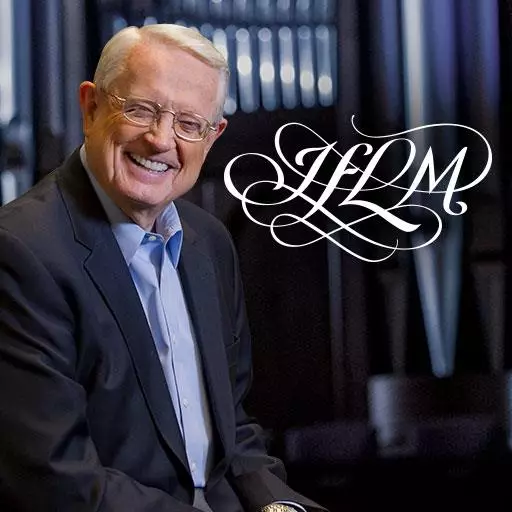
How to Be a Godly Rebel, Part 2


In Romans 13, Paul addresses the importance of abiding by the law as obedient citizens. Or in other words, a good Christian is a good citizen.
In this message, Pastor Chuck Swindoll teaches the role of government in God's plan and explores subjects such as paying taxes, capital punishment, and when civil disobedience might be appropriate.
Obey God by respecting those in authority. Honor elected officials. Live in the land as a good citizen.
Announcer: History's greatest heroes were often called criminals in their time. From smuggling Bibles behind enemy lines to hiding persecuted families in secret rooms, ordinary believers have faced extraordinary moments requiring courage over compliance.
Today on Insight for Living, Chuck Swindoll reveals the surprising biblical truth when Christians must choose civil disobedience over blind obedience. Drawing from Romans 13 and real-life examples of faith under fire, today we'll discover how to navigate the tension between being good citizens and faithful followers of Christ. Chuck titled his message: How to Be a Godly Rebel.
Chuck Swindoll: In Romans 13:1, Paul states the believer's duty to government when it functions properly within the framework of law. No Christian is to be a law unto himself or herself. No individual is exempt from the duties of citizenship.
Here we have a section of scripture where Paul addresses the importance of our being law-abiding citizens, of our being good neighbors, people who stop at red lights, people who don't make their own traffic laws, people who do not invade the privacy and property of others, people who respect others, who pay their taxes.
Every person is to have a spirit of submission to governing authorities. Now, immediately we have to address the issue of resistance. I call verses 2 through 5 inappropriate resistance.
Let's look at those verses. Verse 1 continues, "There is no authority except from God, and those which exist are established by God. Therefore, whoever resists authority has opposed the ordinance of God."
Stop right there. The first reason in Paul's mind is a theological reason, because God supports law and order. God has ordained government. It is called one of the divine institutions, just as marriage, just as home and family, so government.
So there's a theological reason to obey authority and that is because God has ordained the authority. There's an external reason as well, verses 2 through 4. See the end of verse 2. "They who have opposed will receive condemnation upon themselves."
This external reason is because civil disobedience brings consequences. You disobey the government long enough and far enough, you will suffer the consequences. Let me read on.
"Rulers are not a cause of fear for good behavior, but for evil. Do you want to have no fear of authority? Then do what is good. Obey the laws, pay your taxes, stop at red lights. Don't do what is evil and you will have praise from the same."
There are consequences that occur when you ignore law and order. Now, it may be as mild as the policeman standing by your open window in the curb lane of traffic and he says to you, "This is a warning, don't keep driving so fast."
The ultimate consequence is capital punishment. You take a life, you deserve to die. There's a third reason, it's an internal reason. See the end of verse 5, "But also for conscience' sake."
The third reason Paul mentions this is civil obedience relieves our conscience. My friend and mentor Ray Stedman writes about the time when he had to finally start paying income tax. Up until a period of time he had not paid because he had not made enough. And finally, the law caught up with him and he said, "My first letter that I wrote I wrote with a bad attitude. I resented having to pay."
And I addressed it to the infernal revenue service. He says, "They never answered, but they did accept the money." Next year he had improved his attitude a bit and changed it to the eternal revenue service. He says, "I have repented from all those sins and I now hope to pay my taxes cheerfully."
There's a reason for paying taxes and you know them. You know them. We live in a land that is like no other land on the planet. I know that I'm prejudiced when I say that, and I have been in many other lands, but there's no feeling like the feeling of returning home to these great United States.
We pay taxes that handle our roads, that keep our parks beautiful, that guard us in the air and on the ocean, on the coastal side of our planet, of our continent, our nation. And we should. It is only right that we do that.
Now when you read through this section of scripture, you come to the importance of appropriate obedience. He says in verse 6, "Because of this, that is because of conscience, you also pay taxes." And then he says a word to those who work in government, those who are in places of governmental authority.
He says to you who are in that category, "You are servants of God, devoting yourselves to this very thing." Let me say a word to any government official. Never forget that your role is a servant role.
When you forget that, you go too far. Your thinking turns and becomes questionable and sometimes absolutely wrong. Without for a moment in any way encouraging any kind of tax evasion, for that's sinful.
I would say that it is foolish to pay any tax that isn't appropriate, that isn't a part of your lifestyle and is due. You as a government official are not there to be a prima donna. You are there to serve your God and to serve your constituency.
We had a judge sitting in our second morning worship service that heard this message earlier. He thanked me afterwards. He didn't stay, he left. He said, "I appreciate your words, I appreciate your warning, I appreciate your stance."
And my words had to do with the citizens, we who are not a part of the city or state or national government. We have a responsibility. And it happens regularly. We are to be informed of those running for office. We are to vote.
Don't worry, Stonebriar Community Church is not going to become a local precinct headquarters. You'll never be given a flyer, even told who's running, though we're often encouraged to tell you of those in our congregation who are running. We've chosen not to mention any of them, lest it became a precedent we can't stop or change.
I expect you to be informed and I expect you to vote. Now, admittedly, all of us have failed to do so. I say to my own embarrassment, there are times I simply didn't get to the voting booth, but it always bothers me.
Because that is my only way as a citizen to have some say in the ones who will be in places of authority where I will never be. And so we are to be grateful citizens, we are to be discerning, we are to be respectful, we are to be obedient, and we are to be careful in how we rear our children that they understand this.
By the way, you might wonder, what's the big deal of Paul bringing all of this up? Listen to the words of one writer. In Paul's case, there was one immediate cause of his stressing civil obedience. The Jews were notoriously rebellious.
Palestine, especially Galilee, was constantly seething with insurrection. Above all, there were the Zealots. They were convinced there was no king for the Jews but God and that no tribute must be paid to anyone except to God.
Nor were they content with anything like a passive resistance. They believed God would not be helping them unless they embarked on violent action to help themselves. Their aim was to make any civil government impossible.
They were known as the dagger bearers. They were fanatical nationalists sworn to terrorist methods. Not only did they use terrorism towards the Roman government, they also wrecked the houses and burned the crops and assassinated the families of their own fellow Jews who paid tribute to the Roman government.
So we're not the first rebels to come along. Paul writes to his kinsmen saying, "Because of this, verse 6, you also pay taxes." In fact, look at verse 7, "Render to all what is due them: tax, custom, fear, and honor."
What's the difference? Tax obviously would be property tax, school taxes, road taxes, taxes that are required of us as citizens, expected of us for the pleasure of living in this land. Customs would have to do with imports and exports.
We don't work a way around paying that, we pay that, understanding that the custom is due. Fear has to do with respect for those who are in authority and honor has to do with giving them proper esteem and worth and allegiance.
The command does not say, "Render to all regardless." See what it says? "Render to all what is due them." You know what we've learned, Cynthia and I have learned in our years on this earth, we have learned that we need counsel from individuals who make it their part of their practice to give us counsel on how to handle financial matters as it relates to taxes.
And we are adamant with those that we hire to help us that they do so absolutely according to the law. That gives us a clear conscience. It keeps us from fearing that we have done wrong and we've hidden it.
And those we hire to assist us are, I sometimes call them legalists, but it's a compliment because they're doing what's right even though I don't necessarily like it. I've said a lot about liking it. I've said we are to do it because it's expected of us. That's what I want to get across.
There's an overriding principle. We Christians are not only to obey our God, we are to be good citizens in our land. Models of such and to teach our children the same. Barnhouse again I quote writes, "I buy gasoline and pay its taxes, thankful for the fine roads over which I drive.
I enjoy the beauty of a national park paid for by our taxes. I see lighthouses or the trail of a jet plane and I'm grateful for the forces that guard our coasts and defend our skies. And therefore, as good citizens, we are to render what is due and in the process, we are not to grouse about it, knowing that the blessings are ours in abundance.
Now, let me put it all together in a personal way and sort of a short and sweet manner. First of all, obeying God is always right. There's no exception. God says it, we do it. His word teaches it. We do a careful study so that we are interpreting it correctly. We obey it. Our allegiance to him is total, not partial.
And it is ultimate. Always right to obey God. Second, obeying government is usually the right thing to do. When it is the wrong thing to do is when government requires of us to go against our conscience or to go against our God.
We are moving rapidly toward that time. These are treacherous days in which we live. In no way do I mean to sound like an alarmist when I say that in my simple lifetime, I have watched the eroding of many of the things that once made our country great.
And it breaks my heart. And I believe if not my children, I believe my grandchildren will live to see the day when active resistance will be essential for there to be the maintenance of Christian principles.
We have now come to a place where it's considered an infringement if we display a cross or of all things, something not even not even in scripture, a Christmas tree in some places. It's laughable.
Some places you can't speak the name of Christ because it isn't it isn't politically correct. We have already had taken away from us public prayer. And the church is one of the few large gatherings where prayer can be made without any fear of government intervention.
We may be facing a dark future even in that level. There comes a time in every life when it is right to rebel. And that is when government attempts to silence our message or attempts to force us to be tolerant of things that we know to be morally wrong according to the scriptures.
To bow before that is to bow before a tyrannical government that has overstepped its bounds. And I warn all of us against that. I remember growing up, my dad saying to us kids, "I want you to stand alone, children. I want you to stand alone." He had already done that in a particular thing at his work and he was exercised over.
He said, "I don't care if everybody else in school does so and so. I want you to stand for what's right. If you don't, I'll wear you out." I remember that. It was the wear you out part that concerned me more than the standing alone. I just kind of grew up with that.
And here I find myself saying more often than not to my grandchildren, "Stand for what's right. Do what's right." I know it isn't popular. I know you're going to be misunderstood. You'll always be grateful you did what is right.
May I name a few godly rebels? Brother Andrew, who for decades has been smuggling Bibles into countries illegally. An attorney friend of ours who's on the board of Brother Andrew's ministry called us back, I think it was the late 70s, early 80s and he said, "I'd like you to pray for me. I'm leaving and I may not be back."
It's a man with four children. He said, "We're going to be taking Bibles into China." And he says, "We're going across the border." And he said, "They're hidden. If they find them, who knows what will happen?" Well, they didn't find them.
And thousands got a hold of them and have come to Christ. The story's marvelous. Another would be Papa ten Boom and his daughters Corrie and Betsy. Remember, who hid the Jews? They were Dutch, but they loved the Jews and they knew they were being persecuted.
And they paid for it with their lives. Corrie lived through the horrors of the concentration camp and told her story till her death, a story of courage, heroism. Don't know anything about his spiritual life, but I know what he did was morally right, Oskar Schindler.
Remember Schindler's List? Had the guts, the courage to stand alone even in the face of the Nazi government, protecting Jews, giving them work and watching over their safety. How about Dietrich Bonhoeffer, the Lutheran pastor who was told to stay silent because Hitler was after him or his henchmen were.
And he didn't stay silent and he wound up in the concentration camp. And while he was in this camp, he continued to marshal the troops for the glory and the good of Christ. Hanged on the 9th of April, 1945, shortly before they were liberated.
The SS troops wanted for sure to put him to death. They're heroes today. Maybe you've not heard of Pastor Martin Niemöller. Was thrown into a Nazi prison for preaching the truth of the gospel.
Another minister visited him and remarked that if he would keep silent about certain subjects and show respect for the Nazi government, he'd be set free. And so, continued the visitor, "Why are you in jail?" To which Niemöller replied, "Why aren't you in jail?"
Isn't it amazing how safe we feel sitting in this place? We all are in a, well, not, maybe not everybody. Some of your faces say you don't agree. To which I reply, "I don't care." And and some of you are saying in effect by your silence, "I agree. I just don't know that I'm ready to stand up publicly and say it." Someday you'll have to.
Do it. Do it. No matter what it means. Today there will be people who will call you a fool. Tomorrow you'll be known as a hero. Do it. Do what's right. Don't hesitate. Speak the truth. Let's bow together.
Some of you sit today with your children sitting near you. I always love seeing families together like that. I know your heart beats like mine does for your children, for many of you your grandchildren. Nothing more precious to us than our families.
We may live to see the day when the family will be separated along the lines of truth. May God help us all. It may sound awfully strong for you to hear these things and it perhaps it's because you've never known Christ.
I wouldn't have the courage to say what I say if it weren't for him. I would care very much about how you feel or what your opinion is and that could very easily shape my interpretation.
Featured Offer

Pastor Chuck’s audio set (CD or MP3), commentary, and companion spiral-bound workbooks give you everything you need to walk with Jesus from Galilee to the empty tomb.
Past Episodes

Video from Pastor Chuck Swindoll
Featured Offer
Pastor Chuck’s audio set (CD or MP3), commentary, and companion spiral-bound workbooks give you everything you need to walk with Jesus from Galilee to the empty tomb.
About Insight for Living
Join the millions who listen to the lively messages of Pastor Chuck Swindoll, a down-to-earth pastor who communicates God’s truth in understandable and practical terms, with a good dose of humor thrown in. Chuck’s messages help you apply the Bible to your own life.
About Pastor Chuck Swindoll
For most of his entire life, Pastor Charles R. Swindoll has devoted himself to the accurate, practical teaching and application of God's Word — anchoring every message in the transforming power of God's amazing grace. From congregations on the East Coast to the West Coast, his ministry has carried that message across the country, ultimately taking root in Frisco, Texas, where he founded Stonebriar Community Church. Yet Chuck's influence has never been confined to a single sanctuary. Since 1979, Chuck’s messages have aired on Insight for Living, one of the most widely heard programs in Christian broadcasting, carrying his voice — and the timeless truth of Scripture — to listeners around the world. That same passion for God's Word has shaped his leadership at Dallas Theological Seminary, where his tenure as president and now chancellor emeritus has helped raise up a new generation of men and women equipped and called to ministry. Few lives have touched so many, across so many places, for so long.
Contact Insight for Living with Pastor Chuck Swindoll
customerservice@insight.org
http://www.insight.org/
Mailing Address
Insight for Living
Post Office Box 5000
Frisco, Texas 75034
USA
Phone Number
1-800-772-8888