

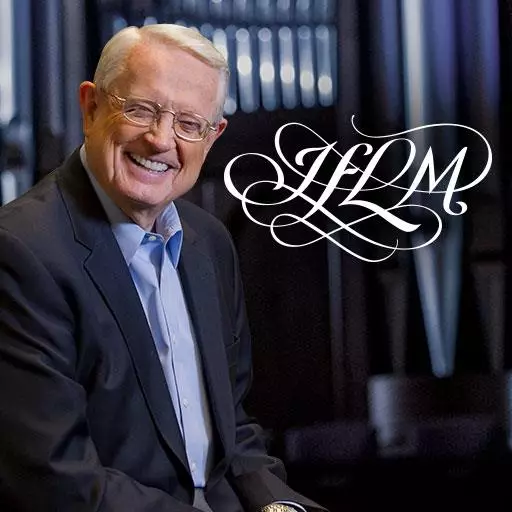
God’s Surprising Sovereignty, Part 1


God’s surprises in your life are never random or accidental. In this message on Esther 7, Pastor Chuck Swindoll reveals how God’s timing is precise and purposeful.
Though unseen, God was working behind the scenes throughout Esther’s story, showing up at just the right moment during the second banquet to bring clarity and deliverance.
When you face silent, agonizing seasons, Esther 7 encourages you to trust God’s unseen hand and His perfect timing.
Guest (Male): Did you know that God's name is never mentioned in the book of Esther? But we can see his obvious handprints marking every page of Esther's story. Today on Insight for Living, Chuck Swindoll continues his study of this fascinating Old Testament heroine.
In this next portion of our study, we'll discover that although God's name isn't identified, he's quietly orchestrating events, people and circumstances to clearly illustrate his control. Maybe you're struggling to see God's hand in your life story right now. Chuck titled this reassuring message, God's Surprising Sovereignty.
Chuck Swindoll: I've never met a person who didn't feel pity for Job. I mean, here was a man godly in heart and righteous in life and lifestyle, who had his entire world crash in on top of him for no apparent reason. And the pain became unbearable.
And all because of satanic cruelty and God's strange allowing of it to happen. The man became like a tiny wounded mouse in the paws of a big cat. Almost played with.
And the hardest part of it all was not the pain, that was bad enough, but it was this mysterious sense of God's silence, which played out in Job's life as God's absence. It occurred to me that it must have been like swimming on a vast lake and getting about 150 yards offshore toward dusk. Suddenly a freak fog rolls in over the lake and surrounds you. You're trapped in this tiny circle of sight.
But the fog has diffused light, so you can't even tell where the sun is going down. You begin to swim. You think toward the shore, but you're not sure. Then you turn, and you panic, and swim in another direction. You again have lost your orientation. You don't know where land is. You panic. Your heart rate increases. You decide maybe to float, to conserve strength, and it gets dark.
And the only way you're going to be safe is by hearing a voice. Faint though it may be, you need a voice. You need to have someone calling from the shore, and you could then point yourself in that direction and swim rapidly and find safety, and comfort, and relief.
Something like that sense of lostness swept over Job as he sat in the rubble of what was once a beautiful landscape. His ruined ranch was before him and his children now fresh graves on a windswewept hill. He lost everything. Everything he owned, virtually everything he was, and now finally his health. And he sits in ashes, and he cannot hear God's voice.
It's like a fog. It's like a tiny little space of sight and not knowing where to say nothing of why. He writes in his journal, third chapter, words that could easily be criticized by people sitting in a place of comfort, good health and ease. He opened his mouth and cursed the day of his birth and said, "Let the day perish in which I was born, and the night which said, a boy is conceived." Verse 11, "Why did I not die at birth, come forth from the womb and expire?"
Those are words from the lake. Those are words in the fog. Those are words that come from a man who doesn't know why, and God won't speak. And he is alone. And he is worse than dead. He is alive in his misery.
Look at the end of that third chapter, verse 24. "My groaning comes at the sight of my food, and my cries pour out like water, for what I fear comes upon me, and what I dread befalls me. I am not at ease, nor am I quiet, for I am not at rest, but turmoil comes." Don't criticize Job until you've been there. It is the worst kind of existence.
Bad enough to have everything gone and to have your body covered with sores from your head to your feet, but to hear no voice from God. From that moving account of a man's misery, let me shift gears to a realm that is not nearly so measurable and realistic. Let's move from this real world to a realm some might call philosophical.
And for the next few minutes, I want you to think with me about time. Time. I would like to contrast our time with God's time. You and I are locked in a cage that causes us an enormous amount of struggle and confusion. We are in a tiny space on this lake of life called the present. Because our entire perspective is gauged from this moment where we find ourselves. We speak of the past and the future.
Because our world of time to begin with is objectively measured. You want to know the hour or minute of the day? You look at your watch. You want to know the day of the week? You look at your calendar. Easily marked, carefully measured. You want to know the past year? You look into the diary or the journal you've been keeping, and you have a record of how things were.
Objectively measured. Second, time for us is consciously accountable. Events are seen, they are dated. People are visible. Things are tangible. It is in a realm of sight, smell, touch, hearing, feeling. It is a very real realm, this accountable realm, and if we want to get it straight, we can ask several others who are accurate witnesses, and they saw it, or they were there, and they can account for it. It is in a world of the tangible and the visible.
Third, time is rarely ignored or overlooked. Oh, we daydream, and we sleep, but aside from those momentary lapses, we may have a little mental lapse in the midst of a busy day where we lose track of time, but not often. Most of us know about every hour of the day, pretty close to the exact time, because that is our world, and it is very real, measurable, and understandable, and conscious.
God is not like that at all. His workings are not on the basis of that. As a matter of fact, we are in this realm of life on planet earth that has its own realm of time, and you leave it instantly when you move beyond it. And he lives beyond it.
I thought of this when I read this account. On the night of February 23, 1987, an astronomer in Chile observed with his naked eye the explosion of a distant supernova. A blast so powerful that it released as much energy in one second as our sun will release in 10 billion years. Did that event truly occur on February 23, 1987?
Well, only from the perspective of our planet. Further investigation revealed actually the supernova exploded 170,000 years prior to our 1987. But the light generated by that far away event, traveling almost 6 trillion miles a year, took 170,000 years to reach our galaxy, and we noticed an explosion. God is in that realm.
There is no night where he lives. Maybe you heard the comic story of a foolish scientist who made plans to send a rocket to the sun. Someone said, "You're going to burn up." "No," they answered, "we're going at night." God has no night. God has no day. God has no month. God has no year. God has no past, present, or future. He transcends it all.
And he operates in a realm that is transcendent. We see history like a sequence of still frames moving from one to another like the passing of a movie. God sees all the movie, all at once, in a flash, along with millions and trillions of others going on at the very same time. He is beyond it all, which makes our little bit of space on the lake seem terribly much like a cage called time.
Isn't it easy to sing it? "In his time, in his time, God makes all things beautiful in his time." It's a quarter to 12, Lord. Lord, please show me every day. He has no day. That you're teaching me your way. He has a way. And you do just what you say in Now we're talking. Your time. Now, immediately we have a problem.
Our problem is that we read life wrongly. It must be read in the panorama of God's mind, and through God's perspective, but we are finite creatures. So we are left in a fog. In disappointment with God, we read these words.
No matter how we rationalize, God will sometimes seem unfair from the perspective of a person trapped in time. Only at the end of time, after we have attained God's level of viewing, after every evil has been punished or forgiven, every illness healed, and the entire universe restored, only then will fairness reign.
Then we will understand what role is played by evil and by the fall and by natural law in an unfair event like the death of a child. Until then, we will not know and can only trust in a God who does know. He continues.
"We remain ignorant of many details, not because God enjoys keeping us in the dark, but because we have not the faculties to absorb so much light. At a single glance, God knows what the world is about and how history will end, but we time bound creatures have only the most primitive manner of understanding. We can let time pass, not until history has run its course, will we understand how all things work together for good."
"Faith then means believing in advance what will only make sense in reverse. And that's hard." That is hard. It's as hard as moving from the chorus, "In his time, in his time, God makes all things beautiful in his time," on Sunday to the real world of pain and loss and hardship and earthquakes and floods and death on Tuesday. Or Wednesday or Friday.
So what do we do? How do we live in a fog without panic? How do we make it in this little space, not knowing where the shore is, and especially during the times when we do not hear a voice? Well, we need help in discovering how God works.
The book just before Job is the book of Esther. And it's quite a book. It's the only book in the Bible where God isn't named. But you haven't had to worry about that because I've named him all the way through these messages. And I brought to your attention the ending of the book. You see, they didn't know about it in the third chapter or fourth chapter. I've read the book, and you have too.
And so we're able to read in reverse and give them peace and comfort and tell Mordecai to wait and rest, and to tell Esther she'll move when it's God's moment because we're able to read it into it because we have the book. And the book is written from the perspective of no planet specifically, but God's transcendent presence generally.
So when we come to chapter three, and we find that there's a sustained period of silence where the king promotes Haman, you and I want to say, "No, don't do it. You'll be sorry. He's a bad guy. He hates the Jews. He's going to work out a murderous plan. Don't promote him." But he promotes him, and there's no voice from the shore.
Verse 6 of chapter 3, he seeks to destroy all the Jews who are in the whole kingdom of Ahasuerus. And the king of all things plants his ring in the clay, and he sends the message by edict across the kingdom of Persia, and the Jews now live in the fear that they will die by the end of the year. And God's silent. He doesn't say a word.
He doesn't speak. He doesn't even stop them. Must have been like living in Paris when the Nazis came. How could they come? How could they take us? We are Frenchmen. But they came. And they killed. And God was silent.
Mordecai tries to motivate Esther, and she's hesitant, and we want to say, "Esther, get at it. You're the queen, you can make a difference. I know, I read where you did, a little later. Do it." And she doesn't do it, not right away, and God is silent.
She asks that they might fast and pray for her, and they do, and she decides to do something. In the meantime, Haman, aggravated at Mordecai, builds gallows that are going to hold the carcass of Mordecai till he rots. And nobody stops him. Let me tell you something, had we lived then in that little place of the lake, we'd have wondered, where is God?
Just like Elie Wiesel in his book *Night* stands as a child viewing all the sights of death and smelling it from the ovens. And the man behind him says, "Where is God? Now?" Of course.
You know, such periods of silence are woven all the way through the text. If you don't know this, and if you don't remember this, and if you don't call this to mind when he stays silent while you're on the lake, you will panic, you will doubt, you will become cynical. Your faith will remain like a little tiny mustard seed.
I've heard great sermons on Joseph. I've listened to great sermons on Moses. I have never heard a sermon on the 400 years that separated Joseph from Moses. And what if you and I had lived then? I'd much rather live in the days of Joseph, or prefer to live in the days of Moses, especially when the redemption happens.
But what about the silent period where God doesn't move? We move along in history and we come to Hannah. We love Hannah, this woman of God who prayed for a son, and the wonder boy came. His name is Samuel. Great messages on Hannah. Great messages on Samuel. I don't think I've ever heard a message on 1 Samuel 3:1 which says, "Word from the Lord was rare in those days, visions were infrequent."
The Good News Bible says, "There were very few messages from the Lord, and visions from him were quite rare." But I venture to say that's exactly where most of us are spending our lives right this hot moment. God is silent.
You're in a waiting period. We think the prophets were the ones who heard God's voice on a regular basis. If you think that, you haven't read Habakkuk, who watched unjust events occur one after another, one after another, and they didn't stop. Finally, he said to God, "Why? And while I'm at it, how long?" This is a prophet. What was the problem? He was on the lake.
The fog had rolled in. You can sing in his time where God makes all things beautiful, but right now, I'm drowning. Between Malachi and the birth of the Lord Jesus is another 400-year period, you have probably never heard a sermon about. Absolute stark silence, not even the writing of a verse of scripture. Four centuries.
If you want to discover how God works, not only in Esther's day, but in your day, keep these four things in mind. Number one, there are often sustained periods of silence. Okay? Often. Unless I miss my guess, that's where you find yourself. And I want to give you a tip on how to handle those times of absolute silence. Here it is.
The periods of God's silence are just as significant as the times in which he speaks. They are far more painful, and they are far more often. You need ears of faith to listen for his voice when you're on the lake. And then let me mention secondly, there will be a subtle turn of events that will begin to happen.
Sensitive ears, sharp antenna will detect those changes. They're subtle, remember. For example, you're looking at Esther chapter 6. The king can't sleep. Now I want to ask you, when was the last time that made news? The president couldn't sleep last night. I don't think I've read that. The king can't sleep. Or if I did, it was a little part of the paper.
But it's subtle. It's nevertheless a change. I suppose the king slept well all the time. That's why it made news in chapter 6 that he didn't on this occasion. And out of the blue, Mordecai's name comes out of obscurity. He's reading the record, listening to the notes from the Chronicles, and he hears Mordecai's name, and he hears that this man saved his life. By the way, this is between the two banquets, isn't it?
Isn't it significant that God in his timing wanted to introduce the king to Mordecai, and it took two banquets. I laughed at two banquets. I'm now ashamed that I laughed at two banquets. It was part of his plan. I think, why two banquets? One will do. Well, I'm not God. He could have called for four, or none. He's not into banquets.
The point of it all is that in the mystery of these changing of events, subtle things occur that the sensitive heart picks up. And my friend, that's what wisdom is about. That's Christian maturity. And rather than thrashing about on the lake, thinking, "I will not make it. I will never hear a voice." We begin to watch for turns of events.
I mean, right after he gets out of this sleepless night, who's in the courtyard or in the court of the king but Haman. Haman, he has splinters in his hands from building the gallows on which to hang Mordecai. And the king called him in. We laughed at that last time, remember? The king calls him in, says, "Who should we honor?" Haman thinks, "Who's better than me?"
"I'm glad you think that, but that's not my plan. I'm going to honor Mordecai." And sure enough, Haman is the man who takes Mordecai out for a walk on a horse, proclaiming his greatness. I'd call that a change of events.
Guest (Male): What may look like a coincidence is actually sovereignty. That's the quiet confidence that Chuck Swindoll wants us to carry away from Esther's story. When God seems silent, he's not absent. He's at work in ways we can't see from our limited human perspective. You're listening to Insight for Living. A bit later on, Chuck will share a closing thought that you won't want to miss.
First, I want to tell you about a special bundle of resources for the Esther series. It includes the Searching the Scriptures Bible study workbook, Chuck's full-length biography of Esther, and the complete collection of 12 sermons on CD. To access these resources right now, go to insight.org/offer.
In just a moment, I'll tell you about a brand-new booklet that Chuck's written about the power of the cross. We published it just in time to coincide with a teaching series that begins on June 10th. The cross not only represents our salvation through Christ, but when we focus on the cross of Jesus, it becomes our compass every single day. Here's Chuck.
Chuck Swindoll: You might not remember the name Roy Riegels. If not, Roy was a football player and in the 1929 Rose Bowl, he picked up a fumble and took off running, fast, confident, strutting toward the goal line, absolutely certain he knew where he was going. Guess what? He was headed in the wrong direction. A 70-yard sprint headed the wrong way.
Oh man, can't you just picture it? His own teammate had to chase him down, and when that teammate finally caught up with him, Roy shouted, "I love this. Get away from me. This is my touchdown." He was convinced, but Roy was dead wrong. Well, I've spent a lifetime in ministry, and I can tell you, that story never gets old because it never stops being true.
Sincere people, well-meaning people, people who love God and work hard and mean every word of their prayers, running the wrong direction. Why? Because somewhere along the way, they lost sight of the cross. The cross reorients everything. When it's in clear focus, you know which goal line is which. You know what matters and what doesn't. You know how to live.
That's what Insight for Living is all about. Every broadcast, every resource, every message we send into the world has one purpose: to point people back to the cross. Not to me, not to this program, but to the cross. And here's something I want you to understand. As we approach June 30th, the end of our fiscal year, every gift that comes in doesn't just keep Insight for Living on the air. It sends you into the world as a minister of this message, through radio, through the internet, through social media, and printed materials, reaching people on every continent. You cast that seed. We just get to watch God grow it. Please give today generously. The world needs the right direction.
Guest (Male): Yes, the world needs the right direction. To respond to Chuck Swindoll, call us at 800-772-8888 or go to insight.org/donate. Plus, when you respond with a much-appreciated gift today, we'll say thanks by providing a brand-new booklet from Chuck. It's called, The Cross We Proclaim. In his booklet, Chuck draws from Paul's letter to the Corinthians to show how easy it is to live with great energy, but be heading in the wrong direction.
Whether chasing achievement, reputation, or religious performance, the cross alone has the power to reorient your life. We'd love to send you The Cross We Proclaim. To send a check in the mail, just address your donation to Insight for Living, Post Office Box 5000, Frisco, Texas 75034. That's Post Office Box 5000, Frisco, Texas 75034. You can also call us at 800-772-8888 or go online to insight.org/donate.
Guest (Male): How do we live faithfully when God seems silent? I'm Bill Meyer, inviting you to hear Chuck Swindoll's answer Thursday on Insight for Living. The preceding message, God's Surprising Sovereignty, was copyrighted in 1989, 1990, 1997, 2005, 2018, and 2026, and the sound recording was copyrighted in 2026 by Charles R. Swindoll, Incorporated. All rights are reserved worldwide. Duplication of copyrighted material for commercial use is strictly prohibited.
Featured Offer

Pastor Chuck’s audio set (CD or MP3) and companion spiral-bound workbook help you discover who God truly is—and live transformed.
Past Episodes

Video from Pastor Chuck Swindoll
Featured Offer
Pastor Chuck’s audio set (CD or MP3) and companion spiral-bound workbook help you discover who God truly is—and live transformed.
About Insight for Living
Join the millions who listen to the lively messages of Pastor Chuck Swindoll, a down-to-earth pastor who communicates God’s truth in understandable and practical terms, with a good dose of humor thrown in. Chuck’s messages help you apply the Bible to your own life.
About Pastor Chuck Swindoll
Charles R. Swindoll has devoted his life to the accurate, practical teaching and application of God's Word. Since 1998, he has served as the founder and senior pastor-teacher of Stonebriar Community Church in Frisco, Texas, but Chuck's listening audience extends far beyond a local church body. As a leading program in Christian broadcasting since 1979, Insight for Living airs in major Christian radio markets around the world, reaching people groups in languages they can understand. Chuck's extensive writing ministry has also served the body of Christ worldwide and his leadership as president and now chancellor of Dallas Theological Seminary has helped prepare and equip a new generation for ministry. Chuck and Cynthia, his partner in life and ministry, have four grown children, ten grandchildren, and six great-grandchildren.
Contact Insight for Living with Pastor Chuck Swindoll
customerservice@insight.org
http://www.insight.org/
Mailing Address
Insight for Living
Post Office Box 5000
Frisco, Texas 75034
USA
Phone Number
1-800-772-8888