

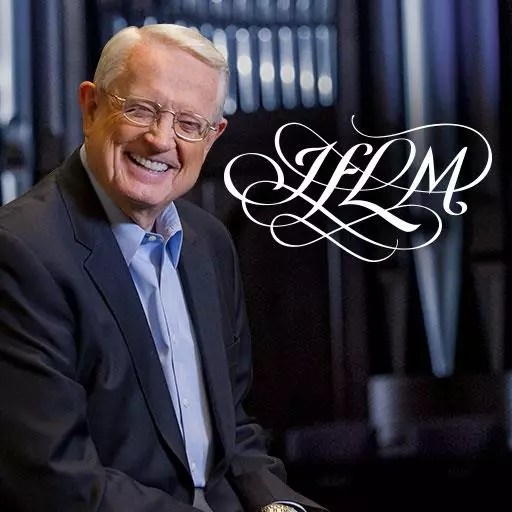
Christianity 101, Part 2


Modeling a life well lived leaves one of the greatest legacies. In the final verses of Romans 12, Paul provides a "checklist" for pursuing Christlikeness and letting love take center stage.
Learn with Pastor Chuck Swindoll the characteristics of love in action—what real love looks like using Christ as our example and guide.
Let love define your life. Remember what truly lasts!
Announcer: The legacy we leave for our families has little to do with our financial portfolio or possessions. Today on Insight for Living, Chuck Swindoll confronts this sobering reality as our study in Romans chapter 12 continues.
This passage contains God's blueprint for authentic Christian living. The blueprint features seven virtues: love, affection, honor, enthusiasm, patience, generosity, and sympathy. Prepare to be both convicted and equipped as you discover how these virtues become your roadmap for leaving a Christ-like legacy.
From his verse by verse study through Paul's letter to the Romans, Chuck titled today's message: Christianity 101.
Chuck Swindoll: First Corinthians 13 is the greatest treatise ever written on love. If I were asked to give one sentence, it would be this: love is seeking the highest good of the other person. It is seeking what's best for the other person.
Sometimes, admittedly, love is tough, firm, stern, strong-hearted, unwilling to look the other way. It's not making someone comfortable, it's not telling them what they want to hear. It is not treating them like they've treated us. It is not looking the other way when we encounter wrong.
This part of love is tough love. It's relentless.
There are other times when love must be tender, soft-hearted, marked by compassion, understanding, tolerance, grace, and forgiveness. Both sides of the coin make this love authentic. And you need both tough and tender.
The best example who's ever lived is, of course, Jesus of Nazareth.
Now, why is it such a high priority? Why is seeking the highest good so valuable in life? It's because it shapes and colors all the other virtues that we admit are important to life. All the virtues I'll mention today are colored by our love, and so we'll return to the word over and over again.
When we put love on display, this is the way it looks.
Look at verse nine to start with. Love has two major qualities: sincerity, which is the opposite, the opposite of hypocrisy. And second, love has discernment, which is the opposite of gullibility. Let's take them in that order.
"Let love be without hypocrisy." Right out of the chute, Paul is making it clear if it's love, it must be real love, it must be sincere love. It has nothing to do with hypocrisy. Love must also be discerning. Notice, "abhor what is evil." The word means to shrink back, to detest. It shrinks back from the presence of evil.
But when it finds what is good, oh, it embraces it. Let it be sincere. Let it be discerning.
Now there are several other components that as we analyze love, emerge. I find seven of them in the verses that follow. First of all, verse 10, "Be devoted to one another in brotherly love."
Paul reserves family words for the first part of verse 10, and I would use the words devoted affection. When love runs its course correctly, sincerely, without hypocrisy, at the same time in a sense of discernment and strength, then it begins to reveal a familial warmth, devoted affection.
So starting there, the apostle begins to unpack the concept of that which we pass on to others to make their lives richer. Devoted affection is followed at the latter part of verse 10 with honor. The word means respect, showing gratitude for one another.
The third is one of my favorite traits in life and it doesn't surprise you: enthusiasm and passion. Look at verse 11, "Not lagging behind in diligence, fervent in spirit." The Greek has in mind boiling over, boiling up as if water were boiling in the pot. Boiling up in the spirit, serving the Lord.
It's the whole idea of active optimism, energetic zeal. It's the opposite of lethargy and indifference. It's the thought of living one's life on tiptoe.
And then there is the devotion to prayer, which can never be displayed. The secret of any ministry is the prayers of the saints. The secret of every meaningful life is the prayer of a partner, a group of friends.
A group of college students went to hear Charles Haddon Spurgeon preach at the London Tabernacle. The day was cold. They were waiting for the doors to open when they were warmly greeted by a man who asked if they would first like to see the heating plant of the church.
They weren't particularly interested in the heating plant, but wishing to get warm, they decided they wouldn't offend him and agreed to go. They were then led down a long stairway, and a door was slowly opened by their guide who whispered, "This is our heating plant."
As the group looked in the room, they saw 700 people on their knees, asking God's blessing on the service that would happen on the floor above them, which they would not even attend as they prayed through that service. Softly closing the door, the guide smiled and introduced himself. It was Charles Haddon Spurgeon. This is the secret of the ministry of the Tabernacle.
What a grand example of being devoted to prayer. No one will know it except you and God. But how deeply you will feel it if you ignore the command. Patience comes from hope and prayer in the midst of tribulation.
When you're putting things together to leave to the next generation, remember love, which has to do with devoted affection and honor and respect, enthusiasm and passion, and certainly patience. And you would expect verse 13, generosity.
"Contributing to the needs of the saints, practicing hospitality." There's generosity written all over it. And unless I miss my guess, many of you immediately think when I mention the word generosity, you think of your wallet. You think of money. Money isn't even mentioned, though money is certainly included.
There's generosity of time, generosity of interest, generosity of attention, encouragement, reaching out to someone in a random act of kindness. Don't you love them? Don't you find yourself delighted when you come across a random act of kindness from a stranger?
Cynthia and I were traveling to Orlando, and on the way back, I decided to dress very casually and I put on a very comfortable Hawaiian shirt, a pair of jeans, and I went through the checkpoint and thankfully nothing went off. And I came the other side standing waiting for my things to come through. And the fellow in uniform who was greeting people all day long with, "You forgot to take your belt off. Get everything out of your pocket. Would you stand over here please?" And listening to people, "You should have taken your shoes off and gone."
This guy was different. He looked at me and he said, "Great shirt." I'm like, "Hey, thanks." He said, "Where are you going, Hawaii?" I said, "No, Dallas." He said, "That's a long ways from Hawaii."
Never met the man in my life. I said, "You do this all the time?" He said, "All day long, people don't know what to think of me. They expect a frown and I just decided to give them a little kindness."
What was the last time you expressed kindness and a word of encouragement to someone you never met before? I mean genuine kindness. Not the kind where you look kind, like when the cop walks up by your car and gives you the ticket, and you say, "Thank you," and smile. When you're really thinking, "May your day be filled with traffic accidents."
"Contributing to the needs of the saints." Do you know what practicing hospitality really says? The Greek says "pursuing a love of strangers." Not practicing, pursuing. That means you initiate it. You're not responding to the nice words, you're initiating them.
You want to pass along something that will cause others to live a greater and better life than you've lived? Go with generosity. Be sure you put that in your bag when you're packing.
We'll leave verse 14 for next time and we come to 15, which is a verse on sympathy. I love the thought of this verse: "Rejoice with those who rejoice and weep with those who weep."
Take a look at those words, will you? Just look at the 15th verse. Love, true love, never stands aloof. When love knows that a brother or a sister is rejoicing, then there's a deep down excitement and applause and a celebration of the same joy.
You say, "I do that." Really? Let's say that you got a neighbor that just won the lottery. Are you going, "Oh, that's so good!" Or are you thinking, "They missed it by one door"?
Or how about the guy at work that gets promoted and you thought you deserved the promotion? You go to his party to celebrate? Or do you keep watching him over the top of your glasses, whispering to your friends how much better you'd have been at that job than he is? He's rejoicing.
You want to be different in a world that's missing love? Here's an example: "Rejoice with those who rejoice." And don't forget to weep with those who are weeping.
We had an old Swedish motto that hung in my home, "Shared joy is a double joy, shared sorrow is half a sorrow." You double a joy when you share it, you cut a tragedy or heartbreak in half when you share it.
Both experiences help bond us together. I've found it's easier to do the latter than the former. Work on both. I will too.
Sympathy. I put it in this little verse: "Love sings with those who sing, love mourns with those who weep, love laughs with those who are happy, love stays awake with those who can't sleep."
All of this sets the stage for the seventh and perhaps the most exacting of the group, and that's verse 16, humility. "Be of the same mind toward one another."
Last time we were together, we analyzed verse three rather carefully. Remember, "through the grace given to me I say to everyone among you not to think more highly of himself than he ought to think." Remember the word hyperthinking, superthinking, thinking above others? Don't go there.
Here he says the same words, "Be of the same mind." I've said for years that all the ground is level at the foot of the cross. There's no status, there's no rank, there's no salary. There's no new or old house. There's no large or small place to live. There's no new or old car. It's all the same, all the same ground level.
That's the way we are to live our lives. There is no place, he admonishes us, against snobbery and status, against pride of birth, pride of training, pride of giftedness, pride of accomplishment, pride of honors. And in other countries, pride of caste and tribe. How foolish to be proud of that. You had nothing to do with that.
You are where you are and they are where they are. And the goal is to blend your life and associate with the lowly, not being wise in your own estimation.
You know what I've found that helps? Going back to our roots helps. Remember when you were a kid? Remember how big everything seemed? Have you gone back to look at that little place lately?
I mean, I went back not long ago and it's a downright dump. And I thought it was a really, really nice place. We had asbestos shingles on the side of our house. I've been breathing it all my life.
Cynthia and I drove there several years ago to see our old haunts and places where we dated, and her place and mine. And my first line was when we got to our neighborhood was, "Be sure your door's locked, honey," when I rolled up. Like time has passed it by.
It really came home to me this past week when I finished a fine book titled My Grandfather's Son. It's the memoir of Justice Clarence Thomas. You must read the book.
We think of a Supreme Justice as a man who's sort of silver spoon in his mouth. We think of him as the Yale law school honors graduate, which he was, and the Holy Cross honors graduate, which he was. But what you don't know are the roots, which made him the man he is.
A few excerpts: "I am descended from the West African slaves who lived on the barrier islands. In Georgia, my people were called Geegies." Mother was born out of wedlock. Her mother died in childbirth. And she saw little of her father throughout her childhood. I was delivered by Lula Kemp, a midwife who came from near the nearby community of Sandfly.
Then as now, Pinpoint, which is where he was raised, south of Savannah. Pinpoint was too small to be properly called a town. No more than 100 ever lived there. Our lives were a daily struggle for the barest of essentials.
He tells in his book that the floor of the shanty was made of several layers of old linoleum, sitting on dirt. The bathroom was outside, shared with three other families.
He writes, "The house in which I was born was a shanty. Kerosene lamps lit it. Water came from nearby where we carried it through the woods in old lard buckets. They were small enough for us to fill up and tote home where we poured the contents into the washtub and larger kitchen buckets, out of which we drank with a dipper."
In the wintertime, we plugged up the cracks in the shanty, the holes in the walls, with old newspapers. That was in the late 1940s and the '50s.
Fast forward to the fall of 1991, following his being sworn in as a Supreme Court Justice. Imagine. I walked into the awe-inspiring Great Hall of the court and through the imposing doorway, glancing at the huge brass doors.
We walked slowly down the gleaming marble white steps later lit by the brightness of a beautiful sunny morning, and I thought back to another sunny day when my brother and I went to live with our grandparents, all of our belongings stuffed into a pair of grocery bags.
The prophet calls this remembering the pit from which you have been dug. Do that.
Next time you're tempted to feel a little stuffy, you know, sort of like, as my dad used to say, sort of like you're something on a stick. Remember, you got to put your britches on one leg at a time. Talk about poor, they couldn't even wear underwear in the summer. Had to save it for the colder days.
Remember from which you've come and thank him for his grace. And when you do, you'll understand what it means to associate with the lowly.
Keep talking to the taxi driver. Keep tipping him well. Take care of those who carry your bags, the associates who make your life successful. Say thank you five, six, seven times a day.
Forget your title. Carry someone else's belongings for a change. Help them get their things to the car at the grocery store. Associate with the lowly.
You'll live a life like we've just described and I can assure you, you'll have no trouble telling them that Jesus is the master and can transform their lives too.
Why is this kind of love held back? We hear about it today and we think, "Oh, that's what I want to leave as a legacy." I'll tell you what holds it back. Two things, neither will surprise you. First is pride. Pride, that most desperate of all enemies of ours. Pride, too proud to stoop, too proud to reach out, too proud to notice, too proud to learn the name, too proud to be vulnerable.
And the other is fear. We fear the risk. I mean, if you do this, you'll be taken advantage of, maybe. Take away maybe, you will be. And it's that fear of knowing you'll be taken advantage of, that some may not respect you like they perhaps should.
Give it up. C.S. Lewis in one of his best works, The Four Loves, writes this about it: "To love at all is to be vulnerable. Love anything and your heart will certainly be wrung and possibly be broken."
"If you want to make sure of keeping it intact, you must give your heart to no one, not even an animal. Wrap it carefully 'round with hobbies and little luxuries. Avoid all entanglements. Lock it up safe in the casket of your selfishness. And in that casket, safe, dark, motionless, airless, it will change. It will not be broken. It will become unbreakable, impenetrable, irredeemable."
"The only place outside heaven where you can be perfectly safe from all the dangers of love is hell."
I'd like you to close your eyes and bow your heads, please. I warned you at the outset that this was convicting. But conviction alone is only half the journey. Conviction must be followed by application. Have you heard something today that stings? It's called the work of the Spirit, convicting you.
Featured Offer

Pastor Chuck’s audio set (CD or MP3), commentary, and companion spiral-bound workbooks give you everything you need to walk with Jesus from Galilee to the empty tomb.
Past Episodes

Video from Pastor Chuck Swindoll
Featured Offer
Pastor Chuck’s audio set (CD or MP3), commentary, and companion spiral-bound workbooks give you everything you need to walk with Jesus from Galilee to the empty tomb.
About Insight for Living
Join the millions who listen to the lively messages of Pastor Chuck Swindoll, a down-to-earth pastor who communicates God’s truth in understandable and practical terms, with a good dose of humor thrown in. Chuck’s messages help you apply the Bible to your own life.
About Pastor Chuck Swindoll
For most of his entire life, Pastor Charles R. Swindoll has devoted himself to the accurate, practical teaching and application of God's Word — anchoring every message in the transforming power of God's amazing grace. From congregations on the East Coast to the West Coast, his ministry has carried that message across the country, ultimately taking root in Frisco, Texas, where he founded Stonebriar Community Church. Yet Chuck's influence has never been confined to a single sanctuary. Since 1979, Chuck’s messages have aired on Insight for Living, one of the most widely heard programs in Christian broadcasting, carrying his voice — and the timeless truth of Scripture — to listeners around the world. That same passion for God's Word has shaped his leadership at Dallas Theological Seminary, where his tenure as president and now chancellor emeritus has helped raise up a new generation of men and women equipped and called to ministry. Few lives have touched so many, across so many places, for so long.
Contact Insight for Living with Pastor Chuck Swindoll
customerservice@insight.org
http://www.insight.org/
Mailing Address
Insight for Living
Post Office Box 5000
Frisco, Texas 75034
USA
Phone Number
1-800-772-8888