

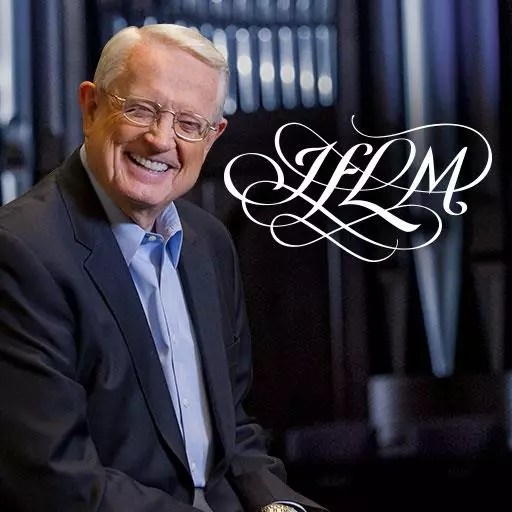
Christianity 101, Part 1


Modeling a life well lived leaves one of the greatest legacies. In the final verses of Romans 12, Paul provides a "checklist" for pursuing Christlikeness and letting love take center stage.
Learn with Pastor Chuck Swindoll the characteristics of love in action—what real love looks like using Christ as our example and guide.
Let love define your life. Remember what truly lasts!
Guest (Male): As followers of Jesus Christ, we often find ourselves striving to reach a higher plane, to rise above other sinners as a model of goodness. But in Paul's letter to the Romans, we're learning that our goal is not to become a better Christian; it's about finally becoming an authentic one.
Today, on Insight for Living, Chuck Swindoll invites us to open our Bibles to Romans chapter 12. In this passage, Paul describes seven fundamental truths of an authentic Christian, and each one is an expression of pure love. Chuck titled today's message: Christianity 101.
Pastor Chuck Swindoll: If you have a copy of the New Testament with you, please turn to the 12th chapter of the letter to the Romans. I should warn you ahead of time that this is a very convicting section of scripture. As I've said to you before, I've lived with it all week, and I thought today I'd share the conviction with all of you. You'll feel it as we work our way through it.
Actually, the section that's so great is the last half of the 12th chapter—not that all of it isn't great, but verses 9 through 21 form, in a nutshell, the Christian life. That's why we've called it Christianity 101. We haven't the time to deal with the last five verses plus verse 14, so we'll wait until the next time for that. About all we can take in one sitting will be 9 through 16, so let's go there.
Romans 12:9: Let love be without hypocrisy. Abhor what is evil, cling to what is good. Be devoted to one another in brotherly love; give preference to one another in honor; not lagging behind in diligence, fervent in spirit, serving the Lord; rejoicing in hope, persevering in tribulation, devoted to prayer, contributing to the needs of the saints, practicing hospitality. Bless those who persecute you; bless and do not curse. Rejoice with those who rejoice, and weep with those who weep. Be of the same mind toward one another; do not be haughty in mind, but associate with the lowly. Do not be wise in your own estimation.
Guest (Male): You're listening to Insight for Living. To dig deeper into the book of Romans on your own, be sure to purchase our Searching the Scriptures Bible study workbook by going to insight.org/offer. Chuck titled today's message: Christianity 101.
Pastor Chuck Swindoll: What are you leaving for the next generation? What are you leaving in the minds of those who will outlive you so that their lives are deeper, richer, better than yours has been? Horror novelist Stephen King lived through a horrible experience. Even though he is rich and famous, he is also very human, and when hit by a car in 1999 and left in a ditch to die, life sort of passed in review and gave him a whole new perspective on things.
Two years after it, he wrote about it, and in the writing, he left all of us with a message regarding that question I asked you earlier. King writes, "A couple of years ago, I found out what 'you can't take it with you' means. I found out while I was lying in a ditch at the side of a country road, covered with mud and blood, and with the tibia of my right leg poking out the side of my jeans like the branch of a tree taken down in a thunderstorm." He is forever the horror writer, isn't he?
"I had a MasterCard in my wallet, but when you're lying in a ditch with broken glass in your hair, no one accepts MasterCard. We all know that life is ephemeral, but on that particular day, and in the months that followed, I got a painful but extremely valuable look at life's simple backstage truths. We come in naked and broke. We may be dressed when we go out, but we're just as broke. Warren Buffett is going to go out broke. Bill Gates is going to go out broke. Tom Hanks is going to go out broke. Stephen King, not a crying dime."
"All the money you earn, all the stocks you buy, all the mutual funds you trade, all of that is mostly smoke and mirrors. It's still going to be a quarter past getting late whether you tell the time on a Timex or a Rolex. No matter how large your bank account, no matter how many credit cards you have, sooner or later, things will begin to go wrong with the only three things you have that you can really call your own: your body, your spirit, and your mind."
I want you to consider making your life one long gift to others. Why not? All you have is on loan anyway. All that lasts is what you pass on. Everything I have to say now has to do with the final eight words of Stephen King's statement: All that lasts is what you pass on.
Imagine yourself in a most unusual place, but someday you will be there: you are lying in a casket. Your days of life have passed. Your family is sitting nearby, staring, blinking through tears. Your friends are there, remembering. What are they remembering? I can assure you they are not remembering your financial portfolio. They do not have in mind your possessions or your photos.
What you leave the next generation really has nothing to do with anything tangible or measurable or audible or even edible. It's what lives in their minds. It's the memories they take with them as the lid of the casket is closed and as it's placed six feet down in the ground. It will be a model of a life well-lived that will enable them to live a life quite likely even better than you or I lived. They need that example.
We often search in vain to find that golden list, that set of specifics we would love to use as a guideline to take us from now till that moment we breathe our last. I'm happy to say that such a list has been preserved, and it's not simply the writing of a brilliant man who made a major emphasis and impact on the first century. It's preserved for us by God. It has His stamp of approval.
This preserved list is in the latter half of Romans chapter 12, beginning at verse 9, all the way down through verse 21. Time doesn't permit us to take the last subject, which is a subject unto itself, and how to deal with those who are difficult to love—those who have hurt and injured us, maybe even persecuted us. We'll leave out verse 14 as well as 17 through 21 today and look at that next time.
What we want to see are these core values of life in verses 9 through 16. Not surprisingly, love takes center stage. It immediately dominates the scene. In fact, I'm convinced that the love mentioned in verse 9 is really unpacked in the verses that follow. In light of that, let's define it so we understand what it means and doesn't mean. Let's understand why it's so important, and then we'll analyze the verses and think through them.
The best definition I've ever come across is found in 1 Corinthians 13. Sometime when you will take an hour alone, would you just read it aloud again and again and again? 1 Corinthians 13 is the greatest treatise ever written on love. If I were asked to give one sentence, it would be this: love is seeking the highest good of the other person. It is seeking what's best for the other person.
Sometimes, admittedly, love is tough: firm, stern, strong-hearted, unwilling to look the other way. It's not making someone comfortable. It's not telling them what they want to hear. It is not treating them like they've treated us. It is not looking the other way when we encounter wrong. This part of love is tough love. It's relentless.
There are other times when love must be tender: soft-hearted, marked by compassion, understanding, tolerance, grace, and forgiveness. Both sides of the coin make this love authentic, and you need both tough and tender. The best example who's ever lived is, of course, Jesus of Nazareth.
Why is it such a high priority? Why is seeking the highest good so valuable in life? It's because it shapes and colors all the other virtues that we admit are important to life. All the virtues I'll mention today are colored by our love, and so we'll return to the word over and over again. When we put love on display, this is the way it looks.
Look at verse 9 to start with. Love has two major qualities: sincerity, which is the opposite of hypocrisy, and second, love has discernment, which is the opposite of gullibility. Let's take them in that order. "Let love be without hypocrisy." You see your text? If you carry the New American Standard Bible, you'll notice the first three words are in italics: "Let love be." The Greek sentence begins simply, "agape anhypokritos." You can understand that though you may not know Greek. "Agape" means love. "Anhypokritos" is the word from which we get the word transliterated un-hypocritical.
The sentence begins "love un-hypocritical." Right out of the chute, Paul is making it clear that if it's love, it must be real love. If it's real love, it must be sincere love. There's no place for a mask, there's no phony baloney, there's no play-acting, there's no think one way, act another. There is no theater. Love is real, gut-level real. It has nothing to do with hypocrisy.
John Murray was right. If love is the sum of virtue and hypocrisy is the epitome of vice, what a contradiction to bring these together. Get rid of all hypocrisy and you're on your way to true love. But I will tell you before you start the project, you've got a lifetime of work cut out for you. We are shot through with hypocrisy, and Christians can be the worst. Who hasn't been hurt by a hypocritical Christian who signs that harsh letter "in the love of Christ"?
Love must also be discerning. Notice: "abhor what is evil." The word means to shrink back, to detest. When love encounters what is evil, it shrinks back. It doesn't embrace it. It doesn't look the other way. Remember, we're seeking the highest good of the other person. It confronts, albeit lovingly. Love abhors what is evil. It shrinks back from the presence of evil, but when it finds what is good, oh, it embraces it. The word carries the idea of gluing or bonding oneself to it.
When you pass on that which is worth living out in the lives of your loved ones and your friends, start with love. Let it be sincere and discerning. Before I move on, I warn you about today's common concept of love. Everything is love, love, love. Love in everybody, love in everything. As one young Christian said to me several years ago, "I just love even the devil." Well, sweetheart, stop. There's nothing to love in the devil. There's nothing to love about demonic things. That isn't love.
Charles Ryrie said it best: Love is a river, and it must be bordered on each side by the banks of truth and discernment. Guard your love. It must have boundaries or, like a river that leaves its banks, it floods and does dangerous things.
There are several other components that emerge as we analyze love. I find seven of them in the verses that follow. First of all, verse 10: "be devoted to one another in brotherly love." Paul reserves family words for the first part of verse 10, and I would use the words "devoted affection." When love runs its course correctly, sincerely, without hypocrisy, and with a sense of discernment and strength, then it begins to reveal a familial warmth.
This is a good time for me to ask about your relationship with your family. How are things with your brother, with your sister? How are you with your parents and with your children? Forget ages; it doesn't matter what their age is. How are things with you and your family? Philadelphia, brotherly love, is what's rendered here in those words. Is there a philos affection for your brothers, your sisters, your mom and dad, your children, your grandparents, and your grandchildren?
Starting there, the apostle begins to unpack the concept of that which we pass on to others to make their lives richer. Devoted affection is followed in the latter part of verse 10 with honor. They go together, don't they? When there is this kind of familial affection, we give preference to one another in honor. The word means respect. It's a willingness to defer to another.
It works its way out in listening when they speak, allowing them to disagree, respecting their opinions, caring how they feel, paying attention to what isn't said, and showing gratitude for one another. I've noticed as a minister of the gospel that when I serve families at the end of a loved one's life, I often hear words of great gratitude and honor and respect said, though the deceased is now gone and unable to hear them. How often I've thought, did you ever tell that person that while they were alive?
It does no good to drop a note in a casket. It does no good to stand over the loved one who is gone and tell them what they mean to you. Don't wait. Devoted to one another, respecting and honoring one another, saying so now.
The third is one of my favorite traits in life: enthusiasm and passion. Look at verse 11: "not lagging behind in diligence, fervent in spirit." The Greek has in mind boiling over, boiling up, as if water were boiling in the pot. Boiling up in the spirit, serving the Lord. It's the whole idea of active optimism and energetic zeal. It's the opposite of lethargy and indifference. It's the thought of living one's life on tiptoe.
Benjamin Zander wrote a book I read several years ago, one of the best books I've ever read, called The Art of Possibility. Zander at the time was conductor of the Boston Philharmonic and a professor at the New England Conservatory of Music. He writes as a musician, not surprisingly, but he also connects with life as we understand it. He writes a whole chapter on passion, and in that chapter, he includes these words: "A young pianist was playing a Chopin prelude in my master's class, and although we had worked right up to the edge of realizing an overarching concept of the piece, his performance remained earthbound. He understood it intellectually, he could have explained it to someone else, but he was unable to convey the emotional energy that is the true language of music. Then I noticed something that proved to be the key: his body was firmly centered in the upright position."
"I blurted out, 'The trouble is you're a two-buttock player.' I encouraged him to allow his whole body to flow sideways, urging him to catch the wave of the music with the shape of his own body, and suddenly the music took flight. Several in the audience gasped, feeling the emotional dart hit home as a new distinction was born: a one-buttock player. The president of a corporation in Ohio who was present as a witness wrote to me later, 'I was so moved that I went home and transformed my whole company into a one-buttock company.' I thought, what a great motto for Stonebriar Church: a one-buttock church. People would come from all over to see what went on inside here."
Zander continues, "I met Jacqueline du Pré in the 1950s when I was 20 and she was 15, a gawky English schoolgirl who blossomed into the greatest cellist of her generation. We performed the two cello quintet of Schubert together, and I remember her playing was like a tidal wave of intensity and passion—I love those words—a tidal wave. When she was six years old, the story goes, she went into her first competition as a cellist, and she was seen running down the back corridor, carrying her cello high above her head, with a huge grin of excitement on her face. A custodian, noting what he took to be relief on the little girl's face, said to her, 'I see you've just had your chance to play.' Jackie answered excitedly, 'No, no, I'm just about to play.'"
Featured Offer

Pastor Chuck’s audio set (CD or MP3), commentary, and companion spiral-bound workbooks give you everything you need to walk with Jesus from Galilee to the empty tomb.
Past Episodes

Video from Pastor Chuck Swindoll
Featured Offer
Pastor Chuck’s audio set (CD or MP3), commentary, and companion spiral-bound workbooks give you everything you need to walk with Jesus from Galilee to the empty tomb.
About Insight for Living
Join the millions who listen to the lively messages of Pastor Chuck Swindoll, a down-to-earth pastor who communicates God’s truth in understandable and practical terms, with a good dose of humor thrown in. Chuck’s messages help you apply the Bible to your own life.
About Pastor Chuck Swindoll
For most of his entire life, Pastor Charles R. Swindoll has devoted himself to the accurate, practical teaching and application of God's Word — anchoring every message in the transforming power of God's amazing grace. From congregations on the East Coast to the West Coast, his ministry has carried that message across the country, ultimately taking root in Frisco, Texas, where he founded Stonebriar Community Church. Yet Chuck's influence has never been confined to a single sanctuary. Since 1979, Chuck’s messages have aired on Insight for Living, one of the most widely heard programs in Christian broadcasting, carrying his voice — and the timeless truth of Scripture — to listeners around the world. That same passion for God's Word has shaped his leadership at Dallas Theological Seminary, where his tenure as president and now chancellor emeritus has helped raise up a new generation of men and women equipped and called to ministry. Few lives have touched so many, across so many places, for so long.
Contact Insight for Living with Pastor Chuck Swindoll
customerservice@insight.org
http://www.insight.org/
Mailing Address
Insight for Living
Post Office Box 5000
Frisco, Texas 75034
USA
Phone Number
1-800-772-8888