

An Evil Interlude, Part 2


Feel like life is full of trouble and turmoil? Shortly after Esther became queen, danger arose when two guards conspired to kill the king (Esther 2:21–3:15). Mordecai, however, stepped in to foil their plot. Meanwhile, Haman, empowered by the king’s ring, launched an even deadlier plan against the Jews.
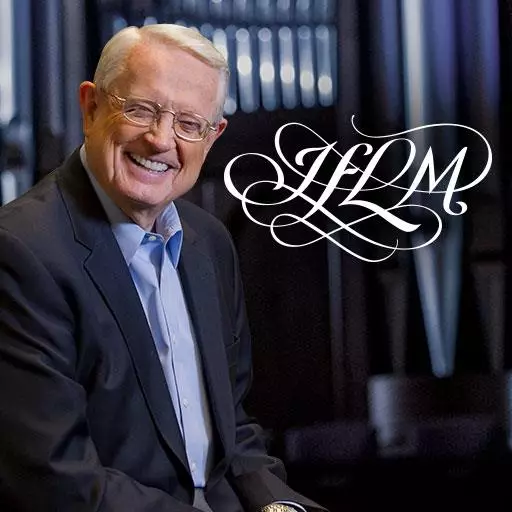
Pastor Chuck Swindoll reveals what we can learn about the presence of evil and how God equips us with the strength to face life’s darkest challenges. Encouragement awaits you today!
Bill Meyer: If you looked up the word "life" in Heaven's Thesaurus, one of the first synonyms you'd find would be this one: pain. Yes, life has broken bones, bitter losses, and enemies you never saw coming.
Today on Insight for Living, Chuck Swindoll points to Esther chapter 3, where a trusted official named Haman nursed an old grudge until it became a blueprint for genocide. Here's the point: unchecked evil grows, and the only power strong enough to stop it is the grace of Jesus Christ. Beginning with Esther 3, verse 5, Chuck titled his message "An Evil Interlude."
Chuck Swindoll: "When Haman saw that Mordecai neither bowed down nor paid homage to him, Haman was filled with rage. And he disdained to lay hands on Mordecai alone, for they had told him who the people of Mordecai were. Therefore, Haman sought to destroy all the Jews." Wait a minute.
In Haman's mind is a learned trait, a hate for the Jews. And he realized if he could ever be placed into power and ever, ever have an opportunity to do something about it, he would not stop with one who wouldn't bow; he would exterminate the race. I have circled in my Bible, "Haman sought to destroy all the Jews." Because you see, that's the way evil is. It grows in an exaggerated manner.
He's not satisfied simply to kill Mordecai or to make his life miserable; now he must kill the people of Mordecai. The plan for extermination unfolds rather quickly. The mind is very creative when it is spurred on by evil. Imagination runs creatively when evil is behind it. Watch.
"In the first month, which is the month Nisan, in the twelfth year of King Ahasuerus, pur (that is, the lot)." We'll read later of the feast of Purim. Purim is the plural of pur, lots. We'll read of that later. Lots were cast before Haman from day to day and from month to month until the twelfth month, that is, the month Adar.
We would read verse 7: in the first month, that is January, lots were cast and they were cast through the month of December. Then Haman said to King Ahasuerus, "I've got an answer. There is a certain people scattered and dispersed among the peoples in all the provinces of your kingdom; their laws are different from those of other people, and they do not observe the king's laws, so it is not in the king's interest to let them remain." That's nothing more than extermination talk.
And he's telling the king what the king wants to hear. He doesn't tell him the whole story. He doesn't mention the prejudice and the grudge, the long-standing antisemitism that goes back to his Amalekite roots. He doesn't mention that.
What's this about lots and casting lots and months and days and all of that? In a book unfortunately that's now out of print, Ray Stedman, *The Queen and I*, on Esther, I find these words:
"What a strange procedure. But the casting of lots to determine a lucky day on which to do something was common practice in Oriental kingdoms. It is very similar to the practice today of shooting dice in order to select a propitious day for some activity. When the record says they cast it month after month till the twelfth month, it doesn't mean they shook dice for a whole year in front of Haman. It means that every cast made stood for a different day. A cast was made for each day of the calendar, and if a propitious number, we might say an evil omen or some sense of significance aroused by the throwing of the dice, turned up, that day was regarded as a lucky day. Thus they went through 365 casts before they found the lucky day. When they found it, it was in the twelfth month called the month of Adar. The whole process made it possible for Haman to go to the king and say, 'Look, if you really want good luck in your life, if you want fortune to smile on you, there's only one way to do it: get rid of these people.'"
That's precisely the way it happened. When your life, by the way, is driven by superstition, you come upon ridiculous decisions very much like this. And by the way, are you still superstitious? That's a loaded question, isn't it? It's assuming we all have been at one time. Do you still drive the other way when a black cat crosses in front of your path? Do you never stay on the 13th floor of a hotel? I can hardly find a hotel with a 13th floor. I usually request it. Usually there's a lot of room on the 13th floor. I love walking under ladders. You walk around them. You worry when a mirror is broken. Isn't it amazing how those things track us and stay with us? Stupid things. Even demonic things.
It led to this game plan for the extermination of the people of the Jews, and the king bought it hook, line, and sinker. He loved the idea. Of course, it appealed to his conceit. Verse 9: "If it's pleasing to the king, let it be decreed that they be destroyed." Did you hear what I read? Let's kill all these people. Let's finish them off.
When you are in a closed setting and you have a prejudiced counselor and those are the only people that are giving you information, you come up with plans that are destructive. All the more reason to live an accountable life and to include in your circle people who are strong enough to tell you no, unwise, not good, too far.
The king had none of that. And he said, "Let it be decreed that they be destroyed, and I will pay ten thousand talents of silver." Are you ready for how much silver that is? 375 tons. That's a lot of loot. Where would Haman get it? Probably from the homes that he would confiscate once he killed the Jews.
He said, "I will take all of this silver and I will place it in the hands of the king's treasuries." The king took his signet ring from his hand, which is like you're giving your Mastercard to your associate and you say, "Ring it up." He took his signet ring from his hand. That's the way they signed documents in soft clay. Documents were written, rolled up, a piece of soft clay sealed it, and then the inscription from the king's ring was placed in the soft clay. It sealed it with the king's "let it be written, let it be done."
He gave him the ring. Then the king—listen to how the writer, whoever this writer was, we're not sure, listen to how he adds a thought in verse 10: "Then the king took his signet ring from his hand, gave it to Haman, the son of Hammedatha the Agagite, the enemy of the Jews." He had an old grudge. He had a long-standing hatred for the Jews.
The king didn't need the money. He said in the next verse, "The silver's yours, the people also. Do with them as you please." That is unbelievable. Sounds like Hitler in the 1930s, doesn't it? Somewhere at some time in that madman's mind there was a break with logic, and he could say with the passing of his hand, "Just finish them off."
Now again, before all of our thoughts turn to those few notorious people we could name, let's not get far from home. Are you nursing a grudge? You have a face on your dartboard? You have a soul, an organization, former mate, former pastor, a church, a boss, a coach, someone that you revered and trusted, who used you and or abused you? You have someone who has made it hard for you? And whatever the intricacies of the encounter, they're now gone, they're past, but you are determined to hold on to them. And someday, someday, I'll get back.
You say, "Chuck, I'm a Christian." I know. Some of you who say that are. You think you still haven't the old nature? When you give vent to your old nature, can you not lust as you once lusted? Can you not be as selfish as you have ever been selfish in your life? Can't you be as vile with your lips? You know you can. And so could I.
This nursing, this lingering grudge, this refusal to forgive grows and grows. It's silent. Oh, it's so quiet. You read nothing of Haman before chapter 3. He's not even in the picture. He's an adult by the time we meet him. But he comes ready to pounce. It is his moment. Life and pain are synonymous. You cannot escape the pain. If you're not careful, you will carry out the most heinous of sins.
These are days of treacherous, terrible criminal cases in the court. We read of Night Slashers, Night Stalkers, and homosexual killings. And we read of a man whose background now includes apparently over 60 murders of the worst kind, the kind I couldn't even read to a child. We watch them as they smile through their court proceedings, and we think, "What an animal." And true. But that same animal nature resides in me and resides in you. It is there. It is wicked. It is vile.
And were it not for the very presence and grace and deliverance of Jesus Christ, it would consume us, and we would kill and not give it that much worry. How absolutely powerless we are to solve our own problem of evil. Were not the power of Christ given to us in daily doses, literally moment by moment doses, my grudge, my lack of forgiveness could grow to a grudge and grow to such thoughts as would shock you, and yours would shock me.
There's no waiting. The plan is all set. Scribes are poised to write in whatever language for whatever province. Verse 12: "Scribes were summoned on the thirteenth day of the first month." He wrote it on the first month, and he let them live in the misery of it for twelve. If he had his way about it, he would have them tortured, waiting those eleven long months for the gallows to be built and the graves to be dug. It was written just as Haman commanded to the king's satraps.
He had thought this through. To the governors who were over each province, to the princes of each people, according to the script, each people according to its language, whatever language, he had the scribe ready to write it. And it was written in the name of King Ahasuerus. "Here, give it to me." And he sealed it with his ring. Every one of them. All 127 provinces. "Let it be sent." And he had the runners there to take it. The couriers were ready.
Verse 13: "Letters were sent by couriers to all the king's provinces." Look at the way he puts it: "to destroy, to kill, to annihilate all the Jews." You haven't misread this or misheard it. "Young and old, women and children." How dare they do that to Agag. I'll teach them a lesson.
A copy of the edict was to be issued as law in every province, was published to all the people so that they should be ready for this day. Look at the incredible irony of the last verse: "The couriers went out impelled by the king's command while the decree was issued in Susa the capital." That's where Haman and the king lived. And look at the scene: "And while the king and Haman sat down to drink, the city of Susa was in confusion." Yes, it can be planned, such murderous things can be planned, and all the while you can sip your booze and could care less. That's the way it is with evil.
I draw three very valuable lessons from three major characters of this story: first from Mordecai, and then from Haman, and then the king himself. From Mordecai I learn this: always remember that there will be someone who will resent your independent devotion to the Lord. That's how it all started.
"Why don't you bow down to Haman the Prime Minister?" "I am a Jew. My devotion to my Lord is such that I dare not do that." There will always be someone who will resent your independent devotion to the Lord. It will weaken your will if you forget that. Expect it. I've seen it in the military, I've seen it in neighborhoods, I've seen it in ministry. There will be resentment if your devotion to the Lord is too independent and you don't play those political games.
Second, Haman: never underestimate the diabolical nature of revenge. Listen to this: never underestimate the diabolical nature of revenge. Don't underestimate your own ability to connive and get back. It'll poison your life if you do. Many, many a divorcee lives today consumed in the poison of an unforgiving spirit.
Third, from the king: never overestimate the value of your own importance. Some wise counselor should have come up alongside Ahasuerus and said to him, "What is this you're allowing? It isn't worth it. Not even you are that important." It'll blind your mind if you do.
There is an evil interlude in the lives of every one of us. Everyone of us. You know the Jews have never forgotten Haman. They're reminded of it at the Feast of Purim every year. Listen. During the dramatic reading of the Book of Esther in a Jewish synagogue at the Feast of Purim, the congregation will be found taking the part of a chorus and exclaiming at every mention of the name of Haman, "May his name be blotted out! May his name be blotted out! Let the name of the ungodly perish!" while boys with mallets pound stones and bits of wood on which that odious name is written.
Did you know that? While the congregation is answering in an antiphonal voice, "Let the name of the ungodly perish! May his name be blotted out!" little boys are pounding on pieces of stone and wood that read "Haman, Haman." He is to them the personification of vanity and cruelty.
What do you do with all this? I think some of you are hearing this kind of teaching for the very first time in your life. For the first time something from the Bible has grabbed your attention, and you may even be astounded that it spoke so directly to where you live. First of all, let me say that you are in the company of other people who understand those kind of feelings. It's happened to all of us. At one time or another in every one of our lives we have been shocked with the relevance of Scripture. It has cut like a hot knife through butter right into our hearts.
And I want to warn you that if you don't do something about your grudge and your plan for revenge, either you will be eaten alive by it and do that which is horrible, or it'll take your life. You'll be turned over to torturers, internal torturers, and not even the finest counselor in the world can free you.
At the risk of sounding simplistic yet again, I want to tell you that it is for this very reason that there once came a day that God invaded this polluted earth. It was for this very reason that we were not able to help ourselves but the Lord Jesus helped us and let nails be driven into His hands and into His feet. And that vertical post lifted and dropped into a hole as He hung and died on a cross so that whoever would believe in Him would never perish in their own grudge and sin and evil and revenge. But somehow, in some wonderful way, God says that the blood that came from His body is like an internal detergent that will wash away your sins. Isn't that great?
No words I could give you or anyone could give you will do that, but the blood of Christ will. What can wash away my sin? Nothing but the blood of Jesus. What can make me whole again? Nothing but His blood.
We must bow our heads. Close your eyes, please. Let the blood wash away your sins. Let it make you whole again. You can't escape the evil. It's there. I can't even promise you that after giving your life to Jesus Christ there will never be another thought of revenge. But then you'll have some built-in controls that will keep you, just like it keeps others around you who know the Lord Jesus, from carrying out the wishes of a wicked old nature.
Right where you're sitting, you can experience the beginning of a transformation. You don't have to do a thing physically. Sometimes it helps if you do that, but for this decision it's deep and it's personal. A simple prayer will do something like this in all sincerity:
"Heavenly Father, I live with this evil in me and I cannot conquer it. I believe that Jesus died and He rose from the grave and I believe that His death paid the penalty for my sins. And I take Him into my life now. Thank You, Lord, for coming into my life."
After making this decision you'll need to grow, to begin a process of growth in the spiritual life, and that's what a church is all about. That's what Christian fellowship is all about, being accountable.
Father, thank You for Your grace that sees beyond our deepest need. Thank You for meeting us where we are, for talking straight to us in terms that even we can understand, for pulling from this tiny entry out of an ancient scroll named Esther a story as relevant as today's grudge and feelings of revenge. I pray that You would clear our hearts of all malice, give us the ability to give that pain to You, and resist all attempts at getting even while You through Your power deal with this unsolvable problem for us. Thank You in advance for doing miraculous things through us and even in spite of us. In the good name of our God and the great name of our Lord, we pray these things. Amen.
Bill Meyer: Evil doesn't announce itself. It grows quietly in the shadows of an unforgiving heart. Chuck Swindoll's message today is a reminder that the antidote to life's inevitable pain isn't revenge; it's the cleansing grace of Jesus Christ.
If today's message stirred something deep within you, we encourage you to dig further into this remarkable story. Insight for Living has resources designed to help you study the Book of Esther on your own, and we'd love to send them your way. Our *Searching the Scriptures* Bible study workbook for Esther is built for that kind of encounter. Chuck's teaching has laid the groundwork. Now this workbook invites you to dig in for yourself, at your own pace and in your own way. This Bible study workbook is like a personal journal, and there's plenty of room to jot down what God is teaching you.
To purchase your copy, call 800-772-8888 or visit insight.org/offer. And you can always reach even deeper into the Bible because the Old Testament is filled with leaders like Esther, men and women who stepped up when the moment demanded it. Nehemiah was one of them. God called him to rebuild the broken walls of Jerusalem, and the leadership principles he lived by offer profound application for our times as well. Chuck Swindoll's classic book *Hand Me Another Brick* draws those timeless lessons out of Nehemiah's story in a way that will sharpen any leader, pastor, teacher, parent, or CEO.
When you support Insight for Living with a donation today, this book is our gift to you. Because of friends like you, people around the world are discovering how to receive God's grace and how to share it with others. We couldn't do it without you. You can make a gift today by calling 800-772-8888 or visit insight.org/donate. Or send your gift and your request for Chuck's book on Nehemiah in the mail. Here's our address: it's Insight for Living, Post Office Box 5000, Frisco, Texas, 75034.
I'm Bill Meyer. Join us when Chuck Swindoll describes the moment that Esther courageously expressed her deepest convictions, Tuesday, on Insight for Living.
Featured Offer

Pastor Chuck’s audio set (CD or MP3), commentary, and companion spiral-bound workbooks give you everything you need to walk with Jesus from Galilee to the empty tomb.
Past Episodes

Video from Pastor Chuck Swindoll
Featured Offer
Pastor Chuck’s audio set (CD or MP3), commentary, and companion spiral-bound workbooks give you everything you need to walk with Jesus from Galilee to the empty tomb.
About Insight for Living
Join the millions who listen to the lively messages of Pastor Chuck Swindoll, a down-to-earth pastor who communicates God’s truth in understandable and practical terms, with a good dose of humor thrown in. Chuck’s messages help you apply the Bible to your own life.
About Pastor Chuck Swindoll
For most of his entire life, Pastor Charles R. Swindoll has devoted himself to the accurate, practical teaching and application of God's Word — anchoring every message in the transforming power of God's amazing grace. From congregations on the East Coast to the West Coast, his ministry has carried that message across the country, ultimately taking root in Frisco, Texas, where he founded Stonebriar Community Church. Yet Chuck's influence has never been confined to a single sanctuary. Since 1979, Chuck’s messages have aired on Insight for Living, one of the most widely heard programs in Christian broadcasting, carrying his voice — and the timeless truth of Scripture — to listeners around the world. That same passion for God's Word has shaped his leadership at Dallas Theological Seminary, where his tenure as president and now chancellor emeritus has helped raise up a new generation of men and women equipped and called to ministry. Few lives have touched so many, across so many places, for so long.
Contact Insight for Living with Pastor Chuck Swindoll
customerservice@insight.org
http://www.insight.org/
Mailing Address
Insight for Living
Post Office Box 5000
Frisco, Texas 75034
USA
Phone Number
1-800-772-8888