

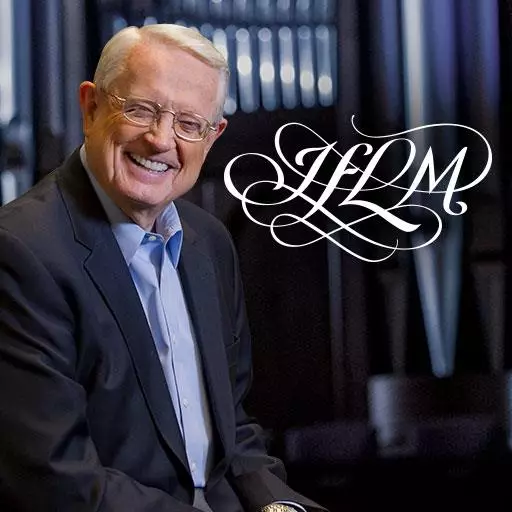
After the Ache . . . Celebrate!, Part 1


Have you ever realized how easy it is to focus on the pains of the past? Celebrating the joys requires much more intention than lamenting the failures.
After facing a terrifying year, the Jews didn’t settle for a fearful existence (Esther 9:17–32). They celebrated! They established Purim, a festival to honor God’s deliverance.
Pastor Chuck Swindoll invites us to create our own monuments from trials—reminders to learn, grow, and give thanks. Learn how to transform your struggles into stepping-stones of faith and gratitude.
You've been through it: the betrayal, the loss, the decision you'd give anything to undo. And yet somehow, even years later, the memory still stings. But what if God never intended for you to stay in that place of pain? What if the very thing that broke you was meant to lead you to something worth celebrating?
Today on Insight for Living, Chuck Swindoll describes how God specializes in turning the worst chapters of our lives into the most meaningful ones. From his study of Esther, Chuck titled today's message "After the Ache . . . Celebrate!"
Chuck Swindoll: Most Christians seem to handle pain better than pleasure. For some twisted and strange reason, we seem to do better with hard days than with easy days, with tough times rather than times of relief and celebration and leisure. I'm sure our critics would tell us that it is because of our consuming guilt. We simply cannot seem to reward ourselves for good times.
Hard days and tough times we seem to handle well. Stress and anxiety we not only experience, we tend to excuse. Times of reward, times of relief, if we're honest with ourselves, we tend to keep those times to ourselves. Because even though we may be among the few who can handle them, many of our friends cannot. We tend to weep with those who weep much more easily than rejoice with those who rejoice, don't we?
Most folks I know who take a two-week vacation tell me that it takes about a week to begin to enjoy it, often because we're so wound up we don't relax. And sometimes it's because we have to take that long a time to give ourselves permission to enjoy the rewards of a long year of work well done. Deep within our minds, there is sort of a bad news mentality.
Have you noticed that about yourself? If someone says to you at church on a given Sunday, "You know, I want to talk to you before long about something that's been on my mind for quite some time," usually it's not a thought in your mind that says, "Oh, I'm sure he wants to tell me something real good." Often you find yourself saying, "Why don't you just tell me now so I don't have to worry about it for the next period of time?" Or if someone says, "I've written you a letter, you'll get it in a day or two," you go, "Oh, no." Rather than a letter of affirmation, we expect confrontation. Why are we like that?
One author writes, "The highest and most desirable state of the soul is to praise God in celebration for being alive. Without perks, our lives are easily lost in the world of money, machines, anxiety, or inertia. Our poor, splendid souls, how they fight for food. They have forgotten how to request the little perks. Our hurried, stressed, busy lives are unquestionably the most dangerous enemy of celebrating life itself. Somehow we must learn how to achieve momentary slowdowns and request from God a heightened awareness of the conception that life is a happy thing, a festival to be enjoyed rather than a drudgery to be endured. Life is full of perks if we train ourselves to perceive them. As someone has said, a thousand tiny things from which one can weave a bright necklace of little pleasures for one's life."
Say, when is the last time you would weave together a bright necklace from the little pleasures of life? Take Christmas, for instance. Some of you say, "Yeah, take Christmas, that would be a relief." I believe that if our focus were right and if our attitude were right, not only would we enjoy the celebration of the day itself, we could even enjoy the busy times that lead up to it.
You know, there are songs to sing. There are smells to smell at Christmas time. There are sounds to hear we'll hear no other time of the year. My son was the other day saying to me, our youngest son said, "Dad, I don't mind the crowds." He said, "These people that get all their stuff bought in September and October, they miss all the fun of the crowds." I thought that is a terrific attitude. What a great response.
I heard a terrific story the other day of a hassled shopper who came into a busy department store and wormed her way to the cosmetic counter. There was a busy saleslady gift-wrapping one gift and waiting on two other ladies. The gal looking for something said rather hurriedly to the saleslady, "Say, do you still have Elizabeth Taylor's Passion?" And the saleslady said, "If I did, honey, would I be working here?" How great it is to hear you laugh. How wonderful it is that God has given us joy rather than a life full of mourning, tears, and sadness.
I've thought a lot about why we're like that. Why is it that we can even turn Christmas into a time of dread? I think I know. I believe our focus is more on the past than on the future. And being negative by nature, being bad news people by habit, we tend to pick out of the past the things that make us sigh and let them bleed into the present so that they color and stain our every day.
When I look back into the past, and when you look back into the past, the things that make us sigh are four in number: people, events, circumstances, and decisions. There were people that we wronged. There were people who wronged us. There were occasions where conversations were held, and we feel badly about what we said, or we're hurt within when we remember and how we've recorded them, of the things that were said by those individuals. And because of the past and the sadness connected with wrong relationships or unhappy, unfulfilling, unproductive relationships, our present is marred because of people of the past.
It was the same in the days of Esther. As the Jews looked back, I'm sure many of them would say, "It's Haman I remember. It's Haman's henchmen. It's Haman's sons. It's Haman's followers. How miserable they have made our lives." If they chose to do that, and they would sigh, looking back into the past at people who have made life miserable for us, who wouldn't sigh?
Then there are events. When we look back, we don't remember the times of celebration, the great birthday parties, the fun things we attended, the joys of an evening around a fireplace, the pleasures of family together. You know what we remember? We remember earthquakes. Isn't it strange that even the newspaper brings up anniversaries for earthquakes? I've never been able to understand. Three years ago today, we had a 5.6 shaker. I thought, so what? Who needs to remember it was three years ago today? Forget it.
We lived through it. We'll be able to go on beyond it. But if we're not careful, the events of our lives that are negative will stick. It would be true in the days of Esther, and they would sigh: the day the king wrote the edict, the day Haman handed it out, the day the couriers came to our province and announced the Jews will die on the 13th of Adar and don't you forget it. What a horrible event. And if they lived in the light of that event, their whole life would be negative, down, sad, and sorrowful.
Then there are circumstances, conversations, difficult jams, situations we found ourselves in, relational barriers. It could be true in Esther's day, and it would be true in our day, and we would sigh.
Perhaps the worst of the four would be decisions. There isn't a person listening to me right now who hasn't made wrong decisions, who hasn't made a foolish decision, who hasn't gone too far or not far enough, who didn't step out on faith, or who called it faith and it wasn't faith, it was presumption. And you look back now through the perspective of the past number of years, and you see it as a wrong decision, or at least a weak one.
And we're all hung up in today because we are snagged on the people and events, circumstances and the decisions of the past, none of which we can change. None. But the enemy of our soul continues to announce to us failures, wrongs, disappointments, disasters, calamities. And we try to put our lives together in this long tunnel called the present. We can't do it.
Let me show you something from the book of Philippians, chapter 3, before we turn back to the ancient scroll of Esther yet again. And let me show you fourteen words from the New Testament that can make a difference. These are words that I call the secret of celebrating life. How do I do it? What does it require? This isn't that complicated, but it will require some mental discipline.
I'm looking at Philippians 3:13 and 14, and there isn't a person listening right now who couldn't do better by applying what I'm going to read. In the middle of verse 13, we read: "forgetting what lies behind and reaching forward to what lies ahead, I press on." There they are. Most of you are counting just to make sure there are fourteen. When you finish that, please underline the words "forgetting what lies behind." Look closely, that's only part of it. "Reaching forward to what lies ahead, I press on."
You know what that kind of philosophy will do to your whole life? It will turn you into a celebrant. You will find that you mourn and sigh less and you laugh at life with God by your side more. Turn from Philippians 3 back to Esther chapter 3, will you do that? By now, your Bible probably opens automatically to this old book that had gathered so much dust over the years. By now, you remember the story of the book, how the plot thickened, how disaster seemed to be written across every Jewish life, how doom was spelled so clearly, so eloquently, and how God changed the events to turn wrong into right.
I'm reading from Esther 3. Locate verse 6 and let's begin about the middle of the verse. "Therefore Haman sought to destroy all the Jews, the people of Mordecai who were throughout the whole kingdom of Ahasuerus. In the first month, which is the month Nisan, in the twelfth year of King Ahasuerus." Now circle this next word. "Pur, that is, the lot, was cast before Haman from day to day, from month to month, until the twelfth month, that is, the month Adar."
Sounds a little bit vague, a little oblique. Let me explain. You may recall when Haman was trying to decide when to carry out his plot to exterminate the Jews, he relied on an ancient custom of casting lots. A lot was called in those days "Pur," P-U-R. And in the casting of the lots in some strange manner, as a result of continuing the process, he came upon a date, the 13th of Adar. What interests me is not only the date but the name of the lot, Pur.
Let's take a little excursion in linguistics and let me help you with this. In English, we pluralize a word by adding S or ES, most often. In Hebrew and its sister language Aramaic, a singular term is turned into plural by adding I-M. The English word for angel is cherub. The Hebrew plural for cherub is not cherubs, but cherubim. Seraph is another kind of angel, and the plural for seraph is not seraphs, but seraphim. The god Baal is sometimes proliferated through the Old Testament in multiple forms, and that's called not Baals, but Baalim.
So if we were to pluralize Pur and make the lot represent lots plural, it would be Purim, Purim. He decided that there would be the final death knell on the Jews on a certain day. Locate verse 13 of this third chapter. "Letters were sent by couriers to all the king's provinces, to destroy, to kill, to annihilate all the Jews, both young and old, women and children in one day, the 13th day of the twelfth month, the month Adar, to seize their possessions as plunder."
What is interesting, and you know the story now, is that between the third and the ninth chapters, the tables were turned. Haman was captured in all of his anti-Semitism and murder, and the queen's heart won the king's mind, and the king made the decision not only to kill Haman, but to wipe the slate clean and to remove the dread of the Jews from the Jews.
And so this day of the 13th of Adar, which is their last month of the year, was turned from mourning and sadness to a time of celebration. As a matter of fact, when you turn to chapter 9, turn please, you'll discover that on the 13th of Adar, they, rather than being killed, turned tables on their enemies and annihilated many of them. Verse 16, chapter 9, "The rest of the Jews who were in the king's provinces assembled to defend their lives and rid themselves of their enemies and killed 75,000 of those who hated them, but they did not lay their hands on the plunder. This was done," look at this, "on the very day they were originally to have died."
And in honor of this remarkable switch of events, they declared a day of celebration which, you anticipate, was named Purim, or the Feast of Purim, as we call it today. And to this day, it is still celebrated by the Jews. To this day. What was once going to be their death turned and became their future, their celebration.
Vance Havner, the evangelist, wrote a little book entitled It Is Toward Evening. And in it, he tells the unforgettable story of a little town in Alabama that made its living raising cotton. One year, as the cotton was growing and it appeared to be a bumper crop, the boll weevil invaded, devastated the crop, and destroyed the economy of that little town in Alabama.
Farmers, however, are an ingenious lot, and they were determined not to just simply sit back and move into the poorhouse. One of the farmers got the idea of planting peanuts instead. Boll weevils don't like peanuts. And another decided to plant yet another produce and others still others, and before long, bumper crops of these began to bring the economy back to what later came to be known as Enterprise, Alabama. I think that's significant.
And do you know what they did? Well, they erected a monument to the boll weevil. It's there to this day. Vance Havner writes, "All things work together for good to the Christian, even our boll weevil experiences. Sometimes we settle into a humdrum routine as monotonous as growing cotton year after year. Then God sends the boll weevil. He jolts us out of our groove, and we must find new ways to live. Financial reverses, great bereavement, physical infirmity, loss of position, how many have been driven by trouble to be better husbandmen and to bring forth far finer fruit from their souls? The best thing that ever happened to some of us was the coming of our boll weevil."
Without that, we might still have been a cotton sharecropper. I'm speaking to people today all of whom could raise up your own monument to the boll weevil. It invaded your life. It took your joy. It had the audacity to come without invitation and probably by surprise. And it devastated your faith at the time. You were cut down to size. The lot was cast.
But your problem is you haven't yet built your monument. You haven't established Purim, your feasting. You're still living in the sigh and the pain of all the sadness that comes over you when you remember the brokenness. That's what this is about. This isn't the story about some ancient feast, not just that. It is that, but it's so much more.
God has given us His Word not to teach us dates and Hebrew words. He's given us His Word to reconstruct our lives, to build monuments where we once wept and bled, and some died, where lives were hurt and hearts were hardened and we were devastated. But forgetting that which lies behind and moving toward that which lies ahead, this is the way to press on. Don't just forget the past. Don't just with a passing of your hand say, "Oh, yeah, it was awful." Build a monument. Celebrate the feast. Pass along the lessons that led to the maturity and the changes that were so essential in your life and so different from when you were just a cotton sharecropper.
When I read verses 17, 18, and 19, I read about a people who decided, "Let's name this day a day for a holiday. Let's call it Purim," which could be translated "In your face, Haman," or something like that. Here's to you, Haman. Here's to our God. Look at 17, it's wonderful. All this annihilation of the enemies was done on the 13th day of the month Adar, and on the 14th day, they rested. Of course. They made it a day of feasting and rejoicing. How appropriate.
The Jews who were in Susa assembled on the 13th and the 14th day of the same month. They rested on the 15th day, took them a little longer to kill their enemies. And they made it a day of feasting and rejoicing. How appropriate. How good. Therefore, the Jews of the rural areas who live in the rural towns make the 14th day of the month Adar a holiday for rejoicing and feasting and sending portions of food to one another. One of the early Christmases. They wrap up gifts and send them to friends, especially to the poor.
What a picture: a people who should have been buried instead threw a party. And not just any party: feasting, rejoicing, gifts to neighbors, gifts to the poor. The title of today's message is "After the Ache . . . Celebrate!" This is Insight for Living. Stay with us because Chuck Swindoll has some important closing thoughts for you in just a moment.
First, Insight for Living has assembled a variety of Bible study tools for this series on Esther. In fact, there's a special bundle that includes the Searching the Scriptures Bible study workbook, a full-length biography of Esther written by Chuck, and the complete collection of 12 sermons on CDs. Chuck's study in Esther concludes on Tuesday, June 9th, so get in touch right away by going to insight.org/offer or give us a call at 800-772-8888. Here's Chuck.
Chuck Swindoll: I've been reading the Bible my entire life, and I mean that literally. From childhood until now, through seminary, through decades of preaching, through every season life has thrown at me, I have never once opened my Bible and walked away empty. Not once. You know why? Because this book is inexhaustible. There is always more, always deeper, always something that stops you cold and makes you whisper, "I never saw that before."
But here's another important fact: the Bible is not simply a collection of wise writings randomly sorted into a thick ancient volume. That misses the whole point completely. Every book, from Genesis to Revelation, is telling one story, one magnificent, unfolding, breathtaking story.
And at the center of that story is a person: Jesus Christ. His life, His death, His resurrection. The thread of the cross is woven through the entire tapestry of Scripture. And it all boils down to three days, three days that changed everything: the death of Jesus on the cross, bearing the full weight of human sin; His burial, silent, sealed, finished; and then, the third day, empty tomb, folded grave clothes. He is not here, He is risen.
That's it. That's the whole story. That's the cross we proclaim. And that is the beating heart of Insight for Living. June 30th is almost here. Would you give generously so that the most important story ever told keeps traveling? The world is waiting. Give today. Give generously. Give joyfully. It matters more than you know.
Bill Meyer: As Christians, we are caretakers of God's story. And today we're inviting you to join Chuck Swindoll and the entire team here at Insight for Living on this sacred responsibility to proclaim the cross. Here's how to get in touch: call us at 800-772-8888 or go online to insight.org/donate.
To express our gratitude for your partnership, we'd like to send you a brand new booklet that Chuck's written called The Cross We Proclaim. In it, Chuck returns to the ancient words of the Apostle Paul and asks a searching question: have you truly come to grips with the message of the cross? Not as a doctrine to affirm, but as a transforming reality to live by. The booklet is yours when you make a gift to support the ministry of Insight for Living. To send a contribution in the mail, just address your envelope to Insight for Living, Post Office Box 5000, Frisco, Texas, 75034. That's Post Office Box 5000, Frisco, Texas, 75034. You can also call us at 800-772-8888 or give online at insight.org/donate.
Are you trying hard to suppress a bad memory? I'm Bill Meyer. Chuck Swindoll describes how to transform your worst moments into memorable ones, Friday on Insight for Living.
The preceding message, "After the Ache . . . Celebrate!", was copyrighted in 1989, 1990, 1997, 2005, 2018, and 2026, and the sound recording was copyrighted in 2026 by Charles R. Swindoll, Incorporated. All rights are reserved worldwide. Duplication of copyrighted material for commercial use is strictly prohibited.
Featured Offer

Pastor Chuck’s audio set (CD or MP3), commentary, and companion spiral-bound workbooks give you everything you need to walk with Jesus from Galilee to the empty tomb.
Past Episodes

Video from Pastor Chuck Swindoll
Featured Offer
Pastor Chuck’s audio set (CD or MP3), commentary, and companion spiral-bound workbooks give you everything you need to walk with Jesus from Galilee to the empty tomb.
About Insight for Living
Join the millions who listen to the lively messages of Pastor Chuck Swindoll, a down-to-earth pastor who communicates God’s truth in understandable and practical terms, with a good dose of humor thrown in. Chuck’s messages help you apply the Bible to your own life.
About Pastor Chuck Swindoll
For most of his entire life, Pastor Charles R. Swindoll has devoted himself to the accurate, practical teaching and application of God's Word — anchoring every message in the transforming power of God's amazing grace. From congregations on the East Coast to the West Coast, his ministry has carried that message across the country, ultimately taking root in Frisco, Texas, where he founded Stonebriar Community Church. Yet Chuck's influence has never been confined to a single sanctuary. Since 1979, Chuck’s messages have aired on Insight for Living, one of the most widely heard programs in Christian broadcasting, carrying his voice — and the timeless truth of Scripture — to listeners around the world. That same passion for God's Word has shaped his leadership at Dallas Theological Seminary, where his tenure as president and now chancellor emeritus has helped raise up a new generation of men and women equipped and called to ministry. Few lives have touched so many, across so many places, for so long.
Contact Insight for Living with Pastor Chuck Swindoll
customerservice@insight.org
http://www.insight.org/
Mailing Address
Insight for Living
Post Office Box 5000
Frisco, Texas 75034
USA
Phone Number
1-800-772-8888