

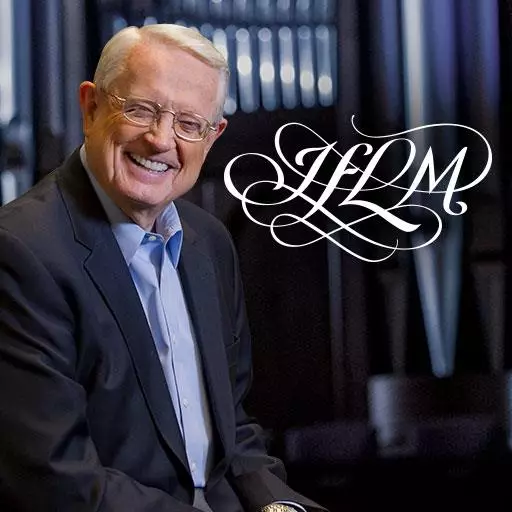
Abraham: The Father Who Released His Son, Part 2


God loves to work in seemingly impossible situations.
Tune in to hear Pastor Chuck Swindoll preach from Genesis 22. Discover what you can learn from God’s test of Abraham’s faith.
What person, possession, occupation, or dream are you clinging to with closed fists? Release it to God in simple obedience. Trust Him to take care of you as you hold everything loosely!
Bill Meyer: We all do it. We clutch, we cling. We wrap our fingers around the people and possessions we treasure most, convinced that if we just hold on tight enough, we can keep them safe. But what if God is gently prying open our clenched fists, not to take something away, but to free us from what's controlling us?
Today on Insight for Living, Chuck Swindoll takes us to an ancient mountaintop where one father learned the hardest and most liberating lesson of his life. Chuck titled today's message "Abraham: The Father Who Released His Son."
Chuck Swindoll: The story we're looking at in Genesis chapter 22 is not the story about the loss of possessions, something that could be purchased for a price, or the loss of an occupation, or the loss of a dream, a long-awaited desire. This is the loss of a person, or the potential loss of a person. This is the story of a father, an old and aging father, whose delight of his life is his boy. And it's the story of his releasing his boy in the mystery of God's will to be taken from him.
There's a command to be obeyed at the beginning of Genesis 22. It came about after these things that God tested Abraham and said to him, "Abraham," and he said, "Here I am." He said, "Take now your son, your only son, whom you love, Isaac, and go to the land of Moriah and offer him there as a burnt offering on one of the mountains of which I will tell you."
Now, why would a good God ask a kind and gentle and loving father like Abraham to do such a thing? Well, it's clear: to put to the test the validity, the authenticity of the man's faith. Was Abraham more in love with the gift of God or God himself? Which is a question every parent has to ask himself periodically. Do I adore the gifts God gives me more than I adore the giver of those gifts? Have I turned to worshiping the ones that God has granted me rather than the one who gave me these delights in my life?
The word "burnt offering" really means a whole burnt offering, an entire burnt offering. When that kind of "olah" is the word, when an olah was offered up, it was hoof, tail, head, ears, body, carcass, all of it. The entire offering was burnt up before God. That's the word used by God. I want the entire body of this young man placed on the altar and given to me.
You can't help but be impressed with the father's swift obedience. I'm impressed with that. Look at the speed of Abraham's reaction. There's no argument, there's no hesitation, there's no bargaining, there's not even a question or a hint of reluctance. Abraham rose early in the morning. He saddled his donkey. He took two of his young men with him and Isaac, his son. And he split wood for the olah, for the whole burnt offering, and he arose and went to the place of which God had told him.
There is resignation in this father's actions, isn't there? He held nothing back. He made the journey, took the wood, planned to bid his boy farewell, a final farewell. I'm impressed with the dad's simple, trusting faith. On the third day, Abraham raised his eyes and he saw the place in the distance. He looked in the distance and he saw the mountain. Somehow, God must have communicated to him, "That's the place, Mount Moriah. That's where I want your boy to be sacrificed."
And Abraham said to his young men who had made the journey thus far with them, "Stay here with the donkey. I and the lad will go yonder, and we will worship and return to you." It took several readings of this when I first looked at this passage to realize that this is a real statement of faith. "I and the lad will go. I and the lad will worship." Look at the plural pronoun: "We will worship. And I and the lad will return."
Have you ever seen that before? How could Abraham know that? Well, if you will hold here, you'll find an answer to that question in Hebrews chapter 11, verse 17. By faith, Abraham, when he was tested, offered up Isaac, and he who had received the promises was offering up his only begotten son. It was he to whom it was said, "In Isaac, your seed shall be called." Watch: he considered that God is able to raise men even from the dead, from which he also received him back as a type. You know how Abraham thought they would return? He thought he would offer up Isaac and God would give him his life back. He knew that somehow God would resuscitate Isaac and bring him back down Moriah with him. That's how he could say what he said in verse 5: "We will go, we will worship, we will return."
I'm impressed not only with his speed and with his simple faith, I'm impressed with the thoroughness of his response. Now it's just the two of them as this story unfolds. The servants are left back, and now it's Abraham and Isaac making their way up the mountain together. Abraham took the wood of the burnt offering and laid it on Isaac, his son, and took in his hand the fire and the knife. Picture that. And the two of them walked on together. Isaac spoke to his father and said, "My father." And he said, "Here I am, my son." He said, "Behold the fire and the wood, but where is the lamb for the burnt offering? You forgot to bring the animal."
Which tells you that Abraham didn't tell Isaac all that they were going to be doing on their way up the mountain. By the way, when God tests you, he's not testing other people; he's testing you. When the test is designed for you, it isn't designed necessarily for you to share the whole story with everybody else. Here is a father being tested who doesn't tell his son the whole story, even on his way up the mountain. The boy is asking, "Where is the sacrifice? Hey, Dad, where's the lamb?"
I'm impressed with Abraham's answer. Isn't it great how he answers Isaac? Abraham said, "God will provide. We're doing God's will; it's up to him to work it out. He knows the answers in the back of the book. He's able to put all this together, Isaac. Let's you and me trust him. If I'm willing to risk, I know you are too. Let's go at this together." By the way, a life without risk is a life that's not worth living.
I was amused in reading one woman's words in a little work entitled *God, But I'm Bored*. Eileen Guder says, "You can live on bland food so as to avoid an ulcer. Drink no tea or coffee or other stimulants in the name of health. Go to bed early and stay away from nightlife. Avoid all controversial subjects so as never to give offense. Mind your own business and avoid involvement in other people's problems. Spend money only on necessities and save all you can. Yes, you can break your neck in the bathtub and it'll serve you right. If that's the way you want to live, just live like that."
Some of you are so careful you just absolutely refuse to risk. I mean, you wouldn't get out of your own backyard if you didn't have to go to the store. Absolutely keep everything under control, everything within border, everything within guideline. I mean, every dime you can account for. And I see Abraham here throwing his faith to the winds. You think children don't learn when they have fathers like that? "God will provide, Isaac. God will provide. I'm trusting him; you trust him with me."
Isaac's no dummy; he's got it figured out by now. Verse 9 is mind-boggling. They came to the place of which God had told him, and Abraham built the altar there and arranged the wood. And he ran to find his son because he is hidden? No. There's no fight. There's no hide and seek. Isaac doesn't by now figure it out and take off down Mount Moriah. He's right there with his dad. I am impressed with Isaac. I've heard this preached on before, and I've never heard anybody speak much about Isaac, and he's the sacrifice!
I mean, he crawls up on that altar, and his father binds him to the altar, which was apparently a part of the ritual. Mind-boggling. He laid him on the altar on top of the wood. Here is a father who has released a son.
I'm going to interrupt a wonderful story for a moment and say that you may be right there in another entirely different experience. I don't know where you are. You and your son may be in such a relationship that you simply must cast him onto God. You would love to be able to work out the details, and you cannot. And you know that God is a good God and God will provide an answer, but you cannot do it. You cannot work it out. And as it were, you must lay your boy on top of the wood and risk him to God.
I don't know about other fathers. I only know about this father. This is a father speaking who would love to protect his children from all difficulties. You may not be like that. I'm like that. I don't want them to have pain. I don't want them to suffer hardship. I don't want them to know mistreatment. I don't want them to ever lose a job. I don't want them to go through difficulties if I can possibly keep them from it. But I'm learning as a father the wisdom as they have grown to give them to God. And let him provide and to become to them the father that they will need when I'm out of the picture completely.
And so he laid him on the altar on top of the wood. And there it is, verse 10: Abraham stretched out his hand and took the knife to slay his son. This isn't some horror movie. This isn't something that's going to all of a sudden turn out good as far as Abraham's concerned. He has a knife, he has a son bound on an altar, and he brings the knife up to bring it down into his chest or to slice it across his throat. This is reality. And all of a sudden, out of nowhere, God spoke. "Stop! Wait!"
Isaac was rather relieved at that point, I would imagine. But no, not more so than Abraham. "That's enough, Abraham. You passed the test." Look at what God says. The angel of the Lord called to him from heaven and said, "Abraham, Abraham!" And he said, "Here I am." Oh, what relief. "Here I am." He said, "Don't stretch out your hand against the lad and do nothing to him, for now I know that you fear God."
The most important word in that sentence, I believe: "now." You've proven it to me. You passed the test, my son, my aging son. Now I know that you really reverence me, since you have not withheld your best gift to you, your only son. Abraham raised his eyes and looked, and behold, behind him a ram caught in the thicket by his horns. Abraham went and took the ram and offered him up for an olah in the place of his son. And Abraham called the name of the place "the Lord will provide," Jehovah Jireh. In the mount of the Lord, it will be provided.
Did you know that very near this same spot, Jesus Christ died? You know that as the ancient days passed, and as the sands of time covered over this site and it was rebuilt, and it came to be known as other names, and finally it came to be known as that place where Christ died, the hill marked Calvary. Do you know that? Which was a reminder of another father who held loosely his son.
And on that first Christmas morn, he smiled as that little precious baby was born into the lives of Mary and her husband Joseph. And for the first time, deity had a human voice. And for the first time, God had a human body. And for the first time, men and women could see, tangible, see the living God because God willingly released his son.
I find a couple or three analogies that are worth pondering when I think back over this wonderful story. And the first one is the one I have just mentioned: God the Father showed us how to give when he released his dear son to us. He did that at Bethlehem. He even did it nine months before Bethlehem when he dispatched his son from heaven in all of its glories and gave him to the helpless condition of an embryo, and then fetal form, and then finally to an infant that would breathe and cry and grow and learn and suffer and die. God showed us how to give when he released his dear son to us. The best kind of gift you can give, by the way, is a gift that represents yourself. Something you that means much to you, something you have that represents who you are. And this is what the Father gave us.
Now the second analogy is this: God the Son showed us how to die when he released himself to the Father. And that's illustrated beautifully by Isaac, who gave himself on the altar without a fight. That took place at Calvary.
The third analogy is: God the Spirit will show us how to live and die when we release whatever has us in its grip. Possession, could it be that? Occupation, could it be that? Some dream? Some person? I never know when I speak to a group of people who's hearing what. But I do know that when you present the truth from God's Word, there's always someone who needs to hear something that has been shared.
For all I know, I speak at this moment to one of you who has something tightly in your grip, and you simply cannot let it go. Remember the words out of Ken Medema's piece, "Moses," when he has him throw the staff down, it becomes a serpent, and he has him pick it up again, it becomes a rod. And he says in the song, "Throw it down. Let it go." Let it go. God's trustworthy. He will provide. If he's taking from you some cherished, some delightful situation, he has something in its place. He has a ram in the thicket. You can't see it right now. You wouldn't guess where it is or how God will come through, but he will.
I read as I began this message from Tozer's *The Pursuit of God*. I want to end with a prayer that he concludes this same chapter, "The Blessedness of Possessing Nothing." The same prayer he concludes with, I want to read in conclusion.
"Father, I want to know thee, but my coward heart fears to give up its toys. I cannot part with them without inward bleeding, and I do not try to hide from thee the terror of the parting. I come trembling, but I do come. Please root from my heart all those things which I have cherished so long and which have become a very part of my living self, so that thou mayest enter and dwell there without a rival. Then shalt thou make the place of thy feet glorious. Then shall my heart have no need of the sun to shine in it, for thyself wilt be the light of it, and there shall be no night there. In Jesus' name, Amen."
Let's bow our heads for a few closing thoughts, moments of quietness together. How simple and easy to refer to holding things loosely. How simple it is to read an outline or share a few thoughts from an ancient story and think we've got the lesson down. I've learned in ministry that what we hear, God very soon has us apply. I have no idea what you or I may face. I remember the one who would keep you from pain, but I'm not God. He sees benefit in pain and loss.
It would never be my plan, but it may be the Father's to root from you some shrine, some relationship that has become more than a relationship, some friend who has become more than a friend, some gift that has taken the place of the giver. These great old stories are not given to scratch the itches of our curiosity; they're given really to change our lives. This is a wonderful time of the year to reflect on the giver of every good and perfect gift. Let's keep those things straight. By the way, he still offers the gift of eternal life to all who will believe.
Before you step out into this cool night air, and before you move into your residence, which may be all alone, before your activities begin in a busy morning tomorrow, pause and evaluate. Are you holding all things loosely?
Father, this man who writes this prayer is right: our hearts hate giving up their toys. We find comfort, we find satisfaction, we find great pleasure, we find relief in the comfort zone of the familiar. The risk of change is always difficult. Some are on the verge of a move, and the fear of the move is a frightening thing. May we hold the familiar loosely. Some are on the verge of a major decision, and the unknown is a throbbing reality. May we hold changes loosely. Some of us are at a place where we are forced to make some tough decisions. May we realize that you're the only one worth holding onto tightly. Provide, Father, the things that we cannot provide for ourselves. And I close by praying especially for those who happen to have a son or a daughter, and they must cast them on you for you to work out the details, especially if those children are grown. I pray that you would give relief and faith and strength to the Abrahams who hear these words today. And as you provide the ram in the thicket, remind us again, Lord, that you are faithful. We pray together in the name of Jesus, your best gift. Amen.
Bill Meyer: When does human life begin? I'm Bill Meyer. Join us when Chuck Swindoll begins a special series on the sanctity of life Tuesday on Insight for Living.
The preceding message, "Abraham: The Father Who Released His Son," was copyrighted in 1990, 1992, 2001, 2006, 2012, and 2024, and the sound recording was copyrighted in 2024 by Charles R. Swindoll, Inc. All rights are reserved worldwide. Duplication of copyrighted material for commercial use is strictly prohibited.
Featured Offer

Pastor Chuck’s audio set (CD or MP3), commentary, and companion spiral-bound workbooks give you everything you need to walk with Jesus from Galilee to the empty tomb.
Past Episodes

Video from Pastor Chuck Swindoll
Featured Offer
Pastor Chuck’s audio set (CD or MP3), commentary, and companion spiral-bound workbooks give you everything you need to walk with Jesus from Galilee to the empty tomb.
About Insight for Living
Join the millions who listen to the lively messages of Pastor Chuck Swindoll, a down-to-earth pastor who communicates God’s truth in understandable and practical terms, with a good dose of humor thrown in. Chuck’s messages help you apply the Bible to your own life.
About Pastor Chuck Swindoll
For most of his entire life, Pastor Charles R. Swindoll has devoted himself to the accurate, practical teaching and application of God's Word — anchoring every message in the transforming power of God's amazing grace. From congregations on the East Coast to the West Coast, his ministry has carried that message across the country, ultimately taking root in Frisco, Texas, where he founded Stonebriar Community Church. Yet Chuck's influence has never been confined to a single sanctuary. Since 1979, Chuck’s messages have aired on Insight for Living, one of the most widely heard programs in Christian broadcasting, carrying his voice — and the timeless truth of Scripture — to listeners around the world. That same passion for God's Word has shaped his leadership at Dallas Theological Seminary, where his tenure as president and now chancellor emeritus has helped raise up a new generation of men and women equipped and called to ministry. Few lives have touched so many, across so many places, for so long.
Contact Insight for Living with Pastor Chuck Swindoll
customerservice@insight.org
http://www.insight.org/
Mailing Address
Insight for Living
Post Office Box 5000
Frisco, Texas 75034
USA
Phone Number
1-800-772-8888