

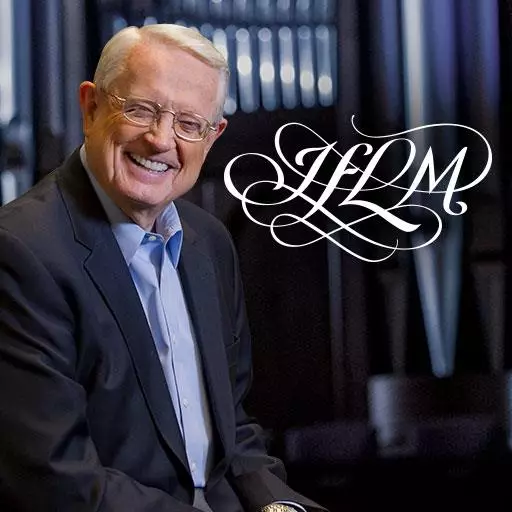
Abraham: The Father Who Released His Son, Part 1


God loves to work in seemingly impossible situations.
Tune in to hear Pastor Chuck Swindoll preach from Genesis 22. Discover what you can learn from God’s test of Abraham’s faith.
What person, possession, occupation, or dream are you clinging to with closed fists? Release it to God in simple obedience. Trust Him to take care of you as you hold everything loosely!
Bill Meyer: Have you noticed when we grasp onto something we treasure with all our might, our knuckles turn white? It happens metaphorically with any possession that defines us, relationship that completes us, or dreams we’ve spent years building. But what happens when God asks us to open our hands and let go?
Today, on Insight for Living, Chuck Swindoll takes us to one of scripture’s most gut-wrenching moments, when a father faced the ultimate test of faith on a lonely mountain. Through Abraham’s story, we’ll discover why the Christian life requires us to hold everything loosely.
Chuck Swindoll: We’re thinking about great stories from the Old Testament in this series we are involved in these days, and it seemed one that would be most appropriate for this hour is the story of the father who released his son.
And of course, the analogy between this earthly father who did that and our heavenly father who did that on the great Christmas morn in its origin is undeniable, and you just can't see one without picturing the other. Really I think what the greater message in this story is all about is the importance of holding all things loosely.
Shortly before her death, Corrie ten Boom spent worship hours in our church in Fullerton. It was always my privilege to see her in our congregation, so unassuming, quiet in her own way, and uniquely worshipful. I always wrestled a bit with feelings of intimidation, having a woman of that stature and with her vast experience sitting of all things under my teaching.
On occasion, she would speak with me quietly as the service had ended, and I will never forget one time when we got on the subject of our children. During the growing up years of our little ones, she often took delight in watching them as they grew, and she said to me, knowing my love for my children and my wife, she said, "You know, Pastor Chuck, I have learned in my years that we must always hold things loosely."
She said because the more we love these ones, the more we tend to hold them tightly, and it will hurt when the father pries our fingers from them and takes them from us. Now that most of my family members have grown and left the nest, I know a little bit about what she was referring to, but nothing like some of you know who have in fact lost your children or lost your mate. There is something very stressful about holding precious things loosely only to have them taken, but even more so to hold them tightly and have them removed from us.
While thinking about the importance of holding all things loosely, it occurred to me that there are two, three, four categories where this is very true, and I'd like for you, before we look at the story in Genesis 22 for a brief period of time, I'd like for you to think first with me about some of the things that we tend to hold too tightly.
First, and in no particular order of importance, we would have to name things, possessions, all the things that would fall into the category of that which has a price tag. Things we purchase or things that have been passed down to us in our family. Some of the most priceless things in our home are the things that we have received from my wife's parents and some from even their parents and a few things from my own family legacy. These things cannot be replaced; they are invaluable, we say. Nevertheless, it is easy for us to become attached to things.
A.W. Tozer in his days on earth often wrote about the devastation connected with holding too tightly to things. And in what I consider to be his finest work, *The Pursuit of God*, he writes these words regarding the blessedness of possessing nothing. Listen to what he says:
"Before the Lord God made man upon the earth, He first prepared for him by creating a world of useful and pleasant things for his sustenance and delight. In the Genesis account of the creation, these are called simply things. They were made for man's uses, but they were meant always to be external to the man and subservient to him. In the deep heart of the man was a shrine where none but God was worthy to come. Within him was God, without, a thousand gifts which God had showered upon him."
"But," writes Tozer, "sin has introduced complications and has made those very gifts of God a potential source of ruin to the soul. Our woes began when God was forced out of His central shrine and things were allowed to enter. Within the human heart, things have taken over."
And then he writes, "We must in our heart live through Abraham's harsh and bitter experiences if we would know the blessedness which follows them. The ancient curse," he warns, "will not go out painlessly. The tough old miser within us will not lie down and die obedient to our command. He must be torn out of our hearts like a plant from the soil. He must be extracted in agony and blood like a tooth from the jaw. He must be expelled from our soul by violence, as Christ expelled the moneychangers from the temple, and we shall need to steel ourselves against his piteous begging and to recognize it as springing out of self-pity, one of the most reprehensible sins of the human heart."
Maybe the words are too dramatic for some of you, but I find them enough to get my attention. I often warn people to remember that when it comes to holding onto things, it's possible that one of us could on some occasion, God forbid, drive home from a church service or back from a wonderful retreat or back from a romantic and delightful weekend with our mate or an enjoyable time with our friends, only to come to a smoldering pile of ruins that was once our home.
I made that warning several months ago and I received a letter from a lady who said to me, "That's exactly what happened. I in fact heard your tape that had been made of the message where you mentioned that and I thought to myself, oh that'll never happen. And yet I returned to my home and I pulled down the street and to my amazement, I saw everything that we had owned now in smoldering ruins." And she said, "I realized that everything that was important to me was not burnt up in that fire. The memories, the relationships with my family and my friends, the important things in life, had not been burnt up."
When I talk about holding things loosely, I'm talking about things that can burn up in a fire. You can't burn up a memory. You can't burn up a relationship. The second category of holding onto things would certainly be our occupation and our work. You know there isn't a week that passes that somebody doesn't lose their job. There isn't a week that passes that someone doesn't lose his job or his or her business, and that's not a problem if our image isn't tied up in our work. But difficulties come when somehow we become so enmeshed in our work that the loss of an occupation becomes the loss of who we are, and that's devastating.
A third category after things and occupation would be plans and dreams and long-awaited desires. Who hasn't suffered through the death of a dream? Who hasn't watched a long-awaited desire fly away? Something you had planned on and worked for. Keep in mind, those dreams often are taken away before they are fulfilled, and I warn all of us to hold them loosely.
Fourth and most significant of all would be relationships and people. Relationships. This includes mates, parents, children, family members, friends. Romances that are now flourishing may not continue to flourish. Partnerships that now seem solid and sure may not remain solid.
Pastors move elsewhere as God leads them. You must always hold the leaders of the church loosely. You do not own us. We work together, we move together, but we all belong to the same Lord, and as He moves people from congregations, He also moves pastors from one church to another. Roommates move out, neighbors move on, workmen and women alongside us are called elsewhere, children are sometimes called home before parents. We must hold all of this loosely.
And that's the lesson that Abraham had to learn. The story we're looking at in Genesis chapter 22 is not the story about the loss of possessions, something that could be purchased for a price, or the loss of an occupation, or the loss of a dream, a long-awaited desire. This is the loss of a person or the potential loss of a person.
And I have to be careful how I say this lest somebody be offended, but unless you are a parent, you really can't enter into the truth and the full feelings of Genesis 22. You have to be there as a dad or as a mom to really feel what Abraham must have felt. You can imagine it, but being a parent means you can really identify with the feelings.
There are a lot of great father-son stories in the scriptures. It occurred to me while putting my thoughts together for this, that there's the story of Noah and his three sons, which follows one particular line of thinking. There's the story of Jacob and his 12 boys, especially his favorite, Joseph. And then there's the story of Eli and his sons. It's a study in tragedy as this priest has boys that he couldn't control, and they became out of control; in fact, they became a scandal in the ancient tabernacle.
And then there's the unforgettable story of David and his son Absalom and another son Solomon, another interesting study. And there is in the New Testament the greatest of all stories aside from the coming of Christ, and that is the story of the prodigal son, which I often think of as the wayward lad and the waiting dad. I often return to the story of the prodigal son in counseling with people who are going through a heartbreaking experience. The lessons to be learned from the prodigal son are it seems unending.
But this is the story of a father, an old and aging father whose delight of his life is his boy, and it's the story of his releasing his boy in the mystery of God's will to be taken from him.
There's a command to be obeyed at the beginning of Genesis 22, and you can read it along with me. Just follow along. "It came about after these things that God tested Abraham and said to him, 'Abraham,' and he said, 'Here I am.' He said, 'Take now your son, your only son whom you love, Isaac, and go to the land of Moriah and offer him there as a burnt offering on one of the mountains of which I will tell you.'"
You know familiarity not only breeds contempt, it breeds boredom. And you read a verse like this and you don't really enter into the feelings unless you stop and meditate for a few moments. Put yourself in the shoes of a hundred-plus-year-old father whose long-awaited boy has been born and whose most delightful memories have to do with the times spent with your boy Isaac.
So you understand what it means when it says God tested Abraham. There are a number of ways the writer of the Genesis 22 passage could have written "tested," and he chose the most intense of all the Hebrew stems in the verbs. He intensely tested Abraham. He put him through an extremely difficult test.
In many ways, it would have been easier if God had just taken Isaac from him, but He prolongs it by having Abraham carry it out. And Abraham is to be the instrument of death in the life of his boy. If you can imagine, I can't. Only in my wildest imaginations.
Now why would a good God ask a kind and gentle and loving father like Abraham to do such a thing? Well it's clear: to put to the test the validity, the authenticity of the man's faith. Was Abraham more in love with the gift of God or God himself? Which is a question every parent has to ask himself periodically.
Do I adore the gifts God gives me more than I adore the giver of those gifts? Have I turned to worshiping the ones that God has granted me rather than the one who gave me these delights in my life? The word burnt offering really means a whole burnt offering, W-H-O-L-E, an entire burnt offering.
When that kind of *olah*—is the word—when an *olah* was offered up, it was hoof, tail, head, ears, body, carcass, all of it. The entire offering was burnt up before God. That's the word used by God. "I want the entire body of this young man placed on the altar and given to me."
You can't help but be impressed with the father's swift obedience. I'm impressed with that. Look at the speed of Abraham's reaction. There's no argument, there's no hesitation, there's no bargaining, there's not even a question or a hint of reluctance.
Abraham rose early in the morning. He saddled his donkey. He took two of his young men with him and Isaac his son. And he split wood for the *olah*, for the whole burnt offering, and he arose and went to the place of which God had told him.
There is resignation in this father's actions, isn't there? He held nothing back. Made the journey, took the wood, planned to bid his boy farewell, a final farewell. I'm impressed with the dad's simple trusting faith. On the third day, Abraham raised his eyes and he saw the place in the distance. He looked in the distance and he saw the mountain.
Somehow God must have communicated to him, "That's the place, Mount Moriah. That's where I want your boy to be sacrificed." And Abraham said to his young men who had made the journey thus far with them, "Stay here with the donkey; I and the lad will go yonder and we will worship and return to you."
It took several readings of this when I first looked at this passage to realize that this is a real statement of faith. "I and the lad will go. I and the lad will worship." Look at the plural pronoun we. "We will worship, and I and the lad will return."
You ever seen that before? How could Abraham know that? Well if you will hold here, you'll find an answer to that question in Hebrews chapter 11, verse 17. Yes, Hebrews 11:17 answers the question how Abraham could have said, "We will go, we will worship, and we will return to you."
"By faith Abraham, when he was tested, offered up Isaac, and he who had received the promises was offering up his only begotten son. It was he to whom it was said, 'In Isaac your seed shall be called.'" Watch. "He considered that God is able to raise men even from the dead, from which he also received him back as a type."
You know how Abraham thought they would return? He thought he would offer up Isaac and God would give him his life back. He knew that somehow God would resuscitate Isaac and bring him back down Moriah with him. That's how he could say what he said in verse 5. "We will go, we will worship, we will return."
Oswald Chambers, in his eminent work *My Utmost for His Highest*, writes about reckless abandonment. Listen to these words: "Faith is the heroic effort of your life. You fling yourself in reckless confidence on God. God has ventured all in Jesus Christ to save us. Now He wants us to venture our all in abandoned confidence in Him. The real meaning of eternal life is a life that can face anything it has to face without wavering. Again and again, you will get up to what Jesus Christ wants, and every time you will turn back when it comes to the point until you abandon resolutely."
"Jesus Christ demands that you risk everything you hold by common sense and leap into what He says. Christ demands of the man who trusts Him the same reckless spirit that is daring enough to step out of the crowd and bank his faith in the character of God."
That's what Abraham does. I'm impressed not only with his speed and with his simple faith, I'm impressed with the thoroughness of his response. Keep reading here. "We will go, we will worship, and we will return to you." Now it's just the two of them as this story unfolds.
The servants are left back and now it's Abraham and Isaac making their way up the mountain together. Abraham took the wood of the burnt offering and laid it on Isaac his son. Now when I was growing up in Sunday school, I remember seeing stories of Abraham and Isaac, and Isaac was always a little tiny boy who kind of walked along with his daddy.
But little tiny boys don't carry enough wood for an offering. Isaac isn't a little boy. Isaac is half-grown. He's a young adult. Isaac is old enough to converse with his father and to understand something of sacrifice. Little boys don't know enough to ask this kind of question.
This is a wonderful moment between a father and a growing son, and if you let the word speak as they are, you'll be impressed with their relationship. Abraham took the wood and laid it on his son and took in his hand the fire and the knife. Picture that. And the two of them walked on together. And Isaac spoke to his father and said, "My father." He said, "Here I am, my son." He said, "Behold the fire and the wood, but where is the lamb for the burnt offering? You forgot to bring the animal."
Which tells you that Abraham didn't tell Isaac all that they were going to be doing on their way up the mountain. By the way, when God tests you, He's not testing other people; He's testing you. When the test is designed for you, it isn't designed necessarily for you to share the whole story with everybody else.
Here is a father being tested who doesn't tell his son the whole story, even on his way up the mountain. The boy's asking, "Where is the sacrifice? Hey Dad, where's the lamb?" I'm impressed with Abraham's answer. Isn't it great how he answers Isaac? Verse 8, Abraham said, "God will provide."
I like it that Abraham doesn't say to Isaac, "Well, you're the sacrifice." Now that kind of blow a guy away walking up a mountain with a handful of wood hearing from his daddy, "You're the one we're going to burn up when we get up the top of the hill."
There is a place where you have to be wise when you deal with things like this. Talk about risk, look at his answer: "God will provide for himself." That's up to God. We're doing God's will; it's up to Him to work it out. He knows the answers in the back of the book. He's able to put all this together, Isaac, let's you and me trust him. If I'm willing to risk, I know you are too. Let's go at this together.
Bill Meyer: Wow. Imagine the exchange between father and son as Abraham and Isaac trekked up the hill. You’re listening to the Bible teaching of Chuck Swindoll, and this is Insight for Living. We’re just getting started in a 14-part series of biographical sketches called Fascinating Stories of Forgotten Lives.
You know that feeling when you’re reading through the Bible and suddenly a minor character jumps off the page? Maybe it’s Onesiphorus, who wasn’t ashamed of Paul’s chains, or Joanna, who quietly funded Jesus’ ministry. Chuck has that rare gift of turning these brief mentions into unforgettable encounters with real people who faced real struggles, just like we do. His series called Fascinating Stories of Forgotten Lives gives you 14 of these portraits.
Picture yourself on a Saturday morning with your coffee, opening up one of these messages and meeting someone you’ve skimmed past a dozen times. Or imagine your small group discovering why God preserved even a single verse about someone’s faithfulness. The *Searching the Scriptures* Bible study workbook will guide you.
This popular spiral-bound study will transform your experience from simply listening to Chuck teach to discovering the text for yourself. Along the way, you’ll follow Chuck’s preparation process, the questions he asks, and the connections he makes, all while capturing your own insights in the margins. It’s like having a master teacher show you not just what he found, but how he found it.
To purchase the *Searching the Scriptures* Bible study for Fascinating Stories of Forgotten Lives, call us at 800-772-8888, or go to insight.org/offer. Remember the first time you listened to Chuck Swindoll teach the Bible? Maybe that moment was sponsored by someone you may never meet. It was a Monthly Companion who sponsored you.
If you’re a regular listener, isn’t it time you took that step? To provide this program for someone else, we invite you to become a Monthly Companion. Call us at 800-772-8888, or you can become a Monthly Companion online at insight.org/monthly-companion.
I'm Bill Meyer. Join us when Chuck Swindoll continues the series called Fascinating Stories of Forgotten Lives, Monday on Insight for Living.
The preceding message, Abraham: The Father Who Released His Son, was copyrighted in 1990, 1992, 2001, 2006, 2012, and 2024, and the sound recording was copyrighted in 2024 by Charles R. Swindoll Incorporated. All rights are reserved worldwide. Duplication of copyrighted material for commercial use is strictly prohibited.
Featured Offer

Pastor Chuck’s audio set (CD or MP3), commentary, and companion spiral-bound workbooks give you everything you need to walk with Jesus from Galilee to the empty tomb.
Past Episodes

Video from Pastor Chuck Swindoll
Featured Offer
Pastor Chuck’s audio set (CD or MP3), commentary, and companion spiral-bound workbooks give you everything you need to walk with Jesus from Galilee to the empty tomb.
About Insight for Living
Join the millions who listen to the lively messages of Pastor Chuck Swindoll, a down-to-earth pastor who communicates God’s truth in understandable and practical terms, with a good dose of humor thrown in. Chuck’s messages help you apply the Bible to your own life.
About Pastor Chuck Swindoll
For most of his entire life, Pastor Charles R. Swindoll has devoted himself to the accurate, practical teaching and application of God's Word — anchoring every message in the transforming power of God's amazing grace. From congregations on the East Coast to the West Coast, his ministry has carried that message across the country, ultimately taking root in Frisco, Texas, where he founded Stonebriar Community Church. Yet Chuck's influence has never been confined to a single sanctuary. Since 1979, Chuck’s messages have aired on Insight for Living, one of the most widely heard programs in Christian broadcasting, carrying his voice — and the timeless truth of Scripture — to listeners around the world. That same passion for God's Word has shaped his leadership at Dallas Theological Seminary, where his tenure as president and now chancellor emeritus has helped raise up a new generation of men and women equipped and called to ministry. Few lives have touched so many, across so many places, for so long.
Contact Insight for Living with Pastor Chuck Swindoll
customerservice@insight.org
http://www.insight.org/
Mailing Address
Insight for Living
Post Office Box 5000
Frisco, Texas 75034
USA
Phone Number
1-800-772-8888