

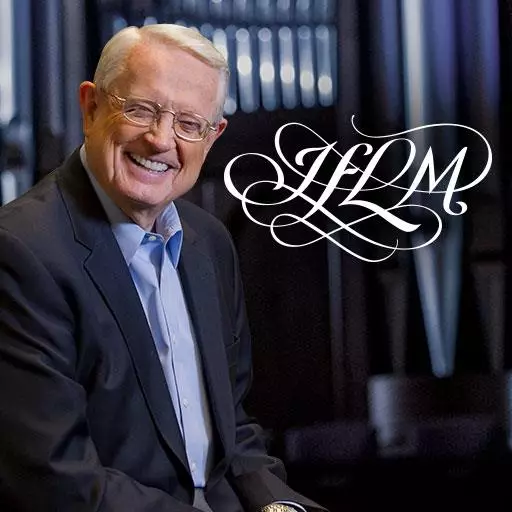
A Leadership Style That Works . . . Guaranteed!, Part 2


Do you want to influence others for Christ and lead others in a Christlike way?
Impactful leaders have inner security, a commitment to excellence, and deliberate faith in God. They love to serve others, and they get along with people. But good leaders are hard to come by. Tune in today to hear Pastor Chuck Swindoll discuss leadership essentials found in 1 Thessalonians 2:1–12.
Discover how you can grow as a leader and steward your life for God’s glory!
Bill Meyer: Ever notice how the best restaurants reflect their leadership? Walk into Al’s place, for instance, and you’ll quickly discover whether someone competent is running the kitchen. Well, the same is true for churches, businesses, and families.
But here’s what might surprise you: the most effective leaders aren’t the loudest voices or the most impressive personalities. Today on Insight for Living, Chuck Swindoll points to Paul’s radically different leadership model in 1 Thessalonians, one where success means working yourself out of a job by raising up others. Chuck titled today’s message "A Leadership Style That Works . . . Guaranteed!"
Chuck Swindoll: The best leaders come from a scarred past. They understand suffering. They understand mistreatment. They’ve earned the right to be respected because they have labored against much opposition. Now, there are some things that you don’t want to have as a leader. In verses 3 through 6, you will find those negatives, and there are four of them I find here. And then verses 7 through 11, you’ll find four positives that you do want to have.
First, deception (verse 3). Our leadership, our style of exhorting, our approach, our ministry, does not come from error or impurity—it has reference to a faulty motive—or by way of deceit. We didn’t come lacking integrity. We didn’t come with deception.
Verse 4 is the second negative characteristic: flattery, or as he puts it, being a people-pleaser. Let me read it for you: "But just as we have been approved by God to be entrusted with the gospel, and so we speak, not as pleasing men, but God who examines our hearts." So good.
When you come to the place where the word of God, the goals of God, the principles of God are the single most important ingredient of your mission, you begin to stop pleasing people. You can’t be a slave of people and a slave of Christ at the same time. It doesn’t mean you have to be abrasive, but it does mean your ultimate goal is to please the living God.
Clyde Cook over at Biola sent me a statement some time ago; it was a great quotation. It said, "I don’t know the secret of success, but I do know the secret of failure: try to please everybody." If you’re struggling with pleasing everybody, no wonder you’re struggling with success. No wonder you’re failing. God help you to see in verse 4 of chapter 2 in 1 Thessalonians that you really are to please God, and that means at any cost.
Number three is greed (verse 5). "We never came with flattering speech, as you know, nor with a pretext for greed." Now, they couldn’t know that—that is, deeply. Only God could know that. That’s why he adds, "God is the witness of that." Greed is the desire to have more. It is the desire to possess more than you need. And when taken to the extreme, it is the desire to possess what belongs to someone else.
We often apply it to money, and perhaps we should, but it isn’t limited to money. There can be greed of glory. And as a leader, you’ll wrestle with that. There can be greed of results. There can be greed of numbers. There can be greed of facilities: bigger buildings, greater impact. There can be greed of popularity, greed of even truth: "We have more of the truth than anyone else."
I read this past week: greed has three facets—love of things, love of fame, love of pleasure. And these can be attacked directly with frugality, anonymity, and moderation. Isn’t that a good quote? These things can be attacked with frugality, anonymity, and moderation.
Put the brakes on, as a strong leader. Control yourself. Get a hold of this greed that drives you to be the top, the best, the most, the fastest, the most successful, the one with the most money, the most sales. Take a look at your greed and ask, "Is that really what’s driving me?" See how this directly addresses those things that people can’t see? That’s why God must be the witness.
Number four would be authoritarianism (verse 6). "We didn’t seek glory from men, either from you or from others." Now, I like the next phrase, you will too: "even though as apostles of Christ, we might have asserted our authority." Isn’t that great?
There is something believable about Paul. Here was a man who could have flown into the city with pomp and demanded the top treatment—and gotten it. Spiritual leaders get away with murder because they do it all in the name of God. And who’s going to pull rank on God?
I love the story Jay Kesler told me some time ago. He said when he took over Youth for Christ, he had a lot of great vision. He said he called the board together and he said, "Now listen, everybody. God’s talked to me, and God’s led me to make certain decisions, and God’s leading us to do this and this and that."
The board members sat there. They broke up for lunch, and a crusty old board member named Fred Smith out of Dallas, whom some of you knew, pulled Jay aside and said, "Now Jay, if you want me to be on the board and be a part of your board, I’m glad to do it. But please don’t bring me from Dallas to vote against God."
Jay said he learned a very important lesson. Be careful about quoting God as your single source of authority. Be careful about that. The point is clear, and there are some who hear me right now who are superb spiritual leaders. Your followers will let you get away with all kinds of things. Part of the reason is they’re afraid of you. Part of the reason is just your position is intimidating.
And part of the reason is that’s what you do with spiritual leaders. You put them on a pedestal and you hold them aloof and you protect them. You do it out of respect, to be sure, but you do it. And the spiritual leader can assert an enormous amount of authority and get away with it. He’s got to be human. He has to live with himself or herself. Take a look at the rights you’re taking advantage of, if in fact you are, and only you know.
The best kind of leader is the servant leader. I don’t mean a guy that sticks his hand in his pocket and says, "Aw, shucks" all day. That’s not servanthood. Not a person that says, "No, I can’t. No, I’m not qualified. No, I’m not the one. No, I’m the worst in the group." That’s a worst kind of pride. But one who knows himself or herself well enough to tell himself the truth and will put brakes on where necessary.
The 150th anniversary of the birthday of Abraham Lincoln, Carl Sandburg addressed an assembled diplomatic corps and a joint session of Congress. The date was February 12, 1959. Lincoln students will remember it. His address was called "Lincoln: Man of Steel and Velvet."
Among other things, he said, "Not often in the story of mankind does one arrive on earth who is both steel and velvet, who is as hard as rock and as soft as drifting fog, who holds in his heart and mind the paradox of terrible storm and peace unspeakable. While the war winds howled, he insisted the Mississippi was one river, meant to belong to one country, that railroad connections from coast to coast must be pushed through."
"While the war wavered and broke and came again as generals failed and campaigns were lost, he held enough forces of the North together to raise new armies and supply them until new generals were found who made war as victorious war has always been made—with terror, frightfulness, destruction, valor, and sacrifice past words of man to tell. In the mixed shame and blame of the immense wrongs of two crashing civilizations, often with nothing to say, he said nothing. He slept not at all, and on occasion he was seen to weep in a way that made weeping appropriate, decent, and majestic."
A little anecdote that Sandburg adds: a man from Indiana at the White House overheard the president say, "Voreis, don’t it seem strange to you that I, who could never so much as cut off the head of a chicken, should be elected into the midst of all this blood?" There’s a humanness about that. He isn’t affected by his position. He’s a leader you could sit down with and talk. Be like that.
Now, there are some positives. First is sensitivity to needs (verse 7). "We proved to be gentle among you as a nursing mother tenderly cares for her own children." I think it’s significant that Paul picks up on a feministic trait of tenderness and he applies it to himself. How much we need it! There’s a tenderness. I think he was at times close to tears and maybe in them, giving them, as Lincoln, a decency and majesty that fits tears.
He wasn’t a glory hog. Mothers aren’t that. He tenderly cared for them as a mother would for her own children. There’s nothing of selfishness in the mother role. There is this constant giving, there is this deep commitment, there is this absolute resistance against running. There is this staying with the family if it means living on the street, because that’s the way it is with mothers. There is this caring for deep needs, and so it is among good leaders. As a nursing mother, there is a sensitivity to needs.
Second is affection for people. "Having thus a fond affection for you." People weren’t used by the apostle. They didn’t find themselves at the end of the tether as he swung them from one objective to another. That wasn’t Paul’s style. He loved them too much for that.
The popular idea is that the tough-minded executive is a professional with a cool air of sophistication who carries himself at a distance from the people. You don’t find that in Scripture. You certainly don’t see that in the life of the Savior. That’s why He made such an impact. He wasn’t like most of the religious leaders. You could touch Him. He made sense. He had an affection for people.
Just a moment, when was the last time you said to some other adult outside your family, "I love you"? You have no idea what that would mean. Speaking to a man I greatly admire just two weeks ago, and just as we were ending the conversation, he said, "Oh, and Chuck." "Yeah." "Hey, I love you." I could hardly say goodbye, even though I sensed down inside there was a love relationship.
He told me, and not just "love ya." Songs say that. "Love ya, love ya." But *I*, put a pronoun on it. Say *you*. Put a name on it. Call the name. I dare you. It’s remarkable what that will do. "I love you." Paul said that. That was fond affection.
And look at this: there was transparency and authenticity of life. "We were pleased to impart to you not only the gospel, but our own lives." Isn’t that wonderful? Why? Because you became dear to us. Don’t miss this third one: an authenticity of life. We imparted life. Are you a teacher of the scriptures? You are imparting life. You are imparting secrets. You are imparting struggles. You are imparting scars. You are imparting reality. Impart that.
Paint the real picture. Add the browns and the blacks and the grays. Leave room. Leave room for the humanity. You’re imparting life. I think at times some young Christians must listen to our story and just kind of, "Ah, I’ll never make it," because we don’t impart life. "I imparted not only the gospel, but our own lives." Why? Because you were dear. You see, having someone dear to you means you let down the barriers. You open up.
You recall—see, say it again, verse 9—remember how we worked among you? We labored night and day so as not to be a burden to any of you. We proclaimed to you the gospel, so he didn’t hedge on that. But "you’re witnesses and so is God how devoutly, uprightly, and blamelessly we behaved." I’ve circled those two phrases: *we proclaimed* line, *we behaved*. See, there was—the triangles were congruent.
I remember being under the ministry of a certain Bible teacher, and I listened to what he said, but I couldn’t square it with his life. Confused me. For the longest time it confused me. And I kept explaining it away thinking, well, I’m not really seeing what I’m seeing, but I was. To get out of that tailspin took me the better part of ten, twelve years. Because he didn’t impart life; imparted truth. And it was true, good truth. I still rely on some of it, but his life was a lie.
There is nothing like incarnating the truth so that what you say mixes with what you live, and it is an undeniable, invincible message. All hell can break loose and you stand fast. See, there’s authenticity of life.
Fourth, there is enthusiastic affirmation (verse 11). "You know we were exhorting and encouraging and imploring each one of you as a father would his children." Isn’t that good? Dads will understand. If you have ever sat in front of the father of the quarterback of the team, you’ll understand. I love sitting in front of fathers of quarterbacks.
I mean, they have got a connection. Now, that son can’t hear that dad, but that dad is continually giving messages to that son. And he’s sacked and he’s a, you know, 12, 15-yard loss. "That’s okay! Let’s go! Let’s take ‘em down the field, take ‘em down the field."
Now, I can barely hear the father; it’s under his breath, but that son, he takes ‘em down the field. "Now go for it! Shoot that pass out to the right!" The guy’s gotta take it to the right now. You gotta go over to the right. And it’s amazing. The guy goes over the right and he shoots the pass and they go right on down the field because this father is imploring and encouraging his son.
There is continued affirmation. I have never heard a good father of a quarterback say, "Why don’t you give up? Coach, put somebody else in!" No, the father is forever affirming, enthusiastically affirming his boy. I’ve seen them stand drenched in rain on the bench, "Go for it! Go for it!" This kid’s out there knocking himself dead, mud up to his thighs, you know, trying to just survive, and this father never thinks of quitting.
People need affirmation. Ladies and gentlemen, Christian people need affirmation. We have been beaten black and blue. We have been stripped to the bone. We have been told we are sinners until we can spell the word backwards. We need to know that we are in Christ and therefore as righteous as Christ Himself.
That there is hope for sinners, that there is a future for failures, that there is forgiveness for the saint. We can’t let our wounded die. We gotta stop shooting ‘em. Somehow they have to know if they come back, there’ll be affirmation, like a father who waits for a son that lived in a pigpen, imploring, encouraging, and exhorting. Who knows how many would come back if they really believed they would be affirmed and forgiven?
The ultimate objective? To get the biggest church? To have the greatest reputation? To have the largest practice? You know better than that. "So that you may walk in a manner worthy of the God who called you into His own kingdom and glory." Now the good thing about it is, it’s for your benefit. Those you are leading are to discover, if you do as I lead, you’ll benefit.
It’ll be good for you, Christian. It’ll be good for you as you lead your class. Your followers will walk better. That exciting? It’ll be good for them. Not good for you. Leader works himself out of a job. The followers become the new leaders. They emerge if you give ‘em breathing room. They take charge, they begin to carry the torch. Catch the switch? It isn’t simply your objective to get something done; it’s for *their* good. Love that whole idea. "So that you may walk in a manner worthy of the God who called you to his kingdom and glory." If we ever caught that, what a remarkable change would occur in the church of Christ.
Three essentials. Number one, there must be inner security to operate like this. There *must* be inner security. Second, there must be a commitment to excellence. You can’t fudge on that. Commitment to excellence. And third, there must be deliberate faith in the living God. That’s in between the lines.
An inner security—that’ll keep you from pleasing people. That’ll keep you from flattery. That’ll keep you from manipulating. An inner security. Second, there’ll be a commitment to excellence. No matter how tough it is, you’re going to make it. You’re going to get there and you’re going to do the very best you could do, and you’re committed to that. If no one else in the organization is, you’re committed to excellence.
And third is a deliberate faith in God. I’ve chosen those words carefully—deliberate. You don’t stumble into faith because everything else fails. You deliberately decide that you will leave room for the living God in your life. That Jesus Christ will indeed be supreme. He will reign as King of Kings and Lord of Lords.
Does the name Howard Rutledge ring a bell? Howard Rutledge, pilot in the Air Force, Vietnam. Good leader. Fine pilot. Shot down. He had been a busy man working his way up in rank in the Air Force. He found himself now with time that he hadn’t had before as he became a part of that horrible ordeal in Vietnam as a prisoner of war.
He writes in his book, "In the Presence of Mine Enemies," "During those longer periods of enforced reflection, it became so much easier to separate the important from the trivial, the worthwhile from the waste. I was too busy, too preoccupied to spend one or two short hours a week thinking about really important things. Now the sights and sounds and smells of death were all around me. My hunger for spiritual food soon outdid my hunger for a steak. Now I wanted to know about that part of me that will never die. Now I wanted to know about God and Christ and His church. But in Heartbreak, the name of the prison camp, solitary confinement, there was no pastor, no Sunday school teacher, no Bible, no hymn book, no community of believers to guide and sustain me. I had completely neglected the spiritual dimension of my life. It took prison to show me how empty life is without God."
What’s it going to take to convince you that life is empty without God? You’re surrounded by people who’ve learned that lesson. Good people, strong leaders, capable people, some of them affluent because of the blessing of God that’s fallen upon them apart from any manipulation. They have deliberately chosen to follow Jesus Christ. Now why haven’t you? Good leaders follow the right people. There’s none better than the Savior.
Let’s bow together. Please come to know the Savior now. Please acknowledge that you’re not the leader of your life, the captain of your soul, the master of your fate. How stupid—that’s not even smart. And you will die, and whatever power is greater than you will take over after death. You know that. Trust Jesus Christ, who came, lived, led, and died for your sins and built the bridge to heaven. Believe in Him now. Deliberately make room for the living God today. Come thou, Almighty King, help us Thy name to sing, help us to praise. The Father, the Son, the Holy Spirit. The Trinity, our leader, our Lord. To You we submit our lives, for Jesus’ sake, amen.
Bill Meyer: This is Insight for Living. If you’ve made a decision to trust Jesus Christ as your Savior and Lord today, we would love to hear from you. You can write to us at Insight for Living, Post Office Box 5000, Frisco, Texas 75034. I’ll repeat that address again in just a moment.
Our Bible teacher is Chuck Swindoll, and the message you heard today comes from a collection of 12 sermons. It’s a practical series Chuck titled "Contagious Christianity." If you’d like to do an in-depth study in 1 Thessalonians, we highly recommend you request the *Searching the Scriptures* Bible study workbook for this series. This popular spiral-bound resource will transform your experience from listening to Chuck teach into discovery for yourself. To order the workbook for "Contagious Christianity," call us at 800-772-8888 or go to insight.org/offer.
In closing, I want to tell you about one of Chuck’s most highly requested books. It ties in naturally with his study on "Contagious Christianity" because it’s about finding outrageous joy. Chuck’s book is called *Laugh Again*. To be clear, joy isn’t the same as happiness. Happiness depends on what’s happening. But joy? Joy runs deeper.
In his book *Laugh Again*, Chuck helps you understand Paul’s radical approach to joy in the book of Philippians. Even when life feels dark, even when you’re tired or afraid, authentic joy is possible—not because you’re ignoring reality, but because you know the One who’s bigger than your reality. We’ll send you the book *Laugh Again* when you make a donation to support the ministry of Insight for Living. To send your request and your contribution, write to us at Post Office Box 5000, Frisco, Texas 75034.
A reminder that your gift, no matter the size, empowers us to share Chuck’s teaching every day on your station and the many other places that you can freely access Insight for Living. Call us at 800-772-8888 or go to insight.org/offer. I’m Bill Meyer. Join us again when Chuck Swindoll continues his series called "Contagious Christianity" Monday on Insight for Living.
Featured Offer

Pastor Chuck’s audio set (CD or MP3), commentary, and companion spiral-bound workbooks give you everything you need to walk with Jesus from Galilee to the empty tomb.
Past Episodes

Video from Pastor Chuck Swindoll
Featured Offer
Pastor Chuck’s audio set (CD or MP3), commentary, and companion spiral-bound workbooks give you everything you need to walk with Jesus from Galilee to the empty tomb.
About Insight for Living
Join the millions who listen to the lively messages of Pastor Chuck Swindoll, a down-to-earth pastor who communicates God’s truth in understandable and practical terms, with a good dose of humor thrown in. Chuck’s messages help you apply the Bible to your own life.
About Pastor Chuck Swindoll
For most of his entire life, Pastor Charles R. Swindoll has devoted himself to the accurate, practical teaching and application of God's Word — anchoring every message in the transforming power of God's amazing grace. From congregations on the East Coast to the West Coast, his ministry has carried that message across the country, ultimately taking root in Frisco, Texas, where he founded Stonebriar Community Church. Yet Chuck's influence has never been confined to a single sanctuary. Since 1979, Chuck’s messages have aired on Insight for Living, one of the most widely heard programs in Christian broadcasting, carrying his voice — and the timeless truth of Scripture — to listeners around the world. That same passion for God's Word has shaped his leadership at Dallas Theological Seminary, where his tenure as president and now chancellor emeritus has helped raise up a new generation of men and women equipped and called to ministry. Few lives have touched so many, across so many places, for so long.
Contact Insight for Living with Pastor Chuck Swindoll
customerservice@insight.org
http://www.insight.org/
Mailing Address
Insight for Living
Post Office Box 5000
Frisco, Texas 75034
USA
Phone Number
1-800-772-8888