

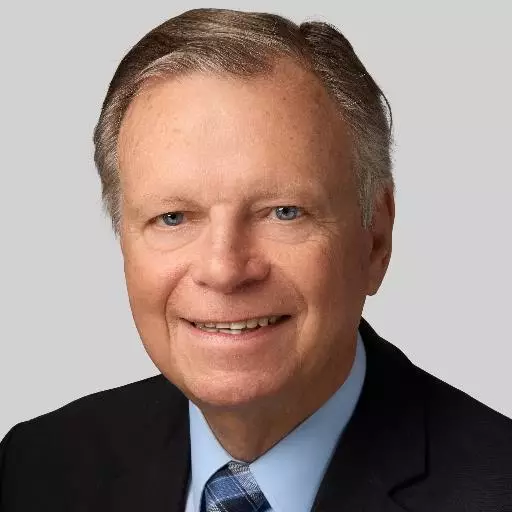
How to Survive When the Economy Collapses pt. 1


Still, today, the effects of the pandemic lockdowns reverberate throughout our lives, businesses, and our economy. Even this many years later, America cannot seem to find its footing financially but especially spiritually. But could it get worse? God’s word has much to say about this, and when that time comes, how can we survive if the economy completely collapses? Today, 3 eternal financial principles in times of trouble.
Mark Finley: Know for sure that the God that redeemed you, the one that created you, the one that is with you today will be with you tomorrow and the next day after that and the next day after that and forever.
Announcer: This is Hope Lives 365 with Pastor Mark Finley. Today's message: How to Survive When the Economy Collapses, part one. Enjoy and remember you can always catch up with past messages and stay up-to-date with Hope Lives 365 and Pastor Mark by going to hopelives365.com. And now, Pastor Mark Finley.
Mark Finley: We're just beginning to experience the long-term effects of COVID-19 or the coronavirus. We're beginning to experience those effects on our personal lives and the lives of our families. The short-term consequences, of course, were thousands of people dead, hundreds more sick, and they were bad enough. But there are significant additional factors or consequences that society now faces. The economic impact is hitting families with full force.
Some of the unemployed during the crisis are now going back to work. But yet, many of them have been living paycheck to paycheck, and they are facing severe shortages financially. Credit card bills are high. They wonder how to pay them with the high interest rates. Some people are struggling to pay their rent. Others have car payments or other payments to make. The entire world economy is on extremely shaky footing, and many economists are wondering how long this is going to last. Will it last a year, two years, three years?
Many businesses have been forced to shut down as the result of the lockdown. Some of them will reopen under tremendous financial difficulties, and others of them may never reopen at all. In one report given by a prominent financial expert, he said since many people are living paycheck to paycheck, we may see far more bankruptcies than we have seen in a generation. Now, the coronavirus has really thrown many families into this financial dilemma. Unemployment rates in the United States have reached an all-time high at 16% and they are growing.
Europe's gross national product dropped nearly 15% in the second quarter of 2020 alone. One report indicates that the US and Eurozone's economies could take until 2023 to recover from the impact of COVID-19, according to a new report by the consultancy firm McKinsey & Company. Now, what does this simply mean practically? It means that more people will be out of work. It means more companies will go bankrupt. It means that more families will struggle under enormous financial distress.
It means that more countries will struggle to provide basic services for their populations. Now, the poor and the underprivileged are going to suffer the most. Since they're dependent on daily funds that they make from their working that particular day, daily wages, they have no savings accounts. They're going to be unable to provide even the essentials of life. One of the most dire reports that I've read recently was really a shocking report that came from the United Nations. David Beasley, who's the director of the UN's food program, said this: "I predict that there'll be widespread famines."
Then he said, "There are no famines yet, but I must warn that if we don't prepare and act now to secure access to avoid funding shortfalls and disruptions to trade, we could be facing multiple famines." Now, notice not one or two, multiple famines "of biblical proportions within a few short months." That was reported in New York Daily News, April 22, 2020. Now, notice David Beasley is not necessarily a religious man, but he calls these famines of biblical proportions. Now, why? Well, it's very simple.
If the oil market goes bust or there's a glut in the oil market, if indeed the trade of the world is disrupted, if the developed nations cannot supply aid to the developing nations, then people who are already living hand to mouth are going to experience very, very serious, disastrous famines. This is what Beasley predicted could very easily happen. How do you survive personally an economic crash? Now, obviously, governments have responsibility to provide for their peoples, but what about personally? How do you personally deal with these economic issues?
Many years ago, in fact, 560 BC, well over 2,500 years ago, the wealthiest man in the world was a man by the name of Croesus. Croesus was the king of Lydia from 560 to 547 BC. And so Croesus was one who was responsible for minting gold coins that had some kind of standardized purity, so they were well known in the world. Croesus had these palaces, he threw lavish banquets, he was the wealthiest man in the world.
And so Solon, who was a Greek philosopher, came to Croesus. Croesus wanted to say to him, "Solon, tell me who is the happiest person in the world?" Croesus had this big ego, and he had shown Solon his palaces, he showed him his golden utensils, his wealth, and as the result of that, Croesus was so amazed at Solon's response. And this is what Solon said: "Croesus, you cannot tell if a man is happy until you see how he dies. And if when he's dying, he looks over his past life and sees the good he has done, he will then have satisfaction."
"So Croesus, I cannot tell whether you're the happiest man of the world, but let me tell you a story." And he told a story about a mother who stood by her son's dying bed praying for her son. And she said, "Son, you must be at peace and happy in death because as you look back over your life, look at the good you have done." So Solon said, "Croesus, call me when you're dying, and I'll tell you whether you're the happiest man." Croesus's own sons died tragic deaths. In profligacy, their wealth did not protect them. Croesus's own kingdom was destroyed.
There was something wrong with Croesus's value system. His value system was based on materialism and things. Norman Cousins, editor of the Saturday Review, wrote something 40 years ago that has real relevance to our world today. And this is what Cousins said: "We are so busy buying that we've failed to realize that there are some moral screws loose in our society. The foundation is cracking. We might be just investing our money in the wrong places." Croesus did not learn the lesson. He thought wealth brought happiness.
Norman Cousins had it right that our foundation of society is cracking. There are moral screws that are loose in this society, and maybe, just maybe, we're investing our money in the wrong places. The Bible presents eternal financial principles that make sense. It reveals financial secrets that the world does not know. It encourages us to re-evaluate our priorities, to seek the eternal rather than the earthly. God's word leads us to make investments that will pay off in the long run.
Now, here are three eternal principles from scripture. When you get these in your brain, whether you have much or little, you will rejoice in God. Whether you have wealth or poverty, you will learn to be at peace where you are. Principle number one: accept the eternal truth that Christ is the creator of this world and He is the owner of everything in it and we are stewards. Now, David's words about God in Psalm 50, David writes at a time of unusual need.
If you have your Bible, I pray that you will take it just now. You know that this is Bible study hour. This is the hour that we hear the word of God speak to us. Three eternal financial principles at a time of pandemic, when we are experiencing financial reverse. Number one: Psalm 50, verse 10 to 12. God speaking to David: "For every beast of the forest is mine, and the cattle on a thousand hills are mine. I know all the birds of the mountains, and the wild beasts of the field are mine. If I were hungry, I would not tell you, for the world is mine."
God speaks. He is the creator of the world. The world indeed is His. Psalm 104, verse 24 and 25. David responds to God's ownership of the world. David responds to the fact that God is the owner of this world. We're looking at Psalm 104, verse 24 and verse 25. O Lord, David responding to the fact that God created the world, that He shaped it, He fashioned it, He owned it. Psalm 104, verse 24: "O Lord, how manifold are your works! In wisdom you made them all. The earth," don't miss this, "the earth is full of your possessions. This great and wide sea, in which are innumerable teeming things, living things small and great."
Announcer: We'll be right back with Pastor Mark Finley. We thank you for listening and hope you're enjoying today's message. Our mission is to attractively present the Christ-centered biblical truths of scripture in a practical, relevant way to people around the world so that they may experience the abundant life that Christ offers and effectively share with confidence His life-changing truths with others. You can support this ministry and help us reach even more by going to hopelives365.com/donate. And now, back to Pastor Mark Finley.
Mark Finley: First, God created the world. When Adam and Eve sinned, they lost dominion. Satan became the prince of the power this world. Jesus speaks about that in John 12. Satan became the prince of the power of the air, Ephesians 2. And they lost dominion. When Christ died on the cross of Calvary, He redeemed this world back. So this world is twice Christ's. He created it, and He redeemed it. We find that in Isaiah chapter 43, verse 1.
Isaiah chapter 43, verse 1. The first financial principle that the world does not know or understand is that God is the creator of the world, God is the redeemer of the world, everything in this world is His. We are never owners, we are always stewards. We'll talk about that as we go on. Isaiah 43, verse 1: "But now, thus says the Lord, who created you, O Jacob, and He who formed you, O Israel: 'Fear not, for I have redeemed you; I have called you by your name; you are Mine.'"
So notice, verse 1, "fear not," says the Lord, "I've created you." He formed you. "Fear not," second reason fear not, "for I indeed have redeemed you." God's the true owner of the world by creation and by redemption. Everything we have is a gift of grace. We are stewards of goods entrusted to us by God. We are Christ's. He created us. The world is His. He made it in the first place. He shed His blood to redeem it. Now, understanding this concept that Christ created us and Christ redeems us, that makes all the difference.
What we have is not our own. All the possessions of this world are His. Notice Deuteronomy chapter 8, verse 18. There are two passages in the Bible that especially begin with the word "remember." The first, of course, is "remember the Sabbath day, to keep it holy." So we remember that all time is sacred to God. It's not that we keep the Sabbath on the seventh day and do what we want the rest of our time. Keeping the Sabbath is an acknowledgment that all time is God's.
But the second "remember" is all material things are God's. Notice Deuteronomy 8, verse 18: "And you shall remember the Lord your God, for it is He who gives you power to get wealth." So when we keep the Sabbath, we remember that all time is God's. When we're faithful in our tithe and offerings, we remember not that the 90% is ours we can spend whatever we want after the tithe, but that all possessions come from God. Remember that it is the Lord your God that gives you power or ability to get wealth.
The talents we have to make money, whatever those talents are, come from God. Every breath we take comes from God. He is the one who opens doors of opportunity for us to be able to survive economically. He is our provider. He is our sustainer. He is our supporter. What we have is a gift of grace and we can never forget that. He's our creator, He's our redeemer. Everything we have is His because He created us and He redeems us. Now, if we are not owners, how does the Bible describe who we are?
1 Corinthians chapter 4, verse 2. Acts, Romans, Corinthians. 1 Corinthians chapter 4 and you're looking there at verse 2. 1 Corinthians chapter 4, verse 2, it says this: "Moreover, it is required," notice, not it's nice if it happens, "it is required in stewards to be found faithful." So I am not an owner, I am a—what everybody? You got it. I'm not an owner, I am a steward. Now, what is a steward? A steward is one who manages another's property, another's finances, another's affairs.
So if I understand that I'm a steward of God and the economy crashes and I have to re-evaluate my priorities and I have to get along with what I have, as difficult as that is, I recognize that I'm not an owner, I recognize that I am a steward. I recognize that although I will do everything I can to improve my economic condition for myself and my family, that I need not be stressed out, frustrated, anxious, worried because I know that everything I have is a gift of God.
One day Christ is going to come and redeem me and I'm going to live in a land of plenty and abundance where there is no economic deprivation. Now, Godfrey Davis wrote a biography of the Duke of Wellington. And in writing that biography, he makes a very, very fascinating statement. And this is what Godfrey Davis said: "I found an old account, an old ledger that showed how the Duke spent his money. It was far better a clue to what he thought was really important than reading letters or speeches."
Let me ask you this: if after you died, somebody got your credit account records to write a biography of you, what would those credit card records show? What would they show about where you placed your priorities? How we handle money reveals much about the depth of our commitment to Christ. That's why Jesus talked so much about money. Now, he wasn't a fundraiser, but one-sixth of the Gospels, including one of every three parables, talks or touches on stewardship. Jesus dealt with money matters because money matters.
Now, for some of us, it matters too much. Now look, principle number one: here is the first financial secret that the world does not know. I am a steward. Everything I have is a gift of God's grace. Principle number one: Jesus created me, Jesus redeemed me. The world is His and He entrusts me with some gifts of grace possessions as I go through this world. Here is the second principle. The second principle is this: believe that the Christ that created you, the Christ that redeemed you, cares for you and He is going to provide for you.
He is not going to let you down. All the riches in heaven back up the promises of God. A pandemic does not wipe out those promises. Look here, Philippians chapter 4, verse 19. Second principle: believe that Christ created you and redeemed you. He cares for you. He is going to provide for you. You're looking there at Philippians chapter 4 and you're looking at verse 19. Read it together wherever you are as a congregation. You ready to read? Let's go. Philippians 4, verse 19: "And my God shall supply all your need according to His riches in glory by Christ Jesus."
Now, it doesn't say my God's going to supply all your wants. Some things you want may never take place, but it says my God shall supply all your need according to His riches in glory in Christ Jesus. You know, years ago when we used to travel a great deal, I would always exchange my money that I was going to take when I was going to Europe—particularly in those days in Europe, earlier on in my traveling evangelistic ministry—and I would exchange it for traveler's checks.
We don't use traveler's checks as much anymore, but those traveler's checks were backed up by the Bank of America around the world. If you lost the traveler's checks, you had the numbers so you could replace them. Very easy replacement. Whereas if somebody stole your cash, you couldn't replace it. So I'd always take traveler's checks. I'd take a few hundred dollars of traveler's checks and you sign the traveler's check at the bank. Then there's a place on the bottom when you give the traveler's check to the merchant, say for $100, you have to sign it there.
The merchant accepts it because it's backed up by the riches of the Bank of America. But I have got good news for you. Philippians 4:19 is a traveler's check on the road of life that is backed up not by the Bank of America, but by all the riches in glory. Here, Philippians chapter 4, verse 19: "My God shall supply all your need according to His riches in glory." Do you believe that, my brother? Jesus said in Matthew chapter 6. Matthew chapter 6. Take your Bible please and turn to Matthew chapter 6.
And we're looking here, here's this second financial principle. The second financial principle is the Christ that created you, the Christ that redeemed you, cares for you and He'll meet your need. Here, Matthew chapter 6. We're looking there at verse 31 to start. Jesus says, "Therefore do not worry." Out of work? Do not worry. Don't be over-anxious. Jesus says, "Do not worry, saying, 'What shall we eat?' or 'What shall we drink?' or 'What shall we wear?' For after all these things the Gentiles seek. Your heavenly Father knows that you have need of all these things."
Now, don't misunderstand me. Worry is an emotion that is natural when you're going through a crisis. So there's nothing wrong to have the emotion of worry. What becomes problematic is when worry becomes crippling, when your anxiety is like a noose around your neck strangling your life. So the emotion of worry is going to come upon all of us at times. But we focus not on the emotion of worry, but we focus on the promises of God. And the promises of God are the antidote for that worry.
So we look at verse 31. Don't worry, saying, what shall we eat, what shall we drink, or what shall we wear? For after all these things the Gentiles—that's the heathen—seek. Your heavenly Father knows that you have need of all these things. If He knows that we have need of all these things, what's His promise in Philippians 4:19? "I shall supply all your need." Now notice: "Seek you first the kingdom of God and His righteousness, and all these things will be added unto you."
How many of these things? All these things. So seek you first. If I place the kingdom of God first in my priority list, first in my prayers, first in my Bible study, first in my giving—if that is my priority, God says I will take care of you. Now, I want to assure you that a pandemic does not eradicate the promises of God.
Announcer: You've been listening to Hope Lives 365 with Pastor Mark Finley. We hope you've enjoyed today's message and remind you that you can find more in our many ministry resources at hopelives365.com. And you can support this ministry by going to hopelives365.com/donate. And now, a final thought from Pastor Mark.
Mark Finley: We are coming to a period of time in earth's history where every earthly support will be cut off. We're coming to a time where we will have to trust God and trust Him implicitly.
Featured Offer

Uncover the Hidden Hope in Bible Prophecy, and See Why Jesus’s Heavenly Ministry Changes Everything
Past Episodes
This ministry does not have any series.
Video from Mark Finley
Featured Offer
Uncover the Hidden Hope in Bible Prophecy, and See Why Jesus’s Heavenly Ministry Changes Everything
About HopeLives365
About Mark Finley
Pastor Finley is a faithful student of scripture and proclaimer of Bible truth. He profoundly believes that the Bible is the inspired word of God and provides answers for the deepest questions of life today. His sincerity and love for people shine through each presentation. He and his wife Ernestine have teamed up in Christian ministry for over fifty years. She is known worldwide for teaching Natural Lifestyle Cooking. Continue their Today the Finley’s continue their worldwide ministry at the Living Hope School of Evangelism in Haymarket, Va. and also conduct a Retreat Center for pastors from throughout North America.
Contact HopeLives365 with Mark Finley
info@hopelives365.com
https://hopelives365.com/
1-855-888-4673