
A Godly Leader Part 2


Right on the heels of our study of Nehemiah, we're bringing you a related series called “A Godly Leader”. Nehemiah was certainly that, and we're noticing what made him the leader that he was. God had given him a vision to carry out concerning the Lord's people. The Lord also has a vision for us today. The question is, do you know what it is and are you living it out? Nehemiah chapter two and verse twelve is the place to be. Here's Pastor Bill…
Announcer: Here's the question that we bring before you today on Hope From the Word.
Bill Luebkemann: What kind of vision do we have in our own lives? What is it that God wants to do in our own lives? And don't tell me, you know, it's about a new car, house, vacation, or any of that stuff, whatever earthly thing you desire. There's lots of churches that concern themselves with those things. If you want to hear about that, you have a lot of choices about where you can go. The really significant things that God wants to do are not things that your flesh will necessarily arrival in. Your flesh is not going to necessarily get all excited about the really significant thing that God wants to do.
Announcer: Great to be with you today for Hope From the Word. It's the radio program of Calvary Chapel of Marlton, and Pastor Bill Luebkemann is our teacher each and every day. Right on the heels of our study of Nehemiah, we're bringing you a related series called A Godly Leader. Nehemiah was certainly that, and we're noticing what made him the leader that he was. God had given him a vision to carry out concerning the Lord's people. The Lord also has a vision for us today. The question is, do you know what it is, and are you living it out? Nehemiah chapter 2 and verse 12 is the place to be. Here's Pastor Bill.
Bill Luebkemann: There were no mounts with me except the one I was riding on. By night, I went out through the valley gate toward the jackal well and the dung gate, examining the walls of Jerusalem, which had been broken down, and its gates, which had been destroyed by fire. Then I moved on toward the fountain gate and the king's pool, but there was not enough room for my mount to get through. There was so much rubble that his horse couldn't even get through there. So I went up the valley by night, examining the wall. Finally, I turned back and re-entered through the valley gate. The officials did not know where I had gone or what I was doing because, as yet, I had said nothing to the Jews or the priests or nobles or officials or any other who would be doing the work.
You know, it seems to me that vision here does not mean that you go and blab to everyone you know what it is that God's leading you to do. That's not vision, that's blabbing. Sometimes it's better left between you and the Lord until the time is right for it to be shared. And in this case, Nehemiah didn't tell everyone what he was intending to do here. He got to Jerusalem. He didn't ride in on a white horse and say, I'm here to save the day. Aren't I something? Look at me. He got there, he stayed three days, he went out to do the survey work late at night. And he kept it to himself, what he was doing.
He didn't schedule a public meeting. At least that wasn't the first thing that he did. He had to do that later. He didn't have a fundraising drive, you know, set up a giant thermometer, goal, you know, 1.5 million dollars, we're 20% of the way, you know, give more money, mortgage your house. I remember years ago seeing a church, they had a, they were having a building campaign, they had a brochure out. I read it, I saw the brochure with my own eyes. I held it in my hand and read it. It said, ways you can help, and one of them was mortgage your house and give the church the money. They actually were advocating putting God's people in hock so they could have their church building.
He didn't do that. He didn't have a big thermometer or anything like that. What we saw, what he did, we already saw that he prayed and he sought the Lord. And now we see him thoroughly and systematically charting out the work. He went all around the city, the walls, looking at all the rubble. You know, for a lot of folks, this would have been the depressing part. It's looking at the rubble. How are we ever going to do this? How are we ever going to make this work? How is God ever going to redeem this situation? You know, the more some people see of what needs to be done, the harder it is to muster the effort to do it.
The more everyone knew about how bad things were, the less they would want to be involved. And it seems to me there's something here to be learned about communicating vision, and that is, perhaps it's not a good idea to focus on what is hard about the job. Maybe what's a good idea is to focus on how God is going to do the work. That's another key here coming up in the next two verses. Then I said to them, you see the trouble we are in. Jerusalem lies in ruins, and its gates have been burned with fire. Come, let us rebuild the wall of Jerusalem, and we will no longer be in disgrace. I also told them about the gracious hand of my God upon me and what the king had said to me.
They replied, let us start rebuilding. So they began this good work. Now here he communicates his vision, and he doesn't begin by banging them over the head with how bad things are. Oh, woe is me. Things are so bad here. We could never do this. How will we ever repair the wall here? This is an impossibility. We don't have enough workers. We don't have enough money. We don't have enough tools. The enemy is here. They're stronger than we are. We could never withstand them. If they attack us, we're done for. If we only had some bulldozers. Nehemiah communicate, you know, if you could have driven up in a bulldozer, I wonder what they would have thought.
Simple things that we take for granted. Nehemiah communicates the vision here, I think mostly in a positive way. And no, I'm not talking about the power of positive confession or any of that baloney. It was the power of God that saw this job through here. And Nehemiah shared with the people the vision, and it was in the context of what God had done so far. No doubt he told them what he had heard when his friends came back from Judah. This is what they told me. This is how I prayed. This is how I wept and mourned. This is what the Lord did so far. I went to the king. You know, the king never gives anybody any money, but he gave me as much as I needed to do the job.
I was afraid he might kill me, but look at what he did. He went through with them the story about how God had worked up until that point, Just beginning with hearing about what happened, to him being interested in doing something about it, to him praying and seeking God, and then approaching the king, and then the Lord even putting it on the king's heart to help him out. You know, he didn't say, this is what we are about to do. He said, this is what God is doing. This is what God has done so far. He already had lots to share. When he got ready to share, he had lots to share about what God had done so far.
You know, I was thinking about us, about this, and you know, each one of us here today, every one of us, probably without fail, has some kind of a story about what God has done in our lives. We're all aware of it. I can think back to ways he protected me from myself even before I got saved. How he drew me to himself, how he revealed himself to me, and the things he has shown me through his word and in my life along the way. And I have no doubt that just about every one of you here can do the same thing. And if you can't, may I respectfully suggest you need to sit down and think about it for a little while and call to mind what God has done, no matter where you are with him.
Consider the things he's done in your life to bring you to where you are today. And knowing all that, you know, is it really so hard to trust him to do even more when he's already proven himself time and time again? With the way God proves himself each and every day, are we really going to show a whole lot of faith if we trust him to do something even more than that? The people respond to this. He tells them what they need to do, what they're going to do, and he also tells them about how God has blessed them, and their response is, let us start rebuilding. And so they began. The people responded in the positive, basically saying, let's get started then.
There was no vote here, no, they didn't have to have a meeting to vote about it and consider the budget or how long it's going to take, or, I want to do that part of the wall. No, I want to do it. No, you got to do it. They didn't have all that kind of stuff. It's not recorded here that anyone said, we can't do that. That's way beyond our means. We could never do that. They were excited to hear that God was at work, and they wanted to get on with his plan. And you know, sometimes that's what we need most in our lives, I think, just a little reminder that God is at work. We ain't who we used to be.
We're not who we're going to be either. Maybe that's something we can remind someone else about who really needs to hear it. Maybe somebody you know needs to be reminded that God is at work. Maybe you know it, but maybe somebody else you know is going through a hard time now, and maybe they need to be reminded, hey, God is at work. He has a plan here. And I have no doubt here that these people grasped the big picture. They knew what they were doing. They were like the guy who said, we're building a cathedral. These people weren't saying, you know, look, sign me up for that 10 buck an hour job.
They were intent on looking at the big picture. He had communicated the vision to them by sharing how God had placed it in his heart and what God had done to confirm that. It seems to me Nehemiah not only had vision, but it seems to me he was able to communicate that to the people, and it seems to me that they responded. He told them what needed to be done, and they told him, hey, let's get going. You know, there's a good chance that they knew already what needed to be done. I don't think they needed Nehemiah to come all that distance to stand there and tell them the walls are broken down, we should rebuild them.
They already knew that. Their parents knew that. Their grandparents probably knew that. They probably grew up listening to their parents talk to their aunts and uncles about what a mess the city was. It had been that way for 150 years. You know, if you take 150 away from 2010, you get 1860, so that gives you some kind of a range. It's like something being a certain way since the time of Abraham Lincoln. And here we are today. It's always been that way. They grew up. That's all they ever knew. They didn't need to be reminded the walls needed to be rebuilt. They just didn't have the vision to get the job done, and Nehemiah had that vision, and he communicated it well.
And it seems to me the most important part of the communication was in showing them that God was working. And that's in stark contrast to those who use worldly techniques to get the job done, appealing to emotions, for example, in order to raise the money to build something that is arguably more a work of the flesh than a work of the spirit. You know, if you have to appeal to people's emotions, then you're probably going about it the wrong way. Look, there are lots of other ways we can look at vision here, but we're not going to look at all of them. Just a few we want to look at real quick. Over in chapter 6, verses 2 to 4, Sanballat and Geshem, they were among the enemies of the Jews, sent me this message.
You know, they were always trying to intimidate him. They were always trying to stop the work. They were trying to get him to stop building the wall. They were threatening him and intimidating him and what have you. We'll back up to verse 1. When word came to Sanballat, Tobiah, Geshem the Arab, and the rest of our enemies that I had rebuilt the wall and not a gap was left in it, though up to that time I had not set the doors and the gates, Sanballat and Geshem sent me this message, come, let us meet together in one of the villages on the plain of Ono. But they were scheming to harm me. They wanted to get Nehemiah to come and meet them so they could kill him, probably.
So I sent messengers to them with this reply, I am carrying on a great project and cannot go down. Why should the work stop while I leave it and go down to you? Four times they sent me the same message, and each time I gave them the same answer, and there was a fifth time if you keep on reading. They kept telling him, come down, we want to talk to you, and he said, hey, sorry guys, I'm doing this great project, and I can't stop it to go down and talk to you. In other words, to rephrase this, you know, he put his mind and his nose, you know, to the grinding wheel, and he kept on doing the work.
He didn't get distracted by anything. He knew what he needed to do. He wasn't worried about them. They were constantly trying to harm him and intimidate him, and he knew this thing is from God here. Over in chapter 7, verse 1, after the wall had been rebuilt and I had set the doors in place, the gatekeepers and the singers and the Levites were appointed. I put in charge of Jerusalem my brother Hanani, along with Hananiah, the commander of the citadel, because he was a man of integrity and feared God more than most men do. He had a vision for seeing the worship restored also, not just for seeing the walls built.
He had a vision for seeing the worship services restored and for putting people in charge and in the right places to lead the people of Jerusalem. And over in chapter 8, at the beginning of it, all the people assembled as one man in the square before the water gate. They told Ezra the scribe to bring out the book of the law of Moses, which the Lord had commanded for Israel. They didn't even know what the Bible said, what part of the Bible they had then, the books of Moses. And his vision included educating these people on the word of God and how it was that they should be living their lives for him.
And much of the rest of Nehemiah focuses on that idea. Over in chapter 13, verse 11, when they weren't living their lives properly, he went back and reminded them to do so. 13:11. So I rebuked the officials and asked them, why is the house of God neglected? And I called them together and stationed them at their posts. There, his vision included restoring the worship, and when he left town for a while and came back and they were no longer doing it, you know, he got them back into gear. He was a man of vision, this guy was from the beginning to the end. And I think we need more people like that in our families and in our churches and in our country and in our jobs.
You know, there were other people who had vision in the Bible. We could spend a month of Sundays looking at all of them. It wasn't always vision, you know, to build something great and big, like it was in Nehemiah's case. Was- it wasn't always a vision, you know, to go out and do something fantastic and wonderful and anything like that. I'm thinking about Paul here in Acts chapter 9. But the Lord said to Ananias, go. This man is my chosen instrument to carry my name before the Gentiles and their kings and before the people of Israel. I will show him how much he must suffer for my name. Paul had a vision, and Paul's vision included suffering, but you won't hear that spoken from the pulpits of very many churches today.
Oh no, God doesn't want you to suffer. He wants you to have everything your little heart desires, everything you see on television, everything they advertise in that magazine, Lust for Electronics. He wants you to have it all. That's why he made it. Paul had a vision because it says here, God said, I will show him how much he must suffer for my name. Now, if God says he's going to show him something, then I believe God did that. He showed it to him. And at some point, after God showed this to Paul, Paul now had a vision for what he was going to do. It was going to bring the name of God, the name of Jesus Christ, to the Gentiles and their kings and the people of Israel, and eventually to Rome even, but he knew he was also going to suffer along the way.
And as he was going back to Jerusalem the final time, you know, he knew what was in store for them, because everywhere he went, the prophet said, don't go down there. They're going to tie you up and imprison you. And he said, this is what I have to do. This is what God is calling me to do. I want to suggest to you, Paul had a vision for building the church. And I don't mean a fancy new building. I remember one church I visited years ago, they had a big picture in the lobby of their big giant new building that they were going to get. It was kind of like, you know, I thought they should have changed the title to What We're Lusting After or something like that.
I always recommend being happy with what God gave you so far. If he has something more in store for you, you know, great, but let's not be unhappy with what he's given us now. Paul had a vision for building the church, and it wasn't, you know, I'm going to get more people so we can have a bigger building so that we can do more things here, so that I can have a better retirement fund. And more than anyone, Paul could see and he knew what the Lord was doing. He shared that with lots of people who wanted to get involved with the work of God. And by the way, plenty of them did not want to get involved with the work of God.
I think about Jeremiah. Look, he had a vision for what was happening, and if the people had listened to them, maybe the city wouldn't have been captured. He kept telling them over and over and over again, you know, this place, the king get mad at him. Stop saying all those nasty things about what's going to happen. You're not really speaking forth the word of God. Shadrach, Meshach, and Abednego, I think they must have had some kind of vision. They were going to stand up for what was right. They said, you know, our God can rescue us from the fiery furnace, and even if he doesn't, he's still God.
I think John the Apostle, when they tried to boil him in oil and he wouldn't boil, there's some vision there. You know, vision is seeing what God wants to do in the big picture. The big picture. It isn't always something that looks appealing in the flesh. I'm not sure if it ever looks appealing in the flesh. John Decker going to Erie and Jiwa, what was his vision? His vision was to see those natives get saved, and when he left there 21 years later, there was something like, I don't know, 79 churches and 15,000 believers. He was only there a couple years, and the one Indian group that he went to was they were sending missionaries to the tribes near them.
There was like 60 missionary couples that came out of those Indian tribes over a period of 21 years, all because one guy and his wife, one couple, followed the call of God there to have vision, to see what God was going to do. They didn't build a big edifice there with their name on it and, you know, a special parking place, you know, just for the pastor by the front door or something like that. Frank Drown, the guy that went on the mission to the headhunter, as his book is called. Hey, they're headhunters? Hey, count me out, buddy. I'm staying here in New Jersey. I mean, New Jersey is not that great, but it's better than a place where they're cutting heads off.
Look, what kind of vision do we have in our own lives? What is it that God wants to do in our own lives? And don't tell me, you know, it's about a new car, house, vacation, or any of that stuff. Whatever earthly thing you desire. There's lots of churches that concern themselves with those things. If you want to hear about that, you have a lot of choices about where you can go. The really significant things that God wants to do are not things that your flesh will necessarily arrival in. Your flesh is not going to necessarily get all excited about the really significant thing that God wants to do.
We get all excited when God does what we want, when we can have what we want in our lives, we can have our material things, we have enough food, you know, and if the air conditioner is working right when it's hot and the heater is working right when it's cold, and if our car starts, you know, we get so wrapped up in such mundane stuff that we don't often have vision for the whole thing, what God wants to do in our life. And I want to suggest to you as we close here, we need to look at the scriptures and look at people like Nehemiah. Say, what is it that drove this guy? What is it that drove Paul?
What is it that drove Jeremiah, Shadrach, Meshach, and Abednego? And don't just say, well, God called them. He's not calling me to do that because God's calling all of us to make a stand for him and for righteousness wherever we're at. They may not threaten to throw you in a fiery furnace, and I hope they don't. But wherever we're at, we can make a stand for God, whether it's in our workplace or in our families or with our relatives or neighbors or in our jobs or schools or whatever. Whatever it is that God is doing in our lives, we need to ask God, open our eyes up to these things that you're doing around us.
What do you want us to be doing in our lives? How can we get on the same page with you, Lord? We need to weep when God weeps. You know, when we look at somebody else and somebody else does something to us that we don't like, and we say, huh, how could they do that? We need to remember they don't need Jesus Christ any more than we do. Not even 1% more. When we look around us, we see things that aren't right, we think, how could that person do that? We all need Jesus Christ exactly the same amount. We are all sinners. See somebody like that, instead of getting mad at what they do, the answer from Nehemiah is we need to be weeping before God.
That unrighteousness goes on. And maybe, just maybe, if we get ourselves into that position, maybe God would use us. But how often we just buy into the unrighteousness? You know, we go to that movie, they only use the Lord's name in vain 6 times in the movie. You know, if it was 15 times, I wouldn't have gone. Or the super du- or the sexual content in today's movies. Well, you know, if we didn't go to any movie that had sexual content, then there wouldn't be any movies to go to. Hey, maybe that's a great idea. Think how much money you can save on popcorn. We need to weep, not just say, oh, they used the Lord's name in vain six times.
Well, what's this world coming to? Does it really make us weep inside that so many people today do not know God. They don't know Jesus Christ. They don't know what he's done for them. And they're going to hell to spend eternity without him. He- hell's real. I forget who it was that said that Christians probably don't really believe in hell, because if they really believed in hell, they would no doubt crawl across hot coals to get to an unsaved person and give them the gospel. Now, if we really believe hell is really what the Bible says it is, what means would we not go through to communicate the gospel to somebody who needs it?
I think his vision started with his weeping. And we would do well if we did the same thing, if we wept when he weeps. If we got on his page instead of always being on our own page, we stop being so selfish, thinking about me, myself, and I, and everything we need, and what we have to have, and instead be asking ourselves, Lord, what is it that you want us to do, and how can we serve you in this situation?
Announcer: You've been listening to Hope From the Word. We're currently in Pastor Bill Luebkemann's study of Nehemiah. If you'd like to hear this message again, you have several options. Visit our website at ccmarleton.org, download the Hope FM app to your smartphone or tablet, or look for us wherever you find podcasts. If you've been thinking about visiting Calvary Chapel of Marlton, where Bill serves as pastor, we'd love to have you. Our service times are on Sunday mornings at 10. We also meet midweek on Wednesdays at 7:00 PM. You can also live stream from home when you visit our YouTube channel at Calvary Chapel of Marlton.
For more information, go to ccmarlton.org. We hope to see you soon. Before the day is done, we'd like to connect with you. Share a praise report, prayer request, or what you're learning from this series. You can easily email us from our website, ccmarlton.org, or just call us at 856-983-1662. There's more to come from Bill's study of Nehemiah, and we'll have that for you next time on Hope From the Word with Pastor Bill Luebkemann. This program is brought to you by Calvary Chapel of Marlton.
Guest (Female): Heart after you. To grow as your disciple in your truth. To grow as your disciple. This world is empty, pale, and poor compared to knowing you, my Lord. Lead me on and I will run after you. Lead me on and I will run after you.
Featured Offer

The Hope FM radio station app provides access to live radio and program archives. Listen live or on your own schedule with access to programs on the Hope FM radio network.
Past Episodes

Featured Offer
The Hope FM radio station app provides access to live radio and program archives. Listen live or on your own schedule with access to programs on the Hope FM radio network.
About Hope From the Word
Hope From the Word with Pastor Bill Luebkemann is the daily teaching ministry of Calvary Chapel of Marlton, NJ. Pastor Bill leads clear, uncompromising verse by verse Bible studies through the whole counsel of God. His passion for the Lord and desire for all to answer the call to salvation is evident as he delivers Hope From the Word.
About Bill Luebkemann
Calvary Chapel of Marlton is also home to the Hope FM radio network. In 1995, Pastor Chuck Smith exhorted pastors to prayerfully consider radio as an effective tool for spreading the gospel of Jesus Christ. Pastor Bill Luebkemann heard that message and caught the vision. Hope FM went on the air in November of 2005 and has continued to grow into a network of stations and translators reaching across South Jersey, Eastern and Central Pennsylvania and south into Baltimore, Maryland.
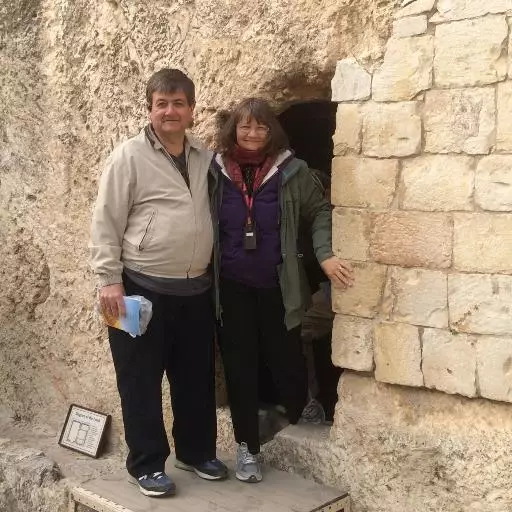
Bill and his wife Lynn have been married for over 40 years and have three adult children and two grandbunnies.
Contact Hope From the Word with Bill Luebkemann
https://hopefromtheword.org/
Hope From the Word
Calvary Chapel of Marlton
55 East Main Street
Marlton, NJ 08053
856-983-1662