
1 Chronicles 16:1-18


We have the tendency to remember what we ought to forget and forget what we ought to remember. In case you don't remember, this is Hope From the Word with Pastor Bill Luebkemann. In First Chronicles chapter sixteen and verse twelve we're told to remember the great things God has done. But how do you get somebody to understand what God has done if they don't believe the Bible. That's where we begin today. Again, from First Chronicles chapter sixteen and verse twelve here's Pastor Bill…
Bill Luebkemann: We begin today's Hope from the Word with encouragement to remember the Lord. God is offering protection to them, and the chronicler is saying, "Look, this is who the Lord is. We need to remember that we need to be worshipping him and we need to remember what he did and what he promised us."
We need to remember that he kept his word and remember that he is going to protect us. All these things we can be doing today. We are not the nation of Israel, but we can still be thanking God for who he is and what he did. We can be remembering his covenant with us, and we can be pondering and thinking about God's protection and how he protected them. He is certainly going to do no less for us today as followers of Jesus Christ.
Guest (Male): We have the tendency to remember what we ought to forget and forget what we ought to remember. In case you don't remember, this is Hope from the Word with Pastor Bill Luebkemann. In 1 Chronicles chapter 16 and verse 12, we're told to remember the great things God has done.
But how do you get someone to understand what God has done if they don't believe the Bible? That's where we begin today. Again, from 1 Chronicles chapter 16 and verse 12, here is Pastor Bill.
Bill Luebkemann: Think about it. Remember what he has done. In a discussion with some pastors, somebody raised a question: "What do you tell people who don't believe the Bible is true? Say, an unsaved person? How do you get them to take the Bible seriously?" There are all different opinions on this. Some say only the Holy Spirit can do it, which is true.
One guy said he liked to give the Bible to an unbeliever if they were willing to look at it. He liked to have them read Isaiah, the end of chapter 52 and all of 53, which I read often during communion, about the suffering servant. He liked to give it to people and have them read it over and ponder it.
He said unsaved people frequently don't even know the difference between the Old Testament and the New Testament. Frequently, they don't know what they're reading. He would let them read it and then he would say, "What do you think that was written about?" They would say, "I know the story. It's about Jesus. It's in the Bible."
Then he takes them to the Qumran Cave number whatever where they found these scrolls of the Old Testament which have been carbon-dated four times. They always come up to be at least a few hundred years before Christ. He says, "Do you know that scripture was actually written on a scroll that was found in a cave that was carbon-dated to at least 200 or 300 years before Christ?"
Some people say the reason the Bible is so accurate is that somebody wrote that afterwards. He liked to point out to people that here is incontrovertible evidence that these words predated the time of Christ and foretell him. I liked what he had to say because it's the Word of God that does the work.
We're never going to convince somebody to get saved. If you can talk them into getting saved, then somebody else can talk them out of it. It's only the Word of God that can work in people's hearts. Getting an unsaved person to read it is a big step. Let God do the work.
For us as born-again individuals, we need to be remembering what he has done. Remember the wonders he has done, his miracles, and the judgments he pronounced. "Oh descendants of Israel his servant, oh sons of Jacob his chosen ones." Look, the psalm is addressed to Israel because that's who was hearing it at the time. They were all Israelites. They were having this big celebration.
I think we can get a lot out of it today. There are a lot of ways to give thanks and a lot of ways to worship God. Some of them are to give thanks to the Lord, call on his name, and make known his deeds. If you just take the verbs here: give thanks, call, make known, sing, glory, look to, remember. These are the things we should be doing.
Sometimes people say, "We had a great worship time at church. You should have heard the band. They really play well." Well, you're in the wrong place. I think our musicians here do a great job, but while they're leading us, we need to be giving glory to God and looking to him and remembering what he did and singing his praises and giving thanks to him.
When we leave this place, we need to be telling other people about him. In verse 14, this next section calls them to remember the things that the Lord has done. He is the Lord our God. His judgments are in all the earth. He remembers his covenant forever, the word he commanded for a thousand generations.
He remembers the covenant he made with Abraham and the oath he swore to Isaac. He confirmed it to Jacob as a decree, to Israel as an everlasting covenant. "To you I will give the land of Canaan as the portion you will inherit." He keeps his word. When it says he remembers it, it doesn't just mean he remembers it but doesn't do it anymore.
We can remember a lot of things we don't do anymore. Think about when you were in college or growing up or in high school. You probably did a lot of things you wouldn't admit to now. Your mother might tell us about them. He doesn't just remember it in the sense that he knows about it or can talk about it.
He remembers it in the sense that he keeps it, that he honors it, and that it was his word. He remembers his covenant forever, the word he commanded for a thousand generations. There haven't been that many generations since the time of Adam and Eve until now. We're talking about forever.
This isn't saying he's going to remember for a thousand generations and you better add them up because when you get to 1,001, he's going to forget it. He keeps it forever. He remembers his covenant and the word he commanded. It was his word. It was his idea. For a thousand generations, nobody would have thought of this.
The Jews wandering around in the desert would never have thought, "Let's make a covenant with God. Let's tell him we'll be his people if he'll be our God." They would never have thought of that, and neither would you. But he thought of it, and he made it. It was his word, and he kept it for a thousand generations.
It was the covenant he made with Abraham and the oath he swore to Isaac. He confirmed it to Jacob as a decree, to Israel as an everlasting covenant. In each generation, he confirmed that. He told Abraham through him all the nations of the world would be blessed. He spoke and appeared to Abraham, and he renewed that with Isaac and Jacob.
He told them their descendants were going to inherit this land. Then he confirmed it to Jacob as a decree, to Israel as an everlasting covenant. When they were out there in the desert, they made the covenant with him. He said, "If you'll be my people and you do these things, I'll do this thing."
It's a covenant, and it's an everlasting covenant. Some people say that ended with the time of Christ. Everlasting things do not end. If it ended, it wouldn't be everlasting, right? It's an everlasting covenant. It's popular for some people to say that the Israel now, the Church has inherited all the promises of Israel.
They say Israel is done and now we have the Church. They claim that anywhere in the Bible where it says about a promise to Israel, that really means the Church nowadays. That's not what it says. It says he made an everlasting covenant that he's good for a thousand generations with the descendants of Abraham, Isaac, and Jacob. Everlasting means never-ending.
Stop trying to change the scriptures around to suit your incorrect view of the world. Read the scriptures first and make your view adapt to them. If we had more of that going on, what a different world this would be, wouldn't it? We take the Bible now and proof-text it. We can prove anything in there.
We can find a proof for anything. When the astronomers only thought there were five planets, somebody wrote a thing out of the Bible as proof that the Bible says there are five planets. Then when they found the sixth planet, they said, "Actually, we can prove that from the Bible. We were wrong before, but now we can prove there are six planets in the Bible."
And of course, then there were seven and eight and nine. Now there are only eight again because they say Pluto's not a planet. We'll just make it adapt to whatever we want it to say. That's not the right way to do it. He swore out this covenant, this word that he commanded and he's good for it.
He made it with Abraham and he renewed it with these other guys. When it came down to Israel in the desert there, he made a covenant with them. He said to them, "To you I will give the land of Canaan as the portion you will inherit." That's how they got that land. It wasn't because the United Nations gave it to them in 1947 or 1948, although it was nice that they saw fit to do that.
The people today that would like to get rid of them and run them out of town and annihilate them are unfortunately dealing with the wrong people because they're dealing with the wrong person. God's going to be at the other end saying, "Hi, I'm God and you're not." He gave the land of Canaan as the portion you will inherit when they were but few in number, few indeed and strangers in it.
They wandered from nation to nation, from one kingdom to another. Remember, it started out with Abraham and his little entourage there, and then Isaac and then Jacob. Then we got to the time in Egypt. Prior to that, Abraham was a wanderer. Isaac and Jacob were wanderers living in tents, never seeing, never taking a hold of or grasping that promise that they would have.
This was promised to your descendants. If God told me, "Your descendants are going to inherit all of New Jersey in 400 years," you know what I'd say? "So what? What can I get now? What do I care about that? Let them worry about themselves. What can I get?" Abraham was an amazing guy because here he was wandering, knowing that he had this promise and having faith in God.
We pray for something, and the next day if we don't get it, we say, "Maybe God didn't hear our prayers. Maybe we better pray more." Abraham never saw it in his entire life, and he lived a very long time—150-some years. They were few in number originally and they wandered around, and they were always protected.
Abraham went with his family to Egypt, and they were protected there everywhere they went. When they were in the desert, the nation of Israel having come out of Egypt, they were protected from the other nations. When they were attacked, they fought back and they won. He allowed no man to oppress them. For their sake, he rebuked kings: "Do not touch my anointed ones; do my prophets no harm."
Oh, you know people wanted to oppress them. The story of Balaam and Balak wanting so desperately to oppress the people and call down curses on them to stop them from coming into the land because they're unstoppable. Only a curse will work. They didn't want God; they wanted a witch doctor to call down a curse.
God allowed nobody to oppress them. That's not to say they didn't lose a few battles along the way, usually because they were not seeking after God properly. He rebuked kings. He did in that whole series with Balaam and Balak. The king was rebuked over and over and over again. "You want me to curse them; I have to bless them."
"I have to bless them because God says to bless them." "Do not touch my anointed ones," God would say, "do my prophets no harm. Leave them alone." You get the idea here of God's protection. This is also important in the context of whoever wrote the Chronicles. They were returning to Jerusalem. They were coming back.
They weren't there when Moses was leading them through the desert. That was their ancestors many hundreds of years before. This was being written probably 400 years after the time of David, and David lived probably 300 or 400 years after the time of Moses. These events were maybe 800 years before this. 800 years ago was the year 1209, so that's how far removed these events were.
If David lived 400 years before these people, that would have been like the year 1609. The time of going through the desert would have been like the year 1209. You can't think back that far. Today you can go to the library and you can get history books on the history of the world and the history of this region and that people.
If you go to school, you learn world history and geography and all this stuff. But they didn't have any of that stuff. They had a few scriptures. I remember learning about Mesopotamia in grade school. I had no idea what they were talking about. It kind of fits together now. He starts this section here by just saying who it is we're talking about: "He is the Lord our God."
He's the creator of everything. There's only one God. His judgments are in all the earth. Look, what he says and how he operates—he holds everything together, not just the nation of Israel. All the other nations as well. He brings about his will everywhere. He raised up other nations for the specific purpose of chastising Israel over the years.
He's the God of all the earth, not just this nation. He's their God, the Lord our God. They're the ones that have the covenant with him. Nobody else has that. But nevertheless, he's the God of everything. His judgments are everywhere; they're in all the earth. He's a God that remembers his covenant forever, the word he commanded for a thousand generations.
In other words, he keeps it. When it says he remembers it, it doesn't just mean, "Yeah, I remember it, but I don't do that anymore." We can remember a lot of things we don't do anymore. Think about when you were in college or growing up or in high school. You probably did a lot of things you wouldn't admit to now.
He doesn't just remember it in the sense that he knows about it or can talk about it or did his dissertation on it. He remembers it in the sense that he keeps it, that he honors it, and that it was his word. He remembers his covenant forever, the word he commanded for a thousand generations. There haven't been that many generations since the time of Adam and Eve until now.
We're talking about forever. This isn't saying he's going to remember for a thousand generations and you better add them up because when you get to 1,001, he's going to forget it. He keeps it forever. He remembers his covenant and the word he commanded. It was his word. It was his idea. For a thousand generations, nobody would have thought of this.
The Jews wandering around in the desert would never have thought, "Well, let's make a covenant with God. Let's tell him we'll be his people if he'll be our God." They would never have thought of that, and neither would you. But he thought of it and he made it. It was his word, and he kept it for a thousand generations.
It was the covenant he made with Abraham and the oath he swore to Isaac. He confirmed it to Jacob as a decree, to Israel as an everlasting covenant. In each generation, he confirmed that. He told Abraham through him all the nations of the world would be blessed. He spoke and appeared to Abraham, and he renewed that with Isaac and Jacob.
He told them their descendants were going to inherit this land. Then he confirmed it to Jacob as a decree, to Israel as an everlasting covenant. When they were out there in the desert, they made the covenant with him. Look, he said, "If you'll be my people, you do these things, I'll do this thing." It's a covenant and it's an everlasting covenant.
Some people say that ended with the time of Christ. Everlasting things do not end. If it ended, it wouldn't be everlasting, right? It's an everlasting covenant. It's popular for some people to say the Israel now, the Church has inherited all the promises of Israel. They say Israel's done and now we have the Church.
Anywhere in the Bible where it says about a promise to Israel, that really means the Church nowadays. That's not what it says. It says he made an everlasting covenant that he's good for a thousand generations with the descendants of Abraham, Isaac, and Jacob. Everlasting means never-ending.
Look, stop trying to change the scriptures around to suit your incorrect view of the world. Read the scriptures first and make your view adapt to them. If we had more of that going on, what a different world this would be, wouldn't it? We take the Bible now and proof-text it. We can prove anything in there. We can find a proof for anything.
When the astronomers only thought there were five planets, somebody wrote a thing out of the Bible as proof that the Bible says there's five planets. Then when they found the sixth planet, they said, "Actually, we can prove that from the Bible. We were wrong before, but now we can prove there's six planets in the Bible."
And of course, then there was seven and eight and nine, and now there's only eight again because they say Pluto's not a planet. We'll just make it adapt to whatever we want it to say. That's not the right way to do it. He swore out this covenant, this word that he commanded and he's good for it.
He made it with Abraham and he renewed it with these other guys. When it came down to Israel in the desert there, he made a covenant with them. He said to them, "To you I will give the land of Canaan as the portion you will inherit." That's how they got that land. It wasn't because the United Nations gave it to them in 1947 or 1948, although it was nice that they saw fit to do that.
The people today that would like to get rid of them and run them out of town and annihilate them are unfortunately dealing with the wrong people because they're dealing with the wrong person. They are dealing with the wrong one. God's going to be at the other end saying, "Hi, I'm God and you're not."
He gave the land of Canaan as the portion you will inherit when they were but few in number, few indeed and strangers in it. They wandered from nation to nation, from one kingdom to another. Remember, it started out with Abraham and his little entourage there. And then Isaac and then Jacob.
Prior to that, Abraham was a wanderer. Isaac and Jacob were wanderers living in tents, never seeing, never taking a hold of or grasping that promise that they would have. "This is promised to your descendants." If God told me, "Your descendants are going to inherit all of New Jersey in 400 years," you know what I'd say? "So what? What can I get now?"
"What do I care about that? Let them worry about themselves. What can I get?" Abraham was a pretty amazing guy because here he was wandering, knowing that he had this promise, having faith in God. We pray for something and the next day we don't get it, we say, "Maybe God didn't hear our prayers. Maybe we better pray more."
Abraham never saw it in his entire life, and he lived a very long time—150-some years. They were few in number originally and they wandered around, and they were always protected. Abraham went with his family to Egypt, and they were protected there everywhere they went. When they were in the desert, having come out of Egypt, the nation of Israel was protected from the other nations.
When they were attacked, they fought back and they won. He allowed no man to oppress them. For their sake, he rebuked kings: "Do not touch my anointed ones; do my prophets no harm." People wanted to oppress them. The story of Balaam and Balak, wanting so desperately to oppress the people and call down curses on them.
They wanted to stop them from coming into the land because they're unstoppable. Only a curse will work. It's like they didn't want God; they wanted a witch doctor to call down a curse. God allowed nobody to oppress them. That's not to say they didn't lose a few battles along the way, usually because they were not seeking after God properly.
He rebuked kings. He did in that whole series with Balaam and Balak. The king was rebuked over and over and over again. "You want me to curse them; I have to bless them." "I have to bless them because God says to bless them." "Do not touch my anointed ones," God would say, "do my prophets no harm. Leave them alone."
You get the idea here of God's protection. This is also important in the context of whoever wrote the Chronicles. They were returning to Jerusalem. They were coming back. They weren't there when Moses was leading them through the desert. That was their ancestors many hundreds of years before.
This was being written probably 400 years after the time of David, and David lived probably 300 or 400 years after the time of Moses. These events were maybe 800 years before this. 800 years ago was the year 1209. That's how far removed these events were. If David lived 400 years before these people, that would have been like the year 1609.
The time of going through the desert would have been like the year 1209. You can't think back that far. Today you can go to the library and you can get history books on the history of the world and the history of this region and that people. If you go to school, you learn world history and geography, but they didn't have any of that stuff.
They had a few scriptures. He starts this section here by just saying who it is we're talking about: "He is the Lord our God." He's the creator of everything. There's only one God. His judgments are in all the earth. What he says and how he operates—he holds everything together, not just the nation of Israel, but all the other nations as well.
He brings about his will everywhere. He raised up other nations for the specific purpose of chastising Israel over the years. He's the God of all the earth, not just this nation. He's their God, the Lord our God. They're the ones that have the covenant with him. Nevertheless, he's the God of everything. His judgments are everywhere; they're in all the earth.
He's a God that remembers his covenant forever, the word he commanded for a thousand generations. He keeps it. When it says he remembers it, it doesn't just mean, "Yeah, I remember it, but I don't do that anymore." We can remember a lot of things we don't do anymore. Think about when you were growing up. You probably did things you wouldn't admit to now.
He doesn't just remember it in the sense that he knows about it or can talk about it. He remembers it in the sense that he keeps it, that he honors it, and that it was his word. He remembers his covenant forever, the word he commanded for a thousand generations. There haven't been that many generations from Adam and Eve until now.
We're talking about forever. He keeps it forever. He remembers his covenant and the word he commanded. It was his idea. The Jews wandering around in the desert would never have thought, "Let's make a covenant with God." They would never have thought of that, and neither would you. But he thought of it and he made it.
It was his word, and he kept it for a thousand generations. It was the covenant he made with Abraham and the oath he swore to Isaac. He confirmed it to Jacob as a decree, to Israel as an everlasting covenant. Everlasting things do not end. It's popular for some people to say the Church has inherited all the promises of Israel.
That's not what it says. It says he made an everlasting covenant that he's good for a thousand generations with the descendants of Abraham, Isaac, and Jacob. Everlasting means never-ending. Look, stop trying to change the scriptures around to suit your incorrect view of the world. Read the scriptures first and make your view adapt to them.
We take the Bible now and proof-text it. We can prove anything in there. When the astronomers only thought there were five planets, somebody wrote a thing out of the Bible as proof that the Bible says there's five planets. Then when they found the sixth planet, they said, "Actually, we can prove that from the Bible."
We'll just make it adapt to whatever we want it to say. That's not the right way to do it. He swore out this covenant and he's good for it. When it came down to Israel in the desert there, he made a covenant with them. He said to them, "To you I will give the land of Canaan as the portion you will inherit."
That's how they got that land. It wasn't because the United Nations gave it to them in 1947 or 1948, although it was nice that they saw fit to do that. The people today that would like to get rid of them are dealing with the wrong person. God's going to be at the other end saying, "Hi, I'm God and you're not."
He gave the land of Canaan as the portion you will inherit when they were but few in number, few indeed and strangers in it. They wandered from nation to nation, from one kingdom to another. Remember, it started out with Abraham and his little entourage there. Prior to that, Abraham was a wanderer.
Isaac and Jacob were wanderers living in tents, never taking a hold of or grasping that promise that they would have. If God told me, "Your descendants are going to inherit all of New Jersey in 400 years," you know what I'd say? "So what? What can I get now? Let them worry about themselves."
Abraham was an amazing guy because here he was wandering, knowing that he had this promise and having faith in God. We pray for something and the next day we don't get it, we say, "Maybe God didn't hear our prayers." Abraham never saw it in his entire life, and he lived a very long time—150-some years.
They were few in number originally and they wandered around, and they were always protected. Abraham went with his family to Egypt, and they were protected there everywhere they went. The nation of Israel was protected from the other nations. When they were attacked, they fought back and they won.
He allowed no man to oppress them. For their sake, he rebuked kings: "Do not touch my anointed ones; do my prophets no harm." People wanted to oppress them. They wanted to stop them from coming into the land because they're unstoppable. Only a curse will work. They didn't want God; they wanted a witch doctor to call down a curse.
God allowed nobody to oppress them. That's not to say they didn't lose a few battles along the way, usually because they were not seeking after God properly. He rebuked kings in that whole series with Balaam and Balak. "I have to bless them because God says to bless them."
God would say, "Do my prophets no harm. Leave them alone." You get the idea here of God's protection. This is also important in the context of whoever wrote the Chronicles. They were returning to Jerusalem. They were coming back. It's an exciting time to be going home to the place of your ancestors but a little scary also.
Going through the wilderness—animals, big animals, enemies, other people that didn't like them. Skirmishes or attacks. When you get back to Israel, where are you going to live? The houses are all burned down. They were like the people that tamed the Wild West. God was offering protection to them.
The chronicler is saying: look, this is who the Lord is. We need to remember that we need to be worshipping him and we need to remember what he did and what he promised us. We need to remember that he kept his word and remember that he's going to protect us. And all these things we can be doing today.
We're not the nation of Israel, but we can still be thanking God for who he is and what he did. And we can be remembering his covenant with us. We can be pondering and thinking about God's protection and how he protected them. He's certainly going to do no less for us today as followers of Jesus Christ.
He did the amazing thing, and the most important thing perhaps we can learn here is he keeps his word. I think that's one of the main themes here: that he keeps his word. He's faithful and reliable. Look to the Lord and his strength. We wouldn't be looking to the Lord for his strength if he was not going to be there when we needed him.
He doesn't say, "Oops, I've got something else to do today. You're on your own." Rejoice and remember that his judgments are everywhere and that he keeps his word and he keeps his covenant. He was faithful to it all this time, even though the people were unfaithful. They were unfaithful from day one.
There was never a time when they were faithful. Maybe for six minutes in the heat of the moment when they were all excited there, but they were turning around and being unfaithful again immediately thereafter. And he still did all these things and he still brought them out and protected them and kept them safe.
Verse 23 says: sing to the Lord, all the earth, proclaim his salvation day after day. What a great verse. Not just the nation of Israel, but all the earth should be singing to the Lord. All the earth. And we want to be proclaiming his salvation. We want to be telling other people about his salvation.
We're saved because of his salvation. If we get out there and promote ourselves, we're not going to get anywhere and we're wasting our time. We want to be proclaiming his salvation day after day. Don't say, "I'm tired of telling people about the Lord. No one ever listens anyway." Get back to work.
Sing to the Lord and rejoice. Remember these things. Proclaim his salvation day after day. Always be proclaiming his salvation and telling people that good news of Jesus Christ. You can get into arguments about all kinds of things. The devil wants to create an argument. So when you're pro-life, they're pro-choice.
That sounds like a good thing. We're not anti-anything; we're pro-something. And then you have the two sides arguing with each other. Look, it says here: proclaim his salvation day after day. How much time is wasted trying to convince people when they don't have the Spirit of God living in them?
There's not a chance in the world they're going to understand it. We need to be praying that they'll get saved and telling them about Jesus Christ and how he can forgive their sins. When they get saved, then they can study the Bible and the Holy Spirit can speak to them, and then they can figure all that out.
If somebody came to me when I was younger and said abortion is wrong, I wouldn't have thought too much about abortion. It wasn't on my radar screen. I just didn't think too much about it and never really sat down and thought about it. If someone had come to me and argued about it, I would have blown them off.
When Jesus Christ touched my heart and when I became a follower of his, as time went on, as I studied the scripture, at some point I was able to realize more what that was all about and what the argument was there. God created life, and only God creates life. If God created it, then who are we to take it away?
We need to be telling about salvation. I got saved because somebody told me about Jesus Christ, not because they were arguing with me about abortion or any of the other issues of the day. Declare his glory among the nations, his marvelous deeds among all peoples. This is more on praising the Lord.
Tell people about his glory, tell them about his marvelous deeds, tell all the people about what he has done in your life and what he did through the scriptures. You can share the scriptures with somebody and they can say they don't believe the Bible. You can tell them what God did in your life.
Tell them, "I was here, I was going the wrong way, and he took me and he changed me around. He gave me a meaning and a purpose." He took away the old and he gave me new. We all have our own testimony and we can share that. Only God could have done those things. They don't just happen by themselves.
Declare his glory among the nations, his marvelous deeds among the peoples. Tell other people this good news. How appropriate it was at this time of feasting. We brought the Ark back and we have God in our presence. We're so excited. Let's just tell everybody what the Lord did.
Everybody got free food at the end of this time from David. He put his money where his mouth was. He was sharing the bounty with them. For great is the Lord and most worthy of praise. He is to be feared above all gods. Why do we praise him? We praise him because he is worthy of praise.
We don't do it because we're scared of anything. He came to the earth to save us, not to condemn mankind. We praise him because he's worthy of being praised, because he is worthy.
Guest (Male): You've been listening to Hope from the Word. We're currently in a study of 1 Chronicles. You can hear this message or more Hope from the Word with Pastor Bill Luebkemann by going to ccmarlton.org. Pastor Bill's messages can also be found by downloading the Hope FM app on your smartphone or tablet.
If you prefer to listen via podcast, you can find Hope from the Word wherever you find your podcasts. We'd love to have you join us at Calvary Chapel of Marlton either in person or online. Our Sunday service begins at 10:00 a.m. and there's a Wednesday evening service at 7:00.
To catch us online, you can subscribe to our YouTube channel at Calvary Chapel of Marlton or just go to our website for the link at ccmarlton.org. And if you take a moment to write Pastor Bill, it would be such a blessing to us.
We're thankful each and every time we hear what God is doing in our listeners' lives. We want to pray for you too. Either email us through the website at ccmarlton.org or call 856-983-1662. We'll continue our study in 1 Chronicles next time on Hope from the Word with Pastor Bill Luebkemann, a presentation of Calvary Chapel of Marlton.
Featured Offer

The Hope FM radio station app provides access to live radio and program archives. Listen live or on your own schedule with access to programs on the Hope FM radio network.
Past Episodes

Featured Offer
The Hope FM radio station app provides access to live radio and program archives. Listen live or on your own schedule with access to programs on the Hope FM radio network.
About Hope From the Word
Hope From the Word with Pastor Bill Luebkemann is the daily teaching ministry of Calvary Chapel of Marlton, NJ. Pastor Bill leads clear, uncompromising verse by verse Bible studies through the whole counsel of God. His passion for the Lord and desire for all to answer the call to salvation is evident as he delivers Hope From the Word.
About Bill Luebkemann
Calvary Chapel of Marlton is also home to the Hope FM radio network. In 1995, Pastor Chuck Smith exhorted pastors to prayerfully consider radio as an effective tool for spreading the gospel of Jesus Christ. Pastor Bill Luebkemann heard that message and caught the vision. Hope FM went on the air in November of 2005 and has continued to grow into a network of stations and translators reaching across South Jersey, Eastern and Central Pennsylvania and south into Baltimore, Maryland.
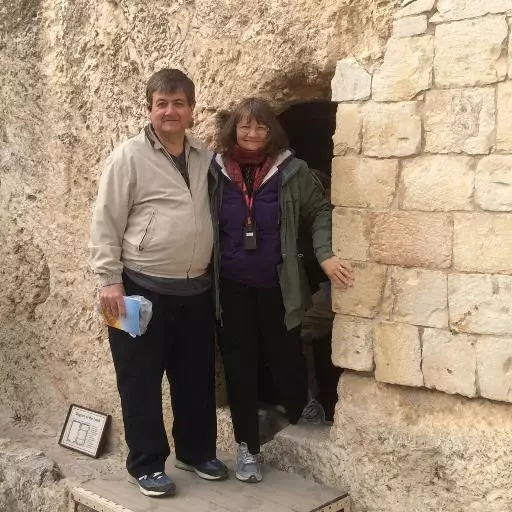
Bill and his wife Lynn have been married for over 40 years and have three adult children and two grandbunnies.
Contact Hope From the Word with Bill Luebkemann
https://hopefromtheword.org/
Hope From the Word
Calvary Chapel of Marlton
55 East Main Street
Marlton, NJ 08053
856-983-1662