
Oneplace.com

Strengthening Your Grip: On Involvement

March 11, 2026
References: Romans 12:6-16

Guest (Male): You are now listening to an inspirational message from Greater Shiloh Missionary Baptist Church, where Dr. Michael W. Wesley Sr. is the pastor. Please join the service in progress.

Dr. Michael W. Wesley Sr.: What a blessing it is to know that there is no other strength like the strength that God gives to us. That's strength like no other. It’s not like powerlifting. It’s not like Gatorade. That’s strength like no other. That’s comfort when I’m hurting. That’s healing when I’m sick. That’s a friend who sticketh closer than a brother. That’s strength like no other. When I walk through the valley where the shadows gather and the road is not marked, that's strength. And when I don't know what else to do, it's strength like no other. And he strengthens me. He strengthens each you.

Good morning to each of you, my brothers and sisters. It's so wonderful to be here this morning. Join me now in a moment of prayer as we ready our hearts for what the Lord will say through his word. Holy Father, we thank you for this time of worship. We thank you for this day that you have made. We are already rejoicing and glad in it. Thank you for the worship experience that we have already gone through: the songs, the scriptures, the prayers. And now, Lord, we need a word to help us to live as we go into another week.

Pray now that you would lift again your human out of self, fill us with the Holy Spirit. Speak to us and through us in this moment of sharing. Bless the words in our mouth and the meditations on our heart, that they may be acceptable in your sight, O Lord, our strength and our redeemer. Speak, Lord, your servants are listening. With you, there is a word. Without you, there isn't a word. We humbly give ourselves to you in the name of your son, the Lord Jesus Christ. In Jesus’ name we pray. Amen.

Thank God for our new pastor. God bless you. You should have heard him this morning at 8:00. He was on fire. Next Sunday, I’ll be over at the Tabernacle Baptist Church at the 10:45 time, so I won’t be here. I’ll be here for 8:00 to hear Mr. Tankard, and we want you to put all that on your social media. Let everybody know that we have an international artist that will be with us and share it on your social media with others so that others can come and hear this man of God as he will be with us. Several other things that will be coming our way soon and we'll talk about those a little later. I’ve been invited to the Mount Pilgrim District Association and I'll be doing a review of one of my books at that association. So we'll talk more about those things to come.

But this morning, as the Lord wills, direct your attention to the book of Romans, the 12th chapter. Romans chapter 12, and I want to look at verses six and following, six through 16. Just 10 of those verses there and lift our thought. We have been, just as James was preaching at this service in a series, I was preaching at the other service in a series, and the subject is very similar. It's on strength, but strengthening your grip. So verses six through 16, and there the word of God says:

"Having then gifts differing according to the grace that is given to us, whether prophecy, let us prophesy according to the proportion of faith; or ministry, let us wait on our ministering: or he that teacheth, on teaching; or he that exhorteth, on exhortation: he that giveth, let him do it with simplicity; he that ruleth, with diligence; he that sheweth mercy, with cheerfulness. Let love be without dissimulation. Abhor that which is evil; cleave to that which is good. Be kindly affectioned one to another with brotherly love; in honour preferring one another; not slothful in business; fervent in spirit; serving the Lord; rejoicing in hope; patient in tribulation; continuing instant in prayer; distributing to the necessity of saints; given to hospitality. Bless them which persecute you: bless, and curse not. Rejoice with them that do rejoice, and weep with them that weep. Be of the same mind one toward another. Mind not high things, but condescend to men of low estate. Be not wise in your own conceits."

This is the word of God for the people of God. And I want to tag this text today with the subject: Strengthening Your Grip on Involvement. Last Sunday, I talked about strengthening your grip on your priorities. And as we think about the priorities, our church is in transition. We've selected, God has called, and he's now in place, a new pastor. And one of the first things that has to happen is the priority of supporting that pastor has got to be firmly in place. There's no iffiness about that. Nothing dynamic will take place in a church unless that spiritual leader is uplifted and supported by the family that he leads. It's a hard thing in the world to be in front of people and nobody behind you. And so there has got to be the connection between pastor and people. And I know what it's like because you blessed me with 40 years to be with me in those up and down times. And I certainly want to see you do the same for the young man that has now taken this helm.

And in those priorities, we talked about several other things, that the ministry in the church has got to be biblically based. That's where the priorities got to be. It's got to be a biblical ministry. Everybody don't create the ministry. The ministry comes from the word of God. When you start making up stuff, then you just doing that, making up stuff. And it doesn't work, it doesn't flow, it doesn't follow God's ideas or God's plan. So ministry must be biblical. And not only the priority of biblical ministry, then it must be gracious. We have to be grateful people. We have to know how to be thankful when we come in here on Sunday. We ought not to wait on the choir to get us in the mood. We ought to already be in the mood.

We have to be authentic. The ministry has to come from the heart. The ministry has to authentically come from the heart. When you're doing things, I said it last time, one of the things that people can spot a mile away is fakeness. And when people see ministry or see people in God's house and they are not authentic, people can recognize that. Thank God for Brother Chris, who shared the genuineness that he felt when he came to this church. And that's what we got to do. You got to warm the church up with love. When you do that, you will have to lock doors to keep people out.

And then we talked last time about relevance. The ministry has to be relevant. In every generation, the ministry has to be tailored toward people in this present age. This present age, my calling to fulfill, oh, may it all my powers engage to do my master's will. We can't go back to 50 years ago. We need to be able to deal with the current generation, but we at the same time have to cook for the whole house. Everybody in here needs to be fed when you come. It can't just be all geared just toward the youth. There needs to be some youthful expression, but it also must be relevant for people who been around for a while too.

So that's kind of what we talked about when we talked about strengthening our grip on our priorities. But now today, I want to talk about strengthening your grip on involvement. Involvement. See, what you got to understand is we need each other. We really do. The church is made up of people that God has uniquely put together. And every one of us are different, and every one of us are unique. And we need one another to function. The Bible gives a picture in first Corinthians of the body of the church being like a physical body. There are many different members, but all of the parts function together for the good of the one body.

And it's just like my physical body. I've got two arms, I've got 10 fingers, I've got two feet, 10 toes. I've got parts you can see, I've got parts you can't see, I've got parts inside, I've got parts outside. But they all work together for the good of this one body. And that's what has got to happen as we look at the priorities and what needs to happen as we continue to make the transition into the leadership under the new pastor. There has got to be involvement of the people. You can't sit back and decide I'm going to watch and see, or I'm going to wait and hope it doesn't work, or hope that something will happen. Don't be that way. You will be out of the will of God.

And so I want to help you understand. I was reading this week and I read about a man up in Saskatchewan, Canada. In Saskatchewan, Canada, this man is a violin collector. And he has collected 25 of the world's most rarest but finest of the violins. And they are all stored there in his home in Saskatchewan, Canada. Now, what I say and what I saw when I was reading that, I was disturbed. I said now, he has all of those precious, unique, and rare violins, but no music is coming from them because they are all stored at his house. It would be wonderful if you had 25 of the world's great violinists to come and make beautiful music out of the rarity of the violins. But just having violins that are unique and rare but stored up in the house does nobody any good.

Now, I submit unto you that in this church, there are rare gifts and there are many gifted people. But I'll tell you the truth: you will do heaven no good, yourself no good, nor this church no good as long as you are just stored up as a unique relic but no music coming out of it. No ministry coming forth. Nothing that is divinely ordained or ready to do what God has uniquely designed it to do. A violin was built to produce beautiful music. But if nobody is playing it, then it does no good. God has given you gifts. But if you are not using those gifts, then who benefits? So my word today is strengthen your grip on involvement.

Paul here, the writer to the Romans, had a desire to go to the imperial city of Rome. Rome was the capital of all of the world. And Paul was very strategic. He understood that if the gospel of Jesus Christ could be planted in Rome, then it had an opportunity to go into all of the world. The Romans had built roads everywhere. The Romans had fortified the oceans and the seas. So road travel was now available. Water travel was available. Air travel had not yet come into being. But he knew that if the gospel of Jesus could be planted on people who came in and out of Rome, then the gospel had a chance of going into all of the world. And so he uniquely wanted to go to Rome.

And so he writes this letter of introduction of himself and of the gospel of God to let them know who he was and the message that he wanted to give them. He said to them, I want to come and have some fruit among you as I've had in other places. And he says because I'm not ashamed of the gospel of Jesus Christ because I know it to be the power of God to everyone that believe, to the Jew first but also to the Greeks. And Paul went on to lay it out. He said because I want you all to understand the whole world is guilty before God. He said when men could have known God as God, they chose not to know him as God. But they made him into the image of crawling things and creeping things and they turned the image of the eternal God into something that he's not.

But he says, but God won't let you get away. Whether you're a Jew or Gentile, all have sinned and all have come short of the glory of God. Paul thunders forth and says there is none righteous, no, not one. But then he says, I've got good news. He said there is a way in which a man can be made right with God that's apart from the law. And he goes on to say that God will count you right even though you're not right. And he called on Abraham. He said Abraham lived 400 years before God gave the law to Moses. But God counted Abraham as right. Not that he was right, but he counted him right because he believed the testimony that God gave.

So let me help you understand. You're not right, sir. You're not right, ma'am. But God will count you right if you can believe the testimony that he has given concerning his son, the Lord Jesus Christ. And when he counts you right, that's called scripturally justification. Then God will do something else to you. He'll sanctify you. Not that means he'll put on black clothes so that you can look down your nose at other people and think you're more spiritual than somebody else. But sanctification is the process of being set apart for God's purpose. And when God counts you right, then he'll set you on the sideline to be used for his purpose. And if you do it and believe that, even the good that you desire to do, when you sometimes don't do it, there you'll find a law existing inside of you.

When you desire to do good, you'll know that evil is always present. But you'll be able to shout out, "O wretched man that I am! Who can deliver me from this body of death?" But you'll end up saying, "I thank God for Jesus." Anybody ever thank God for Jesus? You know that you're not always right. We don't always think the right things. I don't care who you are, you don't always think right. Some of you ain't thinking right right now. Look down your nose and saw that lady sitting down there, "Look at her sitting down there, looking at me. I saw that old dress." But Paul wanted people to know that if you live and walk according to the spirit, then there won't be no condemnation brought against you because those who walk and live according to the spirit are made right, accounted right by God. And nothing or no one could ever separate you from the love that God has for you.

And so he comes now to the practical section and he says, so present your bodies as living sacrifices, holy and acceptable unto God, which is your reasonable service. Other words, Paul says don't get squeezed into conformity with the world. What does that mean? It means when you become squeezed into conformity with the world, that's what produces isolation. The world don't want you to be involved. The world wants you to be isolated and separated from other people. The world don't want you to help nobody. The world wants you to think only about me, myself, and I. And how many know, man, it has gotten like that? We live in neighborhoods where we don't know our neighbors because what we do, we drive up, we drive in, we let the garage up, we drive up, we let the garage down. Every now and then, we might see somebody that we'll wave our hand at, but we're not involved.

Man and woman live next door to me, about a man had a heart attack and died and I'm right there and didn't even know it. I mean, paramedics came, I looked out the window, but because they were a different people than we are, we didn't go over there and say what's happening. You all know how it is. You see people at work and they can be going through and we won't say a word. We had a lady right here in the church, had a stroke right in the office and most of the people didn't even know it. "Oh, what's wrong with her? Why's she looking like that?" Because we don't want to be involved. We don't want to be involved in other folk children. Folk don't want you to be involved with their children. "That's my child, you better not say nothing to my child." And it used to be when I was growing up that everybody's child belonged to everybody.

My neighbors could whoop us and it was all right. That mean you couldn't go home and tell your mama that Miss So-and-So got you because that was going to bring on another whooping anyway. And nobody at church better not call the house and say you were involved in something you had no business being involved in because it was going to bring more trouble. It wasn't no such thing as the parents going down to the school and getting that teacher straight. They believed them. They believed the principal and they supported the people in the public in those ways. But now, we have conformed to the world. And that conformity has produced isolation. And consequently, it carries over into the church. So when we come to church now, we don't want to be involved. We want to sit back, we want to watch, we want to be spectators. The church has made liars out of people and made us into spectators. We come to see who's doing and what they are doing. And if we don't like it, we want our dollar back.

But God calls for us to be involved. So he says not only be conformed, don't be conformed to the world, but be transformed by the renewing of your mind so that you can prove what is that good and perfect and acceptable will of God. What is your reasonable service, or should I say it another way, what should be your reasonable worship? Your reasonable worship should be involvement. Listen to what Paul says. So what you ought to do is take inventory of yourself and don't let anybody think more highly of themselves than they ought to think. And you know that's a problem, don't you? In the days where, man, we got people who think very highly of themselves. They got big heads. When they come in the door, they have to turn sideways to get in the door.

But we ought not to think more highly of ourselves. How many know, yeah, we might be feeling good about ourselves, but the next day, we can be getting up off our knees saying, "Have mercy, Lord." So we ought not to get lifted up when things are going our way. We got to learn how to be even-tempered about life. And so Paul tells us here in these verses that we have read to you today, he says, so then understand that you are different and you have been given different gifts. But here's the problem. The different gifts are not for you. They're for the use of the house. They're for the use of the body. The saddest thing that I saw over 40 years was that people God would bless with different talents and gifts and abilities, but people would misunderstand the use. And rather than using their gifts, talents, and abilities to promote the work of God through the church, they wanted to take their gift and run off with it by themselves. There's no such thing as a lone ranger Christian. You're either in the family or you're not. And if you're in the family, then what God has put in you is put in you for the use within the family.

So what Paul is saying, since we then have different gifts, you need to find what yours are and get at it. Use what you got for the service of the Lord. Oh, I'm coming your way. And if you stay quiet, you going to make me preach. That's all right, I don't mind. I came ready. So here's what I want to tell you first and foremost. I want you to understand that whether you want to be or not, you are involved. And there are four intense relationships that we are all involved in in some kind of way. And the issue is getting your grip on those levels of involvement.

The first intense relationship that we have, if we are a Christian, is with God. I'm involved with God! I wake up in the morning and I want to say thank you. I'm involved. I go throughout the day and he protects me from issues, things I could see, danger seen and unseen, and I want to tell him thank you. When I get done at the end of the day and I finally get back home to my place of rest, and I find that I'm still all right, before I lay it down, I still want to tell him thank you. Watch over me, because I know Pookie, Nay-Nay, Ricky, Ri-Ri live all around and they don't mind coming in there. And so I say watch over me, protect me, do you understand? So I'm involved with God. My question is, are you involved with God? Is there any intensity in that relationship with you and God?

Second relationship that I'm involved in, I'm involved with my family. I didn't come here by myself. I was born into a family. When I woke up, I recognized that they had given me a mother and a father and they had given me brothers and sisters. I didn't choose them, they didn't choose me, but we were put in that relationship. And as a relationship growing up in the household with them, we had to be involved in the lives of one another. And one of the things that I walked out of there 18 years later with was an understanding that my relationship and involvement with my brothers and sisters and family didn't end when I walked out of the door. That that was still my brother, that still my sister, those still are my kinfolk, those still are my loved ones. And they don't always act right. Oh, come on, don't you act like your folk act right. Invite me to your family reunion and let me meet your Uncle Jack. Or let me meet the other uncles or the aunt. You know who not going to act right. You know they going to cut up. And you be saying, "Oh, don't pay them no attention, see, that's them over there. That's not of us." Yes, they are. They still your folk. And we still have to be involved with them. And it's an intense involvement. And what I've learned to appreciate over the years is I value every day the involvement with my siblings more and more because every time one leaves, we recognize that there's a space at the table that's missing. And there's a library of family history that's been lost. So if you're not involved with your family members, you ought to be.

So I wanted just to help you to understand involvement is real. But there's a third level of intense involvement not only with God and not only with your personal family, but you're involved with the family of God. You show up here and you can't just show up in here and just pretend like nobody else is in here but you. You have to pass by people, so you have to speak sometimes. You have to say good morning, good afternoon. "Can you move over? Can you slide in? Can I get over there?" You're involved with a spiritual family. Your church family is your spiritual family. And the value there is in your physical family, they going to leave. I came here with an earthly mother and an earthly father. But over time, God reached into that human family and he took father to be with him and he came back and he got mother to be with him. And he came back and he got brother to be with him and he came back and got another brother to be with him and he came back and got another sister to be with him. But what I found out is being involved with my spiritual family that I got other mothers and fathers in my spiritual family. And I got other brothers and sisters in my spiritual family. And because I am involved in a spiritual family, I'll always have mothers and fathers and brothers and sisters who are part of my spiritual family. And I thank God for them.

But there's a fourth level of involvement with people, and that is I'm involved with people who have never met Jesus. Not everybody you see is saved, but everybody you see is somebody that can be saved. But sometimes they just need somebody to tell them. And so I'm involved. The reason we've been on television and the reason we've been on radio, not for egotistical purposes, but to share the good news. I got a call yesterday from a man that I know, he's a man of a different race. But he called me, he said, "You know, I listen to your broadcast." He said, "I personally videotape it and then I come back later and watch." And there are people up in Vinemont. How many people know what Vinemont is? Vinemont is up on the other side of Cullman. And if you know where Cullman is, if you're from Alabama, you know who live in that area. And we receive checks from people who live up in there. Now, I haven't met them personally, but some of them had never met Jesus until they start listening to hear about Jesus through the broadcast. Are you understand? We're pushing the word of God around the world. So there are people in places that you don't see and that you don't know, but it doesn't mean that we're not involved with them. And so we got to be involved. God wants us to be involved and God has given us unique gifts and abilities so that we can be involved.

Let me look very briefly at the historical context of church involvement. When Jesus was crucified on the cross and he was raised the third day, 40 days thereafter he spent time appearing and disappearing before his disciples, proving to them that he was alive and that he was their same friend, Jesus. He said, "Come and look, put your hands in my hand where the nail prints were, put your hand in my side, see that this is I'm the same one," demonstrating that he had the power over life and death. And then he said, "Now, I'm going back to heaven. And when I get there, I'm going to pray to the father that he'll send to you another one just like me, called the Holy Spirit. And when he come, he's going to make you bold and he's going to make you a witness." And so when he got back to heaven, he sent the Holy Spirit. And on the day of Pentecost, he touched one of his men that he had trained, named Simon Peter. And Peter stood up and preached the message of repentance in Jesus. And 3,000 people joined. Now, they didn't have no building like this, they didn't have no sanctuary, they didn't have no church. They didn't have nowhere. And Peter's looking at like 3,000 folk, "What am I supposed to do with all these folk?" Do you know what the answer was? They got involved.

The Bible says in Acts chapter two, starting in verse 42, that they met every day from house to house and you thought small groups was new. Small groups been around ever since the beginning of church. They met together from house to house in small groups and they did what? They taught. They continued steadfastly in the apostles' doctrine and teaching. So teaching the word of God is one of the ways in which people can be involved. But I hear some of you saying, "But they won't give me no classroom." That don't stop you from being able to teach. You can still teach. If they won't give you a pulpit to stand in, go in the street and teach and preach. But get involved is the point. And they continued not only in the apostles' doctrine and teaching and in prayers, but here's the word that gripped me the most: and in fellowship with one another.

Now that word fellowship is a different word. When I grew up in the church that I grew up in, we thought fellowship was eating stale cookies and drinking red church punch. Because after every church program, the pastor would say, "We're going to go down into the fellowship hall and have fellowship." And so we would always have them cookies and that red punch. And that's what I thought fellowship was. But what I've learned is fellowship comes from the Greek word "koinonia", which means to enter into along with. So it means my involvement has to be a little more intense with my brothers and sisters in Christ. So when you're going through your sickness, my involvement means I have to show up. When you're going through your bereavement, my involvement mean I have to care enough that I'll pray for you. It means when your child is acting a fool, that I love you and your child enough that I can say, "Father, turn that child's life around, open his eyes that he may see the error of his way and that he may listen again to his mother's and father's instruction."

Do you understand? Koinonia, fellowship, means you come along beside someone and you enter into their life situation in a prayerful, spiritual way. Now, how did they do it in the early church? Some of the folk who had property, they sold their property and they brought their money and they laid it at the apostles' feet so that everybody could have what they need. See, there was no Red Cross, there was no Jimmie Hale Mission, there was no soup kitchen. There was none of those organizations that ministered to people. So the people had to receive their ministry from the folk that they were in a spiritual relationship with. I know I told you we've gotten conformed to the world now and because we've gotten conformed to the world, we're isolated. But I remember in the community that I grew up in when people weren't isolated, that you might not have had all you needed, but you didn't have to go to the store every time either. Because if mama was cooking and she needed some tomatoes, "Go over there Miss Lovett and tell her to send me two tomatoes." Or go over there and tell the lady, "Send me two of them Irish potatoes." I mean, and you went and it wasn't no gossip. It wasn't nobody saying, "Well, you know, I had to give her two potatoes and I had to give her some tomatoes." No, people did not think like that. They entered into fellowship. They got involved.

Remember when people died in the community, folk would go around, they take a envelope and they say, "We're taking up money to bury Miss Cora." And people would give whatever they needed. Because the insurance men in those days would sell you a $200 policy and collect 40 years on it and then when you died, it wasn't enough to put you away. Somebody know I'm telling the truth. But the people were involved in the caring concern of one another. Can't tell you the number of people that I've seen come to our house. And we used to get mad with my mama, "Mama, why you giving them our stuff?" But she was caring and concerned about other people that she wanted to make sure that those who didn't have had what they needed.

And so today, you ask the question, why then should we be involved? Why should I be involved? And I've got a twofold answer for you. And the first of that answer is because God commands that you be involved. Don't be conformed to the world, but be transformed by the renewing of your mind so that you can prove what is that good and perfect and acceptable will of God. Evaluate what gifts God has given you. Don't think more highly of yourself than you ought, but let every man use what he has in love toward one another. God commands that we be involved. So there's no such thing as a bench member. I didn't say bench member because we don't have benches. But there ain't no such thing as a bench member. You are involved one way or another. And if you're not involved, then you're missing some aspect of the command of God.

See, the poet John Donne many years ago wrote like this. He said, "No man is an island, no man stands alone. Each man's joy is joy to me and each man's grief is my own." He said, "I don't have to wonder about who the bells toll for," he said, "because I know the bells toll for me." You might be fine today, you might be up, you might have it going on, but don't die tonight. Keep living and you don't know who's going to have to come to your bedside and you don't know who is going to have to be involved in your personal care. So you got to be careful how you treat people. You got to be careful because one day we're going to stand before God and what you have done in life, then you're going to give an account for the deeds done in this body, whether they be good or whether they be bad.

I love to quote Matthew 25, because there Jesus depicts the final judgment. And he says that the king is going to stand and he's going to separate the flock like a shepherd separate sheep from goats. And he's going to say to those on his left hand, "For I was hungry and you gave me meat, I was thirsty and you gave me drink, I was sick and you visited me, naked and you clothed me, in prison and you came to see about me." And the people are going to say, "Lord, when did we see you like that?" And he's going to say, "Whenever you did it unto one of the least of these my brothers, you've done it also unto me." Then he's going to say to those on his other hand, he says, "For I was hungry and you gave me no meat, I was thirsty and you gave me no drink, I was sick and you didn't visit me, naked and you didn't clothe me, in prison and you didn't come to me." And they're going to want to know, "Lord, when did we not see you like that?" And he's going to say, "Whenever you did it not unto one of the least of these my brothers, you did it not unto me." And then he's going to say, "Depart from me, ye cursed, into everlasting fire." And he'll say to those on the other side, "Come, ye blessed of my father, and inherit the kingdom that's laid up for you from the foundation of the earth."

Now, I don't know what you want to hear, but I want to hear the commendation for having been involved. You know, God doesn't say, "Well done, thou good and famous servant." "Well done, thou good and popular servant." "Well done, thou good and most like servant." But he's going to say, "Well done, thou good and faithful servant. You have been faithful over a few things, now I will make you ruler over many." So I guess I need to ask, well, the second part of it is, not only does God command our involvement, but the body of Christ needs it. The family of God needs your involvement. You know, for too long we have suffered in the church. And we've suffered because we've tried to substitute people to do the work that God had given to some other gifted person to do. And because they refused to do it, then we had to try to make somebody else into that vessel to do the work that God had uniquely equipped some of you to do.

When I was a boy, I learned a poem by Booker T. Washington. It was called "Me and the Lord". And the poem simply said, "The Lord had a job for me, but I had so much to do. I said to God, 'You get somebody else or wait until I get through.' I don't know how the Lord came about, no doubt he got along, but I felt kind of sneaky like I knew I had done God wrong. And one day I was in need of the Lord and needed him right away, but all I could hear him say deep down in my accusing heart, 'Child, I've got so much to do, you get somebody else or wait until I get through.' Now my affairs run along or wait until I get through because I've learned nobody else can do the work the good Lord has for you."

I want to close and I want to tell you two, three things more, then I'm done. First, we ought to do it. And what does it look like? What will involvement look like? I would say involvement is spontaneity. It's spontaneous. You see a need, you meet it. You don't need a vote from the church to go help somebody. You don't need somebody else's permission to give you an opportunity to bless somebody when there's needs everywhere. Let what God has put in you flow out of you spontaneously. He's given some the gift of teaching, so get somewhere and teach. He's given some the gift of helps, get somewhere and help. He's given some the gift of preaching or public speaking, get up somewhere and say something. Do whatever God has given you to do and do it without coercion, without somebody trying to embarrass you or make you feel bad. Do it spontaneously, instantaneously.

Secondly, what does ministry look like, involvement look like? It looks like vulnerability. I make myself vulnerable to other people. When I come in here week after week, it doesn't matter what you have been doing on Saturday or Saturday night, I make myself vulnerable when I stand to declare the unsearchable riches of Christ. Whether you want to hear it or not, we have to preach it: in season, out of season, when they want to hear it, when they don't want to hear it, we make ourselves vulnerable. And let me tell you something. When you love people, when you love people sincerely, you make yourself vulnerable because there's no guarantee that they're going to love you back. But let me just tell you how I feel. I love you and there ain't nothing you can do about it. I make the vulnerability of my love on me because that's what I choose to do, to be involved.

And then I heard the word three times during the course of two speakers: accountability. When we are involved, we become accountable for one another. Every month when we have our meeting, we present our accountability report. I called these people, I visited these people, we conducted this service, we did this. You got to be accountable to somebody. Somebody need to know that you're serving the Lord. Yeah, there's some things you do in your secret closet, but there's some things somebody else need to know you're doing.

So let me close now with this. How do we apply the truth? Well, the animals decided one day they looked at the human condition and they were going to do something about it. So they were going to go to school and they were going to learn. So the animals got together and they said, "All right, our school curriculum is going to be swimming, and climbing, and flying, and running." Boy, the duck came out, the duck was at the top of his class in swimming. But he had to stay after school because he was slow in running. And his punishment was to take on extra running assignments. And because he took on extra running assignments, his webbed feet got so sore that he became all right as a swimmer and still was no good as a runner.

Well, the squirrel made an F in climbing because the teacher wanted the squirrel to climb from the bottom to the top and not from the top down. And they wanted the squirrel to take on more classes in swimming. And the squirrel's tail got wet. And so he wasn't no good as a swimmer and he couldn't even climb. The rabbit showed up and the rabbit was at the top of his class in running, but he couldn't fly. So they labeled him a failure and they told him he needed to take extra classes in flying because he could run fast but he couldn't fly.

The eagle was the trouble child because the eagle didn't want to conform to nothing nobody said. They wanted the eagle to be at the top of the tree, but they wanted the eagle to use some other method. The eagle said, "No, I'm going to do it the way I do it." The eagle could fly and he knew that he could fly. And even though other people were trying to make him run and swim and climb, but he understood who he was and he understood the uniqueness of his gift. So he used his gift to soar. What are you saying, pastor? I'm saying you need to take inventory today and look at what God has put in you. Don't let somebody try to make you a runner when you are a swimmer. And don't let nobody try to make you fly when you are a climber. Do what you do the best way you do it, the way God has given it to you and God will honor your life.

But make sure you are involved and you strengthen your grip on the things that God has given you to do. I’m still staying. That's what I'm doing. I'm not running. I'm staying in his will. God made me a preacher, I'm still going to preach. God made me a teacher, I'm still going to teach. God made me a leader, I'm still going to lead. It ain't got to be in here, but I'm going to do God's will. I'm going to stay in his will. I'm going to stay right in his will. I'm a duck, so I'm going to swim. I'm an eagle, so I'm going to soar. I'm a rabbit, so I'm going to run. I'm a man, so I'm going to preach. God bless you. Doors of the church open. Stay in his will. Stay in his will. Stay in his will. Anytime during the singing of the song, somebody might want to give their heart to God and may want to start your life all over again.

I won't give up. No, more giving in. I’m holding on to the end. How many feel that way, are you going to hold on? I will be steadfast. Unmovable. Always abounding in you. Lord, I’m staying in your will. I won't give up. No more giving in. I’m holding on to the end. I will be steadfast. Unmovable. Always abounding in you. Lord, I’m staying in your will. I'm staying in your will. I'm staying, Lord. Yes I am. Lord, I'm staying in your will. I won't give up. No, more giving in. I’m holding on to the end. I will be steadfast. Unmovable. Always abounding in you. Lord, I’m staying in your will. I'm staying in your will. Yes, I am. Lord, I'm staying in your will. I'm staying in your will. I'm staying, Lord. Yes, I am.

Hope you enjoyed the broadcast. You have been listening to a message from the Greater Shiloh Missionary Baptist Church, where we are reaching the world for Christ, located at 2135 Jefferson Avenue Southwest, Birmingham, Alabama 35211. For a copy of this message, you can reach us at 205-925-9750 or 9751, or visit us on the web at www.greatershiloh.org. For another uplifting message, we invite you to join us for our next broadcast.

This transcript is provided as a written companion to the original message and may contain inaccuracies or transcription errors. For complete context and clarity, please refer to the original audio recording. Time-sensitive references or promotional details may be outdated. This material is intended for personal use and informational purposes only.

Featured Offer

Sooo You Want To Be Married?

This is Dr. Michael Wesley, Sr.'s latest book on the subject of marriage. As a Pastor he has counseled many couples before, during, and after marriage so this has given him keen insight into the marital relationship. He himself has been married to the same woman for over 40 years so he has a wealth of knowledge on this subject. In this book Dr. Wesley covers that marriage comes from God, the keys to compatibility, the keys to staying in love, and even what to do if you feel you have married the wrong person. This is an excellent read if you are considering marriage in the future or even if you are currently married.

Past Episodes

Loading...

Video from Dr. Michael W. Wesley Sr.

About Greater Shiloh Missionary Baptist Church

The Mission of the Greater Shiloh Missionary Baptist Church is to Reach, Teach, and Baptize throughout the world beginning in our community, fulfilling the Great Commission by the power and presence of the Holy Spirit until Jesus returns.  

About Dr. Michael W. Wesley Sr.

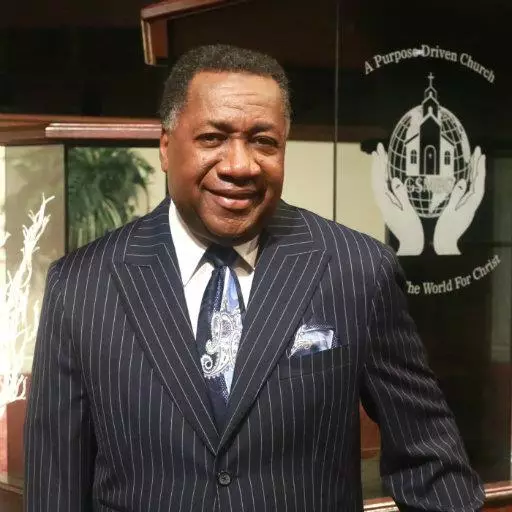
Dr. Michael W. Wesley Sr. is a native of Birmingham, Alabama where he was educated in the public school system. He graduated from Tennessee State University, Nashville,Tennessee with a Bachelor of Science Degree in Music Education. He received a Master’s Degree in Music Education; a Class A certification in School Principal ship and the Educational Specialist Degree in Educational Leadership from Samford University in Birmingham, Alabama. In addition, Dr. Wesley received a Bible Diploma and Bible Certification from Birmingham Baptist Bible College. He completed the Beeson Institute for Advanced Church Leadership Program from Asbury Theological Seminary in Wilmore, Kentucky. Dr. Wesley earned the Doctor of Ministry Degree from Louisiana Baptist University and Theological Seminary in Shreveport, Louisiana May 2006.

Dr. Wesley retired in 2003 after a brilliant 26-year career as an educator in the Birmingham Public Schools. He served as a teacher, assistant principal and principal of three different schools (Powderly Elementary; Arrington Middle and was the first African American principal of Woodlawn High School). He served on the Central Office staff as Extended Day Principal and Coordinator of Safe and Drug Free Schools.

Dr. Wesley is regularly sought after to speak in both schools and churches. He has had the privilege of speaking across the nation and in several foreign countries. His spiritual gifts of teaching and preaching are well documented. He is a member of many organizations. His civic and professional associations are too numerous to mention.

Most recent is the evidence of his leadership, occurred with the completion of a multimillion dollar edifice and education facility located in the heart of the West End community.

Dr. Wesley is currently the pastor of the Greater Shiloh Missionary Baptist Church in the West End community where he has given thirty years of service. He has a great love for people and for learning.

He is married to the former Venita Burkes, and is the father of two sons, Rev. Michael Wesley Jr. and James Edward, one grandson and two granddaughters.

Dr. Wesley is the author of three books, When God Changes A Church, Everybody Deserves A Good Funeral and Reaching the Unchurched_Pathway to Church Growth.

Contact Greater Shiloh Missionary Baptist Church with Dr. Michael W. Wesley Sr.

Address: 
2135 Jefferson Ave SW
Birmingham, AL 35211
Phone Number:
205-925-5972 or 205-925-9751