
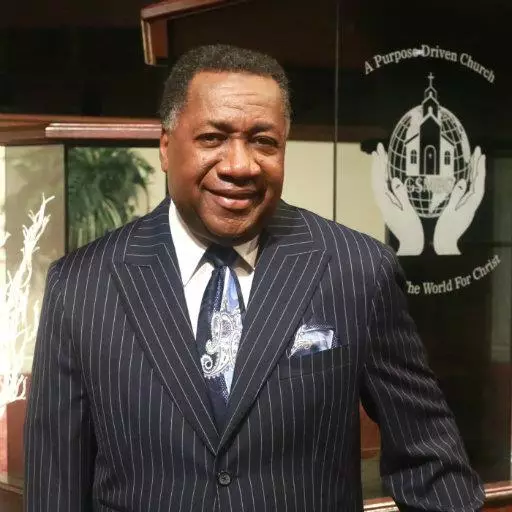
The Servant of the Lord


Voiceover: You are now listening to an inspirational message from Greater Shiloh Missionary Baptist Church, where Dr. Michael W. Wesley Sr. is the pastor. Please join the service in progress.
Guest (Male): Redeemed. No one else could do, no one else could care, as much. Yet you thought my soul was so worthy that you gave your only son. You gave that I might be saved. You gave that I might be set free, exchanged your life for mine. What a marvelous thing you’ve done.
Some folks see my faults, but Lord, you see my accomplishments. Even the good works you have begun in me. Lord, you see my finish, not just half-done. Every battle is already won. I’m so glad you see what’s in me. I thank you, Lord, for everything you see. You gave that I might be saved. You gave that I might be set free, exchanged your life for mine.
What a marvelous thing you’ve done. What a glorious thing. What a marvelous thing you’ve done. Marvelous. So marvelous when you saved me. It was so marvelous when you delivered me. It was so marvelous when you changed me. You rearranged me when you set me free, free from all my care. I want to thank you. It’s marvelous. I want to thank you for setting me free. You broke the chains. It’s marvelous that you set me free. What a wonderful thing you’ve done. What a glorious thing. I’m so glad it was a marvelous thing. You’ve done. You’ve done.
What a marvelous thing God has done. What a glorious thing. I can't help myself. I feel like God has done something for my life that I could never have done for myself. I don't know what you came to do, but I came to give His name glory, honor, and praise for the marvelous things that He has done. Amen. Amen. Amen.
I’m so happy and delighted for the privilege of being with you on this Lord's Day. I want to thank again our pastor for extending the invitation and giving us this moment to share. We just continue to move forward. I know how to be both a leader and I know how to be a follower. It takes an understanding to be able to do both. I've had days of leadership, and now I'm in a role of followership, and it's all right. It's all right. I wish and pray to God that some of us could learn that. Amen.
We’re going to pray and we’re going to have a word for the morning. Join me now, if you will. Father, we thank you for loving us and blessing us. We thank you for giving us a new day. Thank you for the journey of this past week, even our rest last night and our rising early this morning. Giving us a heart and mind to want to be in the house of prayer with your people.
Thank you for the worship opportunity, thank you for the songs of Zion, the scriptures that have been read, the prayers that have covered us. Now, Lord, we need a word to help us to live. Lift again your human out of self. Fill us with the Holy Spirit. Speak to us and through us in your word. Lord, with you there is a word, without you there is no word. Speak, Lord, your servants are listening. Bless the words of our mouth and the meditations of our heart. Let them be acceptable in thy sight, oh Lord, our strength and our redeemer. We ask it in Jesus' name. Amen. Amen.
If you will, turn with me in the Old Testament book of Isaiah. Isaiah, the 53rd chapter, a passage that I'm sure you know. It’s probably one of the most important passages in all of the Bible. It certainly has depth that we cannot possibly exhaust in the few moments that we have. We’re just going to look at five verses of it, maybe six verses here in your hearing.
Who hath believed our report? And to whom is the arm of the Lord revealed? For he shall grow up before him as a tender plant, and as a root out of a dry ground. He hath no form nor comeliness; and when we shall see him, there is no beauty that we should desire him. He is despised and rejected of men; a man of sorrows, and acquainted with grief: and we hid as it were our faces from him; he was despised, and we esteemed him not.
Surely he hath borne our griefs, and carried our sorrows: yet we did esteem him stricken, smitten of God, and afflicted. But he was wounded for our transgressions, he was bruised for our iniquities: the chastisement of our peace was upon him; and with his stripes we are healed. All we like sheep have gone astray; we have turned every one to his own way; and the Lord hath laid on him the iniquity of us all. This is the word of God for the people of God. Thanks be to God.
I want to talk this morning about the Servant of the Lord. The Servant of the Lord. I didn't say "a" servant, I said "the" servant. When I was teaching school back in the day, I would sometimes on exam day tell the kids, "Okay, you can turn in your paper now. When you turn it in, you can write an 'A' on it if you feel that you've done 'A' work." Some students would turn in "a" paper, and some would turn in "an A" paper. There is a difference between "a" paper and "an A" paper.
I want you to understand that there is a difference between "a" servant and "the" servant. The Servant of the Lord is none other than the Lord Jesus Christ. There have been a lot of servants that have lived on the earth. There have been a lot of people that God has used. But no one has been able to do what Jesus has done. What I want to do this morning is to help you deepen your appreciation for the Servant of the Lord. Because I believe that if we have a deeper appreciation for what He has done, then we can make a deeper commitment to want to follow the will that He lays out for our lives.
The Jewish people, the story of Israel, is a story that's steeped in history unlike any other people on the face of the earth. They are a resilient people. There have been many who have come against the Jewish people all throughout its history. When its history opens, we find them slaves in Egypt. For 430 years, they languished beneath the tyrannical yoke of a nation more mighty than they. But in the time that would come, God set them free with a mighty hand.
You know what happened. There was an interlude of 40 years of unbelief where they wandered in the desert. But then they finally came into the Land of Promise, and even there, they had to fight against seven nations. And yet they persevered. They were able to be sustained. Now, I don't know how that grips you, but in the Old Testament, we read about Hittites, and Hivites, and Girgashites, and Amorites, and all of those. None of us have ever met a Hittite, an Amorite, a Girgashite, or any of those other "ites" because they've all been wiped away from the face of history.
But the Jewish people still live. It's not because they were so special in and of themselves. They are small in number, only about 12 to 14 million people that live on the planet today that are Jews. They are there not because they are so special themselves, but they are there because God has chosen to preserve them because there is yet a future plan for the people of Israel.
Now, don't misunderstand. Many of those who live in Palestine today are not necessarily biblical Jews. They are more tied to the Zionists. But there is a coming time when the Jewish people will be preserved and returned to the place of power under the Messiah when the Lord Jesus Christ returns. And they will be saved. Today they're lost. Today many Jews have rejected Jesus. They have rejected Him as their Messiah, their servant, their leader, and as a nation, they are still in denial.
There have been individual Jews who have come to faith in Jesus and accepted Him as their Lord. But by and large, the nation as a whole has rejected Jesus. I say all of that because that ultimately sets the backdrop for understanding what we have in Isaiah 53. What we have in Isaiah 53 is the testimony of the Jews in that coming future when they recognize and accept Jesus as the servant of God and their Messiah.
Instead of, and this is a prophetic word, the value here is this word was spoken by Isaiah 700 years before Jesus was even born. He's speaking of a time that's still yet to come. In prophecy, prophecy looks ahead, but it's not a word of necessarily glory and forecast for something good. If you understand it, this is really a sad chapter. It's a broken chapter because people finally in their brokenness will wake up and acknowledge what they have missed.
How it is so relevant today is because there are people who make the same mistake, who dawn the doors of the church week after week, who listen to all kinds of sermons and study all kinds of Bible apps and everything else and still miss it. It's clear that it’s missed because we're not living it. We don't care about it. We can take it or leave it. When you have such a cavalier attitude about God, it says that you're missing something.
So let's delve in. I'll be brief as I can. But the first thing I want you to see is the tragedy of unbelief. The tragedy of unbelief. Listen at how the prophet speaks here. Wait a minute, before I get into that, let me just give you just one more little point about the book of Isaiah itself. Is it all right? Isaiah is called the Bible in miniature form. In the Bible, there are 66 books, 39 in the Old and 27 in the New.
The book of Isaiah is divided in the same way. There are 39 books in the first 39 chapters and then there are 27 books in the second part. 66 books make up Isaiah. This particular passage is in that second set of 27 books. It is divided into three sets of nine. The first three-nine are all talking about sin and deliverance from sin. The last three sets of nine are talking about the future glory.
But these three, right in the middle, are talking about the salvation that man can have. Right in the middle brings us right down to verses four and five, which become the heart and soul of the entire Gospel. If the whole Bible was lost and we only had Isaiah 53, it would be enough to save the world because it describes the Servant of the Lord.
Come on, let's look at it. Look at the tragedy of unbelief. Listen at what the Jews will say one day when they finally wake up. They're going to say, "Who has believed our report?" The report was given. The Gospel is published. Every week we're telling people about Jesus. We're telling people that the wages of sin is death and the gift of God is eternal life. But who believes it? Look around you today. Why isn't this place running over? It's because people really don't believe the report that's going forward.
Maybe it's because we don't like who's giving the report. Maybe we don't like the way he looks, like the way he sounds, but that has nothing to do with it. You need to hear ye the report and don't make the mistake of falling into the tragedy of unbelief. Jesus came, man, He preached. You know, He said, "I and the Father are one." Because He said that, He said, "Before Abraham was, I am."
He was giving the report. "The works that I do, they glorify Him who sent me." He was giving the report. But how many know reports go unnoticed? Yes, they do. In the old church, we used to give reports. Every third Sunday we had report Sunday. But who believed the report? And the Jewish people are going to wake up one day and they're going to realize that they have misunderstood the report of who Jesus is, who the servant is.
Nobody else, this passage cannot describe nobody else. There is nobody else in human history who fits this description. This was given to us 700 years before He showed up, but it's going to take many more years before they come to the realization of it. Listen at what they say. They say, "Who believes our report?" The arm of the Lord, they didn't realize the power of God was at hand.
When Jesus was calming storms, He wasn't calming storms to show out. When He was healing sick, He wasn't healing sick to show out. When He was raising dead, He wasn't raising dead to show out. He was verifying the report of who He is. But look at what they say. "For He shall grow up before Him like a tender plant, and as a root out of a dry ground. He hath no form nor condition." See, they looked at Him and they weren't impressed.
They looked at Him because He was a dry ground like a dry branch coming up. What they call that in botany is a sucker branch. A sucker branch has no value. They looked on Jesus when He came, I'm talking about the Jewish people, as if He was nobody. He came from a nobody family. He came from a nobody's town. Listen at what the people said, "Can anything good come out of Nazareth?"
Listen at how they felt about Him. He wasn't walking around with a crown on His head. There was no halo glowing around Him when He walked the dusty plains of Palestine. So people looked at Him as if He was nothing. People today still look at Jesus as if He's nothing. Oh, but there's going to come a day when hearts are going to be broken and minds are going to be obliterated because they recognize the tragedy of unbelief. I don't want nobody in here to be included in that particular state.
Listen at what they said about Him. "He had no beauty that we desired Him." He wasn't handsome. He wasn't like Solomon. Solomon was tall, dark, and handsome, but Solomon was a fool. He allowed women to ruin him, bringing in all those girls, building all those temples, worshipping all those strange gods. He ended up losing his own religion. But Jesus did not miss the will of the Father.
But because He didn't have the "pizazz" that people like to see and all of the kinds of things, people looked at Him and just dismissed Him. People look at Him now, even the Romans and the Greeks said, "Listen, how can this man be a Savior? He was nailed to a tree. How can that be somebody special?" So people has always looked down on Him.
But look at what verse three says about Him. He was the rejected Savior. "He is despised and rejected of men, a man of sorrows and acquainted with grief." Now, you can call it what you want. He can be rejected by others, but He's accepted by me. I'm glad that He's a man of sorrow. I'm glad that He's acquainted with grief. You don't know what it is to be sympathetic to another person who's going through until you have gone through.
I preached a long period of time before tragedy and difficulty and sorrow struck my family. It's one thing to pat people on the hand and say, "The Lord will take care of you," until you go through heartbreak row. When you go through heartbreak row, then you begin to understand a different kind of association with others who are there. Don't you know Jesus went through whatever you are going through?
There's no pain that He don't understand. There's no issue that He cannot deal with. There's no circumstance that you can possibly experience that He cannot come along beside you and identify with. And yet, people reject Him. No finer statement to be able to say that He walks with me, and He talks with me, and He tells me that I am His own. And the joy that we share. But so many people are missing the joy because He's not walking with them. They reject Him. They’d rather have Donald. They'd rather have somebody else.
I mean, you ought to see it, man. It's just almost sickening. People are bending and bowing and selling their souls to be identified. I can't hardly stand the television today. I’ll be so glad whenever this election is over because He's "Trump endorsed." That's supposed to mean something? What it does, it does mean something. It tells you what's really up. We better wake up and understand that Jesus is not the one to be rejected. It's the other people who are trying to make themselves appear to be on the same status who are the ones to be rejected.
And so, He was a man of sorrows, acquainted with grief. Look at what they say: "And we hid our faces as it were before Him." You know what that is? That's like looking at somebody who's disfigured. You don't want to be embarrassed by looking at somebody disfigured, and then having to turn your face. That's how they looked at Jesus.
I'm talking about the Jews. The Jews for centuries in the Old Testament, they knew that a Messiah was coming. When He showed up on the earth, they looked at Him as if something was wrong with Him, and they turned their faces, as it were, from Him. They were offended by Him. Just look at what's going on today. There are people who are offended by Jesus. Church people are offended. Yeah, we want to get our wave on and our praise on when it's popular. But when it becomes personal, "Eww, you in that church? Eww, you around those people?"
We have to be careful there because we need to understand the benefits of what happens when you know who He is. There's a tragedy in unbelief, there's a danger in the rejection, but there's a benefit in accepting the substitute. See, He was, look at what He says here, "Surely He hath borne our grief." That's what they're going to wake up and realize one day. "Surely, truly, truly," which means the same thing, "He has borne our griefs."
The Jews believed that when Jesus was on the earth and when He was crucified and when He went to the cross, that He was being punished by God for being a blasphemer. Because they accused Him of blasphemy. They said He makes Himself equal to God. But they're going to wake up one day. Many other people are going to wake up one day, and they're going to look at this Servant of God, and they're going to say, "Surely He was the one who bore our griefs and carried our sorrows."
That's why I'm calling on you today. Wake up! Recognize that no one else can bear your griefs and no one else can carry your sorrows. There's only one servant that God has appointed and God put on the earth for that purpose. And so it's Him, it's Jesus. Look at this thing right here. He has borne our sorrows, but look at what it said. We did esteem Him stricken, smitten of God. We thought God was doing it. Can I tell you God did do it?
It wasn't the Jews that crucified Him. It wasn't the Romans that crucified Him, even though they all had a hand in it. It was God's determined will that this would be the way that we could be made right with God. And so He set Him up to be our substitute. Look at what this idea of substitution is about. From the beginning in the Garden, after Adam and Eve had messed up and they took for themselves fig leaves to try to hide because their conscience had been born.
They were now aware that they were naked. They were naked all along; it was just conscience that had been brought to the forefront. They went and got themselves fig leaves and thought a fig leaf could hide their sin. But God took an animal and He killed the animal, and He made for them appropriate clothing. Now, He was teaching right then the idea of substitution. That you have messed up and you need a substitute. You ought to die, but instead of you dying, I'm going to take this animal's life and substitute this animal for you.
From that moment on, God began to drop into the Jewish community the need to have a substitute. So every year later on, when Moses brought the children of Israel out of Egypt, just before they could get out, he took a lamb and he killed the lamb. They all killed lambs, and they took the blood and put it over the doorpost and lintel because the lamb was a substitute for them.
Later on, when the temple was built, they would bring animals. If you had money, you could bring a bullock, a big one. If you didn't have much money, you could bring a smaller lamb or a ram. If you didn't have that, you could bring two pigeons or turtle doves. But something had to be a substitute. Somebody else had to die in your place.
It wasn't that the substitute had any power in it because later the writer to the Hebrews said it wasn't possible that the blood of bulls and goats could pay the debt of our sin. But God was putting in man's mind the need to have a substitute. And so Jesus became our substitute. How you know? Listen at what the prophet said. I want you to note how the Jews are going to look at this because all of this is written in past tense using past verbs.
"But He was wounded," see, for our transgression. "He was bruised." See, they're going to look back at that, and they're going to see that it was Him who was wounded, that He was pierced through. You know Jesus was pierced. Five times He was pierced. He was wounded for our transgression. Do you know what a transgression is? A transgression is when you cross the line. How many know you have crossed the line? You have crossed the line many times.
He was wounded for our transgressions. He was bruised, He was beat. He was beat in the face by the Jews. He was beat in the face by the Romans. They took a stick and they beat Him. They beat Him bad. He was beat so bad that when they brought Him out before Pilate, Pilate didn't even hardly recognize Him. He was bruised for our iniquities.
Our iniquity is a different word than transgression. Transgression is stepping across the line, but iniquity is when we have been twisted like a pretzel. Life sometimes twists us like a pretzel. We become so messed up we don't hardly know which way we're going. We can get stuff in our head, we can have hatred in our heart, and we can do dirty deeds to other people. We can become twisted. How many people have been twisted? People can make you so mad you can't even see straight.
You know it's the truth. Sometimes if you had a rope, you would hang some folk. If you had a pistol, you would shoot some people. People do because they have transgressions and iniquities. But He, the Servant of the Lord, went to Golgotha's Hill and He was placed there as my substitute. I'm so glad that He's my substitute.
Do you understand? See, if we still needed lambs and rams and bulls and goats, can you imagine what a mess the church would be on Saturday night, Friday night? People would be bringing, dragging bulls up here and goats up here. "Pastor, you got to kill this thing because I have transgressed, I have sinned, I have crossed the line, I have gotten twisted, and I need a substitute."
But thanks be to God, one Friday on a hill called Calvary, He took on the cross. He marched up the Via Dolorosa, He dropped His head in the locks of His shoulders and He died. He died not because He had sin, but He died to be my substitute. He died to be in my place. He died to pay my penalty. He died for my sin. I'm not going to pretend today. I know I'm preaching, but I have sinned. Don't you pretend today; you too have sinned.
So He was wounded for our transgression, bruised for our iniquity. The chastisement, the punishment for our peace was upon Him. And by His stripes—oh Lord, that helps me. That helps me. When I was laying in the Intensive Care Unit and I overheard what the doctor was saying, I turned my face to the wall and I began to talk to the Lord. I said, "Lord, your word says that you were wounded for my transgression, you were bruised for my iniquity. The chastisement of my peace, the good of my shalom, was upon you. And it's by your stripes that I have my healing."
I'm declaring that I'm healed. Man, I began to speak God's word, and the power of the Holy Ghost went through me. I began to stand up and from that day forward, I'm still standing because God is a healer. He has the right to heal, He has the power to heal, He has the willingness to heal. But it's up to us to have the belief to want to be healed. To understand that God put on Him the punishment for you so that you can go free.
There were two parts of the sacrifice. One was the substitute lamb that was killed in place of. And the other was the scapegoat. They would take a goat and they would bring that goat into the camp. All the priests would come around and they would lay their hands on the goat's head. Then they would take the goat to the edge of the wilderness and turn him loose. He was to escape, symbolically with the sins of the people.
Nobody ever went looking for the scapegoat because he was the runaway with the sin. I don't know what you understand. He was that servant that ran away with my sin. He was that servant that was beat up. He was that servant that was stretched wide, pierced in the side, pierced in the head. He was that servant.
Because of Him, the benefit that I have, I have peace in my heart today. I have healing in my body. Can I say it like I want to say? I know I got to stop, but let me just show you three things here. First, it was the attitude. The attitude was the unbelief. "Who hath believed our report?" See, that's attitude stuff. We don't want to believe.
Then there's behavior stuff. That's transgressions, and that's iniquities, and that's chastisement so that we could have shalom peace. And there were stripes all for our behaviors that we could be healed. But then lastly, I want to tell you, you got to own up to your own stuff. That is what's in your nature. Your very nature. I know you look holy, you look dignified, and you look sanctified, but you got a sin nature.
Look at what the Jews are going to realize. "All we like sheep have gone astray." Now, why is that analogy of sheep? Because it's the nature of a sheep to put its head down and just wander away from safety. A sheep is stupid. A sheep is dumb. We are stupid, and we're dumb, and we don't always recognize what's good for us.
We don't always recognize that God be trying to keep us out of trouble, that God be trying to bless our life, that God be trying to take care of us. But we put our head down. We used to play that old song, "Grazing in the Grass." We go grazing in the grass and we move right away from the peaceful shore. "All we like sheep," it's in our nature.
You can't change your nature. I don't care what you do. You can spend the night in the church; that won't change your nature. "What can wash away my sin? Nothing but the blood of Jesus. What can make me whole again? Nothing but the blood of Jesus." Oh, precious is that flow that makes me white as snow. No other fount I know, nothing but the blood of Jesus.
I've got a nature, you’ve got a nature. "All we like sheep have gone astray." But the Lord laid on Him—who's Him? The servant. The servant, not "a" servant, "the" servant of the Lord. That substitute, that scapegoat, that one that God designated before time began to be the one to pay our sin debt in full.
Now, what a time we can look forward to. Because, see, we know where we're going to end up. We're going to be with God. We're going to live with Him. We're going to rejoice with Him. We're going to praise Him. We're going to share in His glory. We're going to walk around Heaven, and we're going to shout, we're going to sing, we're going to be in the realm of eternal bliss.
That's what we’ve got to learn to appreciate. When we learn to appreciate who Jesus really is and what He really has done for us, then we can make a different kind of commitment to Him while we live on the earth and live lives that demonstrate that we are citizens of His Kingdom. Where does that citizenship come from? The book of Ephesians helps us to understand that God was going to do a new thing beyond what Isaiah could see.
Isaiah could see the twin towers. He could see that a virgin would conceive and bring forth a son, and His name would be called Wonderful, Counselor, the Mighty God. He could see that the glory of the Lord shall be revealed and all flesh will see it together. He could see Jesus' first coming and His second coming, but He could not see the in-between period, which is the period we're living in now, the church age.
It was a mystery hidden from all of the Old Testament prophets. Jesus said, "In the church age, I'm going to do a new thing. I'm going to do away with Jew and Gentile titles, and I'm going to make out of myself one new thing called the church." Since we are now part of the church, you need to understand who you are. We were once dead in our trespasses and sin, but God has quickened us, has made us alive.
We are now the workmanship of God. I just came to tell you that God didn't make no junk. So you need to look at yourself. Yes, even though you messed up, even though you’ve got a sin nature, God has made you into a new creature. So you need to bring about the new love. You need to treat your neighbor right. You need to treat your friends right. You need to treat your family right. You need to live right.
My old pastor used to sing, "I want to live so God can use me. Anywhere, Lord, anytime. I want to sing so God can use me anywhere, Lord, anytime. I want to pray so God can use me anywhere, Lord, anytime. I want to preach so God can use me anywhere, Lord, anytime." I'm not ashamed of the Gospel of Jesus Christ because it is the power of God to everyone that believes, to the Jew first and to the Gentile.
The question today is: do you believe? Yes, I'm a believer. Yes, I'm a believer. Yes, I'm a believer. Yes, I am a believer. I got to stop right here. The passage goes on. It is so much in it. It is so impressive and so exhaustive that I could spend the next several months right here in this same passage and still not uncover all of the truths.
But here's what I want to summarize and say to you. Don't have the attitude of unbelief. It's tragic. Many people have lived years and years and years—the Jewish people have lived millennia, thousands of years—and didn't believe. They have entered into eternity already separated from God, and it's too late for some. There will be a future generation who will come to accept Jesus, and they will be in the Eternal Kingdom.
But don't you miss it. Don't you miss it. Don't let the attitude of the report, because you don't like the reporter, mess you up. Make sure you believe the report and understand. Don't reject the Savior; embrace the Savior because He brings benefits for your behavior, for your transgressions, for your iniquity, so that you can have peace, so that you can be healed.
But you got to understand your nature. That you like a sheep, like what's on the inside of you, can't change that. We just follow the ebb and flow and naturalness of our own life. Sheep, dumb before shearers, don't open their mouths. They just so glad to get that wool off of them, they don't even realize that they're about to be slaughtered. But it doesn't even matter because in their nature, they were just a follower.
We need to be followers, but not followers of the natural nature. But followers of the Christ who is the servant, the Servant of the Lord. How you know? In that upper room before He went to the cross, He said to His disciples, "I am the way, not 'a' way. I am the way, the truth, the life. No one comes to the Father but by me."
So I want you to grow in your appreciation. Tell the Lord thank you. Tell the Lord, "I appreciate who you are and what you have done." Anybody been healed and you know that your healing came from the stripes? When God punished Jesus, God became satisfied. That allowed Him to release the mercies, the good things that you and I would need in our lives.
So we ought to praise Him forever for that. Not just on Sunday morning when I feel like it. Not just when my choir is singing. But we ought to praise Him when we're by ourselves. We ought to praise Him every time we think about all of the good things the Lord has done. Doors are open. Doors of the church are open. Somebody might be here this morning. I don't want you to miss this.
This can be a golden moment. This can be a life changer. Jesus has already done everything that you need. All you need to do is to believe the report. Don't reject the report. Come today while blood runs warm in your veins. Make Him Lord. This is what you do. You pray where you are. You say, "Lord, come into my heart. Forgive me of my sin. Help me to be the man, the woman, the boy, the girl you want me to be. I believe Jesus is the Christ, the Son of God. I believe He came to the earth. I believe He died on the cross as my substitute. And now I want Him to live in my heart."
If that's your prayer, you can be saved in this moment. Doors are open. Walk this way, give one of these your hand, give God your heart. My Lord, what a change. That's what you'll be able to say. A change has come over me. There are some folk in here who know that change. He changed my life, and now I'm free. What a wonderful testimony that can be for you. Doors are open anytime during this song. He washed away all my sins, and He made me whole.
He washed me white as snow. He changed my life, and now I see. I see it myself. I’m so glad He changed me. I’m going to do what must be done. I’m going to work and work until He comes. I’m so glad He changed me. He changed my life. He changed my life complete. And now I see. I see it myself. I’m so glad He changed me. I’m going to do what must be done. I’m going to work and work until He comes. I’m so glad He changed me.
A wonderful change has come over me. A wonderful change has come over me. He changed my life complete. And now I see. I see it myself. I’m so glad He changed me. I’m going to do what must be done. I’m going to work and work until He comes. I’m so glad He changed me. He changed my life. He changed my life complete. And now I see. I see it myself. I’m so glad He changed me. I’m going to do what must be done. I’m going to work and work until He comes. I’m so glad He changed me.
Voiceover: Hope you enjoyed the broadcast. You have been listening to a message from the Greater Shiloh Missionary Baptist Church, where we are reaching the world for Christ. Located at 2135 Jefferson Avenue Southwest, Birmingham, Alabama, 35211. For a copy of this message, you can reach us at 205-925-9750 or 9751, or visit us on the web at www.greatershiloh.org. For another uplifting message, we invite you to join us for our next broadcast.
Featured Offer

This is Dr. Michael Wesley, Sr.'s latest book on the subject of marriage. As a Pastor he has counseled many couples before, during, and after marriage so this has given him keen insight into the marital relationship. He himself has been married to the same woman for over 40 years so he has a wealth of knowledge on this subject. In this book Dr. Wesley covers that marriage comes from God, the keys to compatibility, the keys to staying in love, and even what to do if you feel you have married the wrong person. This is an excellent read if you are considering marriage in the future or even if you are currently married.
Past Episodes

Video from Dr. Michael W. Wesley Sr.
Featured Offer
This is Dr. Michael Wesley, Sr.'s latest book on the subject of marriage. As a Pastor he has counseled many couples before, during, and after marriage so this has given him keen insight into the marital relationship. He himself has been married to the same woman for over 40 years so he has a wealth of knowledge on this subject. In this book Dr. Wesley covers that marriage comes from God, the keys to compatibility, the keys to staying in love, and even what to do if you feel you have married the wrong person. This is an excellent read if you are considering marriage in the future or even if you are currently married.
About Greater Shiloh Missionary Baptist Church
The Mission of the Greater Shiloh Missionary Baptist Church is to Reach, Teach, and Baptize throughout the world beginning in our community, fulfilling the Great Commission by the power and presence of the Holy Spirit until Jesus returns.
About Dr. Michael W. Wesley Sr.
Dr. Wesley retired in 2003 after a brilliant 26-year career as an educator in the Birmingham Public Schools. He served as a teacher, assistant principal and principal of three different schools (Powderly Elementary; Arrington Middle and was the first African American principal of Woodlawn High School). He served on the Central Office staff as Extended Day Principal and Coordinator of Safe and Drug Free Schools.
Dr. Wesley is regularly sought after to speak in both schools and churches. He has had the privilege of speaking across the nation and in several foreign countries. His spiritual gifts of teaching and preaching are well documented. He is a member of many organizations. His civic and professional associations are too numerous to mention.
Most recent is the evidence of his leadership, occurred with the completion of a multimillion dollar edifice and education facility located in the heart of the West End community.
Dr. Wesley is currently the pastor of the Greater Shiloh Missionary Baptist Church in the West End community where he has given thirty years of service. He has a great love for people and for learning.
He is married to the former Venita Burkes, and is the father of two sons, Rev. Michael Wesley Jr. and James Edward, one grandson and two granddaughters.
Dr. Wesley is the author of three books, When God Changes A Church, Everybody Deserves A Good Funeral and Reaching the Unchurched_Pathway to Church Growth.
Contact Greater Shiloh Missionary Baptist Church with Dr. Michael W. Wesley Sr.
info@greatershiloh.org
http://greatershiloh.org/
2135 Jefferson Ave SW
Birmingham, AL 35211
205-925-5972 or 205-925-9751