
Men Who Discover the Book 072626


Guest (Male): You are now listening to an inspirational message from Greater Shiloh Missionary Baptist Church, where Dr. Michael W. Wesley Sr. is the pastor. Please join the service in progress.
Dr. Michael W. Wesley Sr.: Soften it up just a little bit there. I would just love to hear just a little bit of that from the congregation. Just "What a Friend We Have in Jesus," just right there. Kind of soft, it doesn't have to be loud, it doesn't have to be strong. Come on, here we are right here.
What a friend we have in Jesus. Him, all our sins and griefs to bear. Come on, just sing it children. What a privilege to carry everything to God in prayer.
Father, we thank You now for this time in Your presence. We pray for the word of God, that You would lift Your human out of self, fill us with the Holy Spirit. Speak to us and through us. Bless the words that are in our mouth.
Lord, with You there is a word. Without You, there is no word. Speak, Lord; Your servants are listening. We need You, Lord. Change us, help us, heal us, bless us in every way. In Jesus' name, we pray. Amen.
I'm kind of old school, so I like those old hymns. I like the medleys that we put together, but I still think it all ought to end in congregation singing. In the Old Testament Book of Second Chronicles, chapter 34, verses 8 through 33. I would never advocate you reading this much if you're a young minister, but because I know this is an unfamiliar text to some, I need to read a bit of it to set the background.
I'm going to start at the first verse and I'm going to read a little while. Josiah was eight years old when he began to reign, and he reigned in Jerusalem one and thirty years. And he did that which was right in the sight of the Lord and walked in the ways of David, his father, and declined neither to the right hand or the left.
For in the eighth year of his reign, while he was yet young, he began to seek after the God of David, his father. And in the twelfth year, he began to purge Judah and Jerusalem from the high places, and the groves, and the carved images, and the molten images. And they break down the altars of Baalim in his presence, and the images that were on high above them, he cut down.
And the groves, and the carved images, and the molten images, he brake in pieces and made dust of them, and strowed it upon the graves of them that had sacrificed unto them. And he burnt the bones of the priests upon their altars and cleansed Judah and Jerusalem. Now, I'm going to skip down to verse 8.
Now, in the eighteenth year of his reign, when he had purged the land and the house, he sent Shaphan, the son of Azaliah, and Maaseiah, the governor of the city, and Joah, the son of Joahaz, the recorder, to repair the house of the Lord his God. And when they came to Hilkiah, the high priest, they delivered the money that was brought into the house of God, which the Levites that kept the doors had gathered of the land of Manasseh and Ephraim, and of all the remnant of Israel, and of all Judah and Benjamin. And they returned to Jerusalem.
Hilkiah answered and said to Shaphan the scribe, "I have found the book of the law in the house of the Lord." And Hilkiah delivered the book to Shaphan. And Shaphan carried the book to the king and brought the king word back again, saying, "All that was committed to thy servants, they do it. And they have gathered together the money that was found in the house of the Lord and have delivered it into the hand of the overseers and into the hand of the workmen."
Then Shaphan the scribe told the king, saying, "Hilkiah the priest has given me a book." And Shaphan read it before the king. And it came to pass when the king heard the words of the law, that he rent his clothes. And the king commanded Hilkiah, and Ahikam, the son of Shaphan, and Abdon, the son of Micah, and Shaphan the scribe, and Asaiah, a servant of the king's, saying, "Go inquire of the Lord for me and for them that are left in Israel and in Judah, concerning the words of the book that is found."
"For great is the wrath of the Lord that is poured out upon us because our fathers have not kept the word of the Lord to do after all that is written in this book." And Hilkiah, and they that the king had appointed, went to Huldah the prophetess, the wife of Shallum, the son of Tikvah, the son of Hasrah, keeper of the wardrobe. Now she dwelt in Jerusalem in the college, and they spoke to her to this effect.
And she answered them, "Thus saith the Lord God of Israel: Tell ye the man that sent you to me, thus saith the Lord: Behold, I will bring evil upon this place and upon the inhabitants thereof, even all the curses that are written in the book which they have read before the king of Judah. Because they have forsaken me and have burned incense unto other gods, that they might provoke me to anger with all the works of their hands."
"Therefore, my wrath shall be poured out upon this place and shall not be quenched. And as for the king of Judah, who sent you to inquire of the Lord, so shall you say unto him: Thus saith the Lord God of Israel concerning the words which thou hast heard: Because thine heart was tender and thou didst humble thyself before God when thou heardest his words against this place and against the inhabitants thereof, and humbledst thyself before me, and didst rend thy clothes and weep before me, I have even heard thee also, saith the Lord."
"Behold, I will gather thee to thy fathers, and thou shalt be gathered to thy grave in peace. Neither shall thine eyes see all the evil that I will bring upon this place and upon the inhabitants of the same." So they brought the king word again. This is the word of God for the people of God.
I'm still talking to men today because I know that men are the target, and we need to be able to reach men. So today, I want to talk about "Men Who Discover the Book." How many know the book is lost? We live in a technological age, and we have more access to the word of God now than ever, but in plain sight, the book is lost.
Because the book is lost, we've got a mess in our society. Because the book is lost, we've got a mess in our home. Because the book is lost, we've got churches that don't know what they're supposed to do. People gather in buildings every Sunday, and they act a fool because the book is lost.
If we're going to get the world back in order, if we're going to get the family back in order, if we're going to get the community back in order, then men are going to have to rediscover the book. That's my premise today because it underscores the value and importance of following God in times of evil activity. Whenever we understand that, we'll come to know the authority of God's word.
I want to get into this text this morning. Our time is running away from us already, so I'm rushing—I feel like I'm rushing—but I don't like to rush. I've got to help you; I want to get it in, at least enough of it so that you can take it home with you. This message is as contemporary as it was the day it was written.
Some people look at an ancient text like this and say, "Now, what in the world does a passage of scripture that was written over 2,600 years ago have to do with life in the 21st century?" Well, I want to say to you today that there are some same sets of circumstances that exist today that existed then, and the same solution that was necessary then is the same solution that's necessary now.
I want to be real clear about that. It all centers around the book, the word of God. When men are neglecting the word of God, sin runs rampant. I don't have to ask you; is sin running rampant? I don't have to ask you, but I will ask you; is the book lost? In plain sight, on our tables, on our bookshelves, right here in our church, but the book is lost.
It's got so much dust on it. We see it, but we don't open it. We know it's there, but we don't read it. And when we do read it, we won't memorize it. So in a real sense, the book is lost. Until and unless we rediscover the book, then we're going to continue to see the problems that we're having.
Listen, man, before 1965, there were probably almost 75 to 80 percent of families that were family-oriented, and people were going to church on a regular basis. Now, today, about 15 percent of families remain together. That's why we should have made a bigger deal out of this for those people who are celebrating today.
I want to submit to you today that churches are closing every day in a record number. Not just shutting down, I'm talking about closing, padlocking buildings because people no longer attend. I dare say that since the pandemic, there have been even more churches that have closed, African American churches.
Churches that started for the wrong reasons. See, in our Black community right around this church, we've got about 35 different Black Baptist churches. They didn't all start because we planted churches; most of them came out of church splits because somebody got mad and decided, "I'm going to take me two or three folk and we're going to go over here and we're going to start us a church."
But now that the people are not coming, they can't pay the mortgage, and the light bills can't get paid, and all of the things. It's not because people are not available, but it's all because the book is lost. So if it's going to turn around, then the book has got to be rediscovered. That's the premise of the whole message today.
What I want to do is divide this message into five lessons that I think men need to learn, that are exercised right here that we can see right here in verses 8 through 33. There are five things that we want to cover, but before I delve into the lessons that are in verses 8 through 33, I at least need to say something about the background of this particular passage and the implications of what's there.
First and foremost, you would understand in the redemptive history of mankind at the junction that this book was written, or this passage was written, Israel and Judah had been divided—well, I should say the nation of Israel had been divided into two kingdoms, the Northern Kingdom and the Southern Kingdom called Judah.
By this time, the Northern Kingdom has already been judged by God, as He has used the Assyrians to come in and to take them captive and to leave just a brief remnant in the land. Eighty years have passed, and at least three wicked kings—or two wicked kings from Judah—have sat on the throne after having seen the Northern Kingdom go into captivity.
Josiah here is the young king. His great-grandfather—or should I say his grandfather—who had been one of the most wicked kings of all, his name was Manasseh. He had reigned in Jerusalem for 55 years. Imagine that; 55 years, you've grown up with nothing but evil in the land, idolatry everywhere.
After Manasseh died, then his son, who was Josiah's father, Amon, became the king. He didn't last but two years. He was so wicked that his own folk assassinated him. They took him out because they just couldn't stand to have this wickedness. So what did the people do? They turned to an eight-year-old boy, and they made the eight-year-old boy king.
I just want you to understand these are some contemporary times. We might not be ready to make an eight-year-old boy president, but we sure are poised to make a Black girl president. For many people, that doesn't make sense. It goes against the grain of what traditionally has been happening, but this is exactly what we see.
I want you to understand that the boy does a great job. Why? Because he seeks after God. The text says in verse 2, and in verse 1 and verse 2, that he followed after verse 3, his father David. David wasn't his biological father; he was his spiritual ancestor. What it says to all of us is that we have to be careful about the kind of life that we live right now.
Because the life that we live right now has and could have an impact upon generations three, four, and five down the line. Because Josiah becomes king, he follows after what David had done. Now, he doesn't have a copy of David's life. He doesn't even have a book that describes how David operated as king.
So he is living off of legends and what he thought or what other people said about David. David was a man after God's own heart. David prayed. David looked. David sought after God. Even though David wasn't perfect, David was a good king. This boy chose to pattern his life after what he heard David had done.
I want to help you understand that there are a lot of people today who are patterning their lives after things they heard other folk have done. Whether they saw it or not, they are still trying to build their lives after it. One of the problems with America—I don't want to be political in here this morning, but I'm not afraid to tell the truth.
One of the reasons that we've got such a racial problem in our country is because things people have heard, and they want to take the country back to a day and to an era when those things were true. That's a problem for some of us who don't want to see it go back to the way it used to be, because some of us had ancestors that lived through it, and we heard first-hand the accounts of the atrocities of what went on.
So you've got two different kinds of stories out here, so you've got to be careful which story you listen to. What I'm saying to us today, to all of us, is that we have to steward well the life that we currently have because somebody down the line is going to look at the annals of history and they're going to either want to be like you or they're going to be totally opposite of how you presented yourself.
Growing up in a large family, I can tell you I had good examples and I had some examples that weren't so good. I saw some things that I wanted to emulate, and I saw some things that I declared I definitely don't want to do. One of the problems in social Greekdom today—and I don't want to go down that trail—is that you've got so many in this current generation that are trying to do what they heard previous generations did, and it's undermining the values that the organizations really were founded upon.
Somebody knows what I'm talking about, but I'll just say that and let that be. I want you to understand we've got to steward well the life that we have right now, and especially men because men leave reputations. Men leave reputations in their families, they leave reputations in their communities, they leave reputations on their job, and people will come behind you and they'll want to do or not do what they heard that you did. They don't even have to know you, but your reputation will live on.
So Josiah followed David's reputation. That's a good thing. Here's another lesson for young people, and I haven't even got to the five yet. The Bible says that Josiah became king when he was eight, but he followed after the ways of God. So what I'm saying to you, even as a teenager, when he became sixteen, he sought the Lord.
You don't have to wait till you get to be old to start trying to follow God. You are not always guaranteed that you're going to get to be old, and especially if you live in this generation. More young people are dropping by the way. More young people's lives are being taken. So you don't want to put it off, saying, "I'm going to take advantage of my teenage years and I'm going to do whatever I want to do, sow my wild oats, and then later come back into the church."
That's a dangerous premise, I should say, because it's not a promise. That's why I say even to us as we teach our young people, we have to be careful. The only product we have is Jesus, and if we don't plant Jesus in the hearts of young people while they are here, there's no guarantee that they'll get a chance to get back.
Josiah teaches us some things about following after God at an early age, and he teaches us some lessons about family heritage and the value of stewarding a good life. But that's not what the thrust of the lesson is. The thrust of the lesson as we come to these five implications that are here is to understand who Josiah really was.
What did he do? He began because he followed after God, and he started early. I want young people to understand, every man needs to understand this: that it takes a while, even when you're following after God, for God to manifest Himself. Just because you seek Him one time doesn't mean that God will show up right when you're seeking Him.
If you look at the record here, you would find that Josiah spent at least ten years before he finds the book of the law, hears it read, and repents. But what did he do? He took the first years to seek after God. God may not come when you want Him, but He's always on time. Josiah first sought the Lord, then after four years of it, he decided that he would start purging the land.
His grandfather had left the land proliferated with idol gods on every high hill, under every green tree there were idol gods and statues. So Josiah started trying to clean up, not just Jerusalem in the Southern Kingdom, but he went all the way up into Manasseh and Naphtali and all of the places in the north.
And he began to cut down those groves, and he began to burn those altars and to crush them down and to pour the ashes on the graves of those who had worshipped. He was very clear and very intentional that the land needed to be ridding of the idolatry. He even dug up some of the graves and burned the bones of some of the people who had participated in idol worship.
The boy shows that he was serious about trying to do what was right. Then even after then, it took him six more years after he'd purged the land of all of the sites of idol gods and groves and things. Then he decided it was time to do a renovation job on the house of God.
He called some men together. He called Shaphan, who was his secretary, and he called Hilkiah, who was a priest, a high priest. And he called Joah, who was a recorder, and he called Maaseiah, who was the governor of the city. And he set them over a renovation project of renovating the temple, which means the temple had been left unattended.
Can I help you understand something? If Josiah, even his heart had been right, he had tried to clean the land up and had gone through that, but it's still six years later before the renovation project starts on the temple. That means folk were still trying to worship without a book. So what in the world were they doing?
That's the question I have to ask today. When I look at the church today and understand that people have been trying to worship without the book, what in the world is going on in these places? Yeah, you might have somebody stand up, and somebody might say something, may tell a few jokes, have a few people laughing. People may leave on Sunday with a warm, fuzzy feeling, but no repentance, no life change because they are not being guided by the book.
We sing songs, we sound no different than what they were doing last night in whatever club it was. We do the same dances, we bust the same moves, we wear the same clothes, so church looks no different than the world. And it's all because the book is lost.
So I'm saying that there is a need for the church to be renovated and some new discoveries need to take place. The communion table is still in place, the pulpit is still in place, but people who don the pulpit are not coming with the fire and brimstone. Not coming with the unadulterated truth of the word of God, compromising just to have a large group of people.
Men in the church, when they do come, their lives are not being changed because nobody is calling for a different way of living. And that's what happens when the book is lost; then sin goes unchecked. The renovation project gives us a picture of the unity that ought to be in the church because there are a lot of folk that participated in the project.
Not only did you have these leaders that had been appointed, but you start seeing all of these craftsmen and you start seeing all of these people. And yes, they took an offering. Josiah sent an offering plate throughout all of the land and they collected money for the renovation project to go on in the temple.
And they brought the money back, and Hilkiah distributed the money to the craftsmen who bought beams and stones and all of the things to bring the house of God back up. It's amazing to me—can I just pause parenthetically—that you will fix your house and spend whatever it takes to fix your house, but we don't want to fix the house of the Lord.
We start fussing and arguing and getting into all kinds of craziness when it comes to putting a little extra to make God's house the way it needs to be. That's not this church, but that's what's happening in the body of Christ. Somebody needs to know it's the truth. You've got buildings that have got leaks in them, and folk are content to sit right there every week and get wet rather than to have the roof fixed. You've got bathrooms that won't flush and odors that run throughout the building, and you don't want nobody to come out there and get that stuff straight. Come on, somebody. God's house.
In the process of those men renovating the house, Hilkiah found a book. He found a scroll. It was just one scroll because you've got to know that for 55 years, Manasseh ruled. And Manasseh tried to get rid of every evidence of the word of God. He probably had them all burned, but somebody hid one of the scrolls in the house of the Lord.
And as they were going through uncovering old stuff and pulling out things and tearing down things, Hilkiah discovered a scroll of the Book of Deuteronomy. And he gave it to Shaphan. Shaphan was the secretary. Shaphan took the book and took the scroll, and he went to King Josiah.
He said, "King, I want to give you a report on how things are going down there at the temple." Said the workers are doing what they need to do. The skilled laborers are going through there; they're using the money right. "But Hilkiah the priest has discovered a book, and I just want to read you just a little bit of the book."
Can I pause right here and help men understand lesson number one? You've got to understand the power of God's word. When a man understands the power of God's word, God's word has the power to change your life. Now, I want you to see what happened. Shaphan just began to read the book. When he read the book, Josiah tore his clothes. He cried out, he repented immediately.
Now, it did not happen because of the renovation or the beauty of the building; that didn't cause him to tear his clothes. I don't care how pretty the church is; that doesn't change people. What changes people is the word of God. Let me tell you something, let me put it like Dr. Jonathan McPherson would say: the White House won't get better, your house won't get better, the State House won't get better, the Church house won't get better apart from teaching of the word of Almighty God.
So we've got to rediscover the word of God. You've got pastors now that want to be comedians, and you've got people who want to be entertainers, but we need preachers. Can I just tell you that that boy just read the word? He didn't explain it; he didn't go expository on it. He just read the word.
And when he read the word, it caused his life to be shattered. Now, you've got the word in your home. Some of us have got three or four different apps of the Bible on our phone, so we've got more access to the word of God than ever. But is it causing you to repent? I'll tell you why not: because you're not reading it, because the word is lost in plain sight.
Take out that word on a daily basis. Spend some time digging into it. "Thy word," David said, "have I hid in my heart that I may not sin against God." See, the word is supposed to be the protector, the word is supposed to be the guide, the word is supposed to be the convictor of when we're wrong.
I don't care who you are; you may not like it, but you are not always right. You don't always have the right attitude. You don't always say the right thing. You don't always do the right stuff. But when you come in contact with the word, the word will change you.
Why we need the word? Because the word tells us where life began in the garden, and the word tells us where life will end in the beautiful city. The word tells a man how to treat his wife. The word tells a husband how to treat his wife and the wife how to treat her husband. It tells children how to follow the instructions of their parents.
And if we had the word—we don't want the word in school, we don't want the word in government, we don't want the word in the community, we don't want the word nowhere, and that's why the whole land is running rampant with sin everywhere. So we need to recognize the power of the word of God. That's the first lesson that we need to learn from this.
The word needs to be rediscovered. See, when the word was rediscovered, look at all of the changes that occurred. As long as the word was still hidden, none of this went on. Josiah was still a good king, but he didn't repent. The reforms that come after don't happen until he reads and hears the word.
So as long as we allow the word to be hidden and lost, we can be sure that there'll be no changes. Kamala might be good, but Kamala is going to need the word. And if she brings and lives the word, then the nation can be true to its cause. The other man has already demonstrated that he's not even interested in the word, because when he displays it, it's upside down. So you know it's not being read.
If you don't know the difference between First Corinthians and Second Corinthians, and you call them "Two Corinthians," something's wrong. Just like when I didn't know the word, like some of you, I used to call the Book of Job the Book of "Job." You remember. But you learn when you learn what the word is.
The second thing lesson that I want men to understand when you discover the word of God, it's going to lead to an urgency of repentance. Josiah didn't wait. Shaphan came with a report to tell him how work was going on at the temple, and he started reading—I don't know where he read. Maybe he read Deuteronomy 20, where the Lord said that you'll be blessed in the fields, you'll be blessed when you come in and when you go out. If you honor me, your fields will be multiplied. If you don't, you're going to be cursed.
Maybe he read the portion that "I the Lord thy God am a jealous God, and thou shalt have no other god before me." Maybe he read "Thou shalt not kill, thou shalt not steal." But all of that was in the word. And when Josiah heard the word, even while the word was being read, he tore his coat, which was a sign of repentance.
And it happened immediately. He didn't wait till Sunday night. He didn't wait till two weeks later, "Let me think about it." Immediately, the repentance came. So there's an urgency, my brothers, for you to change. It's an urgency for you to repent. When you realize that you're doing wrong, that's the time to say to God, "Forgive me."
When you discover the word, that's when you learn how to talk to God. You don't learn how to talk to God when things are going well, going your way, because you talk "down" to God then: "Oh God, you know I am so wonderful." No, but when you realize that you're wrong and your heart is in your hand, and you know that God could do what He wanted to do, you talk to God a different way.
The third thing that men have got to understand is the grace of salvation. Josiah, when he realized, "God, boy we have messed up," and he knew they had messed up because he had been throughout all the land tearing down those groves and those high places, he had burned the bones of people who had worshipped. He had seen the work that God had come against, how the judgment of God had already come against the Northern Kingdom and carried them away captive.
But he was tenderized by this experience and he said, "Hey look, y'all go and inquire of the Lord for me." And the team that he sent went to a prophetess. Her name was Huldah. Now even though Jeremiah was a prophet in that day, and even though there were several other major prophets, they go to Huldah. She lived there in Jerusalem, her husband was over the wardrobe, the clothes. But Huldah was true to the word of God.
See, it doesn't matter whether it's a man or woman, what we need is somebody who's true to the word. And she spoke up and she said, "Yeah, you go back and you tell that king that all of the words that he has heard in this book, all of the judgments that's in this book, God is definitely going to bring against the people."
Now you've got to know that Josiah is trembling when he's hearing that, because he understands that they are definitely guilty. The whole nation is guilty of violating God's law. And so he knows that punishment or judgment is imminent.
But thank God for that little word "but" that's in there. "But you tell that man who sent you here, you tell that king that because his heart was tender, and because he humbled himself and tore his coat when he heard the judgment that was coming."
I don't understand how in the world you can go on and live the same way when you know what God has said. When God has promised, "I'm coming back, I'll be back, and where I am you can be also. In my Father's house are many mansions. If it were not so I would have told you." When you hear that, when you know that God is going to destroy this world—not with water this time, but how many know what it's going to be? And you can continue to live any kind of way?
No, this boy understood the grace of salvation because God said, "You're not going to have to go through that. You're going to be gathered to your fathers. You're going to your grave in peace. And your eyes won't see all of the destruction that's going to come on this land." Somebody ought to be saying hallelujah.
How many know that in the Book of Revelation it describes a period of Great Tribulation that's coming, where all of the wrath of God is going to be poured out on this world? And once the church has been raptured, it's not going to take but seven years for the whole thing to be destroyed. But hallelujah, thank be to God that those of us who are true will already be caught up with the Lord in the air and be with the Lord.
Isn't that what Paul writes about in First Thessalonians chapter 4? "For the Lord himself will descend from heaven with a shout and with the trump of God, and the dead in Christ shall rise first. And those of us who are alive and remain shall be caught up to meet the Lord in the air and so shall we ever be with the Lord."
And that's all before the destruction of the judgment of God that's yet to come will hit the earth. I'm just trying to tell you, you ought to be thankful for the grace of salvation. You ought to be thankful that Jesus went to the cross, that He died for your sins and that you're saved and you know you're not going to hell. No matter who wants you to go, you don't have to go because Jesus has already died and paid the sin debt.
But here is number four. Then there ought to be a commitment made to be obedient. After Josiah heard the word and after he realized that God was going to be merciful to him, he called all of Judah. He called all of the people, and he stood before them, and he made a covenant and a commitment to them that "Y'all can do what you want to do, but I'm going to follow the Lord."
Kind of sounds like Joshua. You remember Joshua? At the end of his life, Joshua said, "You can do what you want to do. Your fathers served the gods on the other side of the river. But as for me and my house, we will serve the Lord." That's the commitment that Josiah made, and Josiah insisted that Judah would follow the will and ways of God.
Listen, it's not enough to just come to church week after week, hear some things. There ought to be a commitment, there ought to be a repentance, and there ought to be a commitment to want to live the way God has described that we should live. Now, are you going to live it perfectly? No. But at least you ought to make the commitment that this is what you want to do.
That's why they used to sing the song, "I Will Trust in the Lord," not part of the way, but they say "until I die." Say, "I'm going to stay on the battlefield," come on help me somebody, "until I die." Say, "I'm going to treat everybody right," when? "Until I die." Because that's a commitment that's being made.
And so you have to commit yourself to want to live a life of obedience. And lastly, even though Josiah was a good king, there was a need for a better king. Josiah was the only one in human history that was said that he didn't turn to the left or the right. There were other kings who followed after David. There were other Judean kings who are listed. But no one else did they say followed God the way Josiah followed.
Josiah went back and he put into practice, he reinstituted the Passover. They hadn't celebrated the Passover in almost 250 years the way they celebrated it when Josiah was king. Josiah put some good things in place. He redeemed Israel, he saved Israel, he brought Israel back and he put them on the map.
But as good as Josiah was, Josiah made a mistake toward the end of his life. He picked the wrong fight. Egypt was marching, and Josiah showed up to try to fight against Necho, the King of the Egyptians. And Necho tried to warn him, "Get out of this, man, this ain't your fight. I'm doing what God told me to do, and if you heed the word you can live, but if you don't, you're going to die."
And one of the Egyptian archers hit Josiah in the chest, and they took him back to Jerusalem to die. Yes, Josiah did good, but thank be to God there's a better king. There's another one who came down through forty-two generations, who perfectly did the will of the Father.
He too started when He was a child. Oh yes, when they brought Him to the temple at the age of twelve, He said, "Didn't you know that I had to be about my Father's business?" And He went home with them and He was subject unto them. And He grew up like a natural man. And one day, He went down in the baptismal pool. He let them carry Him down, but He came up and the Spirit of God came upon Him.
And He went into the temple, the tabernacle of His day, and He declared, "The Spirit of the Lord is upon me, for he hath anointed me to preach the gospel. He hath sent me to heal the brokenhearted, to set at liberty them that are bruised, to preach the acceptable year of the Lord." And He began to do mighty things, marvelous things.
And at the end of three years, He took an old cross and He marched up the Via Dolorosa, sometimes rising and sometimes falling. But He went all the way to Golgotha's Hill, put His hands out, gave them into the nails, dropped His head in the locks of His shoulders, and He died.
But the third day, He got up because you were at stake. He got up because I was at stake. He was a better king than Josiah. And one day, we'll meet Him and live with Him forevermore. Oh men, I want you to know the power of discovering the word of God. The word of God. My hope is built on nothing less than Jesus' blood and righteousness.
I dare not trust the sweetest frame, but wholly lean on Jesus' name. On Christ the solid rock I stand; all other ground is sinking sand. You can have a better king today because Jesus is here, and He wants to be your Lord and Savior. Doors open. Doors of the church open. Anytime during the song, give God your heart. Give one of these your hand.
Guest (Male): Hope you enjoyed the broadcast. You have been listening to a message from the Greater Shiloh Missionary Baptist Church, where we are reaching the world for Christ. Located at 2135 Jefferson Avenue Southwest, Birmingham, Alabama, 35211. For a copy of this message, you can reach us at 205-925-9750 or 925-9751, or visit us on the web at www.greatershiloh.org. For another uplifting message, we invite you to join us for our next broadcast.
Featured Offer

This is Dr. Michael Wesley, Sr.'s latest book on the subject of marriage. As a Pastor he has counseled many couples before, during, and after marriage so this has given him keen insight into the marital relationship. He himself has been married to the same woman for over 40 years so he has a wealth of knowledge on this subject. In this book Dr. Wesley covers that marriage comes from God, the keys to compatibility, the keys to staying in love, and even what to do if you feel you have married the wrong person. This is an excellent read if you are considering marriage in the future or even if you are currently married.
Past Episodes

Video from Dr. Michael W. Wesley Sr.
Featured Offer
This is Dr. Michael Wesley, Sr.'s latest book on the subject of marriage. As a Pastor he has counseled many couples before, during, and after marriage so this has given him keen insight into the marital relationship. He himself has been married to the same woman for over 40 years so he has a wealth of knowledge on this subject. In this book Dr. Wesley covers that marriage comes from God, the keys to compatibility, the keys to staying in love, and even what to do if you feel you have married the wrong person. This is an excellent read if you are considering marriage in the future or even if you are currently married.
About Greater Shiloh Missionary Baptist Church
The Mission of the Greater Shiloh Missionary Baptist Church is to Reach, Teach, and Baptize throughout the world beginning in our community, fulfilling the Great Commission by the power and presence of the Holy Spirit until Jesus returns.
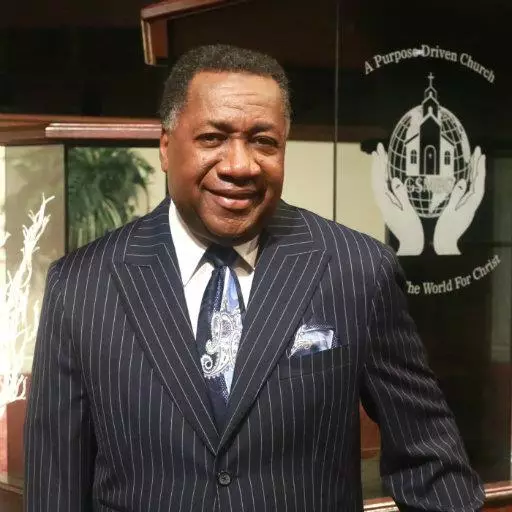
About Dr. Michael W. Wesley Sr.
Dr. Wesley retired in 2003 after a brilliant 26-year career as an educator in the Birmingham Public Schools. He served as a teacher, assistant principal and principal of three different schools (Powderly Elementary; Arrington Middle and was the first African American principal of Woodlawn High School). He served on the Central Office staff as Extended Day Principal and Coordinator of Safe and Drug Free Schools.
Dr. Wesley is regularly sought after to speak in both schools and churches. He has had the privilege of speaking across the nation and in several foreign countries. His spiritual gifts of teaching and preaching are well documented. He is a member of many organizations. His civic and professional associations are too numerous to mention.
Most recent is the evidence of his leadership, occurred with the completion of a multimillion dollar edifice and education facility located in the heart of the West End community.
Dr. Wesley is currently the pastor of the Greater Shiloh Missionary Baptist Church in the West End community where he has given thirty years of service. He has a great love for people and for learning.
He is married to the former Venita Burkes, and is the father of two sons, Rev. Michael Wesley Jr. and James Edward, one grandson and two granddaughters.
Dr. Wesley is the author of three books, When God Changes A Church, Everybody Deserves A Good Funeral and Reaching the Unchurched_Pathway to Church Growth.
Contact Greater Shiloh Missionary Baptist Church with Dr. Michael W. Wesley Sr.
info@greatershiloh.org
http://greatershiloh.org/
2135 Jefferson Ave SW
Birmingham, AL 35211
205-925-5972 or 205-925-9751