
Living on Borrowed Time


Guest (Male): You are now listening to an inspirational message from Greater Shiloh Missionary Baptist Church where Dr. Michael W. Wesley Sr. is the pastor. Please join the service in progress.
(Singing) What kind of man is this who died for me and set me free? Tell me what kind of man is this who died for me and set me free? What kind of man is this who would leave his heavenly home and come down and come down to give his life as a sacrifice just to save a wretch like you and me? They beat my Jesus. They beat him all night long until he saw almost every little bone. But when he took his very last breath, he hung his head and he died for you and me.
Oh, what love the man had for me that he would give his life. Help me sing. Oh, what love that man had for me that he would give his life. Oh, what love. Oh, what love. Oh, what love he had for me that he would give his life at Calvary to save a wretch like me. Oh, what love he had for me that he would give his life at Calvary to save a wretch like me. Oh, what love.
They hung him high. They stretched him wide. He hung his head and then he died. That's not how the story ends. Three days later, he rose again. I'm so glad he rose again. That's not how the story ends. Three days later, he rose again. I'm so glad he rose again. That's not how the story ends. Three days later, he rose again. I'm so glad he rose again. That's not how the story ends. Three days later, he rose again. I'm so glad he rose again. Oh, what love. Oh, what love he has for me. I'm so glad he loved me that he would give his life. Thank you, Lord. You gave your life just for me.
Oh, what love. Oh, what love he has for me that he would give his life. Oh, what love. Oh, what love. Oh, what love he has for me that he would give his life. Oh, what love.
Dr. Michael W. Wesley Sr.: It is amazing the love that God has for us in that he gave himself on our behalf. I think sometimes that message really gets lost. The longer we live, the more we take advantage of life and the more removed we become from those truths. That's kind of what's in my heart today and I want to talk a little bit about it. Let's pray and then we'll get right to the word for the morning.
Father, we love you. We thank you for blessing us, for giving us our very lives, for walking us through another week's journey, for our rest last night and rising early this morning, for the fellowship and friendships that we've already enjoyed, for the worship experience that we are part of, the songs, the scriptures, the prayers, and now Lord, the word to help us to live. Speak it so clear. Speak it so deep. Speak the truth, Lord, so that none of us escape. Change us. Cause us to be different. Help us to hear you. Lift again your human out of self. Fill us with the Holy Spirit. Bless the words in our mouth and the meditation on our heart that it may be acceptable in your sight, Oh Lord, our strength and our redeemer. We ask it in Jesus' name. Amen.
Oh what love. That is something. Turn with me again this morning to the gospel as recorded by Luke, the 13th chapter. We were there last week. But in the process of re-looking, I decided to back up a little bit because I was gripped by a parable or passage and I went all the way back and began to read it all just to make sure I was clear in my mind. I want to look at verses six through nine in your hearing, but we'll discuss more.
And he spake also this parable. A certain man had a fig tree planted in his vineyard and he came and sought fruit thereon and found none. Then said he unto the vine-dresser of his vineyard, behold, these three years I come seeking fruit on this fig tree and find none. Cut it down. Why cumbereth it the ground? And he answering said unto him, Lord, let it alone this year also, till I shall dig about it and dung it. And if it bear fruit, well, and if not, then after that thou shalt cut it down. This is the word of God for the people of God.
I want to preach this morning on the subject, Living on Borrowed Time. That's a pretty common expression that we hear often and we hear it most as it relates to someone who has survived a situation. Someone has had a heart attack and they survived, then the common expression is you're living on borrowed time. Someone has survived some catastrophic event and God spared their life and we say they are living on borrowed time. Usually, it has its limitations. The expression is limited because it usually relates to and means someone who is living who ought to be dead.
Really what I came to say is that's really all of us. All of us are living on borrowed time because all of us have escaped and survived situations and things that could have taken us out. If you want to be honest with you, the psalmist made it clear that I was born in sin and shaped in iniquity and the wages of sin is death. All of us should be, could have been dead and many of us, most of us, probably all of us in hell. But because of God's mercy and grace, we are living on borrowed time.
It just blows my mind the attitudes and the cockiness that people walk around with as if they control time and control their own destinies. But here is a stark warning and here is a clear reminder to all of us that we had better be careful. We need to understand that in infancy, we could have been gone. That's why some babies die in the womb. When they were conceived, they were conceived not because they had lived long enough to sin, but they were conceived in a sin with a sin nature.
Babies who die at early ages, it's a just death. Children die on playgrounds. It's a just death. It's a situation where God in his sovereign will just allows us to continue to live. The question is not what kind of God that would cause people to die? The issue is what kind of God that gives us time? Why does he do it? Because he's merciful and because he's gracious. The scripture reminds us that he is slow to anger and plenteous in mercy.
He gives us borrowed time. He gives us time. Time is probably the greatest gift that God gives to everybody under his common grace. He gives us time, but he gives us time for a purpose and that purpose is time to repent. When we come to the scripture passage for the morning, we find that Jesus has been preaching. If you go all the way back to the first part of Luke's gospel chapter 12, it's a long sermon. In this long sermon that Jesus has been preaching here, he starts off to encourage his disciples that they had to be aware of the hypocrisy of the religious leaders.
I still believe that's a good place to begin. You don't have forever, so you can't be fooled. You can't be duped. You can't be swooped in by craziness. There are a lot of hypocritical, crazy stuff that's out here. It's not limited to one source. Don't misunderstand. I'm not talking governmental now, but I'll get there. But in our whole society, you've got to be aware of the hypocritical stuff. The smiling faces, they used to say, that tell lies. Smiling in your face, the O'Jays said all the time, backstabbers. Anybody ever met some of them? Don't raise your hand.
Jesus was talking. He was talking to them about that need to be aware of that because their lives could be swept away into falsehoods. Then he also in the sermon warns them about greed. Every one of us, it's all right to need and to have needs in life and those needs are reasonable. But when you go beyond the need, how much can you spend in a lifetime? How much do you really, really need? Somebody said always a little bit more.
Once you have taken care of those things, goodness gracious. He warns us about that. He gave a parable in the sermon about that. Then he talked about don't be worried, don't be anxious, don't be overly concerned about life and about things you're going to need to eat and drink and put on and all of those things like that. He said your heavenly Father knows you have need of those things. So don't be worried about it.
Then he shifts on the sermon and he shifts the sermon to talk about that Jesus is coming back and his return will be unexpected. That's when he begins to get into the warning. While he was talking about the unexpected return of Jesus, then a group of people wanted to remind him, well, Jesus, there was a group of Galileans in the worshipping and Pilate's soldiers came in and slaughtered them. Another group stood up and said, well, Master, there was a tower that fell on a group of people and they all died.
Jesus turned it on them. He said do you think that they were less spiritual than you are? Do you think that they were bigger sinners than you are that these calamities fell? He poses the question and he ends the sermon with this parable. This parable is designed to help them get into their minds that we're not better than other people who go through things, but we have been the recipients of God's grace in that he allows us borrowed time.
How much time is borrowed time? Until Jesus come back? Until you die? Third, until he's had enough. How many know he will get to the point that he's had enough? God is patient. He's patient. He's patient with people. I think of this young man who's in the scripture whose name was Saul. He was Saul of Tarsus and he was running around there and he was tearing up the church. He was crucifying people, persecuting Christians, binding them up, taking them to stand trial. God was patient with him.
Then God's patience ran out on the Damascus Road. Saul, Saul, how long you going to persecute me? What you doing? You've got to change from what you're doing. Saul changed and he became Paul the Apostle. God was patient. God wants people to repent. There was another Old Testament preacher, prophet, his name was Jonah. God told him to go to Nineveh and preach to the Ninevites. Jonah didn't want to do it because he was prejudiced. He was a racist. He did not want to preach to those Ninevites because he knew that when God's word went forth, they would hear the word and they would repent and God would not destroy them because of his great mercy.
Jonah went the opposite direction. He got on a boat and went toward another way and he ended up having a whale of a time. Once he got himself together, he came back and he preached. When he preached, all of the people in Nineveh repented. It ticked Jonah off. Chapter four said he said, see God, this is what I told you. This is why I did not want... wasn't he a preacher? Shouldn't he have wanted people to repent? He did. He just didn't want the enemies to repent.
But God is merciful and God is gracious and God is willing that none should perish. He gives us all borrowed time so that you can have time to repent. God was gracious in the Old Testament again. There was another Old Testament preacher, his name was Noah. Noah preached repentance for 120 years. Every day, Noah was out there preaching and he built a boat to demonstrate that God's patience was not going to last always. That there is a such thing as God has had enough. And when he's had enough, he's going to bring down the judgment.
People looked at Noah, they thought he was a fool. I sure wouldn't have wanted to be one of Noah's children in school. Is that your dad out there? Y'all better go get him. Something's wrong with him. He ain't got good sense. He talking about it's going to rain, it ain't rained from never on earth. And we live 500 miles from the nearest body of water. What's wrong with him? He just old and senile.
But the man had a word from God and he understood that God was trying to do something, was trying to give people an understanding that yes, you have time, but you don't have forever. You got time to repent. You got time to get it together. My brothers and sisters, that's the word for the morning that you need to understand that you are living on borrowed time. As we look at the close of Jesus' sermon here, it becomes clear.
He says that he spoke a parable, and a parable is just a story. It's an earthly story with heavenly meaning, but it's designed to be an illustration to open the eyes of people so that they could see and understand what the limitation is that God has set in the earth. He said a certain man had a fig tree. Fig trees were symbolic in the Old Testament. Not only was the land of Israel said to be a land of milk and honey, but it was also said to be a land of fig trees.
Fig trees were valuable in that they grew to be 25 feet tall and sometimes about 20 feet in density. Their fruit, you've seen figs. We used to have fig trees in our yard, they're like little plums. The fruit is sweet. But the fig tree also was valuable because in that hot arid environment of Palestine with its density, the fig trees would offer shade. You do remember that when Jesus started his earthly ministry, one of his early disciples was a man named Nathanael. Jesus said, Nathanael, I saw you sitting under a fig tree. He was there taking in some shade.
Fig trees were valuable and they were important. But look at what he said. This man had planted a fig tree in his vineyard. A vineyard was a good place where people planted fruit trees because vineyards were special places where they worked on and treated the soil. They took care of the vineyard. So a tree that was planted in the soil that was already being watered and nurtured and taken care of would have a chance to be productive.
This man who had had this fig tree planted in that beautiful flourishing environment came along. He says, I've come to this fig tree for three years looking for fruit. Behold, I find none. Meaning surprise. Man, God, that is scary. How often has God come along looking for fruit and production in our lives, but have seen nothing? Maybe earlier years, but of late. Maybe when you were young, you used to sing, you used to pray, you used to be a part of it, but now you've gotten swept away and you're taking up the soil and no fruit is being borne.
It bears taking a look. Not because of me, but because of what Jesus is conveying here. I came looking. How many know he comes? He looks. He looks for fruit of righteousness. He looks for production in our lives. Instead of finding fruit, he finds mess. He finds corruption. He finds foolishness. He finds destruction. Rather than building people up and being fruitful and helping folk and growing and developing people, we're the ones trying to tear folk up.
The Lord sees that. He says to the vine-dresser, why cumbereth it the ground? Why are you going to let it continue to soak up all of the good nutrients? Cut it down. That's frightening. But listen, there's always an intercessor. Maybe you don't understand the value and power of intercessors. That's why when I think about my mom, I can't help but say thank you because she was an intercessor. She prayed for us when we weren't thinking about praying for ourselves. She prayed that God would protect us and keep us when we were foolish and in the world and lost. My brothers would be away in the army, she would be praying for them, Lord keep them, bring them back safe.
You need somebody. You need somebody. Even Saul when he was converted and the Lord told him to go on into Damascus and go on straight street, there be a man there whose name is Ananias. Ananias was an intercessor. Ananias prayed so for Saul that he prayed the scales off of his eyes. Do you have somebody like that in your life? Do you have somebody who can pray the scales off of your eyes, wake you up from your blindness, help you to see the foolishness of your own ways and your own life?
We need intercessors. There was an intercessor in that vineyard. The master was ready to cut the tree down. But the vine-dresser said, wait, Lord, leave it alone this year also. In other words, give it a little more. Let me dig around it. Let me loosen the soil. Let me aerate the roots. Let me water it. Let me put dung or manure around it. Not that I haven't done that before, but let me do it again.
Let me preach. Let me teach a little bit more. Let me help somebody. Let me sing a little more. Let me do it a different way, maybe a little bit more with vehemence that maybe somebody would wake up and recognize the limitations on the time and the lateness of the hour and turn before it's too late. Let me stand just a little while longer to say it a little bit more because somebody needs to repent. Put a little fertilizer around it. Dig a little deeper. Come a little closer. Help somebody so that they might become fruitful and productive.
Give them a little bit more time is what he's saying. A little more time. Then he says, then if it doesn't bear fruit, King James said well. But in the Greek, it doesn't say well. New International says fine, but in the Greek, it doesn't say fine. In the Greek, it was just a shrug. If it doesn't bear fruit then... how are you going to interpret that?
Listen, God is giving you time. If you don't bear fruit, you put yourself in peril. But if you bear fruit, you might could have a little more time to continue to bear fruit. For every one of us here this morning, we ought to hear this. It ought not to be because it sounds good or because it tickles our fancy, but it ought to reach deep into our hearts and cause us to take self-inventory and take a look at what we're doing and how we're living and how we're using the time that we have because we need to understand that we got time, we just don't have an inordinate amount of time. None of us know when that time will end.
Leave it alone this year until I dig and if it bear fruit well and if not, then cut it down. I want to make a few applications from this passage and I'm trying not to be long but at the same time I gotta do it justice. First, this is a single tree. It's one tree, one fig tree. That speaks to one nation and that nation initially is Israel. Isaiah described in Isaiah chapter five that Israel was God's vineyard and God dug around them, planted them in an environment and he blessed them with everything. He de-weeded, he gave them the prophets, he gave them the word of God, he gave them everything that they needed to be a fruitful, productive nation.
When he came looking for fruit, he found sour grapes and it offended him and they did not do what they needed to do. Now what would Jesus' hearers who were hearing this sermon think? Their minds would go back to John the Baptist. Luke chapter three where John had declared that the axe is already laid to the root of the tree. The order has already come down from glory to cut it down.
But because they were given in God's mercy a little more time, they had a little time. Old Testament close, Jesus come, they had a little more time. But he came unto his own and his own received him not. They had a little more time. Three years he preached, three years he healed, three years he raised, three years he did all that he did to lead them to repentance. They had a little more time, but they didn't. Their hearts turned hard.
One day he was nearing Jerusalem and he said, Oh Jerusalem, Jerusalem, thou that killest the prophets, would God that you had known the times and the seasons. God would have gathered you as a hen does her brood. But now your time is up. They still had a little time. Calvary was looming. This was toward the end of his ministry. They had time to repent, but instead, Judas sold him out. The people cried Hosanna but then turned on him before the week was out calling out for crucify him.
The fickleness of the people. Look like they with you one minute, then their true colors show. If it was true of the nation of Israel, how many know it's true of America? Started out one nation under God, indivisible with liberty and justice for all. But now we've turned on God and we're turning on one another. We're sicking the armed forces against innocent people. Home of the free, places of opportunity, and now we're trying to eradicate the nation of people. Melting pot where people from everywhere could come from sea to shining sea and now we want to pluck them up and send them away, want to blow up boats in the water, accuse them of being drug dealers when the real drug dealers are right around you.
Understand there's a judgment that's coming. The axe is already laid to the root of the tree. But there's a little more time. What's true not only for a nation is also true for an individual. This was an individual fig tree. So that individual fig tree stands for you, stands for me. This is not one that we can look around about and say this is pointing to somebody else. I gotta look at me. I gotta look and see what kind of production is coming from my life. You've gotta look at what kind of production is coming from your life. You got time.
How long you got? You got until Jesus come back or you got until the day you die or you got until God said that's it, that's enough. I always talk about that Popeye moment, that holy discontentment. How many know what I mean? Popeye man got to the point that Bruto was beating up on Olive Oyl. He said that's it, I can't stands it no more. And out would come the spinach, muscles would pop loose, and that was going to be it for Bruto. He was going to get plummeted.
God's like that. Who knows? Moses talked about it in the 90th number of the Psalm. Who knows the power of thine anger? Who knows when God has had enough and say that's it? You don't have to die for God to say that's it, I can't stands it no more. In the book of Hosea, the prophet Hosea said to Ephraim, meaning the nation of Israel, yeah, you're going to call on me but I won't be available for you. There comes a time when God will say that's it. You can still live but I won't be available for you. You can call on me but I won't answer. You can holler my name but I won't hear you. I don't want God to ever get into that place where he can't hear me. I can't make it without the Lord on my side.
I need the Lord to hear my prayer. I need the Lord to be merciful to me. So the first thing we need to hear by way of application is that this is a single solitary tree and it has implications for our nation, for the nation of Israel, and for us individually. The second application lesson is that judgment is near. How long is a year and whether or not we already in that year? Who knows? Yes, you're blessed today that the Galileans didn't run in here and massacre you or should I say the soldiers of Herod. That's what Jesus was saying didn't come in among you and take you out. The tower didn't fall on you. Maybe we were blessed because the pandemic didn't take us out but every one of us knew somebody that it did.
Maybe the drive-by didn't get you or the shooting at the school or the mall. Maybe God was merciful, but it doesn't mean that it can't happen. With all of this foolishness, sending troops, firing bullets and tear gas and everything else, you don't know. So we had better wake up and understand the judgment of God is near. The world cannot continue like it is. The nation can't continue like it is. If there's not a reversal, it's going to destroy itself. All you have to do is look at history. Look at the Roman Empire. Look at ancient civilizations who were well developed and had all of those things. But when they began to turn on the people, it brought the judgment of God immediately.
So we can know that the judgment of God is near. The third thing I want you to hear this morning is that borrowed time is not based on your qualification. It's not that you're so qualified that you're so deserving of the time the Lord gives. What is the truth? The truth is we are here on God's mercy. We're here on God's grace. It's nothing inside of any one of us that makes the Lord look at us and say oh, you're so wonderful, I have to preserve you, have to save you.
Thank God for mercy. Anybody glad for mercy? That's why I break my neck to try to get here on Sunday morning because I want the opportunity and privilege to be in the house of God and to praise his name and to thank him. The men sang a song around here sometimes, can't let a day go by without praising his name. Can't keep it to myself. What I got to do? I got to run and tell somebody else.
That's the urgency. We can't assume that we got time to talk to our children and our grandchildren. Sometimes you can see numbers pop up in your phone and you say I don't want to be bothered but you better be. You might be that voice that is necessary to give encouragement to and give understanding for. Even though it may aggravate you and may frustrate you and may vex your spirit, you better understand that you've been given the opportunity. So you need to do it.
Jesus ended the sermon here. Let me ask you this: do you think they got it? A strange place to end a sermon. But do you think they got it? Yeah, they got it. But did they heed it? No, they didn't heed it. People come to church every week. Do they get the sermon? Yeah. Do they heed it? No. I could preach till I'm blue in my face. I could preach till I can't stand up here no more. That won't necessarily mean that it'll produce the change that God intends in you.
It comes individually. I do again want to reiterate what Kamala Harris said that struck so deep. The fight is within. And that's what you have got to know. The good that needs to be done is within. It is not based on someone else. It is not based on how someone else treat you, what someone else say to you, what someone else do to you. It's based on the love of God that you have inside of you. You've got to be willing to tell somebody and you've got to be willing to show somebody and you've got to be willing to be that witness and to be that light.
Jesus put it like this. You are the light of the world. Not can be. You are. The only question is whether or not you're on. You are the salt of the earth. The only question is whether or not you've lost your saltiness. That's who you are. You have been rubbed into the world to slow down the retarding degradation of the world. So you've got to be who God wants you to be and you've got to do what God has called you to do. And if you do, if you bear the fruit, then well. You might continue and might be given the opportunity to do more. But if you don't, you need to know that your borrowed time will soon run out.
I don't know nobody that can save you but Jesus. Can he save you? Won't he do it? Has he done it? Has he blessed you? Has he healed you? Has he given you another day? Has he given you another chance? If he has, then you got to tell somebody. You got to tell everybody. You got to tell it wherever you go. Like the shepherds on the mountains, over the hills, in the valley. Everywhere I go. What am I going to tell? He gave me another chance. He saved my life. He healed my body. He saved my soul. My name is written in the Lamb's Book of Life and yours can be written there too. Doors open. Doors of the church open. It's time to repent. It's time for you to give your life to God. Borrowed time is not permanent.
Guest (Male): I just want to suggest to you that's how you can make the most of your borrowed time is telling others of the goodness of God, helping others to want to know that they need to repent and make sure that their business is fixed before the final court date appears. Our service ends now. Praise God from whom all blessings flow. Stand on your feet.
Hope you enjoyed the broadcast. You have been listening to a message from the Greater Shiloh Missionary Baptist Church where we are reaching the world for Christ. Located at 2135 Jefferson Avenue Southwest, Birmingham, Alabama, 35211. For a copy of this message, you can reach us at 205-925-9750 or 925-9751, or visit us on the web at www.greatershiloh.org. For another uplifting message, we invite you to join us for our next broadcast.
Featured Offer

This is Dr. Michael Wesley, Sr.'s latest book on the subject of marriage. As a Pastor he has counseled many couples before, during, and after marriage so this has given him keen insight into the marital relationship. He himself has been married to the same woman for over 40 years so he has a wealth of knowledge on this subject. In this book Dr. Wesley covers that marriage comes from God, the keys to compatibility, the keys to staying in love, and even what to do if you feel you have married the wrong person. This is an excellent read if you are considering marriage in the future or even if you are currently married.
Past Episodes

Video from Dr. Michael W. Wesley Sr.
Featured Offer
This is Dr. Michael Wesley, Sr.'s latest book on the subject of marriage. As a Pastor he has counseled many couples before, during, and after marriage so this has given him keen insight into the marital relationship. He himself has been married to the same woman for over 40 years so he has a wealth of knowledge on this subject. In this book Dr. Wesley covers that marriage comes from God, the keys to compatibility, the keys to staying in love, and even what to do if you feel you have married the wrong person. This is an excellent read if you are considering marriage in the future or even if you are currently married.
About Greater Shiloh Missionary Baptist Church
The Mission of the Greater Shiloh Missionary Baptist Church is to Reach, Teach, and Baptize throughout the world beginning in our community, fulfilling the Great Commission by the power and presence of the Holy Spirit until Jesus returns.
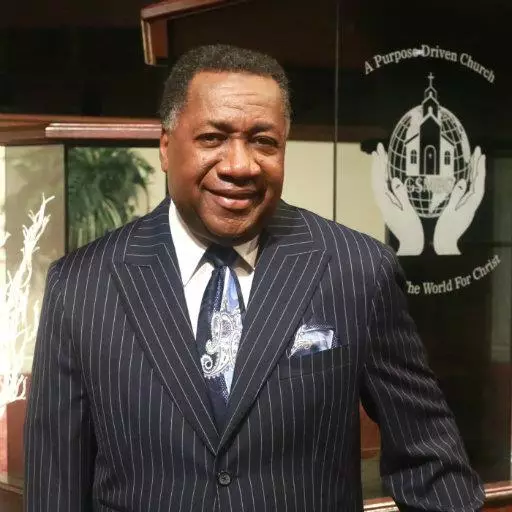
About Dr. Michael W. Wesley Sr.
Dr. Wesley retired in 2003 after a brilliant 26-year career as an educator in the Birmingham Public Schools. He served as a teacher, assistant principal and principal of three different schools (Powderly Elementary; Arrington Middle and was the first African American principal of Woodlawn High School). He served on the Central Office staff as Extended Day Principal and Coordinator of Safe and Drug Free Schools.
Dr. Wesley is regularly sought after to speak in both schools and churches. He has had the privilege of speaking across the nation and in several foreign countries. His spiritual gifts of teaching and preaching are well documented. He is a member of many organizations. His civic and professional associations are too numerous to mention.
Most recent is the evidence of his leadership, occurred with the completion of a multimillion dollar edifice and education facility located in the heart of the West End community.
Dr. Wesley is currently the pastor of the Greater Shiloh Missionary Baptist Church in the West End community where he has given thirty years of service. He has a great love for people and for learning.
He is married to the former Venita Burkes, and is the father of two sons, Rev. Michael Wesley Jr. and James Edward, one grandson and two granddaughters.
Dr. Wesley is the author of three books, When God Changes A Church, Everybody Deserves A Good Funeral and Reaching the Unchurched_Pathway to Church Growth.
Contact Greater Shiloh Missionary Baptist Church with Dr. Michael W. Wesley Sr.
info@greatershiloh.org
http://greatershiloh.org/
2135 Jefferson Ave SW
Birmingham, AL 35211
205-925-5972 or 205-925-9751