
Connected to the True Vine


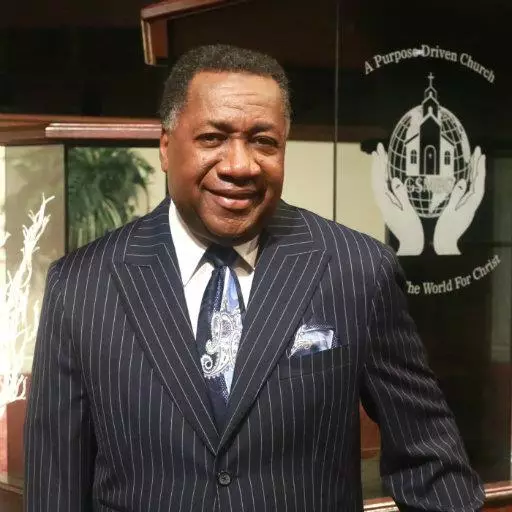
Guest (Female): You are now listening to an inspirational message from the Greater Shiloh Missionary Baptist Church, where Dr. Michael Wesley Sr. is pastor. Please join the service in progress.
Dr. Michael W. Wesley Sr.: Music still makes us feel good, doesn't it? Amen. There's nothing wrong with good music, church music, in the house of God. We come to worship him, praise him. Join me now in a time of prayer as we ready our hearts for the word for today.
Father, we thank you now for blessing us with all that you've given us. You've given us our lives, health, and strength. You've given us a new day. You watched over us and you carried us through last week. You let us rest last night and you woke us this morning. You gave us this day of worship and fellowship of the saints together. We thank you for the songs, the scriptures, the prayers.
Thank you for your people who have joined with us, both in presence and those who may tune in in other ways. We pray now that you would lift again your human from self, that you would bless us now with the presence of your Holy Spirit, that you would speak to us and through us in this moment. Bless the words that are in our mouth and the meditations that are on our heart, that they may be acceptable in your sight. Oh Lord, you are our strength and you are our redeemer. With you, there is a word; without you, there is no word. Bless us now. In Jesus' name, amen.
My dear brothers and sisters, we want to continue looking at things from the life and ministry of Jesus. That's what we have purposed in our heart to do over the next couple of weeks. Ever since the resurrection message, we want to look at practical applications from the word of God that help us to see what's there for us as we live now. It's one thing to look at people long ago, but what does it mean and how does it convey to us today?
Over the next couple of days, couple weeks, today and next week at least, we're going to look at John's gospel chapter 15. We'll be looking at the first 11 or 12 verses, but today we're going to look at the first six verses with a focus on the first three or four verses. We want to read that in your hearing.
"I am the true vine, and my Father is the husbandman. Every branch in me that beareth not fruit, he taketh away, and every branch that beareth fruit, he purgeth it, that it may bring forth more fruit. Now ye are clean through the word which I have spoken unto you. Abide in me, and I in you. As the branch cannot bear fruit of itself, except it abide in the vine, no more can ye, except ye abide in me.
I am the vine, ye are the branches. He that abideth in me, and I in him, the same bringeth forth much fruit, for without me, ye can do nothing. If a man abide not in me, he is cast forth as a branch, and is withered, and men gather them, and cast them into the fire, and they are burned." This is the word of God for the people of God.
I want to preach this morning from the subject, "Connected to the True Vine." It's a very practical and important understanding. It deals with our relationship with God. What we're simply saying is that if we're going to have a productive life now, if we're going to have a fruitful life now, if we're going to enjoy the relationship with God, we have to stay connected to Christ because he is the source of all true blessing.
We live in an era where people are defecting from the church. People are leaving the church. They have reasons or excuses for why they do that. There have been many who have done it. There were people before the pandemic did it, and since the pandemic, many people have been saying to themselves, "I'm not going to go back. I'm not going to do that. I'm just not going to do it. I'm just done."
That's a mistake, and it's a mistake that people don't realize until too late. Just because a lot of other folk do it doesn't mean you have to do it, because you don't want to miss out on the blessing and the benefit that's in it for you. If a whole lot of people decided they were going to get on the roof and they were going to all jump off, does that mean you're going to do that? Not me. I wouldn't do it because I know better.
I know that would be a mistake. I know that would be foolish. Abandoning God means that I've abandoned my soul and assigned my eternal destiny to hell. That's a hard way of saying it, but it's the truth. That's what Jesus is getting at. When it comes to church, we gather not for sources of entertainment. Even though sometimes we can enjoy and sometimes we can move and groove, our primary purpose is that we may hear from God.
One of the reasons people don't have the connection with God is because they never took the time to hear from God. I have to look at that from a preacher's standpoint. A preacher has a responsibility too. A preacher is not a chef that he's got to whip up the meal. A preacher is more like the waiter, trying to get the meal on the table without messing it up. While I don't have to create the word—the word is already here—what I do have to do is serve it in a way that you can eat it.
I think one of the reasons we have mass defections is because people have not looked into the word of God and been able to uncover the truth of it in a digestible way that people can eat it and understand it and benefit from it. When I wrote the book When God Changes a Church, I talk about two things. Preachers first, in order to feed people, they have to have hay. They have to have the word. Then, to feed people, preachers have to understand the goats.
The problem is you've got some preachers that have hay—they've got word—but they don't know the goat, so they can't feed them. Then you've got some preachers who know the goat, but they haven't got no hay. They haven't got no word, so they can't feed. To feed people, you have to have hay and you have to know the goat.
So this morning, I want you to understand you need to be connected and you need to stay connected to Jesus. That's the simplicity of it, because in him there are benefits that are needed in your life now and needed in your life forever. That is the truth. Today I'm just going to lay it out in an introductory form, the text, the context, so that you can understand what we're talking about and why.
Next time we'll talk a little bit more about the benefits that actually come from this connection. Jesus here makes it clear in the verse that we have read to you that he's talking about the need for people to be fruitful and productive in their life. When people are productive and fruitful in their life, it proves that they have a right standing with God. How do you know for real that you are a true Christian? It's because there's fruit that will be in your life.
How do you know that you are not a true Christian? Because there is no fruit. There is deadness on the inside. That is destructive, as the text will show you in just a moment. The other thing that preachers have to understand is that they cannot take the Bible, the scriptures, out of context. You can't just open the Bible and just pull one verse and say, "It says here in the Bible." Everything around it, the book that it's written in, the verses that surround it, all have meaning.
They all shed light on the understanding that we need to really see into what is being said. Let's look at the context first of what this is. In the earthly ministry of Jesus, he preached for three years and he taught and he healed and he did a lot of things. At the end of three years, he was crucified on the cross. This is the night before he was crucified. He has been with his eleven or twelve disciples in the upper room in Jerusalem.
They were in a secret hiding place. There they were celebrating the Jewish feast of the Passover. Jesus has said a lot of things. This all begins in chapter 13. In chapter 13, when they first got to the upper room, the disciples among themselves had been arguing with each other about who was the greatest in the kingdom and who would have the prominent seats in the kingdom. Jesus didn't say nothing.
After dinner was served, he put a towel around his waist and he took a pan of water and he went around and he started washing the disciples' feet. It was such a stunning moment that when he got to Peter, Peter said, "Lord, don't you do that. Don't you know who you are? You're Jesus. You're too big to be washing feet. Get up from there." Jesus told him, "If I don't wash your feet, you don't have no part with me."
Then Peter said, "Well, wash me all over then." Jesus said, "No, I'll stick with your feet." What he was talking about was relationship. Listen to what Jesus said in that room. He said, "All of you are clean, but one of you is a devil." Then he began to say, "And one of you will betray me." None of them knew who it was. They began to say, "Lord, is it I? Is it I? Is it I?"
There was nothing on the visible surface that would say that somebody among the group was different. They had all looked the same. They had all eaten the same. They had all walked with the Lord. They had been in the same set of situations over and over again. But then Jesus exposes who the betrayer was, whose name was Judas. He told him, "Go do quickly what you must do." The scripture said it was night, and Judas went out.
The rest of the disciples didn't even know what was going on. They didn't know where Judas was going. They didn't know what was up, but Jesus knew. At the end of chapter 14, he made many promises. "I'm going to prepare a place for you. I'll come again, receive you unto myself, where I am, you'll be also. In my Father's house are many mansions. If it were not so, I would have told you." He was promising a lot of different things.
At the end of all of that, he said, "Now let us be going from here." They got up from the upper room and they went out into the deep darkness of the night. It was after midnight. Jesus and his disciples are walking through the city of Jerusalem, headed out of the eastern gate toward the Garden of Gethsemane where he would pray. After that, he would be arrested, then tried, and then early the next morning, he would be crucified.
While they were walking, this is deep in his mind and in his heart. He says to them these words: "I am the true vine, and my Father is the vinedresser." He said everyone that remains connected with me will be fruitful. But those whose life has been sucked out of, my Father's going to cut them off and they're going to be good for nothing but to be cast into a fire that burns.
He's thinking about Judas. He's thinking about how he has eleven that are still with him, remaining with him, and one who he knows has gone out to collect thirty pieces of silver to betray him. He knows the devastation of that act. He knows that this man who chooses to separate himself from the Lord is going to be messed up. He walks away from the company of the believers and he goes out on his own and he's going to end up killing himself and he's going to end up in hell.
That's what's behind this scripture. That's what Jesus is saying to us. The lesson that he gives is almost like a parable, but it's not a parable. A parable is an earthly story with a heavenly meaning. This is a simile or a metaphor. It is a word picture that describes a situation. Listen to what he's describing. He's laid out three or four different characters. He said, "I am the vine, the true vine."
He's talking about one character and he's talking about himself. "I am the main one you need to be connected to." He says, "And my Father is the vinedresser. He's the one who takes care of the vine." Then he said there are branches. There are two types of branches: one type that's going to be cut off of the vine and going to be cast into fire or going to be cast into hell, and one kind that's going to bear fruit.
It's going to have to be cut back a little bit, purged, but ultimately it's going to bear fruit. That's very simple but it's very profound. Let's look at it. What he's talking about here, he's talking about salvation. He's talking about the relationship, the benefit that comes to people who choose to remain connected to him. He also talks about the devastation that comes to people who walk away from him and what will happen as a result of that.
Don't ever get lost based on who's the preacher. Don't get lost based on whether you like the music or not. That's not the main thing. That's not where the blessing comes from. The blessing comes from your connection with the Christ. So he says to us, before I can get into the salvation stuff which will come next week, let me just lay this out and give it to you in the smallest portion that we can handle for today.
Jesus says that, "I am the true vine." He used the phrase "I am" a lot of times. Every time he uses the phrase "I am," he is saying that, "I am God." That's what he's saying. How do you know? Because in the Old Testament, in the book of Exodus chapter three, when God showed up at the burning bush and he was going to tell Moses, "I want you to go down into Egypt and tell Pharaoh to let my people go," Moses asked God a question: "Who shall I tell them sent me?"
God gives him the tetragrammaton, the eternal name for himself. He says, "Tell them that I am that I am." So the name that God gave to Moses was "I am." Jesus over and over again in his earthly ministry kept using the same phrase, "I am." He was saying that, "I am the same as God. I am God." He put it like this and he used different word pictures based on where he was and what was going on.
When he was with the woman at the well and she came to get some water, he said, "If you knew who was talking to you, I'd give you living water, and it'll produce a well in you that you won't have to come back here no more." She said, "Give me some of that water." He said, "I am the water." One day he was standing in the middle of the temple and there was this big candelabra that the people lit at night.
When they lit it up at night, it would light up all of the temple and send light all through Jerusalem. But he's standing there during the day and during the day, the candelabra wasn't lit. But he stood next to it and he turned to the people and he said, "I am the light of the world. You look at this candelabra and think it's the light. No, I am the light."
On this occasion, as he's walking through Jerusalem to the garden, he's probably just about at the entry of the garden and he looks up and he sees a vine. He says to his disciples, "I am the true vine. I am the true source of life. And it's me that you must be connected to." The disciples understood what he meant. The Jews in his day understood it. They didn't like it, but they understood it.
Every time he said, "I am, I am," they said, "He makes himself equal to God." He did. One time he was talking with them about the Sabbath day. He had been walking through the grain fields and he was plucking grains of the grain off of the corn. They said, "You're doing work on the Sabbath." He said, "You don't understand. The Sabbath was made for man. It wasn't made for God."
He says, "I am God. And so the Sabbath doesn't apply to me." They got mad. They said, "He's blaspheming. He's making himself equal to God." They knew that. That's what they accused him for when they went before Pilate. They wouldn't tell Pilate that that was the reason that they brought him, but they had decided among themselves, "He makes himself equal to God, and therefore we want him to die," because they understood what he was saying.
Then he sho' nuff made them mad. Because they said, "Well, we're Abraham's seed." He said, "Before Abraham was, I am." So now here he is with his disciples and his heart is broken because one has defected, has walked away. He's saying to them, "I am the true vine and my Father is the vinedresser. And every branch that remains connected to me will produce fruit.
But every branch that looks like it's connected to me but isn't producing anything, my Father's going to take it away, and it's going to be cut down and it's going to be cast into the fire." That means somebody's going to hell. That doesn't mean believers lose their salvation. That's not what he's talking about. What he is speaking of is the value of remaining connected to Christ.
Look at the drama, look at the word picture. Let's explain it. Three characters, four characters here. There's the vine, the true vine. Jesus is the true vine. Some people say maybe he said that because a vine grows low to the ground and maybe he's thinking of his humility. That could be a good analogy, that he's low, that he came into the world not in the high echelon, but he came among the least of these. That would be a good reason for him to be the vine, but that's not it.
Some people might say he said he's the vine because vine and branches have a connection and maybe he's trying to help people see the connection between himself and others. That may be true, but that's not the main reason he's saying he's the true vine. Then somebody else says maybe he's saying he's the true vine because vines ultimately grow fruit, and maybe he's trying to imply that people who are connected to him will grow fruit. That's also true, but that's not the main reason.
The main reason he's saying, "I am the true vine" is because there were other vines that were not true. The one vine that was not true was the nation of Israel. In the Old Testament, the nation of Israel was the source of blessing for the people of Israel. Isaiah the prophet writes about it in Isaiah chapter five. Isaiah talks about how God had taken himself a vine out of Egypt, meaning the nation of Israel.
He dug around it and he built a hedge of protection around it and he planted it and he did everything he could for the nation to be fruitful. But when he came looking for the fruit, instead of finding good, sweet fruit, he found sour grapes. The psalmist David writes about the vine Israel in Psalm 80. Israel was described as God's vine or God's vineyard.
God protected them, but then because they disobeyed him, God turned his back on them. When God turned his back on them, the wild boars came and ran over the garden, ran over the vine. Thorns and thistles grew up because God stopped taking care of them. Anything God takes his hand off of and stops taking care of is going to go to ruin.
What he is saying, Jesus is saying, because he knew these disciples, the Jewish people had been saying all along, "We are Abraham's seed. Because we are connected to Abraham, we then are connected to the source of blessing." Jesus is saying, "No, I am the true vine." If you want to be connected to the source of where blessings are going to come from, you're going to have to learn how to draw your life from me.
He says, "So I am the vine, I am the source of life." I was looking earlier at beautiful flowers. Although they're plastic, that's a good description of some people. They just look real, but they're not real. They're plastic. They're fake. They've got the right colors. They've got the right shape. But they are dead as anything that's in this plastic plant.
The vine is the main source of life for all of these things that come out here. As long as they are attached, they can live. But if they were ever cut off or detached from this, they have no chance to live out here by themselves because they are drawing their life from the source that's within the vine. Jesus is saying, "I am the true vine," which means, "I am the true source of life."
All of life flows through me. And you are the branches. He says, secondly, "My Father is the husbandman," meaning he's the vinedresser. He takes care of the vine. Listen at what Jesus is teaching. He says, "I am the source of life because God provided a virgin for me to come into the world and to be born. Now I'm in the earth and now I am the source of that life.
In the beginning, I was there and I was the word and I was the word with God and I was God. And I became flesh so that you could see." He says, "So I am the source of life, and my Father, God, is the vinedresser. He takes care of the vine." He has a couple of responsibilities. One is to watch over the vine to make sure that the vine is doing what it needs to do.
When there are problems with the vine—if there is disease in the vine, if there are dry branches on the vine that are sucking up the life for the rest of the branches—then the vinedresser comes in and he purges. He cleans it. Cleaning does two things. He might clean something, and he might cut something back.
He might clean one of these dead branches by cutting it off so that it does not continue to consume the life that's in the branch from the rest of the plant. He says now, "You are the branches." He's thinking about Judas. One of you is a Judas branch. So the Father has to come in and do what to that branch? Cut it off, because it is dead on the inside.
It just looked like it's attached. It's attached, but it's not producing. So it's not true. It's impossible—listen to me carefully—it's impossible for you to be a Christian and to live and draw your life source from the vine and not produce fruit. If you're sucking life from the source, you're going to produce. But if the life inside of you has dried up and there's no fruit coming out, something is wrong.
I'll tell you what's wrong: it means you're not true. Then the Father comes along and he cuts the dead branch off. When the dead branch is cut off, now it has no chance of getting no new life. It's cut off. If I took one of these beautiful flowers and I pulled it off the branch and it's over here in my hand, what's going to happen to that flower? It's going to wither up and it's going to die.
It's going to be good for nothing but to be cast where? Into fire. Look at the picture. Jesus, this is where the salvation is. Jesus is saying, "If you stay connected to me, you're going to continue to produce fruit." But if you mess around here and let somebody poison you and you die on the inside and my Father has to cut you off, you're going to be good for nothing but to be cast in the lake of fire, separated from God forever.
Your salvation is not based on what song you sang. It's not based on your pretty legs and how well you walk. It's not based on what ministry you're in. It's based on whether or not you stay connected. This is tearing Jesus up because eleven of his disciples are still with him. One of his disciples has gotten cut off, and you know who that is: that's Judas. So we don't want to be a Judas branch.
So now let's look at the second thing. He's talked about himself as being the true vine, the true source of life. He's talked about the Father as being the vinedresser. The issue is who are the branches? We are the branches. Either we're going to be fruit-producing branches or we're going to be dead branches that's going to be cut off. Are you seeing that?
Let's look at the Father's work in the process as he takes care of Jesus' vine. He comes along and he sees you. You're still there and you have the capacity of producing fruit. He looks at you and he sees you weak, so he may take his finger and squeeze a pinch because you're not ready yet to produce the level of fruit that you are designed to do. So he purges you.
Or he comes at you with a knife. He's going to cut you back, not cut you off, but cut the branch back a little bit because the branch is too tender at the end to carry the heavy weight of the fruit that it's going to have to carry. To allow it to grow stronger, he cuts it back. That's the work of God. God brings trouble sometime. He comes at us with the knife, and the knife is trouble.
The knife sometimes is trial. The knife sometimes is disappointment. The knife sometimes is failure. You've tried and tried to make it happen, and the more you try to make it happen, it just doesn't happen because God knows it's just not time for you to bear the fruit yet. You may not be strong enough yet to handle what's yet to come, and so he cuts you back.
In the process of cutting you back, he is strengthening you. What you need to learn how to do is give God some glory for the trouble you go through. Don't you know what the other writer says about trouble and the place that it has? James the writer says, "Count it all joy when you fall into these various trials, knowing that the testing of your faith is designed to produce something in you."
Peter said, "After you've suffered a while, then you will come forth." Paul said, "When I'm weak, then God makes me strong." I don't have the strength in my life to handle the trials and challenges by myself. But when I get my strength from the vine, then I can handle it. I stand before you today stronger than I've ever been. I'm stronger because of what I went through in earlier years.
If God had not purged me in earlier years, cut me back, I wouldn't have been able to handle some of the stuff that I have to handle. I would not have been able to handle the betrayals and the denials and all of the hateful things that I've seen out of other people. It's because God clipped me back when I was a young branch trying to make it. I was trying to handle fruit that was going to be too heavy for me.
He clipped me back because he knew the day was coming when I would mature, when I would grow up and be able to handle the heavier weight of difficult fruit. I'm so thankful to God for what he has done. I don't know how it makes you feel, but nobody knows the trouble I've seen. Nobody knows but Jesus. I know that sometimes I'm up and sometimes I'm down and sometimes I'm level to the ground, but it's all because of the goodness of God.
In his wise providence, he took me and he changed me and he made me because he knows another season was coming. God knows for you another season is coming. I wouldn't have been able to stand it when my daddy was sick. I always thought that God may have been a little wrong, been a little heavy-handed in taking him out of our life before too soon. But then I've learned that God knew what he was doing.
The man just could not continue in the way that he was going with the level of difficulty and life that was in his body. God cut him back because he knew that life had gotten more than what he could handle, and his boys and his daughters couldn't have handled watching him go through anymore. Do you understand? Yes, God will order the trouble, but that's not where the knife is.
The knife is the word of God. The book of Hebrews tells us that the word of God is sharper than any two-edged sword, and the word of God cuts. When does it cut? It cuts into your attitude when you try to deny who God is. It cuts into your mindset when you try to tell God what ought not be going on when the Lord knows what's best for us.
The word of God cuts. The trouble is just the handle of the knife. The word of God is the blade that cuts through and divides soul and spirit. When we allow God... so we've got to learn how to tell him thank you. We've got to learn how to tell him for the difficulties, thank you. For every mountain you brought me through, for every valley you carried me through, I want to say thank you.
For every tear you've had to wipe from my eye, for every sorrow you've had to pat my soul, thank you. Because you were doing something for me that I did not understand, and my weak attitude or my lack of understanding about the purposes of God may not have been adequate. But what God wants and what God was doing was setting me up for fruit, for more fruit. Christians ought to bear fruit.
Some ought to bear a little fruit, some ought to bear more fruit, and some ought to bear much fruit. But it depends on how well we accept the purging as to how much we're going to be able to handle. I want you to understand God knows. Listen, God knows. What I like about him is he specializes. What does he specialize in? He specializes in things that just seem impossible.
On the surface they look impossible because we're looking at it through human eyes. But through divine eyes, he already knows the end from the beginning. He already knows where the turning point is. He already knows where the good is. God is the same God who puts the colors in flowers. He put the song in birds. He put the buzz in bees. This is the God of all time.
This is the God of everything. Have you any rivers that you might think are uncrossable? Do you have any mountains in your life that you think you can't tunnel through? I just came to tell you that God—anybody know who I'm talking about?—the God of glory, God of heaven, God of creation, God of salvation, God of thanksgiving, God of wonderment in all things, specializes in things that seem impossible.
He can do what no other power—not just human power, not just financial power, not just congressional power, not White House power, but Holy Ghost power—can do. On my bed of affliction, I was. Doctor shook his head, told my wife when I was in Houston, Texas, "We don't know whether or not he's going back to Birmingham." I couldn't get up and I wanted to say, "Oh no, I'm going back."
I've overheard them two or three times saying what's not going to be, but I know what I heard in my heart. I know what I heard the voice of Jesus say. Thou, thou, thou—meaning you—if you trust me and keep your mind stayed on me, I would do for you what no one else can do. I share a brief testimony this morning. I don't want to go into all of that, but it was the essence of it that they told me that I was going to have to have surgery because they'd found some cancer in my body.
At first, I was going to ignore it. I said, "No, I'm just going to have to take this on to glory with me." But then God spoke to me. That word cut. He said, "Don't you know who I am and what I'm doing? I'm preserving your life for later. I'm not through with you yet. There's more fruit that you've got to bear. You've just got to stay connected to me."
Over seventeen years ago, didn't go through no chemotherapy, didn't go through no radiation. This morning, all I took was one Vitamin D. But I'm here. I'm stronger, and I'm wiser, and I'm bolder, and I'm better, all because of the purging of the Lord. God specializes. How many know he does? Do you believe that God specializes? Do you believe that God does? Do you believe that he can?
Do you believe that he will? I just want you to know that he will. He will do what nobody else can do. Doors of the church open. Somebody might be here today, somebody might want to try him now, somebody might want to try his hand. Listen at the song: have you any river that you think you can't cross, that you think are uncrossable? Old school song here.
Have you any mountain, something deep, steep, something rough and tough, that you cannot tunnel through? Listen: God specializes in things that seem impossible. He will do what no other power, oh, no other power can do. Have you any affliction, any personal challenges, any deep stuff, that you think are incurable? And your doctor, he's done all he can do. But he, my God specializes.
He specializes in healing. Healing. Yes, God specializes in healing your body. And he will do what no other medicine, no other power, Holy Ghost medicine, y'all. I said Holy Ghost medicine can do.
There is a power and that power is God. But you have to stay connected. If you allow others to teach you out of it, or if you allow yourself to dry up inside that you're no longer drawing on the power of God on the inside, you're going to be a branch that the Father's going to have to deal with. He's going to cut you off and you're not going to be good for anything but to be cast into the fire.
But if you stay connected, then you will bear forth much fruit in your life. Come back next week and we're going to look at those benefits of what that really means to be connected to Christ. Brings our service to a close.
Guest (Female): Hope you enjoyed the broadcast. You have been listening to a message from the Greater Shiloh Missionary Baptist Church, where we are reaching the world for Christ. Located at 2135 Jefferson Avenue Southwest, Birmingham, Alabama 35211. For a copy of a CD or DVD, you can reach us at 205-925-5972, or visit us on the web at www.greatershiloh.org for an uplifting message. Please join us for the next broadcast.
Featured Offer

This is Dr. Michael Wesley, Sr.'s latest book on the subject of marriage. As a Pastor he has counseled many couples before, during, and after marriage so this has given him keen insight into the marital relationship. He himself has been married to the same woman for over 40 years so he has a wealth of knowledge on this subject. In this book Dr. Wesley covers that marriage comes from God, the keys to compatibility, the keys to staying in love, and even what to do if you feel you have married the wrong person. This is an excellent read if you are considering marriage in the future or even if you are currently married.
Past Episodes

Video from Dr. Michael W. Wesley Sr.
Featured Offer
This is Dr. Michael Wesley, Sr.'s latest book on the subject of marriage. As a Pastor he has counseled many couples before, during, and after marriage so this has given him keen insight into the marital relationship. He himself has been married to the same woman for over 40 years so he has a wealth of knowledge on this subject. In this book Dr. Wesley covers that marriage comes from God, the keys to compatibility, the keys to staying in love, and even what to do if you feel you have married the wrong person. This is an excellent read if you are considering marriage in the future or even if you are currently married.
About Greater Shiloh Missionary Baptist Church
The Mission of the Greater Shiloh Missionary Baptist Church is to Reach, Teach, and Baptize throughout the world beginning in our community, fulfilling the Great Commission by the power and presence of the Holy Spirit until Jesus returns.
About Dr. Michael W. Wesley Sr.
Dr. Wesley retired in 2003 after a brilliant 26-year career as an educator in the Birmingham Public Schools. He served as a teacher, assistant principal and principal of three different schools (Powderly Elementary; Arrington Middle and was the first African American principal of Woodlawn High School). He served on the Central Office staff as Extended Day Principal and Coordinator of Safe and Drug Free Schools.
Dr. Wesley is regularly sought after to speak in both schools and churches. He has had the privilege of speaking across the nation and in several foreign countries. His spiritual gifts of teaching and preaching are well documented. He is a member of many organizations. His civic and professional associations are too numerous to mention.
Most recent is the evidence of his leadership, occurred with the completion of a multimillion dollar edifice and education facility located in the heart of the West End community.
Dr. Wesley is currently the pastor of the Greater Shiloh Missionary Baptist Church in the West End community where he has given thirty years of service. He has a great love for people and for learning.
He is married to the former Venita Burkes, and is the father of two sons, Rev. Michael Wesley Jr. and James Edward, one grandson and two granddaughters.
Dr. Wesley is the author of three books, When God Changes A Church, Everybody Deserves A Good Funeral and Reaching the Unchurched_Pathway to Church Growth.
Contact Greater Shiloh Missionary Baptist Church with Dr. Michael W. Wesley Sr.
info@greatershiloh.org
http://greatershiloh.org/
2135 Jefferson Ave SW
Birmingham, AL 35211
205-925-5972 or 205-925-9751