
Characteristics of One Who Forgives


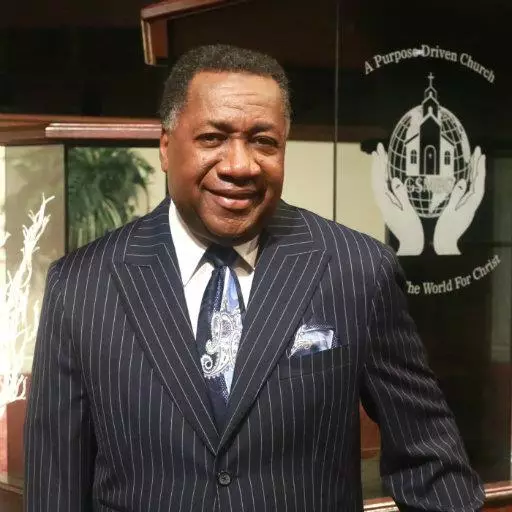
Guest (Male): You are now listening to an inspirational message from Greater Shiloh Missionary Baptist Church where Dr. Michael W. Wesley Sr. is the pastor. Please join the service in progress.
Dr. Michael W. Wesley Sr.: Father, thank you, Lord, for this privilege. Thank you for the worship experience. Thank you for the praise. You are worthy of all of the praise, the glory, the honor. We pray now for divine guidance. We pray as we come to this moment that you would lift us again out of self, that you would speak to us and through us in this moment, and bless the words in our mouth and the meditations on our heart, that they may be acceptable in your sight. Oh Lord, our strength and our redeemer. Speak, Lord, your servants are listening. In Jesus' name, Amen.
I want you to turn with me now into the New Testament book of Philemon, sandwiched right between Titus and Hebrews. I want us to look at just a couple of verses. If I would have been able to be here, I would have been preaching a series on this, and maybe we'll get it in, but I want to take the first installment anyway. I don't like to rush, but I know the time, and I know Sunday school follows, and I know communion and all of the things, so we’ve got to go. Philemon, only twenty-five verses there, but I want to look at verses 4 through 7.
And there the word of God says, "I thank my God, making mention of thee always in my prayers, hearing of thy love and faith, which thou hast toward the Lord Jesus, and toward all saints; that the communication of thy faith may become effectual by the acknowledging of every good thing which is in you in Christ Jesus. For we have great joy and consolation in thy love, because the bowels of the saints are refreshed by thee, brother." This is the word of God for the people of God.
I want to talk about the characteristics of one who forgives. We're entering this month of February, and love is in the air. One of the challenges in every relationship is the issue of forgiveness. Unfortunately, in our time and in our nation and across the society in which we live, forgiveness is not a popular word. People are relishing and brandishing their brand of unforgiveness. As a matter of fact, we celebrate those who are unforgiving. We make heroes out of those who take vengeance against their enemies.
All the way from the days of the cowboy movies, Dirty Harry, Rambo, and all of the other ones. We celebrate people who demonstrate an unforgiven attitude toward people. I want you to know that very few people are in line waving the banner of forgiveness. In graduate schools today, probably the most populated of all of the graduate schools are schools of law. Everybody wants to be a lawyer today because of the revenge that people have in their spirit. They want to sue everybody. They want to get our pound of flesh for every perceived injustice and every perceived hurt or wrong that has been done. Sue them, take them to court.
But that's the mindset of the society that we live in. The result of that is that even Christian people have gotten to the place that unforgiveness has characterized us more than forgiveness. I came this morning to say that it's a mistake that you will regret if you become an unforgiving person because unforgiveness will do some things to you that you just won't hardly be able to recover from.
First, unforgiveness makes you a prisoner of your past. When you can't forgive other people, you become strapped to them always. You always have that hate, all that hell, and all that disdain for somebody who you perceive has hurt you or done some wrong to you. That's why some people can't enjoy worship because they're holding on to stuff that happened forty years ago. You don't know what they did to me, what they said to me. It makes you a prisoner where you can't be free. Just let it go. When you forgive it, it’s done, and you don't have to be entangled.
There's a second devastation that comes even to Christian people when we are unforgiving. When we are unforgiving, it forms a root of bitterness on the inside. You can become so bitter that you don't even like you. I promise you, I don't like to get angry because I know me. I prefer to be on the right side of kindness and the right side of being me because there is another side. Every one of us knows that there's another side.
All of us want to be like the grandfather clock; we want to go tick, tock, tick, tock. But if that clock ever malfunctions and gets over here on this side, oh brother, some of the foul stuff that might come out. Some of the attitudes, some of the words, some of the expressions that are capable of coming because of bitterness. May I say, since we're talking that it's going to be the month of love and celebration, this is one of the greatest challenges in marriage relationships is forgiveness or unforgiveness.
When I got married, I married a sinner. Guess what? She married one too. Every one of you, when you got married, you married sinners and they married a sinner too. Because we are sinful, it's impossible to live without offense. You're going to hurt somebody, you're going to offend somebody. The issue is what you are going to do. Are you going to be willing to forgive, or are you going to forever stand and allow that bitterness to deepen itself inside of you and poison who you are?
I know you don't like the way I cook; you ain't never gonna get nothing to eat. You don't like the way I do it, then okay. And boys, let me just tell you, whenever she says—you ask her how you doing and she says "fine," you better watch out. She ain't really fine. Then you're talking about her Coca-Cola then.
There's a third thing that happens when you are unforgiven. Not only will that bitterness come and not only will you be a prisoner of your past, but you will open the door for Satan. When you are unforgiving, you throw out the welcome mat and you say to Satan and all of the demons, "come on in." Satan doesn't need any help, but when you don't forgive, you let him come in. When he comes in, he's going to take that hurt and he's going to twist it, and he's going to remind you at every chance he gets. Look at that, look at them, look at how they did, what they did. You can't let them get away with that. They don't know who you are. They don't know who they're messing with.
Consequently, he'll stir you up. Before you know it, you're mad and you don't even know why you're mad. But we opened the door. When we open the door, he's not coming in by himself. He brings the whole crew. Come on, boys, let's go over here. Let's go in. The devil and all of his minions come in and they do everything they can to destroy you.
Then fourthly, when you are unforgiving, it interferes with your relationship with God. You cannot stand up and be the man or woman of God that you want to be when you have bitterness in your heart and when you're holding on to unforgiveness. You know what the word of God says; we ought to forgive. How many times we ought to forgive? Four times? Seven times seventy? If you've got to count that many, you really haven't forgiven. "Alright, I've forgiven you four hundred times now, you only have twenty-five more." You get to that number, it’s over with, I'm on you.
Unforgiveness is not the way we need to be. Because unforgiveness is not the way we need to be, God has put in His precious holy word the need to forgive. The way he has done it, he has put more than seventy-five different word pictures in the holy writ concerning forgiveness. Even though I don't have time to give you all of them, just let me give you a couple of them.
God says that forgiveness is like opening the cell door and letting the prisoner out. Forgiveness is like being in court with the gavel and you bang it on the bench and you say, "not guilty," even though all the evidence points to something different. Forgiveness is like turning loose a boat and letting it go free into the open sea. Forgiveness is like sandblasting a building and cleaning it. Forgiveness is like taking the trash out and dumping it and allowing the house to be fresh and clean and not filled with the stinkiness of what was rotten.
Forgiveness is what we need. God has put an example in this little short book called Philemon. He didn't put it so much in word because you can't learn forgiveness from just reading it. He didn't put it in the form of a parable because people are not always able to dissect the meaning of parables. But God put it in the form of a true personal story. He gives us a picture of what forgiveness is all about.
This little short thing is divided into three sections. The first section is all we’re going to get time to get to today, and that is the characteristics of a forgiving person. Then if I had a chance and came back, then I'd look at the actions of a forgiving person. And then if I had a chance a third time to come back, then I would talk about the spiritual benefits of forgiveness.
Let me just give you just a little bit on the characteristics. Some of you may be familiar with the story. Here was a rich man whose name was Philemon. Philemon lived in a city called Colossae. He was married to a woman named Apphia. They were well-to-do; they had a beautiful home, they even had a church in their house. To demonstrate the level of his wealth, he even had a slave, a servant whose name was Onesimus.
It wasn't that Philemon was such a mean-spirited man, but this slave Onesimus wanted freedom. While Philemon may have been a good boss or a good master, Onesimus robbed him one day and he ran away. He went into the imperial city of Rome, hoping to get lost in the massive crowds or multitudes of people, and maybe to blend in with the homeless population on the back alleys of the city of Rome.
But it happened to be his fate that while in Rome, he met a formidable man. That formidable man was none other than the Apostle Paul. Paul shares Jesus with this runaway slave. In the process of converting him to Christianity and discussing his life and his past, he found out that he was from the city of Colossae and happened to have belonged to Paul's personal old friend, whose name was Philemon.
After Paul converts him and helps him in his walk with the Lord, Paul says to Onesimus, "I've got to send you back. And I'm going to send you back with this letter." You’re going to have to go back to your master and carry this letter. The letter is a call for forgiveness. Paul says to Philemon, "I'm sending him back, but not as a slave, but as a brother, a Christian brother."
So what I want to do in just a few moments is at least give you in nugget form the characteristics of someone who has the capacity and who will be a forgiver because all of us need to have these characteristics in our life. We all need to be able to forgive.
Now, what Paul does here in the letter in this opening section after the introduction here, he speaks some flowering words to Philemon. He talks about him, and in his description of him, he is describing some beautiful words. In other words, he's using some psychology. Some people might say he's buttering him up. I don't think he's buttering him up, but I do think he's setting him up before he makes an ask.
Why? Because the Book of Proverbs says pleasant words are as a honeycomb, sweet to the soul and health to the bones. When you give people a description of themselves in glowing and flowering terms, you're setting a precedence that they should live up to. When people tell you you're fine and you know you're not, you just act like you are anyway. You get a different strut about yourself. Throw your head back, put your hands on your hips, and let your backbone slip. When you walk, you just almost glide because you know you're fine. He said I was.
When people think you're kind, then you have an obligation at least around those people to behave in kind ways because they have already viewed you and have set you up by telling you you're kind. So Philemon here has been set up by Paul. Paul knew Philemon. It wasn't just something that he was making up. He had spent three years, Paul had, in Ephesus. Colossae was one of those small cities that people came from to come to Ephesus to learn from the great Apostle.
So he knew the character of Philemon. And not only that, but Philemon had a wife and Paul knew his wife. He had another servant there named Archippus and Paul knew him. He had another man who was the leader of the church in Colossae, a man whose name was Epaphras. Epaphras himself had been with Paul in Rome. So they all had told Paul, and now here was the slave Onesimus there to tell Paul even more about the person whose name is Philemon.
When Paul writes this thing, he writes, and if you read it, you're not going to read and see "character one, two, three, four." That's called being explicit. That's not what I want you to understand today. What I want you to understand today is what is implied. You see, some things are explicitly stated, but the character of the one who forgives is implied in the description that Paul gives of Philemon.
Let's look at the first. In verse 4 he says, "I thank my God, making mention of thee always in my prayers." Every time I pray, I can't help but to think of you. I'm praying for you, brother. I want you to hear what I have to say because these are words that have been given to me from the Lord. Then he says to him in verse 5, "hearing of thy love and faith, which thou hast toward the Lord Jesus, and toward all saints."
Here is the first implication of a person who will forgive. A person who will forgive is a person who has a natural concern for the Lord. If a person doesn't care anything about the Lord, they're going to be hard to be a forgiver. But people who are able to forgive are people who have a bend in their life toward God, a sensitivity about what's right. One of the reasons we find that our friend who occupies a certain residence in DC seemed to be bent so on revenge is because there is no apparent relationship with the Lord.
I'm just trying to help you understand. I don't care who you are, if a person has a desire to please God, then that person is a candidate for being a forgiver. A person who doesn't have any type of characteristic toward God is going to be hardhearted and cold-blooded. So can I tell you, as you look for your boo and your love, make sure that they have some Jesus. If they don't have any Jesus, they might be sweet to you for a while, but when that day comes, then you're going to find out. That's why some people wake up and ask, "Who am I laying here with? Is this Freddy Krueger?"
Secondly, a person who is going to be a forgiver is going to be a person who has concern for other people. Look at what Paul is saying here. He says, "Listen to me, my brother, I've been hearing of your love and faith from these other witnesses." And they tell me that you have a love toward the Lord and you have a love toward all the saints. A person who is going to be a forgiver is a person who cares about other people.
Now, you have some selfish folk in this world. When they are selfish, they are concerned about who? Me, myself, and I. What you think and what you need doesn't even come across my mind. So when they become offended, they are not interested in forgiveness; they are interested in vengeance. So if you are going to be a person who is the type of person who can forgive, then you have to be the type of person who is concerned for others.
Thirdly, a person who is to be a forgiver is going to be a person who has a desire or concern for fellowship. Fellowship is the Greek word koinonia. It has the connotation of entering in or being with people in a sense of being unified. There are folk in your family that can't stand one another. They don't want to see folk come together. They don't want unity. Consequently, when there are issues in the family, they're going to get the popsicle stick and they're going to stir up all of the mess that they can.
When it comes to church, there are people in the family of God who are not interested in the good of the fellowship of the saints. Consequently, they're going to do all they can. But the person who is a candidate for being a forgiver, and Paul recognizes these qualities in Philemon, he says to him, "My brother, I know that you have love for God, you have love for others." And that is where the implied understanding that he has a concern then for the unity of the fellowship.
That's why I say reading it on the surface you might miss it, but when you understand what is happening here, then Paul is laying out for us as he shows to Philemon what he must do, he's also helping us to understand who we are and giving us a chance to take a look at ourselves. In a minute we're going to come to the table, to the Lord's table. You know what Paul also said? He said, "Let a man examine himself and so let him eat of that bread and drink of that cup." He that eateth and drinketh in an unworthy manner, eateth and drinketh damnation to himself, not discerning the Lord's body. You can't mess with God. It’s about your own heart. If you're going to be a forgiver, you have to be concerned about other people and the fellowship, the unity of the family.
Then look at the sixth verse there very quickly. He says, "that the communication of thy faith may become effectual by the acknowledging of every good thing which is in you in Christ Jesus." The person who is going to be a forgiver is going to be the person who wants to discover the good stuff that God has put in them. How are you going to discover the good stuff that God put in you? You discover it by doing it.
God has put some good stuff in us. Every good and perfect gift that we have received has come to us from above, from the Father of Lights in whom there is no variableness or turning. There is no good thing in us on our own. Prophet Jeremiah said, "The heart is deceitfully wicked, who can know it?" That's us in our naturalness. So if there is any good on the inside of us, it's good because who put it there?
What we ought to want to do is to discover the good things, come into the knowledge of understanding what is it that God has done. You can't know that God has put love in your heart reading about it. You only know that God has put love in your heart when you practice loving folk. You can only know that God has put forgiveness in your heart when you practice forgiveness.
Philemon, I'm going to set you up because I'm going to ask you to do something that goes counter the culture. Everybody in your town knows that this boy has run away. Everybody in town knows that he has robbed you, and you have a right to put a brand on the forehead so that everybody sees him will understand that he is a runaway slave and will be forever branded. But you, Philemon, will get a chance to learn of what good things the Lord has put in you by practicing forgiveness.
My sisters and my brothers, when you leave church today, it's not going to be enough to go tell somebody that you love the Lord, that he heard your cry, that he pitied your every groan, and as long as you live and trouble arise, you'll hasten to the throne. The way you're going to tell somebody is by practicing the good things that the Lord has done. Lord help me to live from day to day in such a self-forgetful way that even when I kneel to pray, my prayer shall be for others.
Others, Lord, yes others. Let this my motto be: help me to live for others that I may live like thee. The person who's going to be a candidate to forgive is going to be a person who learns, acknowledges, practices the good things, the mercy of God, the forgiveness of God, the kindness of God as he does to others. Do unto others. The world would say "before they do unto you," but the Lord said "do unto others as you would have them do unto you" even if they don't treat you right. You do it.
Then the fifth thing that is a characteristic of a person who can be or will be a forgiver—Philemon, you are that person—is that you've got to be a person who's concerned about glory. Look at what he says in that sixth verse. Not only "acknowledging of every good thing which is in you," but "in Christ Jesus." The good that you're going to do, the good that you're going to discover, is all designed to bring glory to Christ.
I'm going to ask you to forgive not because necessarily you feel like forgiving, or not necessarily because you think that he deserves to be forgiven, but you need to understand that when you do, you're going to give the glory to God, to Christ Jesus because he's the one who would expect you to do it. On a daily basis, when we go in and we come in, we ought to do the good that we do that it may bring glory to God. We are to let our lights be hidden? No, let your lights so shine before men. Why? So that they may see your good work and bring glory to you, to say what a wonderful thing you are? No, that it may bring glory and honor to your Father which is in heaven.
To forgive another person who has intentionally done you wrong, people are not going to say, "What a glorious person you are." No, they're going to say, "That had to be God in you" to have been able to forgive that person for what they did to you. You're going to let him get away with that? He took your money. Can you hear some of the girls at the line talking to Apphia, his wife? "Y'all going to let him back in y'all house? You're going to trust him again, and he took your jewelry and sold it? And he took your good furs and took them to the pawn shop and got pennies, and y'all going to let him back in there again? It wouldn't be me. I wouldn't do it."
Some of the other brothers at the church would probably get up to Brother Philemon. "Man, you're a better man than me. I'll tell you what I would do, I would put my foot—" How many of your forefathers were castrated and hung? Not necessarily because of the feeling of the master toward his slave, but because of the group dynamics of others in the community. The others who wore the sheets: "let's get him."
Don't miss this: the influence that could have come to Philemon. But Paul is appealing to the glory of God. You do this work and everybody is going to know that you are who you say you are. You are a man of God because only a man of God can forgive like I'm going to ask you to do. You got a choice when church is out. You need to think through your mind right now, but when you leave here, you ought to go forgive somebody. Don't just hear it. Don't just say "we had a good time." No, that's not the point. The point is for us to put this word into practice. True story designed to lead us into a deeper walk with God.
Characteristics of a forgiving person is going to be a person who has concern for the Lord. He's going to be a person who has concern for other folk. He's going to be a person who has concern for fellowship, the unity of the family. He's going to be a person who has—huh? Pop quiz. I'm an old teacher; don't you know teachers give tests? Pop quiz. I’ve got to check you out and make sure you aren't sleep. Person who has concern for the Lord, person who has concern for the glory of God.
Then he has to be a person who is concerned to be a blessing. You’ve got to want to be a blessing. It’s one thing to be the recipient of a blessing, but the whole purpose of being a recipient of the blessing is to be a blessing in return. God doesn't just heap blessings on you just because you are so wonderful. God heaps blessings on you so that you can take those blessings and bless somebody else.
Philemon, don't you make me call you out. Remember I led you to Christ, and I know what the Lord has had to do for you. Since the Lord has saved your soul and spared your life, then my brother, you have got to also be willing to refresh somebody else. You’ve got to be a blessing to somebody else.
The Lord says, "forgive us of our debts as we forgive our debtors." He has forgiven you and then therefore you are supposed to be able to take that same mercy and be merciful to somebody else. You can't go out and choke other people when God didn't choke you. You can't go out and do others dirty when the Lord had you down. Maybe you haven't been sick, but I've been down and the Lord has had to lift me up. I've been discouraged, I've been depressed, and when the Lord has healed my depression and my situation, then now it’s my turn to be a blessing to somebody else. The Lord has forgiven me, he has wiped the slate clean. Then why should I hold you hostage?
That's why I love coming to this moment because I look at you and I know that every one of us in here has sinned and have come short of the glory of God. I don't care what yours has been or what mine has been; the Lord has been good to me. He has dried my tears. He has wiped the slate. Then therefore, we ought to be a blessing to somebody else.
My hope is built on nothing less than Jesus' blood and righteousness. I dare not trust the sweetest frame but wholly lean on Jesus' name. On Christ the solid rock I stand; all other ground is sinking sand. Church open, somebody might want to be forgiven. You can experience the forgiveness of God. He loves you today. Don't miss the moment.
I want to do something as we are preparing to come to the Lord's table now. I'm going to let the deacons out, and they're going out to get ready to come in for the time of communion. But I want us to just take a moment, and I do want us to pray before we come to this table. I want you to purify your heart. I want you to let go of whatever it is and whoever that is, so that you can be fit for this moment of Holy Communion.
Father, all over this building, there's somebody in our life who may have created offense. Someone who has hurt us, somebody who has taken from us, someone who has done something that we are holding on to. Help us to let that go right now. Help us, Lord, to not allow a root of bitterness to form in us. Help us to be released from the prison of our past. Help us, Lord, to not give a door for Satan to come in right now. Help us, dear God, not to offend you, to mess up our fellowship with you. Help us to be the people you want us to be. Forgive us now, make us right with you, and help us as we leave to go right make it right with somebody else. In Jesus' name, Amen.
Come on now, we're going to prepare now for this time at the Lord's table.
Guest (Male): Hope you enjoyed the broadcast. You have been listening to a message from the Greater Shiloh Missionary Baptist Church where we are reaching the world for Christ. Located at 2135 Jefferson Avenue Southwest, Birmingham, Alabama, 35211. For a copy of this message, you can reach us at 205-925-9750 or 9751, or visit us on the web at www.greatershiloh.org. For another uplifting message, we invite you to join us for our next broadcast.
Featured Offer

This is Dr. Michael Wesley, Sr.'s latest book on the subject of marriage. As a Pastor he has counseled many couples before, during, and after marriage so this has given him keen insight into the marital relationship. He himself has been married to the same woman for over 40 years so he has a wealth of knowledge on this subject. In this book Dr. Wesley covers that marriage comes from God, the keys to compatibility, the keys to staying in love, and even what to do if you feel you have married the wrong person. This is an excellent read if you are considering marriage in the future or even if you are currently married.
Past Episodes

Video from Dr. Michael W. Wesley Sr.
Featured Offer
This is Dr. Michael Wesley, Sr.'s latest book on the subject of marriage. As a Pastor he has counseled many couples before, during, and after marriage so this has given him keen insight into the marital relationship. He himself has been married to the same woman for over 40 years so he has a wealth of knowledge on this subject. In this book Dr. Wesley covers that marriage comes from God, the keys to compatibility, the keys to staying in love, and even what to do if you feel you have married the wrong person. This is an excellent read if you are considering marriage in the future or even if you are currently married.
About Greater Shiloh Missionary Baptist Church
The Mission of the Greater Shiloh Missionary Baptist Church is to Reach, Teach, and Baptize throughout the world beginning in our community, fulfilling the Great Commission by the power and presence of the Holy Spirit until Jesus returns.
About Dr. Michael W. Wesley Sr.
Dr. Wesley retired in 2003 after a brilliant 26-year career as an educator in the Birmingham Public Schools. He served as a teacher, assistant principal and principal of three different schools (Powderly Elementary; Arrington Middle and was the first African American principal of Woodlawn High School). He served on the Central Office staff as Extended Day Principal and Coordinator of Safe and Drug Free Schools.
Dr. Wesley is regularly sought after to speak in both schools and churches. He has had the privilege of speaking across the nation and in several foreign countries. His spiritual gifts of teaching and preaching are well documented. He is a member of many organizations. His civic and professional associations are too numerous to mention.
Most recent is the evidence of his leadership, occurred with the completion of a multimillion dollar edifice and education facility located in the heart of the West End community.
Dr. Wesley is currently the pastor of the Greater Shiloh Missionary Baptist Church in the West End community where he has given thirty years of service. He has a great love for people and for learning.
He is married to the former Venita Burkes, and is the father of two sons, Rev. Michael Wesley Jr. and James Edward, one grandson and two granddaughters.
Dr. Wesley is the author of three books, When God Changes A Church, Everybody Deserves A Good Funeral and Reaching the Unchurched_Pathway to Church Growth.
Contact Greater Shiloh Missionary Baptist Church with Dr. Michael W. Wesley Sr.
info@greatershiloh.org
http://greatershiloh.org/
2135 Jefferson Ave SW
Birmingham, AL 35211
205-925-5972 or 205-925-9751