
A Call for Discernment


Guest (Male): You are now listening to an inspirational message from Greater Shiloh Missionary Baptist Church where Dr. Michael W. Wesley Sr. is the pastor. Please join the service in progress.
Dr. Michael W. Wesley Sr.: Only living God. I think that's where we want to put a pin in: only living God. There are a lot of false gods, but they don't live. There is only one living God, and that's who we worship, and that's who we praise, and that's who we're going to talk about today. So, I want to invite you to join me now in a moment of prayer as we connect now with the Holy Spirit and let Him lead us in this message.
Father, we thank You for blessing us with another week's journey. Thank You for the celebration of this nation's history. Thank You, Lord, for the time that You blessed us with family, rest, and recuperation, and whatever You have done. Thank You for our rest last night and rising early this morning with our hearts on wanting to be in the house of prayer. And we pray now prayers of thanksgiving for the lift that we have received through the songs, through the scriptures, through the prayers. And now, Lord, we need food to be able to travel into the week and through the week. So, we pray that You would fill us with Your Spirit and bless us with an understanding of divine truth. Help us not only to be hearers of the word but to be doers of the word. Speak, Lord, Your servants are listening as You bless now the words in our mouths and the meditations on our hearts. May they be acceptable in Your sight, O Lord, our strength and our redeemer. We ask it now in Jesus' name, Amen.
I want to connect the word this morning with what we left with last time. Even though they are coming from two different places, the thought process connects. Last week, we talked about the testimony of a man who was surprised to be in hell from Luke's Gospel, chapter 16. And we raised three questions in that. What is the conscious state of the unholy dead? And this man made it clear that they were aware of their torment in hell.
The second question that was raised is, why did the man go to hell and why do people go to hell? And it wasn't because of his riches. It wasn't because of his selfishness. It wasn't because of any of those things. It was what he did not do with scripture. He did not believe in life what he had been given. And so, his plea was, "Father, send Lazarus back to earth because I have a father there and five brothers. And if you send him back from the dead, then they will hear his testimony and won't come to this place." But God said, through the voice of Abraham, He said, "They have Moses and the prophets. Let them hear them even though one came back from the dead." So, the third question was, what about us? How do we avoid going to hell? And that is: what do we do with scripture?
And that's what I want to piggyback on this morning. First Thessalonians chapter 5, New Testament book. First Thessalonians chapter 5, verses 20 through 22, but we're going to read just verses 16 through 22 because they fall in rapid-fire succession. As Paul is speaking some practical precepts to the people of Thessalonica, he says, "Rejoice evermore." He's talking to Christians. He says, "Pray without ceasing." He says, "In everything give thanks, for this is the will of God in Christ Jesus concerning you." He says, "Quench not the Spirit." And the text for the morning, "Despise not prophesyings. Prove all things. Hold fast that which is good and abstain from all appearance of evil."
This is the word of God for the people of God. And I want to attach to this, assign to this, a subject. And the subject that I want to attach to this is: A Call for Discernment. Discernment is the ability to read small details and to distinguish between truth and error. We got it. It's inside of us. But very few people are using it to their advantage the way God intended for it to be used. A few practical examples. Women got it, and they call it a woman's intuition. And women know that you can read situations. You know when somebody is coming with the come-on, and you know when it's for real. Men got it. Men have a level of discernment although they manipulate it often, and women specialize in doing that: dropping the idea and then making the man think it was his idea. Women are great at that.
But the real issue is really picking up and picking out what is the truth and determining the truth from what is not the truth. And I submit unto us that that is a spiritual gift. It is a skill that every one of us needs. You will not be able to make wise decisions in your life and stay on track with where God may want to lead you if you cannot and do not learn how to discern truth from error. We are seeing it in a massive way now in our world, in particular in our nation. I personally was greatly disturbed and bothered as we watched the manipulation of the United States Congress into voting for what is now known as this big, ugly, beautiful bill.
Now, why? What's the problem with it? The problem is not me wanting to talk about politics. The problem is you have elected men and women who have been sent to do a job but cannot do the job effectively because they can't seem to decide what is true and what is error. When you know what's right, you choose what's right regardless of what anybody else thinks because that's what you are there for. And I'm trying to help you understand that as a church, the church must know the difference between truth and error. And Christian people must be able to decide between right and wrong. And I'm saying that you will not make effective decisions in life nor do things that lead you into the center of God's will if you cannot make those distinctions.
You will ruin your own life. I say to my sons all the time, everybody has a plan for your life, but God has a plan for your life too. So, whose plan are you going to follow? Are you going to follow God's plan, or are you going to follow the world's plan? And it comes down to that single decision every day, multiple times during the day. And so, if you ask me what is the number one weakness in today's church, my answer would be there is a sincere lack of discernment.
The text that claims our attention this morning is written by the apostle Paul. He's writing to the young church at Thessalonica. It's a young church, only three weeks old, when Paul had gone as far as he could go in the areas of Phrygia and Bithynia. The Holy Spirit forbade him not to go any further. And so, he and his traveling companions paused, and they saw a vision of a man in the night saying, "Come over here into Macedonia to help us." And Paul, believing that God's signal was for him to come into the area of Macedonia, brought the gospel into Europe. He went into Philippi, and there you know what happened: he was mistreated, he cast a demon out of a slave girl, and he ended up being in prison, beaten bad. But God relieved them by bringing a midnight revival, shaking the jail, convicting the jailer, and ultimately his family was baptized, and a little church sprang up out of Philippi. It was already populated with a few women, a girl named Lydia who was a seller of purple, and now the Philippian jailer and his household.
But Paul leaves Philippi because of the ill-treatment that he has received and he moves down south a little bit. And when he goes there, he goes to Corinth and he spends time there building a church, a new church. And he leaves there on his way to Ephesus. He stops through Thessalonica. And when he stops through Thessalonica, he preaches the gospel to a group of Jewish converts. And eventually, a little church grows in Thessalonica. But the troublemakers from Berea and troublemakers from Corinth and troublemakers from Philippi, Judaizers came and they stirred up trouble in Thessalonica. And Paul could not stay. They had to get him out of town before he was killed.
But having preached there for only three weeks, he had wondered whether or not he had given them enough gospel to hold them in the faith. So, he goes down to Athens, Greece. And while in Athens, he sends Timothy back to Thessalonica to check on the young church to see how they're doing. The report was pretty good. Paul, the people love you. Paul, they believe the gospel that you gave. But, Paul, there are still some concerns. Some of the doctrine that you preached may not have been fully understood. There were those who believed that you preached about the second coming of Jesus, and so some of the folks have just stopped working and they're just waiting on the coming of Jesus. And then, Paul, some of the people think that since you preached about the resurrection, that their loved ones who have died will miss the resurrection.
So, Paul takes out his pen, and he writes this little practical letter of encouragement to the church at Thessalonica. He starts by telling them, like he always, "I thank God for every remembrance of you. Every time I think of you, I praise God." And he gives them practical information. He tells them, "Listen, you follow the leadership that you have. You be obedient and do the things that you know are right." Then he tells them concerning their loved ones that have died. He said, "I don't want you to be ignorant, not knowing concerning those who have fallen asleep so that you don't sorrow as others who have no hope." He says, "We believe that if Jesus died and rose again, those who have died in Jesus will not prevent us, will not go before us, but the dead in Christ will rise first. Then those of us who are alive and remain will be caught up to meet them in the air and so shall we ever be with the Lord." He says, "Comfort one another with these words."
And then he said for those of you that don't want to work, he said you need to be reminded that if you don't work, you don't eat. And so, he moves into this practical section. And he says to them, he says, "Listen, I want you to rejoice always. Always find a reason to stay upbeat. You've got to always know that God is around and is at hand." And he says, "Pray without ceasing." And he didn't mean you just constantly walk around and murmur. He means you keep a God-consciousness fresh before you. And as you think of need to talk or commune with God, then you go into it. You don't always have to start with a formal address. God is someone you know. He's your Father, and so you can commune with Him anytime. So, you pray without ceasing. In the morning, you just pray. In the middle of the day, you just pray. Things come up, pray. At night, just pray. Just stay.
I woke up last night in the middle of the night and I thought I heard footsteps in the house. I just prayed and went right back to sleep. Whoever that is, Lord, You deal with them. But it might have been a figment of my mind, so I went back to sleep. But he goes on to say, and, and, and in all things give thanks. Christian people of all people ought to always be thankful people. It's a practical, simple lesson. It's something that I learned as a child from my mom. My mom put it like this: if somebody does something to you, for you, the least you can do is say thank you. And when God wakes you up in the morning and God blesses you and God does so many things for you, the least you could do is to say thank you. And he goes on to say, "For this is the will of God concerning you in Christ Jesus, that you give Him thanks."
Then practically he says, "Don't quench the Spirit." There are sometimes church folk get upset because they be doing their thing, and old preachers used to pull your coat tail. Y'all might not know that, but old preachers would sit back there, young boy be up preaching, and the old preacher would pull his coat tail. "That's enough now, son." And you be saying, "Wait a minute, you're quenching the Spirit." "No, I'm not quenching the Spirit. I'm quenching you." Sometimes it happens in music, sometimes it happens in other aspects of church. We think that persons are quenching the Spirit. They're not quenching the Spirit. Sometimes the truth is people can go overboard in church. Sometimes you can step out of the will of God, being so hung up on what you are doing that you lose touch with what is God's assignment at that time.
And I just simply say it as a reminder to all of us as preachers, that when you are invited to the pulpit to do one thing, understand what that assignment is. Do it and sit down. You're on to pray, pray and sit down. You ain't got to tell God about everything about everybody. When you're up to pray in a funeral, you ain't got to try to sneak in a eulogy. Just pray. You're up to read the scripture, don't take points of privilege. You don't have any points of privilege. Do what you're asked to do. And that way, you won't quench the Spirit and won't nobody have to quench you.
And then he comes to the place where the text is, and he says, "Despise not prophesyings." Which simply means people in the church learn not to hate preaching. You need to learn to love preaching. But our problem is we love the preacher and not the preaching. And that's why the rich man ended up in hell because he hated the preaching, and God wants you to love the preaching, the proclamation of the truth is why and where discernment starts. If the truth is delivered to you, then you should know the truth. The next verse says, "Test everything." So, when a person is preaching, you don't have to take my word. Look for it and see, is this the truth? If it is the truth, then that's where Amen comes from, which means "I agree that this is the truth."
And consequently, then your life can be governed and you can learn how to stay out of evil situations because you know what the truth is. So, let me deal with that because that's where our problem is: this lack of discernment. And that's why the call is for discernment. First and foremost, we need to hear Paul. Paul is writing here, but this is not all Paul wrote. Paul goes into the next letter behind Thessalonians and he writes to Timothy, his young son in the ministry. And he encourages Timothy by saying, "Timothy, preach the word." And he wants him to understand that the word is what people need. And you have to preach it when they want to hear it, and you have to preach it when they don't want to hear it. You preach it in season and out of season. You preach it like it's going out of style.
But the problem is there has been a lessening of doctrinal preaching. Because Paul warns, he's like, "Man, don't get in the foolish arguments. It'll eat away you as gangrene, like poisonous stuff. Don't get sidetracked. Don't come into the pulpit playing. Don't come into the pulpit throwing off at people, trying to undermine or sneak a message at somebody that you don't like. No, have the gall to say to another person whatever needs to be said, and don't hide behind the sacred desk to throw rocks to hide your hand."
I learned when I first came to the church early, it was an older congregation. Pastor Thomas was an older man, he was in his 80s, and much of the congregation was also in that older group. And one week, I'd be up preaching, and the next week we'd be having another funeral, and another funeral. And it came to me very clear that those people were depending on what little gospel you can give to get them into heaven. So, I learned very early I can't play. I've got to preach the word. And the gospel is not how it sounds, y'all. And that's what has messed us up as Black people. We have gotten so hung up on how it sounds rather than what it says. I get down and, "Oh, he's preaching now." And I might not be saying nothing but, "Oh, Lord, but he's preaching." That's not what preaching is. Preaching is the proclamation of the good news with the intent to persuade men to believe what the Lord has said.
And that's where the discernment is needed. That's where the difference between truth and error has got to be understood. Paul tells Timothy as a preacher, he says, "Son, study to show yourself approved unto God, a workman, a craftsman, that needed not to be ashamed, one who can rightly divide the word of truth." Now, if I wasn't preaching the truth, then you don't have no reason to listen. But if I'm rightly dividing it, then you need to listen.
And let me just throw this bunt down. This ain't no rock, this just a bunt. And whenever my time is done, you make sure you get somebody up here who can preach the word, who rightly divides the truth. Don't get no joker just with lights like Samuel when Samuel went down to Jesse's house to anoint a king. First one of Jesse's sons came in there, big, tall, good-looking man. Samuel said, "Surely this is the Lord's anointed." God said, "That ain't the one." Another one of Jesse's boys came: big, good-looking, strong-looking guy. Samuel said, "Surely this is the Lord's anointed." God said, "That ain't him." And after going through six of Jesse's sons, Samuel said, "Is there any more?" He said, "Yeah, I got the little shepherd boy out there." And they bring David in. He looked a little rugged, a little rucky-something, but he was still a handsome boy. And he came in there, and the Lord said, "That's the one." And Samuel poured the oil on the young shepherd.
So, you got to understand that discernment is the most important thing. You got all kind of slick Willies out here now. You got pimp-daddies. They're going to come, they're going to look like Absalom. They're going to have rings on every finger, bling everywhere, and make you think that you got something. Then when you check their character, you find out: Lord have mercy. But it'll be too late. So, I'm just telling you, just be discerning. Listen to the word. That's our problem.
Now, not only did Paul tell Timothy to study to be an approved craftsman who doesn't need to be ashamed, listen to what he says: dividing the word of truth. The word of truth is another name for scripture. So, the truth has got to be told. When the truth is told, then it's up to the people to be able to determine whether or not I'm hearing the truth or whether or not I'm not hearing the truth. And that's the basis of decisions that affects my life. "Thy word have I hid in my heart that I may not sin against God." That keeps me discerning right from wrong when I got the word down on in me.
So, you might want to know why was Paul talking to Timothy like that because he said, "Son, in these last days, there are going to come people who are going to be more interested in hearing fables and heaping unto themselves teachers having itching ears and move away from the truth." And I promise you, that's the state of the nation and that's the state of the church. We have become inundated with itching ears and we don't even realize that we are living in some of the most dangerous times. Why are the times so dangerous? Because of the onslaught of attacks against the word of God.
First and foremost, let me give it to you when I was a young boy in coming along in the preaching ministry, the attacks were on Jesus. The attacks really and truly, they attacked Jesus, the character of Jesus. People were saying that Jesus wasn't really the divine Son of God, that He wasn't, that He was some angel. They even came out with a movie, "The Last Temptation of Christ," depicting Jesus as dating Mary Magdalene and they had an affair. That's wrong. But Christian people would have to know that to discern the truth. If you believe everything Hollywood shows you, then you're going to be messed up.
There's a second attack on the Holy Spirit that began by time I was midway into pastoring. And it came out of the Charismatic movement. All of a sudden, everybody wanted to be able to speak in tongues, and everybody wanted to be able to rub their little genie, their lamp, and Christ comes out or the Holy Spirit comes out, and now you "name it and claim it." And whatever you name and claim, then that's what God was obligated to do. That is not the work of the Holy Spirit. That too was an error. But there's enough truth in it to make people think that maybe this is right, but without the ability to discern, they don't know truth from error.
Today, the attack is on the person of God and it's called the "Open God" syndrome. And the Open God syndrome goes like this: that God is not really omnipotent, He's not really omniscient, He really doesn't know everything, He doesn't know the end from the beginning, that God is more like us, that He has to figure out what's going to happen and then when He sees it happen, then try to figure out what He's going to do about it. That is an error. That is an outright lie. God is omnipotent. He has all power. He is omniscient. He knows everything. He's immutable. He's the same yesterday, today, and forever.
But these attacks that I described have happened in my lifetime. But let me tell you that there have been other attacks that started back in the Reformation with what is called sacramentalism. And it came out of the Catholic Church because everybody believed that they were Christians because they were Catholics, and they weren't. Church service took the place of personal knowledge of Christ. You went through the Mass, and so folk didn't worry about knowing Jesus as long as they participated in the Mass. And people didn't even know, Black folk didn't even know what they were talking about because it was all in Latin. And how many Black people you know studied Latin? So, they go to church and they stand up and they chant and they do that and they sit down and they leave church just as happy. And you ask them, "Do you know Jesus?" "Huh?" Because they were getting sermonettes for little Christianettes. Baby, we need more than sermonettes for Christianettes. You need the gospel. You need Jesus to break those bonds and to snap those bondages and to pull you out of your sin and all of that. But sacramentalism gave way and it's still around.
But later on, there was another movement called humanism. And humanism and rationalism where people began to worship their mind. The mind is the greatest thing. And so psychology and preachers began to preach psychology, and people think that if I can believe it in my mind, then I don't believe nothing in the Bible. So, they start trying to dismiss all of the miracles from the Bible, that the Bible couldn't be true because that's just not the way God does. But you've got to understand God can do what He wants to do, when He wants to do, like He wants to do it. But you've got to be able to discern that to know that.
And that gave way to orthodoxism. And we start having orthodox churches: Orthodox Greek church, Orthodox religious church. And you've got a whole lot of orthodox churches where they tell you, "Oh, we don't do that in here. We don't put drums in here. We don't play guitars in here. We don't even put music in here. We don't have instruments in here. We are orthodox." And it ain't a dead-er place in town. Ain't no Jesus in there, no Holy Spirit in there, just orthodoxism, what we don't do. And famous last words.
And orthodoxism gave way to experientialism where people began to look at their experiences and build and base their religion around their experiences. But let me tell you something, you don't live long enough to experience everything, so that's inadequate. And that gave rise to mysticism. And now everybody wants to be a mystic. Everybody wants to be in a trance. Everybody wants to be in a fog. One man told people that you know the Holy Spirit is in us when there are knots in your stomach. Baby, that could be knots in your stomach for what you ate or what you drank. That ain't got nothing to do with the Holy Spirit.
But I'm just, I'm just talking about why we need discernment. And now we have politicism. And everything is political. And you got a president who's arm-twisting people and causing them to make decisions that has nothing to do with the rightness and the wrongness of what's great for this nation but what's in his personal desire. Now, how in the world, if you are a godly man or woman and you know what's right? You know that God loves poor people and God is concerned. He didn't choose to take out of this world all of the poor people but He provided resources for them. And if you think it's right to be able to take away from the poor to give to the filthy rich, then you don't have discernment. Do you understand? And you're then now more persuaded about trying to appease a person than to stand on moral principle and consciousness over what's right and wrong.
So, why then does the nation not have the ability to discern and why is the church so anemic in its ability to discern in these dangerous times? And these are dangerous times. Why are the times so dangerous? Because truth is being deceived. We are living in deception times. Trump in his first administration started calling things fake news, and now people don't know what's the truth and what's fake because the blurriness has been put out there and people doubt what's absolute truth. Let me tell you something, it ain't but one truth, and that's God's truth. It's not your truth and my truth and somebody else's truth. The truth is the truth, and Jesus put it like this in John chapter 8, verse 32, "And you shall know the truth, and the truth shall set you free. And whom the Son sets free is free indeed."
So, so we got a problem. We got a problem because we don't know the truth because deception has taken over truth. And the reason we don't have the truth in the church and in the world is because we have abandoned doctrine: Bible doctrine, straight biblical teaching of the word of God in an uncompromised fashion. And we'd rather have somebody come tickle our ears with little fancy stories and be comedians and do all kinds of things and make us laugh and all of that rather than just tell us the truth.
And consequently, because preachers don't want to preach the doctrines and people don't know the doctrines, then people can't discern. Why doctrines? Because doctrines give you something to stand on called conviction. You've got to be convicted about what's right. You've got to know what's right. And when you know what's right, it doesn't matter how many folk are doing wrong. It's still wrong. You've got to learn how to stand on conviction.
And this is what every young person and every person here needs. When you leave out of here, you're not going to always be in front of other folk, you're not going to always be around people. You're going to have to be able to stand on what you believe based on the word of God. And that gives you your conviction to stand on. And not only standing on conviction, you've got to have a standard, a standard of righteousness. And that's what the word of God gives. And that's why Paul is saying to the Thessalonian church, "You don't, don't hate preaching. That's where you're going to get the doctrine. That's where you're going to get the truth. That's where the standard of righteousness comes."
But why is it missing from church? Number one, because we don't want to do it. Number two, because it's not popular. It makes people feel bad. And you got people that came along, preachers you start packing out churches, Joel Osteen, because he never told anybody that they sinned. He just said, "Oh, you just made a mistake." No, there's a difference in making a mistake and sinning. Sometimes we sin intentional. Is there a witness? Now, you ain't got to raise your hand, but sin goes like this: "Hey, God, I know what You're saying, but this is what I'm going to do." And we intentionally do what we know we should not do. And that's not a mistake, that's a sin.
And we want the church now to become so friendly-oriented and we don't want to confront people with sin. And the wages of sin is still death, but the gift of God is eternal life through Jesus our Lord. So, we have to learn that we have to be willing to tell the truth. We have to tell ourselves the truth because God knows the truth, and we have to be willing to repent of our sin. The reason discernment is lost in the church is not only because we don't want to teach doctrine and because we don't want to tell people sin, we don't like the idea of confronting or challenging people. We want everybody to have their own truth and be able to get along. "I got my truth and so I'm in my group, we can go over here and we can play with our truth, and you can take your truth and we can go over here with our truth and we can just have our fun and we all just get along." That's why the man ended up in hell, y'all.
And I'm telling you it is the responsibility of the preacher to preach and teach the truth. I was laughing earlier this morning, "Man, when I was a boy coming on, the temptations was out and all of the rock group, everybody was fixing their hair and having them processes and slicked." And then it just moved right to the pulpit. Next thing you know, you had all of the preachers with the processes and then all of the bling and all of the other kind of stuff: want to look like stars. That ain't what God called us to be. God called us to be preachers of the word of God. And the word of God does not need to be propped up. You just need to sometimes just stand flat-footed and just say what thus saith the Lord.
How can they believe in Him in whom they've never heard? And how can they hear except there be a preacher? And how can he preach except he be sent? But today, you got a lot of folk who just went. And there's a difference between somebody who's been sent and somebody who went. My pastor told me years ago, he said, "Man, if the people send you, they'll send you back. But if God sends you, you sometimes have to stand in the face of ugliness, stand in the face of disagreement."
Listen, those boys went down in Babylon. You know who I'm talking about. One name was Daniel, one name was Shadrach, one name was Meshach, another name was Abednego. And they went down there and the king, somebody teated him up, said, "You the great one, king. Build you a golden statue, and anybody who don't worship you and your golden statue ought to be chunked in the fire." And the king called them. He said, "Boys, I hear that y'all haven't been bowing down." He said, "I'm going to give you a chance to bow down when the music play. I want to see you hit the ground." And they said, "Wait, O King, let us tell you something. Now, the God we serve, we know He's able. He might not stop us from going in that fire, but let's be real clear: we ain't going to bow. So, go ahead and play your music."
See, the problem with that, my brothers and sisters, when you eat crumbs from the king's table, then you got to bow when the music play. But if you learn not to eat the crumbs from the king's table, you don't have to worry about bowing when the music play. Mr. Trump got a lot of folk who been eating crumbs from the king's table. That's why they have to bow and kiss the ring. But in the church of Jesus Christ, I came to declare and to decree that is for God I live and if need be for God I'll die. I'll stand on the rock. I'll tell the world that my redeemer lives because I know who woke me up this morning. I know who starts me on my way. I know who walks with me and who talks with me and who tells me that I am His own. And the joy that we share as we tarry there, none other has ever known.
We don't even want to sing right in the church no more. Get rid of "Amazing Grace." Get rid of "It is Well with my Soul." Get rid of "Blessed Assurance." You can do it if you want to, but I'm going to hold on to those old songs that brought me through. I'm going to hold on to the truth of who my God is. They that wait on the Lord, something happens to them. They renew their strength. They mount up like wings like eagles. They run and not get weary. They walk and not faint.
Oh yes, I know something. I know somebody. I know somebody who loves you. I know somebody who loves me in spite of me, not because of me, but even when I'm doing what I ought not do, He still loves me. Yes, Jesus loves me. Yes, Jesus loves me. This I know, for the Bible tells me so. Little ones to Him belong. They are weak, but He is strong. I love the Lord. He heard my cry. He pitied my every groan. Now, as long as I live and trouble rise, I'll hasten to His throne.
Is there anybody here who loves God? Is there anybody here who knows the truth? Is there anybody here who will be a witness? Is there anybody here who will stand on Christ? On Christ, the solid rock, I stand. All other ground is sinking sand. When darkness seems to hide His face, I rest on His unchanging grace. In every high and stormy gale, my anchor holds within the veil. It's on Christ, the solid rock, I stand. All other ground is sinking sand. Just want you to know: you got to discern. You got to figure out. You got to be able to choose. You got to be able to distinguish between right and wrong.
And I'm going to stand. I'm going to stand and I'm going to declare it. You ain't got to like me, but I'm going to say it. I'm going to say it till I can't say it no more. I'm going to say it till God shut my mouth. I'm going to say it and even if I can't say it, I'll just wave my hand. I'll stand in the place and tell the world that my God lives.
The doors are open. Somebody might be here today. Somebody might want to give their life to Jesus today. Somebody might want the Lord to take over. Come on, this is your moment today. Don't care where you've been. Don't care how long you've been there. Come on, this is your moment. Open your heart to Jesus today. Let Him in. Ask Him to come in. He'll come in right where you are.
I dare not trust. Come on, anybody dare not trust the sweetest frame? But this is what I do: I wholly lean. On Jesus' name. On Jesus' name. That's why, that's why, because it's on Christ. Come on, on Christ. Come on, anybody stand on Christ? Is there anybody want to stand on Christ? Is there anybody want to stand on Christ? Is there anybody want to stand on Christ? All other ground is sinking sand. On Christ, the solid rock, I stand. All other ground is sinking sand.
Come on, on Christ. Come on, there you go, there you go. Come on, stand with me. Come on, stand with me. Come on, sing it. On Christ the solid rock I stand. All other ground is sinking sand. Come on, come on, the doors are open. Come on, everybody, come on. Come on, this is your moment.
There is a call. There is a call for discernment. You need to know the truth. You need to know the truth, the difference between truth and error. And sometimes truth can sound like error, but it's still a lie. And you got to be convicted enough to be able to stand on what's right. And when we become that kind of people, we'll change our families, we'll change our communities, we'll change our nation.
Guest (Male): Hope you enjoyed the broadcast. You have been listening to a message from the Greater Shiloh Missionary Baptist Church where we are reaching the world for Christ, located at 2135 Jefferson Avenue Southwest, Birmingham, Alabama, 35211. For a copy of this message, you can reach us at 205-925-9750 or 9751, or visit us on the web at www.greatershiloh.org. For another uplifting message, we invite you to join us for our next broadcast.
Featured Offer

This is Dr. Michael Wesley, Sr.'s latest book on the subject of marriage. As a Pastor he has counseled many couples before, during, and after marriage so this has given him keen insight into the marital relationship. He himself has been married to the same woman for over 40 years so he has a wealth of knowledge on this subject. In this book Dr. Wesley covers that marriage comes from God, the keys to compatibility, the keys to staying in love, and even what to do if you feel you have married the wrong person. This is an excellent read if you are considering marriage in the future or even if you are currently married.
Past Episodes

Video from Dr. Michael W. Wesley Sr.
Featured Offer
This is Dr. Michael Wesley, Sr.'s latest book on the subject of marriage. As a Pastor he has counseled many couples before, during, and after marriage so this has given him keen insight into the marital relationship. He himself has been married to the same woman for over 40 years so he has a wealth of knowledge on this subject. In this book Dr. Wesley covers that marriage comes from God, the keys to compatibility, the keys to staying in love, and even what to do if you feel you have married the wrong person. This is an excellent read if you are considering marriage in the future or even if you are currently married.
About Greater Shiloh Missionary Baptist Church
The Mission of the Greater Shiloh Missionary Baptist Church is to Reach, Teach, and Baptize throughout the world beginning in our community, fulfilling the Great Commission by the power and presence of the Holy Spirit until Jesus returns.
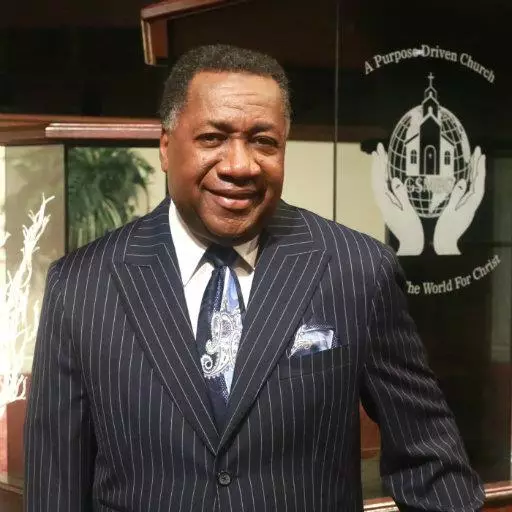
About Dr. Michael W. Wesley Sr.
Dr. Wesley retired in 2003 after a brilliant 26-year career as an educator in the Birmingham Public Schools. He served as a teacher, assistant principal and principal of three different schools (Powderly Elementary; Arrington Middle and was the first African American principal of Woodlawn High School). He served on the Central Office staff as Extended Day Principal and Coordinator of Safe and Drug Free Schools.
Dr. Wesley is regularly sought after to speak in both schools and churches. He has had the privilege of speaking across the nation and in several foreign countries. His spiritual gifts of teaching and preaching are well documented. He is a member of many organizations. His civic and professional associations are too numerous to mention.
Most recent is the evidence of his leadership, occurred with the completion of a multimillion dollar edifice and education facility located in the heart of the West End community.
Dr. Wesley is currently the pastor of the Greater Shiloh Missionary Baptist Church in the West End community where he has given thirty years of service. He has a great love for people and for learning.
He is married to the former Venita Burkes, and is the father of two sons, Rev. Michael Wesley Jr. and James Edward, one grandson and two granddaughters.
Dr. Wesley is the author of three books, When God Changes A Church, Everybody Deserves A Good Funeral and Reaching the Unchurched_Pathway to Church Growth.
Contact Greater Shiloh Missionary Baptist Church with Dr. Michael W. Wesley Sr.
info@greatershiloh.org
http://greatershiloh.org/
2135 Jefferson Ave SW
Birmingham, AL 35211
205-925-5972 or 205-925-9751