

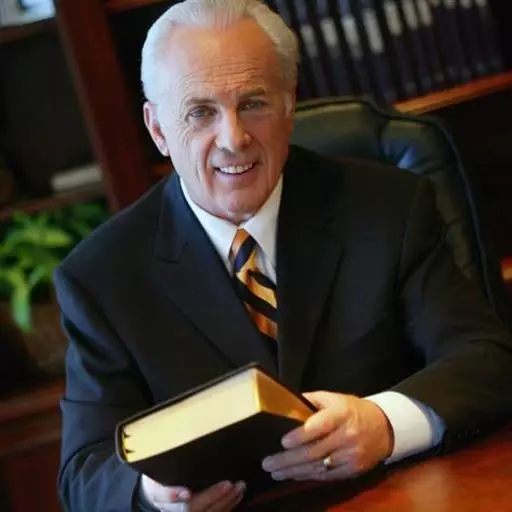
“Prayer as Worship”


There is no more natural response for the believer saved by grace than to praise and worship God in prayer. Still, for most of us, prayer probably is not as spontaneous as we’d like . . . but it’s a discipline we need to work on.
John MacArthur: Build your kingdom. That's the heart of our petition. We're not praying just about the success of our enterprise. We're not praying just about our church or our state. We are thinking about things on a national level and praying for the leadership of the nation and so forth. But that's not the sum of our prayers. In all of that, the bottom line is, Lord, just let your kingdom come.
Phil Johnson: Welcome to Grace to You with the Bible teaching of John MacArthur. I'm your host, Phil Johnson. It's been said a great man is someone who knows when to set aside the important things in order to accomplish the vital ones.
Phil Johnson: Well, that principle applies to what you pray for. You could say a great man or woman of prayer is someone who knows how to discern which issues are the most critical ones to bring to the Lord. To do that, you need to know what God cares about most and what he says should be at the top of your prayer list. Today, John MacArthur explains how you can pray with the same passion and priorities as your heavenly Father. The title of John's current study, Elements of True Prayer. And with the lesson now, here's John MacArthur.
John MacArthur: Prayer is primarily worship. It is Godward. It is not to get for me, it is to allow God to be glorified. I have to see that in my prayers. My prayers are not primarily for what I can gain, but for the glory of God. First of all, God's paternity, that is, that God is Father. Our Father, who art in heaven. This is the basis, by the way, of our boldness in prayer. We go to God because he is not our king only. He is not our monarch only. He is not our judge only. He is not our creator only, but he is also our Father.
John MacArthur: And that beautiful expression gives us the sense of access and the boldness to come intimately into His presence as a son or a daughter would come to the presence of their own father. Let's go to the second thought in this prayer, God's priority. God's priority. Verse 9, it says, Our Father who art in heaven, hallowed be Thy name. Here is the first petition. The initial statement was simply the salutation in prayer. Here is the first petition. And the essence of this petition is worship. God, the first thing I pray is that your name be hallowed.
John MacArthur: I was reading the biography of Arthur Pink, a great teacher of God's Word. One of the things that he said is very, very, very related to this, and I think practical. He said, how clearly then is the fundamental duty in prayer set forth? Self and all its needs must be given a secondary place and the Lord freely accorded the preeminence in our thoughts, desires, and supplications. This petition must take the precedence for the glory of God's great name is the ultimate end of all things. Every other request must not only be subordinated to this one, but be in harmony with and in pursuance of it. We cannot pray aright unless the honor of God be dominant in our hearts. If we cherish a desire for the honoring of God's name, we must not ask for anything which it would be against the divine holiness to bestow. End quote.
John MacArthur: So our prayers are controlled first of all by a recognition that God is Father. Secondly, they're controlled by a recognition that God's name is to be hallowed. Now, name, what does that mean? Hallowed be Thy name. That simply means all that God is. All that God is. In those days, the name of someone was, in a sense, the sum of who they were. It's still that way to some extent. My name is more than just a name, it really sums up who I am. If someone says to you, John MacArthur, there's an image of all that I am in that name. And so it is with God. God's name is the sum of all that he is. Christ's name is the sum of all that he is.
John MacArthur: The name stands for the nature, the attributes, the character, the personality of God. And so what this petition is saying is, Father, may your person, your identity, your character, your nature, your attributes, and your reputation be hallowed. Now, what does it mean to be hallowed? Well, it simply means to set apart as sacred. When we think of hallowed halls, we usually think of some cloistered halls, long robes, dismal chants, halos, musty, dim churches, morbid music, tired traditions. Hallowed means to be set apart as sacred. May your name be set apart as sacred.
John MacArthur: The word, to treat as sacred, to hallow, has a synonym, from which we get the word glory, it means to glorify or honor. Another writer, Origin, said that it also is synonymous with, which means to exalt or lift on high. Lift on high your name, exalt your name, honor your name, glorify your name. May your name be elevated as sacred. That's a very, very basic part of prayer. Lord, whatever honors you, whatever glorifies you, whatever exalts your name, whatever lifts you up. See, that's the antithesis to the kind of praying that's so popular today, which says, lift me up, give me this, give me that, make me prosper, make me successful. The whole idea is, God, may you prosper, may you be glorified.
John MacArthur: Whatever that means, the name of God, Elohim, creator, the name of God, El Elyon, God Most High, Jehovah, meaning I am that I am. Jehovah Jireh, the Lord will provide. Jehovah Nissi, the Lord our banner. Jehovah Rafa, the Lord that heals. Jehovah Shalom, the Lord our peace. Jehovah Raah, the Lord our shepherd. Jehovah Sidkenu, the Lord our righteousness. Jehovah Sabaoth, the Lord of hosts. Jehovah Shama, the Lord is present. Jehovah Makadishkim, the Lord who sanctifies. All that he is is wrapped up in all of his name. And when we say, hallowed be Thy name, we are saying, God, be glorified. The purpose of every prayer you ever offer is that God be glorified, exalted, honored, lifted up. Whatever way he can be.
John MacArthur: And this, by the way, is a protection against abusing the sentimentalism of father. To say Our Father and Our Father alone might be a little bit dangerous. You might overuse that idea of Father and then Abba Father, Papa, Daddy, you might understand that intimacy, but not understand the balancing and the balancing is, yes, you are my loving Father, but hallowed be your holy name. No Jew would ever say Father without adding something. So in the prayers of the Jews, here are some examples: O Lord, Father, and ruler of my life. O Lord, Father, and God of my life. O Father, king of great power, Most High, Almighty God. And the famous daily prayers of the Shema Esra, O Father, O King, O Lord. The Fatherhood always balanced with those which represent his awesomeness. If you only know God as Father, you might lose a little bit of balance. God is also your king, and he has a holy place, and he deserves that holy place, and his name is to be lifted up and exalted in every way.
John MacArthur: Now, how do you do that? How do you pray in such a way as to exalt God's name? By simply praying for his glory to be done, for his glory to be accomplished, for his honor. My prayer is, God, that you would do this if it brings you glory. You might be praying about a child, you might be praying about a situation in your family, you might be praying about a job, you might be praying about a physical problem. Lord, whatever will bring you glory, do that. Do that. Whatever will lift your name, whatever will cause you to be glorious, to be exalted, whatever will draw people to see you as the true God. That's the issue.
John MacArthur: And I tell you, in this contemporary name it and claim it theology, that is not the true God. The kind of God who is a utilitarian genie who has to knuckle under to everybody's commands, is not the God of the Bible, and you have not glorified his name, exalted his name, and lifted him up, you've pulled him down. The error of this is to strike a blow at the very nature of God. It is to take God's name in vain. It is to be irreverent. It isn't just bad theology, it is gross irreverence, fearful irreverence. As Luther's catechism says, how is God's name hallowed among us? Answer, when both our doctrine and our life are truly Christian. In other words, God is glorified when my life reflects the truth of God's Word. When my doctrine reflects the truth of God's Word. In other words, I believe rightly about him and I live rightly in submission to him.
John MacArthur: So when I say, hallowed be Thy name, I'm saying, God, glorify yourself. And what do I mean by that? Put yourself on display. And how is he going to do that? Through my life. Put yourself on display through my life, whatever that means to me, in life or in death, in poverty or in wealth, in sickness or in health. Whatever it is, put yourself on display through my life. That's that prayer. Gregory of Nyssa, many years ago in the early church, preached a sermon on the kind of person who hallows God's name, who lives to the glory of God, who lives to honor God, to lift God up. And he said this of that person: He touches the earth but lightly with the tip of his toes. For he is not engulfed by the pleasurable enjoyments of this life, but is above all deceit that comes by the senses. And so even although in the flesh he strives after the immaterial life. He counts the possession of virtues the only riches, familiarity with God the only nobility. His only privilege and power is the mastery of self so as not to be a slave to human passions. He is saddened if his life in this material world be prolonged. Like those who are seasick, he hastens to reach the port of rest. That's the way to live. We're not living here to get prosperous in this world.
John MacArthur: And the one who lives to the glory of God, the one who hallows the name of God, wants God to be glorified, God to be exalted, and he is more concerned to pray about the glory of God than he is about his own situation. His own glory, his own prosperity. He wants only to strive after the immaterial and not be engulfed, he said, by the pleasurable enjoyments of this life. The one who glorifies God is more consumed with the things that dishonor God, more consumed with what's going wrong in terms of the world and how it treats God than how he is being treated. That's why Psalm 34:3 says, O magnify the Lord with me and let us exalt his name together. That's what prayer is all about.
John MacArthur: Thirdly, prayer is not only a matter of recognizing God's paternity and priority, but God's program. Verse 10 says, Thy kingdom come. Thy kingdom come. Here is a prayer for the advancement of God's kingdom. This marks every true man and woman of God through the history of the kingdom. The greats of God's kingdom, the saints of the ages, have been people who greatly were concerned about the advancement of God's kingdom, not the building of their own empire. Not the padding of their own pocket.
John MacArthur: I was asked the other day, how to evaluate a very well-known, a very high-profile Christian leader in America, a man whom I respect as a person. He said, how do you evaluate that man? I said, well, I think there are two primary ways in which I evaluate the character of a man I don't know personally. Number one way is, how long do good godly people stay with him? In other words, he's at a level of leadership where he has a lot of folks working around him. How long do good and godly people stay with him? That's the measure of his character. If good and godly men stay with him for a long time, that means good and godly men find in him a man of like mind. And secondly, how much of his success winds up in his own pocket?
John MacArthur: If after much success he appears not to be having indulged himself excessively, the indication is that his preoccupation is not for building his bank account but for building the kingdom. Those are the kinds of questions you have to ask. In my prayer life and your prayer life, the bottom line is not how's it going to help the empire of John MacArthur, the enterprise of John MacArthur, the efforts of John MacArthur, but how is it going to help the kingdom expand? That's the bottom line. In fact, the Talmud said, that prayer in which there's no mention of the kingdom of God is no prayer at all. How's it going to advance the kingdom? Build your kingdom. That's the heart of our petition. We're not praying just about the success of our enterprise. We're not to be praying just about our little family and its particular needs. We're not praying just about our church or our state. We are thinking about things on a national level and praying for the leadership of the nation and so forth. But that's not the sum of our prayers. In all of that, the bottom line is, Lord, just let your kingdom come. That's all. That's the big picture. Not our petty kingdom, your kingdom.
John MacArthur: That's a perspective that's very helpful in the ministry. So that you don't begin to pray only for your own little thing, your own little world, your own church, your own radio ministry, your own college and seminary, your own little enterprises. But what you really pray for is that the kingdom would come, however, and in what way and through whomever God would want it to come. What do we mean by that? What is the kingdom? That's a common phrase. First of all, it's simple enough to say, the kingdom is simply the sphere of salvation in which Christ rules. Yes, there's a sense in which God is the universal king of the whole universe and he rules the whole universe all the time, always has, always will. But what he's talking about here is not the universal kingdom, so much as he's talking about the kingdom of Christ that rules in the hearts of the redeemed. It's really a prayer for salvation. Of lost people. Let your kingdom come through conversion of lost souls. The kingdom, Jesus said, is in your midst. It's in you. The kingdom is the sphere where Christ rules. And where does Christ rule? He is the ruler in the heart of every one who's put their faith in him, right? He is my Lord and king, he's your Lord and king, that's his kingdom.
John MacArthur: His kingdom will come to earth in the millennium. His kingdom will fill the universe in the new heaven and the new earth. But even then, the kingdom will still be the sphere of his rule in the hearts of men through salvation. And the prayer is this, whatever advances your kingdom, oh God, whatever advances the elements of the kingdom, mentioned in Romans 14:17, the kingdom of God is righteousness, peace, and joy in the Holy Spirit. Whatever will bring Christ to set up his kingdom on earth, to be all glorious. Let it come. In other words, this this name it and claim it theology is so myopic. It's so self-indulgent, it's so small in its thinking. All it sees is me and what I want. And it has no thought for the greater cause. Lord, advance your kingdom, if that means I lose everything. That's the issue.
John MacArthur: Francis Havergal beautifully wrote the following verse to Christ, O the joy to see Thee reigning, Thee my own beloved Lord. Every tongue thy name confessing, worship, honor, glory, blessing, brought to Thee with one accord. Thee my Master and my friend, vindicated and enthroned, unto Earth's remotest end, glorified, adored, and owned. Now, there's the prayer of a true saint. I'm not concerned about me. I want you to be honored and you to be glorified and your kingdom to be extended to the hearts of men across the earth, so that everywhere you are glorified, adored, and owned. That's a prayer as Jesus taught us to pray. The centrality of prayer then is worship. We go to a loving Father, but that means we accept that he knows best and in obedience respond to him.
John MacArthur: And in our prayers, the first thing to be concerned about is his glory. The second thing to be concerned about is the extension of his kingdom, and the third thing is his will be done, God's purpose. Verse 10, Thy will be done in earth as it is in heaven. We know his will's done in heaven, right? Because everybody who didn't do his will in heaven is what? Out. The fall of angels, they were kicked out. Thy will be done. That means, God, do your purpose. I never pray a prayer without saying, Lord, do your will. And I don't, I don't feel hesitant in praying that way. I saw all I want. I don't want anything that isn't God's will. Somebody said to me, what would happen if if all of a sudden you had to go off all the radio stations? Fine. If that's God's will, that's fine. I don't mind. I don't need any more to do and doing less might be kind of nice.
John MacArthur: And they pursued the question. I've been asked that before, what would happen if the Lord just took away your ministry? Fine. If the Lord wants to take it away, he can take it away. I'll borrow from Job, the Lord gave, the Lord takes away, what? Blessed be the name of the Lord. He doesn't need me. And if he decides to make a change, that's fine. Because I don't, I don't want to do anything that isn't his will. I don't have any personal agenda. I'm often asked, what are your goals for ministry? I really don't have any. I just want to wake up in the morning and do what I have to do that day and trust God that he's leading me. But I don't have any big agenda of things to try to accomplish. I just want to do God's will and I want to stay in the position of doing it. That's not something I'm resigned to. There are some people who say, thy will be done, only they say it like this, thy will be done. Bitter resentment. I know you're going to do what you're going to do. Omar Khayyam wrote that famous little poem, but helpless pieces of the game he plays, speaking of God. We're helpless pieces of the game he plays, upon this checkerboard of nights and days, hither and thither moves and checks and slays, and one by one back in the closet lays. Tragic view of God.
John MacArthur: So there are those people who grit their teeth in bitter resentment and say, thy will be done fatalistically. That's not what we mean by that. Then there are those passive people who just sort of resign, well, if that's what you're going to do, God, so be it. They go off in a corner and suck their spiritual thumb and pine away and moan and groan because of how tragic it is. And then there are those whose whose thy will be done comes out of their theology. They're the hyper Calvinist types, you know. Who think God's bigger than them, so what's the use anyway? Everything's going to be the way it's going to be. It's another kind of fatalism. The first is sort of a philosophical fatalism. The second is sort of a poor me fatalism, and the third is is kind of a theological fatalism. But I don't believe saying, thy will be done, means we just give up. I like what David Wells said. He said, in essence, petitionary prayer is rebellion. It's not rebellion against God, it's rebellion against the world and its fallenness, the absolute and undying refusal to accept as normal what is pervasively abnormal. It is in this, its negative aspect, the refusal of every agenda and every scheme, every interpretation that is at odds with the norm as originally established by God.
John MacArthur: And I can pray rebelling against the way things are, rebelling against evil, rebelling against sin, rebelling against God being dishonored. I'm not going to accept that. I'm not going to strike a truce with what is wrong. I'm not going to even lose heart. I'm going to be like the souls under the altar, how long will the Lord, how long until you're going to do something? Lord, glorify your name, exalt your name. I can pray to God, do this, Lord. I plead with you to do this because it dishonors you. Change this circumstance. Bring glory to yourself. Bring the honor to your name. I have no problem with with that, being bold. But at the same time, whatever God brings, I have to accept. And I do not accept it bitterly, and I do not accept it passively, and I do not accept it simply as some theological thing. I accept it as his will, and not only that, it's his best. For now, and you say, well, sometimes that doesn't seem right. Sure, because you can't see everything, right? You can't see everything. You just don't have the big picture.
John MacArthur: Even though God is my Father and loves me, and even though if I ask him for bread, he won't give me a stone, and if I ask him for fish, he won't give me a snake, even though God has resources unlimited to give at my disposal, those things are given when they will give him glory, when they will extend his kingdom, and when they will fulfill his will. And so my prayers are always controlled by those things. That's how Jesus taught us to pray. So the end of prayer is not so much tangible answers. The end of prayer is a deepening life of dependency. And the end of prayer is a greater sense of being a part of God's kingdom. And what God is doing. Prayer is where I sign in to get on duty, to do what God wants to do for his own glory. Now, when I've gotten that all in order, then I can say, Lord, give us this day our daily bread. Then I can ask for my needs, and nothing more than needs are there. And Lord, forgive us our debts or sins as we forgive others.
John MacArthur: First, I ask for my needs to be supplied, secondly for my sins to be forgiven, and thirdly, lead us not into temptation, deliver us from evil. The third thing I ask is, Lord, protect me. We pray for needs, we pray for cleansing, we pray for his protection. But all within the context of his glory, it ends in verse 13, his kingdom, his power. That's the focus. And so prayer is worship. It's worship. And anything less than a worshiping prayer that gives God the right to be God, glorify his name, extend his kingdom and do his will, is not prayer at all. It may be called prayer, it is not prayer. It is merely an exercise in self-indulgence. And anything that assumes, any theology that assumes that God has to give you what you demand, is taking his name in vain, is irreverent, and is dishonoring God immensely by assuming him to be other than he is. And as I said at the beginning, the error of this theology is that this theology makes man God and God man. Man becomes the sovereign, God the servant. Not so.
John MacArthur: So when we pray, we pray in this way, Jesus said, that God might be honored. Let's bow together. Father, we thank you for such a clear word to us. We never want anything that isn't your will for us. We don't understand all the mystery of that. And we do believe that the effectual fervent prayer of a righteous man avails much. We believe you answer prayer. And if an unjust judge when continually beseeched would do right, how much will a just savior do for those who love him? And if a man asleep will finally open the door to someone who knocks and knocks and knocks, even though he opens it out of anger, how fast will you provide what we need, who are a loving Father?
John MacArthur: Yes, Lord, we believe our prayer will be answered. Even as we read in the Psalms, I cried, and you answered me. But Lord, help us to know and to pray that the answer must be in line with the sacredness of your name, the extension of your kingdom, and the wonderful reality of your will being fulfilled. To that end, we pray that your name would be made sacred, lifted up, exalted, and glorified. Your kingdom would be extended as some would even today open their hearts to Christ. Your will would be done. Thank you for the confidence, Lord, that when we put you in the rightful place, our needs will be met, cleansing will be provided, protection and guidance will be our lot. We could ask nothing more, and do not ask any more than that. Whatever good gifts you choose to give us, we accept with thanksgiving. For Jesus' sake, we pray these things. Amen.
Phil Johnson: You're listening to Grace to You, the Bible teaching ministry of John MacArthur. John's current series is titled Elements of True Prayer. Well, friend, as you think about the fundamentals of prayer and the life-changing benefits of obeying the biblical command to pray, let me remind you about John's book called Alone with God. In it, John takes an in-depth look at the model for prayer that Jesus gave his disciples. And he shows you how following the Lord's example can transform your prayers and bear fruit in your life. To order Alone with God, contact us today. Alone with God costs $10.50 and shipping is free. To get your copy, call 800-55-GRACE or visit our website gty.org. The title again, Alone with God. Pick it up today and make sure you're praying with the right priorities, the ones Jesus himself spelled out to his disciples. Again, to order, call 800-55-GRACE or shop online at gty.org. Now, I trust that the series John wrapped up today on Elements of True Prayer has strengthened your confidence to come before the throne of grace. If so, we would love to hear about that. Let us know how you've benefited from this study. You can email us here at letters@gty.org. That's letters@gty.org. Or you can write to Grace to You, PO Box 4000, Panorama City, California, 91412. Now for the entire Grace to You staff, I'm Phil Johnson. Remember to watch Grace to You Television this Sunday on Direct TV Channel 378. And join us again tomorrow when John MacArthur shows you a pattern for prayer that can help you pray boldly and often. It's another 30 minutes of unleashing God's truth, one verse at a time, on Grace to You.
Featured Offer

New to Grace to You? Get a free copy of this verse-by-verse study guide from John MacArthur.
Past Episodes
- If God’s Will Is So Important, Why Can’t I Find It?
- Insight into a Pastor’s Heart
- Is the Bible Reliable
- The Anatomy of the Church
- The Beginning of the End
- The Best of Christmas
- The Divine Drama of Redemption
- The Doctrines of Grace
- The Jesus of Christmas
- The Love God Hates
- The Pillars of Christian Character
- The Promise of Christmas
- The Road to Nowhere
- The Sinfulness of Sin
- The Sufficiency of Scripture
- True Happiness

Featured Offer
New to Grace to You? Get a free copy of this verse-by-verse study guide from John MacArthur.
About Grace to You
About John MacArthur
Contact Grace to You with John MacArthur
letters@gty.org
http://www.gty.org/
Grace to You
P.O. Box 4000
Panorama City, CA 91412
1-800-55-GRACE
1-800-554-7223