

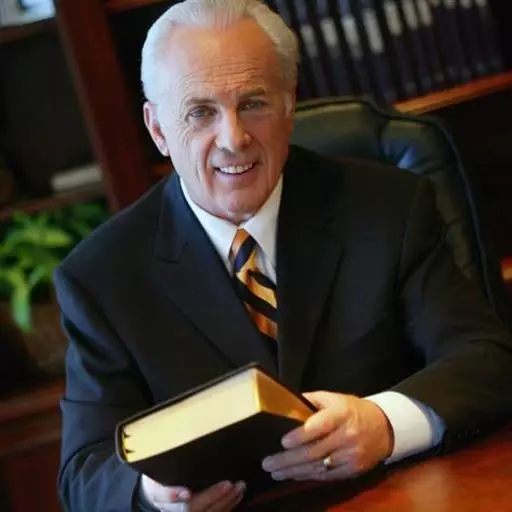
“Prayer and the God Who Hears You”


For over five decades, GRACE TO YOU has been connecting God’s people like you with verse-by-verse Bible teaching that transforms lives and strengthens families and churches.
John MacArthur: What do we mean when we, when we say hallowed be your name? We're not, we're not making God holy. He's already holy. We're simply recognizing it. We are treating Him as holy. We are acknowledging His holiness. We're affirming that we recognize His holiness. And that's essential as we come to Him in prayer.
Phil Johnson: Welcome to Grace to You, featuring the Bible teaching of John MacArthur. I'm your host, Phil Johnson.
Scripture tells us that God is holy, absolutely pure. So what good is it to pray that God's name be hallowed? Can the prayer of a sinner add anything to a holy God?
John MacArthur answers that today as he looks at a marvelous example of prayer in Scripture, the model prayer that Jesus taught His disciples. Word by word it contains profound lessons for your prayer life. John will continue unpacking those lessons today, focusing particularly on what it means to pray for God's name to be glorified and for His will to be done. And now with the lesson, here's John MacArthur.
John MacArthur: I would invite you to turn in your Bible to Luke chapter 11. Luke chapter 11, verse one. And it came about that while He was praying in a certain place, after He had finished, one of His disciples said to Him, "Lord, teach us to pray, just as John also taught His disciples."
And He said to them, "When you pray, say, 'Father, hallowed be Thy name, Thy Kingdom come. Give us each day our daily bread, and forgive us our sins, for we ourselves also forgive everyone who is indebted to us and lead us not into temptation.'"
In this text of Luke 11, we come to Jesus' specific instruction on how to pray. And the question that launches it is at the end of verse one, "Lord, teach us to pray. Teach us to pray." And so to that, Jesus responds, "When you pray," No set time, no set posture, "Whenever you pray," present subjunctive, "Say."
First thing, "Father." So here is a model, a pattern, a format, a framework for prayer that begins with addressing God in a way that the Jews really never did. Collectively they did, but individually they did not. This invocation says that you have the right to approach God, the Creator, the sovereign, eternal, holy One, and to call Him, Papa.
Well, let's just call that God as source. That's where we start. But even more intimately, God as Father. Secondly, I want to see the next statement here, "hallowed be Thy name." Let's just say that's God as sacred. God as sacred. What do we mean when we, when we say, "hallowed be Your name"? We're not, we're not making God holy. He's already holy. We're simply recognizing it. We are treating Him as holy. We are acknowledging His holiness. We're affirming that we recognize His holiness.
And that's essential as we come to Him in prayer. So this is a protection against sentimentalism. This is a protection against overuse and abuse of Abba, which is so prone to be sentimentalized.
When you go back and find some of the Jewish prayers, some of the Jewish prayers that have been used historically and are still used today, you find, and I listed all kinds of these once and I just copied down a few of them. Here's how a Jew prayed in the past, and they still do, if you ever are in an orthodox environment or even a conservative environment, they will pray like this, "O Lord, Father and ruler of my life."
They just never end with "Father." Or, "O Lord, Father and God of my life." Here's another one, "O Father, King of great power, Most High, Almighty God." Some of you have heard of the Shemoneh Esrei, which are a series of 18 prayers. They all start this way, "O Father, O King."
And on the day of the Atonement, there are 10 penitential prayers that Jews pray. They are called the Avinu Malkeinu. And in those 10 prayers, they say this, "Our Father, our King," 44 times. The balance between Abba and God's holiness. They guarded carefully against sentimentalizing God. And so must we.
When we hallow God, we are affirming that He is set apart from everything common, that He is set apart from everything profane, that He is to be prized and esteemed and honored and reverenced and adored and glorified and praised and worshipped as the one who is infinitely blessed. So easy to say hallowed be your name and have absolutely no thought.
The truth is, when you pray, yes, you go into His presence as Abba, but immediately you're pulled up short to the realization that the absolute priority place in your heart belongs to the glory and the honor of God, and whatever it is that you're bringing in, it is directed at that. Jesus says, "Father, glorify your name." That's, that's the model. That's what this is saying.
You hallow His name when you believe He is who He is. Hebrews 11:6, "Him that comes to God must believe that He is, must believe that He is who He is." And who He is is clearly revealed in all the wonder of the names that make up His name. It was Origen who wrote, "The man who brings into his concept of God ideas that have no place there takes the name of the Lord God in vain."
Origen was right. If you're going to go into the presence of God, you go into the presence of the God who is the God He is. We hallow His name when we worship the God who is the God He is. And the God He is also includes that He is the God and Father of our Lord Jesus Christ. We hallow God's name also when, in view of who He is, we desire His glory to the extent that we come into His presence first and foremost to submit to Him.
It was Luther in the catechism who said, "How is God's name hallowed among us?" "When both our doctrine and our life are Christian." Don't say hallowed be Thy name and then go out and dishonor God. The prayer is not just that God's name be hallowed in Him, or that God's name be hallowed in our words, but that God's name be hallowed in us. So what I'm saying is, Father, I come to you with my need as the source, I come to you thanking you for intimacy, but I come to you to hallow your name, that is to submit myself to that which brings you glory and honor.
Augustine said, "It's not that God's name is not already holy, but we pray that men may regard it as holy. And that God may become so near and dear to us that we esteem nothing more reverent than Him."
Prayer begins clearly with us being on our face. The prayer that God would use His fatherly goodness and His eternal riches at His disposal on behalf of His people to glorify Himself for us and through us. Romans 11:36, "For from Him and through Him and to Him are all things. To Him be the glory forever. Amen."
There's a next phrase, and if you're wondering if we're going to get to the full prayer, probably not, but that's okay. The third element here is "Thy Kingdom come." This looks at God as sovereign. That's critical in your prayers. You come to God as a loving Father who's the source of everything you need, you come to God as sacred, absolutely holy and pursuing His glory, and you come to God as utterly and completely sovereign.
Immediately after the celebration of intimacy and the celebration of worship comes submission. "Do whatever advances Your kingdom." That's the point. "Do whatever advances Your kingdom." Here I am, Lord, I have one prevailing request, "Do whatever advances Your kingdom." God does what He does because He purposes to do it, but the means by which He does it is our prayer. Just as God saves us because He determined to save us, but the means by which He saves us is our faith.
Do whatever advances Your kingdom. The Talmud says, "That prayer in which there is no mention of the kingdom of God is no prayer at all."
The vain repetition of the Pharisees and the scribes somehow seeking to badger God into doing what they wanted is a far cry from what our Lord is telling us here. The kingdom of God was a central matter in His preaching. I don't want to get too technical, let's make it real simple. The kingdom of God is the sphere over which God rules, right? And there are two elements of it. There's the universal kingdom, that is to say God is the ruler of the entire universe, but there is the redemptive kingdom, and that is to say, that is the kingdom of those over whom God rules by virtue of salvation.
And so what we say is, "God, whatever it is that brings the fullness of Your redemptive purpose to pass, do that." Jesus came preaching the kingdom, the good news of the kingdom. He was sent by God, he said, "to preach the kingdom, to announce that the kingdom was in their midst. The kingdom was available, the king was gathering His people. He told them how to come into the kingdom. He told them what it required."
He said the kingdom already existed because Abraham, Isaac, and Jacob, and all the prophets are in the kingdom. And He said in Luke 17:21, "And the kingdom's in your midst."
And He was talking about the salvific kingdom, the realm of salvation over which God rules. And we really are saying, "Lord, I just want you to do what builds Your kingdom and brings You glory through salvation." You're praying for the advance of the gospel. You're praying for the salvation of the lost. "Let Your kingdom come down."
In the prayer in Matthew 6, which I purposely didn't use because I wanted to use this one to make it clear to you that this is not a formula, it's a structure, and that's why the two are not the same. But in that prayer in Matthew 6, He says, "Thy kingdom come, Thy will be done on earth as it is in heaven."
What's going on in heaven? What's going on up there? The exaltation of God, the worship of Christ, and the dominance of holiness. It's where God is praised and worshipped by the saints. And this is a prayer to bring that down. Bring heaven down. That's why I've been saying for years, the church is not to be the place where the world comes in, it's to be the place where heaven comes down. That's what we're praying for.
"Bring your heavenly kingdom down. Build Your kingdom. Exalt yourself, exalt your Son." And the true church is the answer to this prayer. You're the answer to this prayer.
I think you would, you would say that immediately if I said to you, "Would you want to pray something that was contrary to the redemptive purpose of God?" No.
Well then this is how you line up. God, before I ask anything for myself, you know there are no personal requests yet. Have you noticed that? Okay. Before you ever get to that, you've got to go through this. This is the structure. By now, you're so lost in wonder, love and praise, your next words are probably gonna be, the rest I leave to you.
I mean, you're almost there, right? There is a, there's an utter yielding up at this point. "Glorify yourself. Lift up the Son that He may draw Your own. Build Your kingdom. I want You glorified. I want Christ exalted." Paul understood this. He gave his life, he said, purposefully so that people would believe. He said to the Corinthians, "And their praise would redound to the glory of God."
I mean, his whole life was given to add one more voice to the Hallelujah Chorus that God might be glorified. You're really praying redemptively here for the purposes of salvation to be fulfilled. In the First Timothy chapter 2, it says, "God our Savior desires all men to be saved and come to the knowledge of the truth."
And this is God's purpose that those whom He has called would come to salvation. What's our part? I entreat, or I urge that entreaties, prayers, petitions, thanksgiving, be made on behalf of all men, for kings and all who are in authority, in order that we may lead a tranquil and quiet life in all godliness and dignity. This is good and acceptable in the sight of God, our Savior, who desires men to be saved. What are we praying for? We're praying, we're not praying for the political wisdom of people, we're praying for their salvation.
Pray. Say, "Well, God already knows what He's gonna do." But again, the means He uses to do what He does is our prayers. Daniel was praying because God had already revealed what He was gonna do. And yet I want to add something here. You can't cave in at this point. You can never really make a truce with evil. You can never be indifferent to the lostness of the world. I mean, Jesus is weeping over the city of Jerusalem. Paul says if I, if I could, I literally would wish myself accursed for the sake of my brethren.
You can never be resigned to a passive attitude. There can never be some kind of gray acceptance of the way things are. You can never let your theology stifle your zeal for intercession. David Wells wrote, "What then is the nature of petitionary prayer?" He said this, "It is, in essence, rebellion. It is rebellion against the world and its fallenness. The absolute and undying refusal to accept as normal what is pervasively abnormal. It is, in this, its negative aspect, the refusal of every agenda, every scheme, every interpretation that is at odds with the norm as originally established by God. As such, it is itself an expression of the unbridgeable chasm that separates good from evil. It is the declaration that evil is not a variation on good, but its antithesis. Or to put it the other way around, to come to an acceptance of life as it is, to accept it on its own terms, which means acknowledging the inevitability of the way it works, is to surrender a Christian view of God. This resignation to what is abnormal has within it the hidden and unrecognized assumption that the power of God to change the world, to overcome evil by good, will not be actualized."
What he's saying is, we have to rebel. We rebel against evil in the world. We rebel against the dishonor of God and the dishonor of Christ. I remember reading about Henry Martyn, the missionary in India, who first came there, went to a temple where the Hindus were worshipping with sacrifices, and it was a vile experience. And he ran from that experience. And he went to his room and took his journal and wrote this, "I cannot endure existence if Jesus is to be so dishonored."
I think we understand that. We never come to a truce with that. It isn't that we distrust the purposes of God, it is that we share the passion of God. It is that we are prompted by the Spirit of God to feel the way He feels. Psalm 69:9, the psalmist writes, "Zeal for Your house has eaten me up."
The reproaches that fall on You have fallen on me. What a statement. He's saying, "God, when You're dishonored, I feel the pain." And Jesus experienced that, didn't he? He went into the temple and he cleaned the place out. And in a sense, he said, "I'm the fulfillment of Psalm 69," for he quoted it, "Zeal for Your house has eaten me up."
But what is the passion of that prayer? The passion of that prayer is that God would not be dishonored, that Christ would not be dishonored, that the Kingdom would come, that salvation would come, that the Lord would build His church, that He would be glorified.
This turns prayer into worship of the highest kind, from the heart, a passion for His glory. When prayer is used as a device for eliciting health and success and other favors from some celestial vending machine, is this Christianity? I think not.
Jim Packer said, "The prayer of a Christian is not an attempt to force God's hand but a humble acknowledgement of helplessness and dependence."
Well, verse 3, we get to our side of this prayer. "Give us each day our daily bread, and forgive us our sins, for we also forgive everyone who is indebted to us and lead us not into temptation." Once you put God in the rightful place, you can get to you.
We don't have time to develop all of this, but suffice it to say, each of these requests is tied to a promise. Each of them. The Old Testament says, "I've never seen God's people begging," what? Begging bread. The New Testament says, "My God shall supply all your needs according to His riches in Christ Jesus."
God already promised to give us everything we need. "Seek first the Kingdom and His righteousness, and all these things shall be added to you." And in Paul's letter to the Corinthians, he says, "Don't worry about giving. Don't worry about giving generously, sow bountifully, reap bountifully, and God will give you bread for your food."
So why are we asking? Because you always ask consistent with divine promise. And the second one, "forgive us our sins," that is based on a promise. "If we confess our sins, He's faithful and still righteous to forgive our sins." "Do what you said you were going to do." Meet our physical needs. Sustain our lives until our lives fulfill your full purpose. Forgive our sins the way you said you would. Our violations of Your holy law. Forgive the debt we've incurred with You. As we desire to do the same for others.
He knew God was his supplier. He knew God was his Savior. He, being any believer who comes to the foot of the, the cross. She knew God was the source of everything. Every good and perfect gift comes down from the Father of Lights in whom there's no variableness, no shadow of turning. We all know that.
God is not only our supplier and our Savior, He's our safety. We know that. The end of verse four, "lead us not into temptation." Is God gonna lead us into temptation? With a view to exposing us to the evil one, as Matthew 6 says it. Is He gonna purposely lead us into a temptation so that we can fall? No.
God doesn't tempt. James 1, does he? God doesn't tempt. He allows us to go into peirasmos, trials, but He allows trials so we can be strengthened, not so that we can be crushed. We know He's gonna feed us. We know He's gonna forgive us and we know He's gonna protect us and direct us in paths that produce righteousness, not sin. So what we're really praying for is what He's already promised.
It's a very simple prayer. "Lord, You're the priority. And when it comes to me, all I ask is that You fulfill Your promise on my behalf to sustain my life for Your glory, to forgive my sin for Your glory, and to protect me from the evil one for Your glory." So whatever it is that you do about this illness or whatever it is that you do about this dilemma or whatever it is that you do about the suffering and the pain. Lord, may it honor You and may it manifest the fulfillment of Your promises. Let's bow together in prayer.
Lord, so much more needs to be said about this, but we do come to You as our gracious and loving Father. We do hallow Your name. We seek Your glory. We remember the words of our Lord Jesus, "Whatever you ask in My name, that will I do in order that the Father may be glorified in the Son."
It's really about You and then about us, only in so far as what happens to us glorifies You. May we pray as worshippers always for Your glory. We thank You for this access. This open door. And may we live in this constant communion which You've made available to us. Be glorified, O God, through our lives as You hear and answer our prayers. We pray in Your Son's name. Amen.
Phil Johnson: You're listening to Grace to You, featuring the Bible teaching ministry of John MacArthur. The title of John's lesson today, "Prayer and the God Who Hears You." Now, when it comes to praying, there's a bit of a balancing act. On one hand, God is the sovereign ruler of the universe, and we need to remember that when we come before Him. But as John has been pointing out, God is also our loving Father, and as His children, we can pray to Him with confidence.
To help you keep that balance and pray in a way that pleases Christ, let me remind you of John's book called "Alone with God." This helpful resource looks at Jesus' masterful teaching on prayer. In what is commonly called the Lord's Prayer, and it will enrich your own prayer times, and it makes a great gift for those you love. Order John's book "Alone with God" when you get in touch today. Call 800-55-GRACE, or visit our website gty.org. The cost for "Alone with God" is $10.50, shipping is free.
Again, to order John's book called "Alone with God," call 800-55-GRACE, or visit gty.org. And friend, a reminder about the impact you can have when you support Grace to You financially. Every day this broadcast is heard on radio stations around the world in communities like yours. Depart with us and to help reach people with biblical truth that changes lives. Mail your tax-deductible gift to Grace to You, Box 4000, Panorama City, California, 91412. You can also make a one-time donation or set up a convenient recurring donation online at gty.org or when you call 800-55-GRACE.
Now for the entire Grace to You staff, I'm Phil Johnson. Thanks for joining us today. And remember to watch Grace to You Television this Sunday on Direct TV channel 378, and be back Monday as we begin John MacArthur's study called "The Sinfulness of Sin." A series designed to show the magnitude of our sin and the incomparable breadth of God's love and forgiveness. It's another half hour of unleashing God's truth, one verse at a time on Grace to You.
Featured Offer

New to Grace to You? Get a free copy of this verse-by-verse study guide from John MacArthur.
Past Episodes
- If God’s Will Is So Important, Why Can’t I Find It?
- Insight into a Pastor’s Heart
- Is the Bible Reliable
- The Anatomy of the Church
- The Beginning of the End
- The Best of Christmas
- The Divine Drama of Redemption
- The Doctrines of Grace
- The Jesus of Christmas
- The Love God Hates
- The Pillars of Christian Character
- The Promise of Christmas
- The Road to Nowhere
- The Sinfulness of Sin
- The Sufficiency of Scripture
- True Happiness

Featured Offer
New to Grace to You? Get a free copy of this verse-by-verse study guide from John MacArthur.
About Grace to You
About John MacArthur
Contact Grace to You with John MacArthur
letters@gty.org
http://www.gty.org/
Grace to You
P.O. Box 4000
Panorama City, CA 91412
1-800-55-GRACE
1-800-554-7223