
Our Vocation: Lay Ministry


To live a Christian life is much more transformative than just trying to live better.
If you’re a Christian, you are a living stone in the temple of the Holy Spirit, and you are a holy priesthood called to do sacrifices to the Lord, because you’re related to the cornerstone, Jesus Christ. Now that’s quite an image. What does it all mean?
Let’s unpack that under three headings: 1) what we are called to be, 2) what we’re called to do, and 3) how we can be enabled and empowered to do it.
This sermon was preached by Dr. Timothy Keller at Redeemer Presbyterian Church on June 29, 2014. Series: Following Jesus. Scripture: 1 Peter 2:4-10.
Today's podcast is brought to you by Gospel in Life, the site for all sermons, books, study guides and resources from Timothy Keller and Redeemer Presbyterian Church. If you've enjoyed listening to this podcast and would like to support the ongoing efforts of this ministry, you can do so by visiting https://gospelinlife.com/give and making a one-time or recurring donation.
Narrator: You're listening to the Gospel in Life podcast. What does authentic spiritual growth actually look like? Writing to early believers, Peter outlines several qualities of a life that looks more and more like Christ's. Today Tim Keller takes a closer look at how we can develop this in our own lives and how the resurrection of Jesus makes true lasting transformation possible.
Guest (Male): The Scripture reading is First Peter chapter two, verses four through 10.
As you come to him, the living stone, rejected by humans but chosen by God and precious to him, you also like living stones, are being built into a spiritual house to be a holy priesthood offering spiritual sacrifices acceptable to God through Jesus Christ. For in scripture it says, see, I lay a stone in Zion, a chosen and precious cornerstone. And the one who trusts in him will never be put to shame.
Now, to you who believe, this stone is precious, but to those who do not believe, the stone the builders rejected has become the cornerstone. And a stone that causes people to stumble and a rock that makes them fall. They stumble because they disobey the message, which is also what they were destined for. But you are a chosen people, a royal priesthood, a holy nation, God's special possession, that you may declare the praises of him who called you out of darkness into his wonderful light.
Once you were not a people, but now you are the people of God. Once you had not received mercy, but now you have received mercy. The Word of the Lord.
Tim Keller: The passage you just had read is from First Peter. We've been looking in these weeks after Easter at what it means to live the Christian life in the books of First and Second Peter. And today we again come to one of those themes that is crucial to understand what it means if you say you're a Christian, what it means to live a Christian life.
To live a Christian life is way more than just turning over a new leaf, kind of like New Year's resolutions, trying to live a little better. No, no, it's much, much more transformative and radical than that. And the only way we're going to come to grips with what it means to live a Christian life is to look at some of these remarkable themes and concepts, especially that we find in these two books. And today we get to the one, well, it's several, but they're very, very linked. And we're going to see that if you're a Christian, you are a living stone in the temple of the Holy Spirit. You are a holy priesthood called to do sacrifices to the Lord, because you're related to the cornerstone Jesus Christ. Now, that's an image. Is it temple imagery, priesthood, cornerstone, what does it all mean? Let's break that down. I want to unpack that.
So let's do it under these these sort of three headings. What we're called to be, what we're called to do, and how we can be enabled and empowered to do it. What we're called to be? A spiritual house, a temple. What we're called to do as priests of as a priesthood of all believers offers acceptable sacrifices. And how we're going to be enabled to do that? You've got to relate to the cornerstone. Come to him, the living stone. Okay, let's first of all. Here's what it means to be a Christian, among many other things. It means as we see right here, it means that you are like living stones are being built into. It's a word that means to be fitted together, to be built into a spiritual house, a house of the Holy Spirit.
We're being made a temple. Now, let me give you a summary of the entire Bible. Okay? Okay, set your watches. I'll give you a summary of the entire Bible, the entire storyline of the Bible, in terms of one theme, and that is this: the presence of God. Seeing him and knowing him face to face. The Bible says that God created us for his presence. He created us to know him face to face. That's what we were built for. And in the Garden of God, in the Garden of Eden, God walked with Adam and Eve, and they knew his presence, they had a face-to-face relationship with him. Can you imagine the joy and the love of knowing the infinitely holy and happy God face to face?
But the Bible says, when the human race turned away from God, we wanted to be our own masters, it broke the relationship. And when it broke the relationship with God, it actually also deeply broke us. When we turned away from God, said no, we want to be our own masters. Now the very thing we were built for, we can't bear. We can't bear the presence of God. We don't deserve it and we can't bear it. We can't bear the truth of it, we can't bear the glory of it. And because we don't we can't bear the presence of God and we also don't deserve the presence of God, the presence of God was removed from the world. And of course, that's the reason why everything broke. That's the reason why we live in a world of disease and of injustice and of violence and of suffering and of death.
So everything broke, but God decided not to leave us in this. And he planned a rescue, a race of people, the human race, that doesn't want, we don't want the glory, we don't want the presence of God, and we can't bear the presence of God, and we and we don't deserve the presence of God. But God did not leave us to stew in our own juices. Instead, he had a plan. And in the early days of the Old Testament, we see occasionally God's presence episodically comes down. Comes down to Abraham, comes down to to Jacob. And you remember there's a place Jacob in Genesis 32 meets God. A stairway, the stairway to heaven, and angels ascending and descending, and he he meets God. And when the vision is over, he calls that place Bethel, which means the house of God. Now it really wasn't the house of God, God didn't really live there. His presence wasn't really there. He'd only been there briefly, and yet he uh he called it Bethel.
But you see, the presence of God didn't live anywhere. There was no, it came down episodically. But then we get to Moses and the children of Israel and the great covenant that God makes with the children of Israel at Mount Sinai. And when God enters into a covenant relationship with the children of Israel, he says, if you are in covenant with me, if you're faithful to me, now I will dwell in your midst. I will put my name in your midst. And they built the tabernacle, later on the temple. And in the center of the tabernacle, there permanently dwelt the presence of God. It was characterized by the Shekinah glory cloud, this cloud of glory. It was at night it was like fire. In the daytime it looked like a cloud. And it was there over the over the ark of the covenant, the Holy of Holies, and though even though no one could get near it, no one could come in and touch it, only the high priest could even go into the Holy of Holies once a year.
When Moses said I want to see you face to face, God says, no, it'll destroy you. Nevertheless, under Moses, now God's presence permanently resides in one space, in one place, in the midst of the people. But during this time, in which God dwelt in the tabernacle in the temple, there are these promises. The prophets talk about them. They're strange actually. Isaiah 4, listen, in Isaiah 4 it says, in that day, the branch of the Lord will be beautiful and glorious, and all in Jerusalem will be holy. Then the Lord will create over all of Jerusalem and those who assemble there a cloud of smoke by day and a flaming fire by night, over all the glory. That's a strange prophecy. It sounds like everybody's going to have the Holy Spirit. Everyone's going to have the glory of God on them. Everyone's going to there's going to be a a pillar of cloud by day and and and fire by night over all the people of God. How could that be?
And then Zechariah, the last the very end of the prophecy of Zechariah ends like this. And I always love this. Zechariah 14:20-21. On that day, holy to the Lord, that's an inscription. Holy to the Lord, will be inscribed on the bells of the horses, on every pot in Jerusalem. Every pot in Jerusalem will be holy to the Lord Almighty, and all who come to sacrifice will take some of the pots and cook in them. Now I know you're reading that saying, say what? What was that? Well, you see, when God dwelt in the tabernacle, when his holiness, you might say, was confined to this one space, his glory, his presence was there. Anything that was in the tabernacle used for the sacrifices, used by the priests and all that, any utensil, any pot, had an inscription put on it, Holy to the Lord. And no one could use it for anything else but that. It had, you know, that pot was now permanently in the tabernacle, was permanently or in the temple, it could only be used for that. Zechariah says the day is coming in which holy to the Lord will be written on the saddles and the bridle and the and the bridal, uh, pieces of your horses, and on every single pot, in every kitchen in Jerusalem, it'll say holy to the Lord. Again, it's it's saying someday the holiness of God, the glory of God will break out and it won't kill people, it'll empower people.
Isn't that amazing? Well, when is that going to happen? Who is the branch? When Jesus Christ died on the cross, the veil in the temple was ripped from top to bottom. The veil separating the Holy of Holies from from everyone else, protecting as it were, the world from the power and the glory and the presence of God. And that veil was ripped. What does that mean? Here's what it means. John chapter 1 says, the Word became flesh and dwelt among us, tabernacled among us, and we beheld his glory, glorious as of the only begotten of the Father, full of grace and truth. Moses said, I want to see your glory. God says, no, it'll destroy you. But in Jesus Christ, we see the glory. Second Peter, chapter 1 verse 3, says, when we become Christians, we partake of the divine glory. It's happening now.
Because of the work of Jesus Christ, because he's forgiven our sins, when you believe in Jesus Christ, the glory of God, the Holy Spirit comes into you in a way that the Old Testament saints would be astounded by, astounded by. We don't see him yet face to face. You know, there's a place in First John, chapter 3 when it says, what are we going to be like at the end of time? And what he says is, we don't know what we will be like, but we will be like him because we will see him as he is. See, when we actually see him with our actual eyes, our literal eyes, face to face, finally, then suddenly we will be free of all of our defilements and all of our flaws and everything that's wrong with us. And we'll be all that we were meant to be again.
But now, even now, even even though we only see him by faith, not by sight. We walk by faith not by sight. We are partakers of the divine nature. The glory of God has broken out into our lives. In a way that the Old Testament saints, Moses and Abraham could not even imagine. You are, we are, if you become a Christian, you are living stones in a temple of the Holy Spirit. Now, what does that mean? See, that's the issue. What does that actually mean? Now, it means two things, and we're only going to look at the second one. I already talked about the first one, or we talked about it earlier on. The first thing it means is this, if the if the glory of God is in you, that means you can change anything about yourself. By the way, anything about yourself that's wrong can be fixed. That's one thing. We talked about that some weeks ago. There's not a sin in your past that can't be cleansed. There's not a wound that can't be healed. There's not a habit, bad habit that can't be broken. There's absolutely no end to the kind of power for change that you've got within you. But we're not going there, because actually that's not what this text is talking about.
What this is saying is that the Holy Spirit comes in to Christians as we are fitted together. You see that word? It says you are being built into. It's a word that means to be fit together like living stones. And as we're fitted together, we have access to the holiness and the power of God. We in other words, let me let me give you what one commentator, this is this is one of the commentators on First Peter, looking at this chapter, says this. Listen carefully, because I'm going to repeat it. The imagery of the living stones being built into a single unit implies that the significance and purpose of individual Christians cannot be realized apart from community with other believers. You have access to this incredible glory as you're fitted together with the other living stones. It doesn't say God inhabits each stone, even though in a certain sense of course that's true, but that's not the point here. It's saying God inhabits us, we have access to his presence as we're fitted together.
What's that mean? Okay, it means a couple things. Let me give you a couple ideas then we're going to move on to speak because there's one really important implication, but here are some implications. One is this means is you can just in the privacy of your own home, you can sit down and say, God, change me. You stay out of church, maybe show up at church every so often, take notes, get inspired, but basically you say, God, change me. I don't really want to be part of a church. I don't want to be part of a community. You know, I've been hurt in the past, you know, the church is so flawed. Just, Lord, now I have a relationship with you. Just change me in the privacy of my own apartment, please. And the answer is, you didn't get to be the mess you were all by yourself. You didn't become the mess you are through your own choices. Some, but not mainly. It's through relationships. It's through your family, it's through your society, it's through your relationships that you have the problems that you have got.
And therefore, it's it makes perfect sense that God would say, I'm going to come into your life, and I'm going to change you as you come into the church. As you are fitted together with the other people around you. As you, you know, living stone in a in a building, as you got people above you, beside you, below you. You have people coming pressing you, you have people supporting you, you've got people, uh, you know, uh, that you're just walking together with. It's as you come into the community of the church that you access the glory and presence of God. Or let me give you one more example. David Martin Lloyd Jones I always talk about, he was a British preacher, preached in London in the middle of the 20th century. For many, many years, even though the technology was available, he refused to let anybody record his sermons.
And eventually he agreed, and we're all very grateful, I'm very grateful. In fact, you ought to be pretty grateful, because to a great degree my preaching is a result of listening to hundreds of tapes and recordings of David Martin Lloyd Jones' sermons. So we should all be glad that he agreed. But the reason he was resistant is extraordinarily important and theologically right. And this is what he said. If you listen to a sermon in the privacy of your home or your car or walking along, you know, a you know, a pathway, it is not at all the same experience as when you sit in the gathered people of God, you sit in a in a congregation where God is present because of the work of Jesus Christ to a degree that other that the older Old Testament people would find unimaginable. Right? You're sitting in the presence of the people of God where God is present because of the work of Jesus Christ in an astounding way. And you've been singing, and you've been praying, and you've been seeking the Lord together, and then you hear the Word of God preached to you. He says, that is a profoundly different experience than if you listen to it, you know, as you're walking along somewhere. It will not shape you if you're listening to it by yourself as if you're here. Because God is present. Why? Because we're fitted together here.
That's not you say, oh, okay, I get that. I get it. Psychologically it doesn't have as big an impact if you're walking along because, you know, you can be distracted by other things. Well, maybe that's part of it, but no, the real answer is theologically. The sermon can either be a product that you consume or it can be a participation, something you give yourself to. And there's no way you can say, well, I get just as much out of it listening to it, you know, and I can stop it and take notes as I could if I was actually there. No, you can't. Not if you understand this text, not if you have theology. By the way, not unless you come to a worship service, sort of sit and become totally inert and passive and distracted the entire time, and then just wake up to take notes on the sermon. Yeah, I suppose that would it might be the same. But do you understand? Let me read this to you again. The imagery of the living stones being built into a single unit implies that the significance and purpose of individual Christians cannot be realized apart from community with other believers.
That's what we have become in Christ. Living stones in a temple of the glory and spirit of God. What are we supposed to do then? What are we called to do? To be a holy priesthood offering spiritual sacrifices acceptable to God through Jesus Christ. Now, what does that mean? Look, there's input and there's output. Let's talk about the human body. You need input, you need to eat, drink, breathe. Well, actually breathing is input and output too, isn't it? Let's not go there. Sorry. Some of you are going some of you know too much about this and you're going to say, wait a minute, you didn't do that illustration right. Okay. But you have to eat, you sleep. Those that's input. I'm building up my batteries. And then you exercise and you work, and that's output. And if I have output and I don't have input, that's bad, right? Wipe myself out. But on the other hand, we all know if you have input and you don't have output. If you're just eating and sleeping and you're not exerting yourself, that's bad too. If you really want to thrive as an organism, input, output. Same thing spiritually.
Input means someone's ministering to you. You're being instructed, you're being encouraged, you're being counseled, you're being supported, you're being loved. You're being served. That's input. What is output? You doing that. You instructing, you encouraging, you serving, you volunteering, you being trained, you ministering. Input and output.
Narrator: What is my purpose in life? What is a good life? And why does the world feel so broken? In the Gospels, Jesus meets people who are asking these very questions. And when Jesus responds, their lives are changed in unexpected ways. In his book, Encounters with Jesus, Tim Keller explores several of these conversations. Looking at Jesus's interactions with everyone from a skeptical student to a religious insider to a social outcast, Dr. Keller shows how these encounters with Jesus can uniquely address the big questions and doubts we still face today. Encounters with Jesus is our thank you for your gift this month to help Gospel in Life share the hope of the Gospel with more people. Request your copy today when you make a gift at gospelinlife.com/give. That's gospelinlife.com/give. Now, here's Tim Keller with the remainder of today's teaching.
Tim Keller: What does it mean to be a priest? Well, it's interesting that in the history of redemption, you go through the Old Testament, in the earlier stage of redemptive history, which is the Old Testament. When God's glory is confined to a physical space, there were priests, but the priests did everything and the people were pretty passive. In fact, it was the priests who offered sacrifices. In fact, if you as a non-priest or a non-Levitical person, if you as a non-priest decided you were going to build a an altar in your backyard and offer sacrifices, you'd be executed. It's in the Old Testament, you, it's in the Mosaic, you'd be executed. No, no, you're not a priest, only the priests can do this.
So in a sense, the priests did everything, they did all the ministry and the people were quite passive, they stood around and watched. The priests did all the work. But suddenly we're told this. Here is Hebrews chapter 13. Through Jesus, let us continually offer to God a sacrifice of praise, the fruit of lips that confess his name. And do not forget to do good and to share with others, for with such sacrifices God is pleased. Who's he talking to? Who's the writer of the Hebrews talking to? All the Christians. Who is Peter talking to? All Christians. We all do sacrifices. There's this this is what's happened. Jesus Christ is the priest to end all priests, and he's the sacrifice to end all sacrifices. He gave himself. He atoned for our sins once for all. He's the priest who mediates the presence of God to us once for all. But there's a sense in which because Jesus Christ is the priest to end all priests and the sacrifice to end all sacrifices, all of us now become priests because we're all empowered. We all have the presence of God.
And therefore, we are empowered to do ministry, which is a pleasing sacrifice to God, that God particularly particularly honors. And actually, Hebrews 13 gives you two kinds. He says, first of all, the fruit of lips that confess your name. When you sit with a very discouraged, unhappy, grieving person, and you just simply share out of your heart truths, Christian truths about God and about Christ and about love and about grace. Or if you teach in Sunday school, or if you just share your faith with a with a friend who doesn't believe. In other words, if you ever confess Jesus' name, if you do it through instruction, through counseling, through encouragement, through, you know, through evangelism, through all these various things, that's not just busy work. God sees you as a priest. He empowers you as a priest to do that. It's a pleasing sacrifice to him. He accompanies it. You're being empowered to do that. The other thing it says I think extremely interesting. It's not just words that are ways to do ministry. It also says, and do not forget to do good and to share with others for with such sacrifices God is pleased.
See, there's ways to share the gospel in word, but there's also ways to share the gospel in deeds. That's why we have deacons and deaconesses, and then we have preachers. See, there are still specialists. I'm confessing with my lips Jesus' name. What I'm doing is I'm instructing, I'm evangelizing, I'm counseling, I'm doing it right now. In other words, it's my job. I'm a specialist. Deacons and deaconesses are also specialists. What they do is they go out and they and they uh they do transportation, and they help the poor, and they do all these various things. Right? Why? Because they're sharing the gospel indeed, they're specialists. But all of you are generalists. All of you.
There's a place in Matthew chapter 11 verse 11 where Jesus says the most astounding thing. He's talking about John the Baptist, and he says, you know, John the Baptist is a great guy. In fact, he says, there's never been anyone born of a woman till now greater than John the Baptist. Which is astounding. In other words, he's saying, there's never been a greater man in the history of the world than John the Baptist. And then he says, but the least in the kingdom of God is greater than he. What that's saying is the humblest Christian, the weakest Christian, has got the Holy Spirit in a way that John and understands the Gospel in a way that John the Baptist did not. And therefore, you have the ability to change lives that John the Baptist did not have. The least in the kingdom of God is greater than he. We're all priests. We're all priests.
Now, just before moving on, what this means of course is, two things. Everybody's got a gift. Even though this is chapter 2, chapter 4 says that every Christian has got a spiritual gift, use it. This means that you have got certain talents, everybody in this room, if you're a Christian, you've got certain talents. You have certain life experiences, you've got certain aptitudes, you've even got certain things that you suffered that make you as unique as a thumbprint, as unique as a snowflake with regard to ministry. What I mean by that is, there are some people that pretty much only you can reach. There's some hands that pretty much only you can hold and comfort. And there's some needs that only you will resonate to and even see and meet.
And because we are being fitted together into a community, do you know what this means? It means you're not here by accident. If you live in New York City, if you're coming to Redeemer, for example, if this is the church you're coming to, you're not here by accident. There are some needs only you can see, there are some hands only you can hold, there are some people only you can reach. And if you are only doing input, if you're only coming here and taking and you're not giving, you're not volunteering, you're not being trained, you're not serving. It means there's some things that God wants this church to do in the city that it's not doing, not being able to do.
In his providence, you're here because there are certain things that only you can do. And we're being fitted together. And if we're not fit together as a priesthood, as the priesthood of all believers, then we're not the church that God wants us to be. And guess what? We're not. Here's my last, here's a little practical note before moving on to the third point and thinking about how God gives us power to do this. Large churches have a big problem in this area. Redeemer is actually as far as large churches goes, pretty good, really quite good at getting people involved. Nevertheless, in large churches there's always a high percentage of people who come to get and not to give, come to take and feel like, oh, you and here's the reason why. I understand it. First of all, big churches have talented staff, talented programs, and you come and it's natural to say, you don't really need my money. You know, look, you built this building, you don't need my money. Obviously, you've got people here of means. And you don't need my gifts. You got all kinds of programs, and I, you know, I just got, you don't need my money, you don't need my time. That's deadly. That's deadly. Because if you're here, it's because God says, you are, I'm fitting you together here, and you should be part of the priesthood of all believers. To think like that, to think you don't need me. I'm not here long enough, or I'm kind of busy. See, if you're too busy or too timid or maybe too selfish to do output as well as input, it's bad for you, it's bad for the church, it's bad for the city.
And by the way, Redeemer is at a stage in its own history that we have to consider this. Redeemer in the past has been one big central church and it was largely built around the big show. And it was quite a show. But we are transitioning into being multiple churches, all in their neighborhoods, reaching their neighborhoods. And in the future, Redeemer, the priesthood of all believers will be central to what makes Redeemer tick in much more so than it was in the past. You're all priests. You're all here to offer up holy sacrifices. We're all being fitted together. You are needed and God is calling you not just to do input, but output, to minister. Now lastly, where do you get the power to do this? Actually, some of you are saying, I you know, you're really pushing me here. I don't know where do I where do you get the power, the motivation, the freedom, the confidence to do this? It's really clear here. Come to him, the living stone. In fact, look, look carefully. Look at that first sentence. As you come to him, the living stone, rejected by humans but chosen by God and precious to him, you also like living stones are being built into a spiritual house to be a holy priesthood offering spiritual sacrifices acceptable to God through Jesus Christ. There it is. As you come to the living stone, Jesus the cornerstone, you become living stones in the temple. It's as simple as that. If you relate to Jesus Christ as your cornerstone, you will then have all these things, this power to change lives, this power to change your own life.
So in other words, it's it all the power is this, do you relate to Jesus Christ as the living stone, the cornerstone? And you say, well, how do you do that? Well, let me ask three there's three ways to relate to Jesus the cornerstone, three ways then to get this power. Number one, he's got to be your foundation. The cornerstone wasn't just any stone, it was the foundation of the foundation. Think about it. A cornerstone I I won't take too long on this, but a cornerstone first of all has to be perfectly chiseled. Its lines have to be perfect. You know, why? Because all the other stones in the foundation, uh, projected it off of the lines of that first stone. So if that stone wasn't a, you know, perfect right angle or something like that, the whole foundation would be messed up. Not only that, the cornerstone had to be strong. It couldn't crumble, because if the cornerstone crumbled, the foundation would crumble. So the cornerstone is sort of the the the foundation of the foundation.
It is not enough for you just to believe in Jesus. I dare say there's people in this room who don't believe in Jesus Christ, and you're here, and I'm glad you're here. I know this is New York. There's always people here say, I'm not sure I believe in Jesus. But there's also a lot of you that say, I believe in Jesus. I do. But he's probably not the foundation of your life. He's not the operable foundation of your life, something else is. What do I mean by that? Uh, everyone's identity has got layers. Everyone's identity has got layers. So for example, my grandfather was an Italian immigrant to this country. I never met him, he died before I was born. But my understanding he was quite proud of being Italian. And, uh, therefore, though he did many things, he was a butcher, he was a mushroom farmer, he did a whole lot of things. But the fact was that his Italian-ness, living in America, his Italian-ness was what gave him his main identity. My mother, however, came along and she went to nurse's school, and she became a trained registered nurse. And she was extraordinarily proud of that, rightly so. Uh, and her she knew she was Italian. Being Italian was part of her identity, but it was nothing like uh my grandmother and grandfather's identity. Uh, it was uh it was part of it, but it was really her identity is, I am a trained professional, and she accomplished that. In other words, there's layers. Her for for her, her her job was much more foundational than her ethnicity. And for my grandfather, his ethnicity is national background was much more.
What is at the foundation of your identity? Let me just say, but listen, I'm going to say something and right away, I I I I promise you I'll get back to the subject. Ready? Do you know how the very beginning of the second Lord of the Rings movie, Gandalf uh falls into this what seems to be a bottomless abyss with this terrible demonic uh monster, the Balrog. At the very beginning of the second movie, we see him going down it's it's into this abyss, fighting and and, you know, with each other. And it comes down, down, down, down, thousands of miles, down, down, down into what Tolkien calls in his book the uttermost foundation of stone. The bottom of the bottom of the bottom of the world, the uttermost foundation of the world. And that's where they wrestle, you know, to the death. Every human heart has got an uttermost foundation.
And Jesus Christ has got to go there or he's not your cornerstone. If you become a Christian, and let's just say you're African. You become a Christian? Well, uh, you don't become Chinese. You become an African Christian. Being African is still part of your your uh your identity. When I become a Christian, I don't stop being white. I'm still quite a white guy. As many of you have often reminded me. But I'm not white like I used to be. I'm not white like I used to be. I'm a Christian first, and I'm white second. You're a Christian first, and you're Asian or Hispanic or or, uh, you know, African second. What happens is the experience of sin, the experience of grace, the experience of love becomes more important, more foundational than your accomplishments as a lawyer or your racial background, and it weakens, as it were. It's one of the reasons why Christians should be the the leaders in getting across racial barriers, because your whiteness just isn't as important to you as it was. Uh, we shouldn't be driven by our our our jobs, because my, you know, being a lawyer, or being a doctor, or something, it's just isn't important anymore. You're a Christian first, and you're everything else second. You're a Christian first, and you're an abused child second. That no longer has to rule your life.
See, no matter what happens to has happened to you in the past, the fact that you are loved in Jesus Christ becomes the foundation of your life. Is Jesus Christ your cornerstone? Is he your foundation? You say, well, how does he get there? Here point two. He's got to be precious to you. Rejected by human beings, but chosen by God and precious to him. That word precious. You know, by the way, again, it's not it's not a it's a powerful word, especially in Greek, but to me, the illustration I got this from Charles Spurgeon, the Baptist preacher years ago. He said this, Imagine that you get word that you're dying, and you and your family around you, and you're so you you only have a couple months to live, and everyone is just so absolutely distraught. Suddenly someone comes in and says, they just discovered a medicine.
And if you take it, you will be cured. And everybody says, you're kidding. Yes. They say, it's very expensive. It's so expensive that in order to buy it and be cured, you're going to have to sell the house that you've lived in all of your life and that you love so much and live into go into a smaller apartment. You might not want to do that. And we would say, the family would say, you kidding me? Yeah, you know, the house meant a lot to me, but but you see, that medicine is so precious to me now because I thought I was dead. We all thought I was dead. And now I'm going to have a normal life with my family for the That is so valuable that even my house, I hate to lose my house, but that medicine is so precious to me now that other things that used to seem valuable are expendable. Jesus Christ has to become so precious to you that everything else in life is expendable, or he cannot be your cornerstone. And you say, well, how can he become that precious? Point three. See him rejected for you.
He was rejected. He was rejected by his friends. He was rejected by his Father. He was the despised, rejected one, and he went to the cross and died for your sins. Why? Why would he be rejected like that? I'll tell you why. There's only one answer. Because you were precious to him. And you were that precious to him. When you see yourselves being that precious to him that he'd be rejected for you, that will turn him precious to you, and that will make him your cornerstone. And if he becomes your cornerstone, you will be empowered to be a priest. You will be empowered by the presence of the Holy Spirit in your life.
You know, uh, Noel Paul Stookey, remember of the the the Peter, Paul and Mary, had a little call and response cute little call and response chorus he he wrote back in the 1970s and uh used to sing it it was called the building block. And here's the chorus. The building block that was rejected became the cornerstone of a whole new world. The building block that was rejected became a cornerstone of the whole new world. You say, well, I thought the text says he's just the cornerstone of the church. But if you go to to the end of the Bible, if you go to the to the New Heavens and New Earth, the Jerusalem, New Jerusalem coming out of heaven, there's no temple in the city of God. Why? Because the whole world has become a temple. The whole world has become the place of the glory of God, which means the building block that was rejected became the cornerstone of a whole new world. Don't you want to be part of that? I do. Let us pray. Our Father, we thank you that we have been made living stones, and we ask that now you would enable us to uh become the priests that we should be and be fitted into a holy spiritual house. And I pray, Lord, that the the churches that the people who are here today, the churches that we are part of, that we would truly uh accept our role, accept our role as ministers, and so that we can really help our church to be everything that you have called it to be in that particular place and time. So Father now empower us as we meet with you around your table. We ask it in Jesus name. Amen.
Narrator: Thanks for joining us here on the Gospel in Life podcast. If you were encouraged by today's teaching, you can help others discover this podcast by rating and reviewing it. And to find more great Gospel-centered content by Tim Keller, visit gospelinlife.com. Today's sermon was recorded in 2014. The sermons and talks you hear on the Gospel in Life podcast were recorded between 1989 and 2017, while Dr. Keller was senior pastor at Redeemer Presbyterian Church.
Featured Offer

In Tim Keller’s book Jesus the King you’ll discover how the story of Jesus from the Gospel of Mark helps you make sense of your own life. Jesus the King is our thanks for your gift to help share the transformative power of Christ’s love with people all over the world.
Past Episodes
This ministry does not have any series.
Featured Offer
In Tim Keller’s book Jesus the King you’ll discover how the story of Jesus from the Gospel of Mark helps you make sense of your own life. Jesus the King is our thanks for your gift to help share the transformative power of Christ’s love with people all over the world.
About Gospel in Life
About Tim Keller
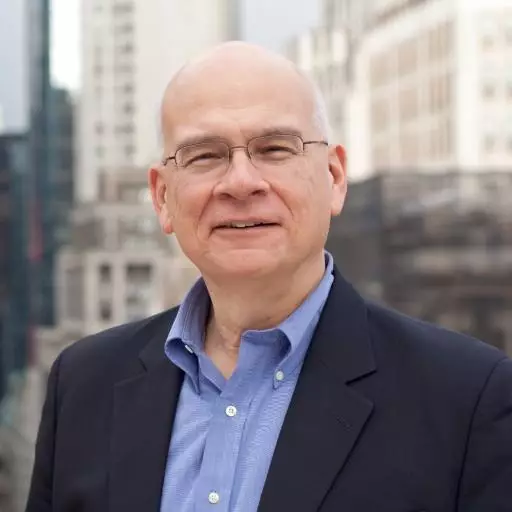
Timothy Keller is the founding pastor of Redeemer Presbyterian Church in Manhattan, which he started in 1989 with his wife, Kathy, and three young sons. For 28 years he led a diverse congregation of young professionals that grew to a weekly attendance of over 5,000.
He is also the Chairman & Co-Founder of Redeemer City to City (CTC), which starts new churches in New York and other global cities, and publishes books and resources for ministry in an urban environment. In 2017 Dr. Keller transitioned to CTC full time to teach and mentor church planters and seminary students through a joint venture with Reformed Theological Seminary's (RTS), the City Ministry Program. He also works with CTC's global affiliates to launch church planting movements.
Dr. Keller’s books, including the New York Times bestselling The Reason for God and The Prodigal God, have sold over 2 million copies and been translated into 25 languages.
Christianity Today has said, “Fifty years from now, if evangelical Christians are widely known for their love of cities, their commitment to mercy and justice, and their love of their neighbors, Tim Keller will be remembered as a pioneer of the new urban Christians.”
Dr. Keller was born and raised in Pennsylvania, and educated at Bucknell University, Gordon-Conwell Theological Seminary, and Westminster Theological Seminary. He previously served as the pastor of West Hopewell Presbyterian Church in Hopewell, Virginia, Associate Professor of Practical Theology at Westminster Theological Seminary, and Director of Mercy Ministries for the Presbyterian Church in America.
Contact Gospel in Life with Tim Keller
support@gospelinlife.com
https://gospelinlife.com/