
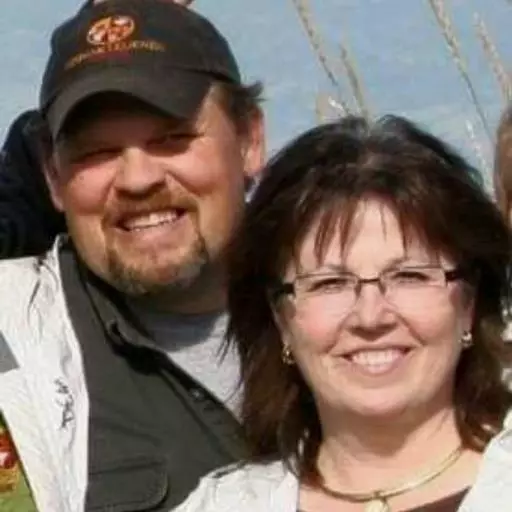
Life on the Water – Capt Allan Mills


Life is very similar to fishing. Sometimes things are like smooth water and a moment later you might be facing the worst storm of life, wondering if you will make it through. We all face storms in our lives. How we deal with them shows where our base is.
On today’s program, we will visit with a boat captain that has spent over 40 years on the salt water from The NorthEast coast of Florida to across the Gulf of Mexico to the coast of Texas. In his time on the seas, he faced many storms that nearly took his life and the lives of his mates.
Guest (Male): Life is very similar to fishing. Sometimes things are like smooth water, and a moment later, you might be facing the worst storm of life, wondering if you'll make it through. We all face storms in our lives. How we deal with the storms of life shows where our base is.
On today's program, we'll visit with a boat captain that has spent over 40 years on the saltwater of the Northeast coast of Florida to the Gulf of Mexico on the coast of Texas. In his time on the seas, he faced many storms that nearly took his life and the lives of his mates. We all face storms throughout our lives. When you face one of these storms in life or on the ocean, there's no other place to turn than to Jesus Christ. He'll carry you through the storms when you allow Him to.
Let's join our host now, Dean Hulce, and his guest, the boat captain that has lived through many of life's storms. We'll hear about how he made it through on the trail to adventure in his life on God's Great Outdoors.
Dean Hulce: Welcome to God's Great Outdoors on the trail to adventure. We are today in Fernandina Beach, Florida, at First Baptist Church of Fernandina Beach. We just got in after a long drive down from the Upper Peninsula of Michigan, but we're happy to get going. Our guest this morning is Captain Allan Mills. Allan, you're a boat captain and have been your whole life basically.
Capt. Allan Mills: Yes, sir. We started out with commercial fishing shrimp boats. Fernandina was a commercial fishing town. You either were a commercial fisherman, a shrimper, or you worked at one of the two mills, Rayonier or Container there.
Dean Hulce: Those mills, is that where all the big lights are on the north end of the?
Capt. Allan Mills: Yes, sir. It makes all the steam and sound at night. It's a big industrial paper mill.
Dean Hulce: Okay. It's right here. A lot of paper mills in our area in Michigan, probably producing a different kind of paper because I'm sure they're using different woods than what you have here. So you're from Jacksonville originally?
Capt. Allan Mills: Born in Jacksonville. My mother married a commercial fisherman, a shrimper, Earl Cook. He raised me from about age seven on up, and that's how I got into fishing.
Dean Hulce: Did you enjoy the shrimp fishing life or not?
Capt. Allan Mills: Yes. Right out of high school, I was one of the youngest captains to run a boat from here to Texas. Two of my classmates there, I think I was 19 or 20 and they were 18, and we ran a boat from here to Texas.
Dean Hulce: Is it different seasons that you would move different places?
Capt. Allan Mills: Yes, sir. Each state would open up, so we would leave here about April and then we'd work our way all the way to Texas and end up there, staying until the end of August and then coming home the first of September to try to beat the storms back.
I retired from shrimping in '83. There's a guy that I used to see every year when we were off Biloxi, Mississippi. He'd come out and he always had two ladies on the boat. They'd come out and we'd swap him shrimp for beer. After about two years, because we just hooked up, I said, "How did you get into this?" He said, "Well, I went to sea school and got a captain's license and started guiding." I said, "That's pretty interesting." So I told my buddies, I said, "He's got better deckhands than I do. I think I'm going to become a charter boat captain."
Dean Hulce: Well, and the difference probably, and having been a guide my whole life, very little fishing guiding except I ran a lodge in Alaska, so I did have some times when I did guide, but not on the boat. I didn't have a guide's license for the boat, but I did have a guide's license just to take people into the rivers. One of the reasons I didn't do that, and people say, "How come you did all the hunting and not the fishing?" I said, "Because hunting I can drop a guy off at a stand and leave him. In fishing, you've got to be in the boat with him whether you like him or not." You're in the entertainment business.
Capt. Allan Mills: That's true. Funny you say that. Years and years ago when I first started guiding, 38 or 39 years ago now, I had a booking agent the first year or two that he brought some guys in and hunted with me in Michigan. He asked me in the truck on the way back one night, "Dean, what do you do for a living?" I thought, "He knows what I do for a living." I thought about it and I said, "I'm an entertainer."
He said, "What do you mean?" I said, "Well, guys come in to hunt, but for some of them, that's not the most important thing to do. Some guys like to come in and they'll chop firewood as a kid at their camp or something and they want to go do that. My job is to find out what they're really there for and give it to them." He said, "I've asked hundreds of outfitters that. Nobody's ever given me the right answer before." Whether it was right or not, but it's true.
A lot of people ask me, "What do you do?" I say, "I'm in the entertainment business." They say, "What do you mean?" I'm a fishing guide, but there's a lot of entertaining in between catching fish.
Dean Hulce: You're the only person that's ever given me that answer to be honest with you as we talk about it. When I guided in Colorado, there was lots of dead time. You'd climb out on a mountain midday, you weren't too far back to go to camp, so we'd sit on the side of the mountain and I had two or three magic tricks in my pocket. I'd do a magic trick and then put it away and they didn't know what I had done and it really eats at them. So it takes up a lot of time with them trying to figure out what I had done.
Capt. Allan Mills: You tell a lot of jokes, you talk a lot of conversation, you meet a lot of different people. It's really an awesome business. You make friends from all over the world. That's the best thing that I ever got out of guiding, I believe. Well, I'm up to three generations, almost four generations of taking people fishing, guiding for 43 years now.
Dean Hulce: Let's talk a little bit about your guiding. Tell me a little bit, what are you fishing here? Because you're offshore and inshore fishing both.
Capt. Allan Mills: Yes, sir. I do different types of fishing so I don't get burnt out. I learned a long time ago if you do one thing, it just gets boring. So I have a 23-foot Hansen that I do inshore fishing with, and then I have a 31-foot Bertram that I do offshore fishing with.
This time of year, say September to May, we're more in the backwater. So we're light tackle fishing for trout, reds, sheepshead, puppy drum. We're doing some fly fishing. We have some good clients that love to fly fish. That's really good. When the weather's nice this time of year, the sea bass, which are excellent eating fish, we go offshore fishing. We catch a lot of snapper you have to release, and cobia also. It seems like every six weeks here in Fernandina, Northeast Florida, we have a change of fish. It's entertained. Like I've got it out of South Florida, I mean you're there for sailfish and then a few dolphin, but I mean you have not that many opportunities to catch different fish. Up here where we live, we have all these estuaries and islands that we can fish, and offshore we get so many spin-offs from the Gulf Stream here because we're the furthest point west of the continental shelf. So we get a variety of types of fishing, which is very entertaining.
Dean Hulce: Your stepfather owned Cook and Cook Seafood. So you shrimped up until tourism started in the '70s?
Capt. Allan Mills: Tourism didn't start until the '70s. This is a little different, and I've been up and down mostly the East Coast of Florida. This is a little different world than most of it. It's way more laid back, a little quieter out here on the island. It's an amazing place. Very, very nice.
Dean Hulce: You're going to be guiding this weekend. The church here has a tournament going on. Johnny Burbank and I started talking about this two years ago when I was here and we were talking about how the church could engage the men a little bit more here. The tournament, you're actually taking the pastor out. So if the pastor wins the tournament and a couple of the other guys we know, we've got a ringer in it.
Capt. Allan Mills: The pastor asked me a couple of years ago, "Allan, what do you think about doing a tournament?" I've run tournaments. I've run marlin tournaments, I've run the backwater fishing tournament for our Nassau Sport Fishing Association for probably 18 years there until my son got into hunting a bunch and then we backed off the fishing. I told him I'll help you out, but there's one thing though, I want to make sure we have a kids' category there because I have so many kids that fished in these tournaments in the past that now are either guides or they take their kids fishing and it's a really great family bonding thing, I think.
Dean Hulce: It is. Fathers and sons and daughters. My wife started hunting, she was never a hunter. She still doesn't care for fishing. She'd be okay being in the boat as long as she has a book and it's sunny and she can lean back, she doesn't care about catching the fish. I tell her if we're out there, we went for yellow perch in Lake Erie a few years ago with some friends and she caught a bunch of fish and then she decided she was going to take a nap and she was going to lie down. I said, "This is going to be our... she loves to eat fish." I said, "You need to keep fishing if you want to eat perch all year long." But she loves to hunt, but she doesn't really care to fish.
I've got a granddaughter that turned into a phenomenal hunter. She's a really good blood trailer, so she helps me with some guiding. But she wants to be a taxidermist now. She's not a normal frilly girl. But that was by taking her with instead of just... when we were kids, it was like the dads took the sons and mothers took the daughters and they did other things, and that's changed in our world.
Capt. Allan Mills: In my world, my oldest daughter, we put her into tap, ballet, all that other stuff. When my second daughter, Alex, came along, I said, "No, we're going to do the outdoors." If you want to do cheerleading, all that, it's behind you, but you're going to try this first. You'll try it both ways. Whatever you want to do is fine. But I was very fortunate that Alex, at age 13, she would help me out. She could drive that boat and back it up to the jetties, and I'd jig baits. All these guys see this young 13-year-old girl driving a boat, they all move out of the way, but all she does is back it up and keeps me right there, does everything. I mean, she was really phenomenal. So it's just bonding time.
Dean Hulce: Well, and that's really important. We'll talk about that in a minute. I want to hear some of the experiences you've had with fishermen or on your own, some of the things. But we're going to take a quick break and then we'll be back. Adam our producer will come on and share who makes this show possible with donations and then tell people how they can come alongside us. We'll be right back with God's Great Outdoors.
Guest (Male): For over 30 years, God's Great Outdoors Trail to Adventure has been broadcast to win men and women, boys and girls to Jesus Christ. This is only possible by the generosity of our listeners. Thank you to all who have supported us in the past. God has blessed us because of you, and we pray for you to feel His blessings as well.
Additional underwriting support has been provided by Mathews Archery, the leader in the archery industry; Mission Archery with revolutionary crossbow technology; Hunter Safety Systems, saving lives is what we do; Center Shot Ministries, hit the mark with Center Shot; Wheelchair Whitetails, guided whitetail deer hunts for wheelchair-bound disabled hunters; and Hodgdon Powder Company, the gunpowder people, delivering reliable performance and precision you can trust every time.
God's Great Outdoors has produced many ministry tools including tracts, DVDs, and books to help you reach others for Jesus Christ. You can access these items, other God's Great Outdoors items, and so much more at our website, godsgrtoutdoors.org. That's godsgrtoutdoors.org.
Dean Hulce: Welcome back to God's Great Outdoors on the trail to adventure in Fernandina Beach, Florida. North Florida, I think we're the last island before Georgia, aren't we?
Capt. Allan Mills: We are a stone's throw from Georgia. When you go out the inlet at St. Mary's entrance, that's the Florida-Georgia line going right down the middle channel.
Dean Hulce: We're with Captain Allan Mills. Allan, we've shared a little bit about some experiences, but I'd really love you to talk. You were a shrimp boat captain before, and I think having that much net and being out in any weather and different things, it's probably not what the average guy thinks of. Why don't you share with us some of the experiences you had there?
Capt. Allan Mills: One of the challenging ones was in Cameron, Louisiana. We're unloading. It was, I think, in July, July 4th weekend. There's a hurricane coming up, so we're tied in Sabine Pass. We're tied up to a fish house and shrimping was a really big industry back then. We're probably eight or nine boats deep and we're on the outside from the dock. There's an open area where we unload shrimp and there's another area where another 10 or 12 boats are tied up.
So we're riding out the storm. It's blowing and the crew boats go out of there too and they're getting people off of the oil rigs and stuff. It's blowing a gale. Johnny and Mike and myself, Johnny and Mike were working the deck with me and it was blowing. We were out having a good time, getting to the boat and the storm really takes off. Well, a boat inside of us, and these are 74-foot Desco shrimp boats that we're running, single screw boat motors, and the lines break loose. There's nobody on the boat inside of us.
We're on our boat and my one buddy can't really help out much. My other buddy says, "I can do this." I said, "Man, we don't have anybody on this other boat. We've got to go between two boats, two sets of boats that's lined up. We only have about 100 feet between them and we have to work our boat all the way into the dock without going on the bank or getting all tangled up with these other boats." So we sit there and we're thinking about it and I said, "Lord, you just let us get through this tonight and I'll go to church in the morning."
We worked it and we made it and it was just a prayer that we made it without getting tangled up or anything. So we get in there and we get tied up. We wake up the next morning and it's pouring down rain and my other buddy gets up, the other one was sleeping, so we get in our slicker suits, our rain jackets and all that. We get into church. Well, we're there about an hour early or so, so we hang up our gear and we're laying in the pews and fell asleep. This lady comes up to me, she goes, "Young man, young man, are you all right?" I woke up. I said, "Oh, yes ma'am, we're just excited to get to church and we didn't know what time it started." But we made it. I was very, very fortunate.
Dean Hulce: Did you have others where you were out and got caught in storms?
Capt. Allan Mills: The last trip I made over into the Gulf all the way to Texas, we were coming back and I was working for Calvin Lang then. I was running the Lang's Pride. We've been gone for about six months. I said, "You know what? This was back in '82." I think we can run straight from Texas to the Keys. Normally we go along the coast about 100 miles out and then shoot out. There were two other captains, Mike Wingate and Clifford Threpp. I said, "Guys, we can just shoot and we can save about 12 hours." The weather looked great back then.
We're out in the middle of the Gulf about halfway there and Isadore was off the east coast of Florida and the front comes down and takes a west turn, so it goes across into the Gulf. So we're out there and once we realize what's going on, we couldn't do anything but go to the southwest to get on the southwest side of it because that's the nicest side of it. Towards Mexico. It's about 28-foot seas or more. We make it through there and it's just a miracle we didn't lose anything.
The only time I put a life jacket on until that day was twice, and that was to go out because you have to go outside the cabin and go down the engine room and check your oils and stuff because we had a bunch of shrimp on board, we had to unload and get a paycheck when we got home. We made it through there and wake up, finally get some sleep after about 48 hours, and my crew bangs on my door and they say, "Captain, get up, get up!" I said, "What's going on?" They said, "There's bales of pot everywhere." I said, "What do you mean?" You looked at the radar? They said, "You don't have to." I said, "What do you mean?" "Look, there's another one floating by." I said, "Let's look at the radar." Flipped on the radar and there's a big blimp and a bunch of little blimps. I said, "Guys, this is my last trip and I'm not stopping for this. We're going home."
Dean Hulce: Well, and you never know who might have been trying to pick those up.
Capt. Allan Mills: I told them they'll help us load this boat, but they're going to give us the third eye when we're done. I said we don't need that.
Dean Hulce: It's funny because I've been stuck in some small boats up in Canada specifically, but also on Lake Michigan, Lake Superior. Been on boats when the waves come up quick and for a guy that doesn't have experience and those waves come up quick, you wonder whether or not you're going to make it in. Even on small lakes, you had guys drown all the time on small lakes.
Capt. Allan Mills: We've seen some people, little boats tied up at the jetties there get flipped over. There was one not long ago, a little blue boat and the one thing about though, the kid had a life jacket on. It filled up and we look over there and there's another boat between me and them, and they went right up to them and luckily the little kid had a life jacket on and they got the kids and the father out and all.
Dean Hulce: How about in your chartering? I'm sure you probably watch the weather pretty close. If it looks like it's going to be bad, you don't go. I'm sure guys want to go no matter what because they're paying the money and they're taking their time to go.
Capt. Allan Mills: Well, we have a weather buoy offshore at the St. Mary's entrance there, and if the waves are three feet and six seconds or less, I don't go. I tell them, "Look, you can give me your money but I can't earn it that way." So it's pretty rough. Now there is times you get caught in it and there's nothing you can do but just ride it out. Most of the time when it's rough, really rough, you'll just let the adrenaline take over and you get through and then you realize what's going on.
I tell you, I had an experience once whenever I had a boat catch on fire, my Topaz. I kept smelling something, I thought it was the boat in front of me there because it smelled like a cigar smell and I was looking around, couldn't find anything. I was looking in the engine room and all the people kind of looking at me like, "What you looking for?" You start to lose a little confidence. So we pull up, anchor up, and then I look over to my left and there's smoke coming out of the side of the boat right there.
I said, "Oh, let me check this out." So I open... I said, "Sir, go back in the back." So I open up this one compartment and there's a panel I can't quite get it up, flames are coming out of it and all that. So I get in there and I throw the fire extinguisher in there but I couldn't get the panel open enough. But I put a fire extinguisher in there, put water in it and all that, it looked like it was over. I said, "Okay guys, we're going to head on in and check this out."
Well, we start running in. I'm about four miles offshore at that time and about a mile and a half, it just comes on. The resin had taken on fire. I mean there was just nothing we could do, it was getting in flames. So I called a guy to come get me and the smoke, you can't hardly see for the smoke and flames. I get my mate, I said, "Get the life jackets." He's kind of panicking. He says, "Where?" I said, "Gavin, get it together. They're right there where they always are." And hand them out.
So I hand the guys the jackets, I said, "You all put these on." And I'm getting him out of there and I look back and they're looking at me. They said, "You told us where they were, you didn't tell us how to put them on." They didn't know how to put them on. So I get them all on them and one guy gets it on and he starts to jump overboard. I said, "Look, calm down. We're not going to blow up. It's diesel, it's just going to burn."
So they're all back in the back and Gavin's out there, we get him, I call the guys there, they come coming at us. One guy says, "Man, and the flames are getting bigger." He goes, "Who's coming to get us?" I said, "That guy right there, he's coming, he's coming." He said, "Well, looks awfully slow." I said, "Everything's going slow right now, trust me, he's coming." So they pull up beside us and one guy dives in, the other two guys get in there and then the boats get separated and I'm left on the boat. Finally after about three passes, they get me and the boat just goes all the way down to the waterline. They end up having to bury it, put it out on the beach. But there's some big, some crazy experiences that happen out there. You've just got to stay calm. If you stay calm, they'll be calm.
Dean Hulce: We'll get to some of those before we finish out this program. I just want to talk quickly just because that's so close to what happens in life. In life, we run into storms all the time. I mean, they're not the same kind of storms that you run into out, but if you think about it, there's just things that happen in our lives all the time that we just come headlong into storms. We have lots of times only one way out, and like you guys out with the hurricane in Louisiana, our options are to turn to God.
Often, we don't have another option really because every other option is kind of like when you were dealing with that hurricane in the Gulf. You could have driven into the storm, but it probably would have meant death. But you look for the right way out, and that's God.
Capt. Allan Mills: Without a doubt, you can call the Coast Guard, you can call your friends, but the one you're really going to lean on and depend on is God to show you the way.
Dean Hulce: We saw that in Alaska and there were times where we didn't have another option. I was scared to death. I think one day we got out in 16-foot waves and it came up in a hurry and what we did is we looked for a safe spot and that safe spot is always God. Yes, there is no other options. We're about out of time for the radio portion. I'd love to go onto the podcast and share some more stories. But in the meantime, we're going to sign off from the radio. Please join us on the podcast if you can. Thank you, Captain Allan.
Capt. Allan Mills: Thank you.
Dean Hulce: It's been a lot of fun. I'm looking forward to being out this week. I'm not fishing with you, so we're a little competing, but I know nothing about it. So we're going to have a great time, I think it's in God's hands who's going to win the biggest fish. But we're going to have fun doing it, make some memories. Well, and I come in from that and speak that evening. Usually I don't do that. Usually I take care of keeping my mind in the right spot all day, but I'm going to go fishing this time. Quit wishing, let's go fishing. Thanks again. Thanks to our listeners. Please join us on the podcast if you can, if not, join us every week as we head down the trail to adventure in God's Great Outdoors.
Guest (Male): For over 30 years, God's Great Outdoors Trail to Adventure has been broadcast out to win men and women, boys and girls to Jesus Christ. This is only possible by the generosity of our listeners. Thank you to all who have supported us in the past. God has blessed us because of you, and we pray for you to feel His blessings as well.
Additional underwriting support has been provided by Mathews Archery, the leader in the archery industry; Mission Archery with revolutionary crossbow technology; Hunter Safety Systems, saving lives is what we do; Center Shot Ministries, hit the mark with Center Shot; Wheelchair Whitetails, guided whitetail deer hunts for wheelchair-bound disabled hunters; and Hodgdon Powder Company, the gunpowder people, delivering reliable performance and precision you can trust every time.
God's Great Outdoors has produced many ministry tools including tracts, DVDs, and books to help you reach others for Jesus Christ. You can access these items, other God's Great Outdoors items, and so much more at our website, godsgrtoutdoors.org. That's godsgrtoutdoors.org.
Dean Hulce: Welcome to the trail to adventure with God's Great Outdoors and we are again in Fernandina Beach, Florida. We are with Captain Allan Mills. Allan, you've been doing this your whole life really as some sort of fishing.
Capt. Allan Mills: Yes, sir. I've been commercial fishing my whole life. I've had AC Charters, been guiding, running charters for 43 years this year.
Dean Hulce: Why don't you tell people how they can get a hold of you if they're looking for a place to fish?
Capt. Allan Mills: We have a nice website. It's AC Charters, www.accharters.net. We have a slogan, "Quit wishing, let's go fishing." We're located in downtown Fernandina Harbor Marina, which is downtown Fernandina Beach. The internet's a big avenue to get to us. They can book dates right there. You can see what boats you want to go on and then call.
Dean Hulce: Well, that'd be great. We'll try to send some people your way as well.
Capt. Allan Mills: I have some days available.
Dean Hulce: Okay, well I'll see what I can do. Actually, my son and grandson are looking even yet this spring to come down. He works at a Bible camp and not a lot of financial ways to do those things, but he's got a friend down here that loves to fish. So I think they're looking for a place, so we'll talk about that after we get off the air, see if they can line something up with you.
Capt. Allan Mills: Sounds great.
Dean Hulce: Why don't we share... you've shared a couple stories of some near disasters, but any other stories you've got? Things that were some of your favorite clients or some of the most interesting? Here's the thing I thought, one of the things we always talk about is you go out to some areas and you never know what's coming up when you set the hook. Do you use circle hooks, by the way? Is that mostly what you do or no?
Capt. Allan Mills: Circle and Kahle. A Kahle hook is a circle hook but it's not as... you can still pull and you still get the fish, where a circle hook you just want to reel.
Dean Hulce: So you never know what's coming up because you don't know what could be there. Have you gotten anything that was very unusual for what you were doing?
Capt. Allan Mills: The most unusual one we were out at Brunswick Bottom. It was a warm summer day there, I think it was like July 20th or something there. We're out bottom fishing, catching B-liners and all. This young boy, he catches, hooks up a fish and I mean he's running hard like a grouper would, just bumping his head down and all.
Get it up and all of a sudden I'm looking, "Man, that isn't a grouper, that's not a snapper." I'm looking, he gets it up, it's kind of moving right then back and left and all that. He gets it up, I said, "Holy crow!" Had to grab the net and it was a 13-pound lobster. A 13-pound Florida spiny lobster. It was in season, it was perfect. He's holding it up by its antlers and tentacles, and when he held it up you couldn't even see his cavity, this young man's cavity there.
It was the wildest catch that I've ever done. He was probably about 14 and it was about five years ago, he comes on board. He says, "You remember me?" I said, "You look familiar." He says, "I caught that lobster." And my mate says, "He tells that story all the time. I thought it was a lie."
Dean Hulce: How deep were you?
Capt. Allan Mills: 120 feet of water. It almost makes you want to go back for more. Makes you want to go down there and dive, but I'm not going that deep. No.
Dean Hulce: We went off up in Kodiak, occasionally you'd pull up an octopus, which was great. I love octopus, so I would save every one we got. They got in our crab traps because we had some king crab and mostly Tanner and the snow crabs. But I got excited, everybody else hated it when they saw octopus come up. They ink on you. Yeah, and I loved it when they come up. Of course all the crab are eaten when they get there, they're eating the crab out of the pot. We'll catch them, but you don't hook them very seldom do you hook them. They hang onto the weight. So when you see them coming up, you have to have that net ready because usually once they get to the edge of the water they let go. So you have the net ready and you get them.
In the crab pots, it wasn't so big a deal and we also hunted them. At low tide, we'd go out on... our tides were the most drastic, were 30-foot tides there. So on the low tides you'd go out and you'd find where they're living under the rocks and get them out from underneath the rock. I loved eating them. My wife says it was like eating rubber, but if you cooked it right, it was pretty good.
What do you tell some of the other species and something about them? Because I know kind of what we're going to fish on inshore here, but as far as out on... what else do you run into out here?
Capt. Allan Mills: Offshore, what we're going to have coming up soon in March is the black drum. The black drum, they get up to 100 pounds. They're coming in on the beach to spawn and they eat crab. So you're going to be in the... you're going to use a lighter rod, light tip rod because they're really light biters. I mean, the rod tip barely moves and that's them crunching it and inhaling it. That's pretty exciting, but after you catch one or two, you're done. No.
I'll tell you on Kodiak with the halibut, my wife said, "I want a 100-pounder, I want a 100-pounder." She caught a 40-pounder, said, "I don't want a 100-pounder, that was enough for me." 40 pounds is probably better eating. It is, and you can catch limits any day you wanted out there, most of them were 20 to 50 pounds.
Now Dean, you never fished for a sheepshead. This is going to be brand new. This weekend at the First Baptist men's category they have golf, they have sporting clay shooting, and we have fishing. You're going to fish what I think is the most challenging fish to catch is the sheepshead. A sheepshead looks like a drum but it's not and it has teeth like human. Kind of like a triggerfish kind of teeth. No, triggerfish has a beak like. I mean, this has teeth just like a goat does. Most challenging fish, I mean it's just going to be like a thump, a whisper. But when you hook up, they fight like a snapper, they buck the head all the way up. You will find that whenever this is done... I've done TV shows with Peter Miller and all that, and you're going to find out it is the most challenging fish. Like a brim fish in there. Is there a fair number of them? They're spawning this time of year.
So they didn't want... whenever I do a tournament, I put in a slam. So you have to have a redfish, a flounder, and a trout. Well, they were talking about... these guys were saying, "Well, the flounder's really hard to catch this time of year." So I said, "All right, I'm going to do a FBBC Slam. You have to have a redfish, a trout, and a sheepshead." So I'm excited to see how many of them we have. There should be quite a few numbers of them.
Good. I love eating redfish. I've got friends from Texas and they would hunt with me in Colorado and South Dakota, but when they came, they usually brought a big redfish with them and we ate them and they were really good. Now I've never eaten the trout. Way different than our stream trout, different fish altogether. But I've never eaten, never caught any of them.
Capt. Allan Mills: I like a trout better than I do a redfish. I like the sheepshead better than both of them.
Dean Hulce: Sheepshead in freshwater up by us, they're nasty. People hate to see them on their line because with the amount of fight that's on there, if that's a walleye, it's going to be a world-class walleye, but the sheepshead when it comes up, they're not happy with it. But you said that's one of the best eating here?
Capt. Allan Mills: A lot of my clients from Ohio and all that, they catch sheepshead when you say sheepshead, they said, "No, no." I said, "This is totally different." Ohio, there's probably fishing some on Lake Erie, and I've caught sheepshead out there. They're great fighters, but you're disappointed when it comes up.
So you actually run some tournaments down here or have run some tournaments?
Capt. Allan Mills: I have, yes sir. Been part of the Nassau Sport Fishing Club, I'm actually an honorary member, and we ran the kingfish tournament for a long time. The trout tournament that I run for them, the inshore tournament for a long time, and then I ran my own tournament, the Amelia Island Blue Water Shootout up until about eight years ago and I turned it over to someone else.
Dean Hulce: Well, why don't you tell me your personal best fishing story? Sport fishing. Of course you're probably like me, by the time you're done guiding people, you don't really feel much like fishing anymore.
Capt. Allan Mills: I tell you, one of my best trips, I used to have a client that, Bob Kissler, he bought all the petroleum for CSX Railroad. So he'd have me book 13 Saturdays out of the year and we'd go to the Gulf Stream. He loved blue water fishing whether it was for a bonito or a wahoo, a marlin, it didn't matter what he wanted to go, no matter what, or cobia fishing.
We're out there one year and we hooked up, and this was in October there, and we usually catch a marlin usually in May and all, and we've caught several. But this one we caught and we hooked up and we're fighting him, he was putting on a jumping and all that. I mean, he was huge. I saw this tug and barge that was coming down on us. I called him up, I got on 16, I said, "Hey Cap, I got a big fish and he's running your way." He says, "Yeah, I can see him, he's huge." I said, "You mind turning a little bit?" He had a tug and barge joint, he goes, "Yeah, no worry."
So he pulls out of the way and we're moving, and luckily also the fish turned the other way as well. About five minutes later, the Coast Guard buzzes right over top of the outriggers. I mean, seemed like they were right on top of us. I said, "Holy crow!" Get on the radio, the Coast Guard said, "Man, that's a big fish, we're going to circle you one more time." I said, "If you don't mind, you do a little bit higher, you scared that fish so bad he jumped out the water." He goes, "I know, we all saw it!" And they flew back by us and they're all giving us thumbs up. In about three hours and 45 minutes later, we finally got him up and we grab her bill, we guessed at about over 600 pounds. Just grabbed him and cut the line, let it go. But that was a pretty exciting, the most exciting thing about it was the Coast Guard flying over.
You get some sharks? We get some big sharks. We had an encounter with a Great White Shark. This is one January, I had Mr. Woods on board, his two young kids. He was here doing a seminar, he's a financial advisor. We're catching a grouper. We hook up this grouper and then all of a sudden, the line goes left and out of the back of the water comes a Great White Shark right from me to you, we're about five feet, and he lands right off the back of the boat and he splashing soaked every one of us.
He was probably about 17 feet, he was huge. First experience with a Great White. He runs and the line goes limp. "Holy crow, that was a big shark!" So we go down there and we're fishing again and I had Captain Burgess Louellen was working with me at the time and I said the fish kind of quit biting. He said, "That shark's still down there." That's the first time he and I, and he'd been running boats longer than I had. I said, "I don't know man, he had to be full, that was about a 20-pound grouper."
After about five minutes, we hook up another grouper and I get him up off the bottom, he goes back down. I get him up off the bottom, he goes back down and finally I get him off the bottom. I hand the gentleman the rod there and he's fighting the rod. I told Burgess, "I told you he wasn't down there." So he gets him up close to the boat so I grab my little gaff, I lean over in the water because I used a little 12-inch gaff at that time. Well, that shark comes out from underneath the boat and he just grabs that grouper from the gills back and just rakes it back and all that's there is a backbone and the head.
I'm saying, "Holy crow," I about peed on myself. I said, "Drop it back, drop it back!" He said, "What do you mean?" I said, "Put it back in water!" Well, that shark came back like a dog chasing its tail and sucked it down. He runs off about 150 yards and he turns around and he's charging the boat. All you see is a big wake, his dorsal and his tail about 10 feet behind that. He's coming at us and the kids are hollering and jumping their mom's lap. "Quit reeling, Daddy, quit reeling!" And I'm hollering, "Reel, reel, reel!"
And he's coming up, the kids are screaming, crying and all of a sudden I start backing up because he's coming right at the back of the boat. I said, "Holy crow, please don't jump, Lord, please don't let him jump in the boat." And he rolls over on his side and he looks at Captain Burgess, he looks at Mr. Woods and he looks at me. I mean, the eye moves and he's looking at us. He rolls over on his side and he goes down right by the back of the tower and his tail comes out and he slaps the rod and breaks the rod tip. Breaks it, we lose him. It's like watching Jaws all over again. Man, it was the wildest thing I've ever seen in my life. I said, "Whatever that shark wants, he's going to take it. He's the ruler of this ocean."
Dean Hulce: You know, it's funny because those are the things that are close to disaster, but they're the things that you remember the most when you live through it. I've been charged by grizzlies about the length of this room when he stopped and put a bullet underneath him and stopped, but same feeling. When it's happening and that first few seconds afterwards, your heart doesn't want to go.
But afterwards you think, "That was one of the best experiences ever."
Capt. Allan Mills: When you're going through that though, you don't really worry about it, you just take care of it, and just say, "Lord, just let me get through this."
Dean Hulce: And that's often we forget at the time as men especially, we think, "I can take care of this," and realize it's completely out of our hands. Nothing we can do with it other than turn it to God.
Anything else you want to share?
Capt. Allan Mills: I take a lot of families out. I'm probably up to three to four generations now. One family that fished with me for a long time and then they quit, and I probably didn't see them for 10 years and they all came back. We all had a really great time, had a good time and the dad called me up and he says, "Allan, we've always had a good time but we had a problem in life like a lot of people do." He says, "But you know, whenever we were always had a problem with life and we went fishing, we always came back together. So we came back to try it out again to go fishing and see if we can join it." He said, "Now my family's back together really strong and we do appreciate hanging out with you and having a good time. Not all the time the fishing's great, it's all about making memories and having good times and making relationships."
Dean Hulce: You can't do anything to make the fish bite better. I mean, you can do all you can and you try everything, I'm sure, but there's times when things are just tough.
Capt. Allan Mills: Well, I tell them all the time, I can show you the fish, I can get you to the fish, but there's only one person that can make it happen, the Good Lord.
Dean Hulce: It's good to fall back on that specifically, you know, because at least it gets it off your shoulders. I did the same thing with hunting. I said, "I can only do what I can do, and if the fish don't bite or if the deer don't move, all you can do is take out your magic tricks and start entertaining."
Well, thank you for joining us. It's been fun. I'm looking forward to seeing you this weekend and see if I don't know who I'm fishing with exactly, but hopefully we beat your team.
Capt. Allan Mills: Well, there you go. We're going to have a fun time trying, we're going to make a lot of memories and meet a lot of people, have some good food.
Dean Hulce: By the time this plays, the show will be over, but I'll let everybody know in the intro as we do that. But thanks again.
Capt. Allan Mills: I appreciate you having me on and I look forward to hearing it and maybe some good memories with you.
Dean Hulce: I'll send it on to you. Thank you, Allan. Thank you to our listeners for joining us. Like I said, we'll give you an update when the program comes out what actually happens and hopefully I'm at the top of the board. If I win, I can't take the purse, I can't do it because as a speaker I'll pass it on to the next one or to some kids maybe, or donate it to the church. We have some really great prizes there. Rent Works donated a nice rod and reel, a Fenwick rod with a nice Florida Battle reel for the kids. We have three places for the kids and they're all going to walk away with some nice tackle and some gift certificates to the local tackle shops too. So I mean, to me, it's more about the kids getting involved in fishing and new fellowship there, that's what this weekend's all about.
The prizes are secondary, but for kids... and we just did a game feed at our dinner at our church last week and all the kids leave with something. And you know what? They go back and they tell their dads, "Hey, I want to come back next year." And that's important. I mean, that's way more important than a prize we'd win ourselves. Thanks again for joining us and thank you for our listeners to our listeners for joining us. Join us each week on the Trail to Adventure as we head out into God's Great Outdoors.
Guest (Male): What storms are you facing right now in life? What are you resting on as you face one storm after another in your life? If you're looking for salvation in anyone or anything other than Jesus Christ, you're heading for a shipwreck. Captain Allan shared his stories of his storms on the ocean and how he led the fishing tournament in Florida. The very next week, he gave his heart to Jesus Christ in the church where the event was held. His storms may continue to come up against him, but he has a new hope of combating these storms with Jesus Christ in his boat.
We at God's Great Outdoors are rejoicing with Allan. We are so thankful to have been part of the lives that were changed for God. If you've enjoyed today's program and would like to hear the extended podcast version, you can find it by looking for Dean Hulce or Trail to Adventure wherever you listen to your favorite podcasts. This program is provided by and can be contacted at God's Great Outdoors, PO Box 414, Powers, Michigan, 49874, or on the website, godsgrtoutdoors.org. Thank you for joining us this week here on God's Great Outdoors and please join us each week as we travel down the trail to adventure.
Featured Offer

We so appreciate all of our listeners of our radio and podcasts as well
as our reader of our daily devotionals. There's no purchase necessary.
Go to the God's Great Outdoors website at
www.godsgreatoutdoors.org/trail-head-newsletter and sign up for our
newsletter and daily devotionals or send in a donation. Fill out your
name address and email and you will be entered for a chance to win one
of ten prizes.
Past Episodes
This ministry does not have any series.
Featured Offer
We so appreciate all of our listeners of our radio and podcasts as well
as our reader of our daily devotionals. There's no purchase necessary.
Go to the God's Great Outdoors website at
www.godsgreatoutdoors.org/trail-head-newsletter and sign up for our
newsletter and daily devotionals or send in a donation. Fill out your
name address and email and you will be entered for a chance to win one
of ten prizes.
About God's Great Outdoors
About Dean Hulce
Dean Hulce was born and raised in the Upper Peninsula of Michigan where he spent every weekend in the woods or on the water with family and friends. After graduation he married his highschool sweetheart Linda. They have two boys and 5 grandchildren.
Dean has written for several hunting and fishing magazines over the last 25 years. He has guided hunters and fisherman as well as run hunting fishing camps from South Texas to Alaska and many states and provinces in between. In the last 10 years Dean has written a daily devotional that goes out to thousands each day. He had published 5 devotional books, using hunting stories to bring a message to people. He has traveled across the USA speaking to groups, spreading the gospel through outdoor experiences.
Dean has no doubt that God has prepared him his entire life for his position with God's Great Outdoors Ministry
Contact God's Great Outdoors with Dean Hulce
Mailing Address
God's Great Outdoors
P.O. Box 414
Powers, MI 49874
Telephone Numbers
906-825-2350
906-282-0795