

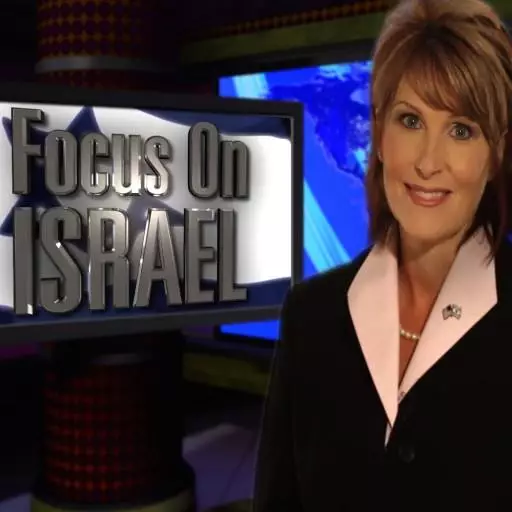
Theodore Herzl: Father of Israel


Laurie Cardoza-Moore: The creation of a Jewish state was not a dream to a man named Theodore Herzl. To him, it was a life's mission. He had a surety of mind, of heart, and of will to bring his people to the land that was given them by the God who had created this place, long before any present-day claims.
Hello and thank you for joining me today on Focus on Israel. Like most Americans, I began to ask a lot of questions about what happened to our country following 9/11. As I read and talked to experts, the issues of radical Islam and the attacks on America and Israel became extremely personal to me.
I realized that Israel is faced with threats from nearly every corner—from Iran's nuclear weapons program, from terrorist groups such as Hamas, Hezbollah, Al-Qaeda, and ISIS. I also saw how much of the world comes against the Jewish state. The UN and the world continue to demand the creation of a Palestinian state, a terrorist state on Israel's doorstep.
Now we see a rise of global antisemitism with threats from every corner as it seems we're heading closer to the biblical prophecy of Armageddon in the Middle East. So, if you're a Christian, why should you care? Many Christians believe that as the Jews rejected Jesus, then God has rejected them.
This replacement theology is growing as many Christians believe they replace the Jews in God's prophetic plan. The mission of this series and PJTN is to educate and equip you so that you can share this truth with your family and friends.
In December of 1894, Theodore Herzl was the Paris correspondent for Neue Freie Presse when the infamous Dreyfus Affair occurred. It was a notorious antisemitic incident in France in which a Jewish French army captain was falsely convicted of spying for Germany.
Herzl was to witness mass antisemitic rallies in Paris following the Dreyfus trial. Herzl himself stated that the Dreyfus case turned him into a Zionist, and that he was particularly affected by chants of "Death to the Jews" from the crowds.
In 1897, Herzl convened the first Zionist Congress in Basel, Switzerland, and was elected president of the Zionist Organization. He began a series of diplomatic initiatives to build support for a Jewish state, appealing unsuccessfully to German Emperor Wilhelm II and Ottoman Sultan Abdul Hamid II.
The life and passion of the man who began the political movement for a modern state of Israel is well-presented in the Moriah Films documentary *It Is No Dream*. Up next, you'll see just a portion of this moving and poignant film. I urge you to rent or purchase this film on Amazon to see the full story.
Narrator (Male): The Jewish question still exists. It would be foolish to deny it. It is a remnant of the Middle Ages which civilized nations do not even yet seem to be able to shake off, try as they will. Attacks in parliament, in assemblies, in the press, in the pulpit, in the street, become daily more numerous. In countries where we have lived for centuries, we are still cried down as strangers.
Oppression and persecution cannot exterminate us. No nation on earth has survived such struggles and sufferings as we have gone through. Distress binds us together and, thus united, we suddenly discover our strength. Yes, we are strong enough to form a state, and indeed, a model state. We possess all human and material resources necessary for the purpose.
The idea which I have developed in this pamphlet is a very old one. It is the restoration of the Jewish state. The world resounds with outcries against the Jews, and these outcries have awakened the slumbering idea. These words were written in 1895, almost 120 years ago. They were part of a pamphlet entitled *Der Judenstaat*, or *The Jewish State*.
The author was a 36-year-old Viennese journalist and playwright named Theodore Herzl. In 1895, what Theodore Herzl was proposing seemed, even to his supporters, an impossible goal. But to all who insisted it was a fantasy, Theodore Herzl had this to say: "If you will it, it is no dream."
In 1894, Theodore Herzl was living in Paris and working as the bureau chief for Vienna's *Neue Freie Presse*, one of Europe's most respected newspapers. At the moment, the big story making headlines was the criminal trial of Captain Alfred Dreyfus. After it was discovered that military secrets had been passed to Germany from a member of the French General Staff, Dreyfus fell under suspicion because he was Jewish and disliked by his fellow officers. But after his arrest, no evidence could be found linking him to the act.
Although he tried, Herzl could not shake the scenes of the trial and the antisemitic demonstrations from his mind. And news from Vienna, where his family was living, added to his anxiety. There were calls for expulsion of the Jews from the country and the confiscation of their property.
By the spring of 1895, Herzl had decided that he needed to take drastic action. He would spearhead an international effort to solve the Jewish problem as he saw it. He might have been the most unlikely person to lead such a campaign.
Theodore Herzl was born on May 2nd, 1860, in the heart of the Jewish community of Budapest, Hungary. In 1878, Jacob and Jeannette Herzl decided to move the family home from Budapest. Many Jews were leaving the city at that time because they were uncomfortable with the growing nationalism of the Hungarian people. Jacob set his sights on Vienna, not only more hospitable to Jews at that moment, but also a place with much better business prospects for him.
On a European vacation, Herzl had written a number of short observational pieces called *feuilletons* that ended up being published in several German and Austrian newspapers. Soon, he was contributing regularly for some of the best-known newspapers in Vienna, including the highly esteemed *Neue Freie Presse*.
In subsequent weeks, while covering the French parliament, he witnessed angry debates on the so-called Jewish question. And at a political rally, he heard the cry, "Death to the Jews," for the very first time. He now became obsessed with finding a solution to antisemitism. In the weeks following Captain Dreyfus's degradation at the École Militaire, it appeared to Herzl that all of Europe was on a rampage against the Jews.
He became convinced that by remaining in Europe, the Jews were facing an apocalypse. As he saw it, they needed to leave and create a sovereign Jewish state in another place. But where? Palestine was an obvious choice. Jews had been returning to their biblical home there for well over 100 years. Herzl began composing a series of documents that would become the most significant he would write. They would include his innermost thoughts about why a state was needed, the nature of that entity, and what was required to make it a reality.
As soon as he returned to Vienna at the end of 1895, he adapted his speech to the Rothschilds into an 86-page booklet entitled *Der Judenstaat*, or *The Jewish State: An Attempt at a Modern Solution of the Jewish Question*. In the booklet, Herzl explained why he believed Palestine, for historic and religious reasons, should be the home for the new Jewish state.
The Jews have dreamt this kingly dream all through the nights of their history. "Next year in Jerusalem" is our old phrase. It is now a question of showing that the dream can be converted into a living reality. Only a tiny publisher with a bookstore on Vienna's Währinger Strasse, M. Breitenstein, was willing to take a chance on publishing *Der Judenstaat*.
In political circles, Herzl was condemned by everyone from the Prime Minister to the aging Emperor Franz Joseph. Orthodox Jewish leaders were also up in arms. Herzl also received the almost unanimous endorsement from the Jewish student fraternities at the University of Vienna. And veteran Zionists throughout Eastern Europe and Russia, and even the small settlements in Palestine who had joined the cause decades earlier, also jumped on his bandwagon.
He outlined a scheme where world Jewry would pay off the huge foreign debt of Sultan Abdul Hamid and the Ottoman Empire, which controlled Palestine. In exchange, the Jews would be granted Palestine for their new state. As 1897 began, Herzl was receiving hundreds of supporters at his home, and preparations were in full swing for an international conference of Zionists that he wanted to convene that August.
The strain on his health was becoming apparent. His heart, damaged from his bouts of malaria in France years before, was causing him problems, forcing him at times to take to his bed. During the spring, Herzl convened the conference of his deputies in Vienna to organize the Zionist Congress he wanted to hold that August. Among other things, it was decided to hold the conference in Munich.
But as soon as word got out about the Congress, trouble began developing. Vienna Chief Rabbi Moritz Güdemann, who a year and a half earlier had likened Herzl to Moses, wrote an attack against Zionism, insisting that Judaism and nationalism were not compatible. In Berlin, the Rabbinical Council of Germany also published a strong statement against the Zionist movement and the plans for a Congress.
An angry Herzl decided to move the convocation to Basel, Switzerland, where he had more support from the local Jewish community. And then the delegates—more than 200 of them from 17 countries—started to arrive. They had come to the Congress seeking a life beyond pogroms and religious persecution. They could hardly contain their excitement of what they believed was about to happen for the Jewish people. They were sure that they were transforming the dream of returning the Jewish people to the Land of Israel into a reality.
That evening, as he walked to the podium to deliver his inaugural address, Theodore Herzl was greeted with the stomping of feet and a thunderous ovation. He explained that they needed to set up an organization to negotiate with the Great Powers, and specifically with the Ottoman Empire, to achieve Jewish settlement in Palestine on a large scale. Jewish colonization should no longer be conducted in secret and must be in accord with international law. Herzl concluded that the goal of the Zionist Congress was to create a new kind of Jew.
When Herzl finished his speech, pandemonium once again broke out. Were I to sum up the Basel Congress in a few words, it would be this: At Basel, I founded the Jewish state. If I said this aloud today, I would be answered by universal laughter. Perhaps in five years, and certainly in 50, everyone will agree.
Throughout 1898, Herzl and the Zionist movement continued to gain credibility around the world. By the fall, he received word that Germany's Kaiser Wilhelm II was ready to endorse his plan. The Kaiser announced that he would receive the Zionist leader and his delegation in Jerusalem where, in a formal setting, Herzl could present his plan in a speech to the royal party.
A few days later, Herzl and his delegation were aboard a steamship on their way to Palestine. After waiting almost a week, Herzl and his delegation were finally called to see the Kaiser. Herzl started his speech by describing the nature of the Zionist dream. We are bound to the sacred soil. Many generations have come since this land was Jewish, but the dream still lives on in the many hundreds and thousands. Whenever foes oppressed us, whenever we were begrudged our rights to live, in our depressed hearts we remembered Zion.
Wilhelm II proceeded to make small talk, discussing Palestine's water and agricultural needs for a few minutes. He then stood up and ended the meeting. As Herzl was ushered out of the royal tent, he could not believe what was happening. The Kaiser had changed his mind.
Herzl turned his sights on England. He now began meeting regularly with Colonial Secretary Joseph Chamberlain and several other officials. During one of those meetings, the Colonial Secretary and father of the future Prime Minister Neville Chamberlain proposed an idea. There was a British territory he could offer to Herzl where the Jews could move to immediately: Uganda. The Zionist leader was not interested.
But then on April 19th, 1903, anti-Jewish violence broke out in the Russian town of Kishinev. Some 50 Jews were murdered, over 600 seriously wounded, thousands of shops and homes destroyed. The news reached Herzl as he was in London for another round of meetings with Chamberlain. He decided to accept the Colonial Secretary's offer of Uganda.
As this was unfolding, Herzl made one of his boldest moves yet. He approached Czarist Russia for a meeting to convince it to allow its Jews to leave and to exert pressure on the Turks to allow some form of Jewish autonomy in Palestine. The Russians had been harshly criticized around the world for the Kishinev pogrom, and the Czarist government agreed to the meeting, hoping that it would help repair its image.
After almost a week of meetings, Herzl was given a letter from the Czar formally pledging the Russian government's support for the Zionist cause on one condition: that the movement must encourage Jews to move from Russia to Palestine as soon as the homeland is established. Less than a week later, the Sixth Zionist Congress opened in Basel. There were now almost 600 delegates, a testament to the huge growth of the movement since the first congress in 1897.
The stress would only increase for Herzl as the Uganda plan was announced to the Congress. Russian Zionists, who were already angry about his meeting with Count von Plehve, threatened a hunger strike if the Uganda proposal passed. Cries of "traitor" could be heard in the hall.
Returning to Vienna, Herzl's health began to deteriorate rapidly. The end, when it came on July 3rd, 1904, was sudden. Herzl groaned and his head fell back. He was dead, just two months after his 44th birthday. Herzl's passing was major news in both mainstream and Jewish newspapers. He was hailed as one of the greatest figures of the century. Thousands converged upon Vienna for the funeral. It was one of the biggest the city had ever seen. The Zionist leader asked to be buried next to his father until the day when the Jewish people transfer my remains to Palestine.
Theodore Herzl's request was finally carried out on August 16th, 1949. His remains were taken from Vienna's Döbling cemetery and flown, not to Palestine, but to the State of Israel, declared on May 14th, 1948, a little more than 50 years after the Zionist leader's prediction in the diary entry wrote upon concluding the first Zionist Congress.
In 1917, the Zionist movement's former lawyer in Great Britain, Prime Minister David Lloyd George, approved the Balfour Declaration. It called for the establishment of a Jewish national home in Palestine, for which the British were given a League of Nations mandate after World War I in 1919. But bowing to pressure from the Arab world, the British never fulfilled their promise to create a Jewish national home and placed strict limits on the amount of Jews allowed to immigrate to Palestine. Many would later ask: Would six million European Jewish men, women, and children who perished during the Shoah, which Herzl had long feared, be saved had the doors to Palestine been open?
When the prophet Jeremiah was imprisoned for having prophesied the destruction of Jerusalem by the Babylonians and the fall of the city had begun, a vision came to him that he would be approached by a relative to buy land there, and that he should immediately agree. In the vision, the God of Israel promised him: "Houses, fields, and vineyards will yet be bought in this land. There will again be heard in this place, in the cities of Judah and in the streets of Jerusalem, the sound of joy, the sound of gladness, the sound of the groom, and the sound of the bride will again be heard in this place. In those days, I will administer justice and righteousness in the land."
At the end of *The Jewish State*, Theodore Herzl envisioned what his dream would bring not only to the Jewish people but to the world. What glory awaits those who fight unselfishly for the cause. I believe that a wondrous generation of Jews will spring into existence. We shall live as free men on our own soil and die peacefully in our own homes. And whatever we attempt to accomplish for our own welfare will react powerfully and beneficially for the good of humanity. The world will be freed by our liberty, enriched by our wealth, magnified by our greatness.
Laurie Cardoza-Moore: Unfortunately, Theodore Herzl did not live to see the fulfillment of his lifelong mission. At 5:00 PM on July 3rd, 1904, in a village inside Lower Austria, Theodore Herzl died of cardiac sclerosis. A day before his death, he told the Reverend William H. Hechler: "Greet Palestine for me. I gave my heart's blood for my people."
First buried at a Viennese cemetery, his remains were brought to Israel in 1949 and buried on Mount Herzl in Jerusalem, which was named after him. Herzl is specifically mentioned in the Israeli Declaration of Independence and is officially referred to as the spiritual father of the Jewish state, the visionary who gave a concrete, practical platform and framework to political Zionism and the establishment of a Jewish state.
Well, that's our program for today. And I want you to know we appreciate your support. The time to take a stand is now. Be a leader in your community and in your church. One person can make a difference. Get involved with and support pro-Israel organizations such as PJTN. Call your senators, congressmen, let your elected leaders hear from you.
Visit our website to learn more, sign up to receive action alerts, and order our films to share with family and friends. Please encourage everyone you know to tune in and become informed. God bless you and thank you for all you do on behalf of our Jewish brethren and all Israel. We'll see you next time on Focus on Israel.
Narrator (Male): To support this program, send your tax-deductible gift to: Proclaiming Justice to the Nations, PO Box 682711, Franklin, Tennessee 37068. You can also support PJTN online; visit PJTN.org or call 1-877-873-9020. Antisemitism has reached epic proportions, and Israel is now surrounded by nations who seek its destruction.
For Israel to lose just one battle would mean losing everything. As Christians, it is our biblical responsibility to stand with our Jewish brethren and Israel. PJTN needs your help to reach more Christians with this urgent message. Please visit our website to become a member today and order our award-winning documentaries. You must decide that you won't be silent. Sign up now at PJTN.org. God bless you and thank you for your support and prayers.
Featured Offer

“Taking Back America’s Children” outlines concerns about the current state of the U.S. educational system, arguing that there is a deliberate effort to undermine American values, history, and cultural foundations. The key points include: The History, The Challenge, and The Solution how parents, grandparents, and patriots can unite to reclaim control over the educational system, resisting efforts that are seen as damaging to the nation’s foundational values. This document urges a return to traditional American values in schools and emphasizes the need for active involvement to prevent what it sees as a harmful shift in educational content and influence.

Video from Laurie Cardoza-Moore
Featured Offer
“Taking Back America’s Children” outlines concerns about the current state of the U.S. educational system, arguing that there is a deliberate effort to undermine American values, history, and cultural foundations. The key points include: The History, The Challenge, and The Solution how parents, grandparents, and patriots can unite to reclaim control over the educational system, resisting efforts that are seen as damaging to the nation’s foundational values. This document urges a return to traditional American values in schools and emphasizes the need for active involvement to prevent what it sees as a harmful shift in educational content and influence.
About Focus on Israel
About Laurie Cardoza-Moore
Laurie Cardoza-Moore is a respected “go to” voice on the frontlines of battle for the ideological, social, moral and religious mind of this generation. As Special Envoy to the United Nations for human rights and anti-Semitism on behalf of 44 million Christians, to her leadership in statehouses through PJTN’s anti-Semitism Awareness Resolution, Laurie is a tireless advocate.
A home schooling mother of five, Laurie Cardoza-Moore’s original “wake-up call” was the discovery of anti-Semitic, anti-Christian, and anti-American content in her children’s textbooks. The revelation of the early seeds of indoctrination of America’s children began her quest to bring awareness and change through every avenue she could reach: Legislative, media, advocacy, and ultimately the development of PJTN programs and documentaries that are shared and educate on a mass level. PJTN programming in support of Israel today reaches over 950 million potential viewers on a regular basis through a network of close to two dozen TV affiliates and satellite broadcasters.
Laurie has been appointed, awarded and recognized by her peers for her leadership, including:
- The President’s Council of The National Religious Broadcasters, (NRB)
- The “Top 100 People Positively Impacting Israel” by the Algemeiner
- An Honorary Doctorate Degree in Theology from the Latin University of Theology
- The “Friend of Israel Award” by The Center For Jewish Awareness
- The “Goodwill Ambassador to Israel Award” given by Israel Consul General of the Israeli Foreign Ministry.
Contact Focus on Israel with Laurie Cardoza-Moore
lauriecm@PJTN.org
https://www.pjtn.org
P.O. Box 682711
Franklin, TN 37068-2711
877-873-9020