

Political Basis for Israel
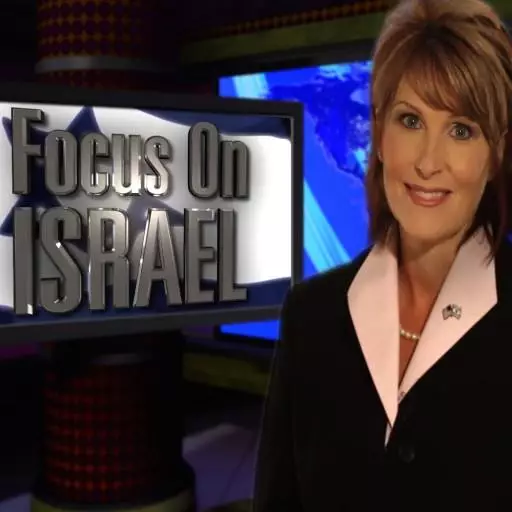
Laurie Cardoza-Moore: Hello and thank you for tuning in to Focus on Israel. I'm Laurie Cardoza-Moore, president of Proclaiming Justice to the Nations, a non-profit organization dedicated to educating Christians about their biblical responsibility to the Jewish people.
Many Christians do not realize that the Word explicitly tells us to stand with our Jewish brethren and defend the land God calls His. Last week, we continued our teachings on the evidence for the Jewish state. We started with the biblical evidence, as I had a chance to travel to Israel and meet with and interview two leading rabbis from Jerusalem. Over the last two weeks, we focused on the archaeological and historical evidence for the state of Israel, and I spoke with prominent archaeologists and historians in Israel. Please go to the PJTN website to review these important lessons, as well as our first four lessons on antisemitism.
Today, we look at the political basis and evidence to support the state of Israel. We'll see that there is a political basis for the birth of Israel and that international law gives Israel the right to the land it won during its wars of survival. The fact that Israel has fought several times against overwhelming odds to stay alive is probably one of the greatest testaments to the Jewish people inhabiting the land God calls His. It is only been through God's hand and His miracles that Israel has beaten back its enemies.
Modern Jewish history begins with the establishment of the Jewish homeland in 1948. This was foretold in the scriptures in Isaiah 66:8. Years before the birth of the modern Zionist movement, more than 10,000 Jews lived throughout what is today Israel, and that number grew exponentially as extreme antisemitism rose in Europe and Russia.
In 1917, Britain was issued the mandate for Palestine, which included the Balfour Declaration. It specifically referred to the historical connections of the Jewish people with Palestine and to the moral validity of reconstituting their national home in that country. The term reconstituting shows recognition of the fact that Palestine had been the Jewish homeland. Furthermore, the British were instructed to use their best endeavors to facilitate Jewish immigration, to encourage settlement on the land, and to secure the Jewish national home.
The word Arab does not appear in the mandatory award. The mandate was formalized by the 52 governments at the League of Nations on July 24th, 1922. On my last trip to Israel, I had the good fortune to speak with and learn from several experts in the area of modern Jewish history. Next, you'll be hearing from three of them.
The first is Chris Mitchell, who serves as the Middle East bureau chief for CBN News. Next will be Lenny Ben-David, a former deputy ambassador for Israel to Washington, D.C. Finally, you'll hear from Dr. Aryeh Eldad, a member of the Knesset, which is the legislative body for Israel. All three gave me great insight into the birth of the modern state of Israel.
Chris Mitchell: One of the forgotten things in history is something called the San Remo Resolution. It was passed in 1920. After World War I, the great powers of the world at that time, the conquering powers, got together in San Remo, Italy, and decided what to do with the Middle East. They divided up the land, and they gave a mandate to the nation of Britain at the time, called the British Mandate, where they promised a Jewish homeland.
Now, that was ratified by international law, by the San Remo Resolution, by also the League of Nations in 1922, and several weeks later by the U.S. Congress itself, which ratified the San Remo Resolution giving this land to the Jewish people. That's something that's been forgotten for many, many years, but some people now are reviving this, and for many people, it's a compelling argument.
Many people believe that the future U.N. resolutions that were passed in decades after that really don't hold water. The mandate actually charged the British government with establishing this as a Jewish homeland. The rest of the Middle East was carved up for the Arabs. So, this land was given exclusive political rights to the Jewish people. The other peoples in the lands, the Arabs, were given civil rights and religious rights. Then they were given political rights in the land surrounding: Lebanon, Syria, Iraq. If you go back to international law, you can go back to the 1920 San Remo Resolution and see that it ratified the right of the Jewish people to establish their homeland in Israel.
Lenny Ben-David: There's an interesting phenomenon for those who like American history, and I'm one who does. That is, you have virtually every president, going back to John Adams, talking about the need for a Jewish homeland and a desire for Jews to go to Palestine. Part of this was seen in various congressional statements in the 19th century, and there was a similar buildup of sentiment in Britain as well.
A politician named Arthur Balfour, already, I believe, in 1914 or so, started raising the possibility of a homeland for the Jewish people. When he became Lord Balfour, when he became a politician in 1917, an appointed politician, he actually worked with the Zionist leadership and Arab leadership to work on a Zionist homeland, a Jewish homeland in Palestine.
This was part of the British effort, even the war effort against the Ottoman Empire, to say we want to set up once the Ottomans are gone such a Jewish homeland. It was to be located on both sides of the Jordan River. It was to go from the Mediterranean almost to Iraq. Later, subsequently, the whole side, the Transjordan, the side east of the Jordan River, was peeled off and given to the Hashemite Emir Abdullah, and that became Transjordan and then the Kingdom of Jordan.
So, the Palestine homeland for the Jews was already lopped off. 20 percent was left for the Jewish people after Balfour and the British got through with this. Even then, there was subsequently an attempt to partition that land into an Arab state and a Jewish state, but it was never to be considered a Palestinian Arab state. The term Palestinian Arab didn't come into being until many years later. Indeed, the Jews who lived in the British Mandate were called Palestinian Jews, and you had Palestinian Arabs. The term Palestinian to represent Arabs of the location came up years later.
Dr. Aryeh Eldad: The war is a religious war for them. Christians and Jews are forever infidels, and they will never, by the Islam, will never be able to recognize the right of any infidel to rule over such a Muslim land. The declaration of Abu Mazen about Temple Mount is just a symptom of his religious war because if we, the Jews, had the first Temple here, the second Temple here, 1,700 years before Mohammad was born, then he will lose the religious ground of his demands because his demands will be false.
So, what the Muslims are saying is there was never a Temple here; it was always a mosque. The Temple was a mosque according to their definition. They don't say nothing was built there. They said a mosque was built there, before Mohammad? Yes, everything is a mosque. The Arabs were here many years before they invaded Israel.
History was different. When you fight a clash of civilization, when you fight a religious war, the effort to distort the past, to distort history, to distort the truth, to distort religion, is as important as long-range missiles in the current war because this is not a territorial clash. This is not a conflict that can be solved by giving up another mile or two miles somewhere in the Mediterranean. It's a principle war.
When your basic beliefs, your religion, your ideology, is fighting another one, you have to annihilate the other ideology to make it non-existent. Therefore, the Temple, according to the Palestinians, never stood on Temple Mount. The Israel Kingdom never was here. King David wasn't here. Everything started with the Muslim and will end with the Muslim. All the rest is not history, not existent.
Laurie Cardoza-Moore: As we can see, several lawful mandates and declarations made by the powers of the world established the state of Israel. Thus, 78 years of nation-building, beginning in 1870, culminated in the reestablishment of the Jewish state.
Israel's international birth certificate was validated in many ways: by the promise of the Bible, uninterrupted Jewish presence from the time of Joshua onward, the Balfour Declaration of 1917, the San Remo Resolution of 1920, the League of Nations Mandate which incorporated the Balfour Declaration, the United Nations Partition Resolution of 1947, Israel's admission to the U.N. in 1949, the recognition of Israel by most other states, and most of all, the society created by Israel's people in decades of thriving, dynamic national existence.
Several years back, I had the chance to visit Independence Hall, the very room where Israel signed its declaration of statehood. I must admit to having such an overwhelming feeling of awe that biblical prophecy became reality there. If you make a trip to Israel, you must be sure to visit. Unfortunately, the Arab nations surrounding Israel did not agree to any Jewish state and proceeded to attack the new country as the Jewish people danced in the streets.
Multiple wars of defense against these aggressors has meant the loss of many lives and territorial gain for Israel. In the Six-Day War of 1967, Israel won control over a large part of its ancient homeland, much of which was ancient Judea. This part of the Middle East is now referred to as the disputed territory of the West Bank. To help you better understand the politics of the West Bank, I'd like to play for you a video piece produced by my friends at StandWithUs, a highly respected pro-Israel organization. Danny Ayalon, former Israel ambassador to the U.S., hosts this fast-paced teaching.
Danny Ayalon: Often on the news, we hear the terms occupied territories, 1967 borders, and illegal settlements. And the story we usually hear sounds very simple. During the Six-Day War, Israel captured the West Bank from the Palestinians, refused the United Nations' demand to retreat, and illegally built settlements. But is that really the case? Let's try to understand the situation a little bit better.
We'll start with a simple but extremely important question: from whom did Israel capture the West Bank? From the Palestinians? No. In 1967, there was no Arab nation or state by the name of Palestine. Actually, was there ever? Israel took over the West Bank from Jordan in an act of self-defense after Jordan joined a war launched by Egypt and Syria to destroy Israel. Oh, by the way, destroying countries is rather illegal.
The United Nations back in 1967 rejected repeated Arab and Soviet attempts to declare Israel as the aggressor. Security Council Resolution 242 did not demand a unilateral Israeli withdrawal. Rather, the United Nations called for negotiating a solution which would leave Israel with secure and recognized boundaries, in effect, defensible borders.
But wait a second. What was Jordan doing in the West Bank in the first place? What was its legal justification? Well, Jordan had no legal justification. Jordan simply occupied it during its previous attempt to destroy the newly established state of Israel in 1948, changing the commonly accepted name, Judea and Samaria, to the West Bank. But that did not really convince anybody, and almost no one recognized the legality of Jordan's occupation, not even any of the other Arab states.
So, if Jordan had no legal claim to the land and a Palestine did not exist, whose territory is it? Let's go a little further back in time. Don't worry, not to the days of the Bible, only about 100 years. Until 1917, the Ottoman Empire occupied the whole region. After losing in World War I, the Ottomans relinquished their 500-year control to the Allied forces, which decided to divide the old empire into countries. Britain's Foreign Minister, Lord Balfour, recognized the Jewish people's historical right to their homeland. A small area, equivalent to about half of one percent of the Middle East, was designated for this purpose.
Britain received a mandate from the League of Nations to promote the establishment of a Jewish homeland. But wait a second, do you realize what happened? The Jewish homeland originally included not only the West Bank but also the East Bank of the Jordan River. I guess you cannot say the Jewish people have not accepted some painful compromises already.
Anyway, the League of Nations' recognition of a Jewish homeland, which includes the West Bank, was reaffirmed by the United Nations after the Second World War. With the British Mandate ending, United Nations General Assembly Resolution 181 recommended the establishment of two states: one Jewish and one Arab. The Jews accepted it and went on to create the state of Israel, while the Arabs refused the compromise and launched a war to destroy the newly established Jewish state.
Resolution 181, a non-binding recommendation in the first place, remained with no legal status. At the end of the war, a ceasefire line was formed where the Israeli and Arab forces stopped fighting. At the insistence of the Arab leaders, this line was defined as having no political significance. So, although this line is commonly referred to as the 1967 border, it is not from 1967, and it was never an international border.
This is why a more exact legal definition for the West Bank according to international law is really the same as in so many other areas where there are or were territorial disputes, but which are not defined as occupied. For example, Zubarah, the Tumbs Islands, the Western Sahara, amongst many others, they're not considered occupied territories but rather disputed territories.
So, let's return for a moment to our illustration and examine the complete chain of events. Israel's presence in the West Bank is the result of a war of self-defense. The West Bank should not be considered occupied because there was no previous legal sovereign in the area, and therefore, the real definition should be disputed territory. The 1947 partition plan has no current legal standing, while Israel's claim to the land was clearly recognized by the international community during the 20th century. That is why the presence and construction of Israeli settlements in the West Bank should not be considered illegal. These are not just my own opinions. They are based on conclusions made by world-renowned jurists like Professor Eugene Rostow, Justice Arthur Goldberg, and Stephen Schwebel, who headed the International Court of Justice.
Laurie Cardoza-Moore: I pray you were enlightened and hopefully a bit entertained by that well-made cartoon. Finding peace in Israel is truly a very serious matter, but if you look at some of the ridiculous claims by Arabs, you almost can't help but laugh.
A large issue that Israel deals with in the world's political realm and with its neighbors can be summed up in one word: borders. What and whom actually dictates where the border lines are drawn? I spoke with Knesset member Dr. Aryeh Eldad about this issue while in Israel. I believe you'll find his point of view based solidly in international law and past world history.
Dr. Aryeh Eldad: Borders all over the world are usually the result of the condition of the end of a war and the peace agreement that followed. All the borders in Europe were created like that. They were changed; they were changed after the war in 1870, they were changed after First World War and changed again after Second World War, and now they changed again after the war in the Balkan. And after the nations look at the end result of the war, they may reach an agreement about the border.
The borders in Israel only partially agreed upon by the sides as a result of previous wars. We have an internationally recognized border with Egypt. These were the ceasefire lines and the international borders of 1903 and the ceasefire lines of 1949 that later were adopted by both sides, and we have a peace agreement. This is an international border. We have an international border with Jordan; that's the Jordan River. We agreed upon it in the peace agreement. We have an international border with Lebanon even though we don't have peace agreement, because this is an older border that was drawn by the Sykes-Picot document at towards the end of First World War between Britain and France.
But we do not have any recognized border between us and the Palestinians because they were never a side to any of these wars or any of these agreements. What we call the '67 borders were only the ceasefire lines between Israel and Jordan at the end of the War of Independence. And the ceasefire agreement that was signed in Rhodes specified that these are not the final borders, and these final borders should be agreed upon in any peace agreement. We do not have peace agreement. That's why the '67 lines have no international meaning by the international law. They are not borders.
Laurie Cardoza-Moore: Over the last few weeks, we've looked at the overwhelming evidence that supports the state of Israel. From the early inscription of the name of Israel in Egypt over 3,000 years ago to the U.N. resolution establishing the modern Jewish homeland, we see strong evidence of support at the levels of archaeological science, historical records, biblical texts, and political resolutions and laws.
So much so that who can deny Israel's right to exist and her rights to the land won in wars of defense? Abba Eban, one of Israel's greatest statesmen, had a powerful statement to those who denied Israel's right to exist. He said, "Nobody does Israel any service by proclaiming its right to exist. Israel's right to exist, like that of the United States, Saudi Arabia, and 152 other states, is axiomatic and unreserved. Israel's legitimacy is not suspended in mid-air awaiting acknowledgment. There is certainly no other state, big or small, young or old, that would consider mere recognition of its right to exist a favor or a negotiable concession."
Ladies and gentlemen, God's Word is true, and He is true yesterday, today, and forevermore. It's interesting because we look at what's happening in the Middle East today, and we see the same struggle that Israel was facing in years before with the Arabs. And I want to encourage you, if you have your Bible with you, turn to Nehemiah Chapter 2. And I want to read from these scriptures because it's very interesting and quite timely to read these verses and see what was happening during the time of Nehemiah. And we're going to start reading at verse 17 of Nehemiah 2.
To put it in context, if you remember, Nehemiah was given leave by the king to go back to Jerusalem to assess the damage in order to rebuild the city. So, we start at verse 17, where he says, "Then I said to them, 'You see the distress that we are in, how Jerusalem lies in waste and its gates are burned with fire. Come and let us build the wall of Jerusalem, that we may no longer be a reproach.' And I told them of the hand of my God, which had been good upon me, and also of the king's words that he had spoken to me. So they said, 'Let us rise up and build.' Then they set their hands to do this good work. But when Sanballat the Horonite, Tobiah the Ammonite official, and Geshem the Arab heard of it, they laughed at us and despised us, and said, 'What is this thing that you are doing? Will you rebel against the king?' So I answered them and said to them, 'The God of heaven Himself will prosper us; therefore we, His servants, will arise and build, but you have no heritage or right or memorial in Jerusalem.'"
Just like back in Nehemiah's day, the Arabs also said that they had rights to Jerusalem. And here, Nehemiah is confirming that this city belongs to the Jewish people. And God would prosper them. And just like today, God will prosper the Jewish people. He will defend Israel. He will establish them in that land.
I want to just thank you, and I hope that we've helped to increase your knowledge and love for the Jewish people today and for the state of Israel. As always, we so appreciate hearing from you. Please send your comments and questions to comments@pjtn.org. When time allows, I'll answer them on our program.
The time to stand up is now. Be a leader in your community and in your church. One person can make a difference. Get involved with and support pro-Israel organizations such as PJTN. Call your senators, congressmen, the White House; let your elected leaders hear from you. Visit our website to learn more, sign up to receive action alerts, and order our films to share with family and friends.
I want to thank you for watching our program today. Be sure to join us next week as we'll be focusing on the relationship between the nations of the world and the state of Israel. God bless you and thank you for all you do on behalf of our Jewish brethren and all Israel. We'll see you next time on Focus on Israel.
Featured Offer
“Taking Back America’s Children” outlines concerns about the current state of the U.S. educational system, arguing that there is a deliberate effort to undermine American values, history, and cultural foundations. The key points include: The History, The Challenge, and The Solution how parents, grandparents, and patriots can unite to reclaim control over the educational system, resisting efforts that are seen as damaging to the nation’s foundational values. This document urges a return to traditional American values in schools and emphasizes the need for active involvement to prevent what it sees as a harmful shift in educational content and influence.
Video from Laurie Cardoza-Moore
Featured Offer
“Taking Back America’s Children” outlines concerns about the current state of the U.S. educational system, arguing that there is a deliberate effort to undermine American values, history, and cultural foundations. The key points include: The History, The Challenge, and The Solution how parents, grandparents, and patriots can unite to reclaim control over the educational system, resisting efforts that are seen as damaging to the nation’s foundational values. This document urges a return to traditional American values in schools and emphasizes the need for active involvement to prevent what it sees as a harmful shift in educational content and influence.
About Focus on Israel
About Laurie Cardoza-Moore
Laurie Cardoza-Moore is a respected “go to” voice on the frontlines of battle for the ideological, social, moral and religious mind of this generation. As Special Envoy to the United Nations for human rights and anti-Semitism on behalf of 44 million Christians, to her leadership in statehouses through PJTN’s anti-Semitism Awareness Resolution, Laurie is a tireless advocate.
A home schooling mother of five, Laurie Cardoza-Moore’s original “wake-up call” was the discovery of anti-Semitic, anti-Christian, and anti-American content in her children’s textbooks. The revelation of the early seeds of indoctrination of America’s children began her quest to bring awareness and change through every avenue she could reach: Legislative, media, advocacy, and ultimately the development of PJTN programs and documentaries that are shared and educate on a mass level. PJTN programming in support of Israel today reaches over 950 million potential viewers on a regular basis through a network of close to two dozen TV affiliates and satellite broadcasters.
Laurie has been appointed, awarded and recognized by her peers for her leadership, including:
- The President’s Council of The National Religious Broadcasters, (NRB)
- The “Top 100 People Positively Impacting Israel” by the Algemeiner
- An Honorary Doctorate Degree in Theology from the Latin University of Theology
- The “Friend of Israel Award” by The Center For Jewish Awareness
- The “Goodwill Ambassador to Israel Award” given by Israel Consul General of the Israeli Foreign Ministry.
Contact Focus on Israel with Laurie Cardoza-Moore
lauriecm@PJTN.org
https://www.pjtn.org
P.O. Box 682711
Franklin, TN 37068-2711
877-873-9020
