

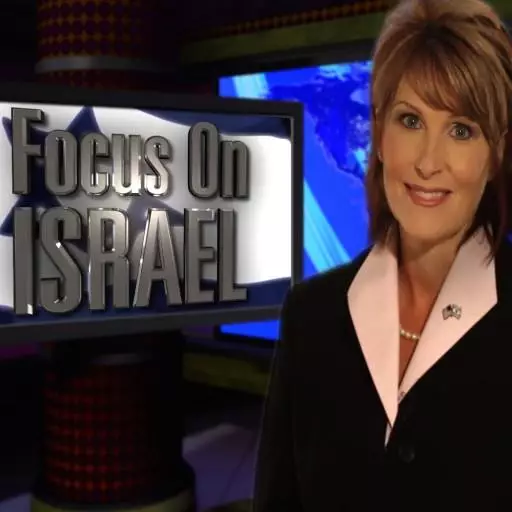
Historical Evidence for Israel


Laurie Cardoza-Moore: I'm Laurie Cardoza-Moore, and this is Focus on Israel.
Laurie Cardoza-Moore: Hello and thank you for tuning into Focus on Israel. I'm Laurie Cardoza-Moore, President of Proclaiming Justice to the Nations, a non-profit organization dedicated to educating Christians about their biblical responsibility to the Jewish people. Many Christians do not realize that the word explicitly tells us to stand with our Jewish brethren and defend the land God calls his.
Laurie Cardoza-Moore: Last week, we continued our teachings on the evidence for the Jewish state. We started with the biblical evidence, as I had a chance to travel to Israel and meet with and interview two leading rabbis from Jerusalem. Rabbi Abraham Greenbaum and Rabbi Yeshiyahu Hollander.
Laurie Cardoza-Moore: Last week, we focused on the archaeological evidence for the State of Israel, and I spoke with two prominent archaeologists in Israel. Today, we look at the historical evidence to support the State of Israel.
Laurie Cardoza-Moore: We'll see that there is much written evidence in ancient texts, as well as the Bible, that show a Jewish presence in the land of Israel for over 3,000 years. Arguably, one of the greatest testaments to the Jewish people inhabiting the land God calls his.
Laurie Cardoza-Moore: Much like archaeology, historical writings provide a valuable link between Israel's past and present. Jewish history begins with the patriarchs Abraham, Isaac, and Jacob, some 4,000 years ago. We saw last week how many archaeological finds help prove the biblical narrative, as well as other texts.
Laurie Cardoza-Moore: So on our show today, let's say we have no Bible. What historical evidence exists in written form to prove Israel existed thousands of years ago?
Laurie Cardoza-Moore: In 1896, in an Egyptian temple in the city of Thebes, an archaeologist discovered the Stele. An ancient Egyptian poetic eulogy to Pharaoh Merneptah. This find dates back to around 1200 BC.
Laurie Cardoza-Moore: Of significance to biblical studies is a short section at the end of the poem describing a campaign to Canaan by Merneptah in the first few years of his reign. Here we have the earliest mention of Israel outside the Bible and the only mention of Israel in Egyptian records. It reads, Israel is desolated; his seed is not. This indicates that at this time, at least some constituent of Israel had stores of grain.
Laurie Cardoza-Moore: The next recorded history of Israel was displayed in the Mesha Stele, a black basalt stone bearing an inscription by the 9th-century BC ruler Mesha of Moab. The inscription was set up about 840 BC as a memorial to Mesha's victories over Omri, King of Israel and his son, who had been oppressing Moab. It is the most extensive inscription ever recorded that refers to ancient Israel. It bears what is generally thought to be the earliest non-biblical Semitic reference to the name Yahweh.
Laurie Cardoza-Moore: In the second century BC, the Jews succeeded in creating an independent kingdom covering much of the biblical land of Israel. But by the end of the first century BC, this was absorbed into the Roman Empire.
Laurie Cardoza-Moore: A series of revolts against the Romans led to the forced dispersal of much of the Jewish population. Although most of the Jews in the land were expelled, many still remained and maintained a Jewish presence there.
Laurie Cardoza-Moore: In the 7th century BC, Jerusalem became a city with a population many times greater than before, with clear dominance over its neighbors. The Babylonian conquest entailed the destruction of Jerusalem and its temple. The exile experience led to the development of a strong sense of identity as a people distinct from other peoples, and increased emphasis on symbols such as circumcision and Sabbath observance to maintain that separation.
Laurie Cardoza-Moore: In 37 BCE, Judeans continued to live in their land in significant numbers and were allowed to practice their religion until the second century, when Julius Severus ravaged Judea. 985 villages were destroyed. Banished from Jerusalem, the Jewish population now centered on Galilee. This was also the time of the schism between Judaism and Christianity. Many Christians considered the new religion to supersede Judaism.
Laurie Cardoza-Moore: The last pagan Roman Emperor Julian allowed the Jews to return to Holy Jerusalem and to rebuild the temple. In the years 1260 through 1516, Israel was part of the Empire of the Mamluks, who ruled first from Turkey, then from Egypt. Jews suffered persecution and humiliation, but the surviving records cite at least 30 Jewish urban and rural communities at the opening of the 16th century.
Laurie Cardoza-Moore: In the Ottoman period, the Jewish population of the Palestine region was approximately 10,000 during the first half century of the Ottoman rule. 30 Jewish communities existed at the time, and the 8,000 or 10,000 Jews in 1555 grew to 20,000 or 30,000 by the end of the century.
Laurie Cardoza-Moore: By the 19th century, the growth of the Zionist movement saw a large migration of Jews to the land. So the myth that the Jews came back to Palestine and stole the land from the Palestinians is simply that, a lie of enormous proportions.
Laurie Cardoza-Moore: While in Jerusalem recently, I had the unique opportunity to meet with Lenny Ben-David, a former deputy ambassador for Israel to Washington DC. His deep insight and knowledge of Jewish history brought new light to an ancient subject.
Lennie Ben-David: Laurie, we have a tremendous history of Jews here in the land, over 2,000 years ago. It is a mistake to believe that with the destruction of the Temple, the Jews left the Holy Land. They stayed here, not necessarily in Jerusalem, but there were very large centers of Jewish life, of scholarly work that were done here in the land from 70 AD after the Temple was destroyed. Great works of Jewish scholarship, the Talmud, the Mishna were done here. Great rabbis came here and lived from Maimonides and Nahmanides. Maimonides came from Cairo, Nahmanides came from an area of Germany, France.
Lennie Ben-David: And there were always Jews in the Holy Land. So their presence is a physical documentation of Jewish life here. Their works, their books, their writings were done here in Eretz Israel, the Land of Israel.
Lennie Ben-David: The Roman history was certainly a period of brutality, particularly after the the rebellion against against Rome that took place, that they the Romans felt that they had to destroy the Temple in Jerusalem. But then 60, 70 years later, there was another rebellion against the Roman emperor. And the decision was made to absolutely destroy everything, not just Jerusalem, not just the Temple, but also to lay barren towns and cities and absolutely strip the land.
Lennie Ben-David: It's interesting to look at the history that the Romans used a tremendous amount of their resources. A huge percentage of their army had to come here to put down this revolution, this rebellion. And it wasn't just a rebellion of military means, it was a rebellion of social means, as to a social message that they had to destroy this message of freedom, equality of social welfare. And they never succeeded.
Lennie Ben-David: And indeed, even the Jews that they took back to Rome in captivity, it has been shown impacted on Roman society and kept their Judeo-Christian traditions even after they went back to Rome as slaves. After the Romans were defeated in battles with the Persians, and then you had the Seljuks, and the Mamluks, and the Ottomans, and the Turks, this land has been like a card, a deck of cards being shuffled all the time.
Lennie Ben-David: And no one set up a permanent capital here. Even when the Arabs came in in the 7th century, this was not a center for Arab culture or Arab life. Their center was in Baghdad or in Damascus or in obviously in Saudi Arabia, and there was never a capital, never a country that was located here. It was always ruled elsewhere.
Lennie Ben-David: I recently came across documentation and even some pictures dating back to the 19th century, where some Jews who came back to this land 200 years ago sought to rebuild a synagogue in the Old City of Jerusalem. They had to get permission to do so from an Ottoman leader who sat in Cairo. Not even in in Turkey or in the Ottoman center of Constantinople, because there was no governor here in the land of Palestine.
Lennie Ben-David: Sometimes it was ruled from Damascus, sometimes from Cairo, sometimes from but sometimes from the Turkish area, but never was there a center, a government, a country here until until the 20th century. There is no question that the land was abused by all the conquerors who came in afterwards. Not just in terms of killing off of the fauna and the and the and the flora.
Lennie Ben-David: Great forests were cut down for use of railroads. But there was also simply an abuse of the land. There was no caring for the land. No greater figure than Mark Twain describes what this land looked like 160 years ago when he was when he visited with the group and it's all documented in a fabulous book called Innocence Abroad.
Lennie Ben-David: And so the land was barren. The land was stripped of all resources. And now when you go through and you see how lush and how beautiful the land has become, you recognize that indeed we're seeing biblical descriptions of a land of milk and honey. I squeezed grape juice yesterday from the grapes in my backyard, and I live 10 miles south of Jerusalem in Judea.
Lennie Ben-David: Bountiful produce. And it's for me it's a reliving of prophecy to see this happening.
Laurie Cardoza-Moore: One of the greatest myths perpetrated today is that the Palestinians are descendants of the Philistines. Who were the Philistines? The word Palestine means Land of the Philistines. Egyptian records refer to the Philistines as the Sea Peoples, who came from an area of the Aegean Sea, which is bordered by Greece and Turkey.
Laurie Cardoza-Moore: In First Samuel 30, verse 40, the Philistines are referred to as the Cherethites, the Hebrew word form of Cretans, inhabitants of Crete. In Ezekiel 25:16 and Zephaniah 2:5, the terms Cherethites and Philistines are used parallel, a way of saying they are one and the same. The Philistines were descendants of the Grecian seafaring people, and definitely not Arab.
Laurie Cardoza-Moore: The people who call themselves Palestinians today are of Arab origin, whose father is Ishmael. In a great battle fought near Gaza in AD 635, the Arabs conquered the Byzantines, who ruled the area at the time. Soon after, all traces of Philistine life faded away, and the history of the land became Arab, Jewish, and Samaritan.
Laurie Cardoza-Moore: Lenny Ben-David had some great insight into this myth, as did another honored guest I met in Jerusalem, Shai Ben-Tekoa, a historical and Torah scholar.
Shai Ben-Tekoa: In every generation, people tell whopping lies about the Jews. That's anti-Semitism in a nutshell. Telling lies about the alleged evil that Jews perpetrate, and on the basis of these lies, you get to beat up the Jews, steal from the Jews, drive them from their homes, burn them in gas chambers. The current myth is that there was an ancient Palestinian people here, and these pushy Jews came in after World War II and stole their country from them. That's the claim that the so-called Palestinians make.
Shai Ben-Tekoa: In fact, there is no recorded history of any such nation here. The Palestinians is an anti-Semitic myth. This is the most written about piece of real estate on the planet. It's the oldest and the widest in so many languages. Everybody's been here, conquerors and pilgrims, and prophets, and tourists, and nobody said a word about the Palestinians because there weren't none. In fact, the Palestinians, so-called, were led by a Muslim priest in the first half of the 20th century, Haj Amin al-Husseini, who said there's no such thing as Palestine and no Palestinians.
Shai Ben-Tekoa: This was the doctrine until the 1960s. After the 1960s, they began to change it all around and say, yes, we are the ancient Palestinians and this is their land that was stolen from us. They have no claim. These people are Syrians, because for 1,400 years, there was no Palestine in the minds of Muslims. They have no map. If you look at the maps in Turkish days, when they ruled there for 400 years, there is no Palestine. They had different provinces and districts. No Palestine. Nobody called themself a Palestinian.
Shai Ben-Tekoa: There is no reference to Palestinians in the UN until 1970, three years after the Six-Day War. For 25 years, no reference to the UN. For the 25 years before then, during the League of Nations period, no reference whatsoever. It was Jews and Arabs, Arabs and Jews. That's the story. That's the historically that's the historically accurate record. The Palestinians are invented after the Six-Day War in order to do the same thing that Muhammad did.
Shai Ben-Tekoa: They stole Zionism, the way the Muslims stole Judaism. They claim to be an ancient people and this is their ancient homeland and they're and they're suffering racist prejudice the way the Jews suffered. They have stolen our emotions, our history, our beliefs, and made them their own.
Shai Ben-Tekoa: There is very little relationship between the Palestinians today and the Philistines from 2,000 years ago. Indeed, if you look at some of the names of the Palestinians, you'll see that they came to the region in the last 100 or 200 years. You do have some families that date back many centuries, but famous Palestinians, for instance, are the Masri clan.
Shai Ben-Tekoa: Masri is Arabic and Hebrew for Mitsri, or Egyptian. There's a Jabari clan. Jabari is an area in Iraq. So they came to the region in more recent years. In fact, there was a recent case I discovered in Lebanon of a refugee camp in Ba'albek, and this refugee camp has neighborhoods named after countries in North Africa. Why? Because they admit that the Palestinian families that are there originally showed up or came from the Maghreb, from the from North Africa.
Shai Ben-Tekoa: And so some of the Arabs even keep their the names of their previous locations, and many of them came here. There's an interesting feature that I'll share with you that has been discovered recently by anthropologists, and that is south of Jerusalem, in the Hebron region, especially in the hills, there are what we call crypto-Jews. It was clear that these were Jewish families that were forced to convert, but kept some of the Jewish traditions over the last 100 years.
Shai Ben-Tekoa: And so you still see the Jewish roots even in some of the Arab societies. So were they originally Philistines? Certainly not.
Laurie Cardoza-Moore: Two years ago, PJTN created a short documentary titled The Disputed Territories. Its goal was to help Christians understand that the areas of Gaza and the West Bank were a part of Israel thousands of years ago. Looking at the biblical, historical, archaeological, and political evidence, there should be no dispute as to who the rightful owner of these pieces of real estate are.
Narrator (Male): Israel, 12,000 square miles of land that lie at the center of a world conflict, less than 1% of the world's land mass. In this small region lies the lands known as the disputed territories, merely 2,400 square miles of real estate that are now the focus of this conflict. But is it these small areas of land that have ignited the firestorm, or is it the tiny country and its people?
Narrator (Male): Are these disputed territories truly at the heart of the matter? Why does a major conflict and possibly world peace itself hinge upon this small corner of the world? A place of no strategic value, with no great or valuable natural resource. Is there a peaceful solution? Can the two sides live in coexistence?
Narrator (Male): To understand the complexity of the struggle, we must separate the myths from the facts, and the lies from the truth. We must also examine the history of this land and the people who call it home. We must examine the conflict between Jew and Arab, between the God of Abraham and the God of Islam. The history of Israel and its people began over 5,000 years ago, with a promise from God to a man of steadfast faith.
Narrator (Male): With the conquests of Joshua in 1250 BC, that promise was fulfilled. And for the past 3,300 years, there has since been a continuous Jewish presence in the land. Arabic history began in Israel in 636 with the building of the Dome of the Rock on the site of the destroyed Jewish Temple. And from one obscure reference in the Quran, Jerusalem was made one of the three holy cities of Islam.
Narrator (Male): Over the centuries, the region was ruled or controlled by a succession of superpower empires of the time: Assyrian, Babylonian, Persian, Greek, the Roman Empire, Islamic and Christian Crusaders, the Ottoman Empire, and the British Empire.
Narrator (Male): One myth today is that the Palestinian people are descendants of the ancient people group called the Philistines, who inhabited this area. The Philistines were actually of Greek origin and in 736 BC were absorbed into Babylonian culture and disappeared from history. Today's Palestinian Arabs are actually descendants of the nomadic tribes that migrated from the deserts of North Africa and spread across the Middle East.
Narrator (Male): Who was there first? Who has been there longer? If we look to international law, we see that Israel has both a right of existence and the right to occupy the disputed territories. UN Resolution 181 in 1947 established the State of Israel.
Narrator (Male): Further, if we look at the international laws of war and uncontrolled territory, Israel also is in the right to maintain control and keep these disputed areas after its victory in the Six-Day War of 1967. During the preceding period of almost 20 years, between 1949 to 1967, why didn't the Arab countries who controlled these territories establish or re-establish a Palestinian state? Had there ever been a Palestinian state?
Guest (Male): The West Bank, the last time it was part of a real state, it was the Ottoman Empire. It has been either in uncertain status as part of the Palestinian Mandate operated by Britain or in an intermediate status with being administered by Jordan for a time and then not. It's not as if there were a Palestinian state there that Israel had conquered in an aggressive war. Israel's wars have all been defensive anyway. They keep having to fight because they get attacked by it's what happened except for Suez. It's what happened in '48, it's what happened in '67, it's what happened in '73. And each time they were attacked, they won and ended up particularly after the '67 War, with some increased territory that they occupied.
Guest (Male): First and foremost, there has never been a state called Palestine. We're talking about nomadic Arabs. And what really concerns me is the agreement now, this reconciliation pact between Fatah and and Hamas, and then go back to history and understand where the word Palestine came from. You know, in 73 AD, when Emperor Hadrian sent out his decree after the Romans conquered Judea, they just changed the name. Palestine is a region. And once upon a time, everyone who occupied that region had on their passport Palestine. There's always been a state of Israel. After 1948, we have a modern day State of Israel. So we need to respect that, and the people who call themselves Palestinians need to have a right and a respect of that State of Israel. Until then, until there's a willing peace partner, there really can't be peace.
Guest (Male): Up until 1967, the term Palestinian means something entirely different than it does today. The very term Palestinian. In fact, you know, in the if you used the term Palestinian in 1948, you'd have been talking about Jews. Those are the only people that considered themselves Palestinians. Arabs didn't want to have anything to do with the term Palestinian. Palestinian meant Jew. The Jerusalem Post was the Palestinian Post. Not not until 1967 does Arafat and the and his band of terrorists adopt the term Palestinian for their own and decide it's not just a term of recent invention. It actually has to do with, you know, they're descendants from the Philistines. They've been around for thousands of years. The Palestinians are now a distinct Arab people. They invented this idea in 1967, and the world has bought it. It's this is, you know, this goes right to the heart of of what I talked about in those original myths of the Middle East. This concept of Palestinians, it doesn't mean anything.
Guest (Male): Palestinians are not a distinct Arabic culture, there's no language of Palestinian. There's never been a land of Palestine in the history of the world that's been ruled by Palestinian people. So where do we get off with with this idea that we need a national movement for nationhood for a country that's never existed in the history of the world? It's just a truly amazing thing. And so, but that's where we are today. The Palestinian Authority, we're moving toward a state of Palestine, and it all began. The genesis of this is in 1967. The Arabs got their butts kicked in another war, and another conventional war. And new tactics had to be invented to take on Israel. And the new tactics that were adopted, by the way, not just by Arafat and and his Palestinian Liberation Organization, but by the leaders of the Arab world. They said, they decided that this was the way to go. We need a proxy army to take these guys on. We don't want to take them on head to head in a conventional war anymore. Let's let's try another approach.
Narrator (Male): Biblically, historically, and lawfully, Israel has the right to the disputed territories, the right to make them a true part of their country if they so desire, for they are, by all rights, the property of Israel. It is only Israel's desire for peace that drives them to relinquish these areas, a desire for peace not shared by its Arab neighbors.
Narrator (Male): World opinion, as well as Israel's greatest ally, the United States, are increasing pressure on Israel to leave these territories to Arabic rule. The Palestinian Charter and school curriculums, as well as religious teachers, all call for the destruction of Israel. Many of these Islamic fundamentalists cry as well for the death and destruction of all infidels and the countries they inhabit. Why does the US demand the creation of such a country when they are fighting a war against terror?
Narrator (Male): Do Americans and Israelis believe that giving over the land in Israel will satisfy the Islamic fascists bent on world domination? In the struggle for a lasting peace, there are more questions than answers. Do historical, archaeological, and biblical evidence, as well as international law, hold precedence, or does world opinion hold sway? As world pressure increases, will Israel have any other choice?
Laurie Cardoza-Moore: That's our show for today, and I want to thank you for watching. The time to stand up is now. One person can make a difference. Get involved and support pro-Israel organizations such as PJTN. Visit our website. Sign up to receive free newsletters, action alerts, daily blogs, and order our films to share with others. Please encourage your family and friends to tune in and watch Focus on Israel. God bless you, and thank you for all you do on behalf of our Jewish brethren and all Israel. We'll see you next time on Focus on Israel.
Laurie Cardoza-Moore: Anti-Semitism has reached epic proportions, and Israel is now surrounded by nations who seek its destruction. For Israel to lose just one battle would mean losing everything. As Christians, it is our biblical responsibility to stand with our Jewish brethren and Israel. PJTN needs your help to reach more Christians with this urgent message. Please visit our website to become a member today, and order our award-winning documentaries. You must decide that you won't be silent. Sign up now at PJTN.org. God bless you and thank you for your support and prayers.
Featured Offer

Are ancient Bible prophecies unfolding before our eyes? In this compelling article, Laurie Cardoza-Moore explores the Iran-Israel conflict through the lens of Ezekiel’s Gog-Magog prophecy, connecting today’s headlines to predictions written thousands of years ago.

Video from Laurie Cardoza-Moore
Featured Offer
Are ancient Bible prophecies unfolding before our eyes? In this compelling article, Laurie Cardoza-Moore explores the Iran-Israel conflict through the lens of Ezekiel’s Gog-Magog prophecy, connecting today’s headlines to predictions written thousands of years ago.
About Focus on Israel
PJTN educates, advocates, and moves to activate Christians, Jews and all people of conscience in building a global community of action and prayer in support of Jews and Israel. We are engaged in winning the ideological, social, moral and spiritual battle for the mind of this generation.
About Laurie Cardoza-Moore
Laurie Cardoza-Moore is a respected “go to” voice on the frontlines of battle for the ideological, social, moral and religious mind of this generation. As Special Envoy to the United Nations for human rights and anti-Semitism on behalf of 44 million Christians, to her leadership in statehouses through PJTN’s anti-Semitism Awareness Resolution, Laurie is a tireless advocate.
A home schooling mother of five, Laurie Cardoza-Moore’s original “wake-up call” was the discovery of anti-Semitic, anti-Christian, and anti-American content in her children’s textbooks. The revelation of the early seeds of indoctrination of America’s children began her quest to bring awareness and change through every avenue she could reach: Legislative, media, advocacy, and ultimately the development of PJTN programs and documentaries that are shared and educate on a mass level. PJTN programming in support of Israel today reaches over 950 million potential viewers on a regular basis through a network of close to two dozen TV affiliates and satellite broadcasters.
Laurie has been appointed, awarded and recognized by her peers for her leadership, including:
- The President’s Council of The National Religious Broadcasters, (NRB)
- The “Top 100 People Positively Impacting Israel” by the Algemeiner
- An Honorary Doctorate Degree in Theology from the Latin University of Theology
- The “Friend of Israel Award” by The Center For Jewish Awareness
- The “Goodwill Ambassador to Israel Award” given by Israel Consul General of the Israeli Foreign Ministry.
Contact Focus on Israel with Laurie Cardoza-Moore
lauriecm@PJTN.org
https://www.pjtn.org
P.O. Box 682711
Franklin, TN 37068-2711
877-873-9020